CHINESE CAMP, Calif. (AP) — One of nearly two dozen fires burning across Northern California on Wednesday scorched homes in a Gold Rush town settled in the 1850s by thousands of Chinese miners who had faced discrimination and were driven out of a nearby camp.
The quick-moving fire in the Sierra Nevada foothills threatened the few remaining historic structures in Chinese Camp, forced the evacuation of its roughly 100 residents and closed a highway that’s a main route between San Francisco and Yosemite National Park.
Click to Gallery
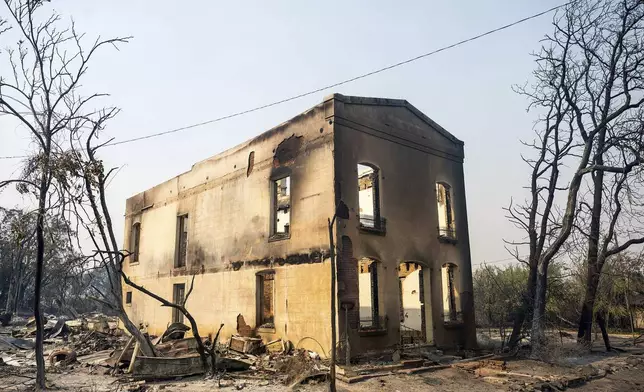
Exterior walls stand at a building destroyed by the TCU September Lightning Complex fire in the Chinese Camp community of Tuolumne County, Calif., on Wednesday, Sept. 3, 2025. (AP Photo/Noah Berger)
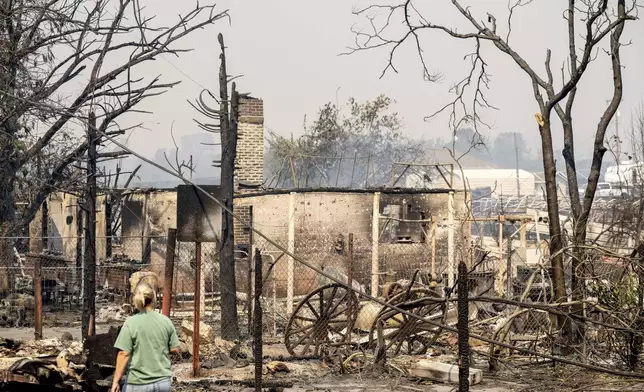
A resident passes a home destroyed by the TCU September Lightning Complex fire in the Chinese Camp community of Tuolumne County, Calif., on Wednesday, Sept. 3, 2025. (AP Photo/Noah Berger)
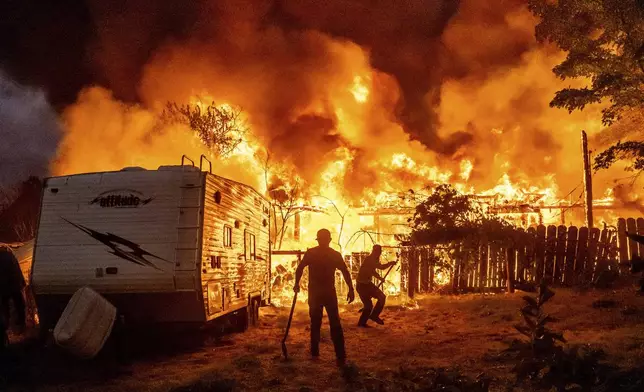
Residents work to stop flames from a burning home from spreading to a neighboring house as the 6-5 Fire burns through the Chinese Camp community of Tuolumne County, Calif., on Tuesday, Sept. 2, 2025. (AP Photo/Noah Berger)
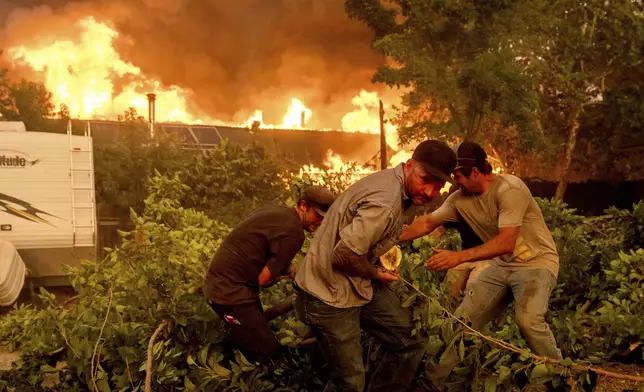
Residents work to stop flames from a burning home from spreading to a neighboring house as the 6-5 Fire burns through the Chinese Camp community of Tuolumne County, Calif., on Tuesday, Sept. 2, 2025. (AP Photo/Noah Berger)
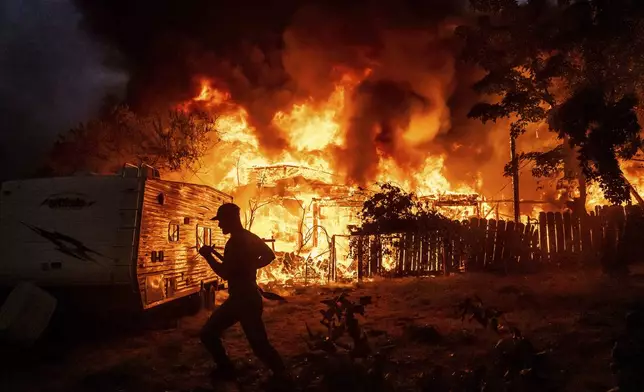
A residents works to stop flames from a burning home from spreading to a neighboring house as the 6-5 Fire burns through the Chinese Camp community of Tuolumne County, Calif., on Tuesday, Sept. 2, 2025. (AP Photo/Noah Berger)
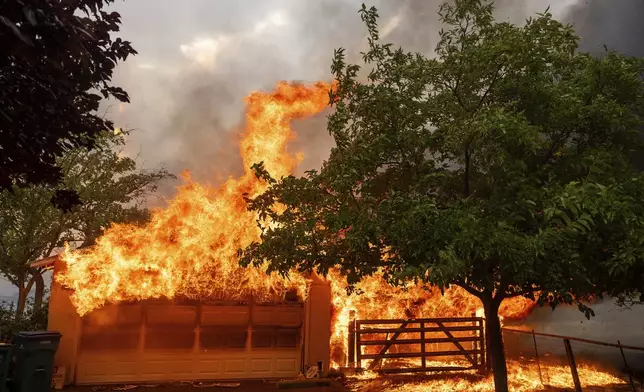
Flames consume a garage as the 6-5 Fire burns through the Chinese Camp community of Tuolumne County, Calif., on Tuesday, Sept. 2, 2025. (AP Photo/Noah Berger)
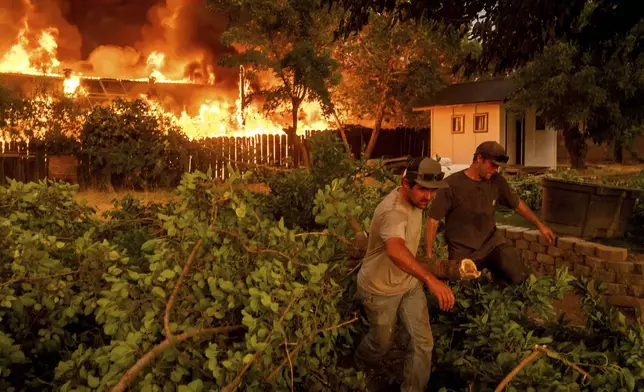
Layne Smith, left, clears vegetation to stop flames from spreading to his home as the 6-5 Fire burns through the Chinese Camp community of Tuolumne County, Calif., on Tuesday, Sept. 2, 2025. (AP Photo/Noah Berger)
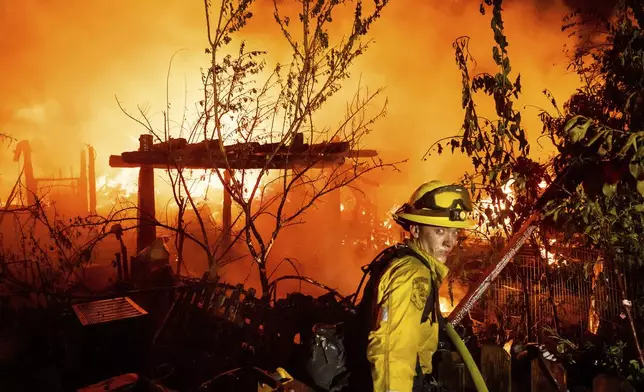
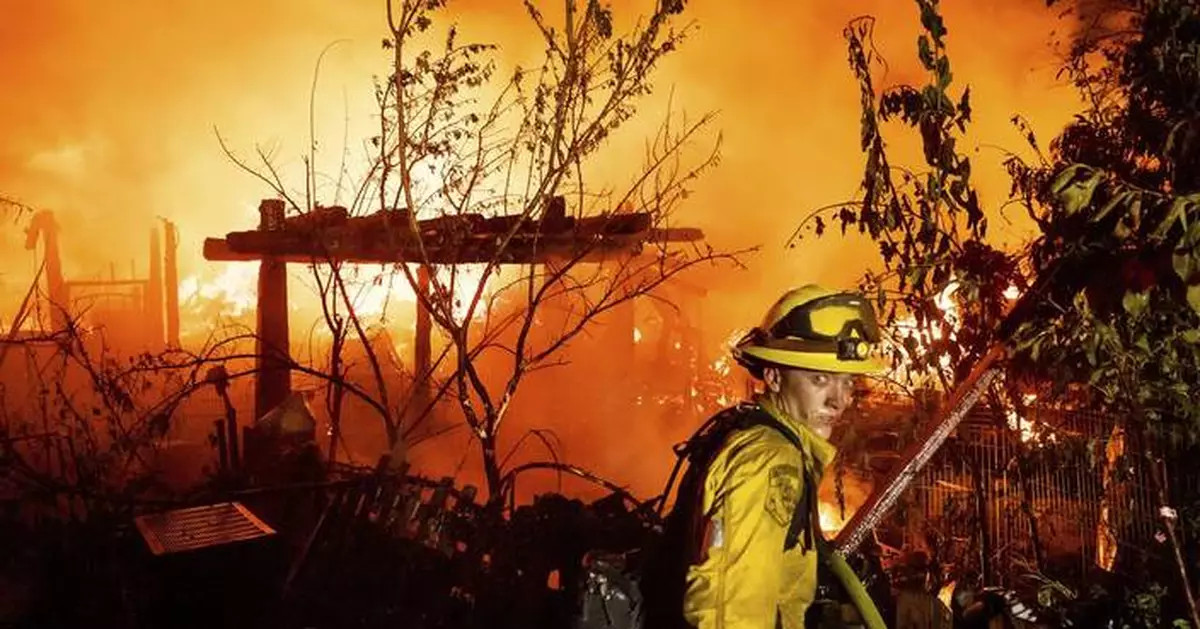
A firefighter battles the 6-5 Fire burning through the Chinese Camp community of Tuolumne County, Calif., on Tuesday, Sept. 2, 2025. (AP Photo/Noah Berger)
It’s not clear yet whether the town’s handful of Gold Rush era structures -- including an old post office built in 1854 -- were damaged in the fire that erupted Tuesday and continued burning without any containment.
A shuttered Catholic church dating back to 1855 appeared to have survived the flames. The town's general store where tourists could pickup supplies and see historic artifacts also seemed to be intact. But on some lots, all that remained were charred brick walls and scorched trees.
A large number of lightning strikes early Tuesday set off at least 22 fires that have burned about 20 square miles (52 square kilometers) in Calaveras, Tuolumne and Stanislaus counties, said Emily Kilgore, a spokesperson for the California Department of Forestry and Fire Protection, the state’s chief fire agency.
The fires are spread across the region about 120 miles (190 kilometers) east of San Francisco. There have been no reports of injuries, but several structures were destroyed in two of the fires, Kilgore said Wednesday. Damage assessments have not been completed.
Many of the fires are in remote and rugged areas, some with very difficult access, Kilgore said.
“There still may be fires that haven’t been discovered yet,” Kilgore said, warning that more evacuations may be necessary. Temperatures were expected to be in the 90s over the next few days with little rain in sight.
Strong winds were adding to the challenge as the flames strengthened in areas filled with dry, tall grass and brush, CalFire said.
The largest of the fires crossed 10 square miles (26 square kilometers) around Chinese Camp, where at least five homes burned. During the first hours, residents moved tree branches and shoveled sand onto flames in a desperate attempt stop them from spreading until firefighters arrived. A recreational vehicle on the property was damaged.
Chinese Camp, now a crossroads for tourists traveling to Yosemite, flourished in the 1850s as a stagecoach stop and supply hub for mining camps during the Gold Rush.
Thousands of Chinese came to California during the Gold Rush and faced persecution that included an exorbitant Foreign Miners Tax designed to drive them away from mining. It was a time when Chinese people all across the state faced widespread discrimination.
The town grew as the Chinese miners arrived after being thrown out of a nearby camp by European miners who didn't want any competition and discriminated against the Chinese. Originally called Camp Washington, its name was soon changed to Chinese Camp to reflect the thousands of new settlers.
But within three decades, most of the Chinese residents had moved away, the last two leaving in the early 1920s, said Stephen Provost, who recently wrote “Chinese Camp: The Haunting History of California’s Forgotten Boomtown.”
The saloons, temples, stables and homes built by the Chinese have long been gone too, he said.
But some structures built by European settlers in the 1800s could still be found, including a saloon, a boarding house and a few old residences, said Provost, whose wife, Sharon, also has written about the town’s past.
“It was like a town that had been trapped in time,” he said recalling his first visit.
Now he is anxiously waiting for news about what’s left.
“These are places that are personal to our hearts,” Provost said. “We got there just in time.”
Brumfield reported from Cockeysville, Maryland. Associated Press reporter John Seewer in Toledo, Ohio, contributed.
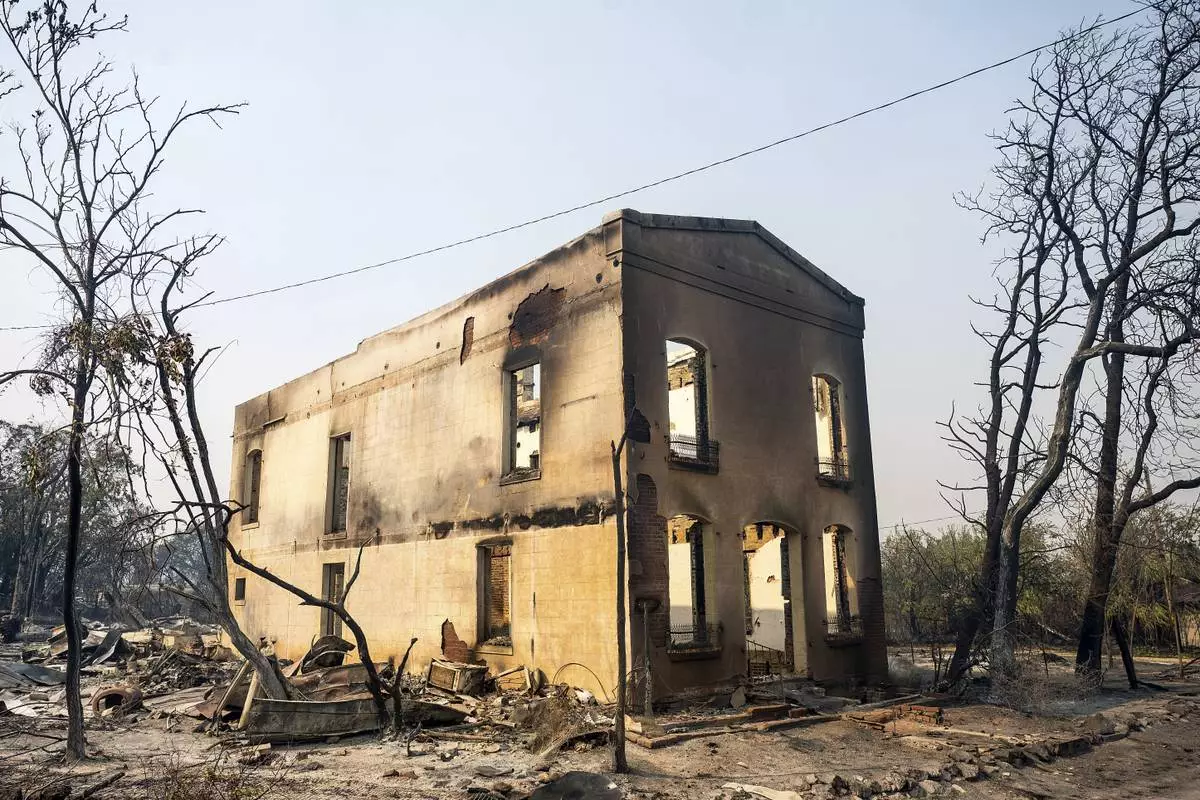
Exterior walls stand at a building destroyed by the TCU September Lightning Complex fire in the Chinese Camp community of Tuolumne County, Calif., on Wednesday, Sept. 3, 2025. (AP Photo/Noah Berger)
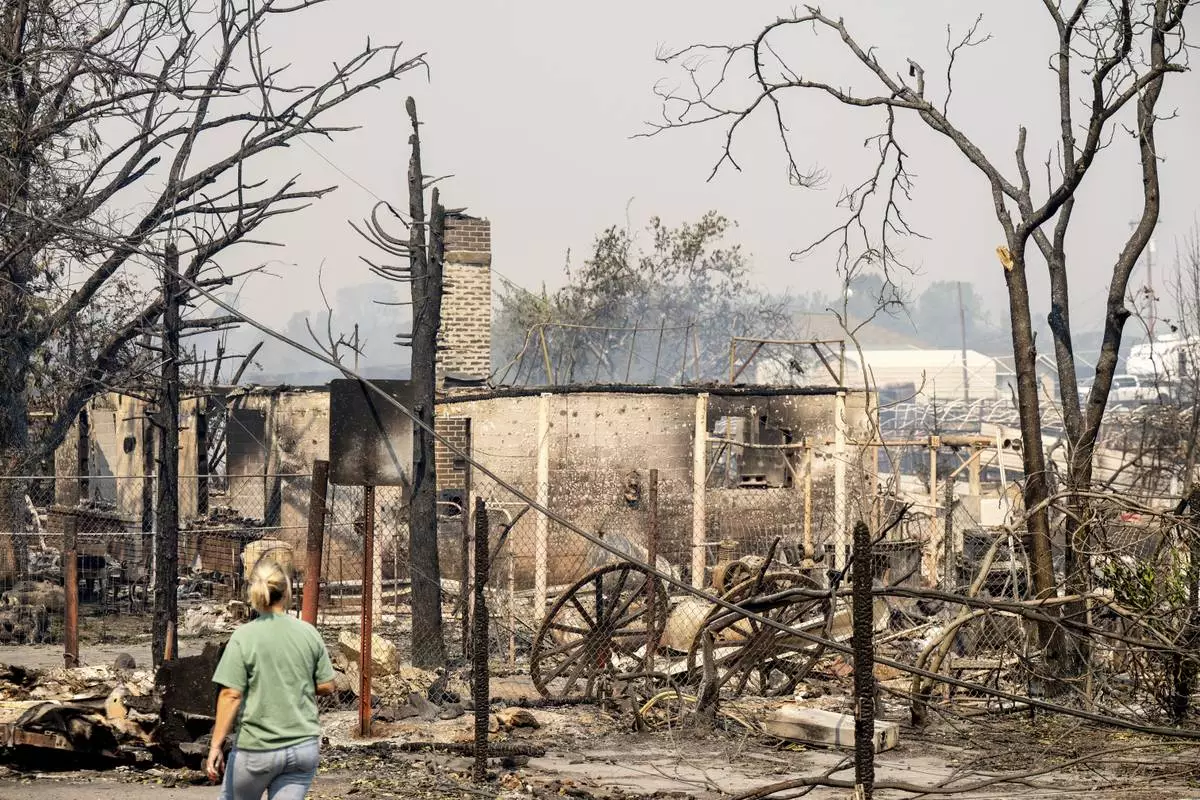
A resident passes a home destroyed by the TCU September Lightning Complex fire in the Chinese Camp community of Tuolumne County, Calif., on Wednesday, Sept. 3, 2025. (AP Photo/Noah Berger)
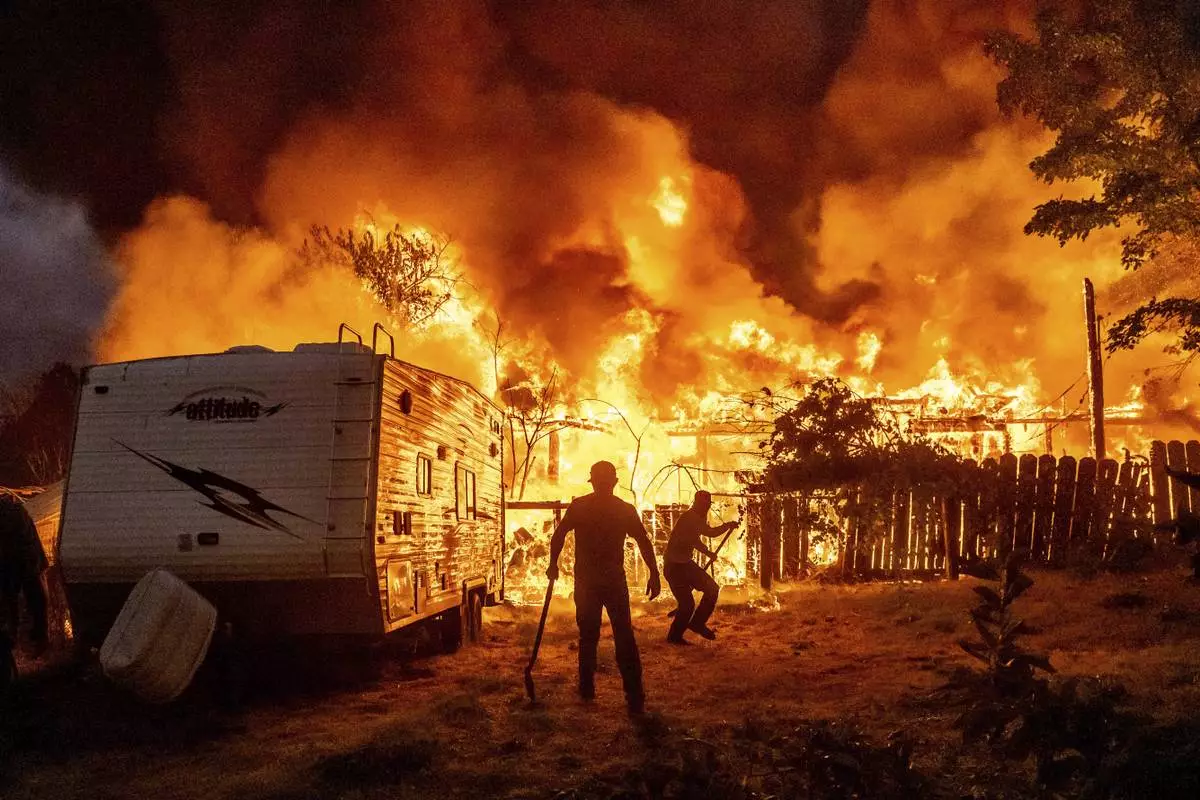
Residents work to stop flames from a burning home from spreading to a neighboring house as the 6-5 Fire burns through the Chinese Camp community of Tuolumne County, Calif., on Tuesday, Sept. 2, 2025. (AP Photo/Noah Berger)
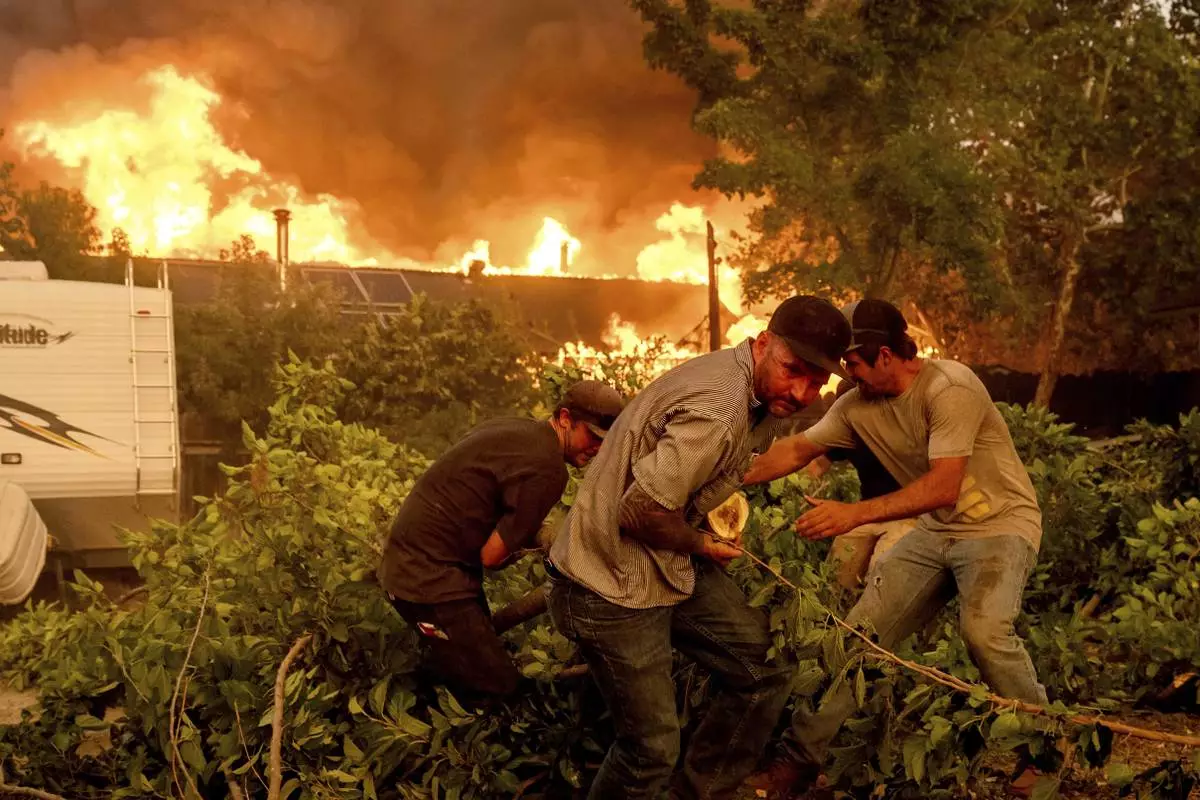
Residents work to stop flames from a burning home from spreading to a neighboring house as the 6-5 Fire burns through the Chinese Camp community of Tuolumne County, Calif., on Tuesday, Sept. 2, 2025. (AP Photo/Noah Berger)
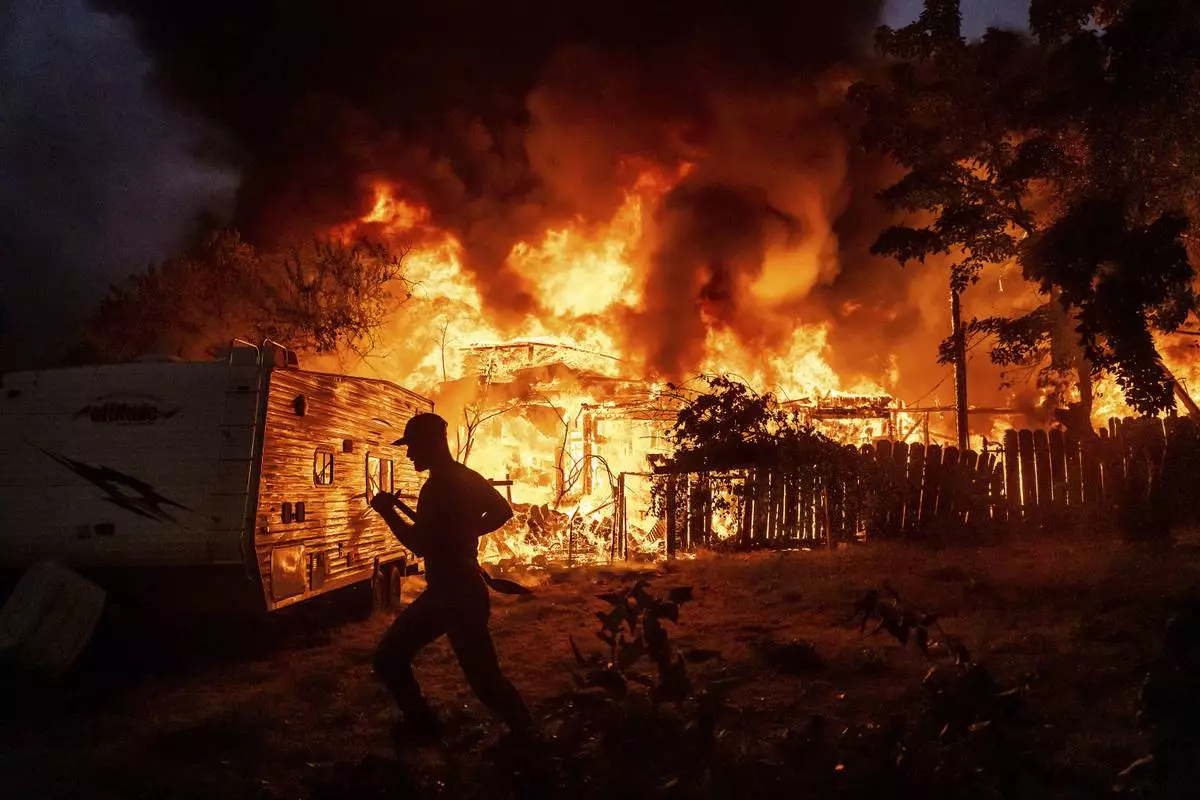
A residents works to stop flames from a burning home from spreading to a neighboring house as the 6-5 Fire burns through the Chinese Camp community of Tuolumne County, Calif., on Tuesday, Sept. 2, 2025. (AP Photo/Noah Berger)
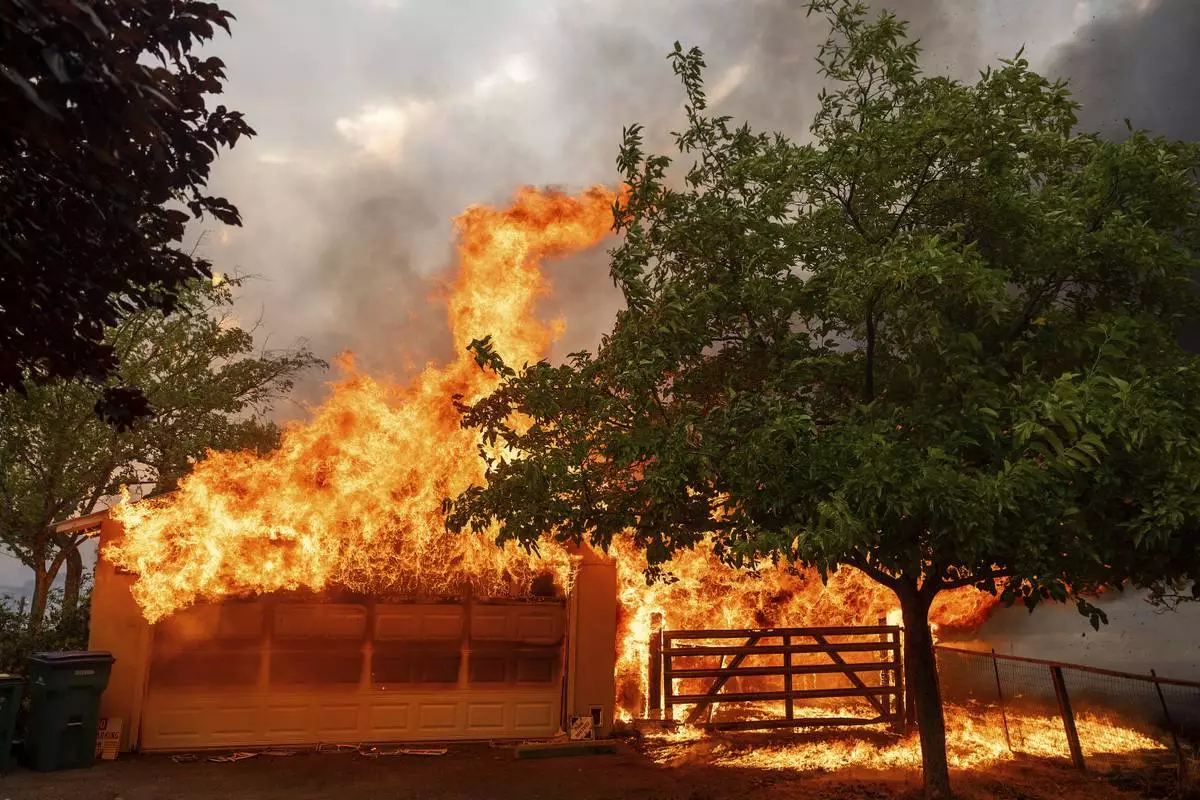
Flames consume a garage as the 6-5 Fire burns through the Chinese Camp community of Tuolumne County, Calif., on Tuesday, Sept. 2, 2025. (AP Photo/Noah Berger)
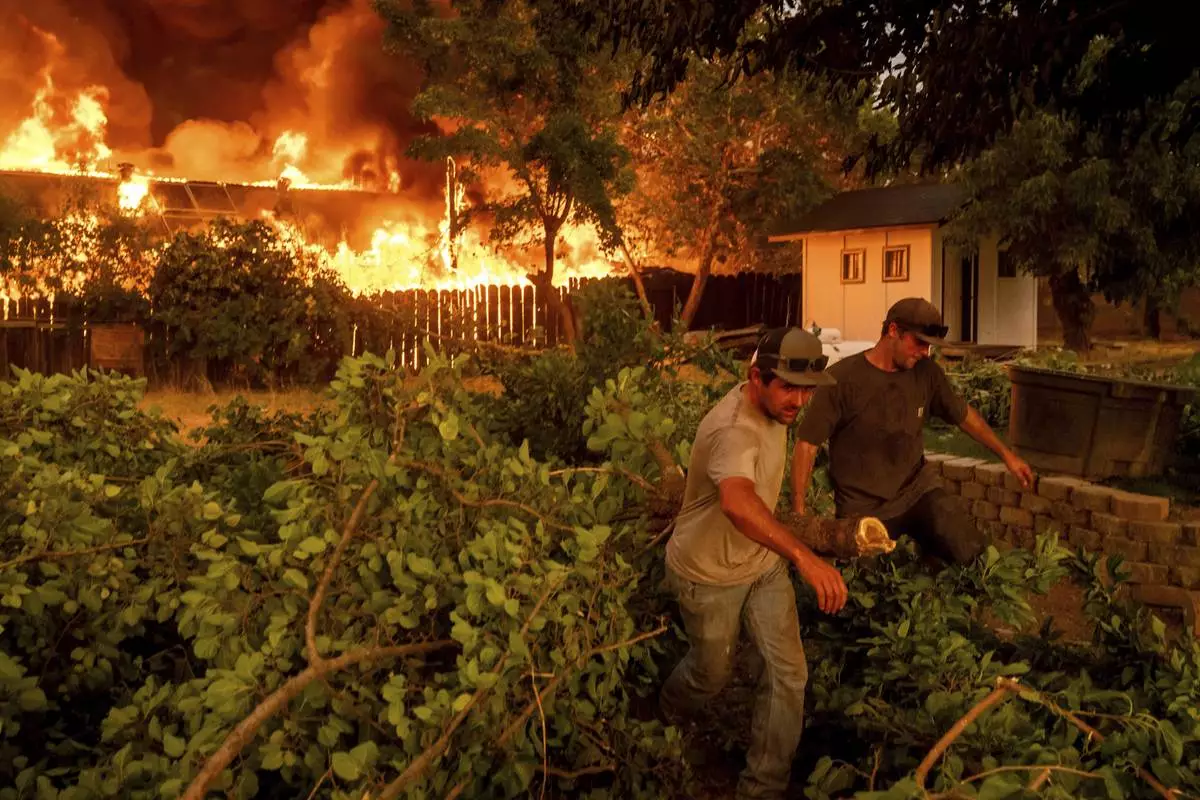
Layne Smith, left, clears vegetation to stop flames from spreading to his home as the 6-5 Fire burns through the Chinese Camp community of Tuolumne County, Calif., on Tuesday, Sept. 2, 2025. (AP Photo/Noah Berger)
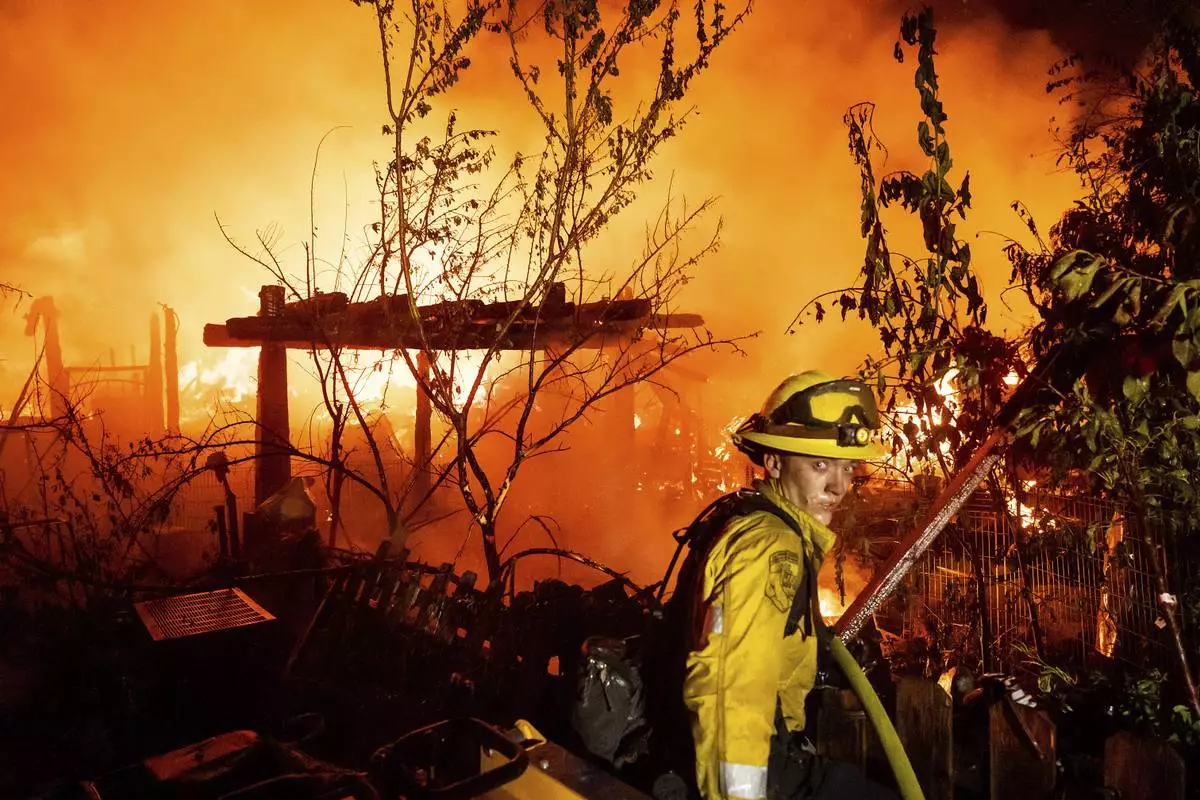
A firefighter battles the 6-5 Fire burning through the Chinese Camp community of Tuolumne County, Calif., on Tuesday, Sept. 2, 2025. (AP Photo/Noah Berger)