Skip to Content Facebook Feature Image

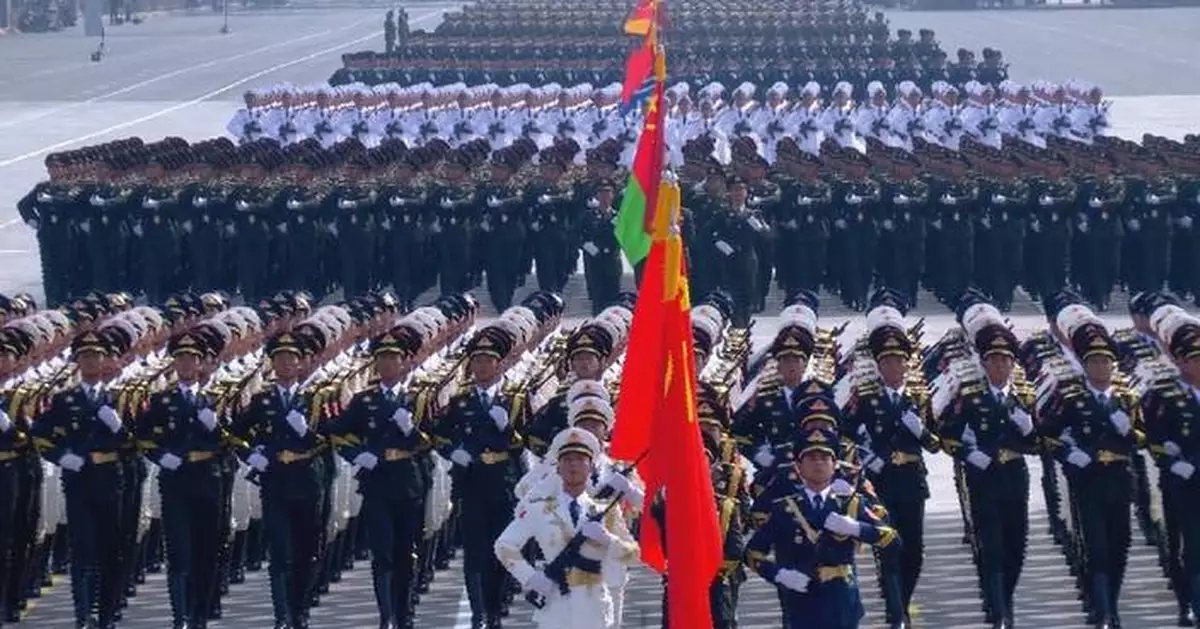
Foot formations featuring PLA's new military structure pass through Tian'anmen Square in V-Day military parade

China

Foot formations featuring PLA's new military structure pass through Tian'anmen Square in V-Day military parade
China

China

Foot formations featuring PLA's new military structure pass through Tian'anmen Square in V-Day military parade

2025-09-03 11:54 Last Updated At:15:57

Foot formations featuring the People's Liberation Army (PLA)'s new military structure of services and arms marched through Beijing's Tian'anmen Square in a grand military parade on Wednesday to mark the 80th anniversary of the victory in the Chinese People's War of Resistance Against Japanese Aggression and the World Anti-Fascist War.

The foot formations are composed of a total of 13 formations including guard of honor, four services and four arms, armed police force, reserve service forces, militia, and peacekeepers.

The PLA's new structure of services and arms passed through Tian'anmen Square following the formation of guard of honor. It was the first time the new military structure to appear in a military parade.

The new structure, comprising four services of the Ground Force, the Navy, the Air Force, and the Rocket Force, as well as four arms of the Aerospace Force, the Cyberspace Force, the Information Support Force, and the Joint Logistics Support Force, was formally established in 2024 as part of President Xi Jinping's military reform plan.

Three of the four arms, the Aerospace Force, the Cyberspace Force and the Information Support Force, made their debut in the military parade through the Tian'anmen Square.

The 70-minute parade consists of two parts, a military review by President Xi and a march-past of troops.

A total of 45 formations and echelons joined the grand parade.

The parade is organized under a wartime command system, and involves thousands of troops, over 100 aircraft and hundreds of ground armaments.

Japan officially surrendered on Sept 2, 1945, by signing the Instrument of Surrender. China has designated Sept 3 as Victory Day.

The Chinese People's War of Resistance Against Japanese Aggression was the first to break out and lasted the longest in the World Anti-Fascist War, resulting in over 35 million Chinese military and civilian casualties from 1931 to 1945.
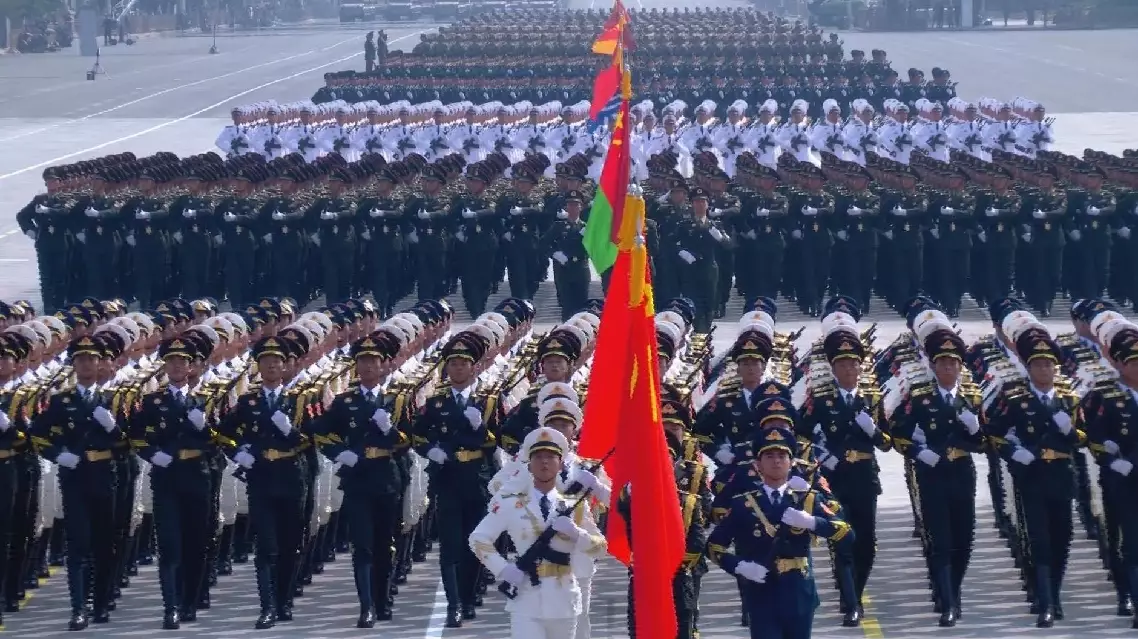
Foot formations featuring PLA's new military structure pass through Tian'anmen Square in V-Day military parade
Foot formations featuring PLA's new military structure pass through Tian'anmen Square in V-Day military parade
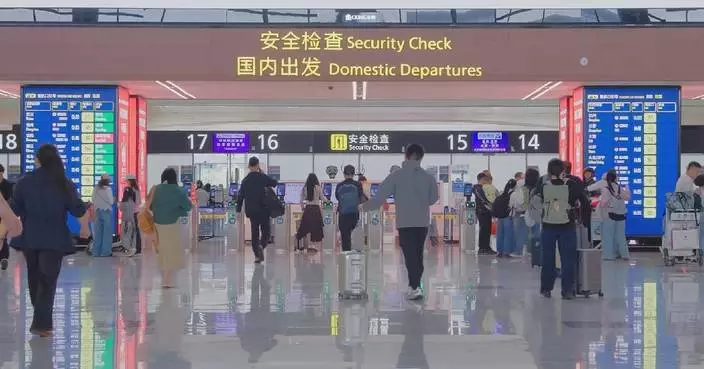
Geoeconomic confrontation is the leading short-term global threat in 2026, the World Economic Forum (WEF) warned in its Global Risks Report 2026 released on Wednesday ahead of its annual meeting in Davos, Switzerland.

The report ranks geoeconomic confrontation as the top risk for 2026, followed by interstate conflict, extreme weather, societal polarization, and misinformation and disinformation. It also identifies geoeconomic confrontation as the most severe risk over the next two years.

"I think if there is to be one key takeaway from the report, it's that we are entering an age of competition and this new competitive order is then shaping current global risks, but it is also shaping and to some extent hindering our ability to actually cope with them. That's really the key takeaway. If we take a look at, the number one risk both for 2026 and two years out, it's dual economic confrontation. But then if we look at the risks 10 years out. It's really the climate and environment related risks. All of these things require global cooperation and that's where we're seeing a big backsliding in this new age of competition," said Saadia Zahidi, managing director of the WEF.

Economic risks showed the largest increase in the two-year outlook, with concerns over economic downturns, inflation, rising debt and potential asset bubbles intensifying amid geoeconomic tensions, the report said.

Environmental risks remain the most severe overall, led by extreme weather, biodiversity loss and critical changes to Earth systems. The report noted that three-quarters of respondents expect a turbulent environmental outlook.

Risks related to adverse outcomes of artificial intelligence rose sharply, climbing from 30th in the two-year horizon to fifth in the 10-year outlook, reflecting concerns over impacts on labor markets, society and security.

The 21st edition of the report draws on views from more than 1,300 experts, policymakers and industry leaders.

The WEF's annual meeting will be held in Davos from Jan 19 to 23 and draw nearly 3,000 guests from more than 130 countries and regions to participate.

"So overall, we are starting to see this shift away from what have traditionally been the ways in which people have been able to cooperate. Now, that is not to say that any of this is a foregone conclusion. And I think that's a really important message around the risks report. None of this is set in stone. All of this is in the hands of leaders. Whether they choose to cooperate and invest in resilience or whether they do not. So that's really what we'll be focused on next week in Davos bringing leaders together under this overall theme of 'a spirit of dialogue' and trying to reestablish relationships, cooperation and trust. That's the fundamental," said Zahidi.

WEF warns of rising geoeconomic risks in 2026

WEF warns of rising geoeconomic risks in 2026

Recommended Articles