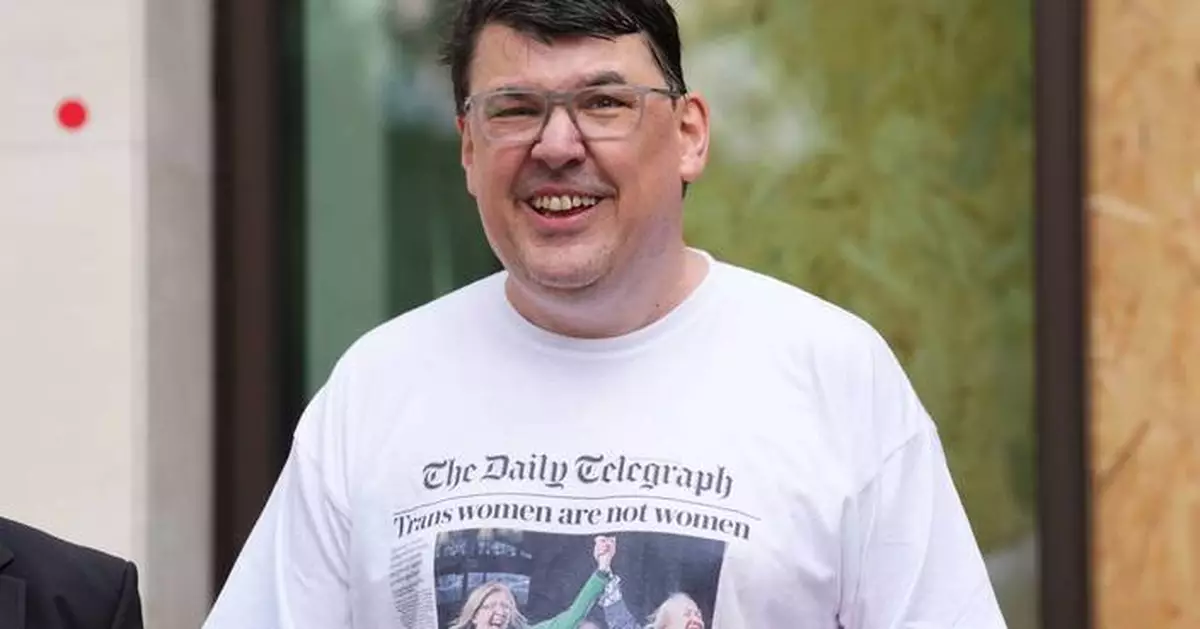
LONDON (AP) — The arrest of comedy writer Graham Linehan in Britain over social media posts about transgender people has sparked a debate about freedom of speech and its limits.
Supporters of Linehan say U.K. laws are stifling legitimate comment and creating what “Harry Potter” author J.K. Rowling –- like Linehan, a critic of trans activism — called “totalitarianism.”
Others argue that online abuse and hate speech have real-world impact and police have a duty to take it seriously. London's police chief said ambiguities in the law had left officers “in an impossible position.”
Linehan, the co-creator of beloved 1990s sitcom “Father Ted” and other shows including “The IT Crowd,” says he was detained by five armed police officers on Monday at Heathrow Airport as he returned from Arizona.
Linehan, who has been outspoken in his assertions that trans women are men, said on X in April that trans women were violent criminals if they used women-only facilities. He advocated people “punch” them if calling police and other measures failed to stop them.
The post came days after the head of the U.K’s Equality and Human Rights Commission said transgender women would be excluded from women-only spaces such as toilets, single-sex hospital wards and sports teams. The decision followed a ruling by Britain’s highest court that the terms “woman” and “man” refer to biological sex for antidiscrimination purposes.
Another post by Linehan referred to trans-rights protesters and said “I hate them.”
The Metropolitan Police force didn’t name Linehan but said it had arrested a man in his 50s at the airport on suspicion of inciting violence in posts on X.
Linehan, 57, said on Substack that he had been “arrested for jokes.” He said the questioning by police sent his blood pressure soaring and he was taken to a hospital before being released on bail, on condition he doesn't post on X.
Linehan is due to appear in a London court on Thursday in a separate case in which he is accused of harassing a transgender woman and damaging her phone. He denies the charge.
Supporters of Linehan condemned his arrest, saying it amounted to the policing of opinion.
“This is totalitarianism. Utterly deplorable,” Rowling wrote on X.
The tabloid Sun said there was “outrage” at the arrest of the “Father Ted genius.” The right-leaning Daily Mail asked “When did Britain become North Korea?”
Kemi Badenoch, leader of the opposition Conservative Party, said: “It’s time this government told the police their job is to protect the public, not monitor social media for hurty words.”
But Zack Polanski, leader of the Green Party, said the posts were “totally unacceptable” and the arrest seemed “proportionate."
The right to freedom of speech is protected under Britain’s Human Rights Act, but it has limits. Inciting violence is illegal, as is hate speech directed at people on grounds including race, gender, sexuality and religion.
As public debate has moved online, so has policing of it, with a growing number of arrests for comments on social media. After an outbreak of anti-immigrant violence in the summer of 2024, hundreds of people were prosecuted for participating in the rioting -– and others for things they’d posted online.
The best-known case is that of Lucy Connolly, a childminder married to a Conservative local councilor, who was sentenced to 31 months in prison for a tweet urging people to “set fire” to hotels housing asylum-seekers.
The Connolly case has become a major talking point for the political right. Critics of the center-left British government cite it as evidence of “two-tier policing” that treats right-wing and anti-immigration protesters more harshly than pro-Palestinian or Black Lives Matter demonstrators.
The supposed threat to free speech in the U.K. and elsewhere in Europe has been taken up by allies of President Donald Trump including Vice President JD Vance, who claimed in February that “basic liberties” in Britain are under threat.
The idea has been hammered home by hard-right Reform UK leader Nigel Farage, who testified to the House Judiciary Committee in Washington on Wednesday about “Europe’s Threat to American Speech and Innovation.”
Technology bosses including Elon Musk have criticized U.K. laws that make tech firms responsible for removing harmful content and use age verification to try to ensure children do not see pornography on their sites.
Farage told the congressional committee that Linehan's arrest was “a genuinely worrying, concerning, shocking situation.”
Not all the criticism comes from the right. Civil liberties campaigners say authorities have gone too far in limiting peaceful protest, citing a July decision to ban the group Palestine Action as a terrorist organization. Since then, hundreds of protesters have been arrested for holding signs supporting the group. More than 1,000 people have pledged to challenge the ban at another demonstration on Saturday.
Prime Minister Keir Starmer pushed back against criticism, saying Wednesday he is “very proud” of Britain’s long history of free speech. He has not commented directly on the Linehan case, but said “we must ensure the police focus on the most serious issues” such as knife crime and violence.
Metropolitan Police Commissioner Mark Rowley said officers should not be “policing toxic culture wars debates” and called for “greater clarity and common sense” in the law.
“Most reasonable people would agree that genuine threats of physical violence against an identified person or group should be acted upon by officers,” Rowley said.
“But when it comes to lesser cases, where there is ambiguity in terms of intent and harm, policing has been left between a rock and a hard place,” he added.
Health Secretary Wes Streeting acknowledged Wednesday that people are “anxious about some of the cases we’ve seen” and suggested the government could change the law.
“The police enforce the laws of the land that we as legislators provide,” Streeting told Times Radio. “So if we’re not getting the balance right, then that’s something that we all have to look at and consider.”
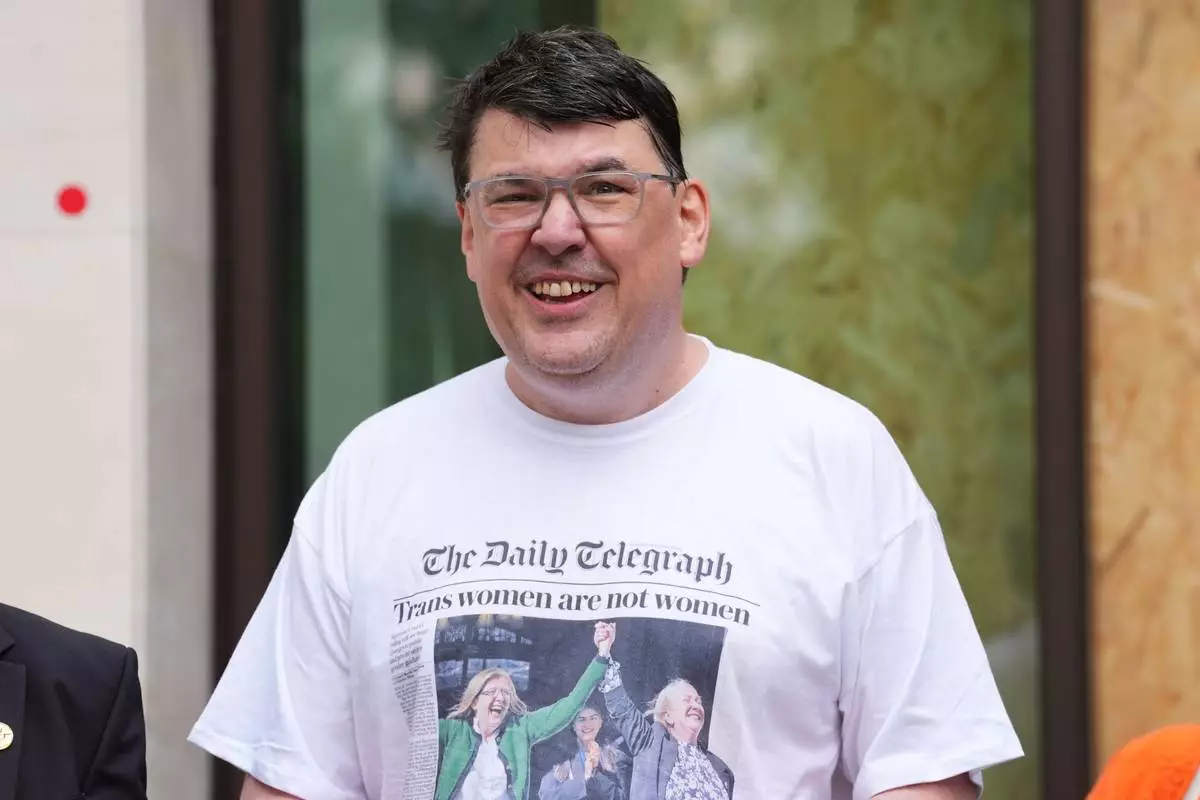
This May 12, 2025 photo shows Graham Linehan in London. (Lucy North/PA via AP)
MINNEAPOLIS (AP) — A federal officer shot a person in the leg in Minneapolis after being attacked with a shovel and broom handle while trying to make an arrest Wednesday, federal officials said.
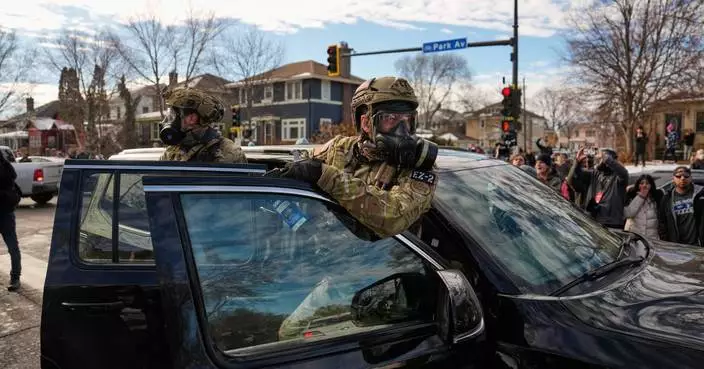
Smoke filled the street near the site of the shooting as federal officers and protesters squared off. A group of officers wearing gas masks and helmets fired tear gas and grenades into a small crowd while protesters threw snowballs and chanted, “Our streets.”
Such scenes have become common on the streets of Minneapolis since an immigration agent fatally shot Renee Good on Jan. 7. Agents have yanked people from cars and homes and been confronted by angry bystanders who bare demanding that officers pack up and leave.
The Department of Homeland Security said in a statement on the social media platform X that federal law enforcement officers stopped a person from Venezuela who was in the U.S. illegally. The person drove away and crashed into a parked car before taking off on foot, DHS said.
After officers reached the person, two other people arrived from a nearby apartment and all three started attacking the officer, according to DHS.
“Fearing for his life and safety as he was being ambushed by three individuals, the officer fired a defensive shot to defend his life,” DHS said.
The two people who came out of the apartment are in custody, it said.
The shooting took place about 4.5 miles (7.2 kilometers) north of where Good was killed.
Earlier Wednesday, a judge gave the Trump administration time to respond to a request to suspend its immigration crackdown in Minnesota, while the Pentagon looked for military lawyers to join what has become a chaotic law enforcement effort in the state.
“What we need most of all right now is a pause. The temperature needs to be lowered," state Assistant Attorney General Brian Carter said during the first hearing in a lawsuit filed by Minnesota and the cities of Minneapolis and St. Paul.
Local leaders say the government is violating free speech and other constitutional rights with the surge of law enforcement. U.S. District Judge Katherine Menendez promised to keep the case “on the front burner” and gave the U.S. Justice Department until Monday to file a response to a request for a restraining order.
The judge said these are "grave and important matters,” and that there are few legal precedents to apply to some of the key points in the case.
Justice Department attorney Andrew Warden suggested the approach set by Menendez was appropriate.
The judge is also handling a separate lawsuit challenging the tactics used by Immigration and Customs Enforcement and other federal officers when they encounter protesters and observers. A decision could be released this week.
During a televised speech Wednesday evening, Gov. Tim Walz described Minnesota as being in chaos, saying what's happening in the state “defies belief.”
“Let’s be very, very clear, this long ago stopped being a matter of immigration enforcement," he said. "Instead, it’s a campaign of organized brutality against the people of Minnesota by our own federal government.”
Walz added that “accountability” will be coming through the courts.
The Department of Homeland Security says it has made more than 2,000 arrests in the state since early December and is vowing to not back down. The Pentagon is preparing to send military lawyers to Minneapolis to assist.
CNN, citing an email circulating in the military, says Defense Secretary Pete Hegseth is asking the branches to identify 40 lawyers known as judge advocate general officers or JAGs, and 25 of them will serve as special assistant U.S. attorneys in Minneapolis.
Pentagon spokesperson Kingsley Wilson appeared to confirm the CNN report by posting it on X with a comment that the military “is proud to support” the Justice Department.
The Pentagon did not immediately respond to emails from The Associated Press seeking more details.
It’s the latest step by the Trump administration to dispatch military and civilian attorneys to areas where federal immigration operations are taking place. The Pentagon last week sent 20 lawyers to Memphis, U.S. Attorney D. Michael Dunavant said.
Mark Nevitt, an associate professor at Emory University School of Law and a former Navy JAG, said there's concern that the assignments are taking lawyers away from the military justice system.
“There are not many JAGs but there are over one million members of the military, and they all need legal support,” he said.
Jonathan Ross, the Immigration and Customs Enforcement officer who killed Good, suffered internal bleeding to his torso during the encounter, a Homeland Security official told The Associated Press.
The official spoke to AP on condition of anonymity in order to discuss Ross’ medical condition. The official did not provide details about the severity of the injuries, and the agency did not respond to questions about the extent of the bleeding, exactly how he suffered the injury, when it was diagnosed or his medical treatment.
There are many causes of internal bleeding, and they vary in severity from bruising to significant blood loss. Video from the scene showed Ross and other officers walking without obvious difficulty after Good was shot and her Honda Pilot crashed into other vehicles.
She was killed after three ICE officers surrounded her SUV on a snowy street a few blocks from her home.
Bystander video shows one officer ordering Good to open the door and grabbing the handle. As the vehicle begins to move forward, Ross, standing in front, raises his weapon and fires at least three shots at close range. He steps back as the SUV advances and turns.
Homeland Security Secretary Kristi Noem has said Ross was struck by the vehicle and that Good was using her SUV as a weapon — a self-defense claim that has been deeply criticized by Minnesota officials.
Chris Madel, an attorney for Ross, declined to comment on any injuries.
Good’s family, meanwhile, has hired a law firm, Romanucci & Blandin, that represented George Floyd’s family in a $27 million settlement with Minneapolis. Floyd, who was Black, died after a white police officer pinned his neck to the ground in the street in May 2020.
The firm said Good was following orders to move her car when she was shot. It said it would conduct its own investigation and publicly share what it learns.
“They do not want her used as a political pawn,” the firm said, referring to Good and her family, “but rather as an agent of peace for all.”
Waving signs reading “Love Melts ICE” and “DE-ICE MN,” hundreds of teenagers left school in St. Paul and marched in freezing temperatures to the state Capitol for a protest and rally.
The University of Minnesota, meanwhile, informed its 50,000-plus students that there could be online options for some classes when the new term starts next week. President Rebecca Cunningham noted that “violence and protests have come to our doorstep.” The campus sits next to the main Somali neighborhood in Minneapolis.
Associated Press reporters Julie Watson in San Diego, California; Rebecca Santana in Washington, D.C.; Ed White in Detroit; Giovanna Dell’Orto in Minneapolis; Graham Lee Brewer in Oklahoma City, Oklahoma; and Hallie Golden in Seattle contributed.
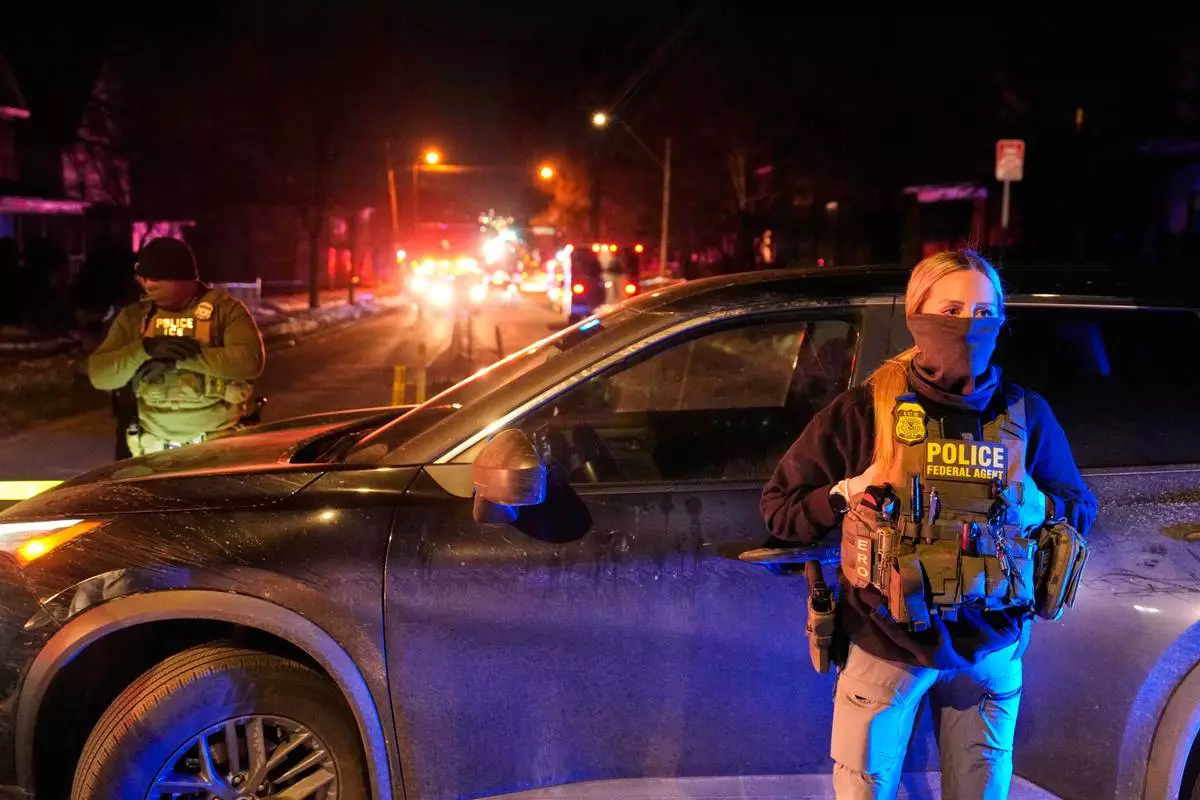
Federal immigration officers at the scene of a reported shooting Wednesday, Jan. 14, 2026, in Minneapolis. (AP Photo/John Locher)
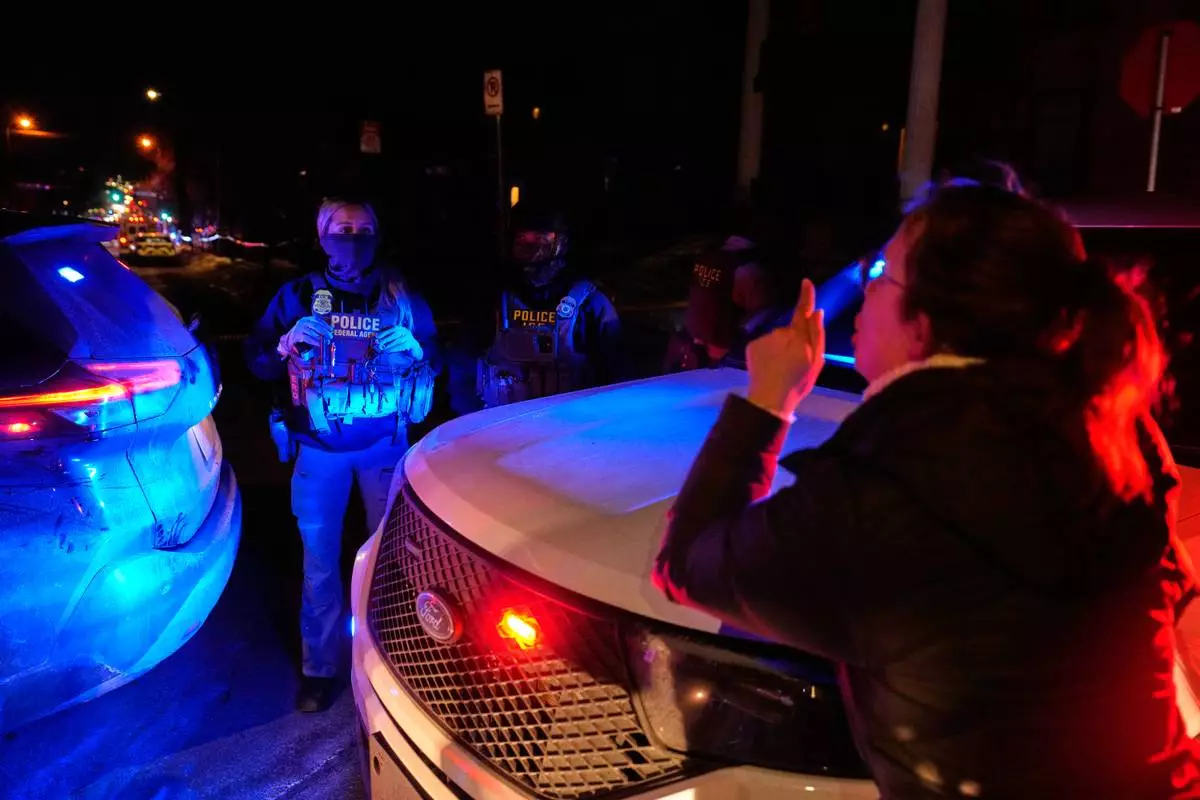
A woman confronts a federal immigration officer at the scene of a reported shooting Wednesday, Jan. 14, 2026, in Minneapolis. (AP Photo/John Locher)
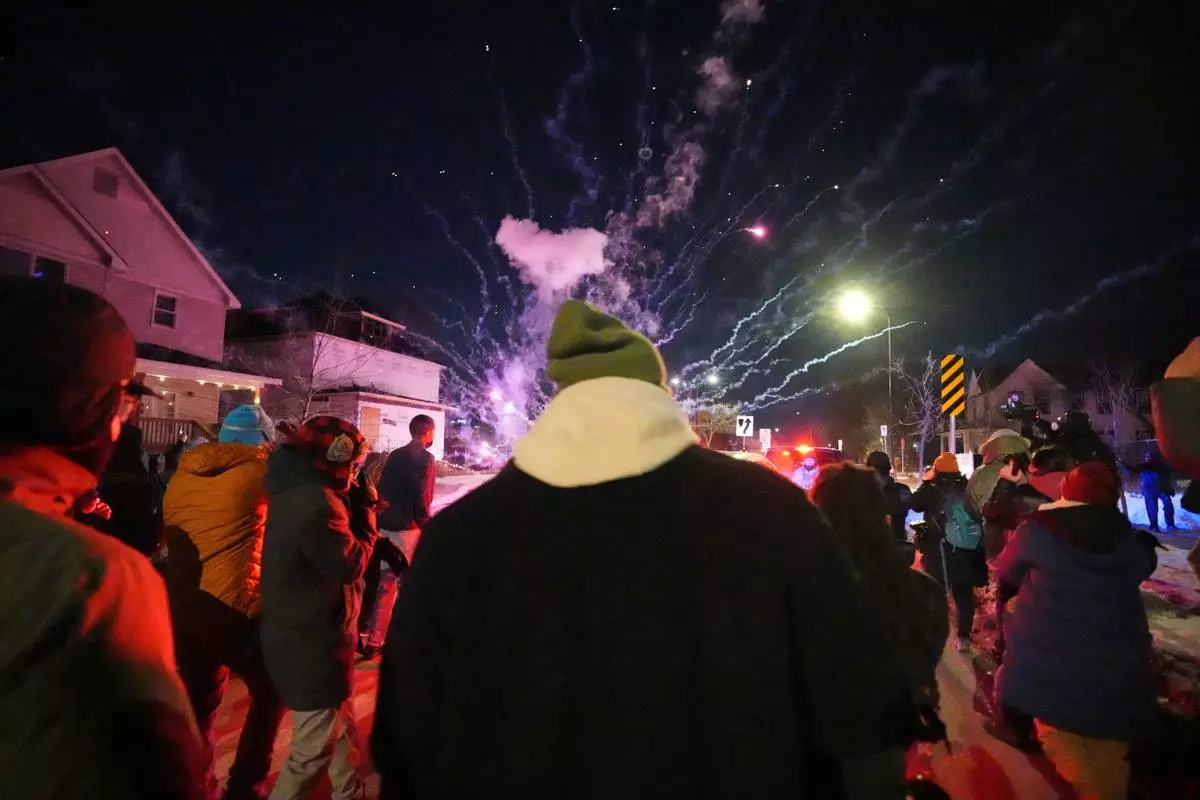
People react after a firework was set off near the scene of a reported shooting Wednesday, Jan. 14, 2026, in Minneapolis. (AP Photo/Abbie Parr)
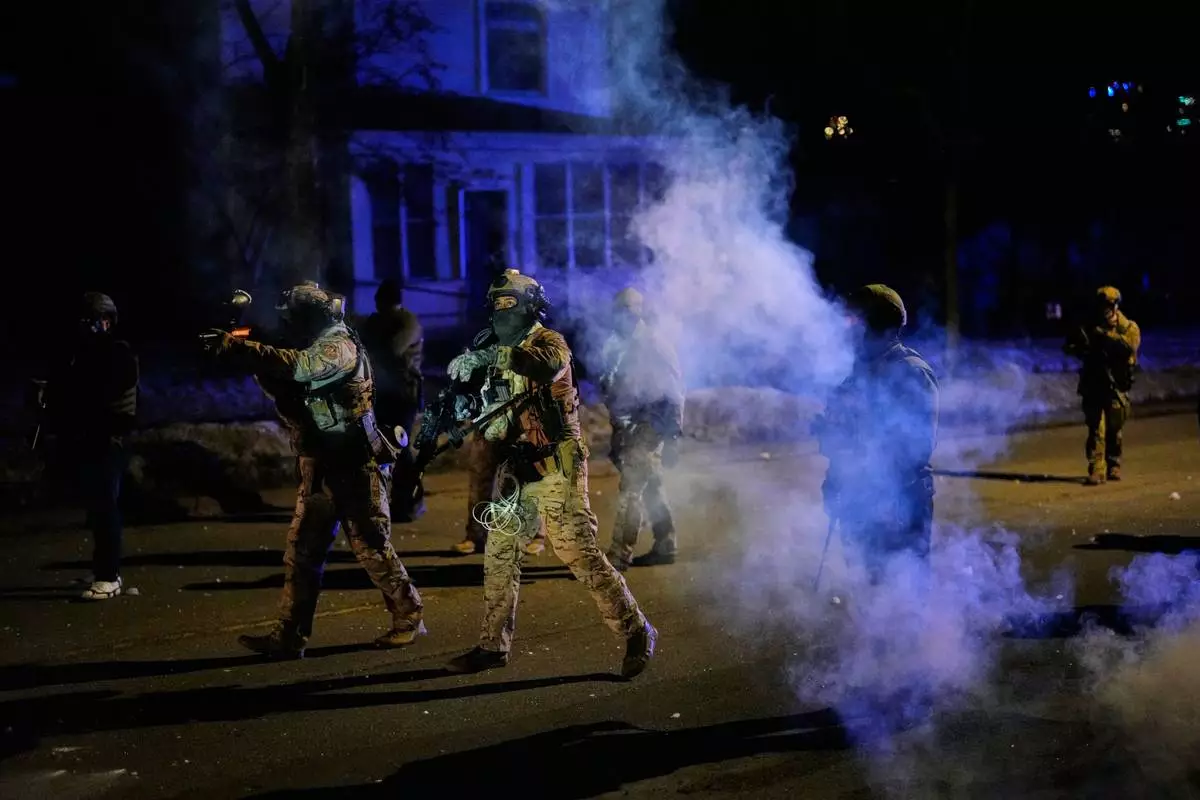
Federal immigration officers shoot pepper balls as tear gas is deployed at the scene of a reported shooting Wednesday, Jan. 14, 2026, in Minneapolis. (AP Photo/John Locher)
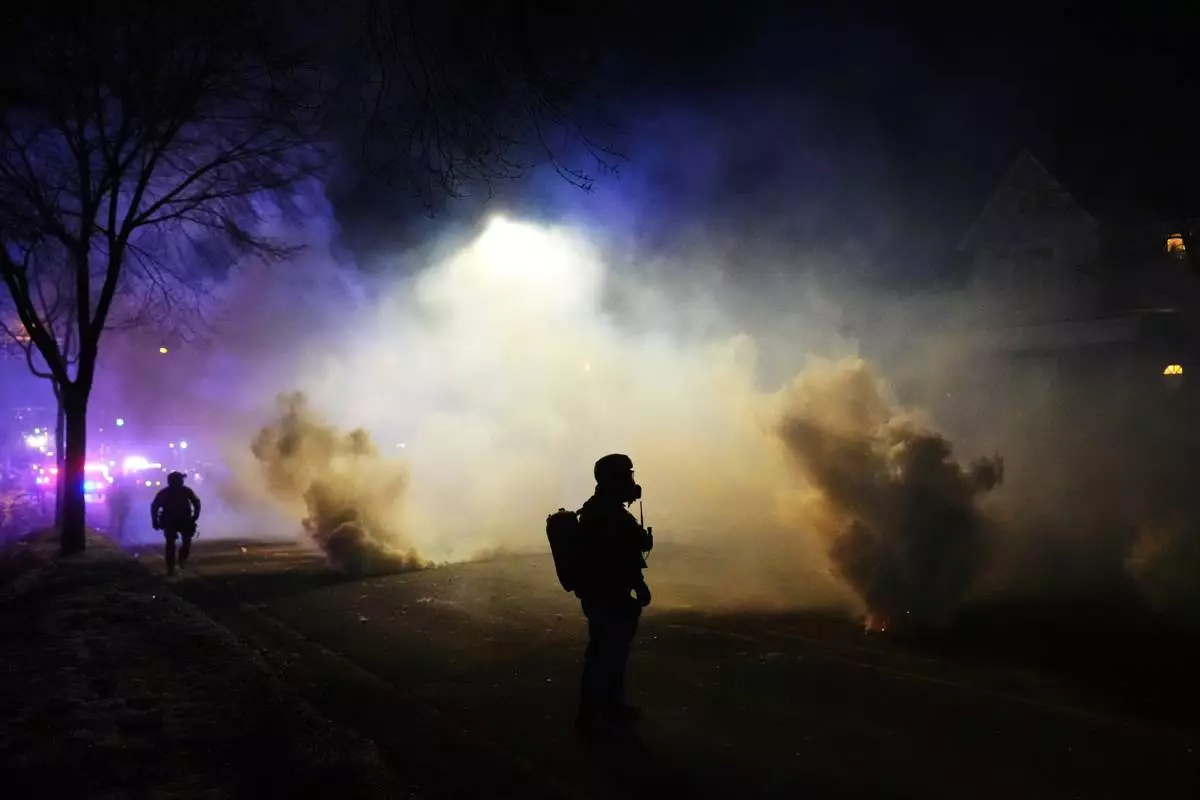
Law enforcement officers stand amid tear gas at the scene of a reported shooting Wednesday, Jan. 14, 2026, in Minneapolis. (AP Photo/Adam Gray)
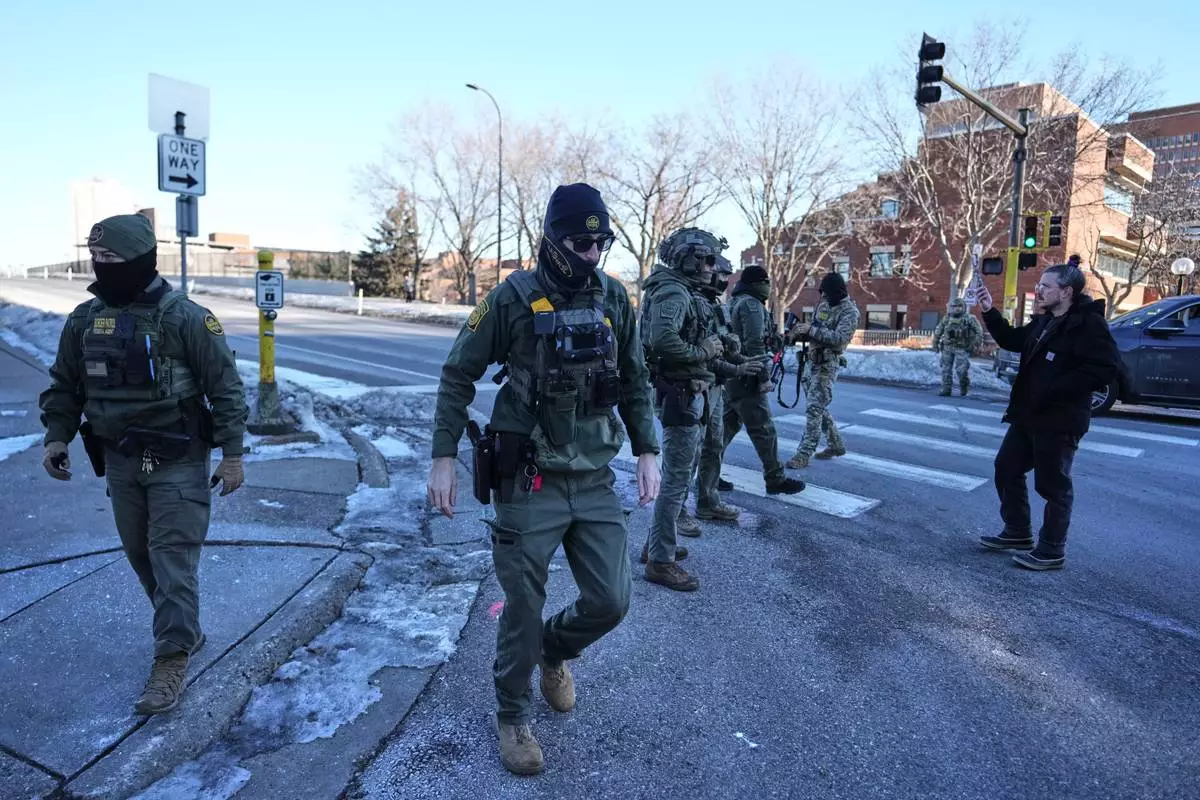
Federal immigration officers are seen Wednesday, Jan. 14, 2026, in Minneapolis. (AP Photo/Abbie Parr)
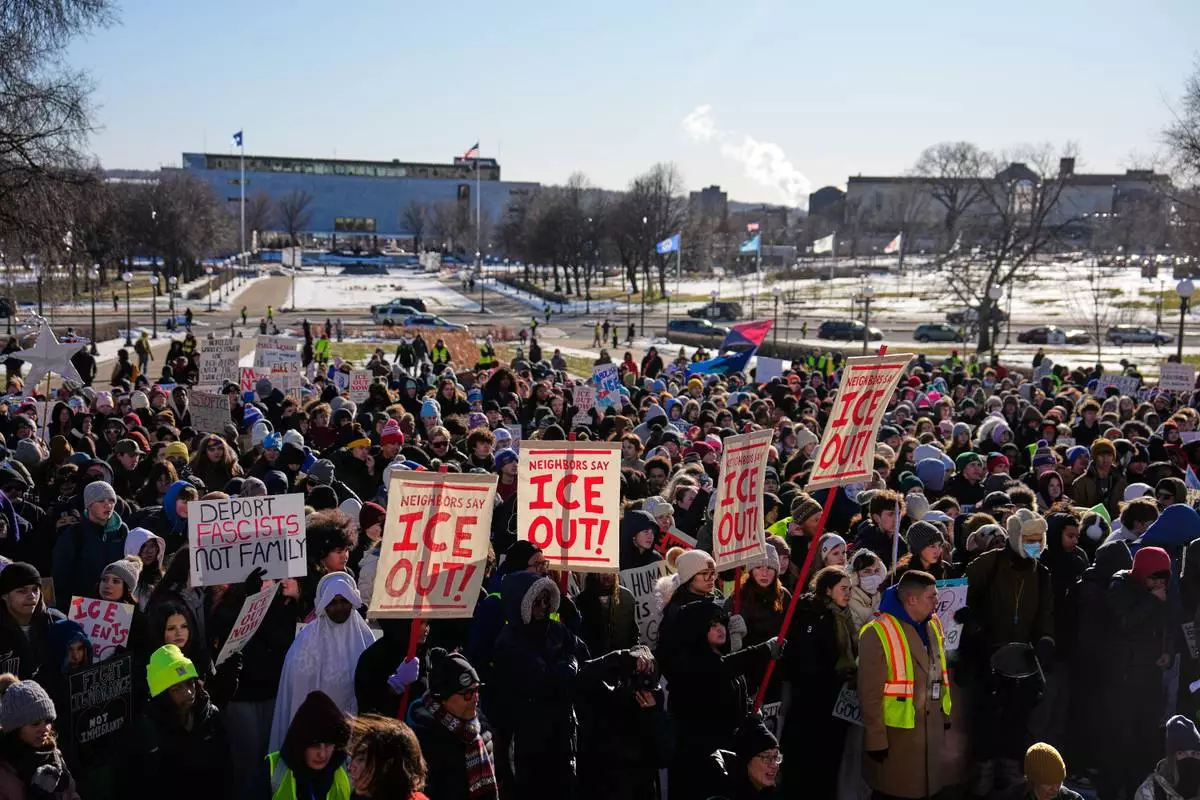
Hundreds of protesters gather in front of the Minnesota State Capitol in response to the death of Renee Good, who was fatally shot by an ICE officer last week, Wednesday, Jan. 14, 2026, in St. Paul, Minn. (AP Photo/John Locher)
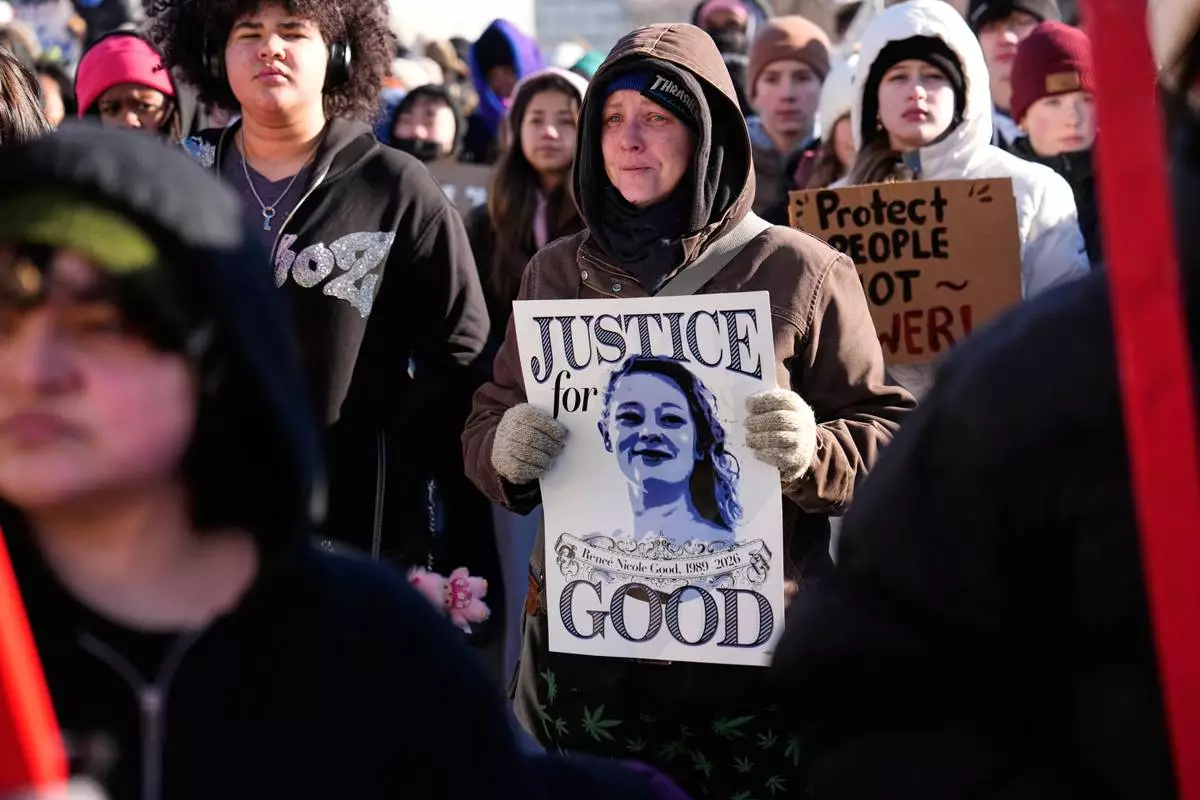
Protesters gather in front of the Minnesota State Capitol in response to the death of Renee Good, who was fatally shot by an ICE officer last week, Wednesday, Jan. 14, 2026, in St. Paul, Minn. (AP Photo/John Locher)
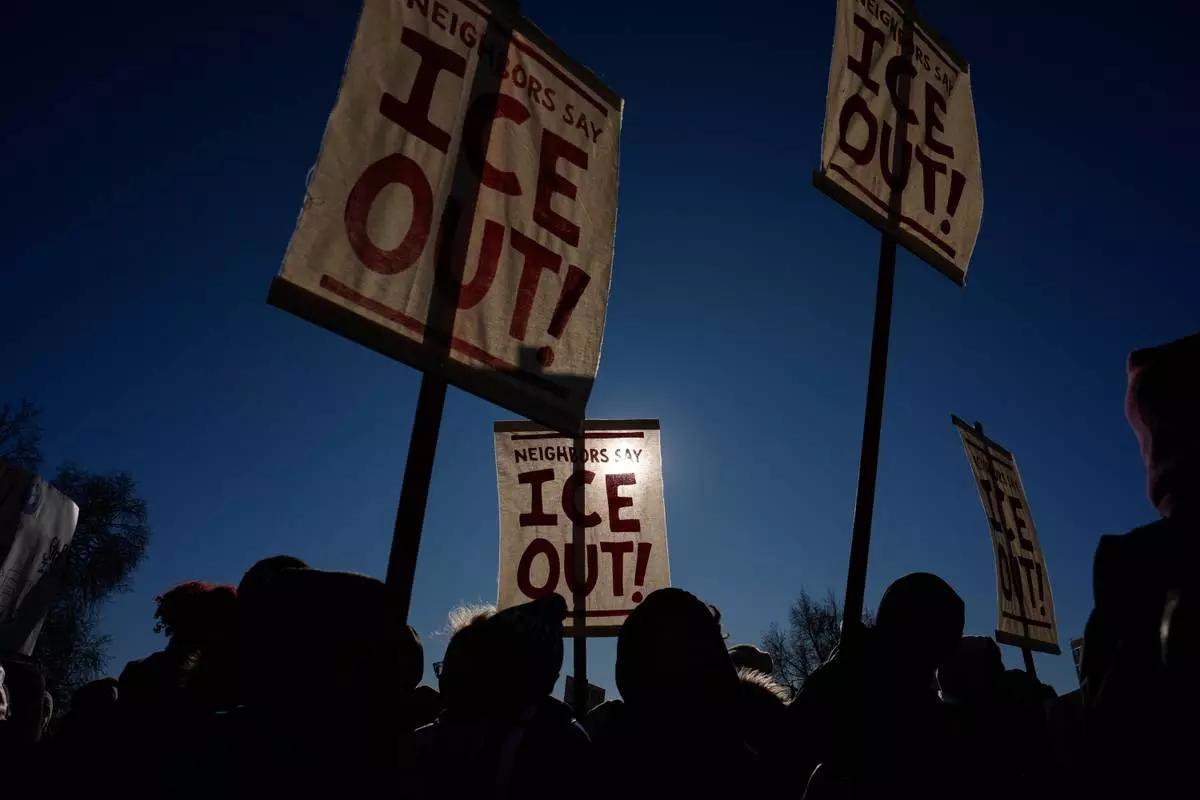
Protesters gather in front of the Minnesota State Capitol in response to the death of Renee Good, who was fatally shot by an ICE officer last week, Wednesday, Jan. 14, 2026, in St. Paul, Minn. (AP Photo/John Locher)
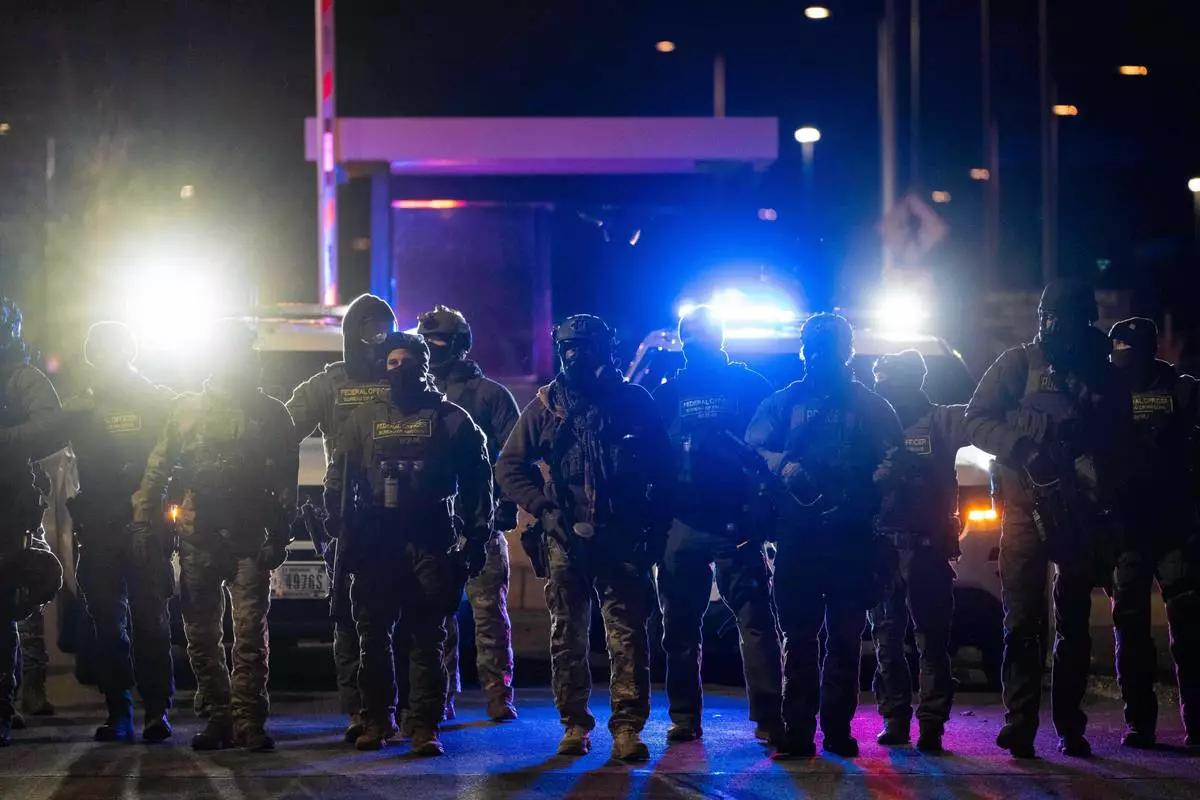
Federal officers stand guard after detaining people outside of Bishop Henry Whipple Federal Building, Tuesday, Jan. 13, 2026, in Minneapolis. (AP Photo/Adam Gray)
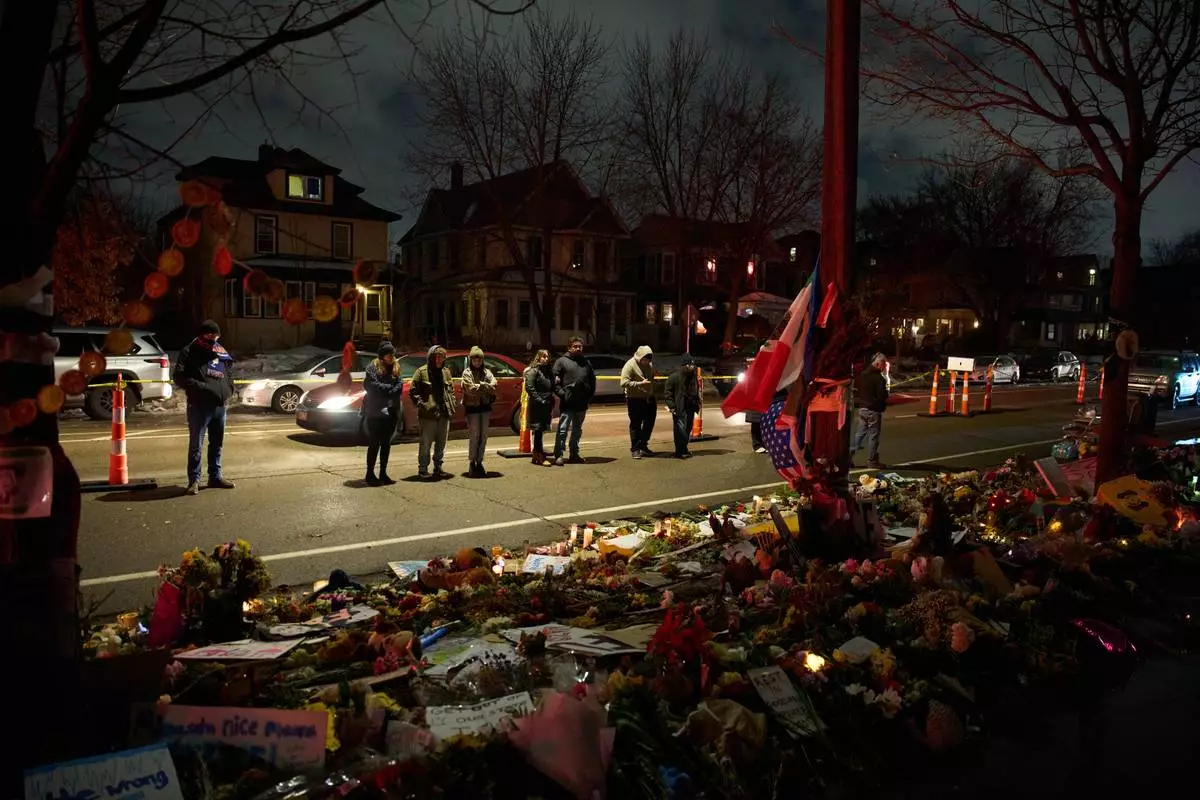
People visits a makeshift memorial for Renee Good, who was fatally shot by an ICE officer last week, Tuesday, Jan. 13, 2026, in Minneapolis. (AP Photo/John Locher)
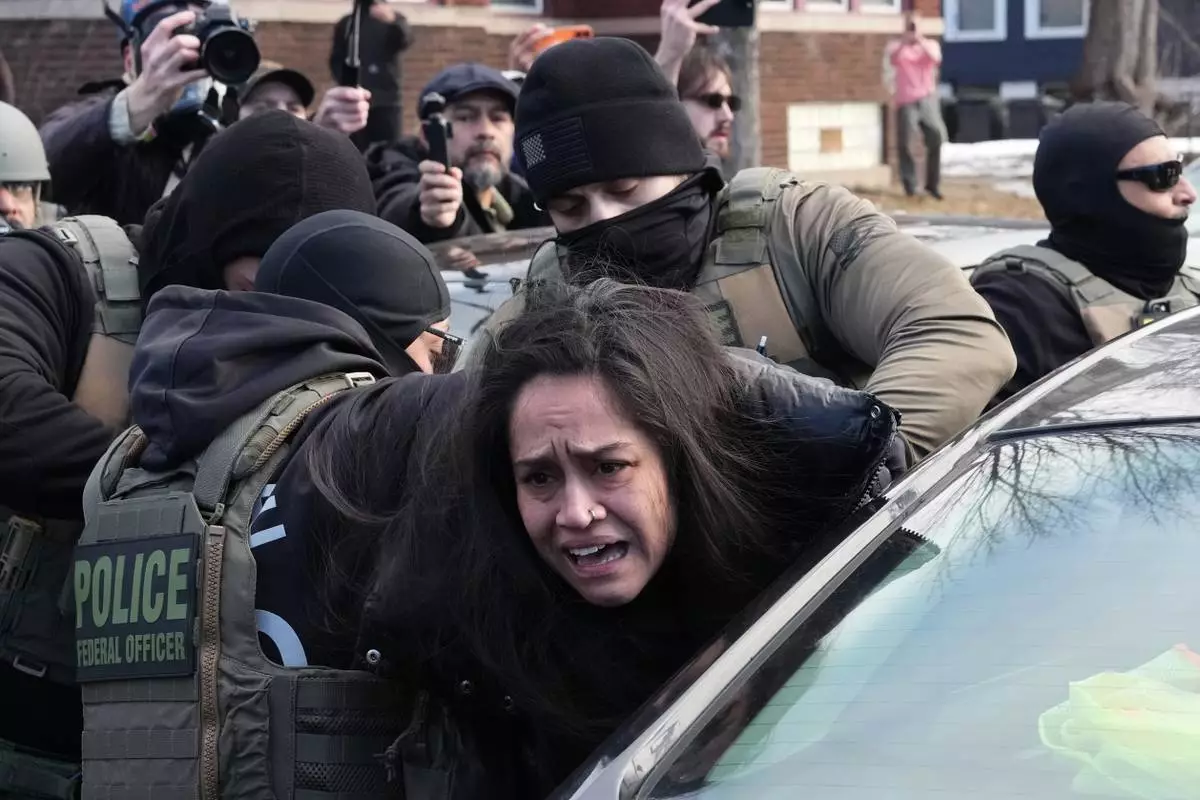
A person is detained by federal agents near the scene where Renee Good was fatally shot by an ICE officer last week, Tuesday, Jan. 13, 2026, in Minneapolis. (AP Photo/Adam Gray)