Skip to Content Facebook Feature Image

GOP Sen. Cassidy, facing primary challengers, proceeds cautiously on CDC and Robert F. Kennedy Jr.

News

GOP Sen. Cassidy, facing primary challengers, proceeds cautiously on CDC and Robert F. Kennedy Jr.
News

News

GOP Sen. Cassidy, facing primary challengers, proceeds cautiously on CDC and Robert F. Kennedy Jr.

2025-09-04 06:56 Last Updated At:07:00

WASHINGTON (AP) — Republican Sen. Bill Cassidy's support was crucial to Robert F. Kennedy Jr.’s confirmation as Secretary of Health and Human Services. With firings and resignations at the Centers for Disease Control and Prevention now prompting concern about a leadership breakdown at the nation’s leading public health agency, the Louisiana lawmaker and physician is in a tight spot.

The two-term senator — who publicly expressed concern about Kennedy’s anti-vaccination positions before voting to confirm him — has worried aloud about “serious allegations” at the CDC and has called for oversight, without blaming Kennedy.

But he was choosing his words carefully as he returned to Washington this week after the Senate’s August recess and was preparing to question Kennedy during a finance committee meeting scheduled for Thursday. Cassidy told reporters he hadn’t yet decided what to ask Kennedy, saying, “I want to carefully frame the question.”

The tension underscores competing pressures: A senator with oversight responsibility for a massive federal agency and a Republican seeking reelection next year. Cassidy, who voted to convict Donald Trump after his 2021 impeachment trial, already has a cool relationship with the president. And his reelection chances would worsen were Trump to oppose him publicly.

“He’s in a pickle,” Republican state Sen. Alan Seabaugh said of Cassidy, “And it’s a box I don’t think he can get out of.”

The most recent turmoil at the CDC was the forced departure of Susan Monarez, a longtime government scientist who had been the CDC director for less than a month. Her lawyers said she refused “to rubber-stamp unscientific, reckless directives and fire dedicated health experts.” It came amid Kennedy's efforts to reshape the nation’s vaccine policies to match his long-standing suspicions about the safety and effectiveness of long-established shots.

Last month, Cassidy voiced concern after Kennedy's June firing of the CDC's Advisory Committee on Immunization Practices. Cassidy had noted “serious allegations” about the outside group of experts that has been reshaped by Kennedy, a leading anti-vaccine activist before becoming the nation’s top health official.

Cassidy was asked Tuesday about what information he'll seek from Kennedy at Thursday's hearing.

“I want to carefully frame the question. The issue is about children’s health. There’s rumor and allegations that children’s health, which is at issue here, might be in danger by some of the decisions that are purported to be made,” Cassidy said in the Capitol.

“I don’t know what’s true. I’m not quite sure what I just told you is exactly how to phrase it. I know that we need to get there,” he said.

On allegations from those who resigned that Kennedy put politics above science, Cassidy was equally careful.

“Shouldn’t we find that out. You don’t presuppose they are right. You don’t presuppose they are wrong,” he cautioned. “You go at it in a way in which both sides get a chance to say, and then we can judge.”

Cassidy’s public concern about immunization policy recalled his hesitation to vote to confirm Kennedy in February.

Cassidy told Kennedy during his January confirmation hearing that he was “struggling” with his nomination. “Your past, undermining confidence in vaccines with unfounded or misleading arguments, concerns me,” he told Kennedy during his confirmation hearing.

Still, Cassidy voted for Kennedy, later describing intense conversations with the nominee and Vice President JD Vance that yielded “serious commitments” from the administration.

Already facing a crowded field of Republican primary challengers, Cassidy is operating with little wiggle room.

A group supporting Cassidy's candidacy has been airing ads promoting the senator's support for Trump's agenda, while Trump himself, famous for publicly condemning others who have voted to convict him, has been quiet.

Trump is treating Cassidy friendlier than others who have publicly opposed him previously because the president needs the vote in a narrowly Republican-controlled Senate, Louisiana state Rep. Mike Bayham said.

“He would be in a lot more hot water had he defied Trump. Had he torpedoed RFK, Trump would not be neutral but would be working overtly against Bill,” Bayham said. “Cassidy, for his own political self-interest, has to vote Trump’s way, and Trump doesn’t even have to say thank you. The thanks is his silence.”

Trump has indeed been quiet as a field of Republicans has begun to gather to challenge Cassidy in what would be the state's first closed party primary in 16 years, in light of legislation enacted this year. Louisiana State Treasurer John Fleming, state Sen. Blake Miguez, and Public Service Commissioner Eric Skrmetta have announced they are running for the seat.

Republican Gov. Jeff Landry has discussed with Trump the idea of U.S. Rep. Julia Letlow, who is considering a Senate campaign, as a possible Cassidy challenger.

Cassidy announced his candidacy for a third term last month, and reported having $9 million in his campaign account, while a super PAC supporting him reported having $2.5 million, a total far more than his combined competition.

Senate Majority Leader John Thune, a South Dakota Republican, and South Carolina Sen. Tim Scott, chairman of the National Republican Senatorial Committee, endorsed Cassidy for reelection last month.

But with a newly enacted election system, where only registered Republicans and politically unaffiliated voters can participate in the GOP primary, Cassidy will likely have a tougher time than he would have under the former system.

For the past 16 years, congressional candidates from all parties seeking the same office ran on the same ballot regardless of party affiliation. In these so-called jungle primaries, only a candidate who received 50% of the vote would win the office outright. If no one reached the threshold, the top two finishers would face each other in a runoff.

The partisan primary will create a more GOP-heavy electorate for the Senate primary in a state Trump carried with 60 percent of the vote in 2024.

“Cassidy has put himself in a situation for which there are really no wins,” Scott McKay, a Louisiana Republican who runs a conservative news website. “In all this, what he hasn't bought is the goodwill of Trump voters.”

Beaumont reported from Des Moines, Iowa.
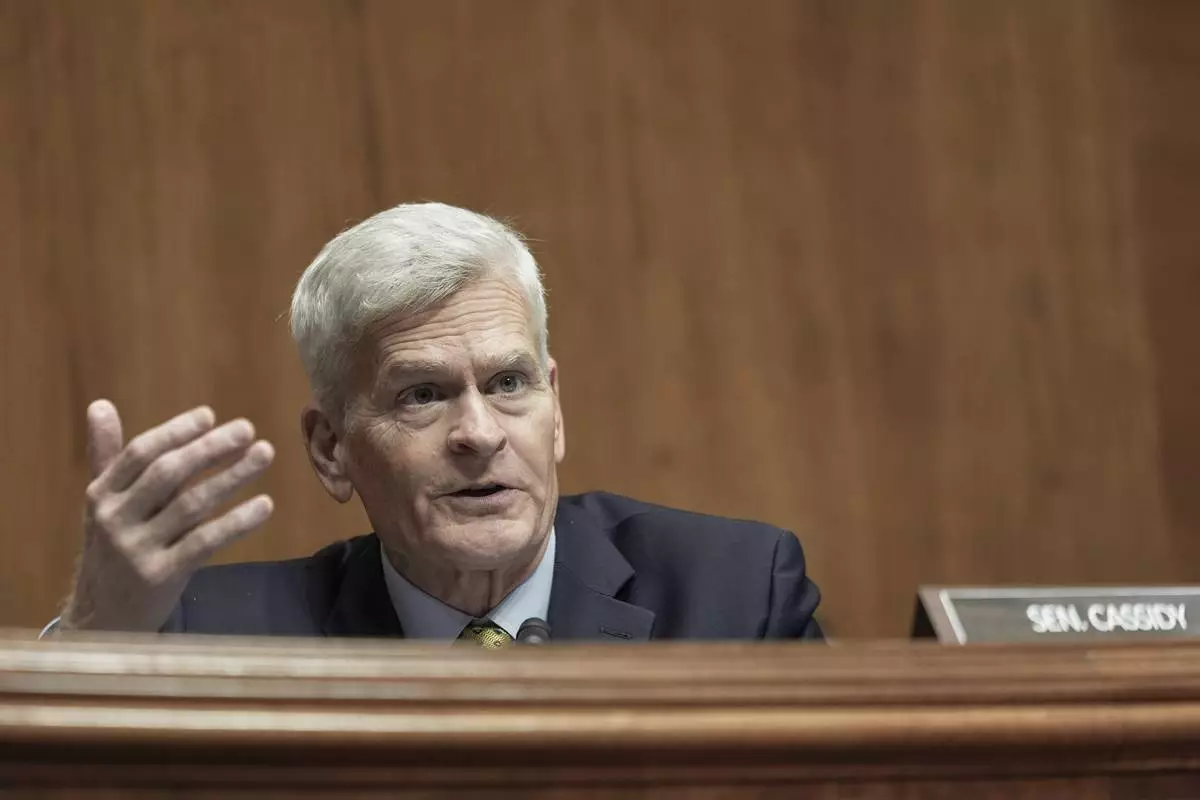
FILE - Sen. Bill Cassidy, R-La., asks a question during a Senate Health, Education, Labor, and Pensions (HELP) Committee hearing, June 18, 2025, on Capitol Hill in Washington. (AP Photo/Mariam Zuhaib, File)
FILE - Sen. Bill Cassidy, R-La., asks a question during a Senate Health, Education, Labor, and Pensions (HELP) Committee hearing, June 18, 2025, on Capitol Hill in Washington. (AP Photo/Mariam Zuhaib, File)
WASHINGTON (AP) — Venezuelan opposition leader María Corina Machado said on Friday she’s confident of her country’s eventual transition to democracy after the U.S. military ousted former President Nicolás Maduro.

But she acknowledged the challenge of holding free elections after decades of autocratic rule and declined to set any timetable. When pressed, she also took pains to avoid giving any details on her plans to return home, saying only that she would return “as soon as possible.”

Her struggle to offer clear answers in Friday's news conference reflects how President Donald Trump’s endorsement of a Maduro loyalist to lead Venezuela for now has frozen out the nation’s Nobel Peace Prize -winning crusader for democracy.

With little choice but to put her faith in the U.S. and hope for an eventual transition, Machado has sought to cozy up to Trump, presenting her Nobel medal to him a day earlier at the White House.

As Machado was meeting with Trump, CIA Director John Ratcliffe was in Venezuela meeting with acting President Delcy Rodríguez, further confirmation that Maduro's longtime second in command was the woman that Washington preferred to see managing Venezuela at the moment.

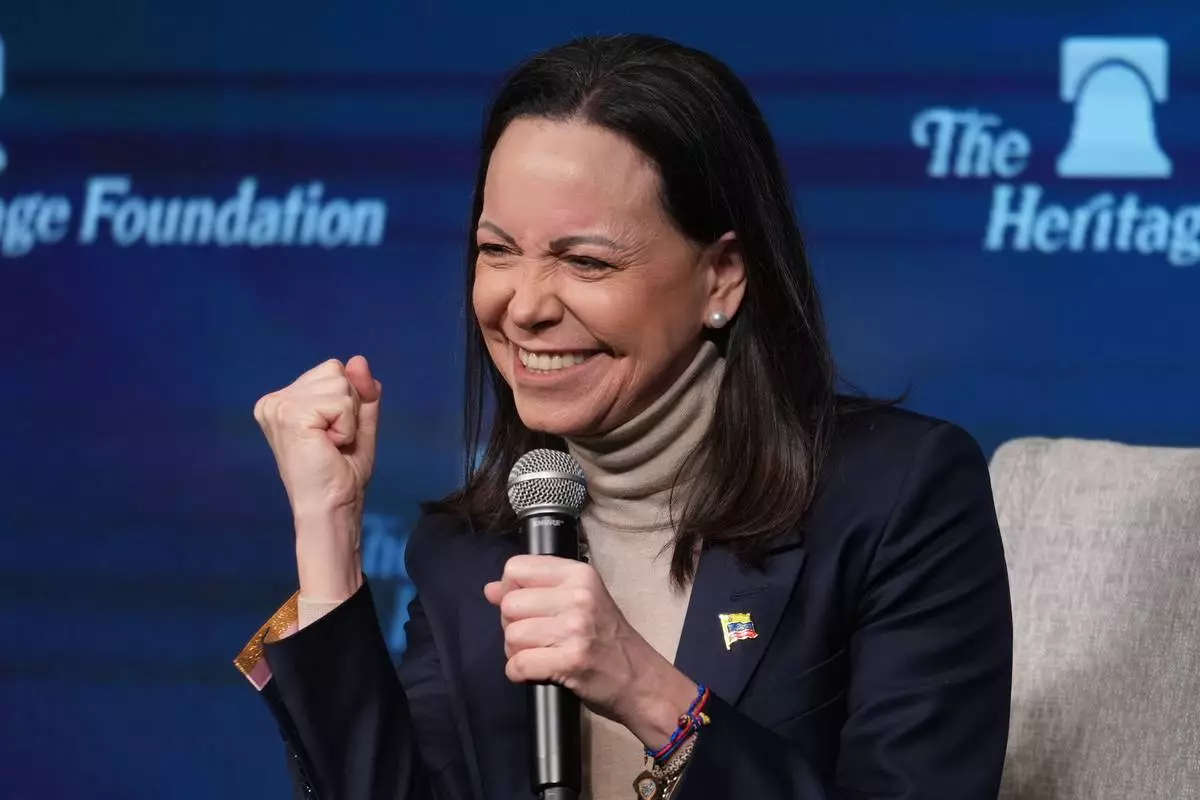
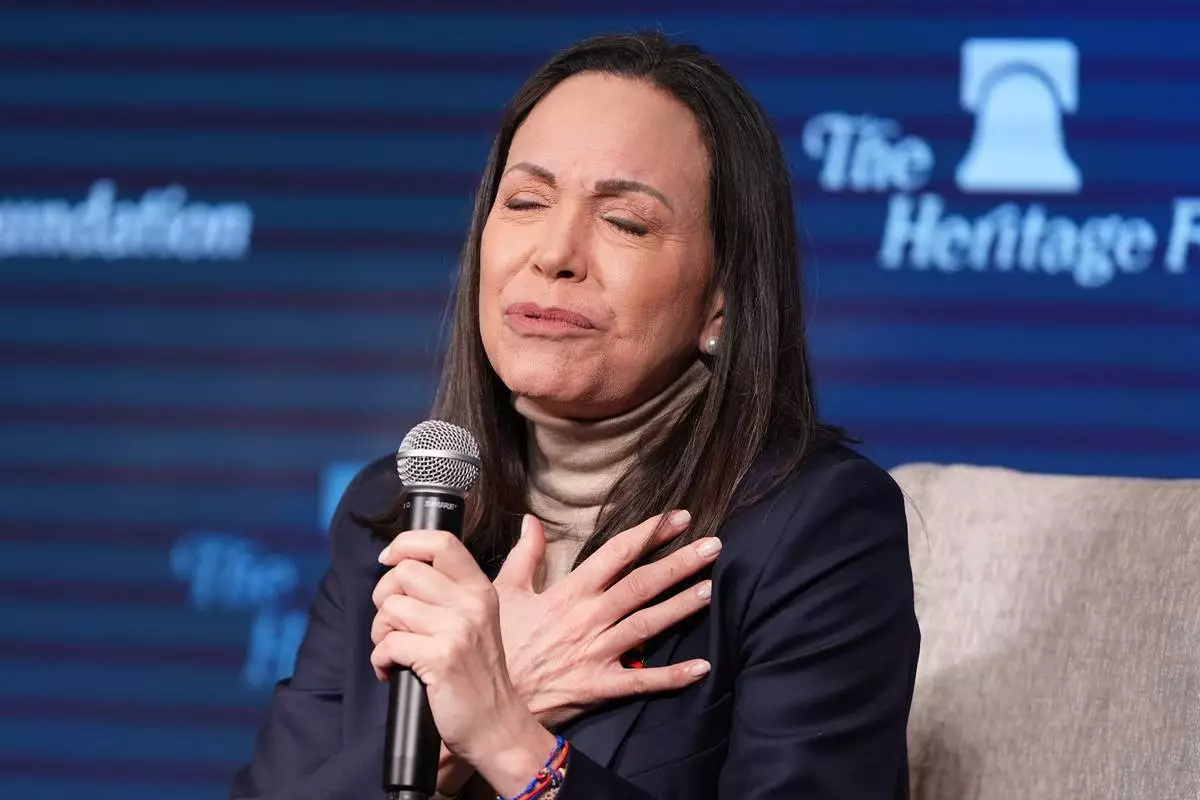
Speaking to reporters at the Heritage Foundation, a conservative think tank in Washington, Machado said she was “profoundly, profoundly confident that we will have an orderly transition” to democracy that would also transform Venezuela's self-proclaimed socialist government long hostile to the U.S. into a strong U.S. ally.

She dismissed the perception that, in choosing to work with Rodríguez, Trump had snubbed her opposition movement, whose candidate was widely believed to have beaten Maduro in the 2024 presidential election.

“This has nothing to do with a tension or decision between Delcy Rodríguez and myself,” she said, but avoided elaborating in favor of more general assertions about her party's popular mandate and the government's dismal human rights record.

“The only thing they have is terror,” she said of Maduro's government.

Machado waved away the suggestion that her movement wouldn't be able to assert authority over security forces that remain loyal to Maduro and have long benefited from corruption under his government.

“There are not religious tensions within the Venezuelan society or racial or regional or political or social tensions,” she said.

But she also acknowledged “the difficulty of destroying a 27-year structure allied with the Russians and the Iranians.”

“We are facing challenging times ahead,” she said.

In apparent deference to Trump, she provided almost no details on Friday about what they discussed or even what she thought the U.S. should do in Venezuela, saying, “I think I don’t need to urge the president on specific things."

Trump has said little about his administration's plans for holding new elections in Venezuela and far more about its vision for reviving the nation's crumbling oil infrastructure. He's relying on a crippling oil blockade and threats of further military action to keep the interim government in line.

In a sign that the U.S. is exploring the restoration of relations with Venezuela, U.S. officials are considering reopening the U.S. Embassy in Caracas, which Trump closed during his first administration.

Machado traveled to Washington looking to rekindle the support for democracy in Venezuela that Trump showed during his first administration. She presented him with the prize she won last year, praising him for what she said was his commitment to Venezuela’s freedom. The Nobel Institute has been clear, however, that the prize cannot be shared or transferred.

Trump, who has actively campaigned to be awarded the prize, said Machado left the medal for him to keep. “And by the way, I think she’s a very fine woman,” he said. "And we’ll be talking again.”

That was of small comfort after Trump said it would be difficult for Machado to lead because she “doesn’t have the support within or the respect within the country.”

Machado crisscrossed Venezuela ahead of the 2024 presidential elections, rallying millions of voters looking to end 25 years of single party rule. When she was barred from the race, a previously unknown former diplomat, Edmundo Gonzalez, replaced her on the ballot. But election officials loyal to the ruling party declared Maduro the winner despite ample credible evidence to the contrary.

Machado, revered by millions in Venezuela, went into hiding but vowed to continue fighting until democracy was restored. She reemerged in December to pick up her Nobel Peace Prize in Norway, the first time in more than a decade that she had left Venezuela.

DeBre reported from Buenos Aires, Argentina. Darlene Superville in Washington and Meg Kinnard in Columbia, South Carolina, contributed.

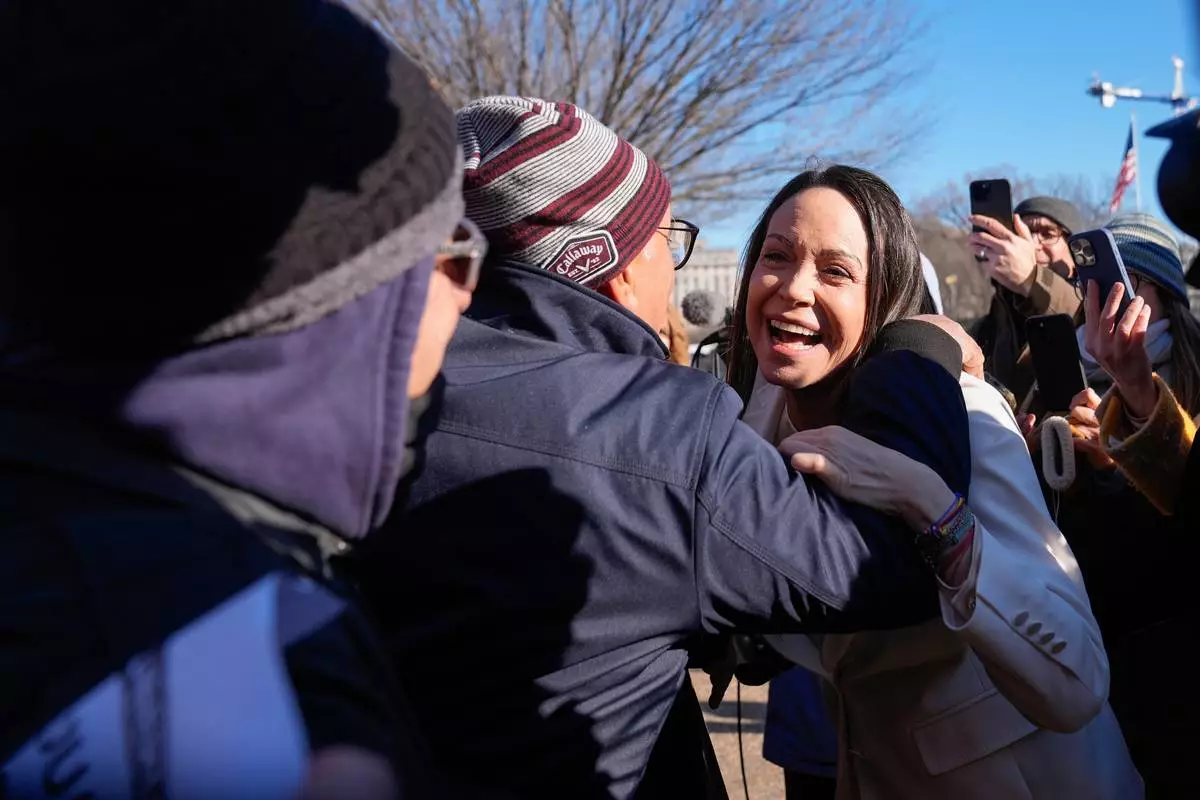
Venezuelan opposition leader MarÌa Corina Machado greets supporters on Pennsylvania Avenue near the White House after meeting with President Donald Trump Thursday, Jan. 15, 2026, in Washington. (AP Photo/Pablo Martinez Monsivais)

Venezuelan opposition leader MarÌa Corina Machado greets supporters on Pennsylvania Avenue near the White House after meeting with President Donald Trump Thursday, Jan. 15, 2026, in Washington. (AP Photo/Pablo Martinez Monsivais)

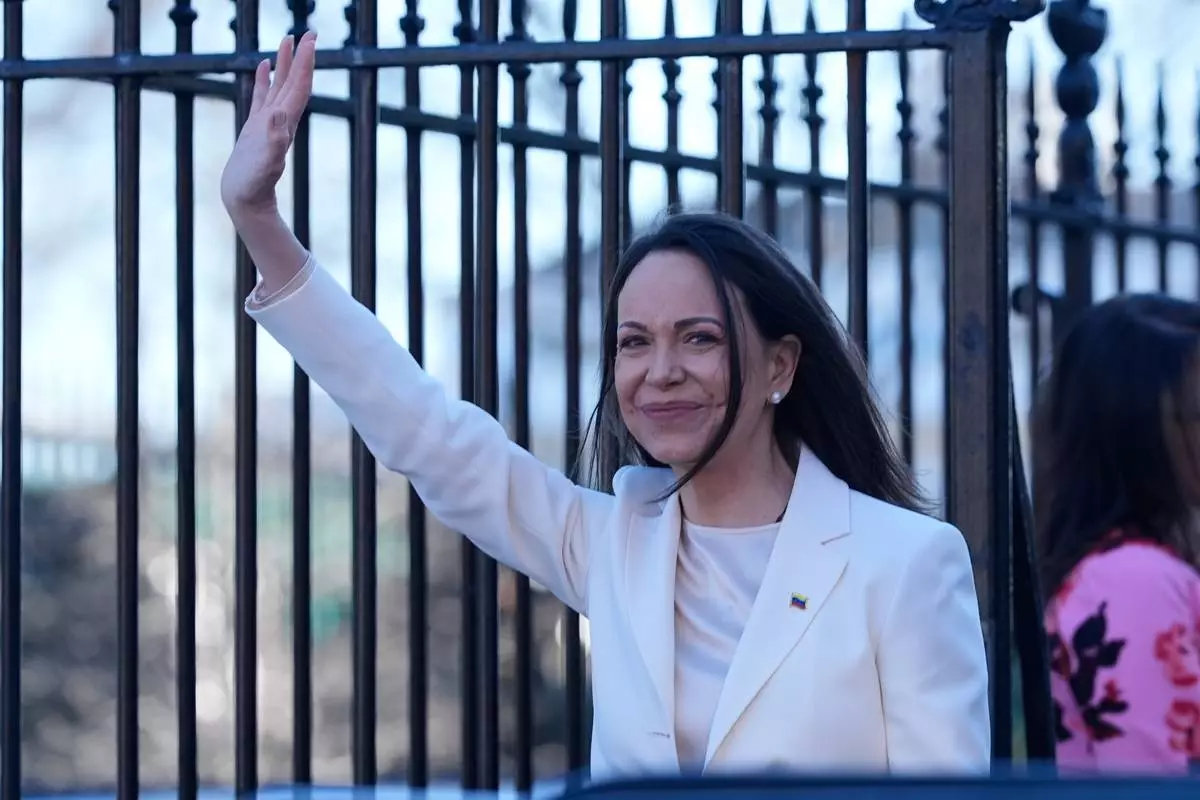
Venezuelan opposition leader María Corina Machado waves to supporters on Pennsylvania Avenue as she leaves the White House after meeting with President Donald Trump Thursday, Jan. 15, 2026, in Washington. (AP Photo/Pablo Martinez Monsivais)

Venezuelan opposition leader María Corina Machado waves to supporters on Pennsylvania Avenue as she leaves the White House after meeting with President Donald Trump Thursday, Jan. 15, 2026, in Washington. (AP Photo/Pablo Martinez Monsivais)

Venezuelan opposition leader Maria Corina Machado speaks at the Heritage Foundation, an influential conservative think tank, a day after meeting with President Donald Trump and members of Congress, on Capitol Hill in Washington, Friday, Jan. 16, 2026. (AP Photo/J. Scott Applewhite)

Venezuelan opposition leader Maria Corina Machado speaks at the Heritage Foundation, an influential conservative think tank, a day after meeting with President Donald Trump and members of Congress, on Capitol Hill in Washington, Friday, Jan. 16, 2026. (AP Photo/J. Scott Applewhite)

Venezuelan opposition leader Maria Corina Machado speaks at the Heritage Foundation, an influential conservative think tank, a day after meeting with President Donald Trump and members of Congress, on Capitol Hill in Washington, Friday, Jan. 16, 2026. (AP Photo/J. Scott Applewhite)

Venezuelan opposition leader Maria Corina Machado speaks at the Heritage Foundation, an influential conservative think tank, a day after meeting with President Donald Trump and members of Congress, on Capitol Hill in Washington, Friday, Jan. 16, 2026. (AP Photo/J. Scott Applewhite)

Recommended Articles