UNITED NATIONS (AP) — The United States and Panama are urging the U.N. Security Council to authorize a 5,550-member force with the power to detain gang members in Haiti to help stop the escalating violence.
The two countries outlined their proposal to transform the Kenya-led multinational force now deployed in the Caribbean nation into a much larger force in a draft resolution to the U.N. Security Council obtained Wednesday by The Associated Press.
The first Kenyans arrived in Haiti in June 2024 and the force was supposed to have 2,500 troops, but it has been plagued by a lack of funding and its current strength is below 1,000.
Gangs have grown in power since the assassination of President Jovenel Moïse in 2021. They now control 90% of the capital, Port-au-Prince, and have expanded their activities, including looting, kidnapping, sexual assaults and rape, into the countryside. Haiti has not had a president since the assassination.
The six-page draft resolution expresses appreciation to Kenya for leading the multinational force but reaffirms Secretary-General Antonio Guterres’ finding in February that it hasn’t been able to keep pace with the dramatic expansion of the gangs and needed to be scaled up.
Acting U.S. Ambassador Dorothy Shea had announced on Aug. 28 that the U.S. was seeking U.N. authorization for a new Gang Suppression Force.
The draft resolution would authorize U.N. member nations to transition the mission into such a force in cooperation with Haiti’s government for an initial period of 12 months. The force would be able to detain and arrest Haitians.
It states that the force would consist of 5,500 uniformed personnel and 50 civilians who would be paid from voluntary contributions. But it does not specify whether Kenya or any other country would contribute troops or police.
The resolution would authorize participants in the new force to “conduct independent, intelligence-led targeted counter-gang operations to neutralize, isolate, and deter gangs that continue to threaten the civilian population, abuse human rights and undermine Haitian institutions.”
The new force would also provide security for critical infrastructure, including the airport and ports, schools and hospitals, along with the Haitian police and armed forces. And it would support Haitian efforts “to combat illicit trafficking and diversion of arms and related materiel.”
The Security Council mandate for the Kenya-led multinational force ends Oct. 2 and council members are expected to vote at the end of the month on the U.S. and Panama draft resolution.
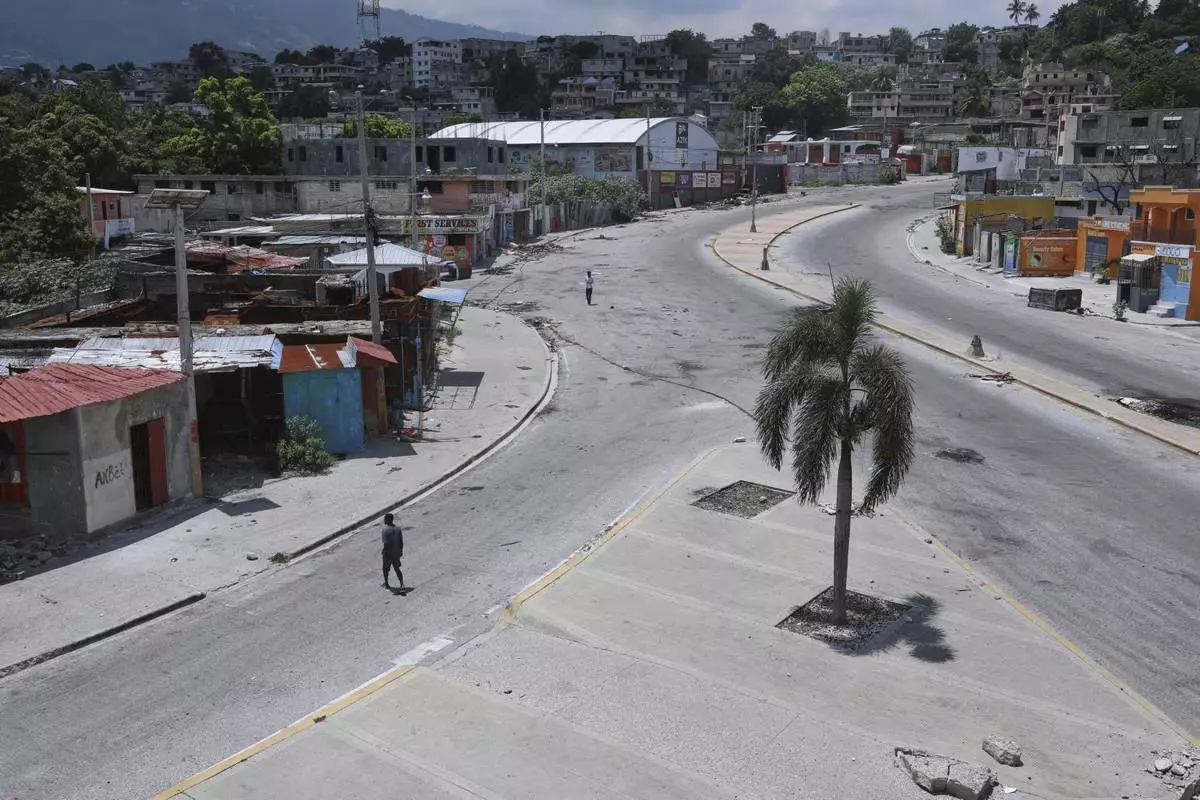
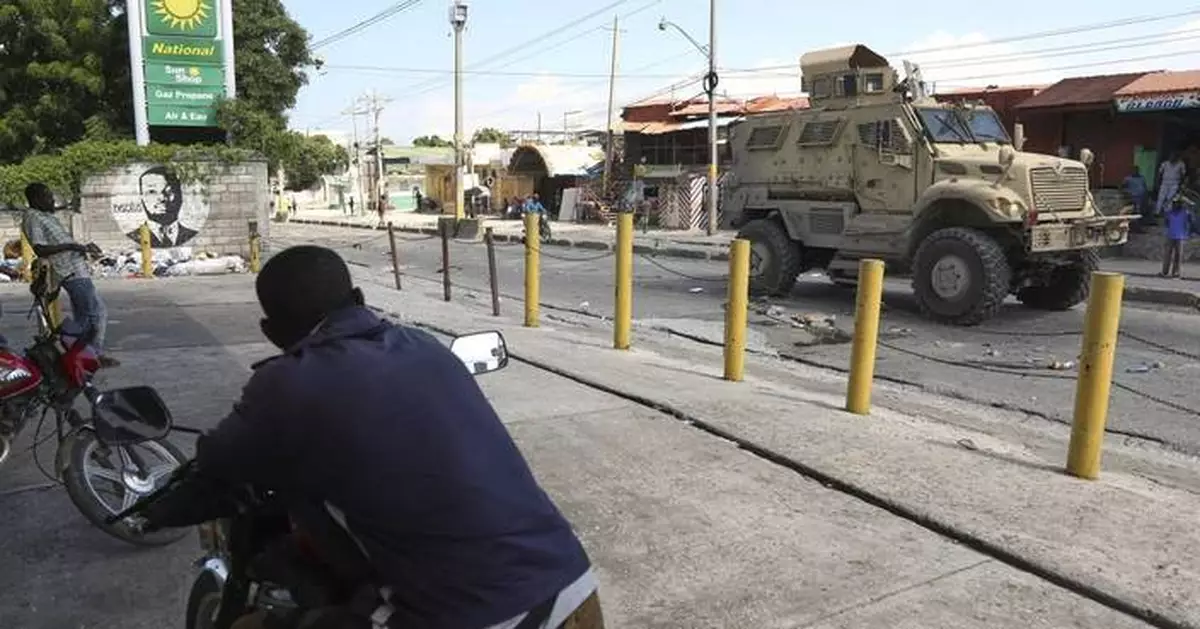
A main street is empty due to insecurity in the Delmas neighborhood of Port-au-Prince, Haiti, Tuesday, Sept. 2, 2025. (AP Photo/Odelyn Joseph)
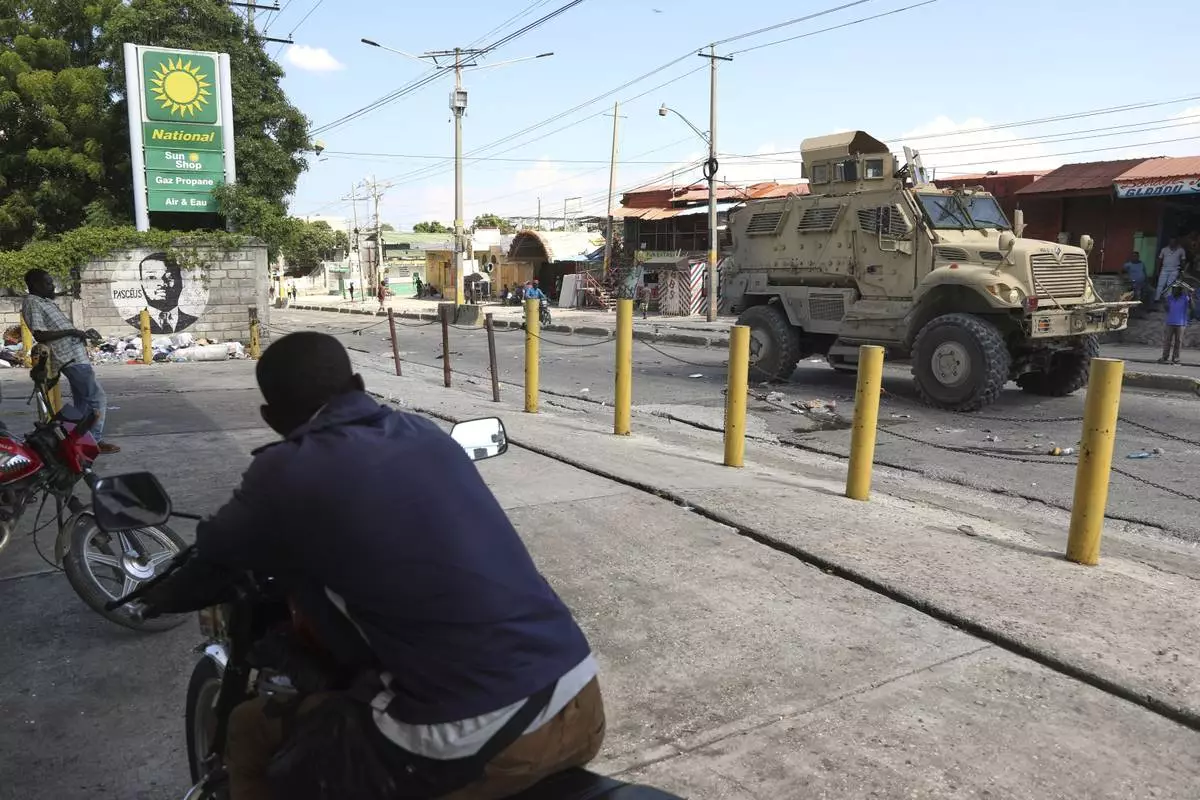
Residents watch a Kenyan police armored vehicle patrolling in Port-au-Prince, Haiti, Tuesday, Sept. 2, 2025. (AP Photo/Odelyn Joseph)
WASHINGTON (AP) — U.S. forces in the Caribbean Sea have seized another sanctioned oil tanker that the Trump administration says has ties to Venezuela, part of a broader U.S. effort to take control of the South American country’s oil.
The U.S. Coast Guard boarded the tanker, named Veronica, early Thursday, Homeland Security Secretary Kristi Noem wrote on social media. The ship had previously passed through Venezuelan waters and was operating in defiance of President Donald Trump’s "established quarantine of sanctioned vessels in the Caribbean,” she said.
U.S. Southern Command said Marines and sailors launched from the aircraft carrier USS Gerald R. Ford to take part in the operation alongside a Coast Guard tactical team, which Noem said conducted the boarding as in previous raids. The military said the ship was seized “without incident.”
Several U.S. government social media accounts posted brief videos that appeared to show various parts of the ship’s capture. Black-and-white footage showed at least four helicopters approaching the ship before hovering over the deck while armed troops dropped down by rope. At least nine people could be seen on the deck of the ship.
The Veronica is the sixth sanctioned tanker seized by U.S. forces as part of the effort by Trump’s administration to control the production, refining and global distribution of Venezuela’s oil products and the fourth since the U.S. ouster of Venezuela President Nicolás Maduro in a surprise nighttime raid almost two weeks ago.
The Veronica last transmitted its location on Jan. 3 as being at anchor off the coast of Aruba, just north of Venezuela’s main oil terminal. According to the data it transmitted at the time, the ship was partially filled with crude.
Days later, the Veronica became one of at least 16 tankers that left the Venezuelan coast in contravention of the quarantine that U.S. forces have set up to block sanctioned ships, according to Samir Madani, the co-founder of TankerTrackers.com. He said his organization used satellite imagery and surface-level photos to document the ship movements.
The ship is currently listed as flying the flag of Guyana and is considered part of the shadow fleet that moves cargoes of oil in violation of U.S. sanctions.
According to its registration data, the ship also has been known as the Gallileo, owned and managed by a company in Russia. In addition, a tanker with the same registration number previously sailed under the name Pegas and was sanctioned by the Treasury Department for being associated with a Russian company moving cargoes of illicit oil.
As with prior posts about such raids, Noem and the military framed the seizure as part of an effort to enforce the law. Noem argued that the multiple captures show that “there is no outrunning or escaping American justice.”
Speaking to reporters at the White House later Thursday, Noem declined to say how many sanctioned oil tankers the U.S. is tracking or whether the government is keeping tabs on freighters beyond the Caribbean Sea.
“I can’t speak to the specifics of the operation, although we are watching the entire shadow fleet and how they’re moving,” she told reporters.
But other officials in Trump's Republican administration have made clear they see the actions as a way to generate cash as they seek to rebuild Venezuela’s battered oil industry and restore its economy.
Trump met with executives from oil companies last week to discuss his goal of investing $100 billion in Venezuela to repair and upgrade its oil production and distribution. His administration has said it expects to sell at least 30 million to 50 million barrels of sanctioned Venezuelan oil.
Associated Press writer Ben Finley contributed to this report.
This story has been corrected to show the Veronica is the fourth, not the third, tanker seized by U.S. forces since Maduro’s capture and the ship also has been known as the Gallileo, not the Galileo.
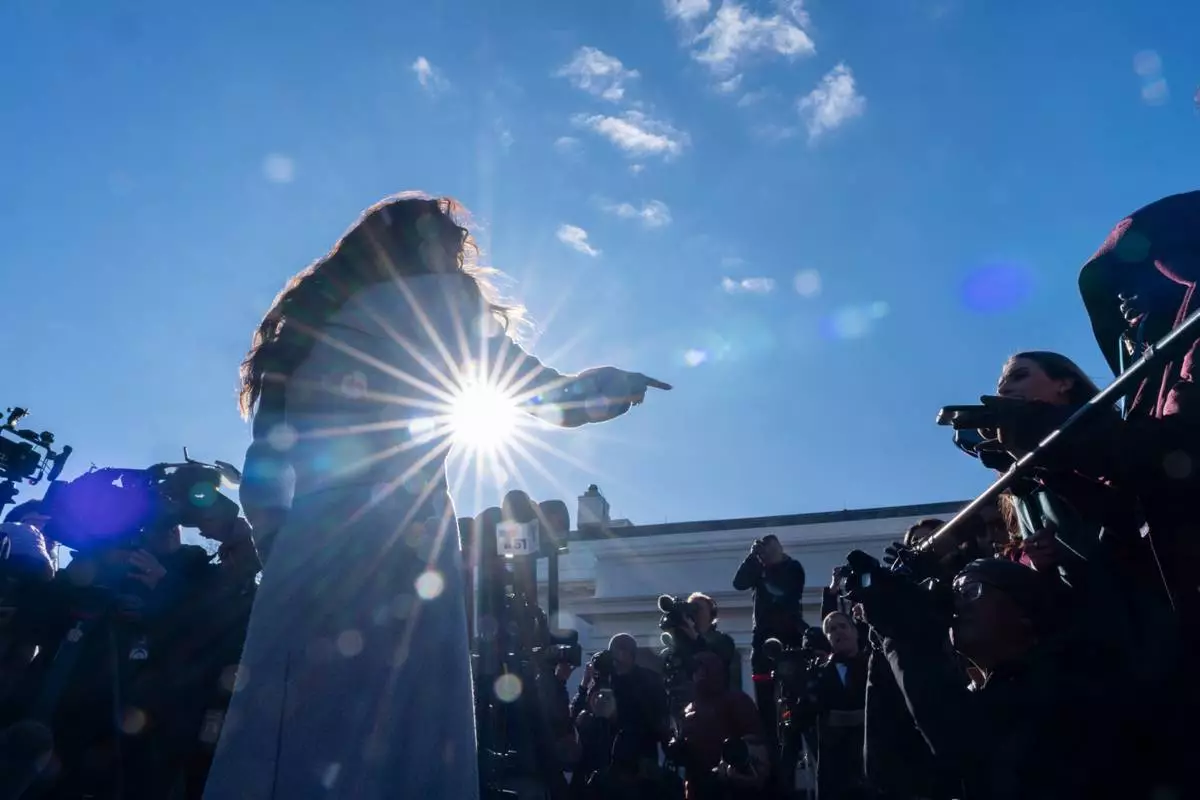
Homeland Security Secretary Kristi Noem speaks with reporters at the White House, Thursday, Jan. 15, 2026, in Washington. (AP Photo/Alex Brandon)
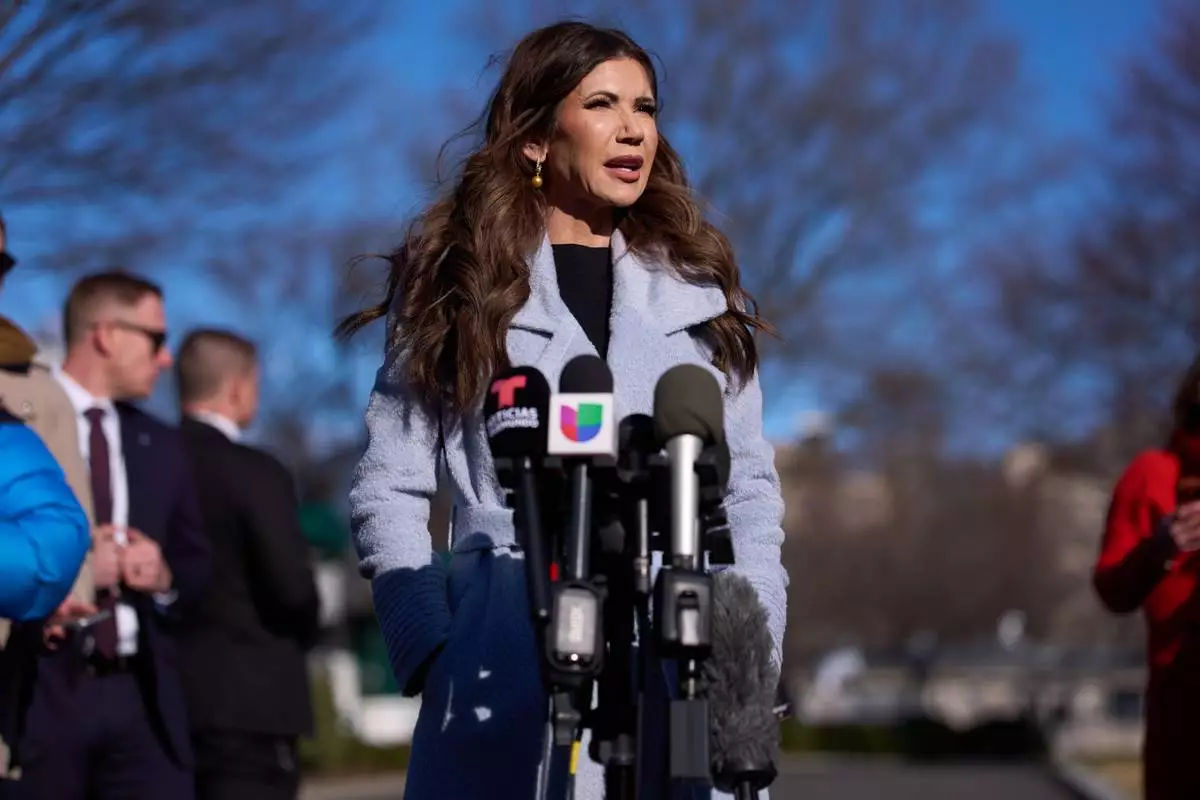
Homeland Security Secretary Kristi Noem speaks with reporters at the White House, Thursday, Jan. 15, 2026, in Washington. (AP Photo/Evan Vucci)
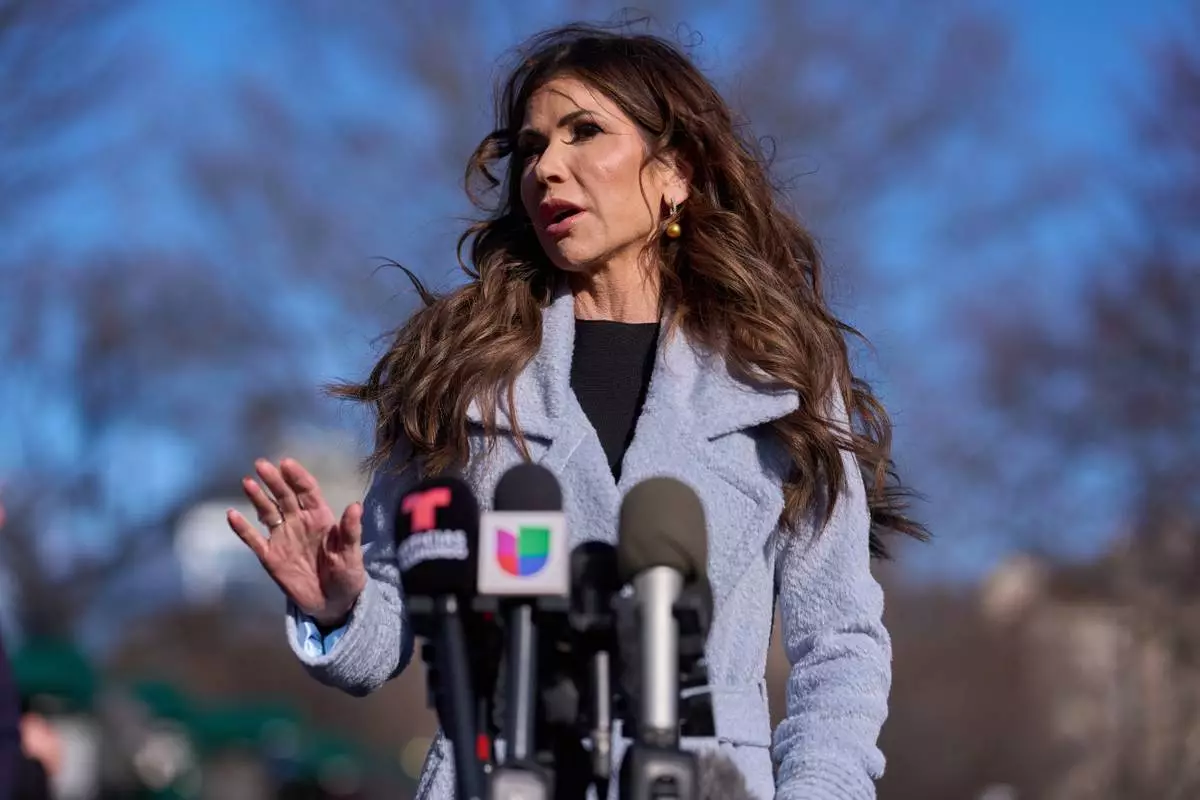
Homeland Security Secretary Kristi Noem speaks with reporters at the White House, Thursday, Jan. 15, 2026, in Washington. (AP Photo/Evan Vucci)
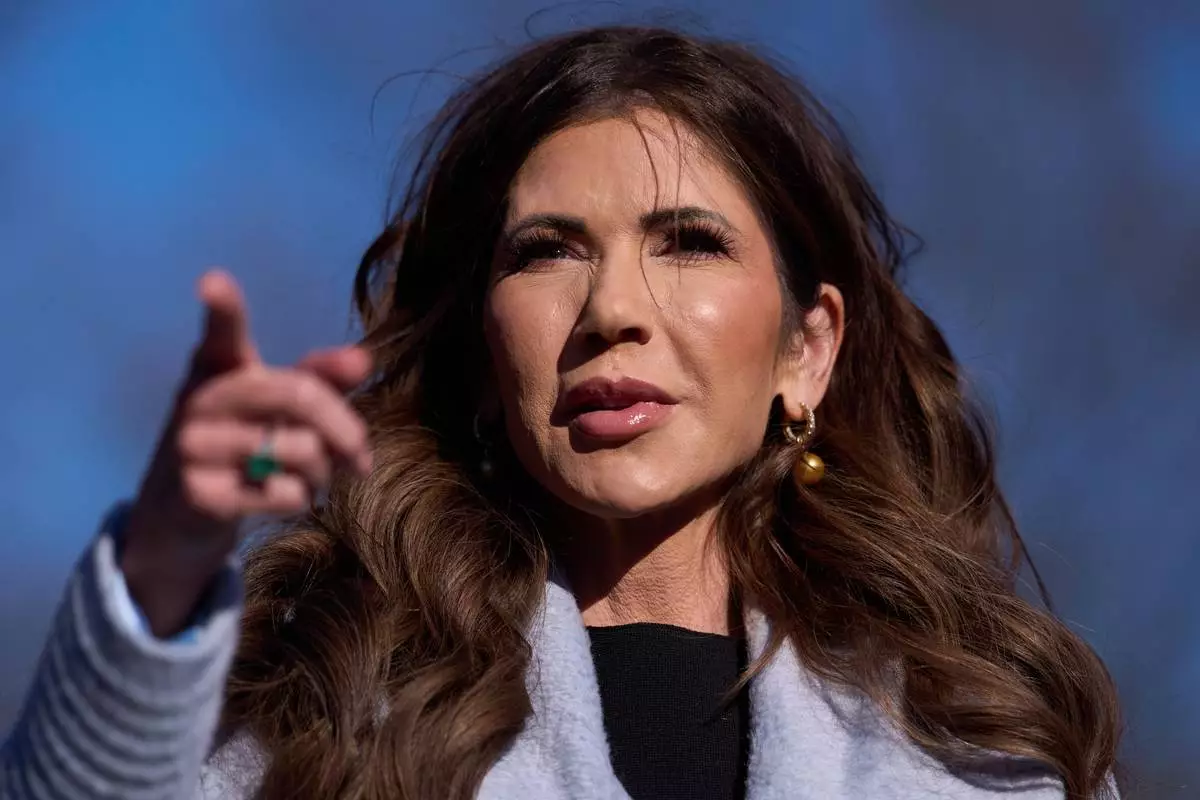
Homeland Security Secretary Kristi Noem speaks with reporters at the White House, Thursday, Jan. 15, 2026, in Washington. (AP Photo/Evan Vucci)
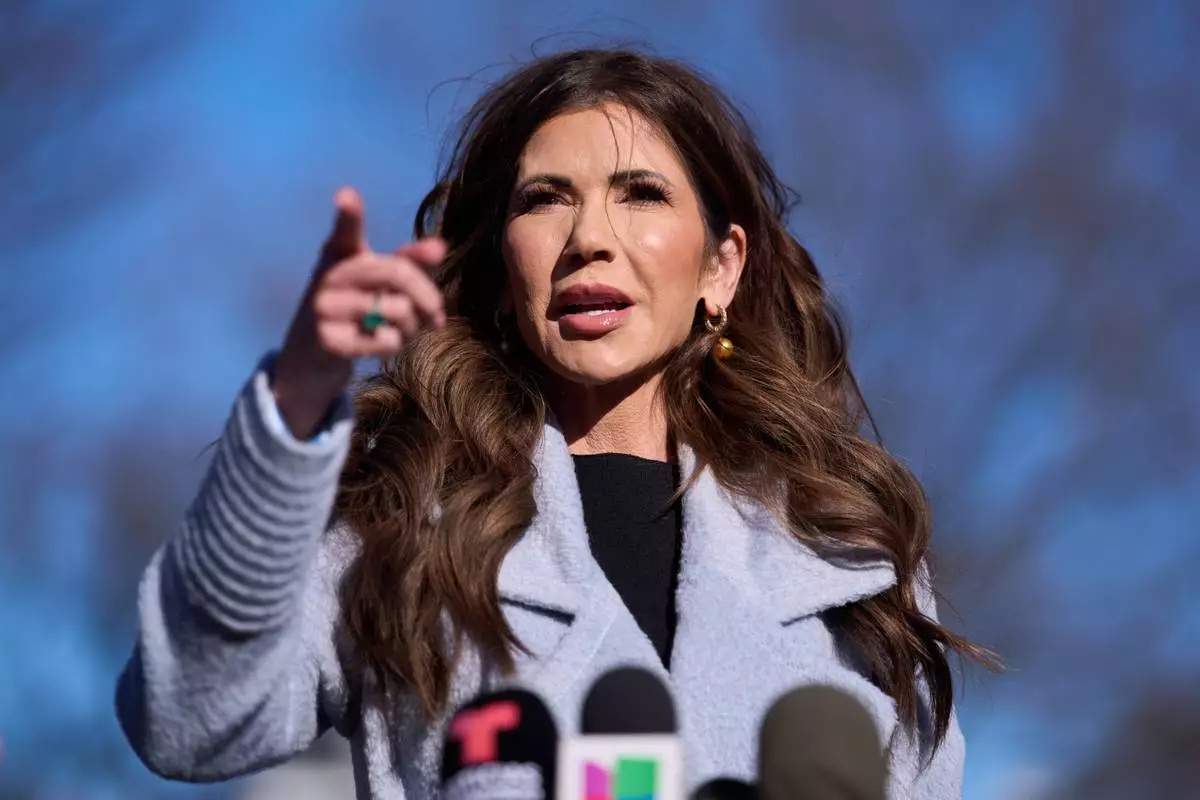
Homeland Security Secretary Kristi Noem speaks with reporters at the White House, Thursday, Jan. 15, 2026, in Washington. (AP Photo/Evan Vucci)
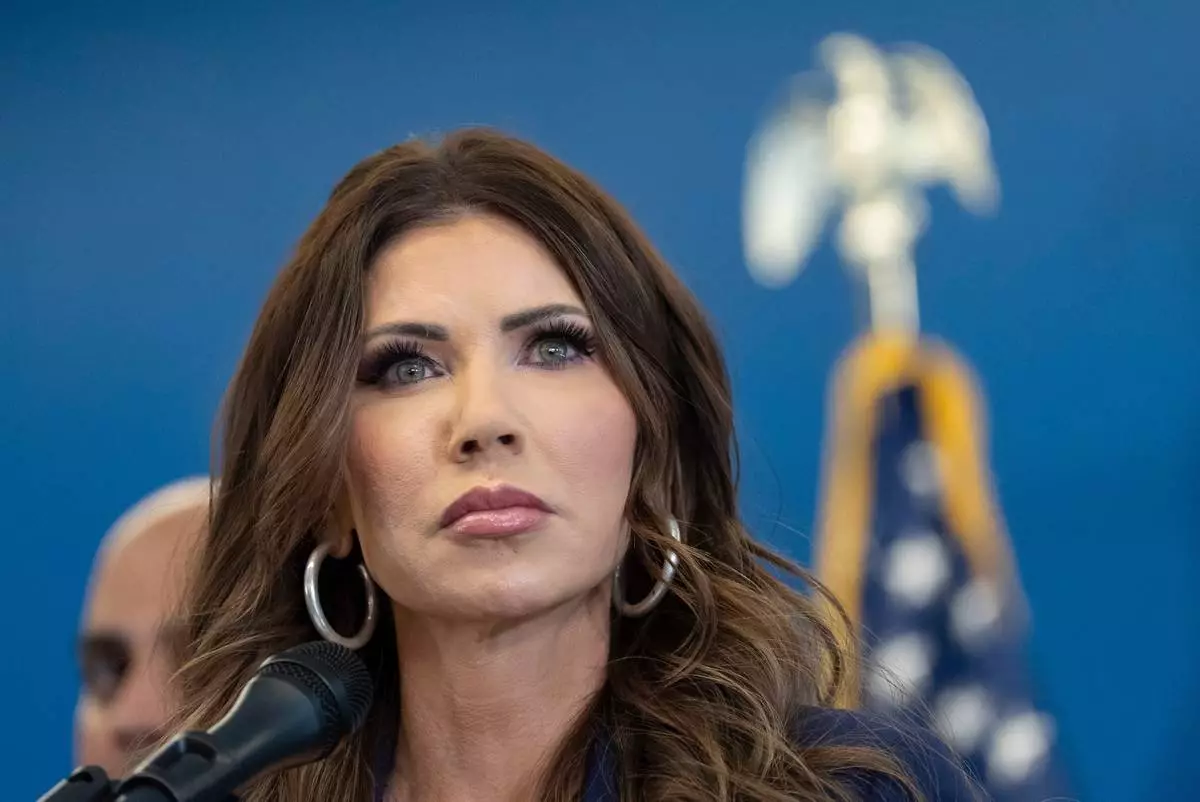
U.S. Homeland Security Secretary Kristi Noem speaks during a press conference, Thursday, Jan. 8, 2026, in New York. (AP Photo/Yuki Iwamura)
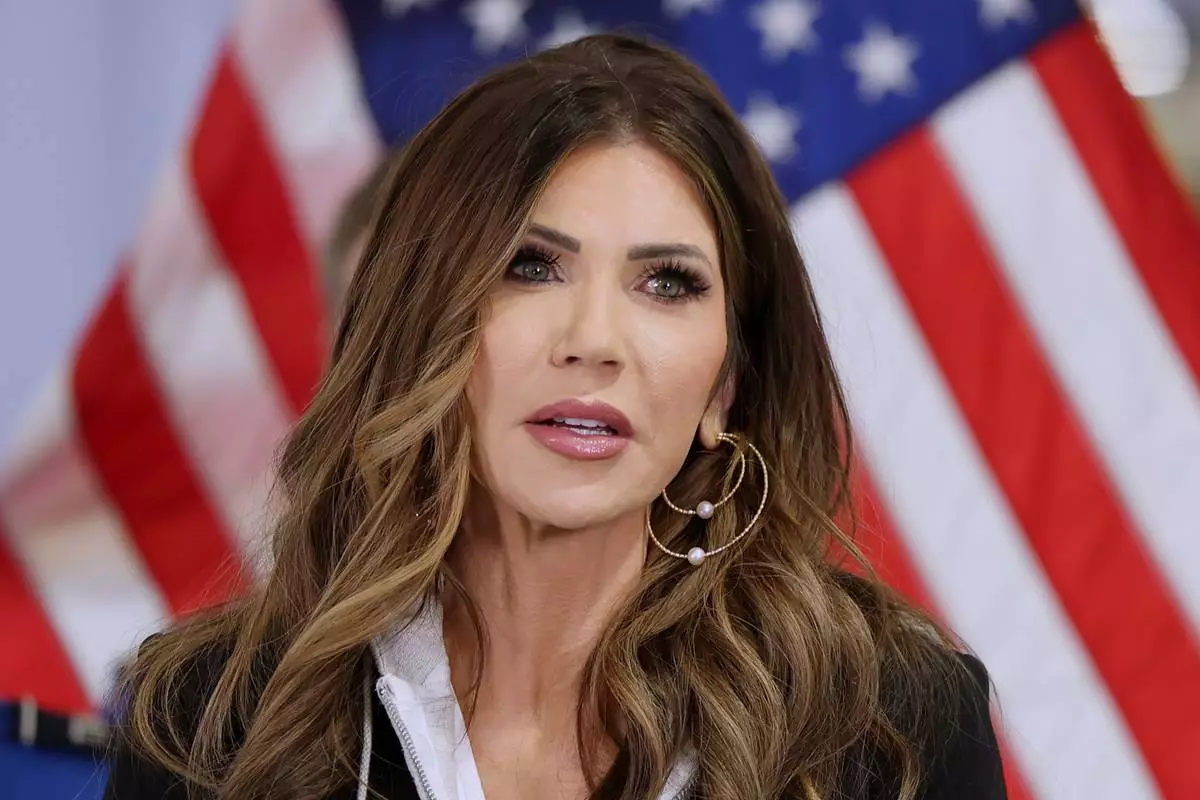
U.S. Homeland Security Secretary Kristi Noem speaks at a news conference at Harry Reid International Airport, Nov. 22, 2025, in Las Vegas. (AP Photo/Ronda Churchill, File)