Update on chikungunya fever
The Centre for Health Protection (CHP) of the Department of Health (DH) announced that as of 5pm today (September 4), nonew cases of chikungunya fever (CF) had been recorded.
"According to the World Health Organization, CF cases have been recorded in more than 110 countries/regions. Many countries worldwide experienced CF outbreaks this year, and as of July this year, over 240 000 cases had been reported in 16 countries/regions worldwide. Of these cases, about 90 were fatal. High temperatures and rainfall levels in summer continue to pose a risk of outbreaks of various mosquito-borne diseases in Hong Kong and around the world, and members of the public must remain vigilant. They must take proper mosquito control and personal protective measures both locally and during travel. Individuals experiencing relevant symptoms should seek medical advice promptly and inform their doctors if they have a travel history," the Controller of the CHP, Dr Edwin Tsui, said.
So far this year, Hong Kong has recorded a total of 13 confirmed CF cases. All are imported cases. From 2016 to 2019, Hong Kong recorded between one and 11 imported cases annually.
Continuously strengthening prevention and control
The FEHD continues to conduct vector investigations and targeted mosquito control operations, and intensify mosquito prevention and control measures at the residences of recently confirmed patients, as well as at locations visited after the onset of symptoms. These measures include:
Additionally, the CHP's Port Health Division continues to step up inspections at boundary control points and to remind cross-boundary public transport operators and other relevant parties to ensure good environmental hygiene and effective implementation of anti-mosquito measures. Furthermore, staff members of the Port Health Division distribute leaflets to travellers, conduct temperature screenings for inbound travellers, conduct health assessments for travellers with fever or related symptoms and refer them to hospitals for follow-ups when necessary.
To raise awareness among the elderly about preventing mosquito-borne diseases, the Visiting Health Teams under the Elderly Health Service of the DH have been advising them on mosquito-borne disease prevention and tips on travel health at health talks conducted at District Elderly Community Centres and Neighbourhood Elderly Centres. Moreover, the Visiting Health Teams have also reminded all residential care homes for the elderly in Hong Kong to enhance mosquito control measures. The DH's Maternal and Child Health Centres, Student Health Service Centres and Special Assessment Centres also advise pregnant women, infant carers and students on symptoms and preventive measures of mosquito-borne diseases.
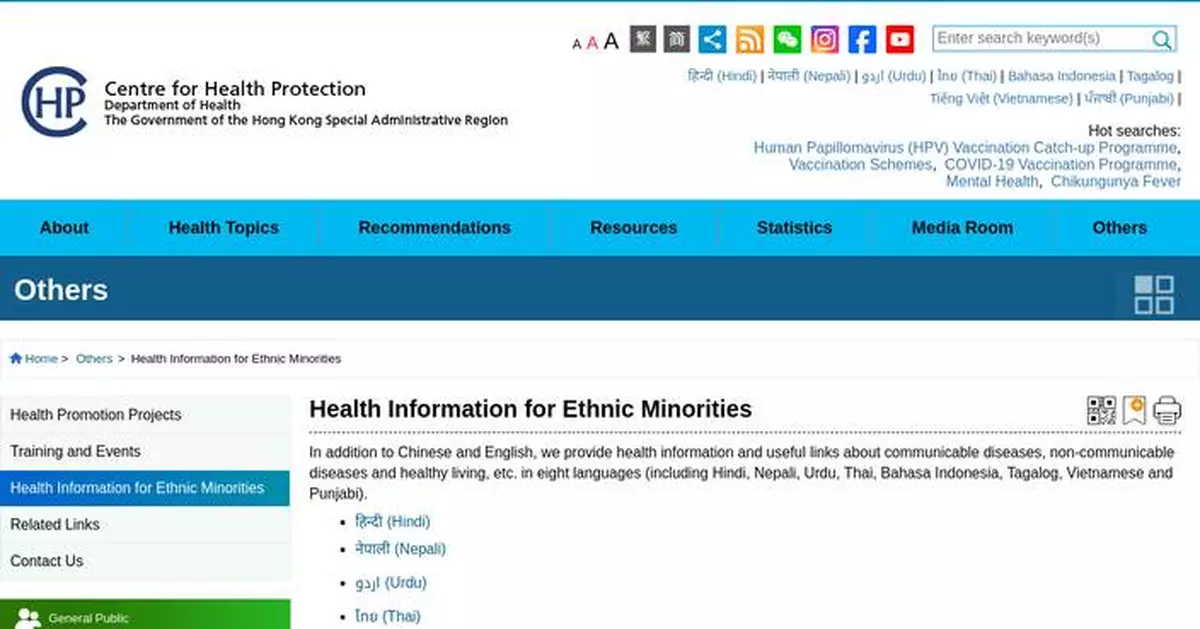
To strengthen support for ethnic minority communities, essential information on CF has also been translated into 10 ethnic minority languages (namely Hindi, Nepali, Urdu, Thai, Bahasa Indonesia, Tagalog, Vietnamese, Punjabi, Sinhala and Bengali) and uploaded to the CHPwebsite (www.chp.gov.hk/en/static/104022.html).
Proper use of DEET-containing insect repellents or other effective active ingredients can prevent mosquito bites, but the following precautions should be taken when using them:
The FEHD also appeals to members of the public to continue to stay alert and work together to carry out mosquito prevention and control measures early, including inspecting their homes and surroundings to remove potential breeding grounds, changing water in vases and scrubbing their inner surfaces, removing water in saucers under potted plants at least once a week, and properly disposing of containers such as soft drink cans and lunch boxes. The FEHD also advises members of the public and estate management bodies to keep drains free of blockage and level all defective ground surfaces to prevent the accumulation of water. They should also scrub all drains and surface sewers with an alkaline detergent at least once a week to remove any mosquito eggs.
The public should call 1823 in case of mosquito problems, and may visit the following pages for more information: the CF page of theCHPand theTravel Health Service, the latestTravel Health News,tips for using insect repellents, and the CHPFacebook Page,Instagram AccountandYouTube Channel, and also theMosquito Prevention and Control dedicated pageof the FEHD.
Source: AI-found images