The just-concluded Intertextile Shanghai Apparel Fabrics, one of the world's largest apparel fabric shows, has drawn more than 3,700 Chinese and international exhibitors, with a vast array of new technologies on show.
This event, which opened on Tuesday, wrapped up on Thursday in China's financial hub of Shanghai. During the show, textile makers from various countries demonstrated how they are applying cutting-edge technologies to the garment industry.
American fabric manufacturer Burlington Fabrics debuted its new technology at the show -- a denim shirt made from nylon. Although denim is typically produced from cotton, this manufacturing innovation makes the shirt at least 50 percent lighter.
"We could see cost benefits for sure, but we also were targeting the weights that typically aren't associated with denim or cellulose, so we were able to achieve lightweight products that give you a similar appearance both in wovens, as well as in knits," said Andrew Hicks, global sales and marketing director of Burlington Fabrics.
Innovations are not only happening on the production side. An AI-based assistant for fashion designers, capable of providing style suggestions based on designers' inspiration and sketches, also took the spotlight at this event.
"In the traditional fashion design process, designers need to spend from few weeks and even up to few months to edit, modify and finalize the fashion collection for the upcoming season based on the initial creative idea and also the mood board. It seems like AI can really help to speed up this process and also at the same time a generative AI can also inspire designers' creativity," said Calvin Wong, CEO of Laboratory for Artificial Intelligence in Design, a research platform established by the Hong Kong Polytechnic University and Royal College of Art in the United Kingdom.
Innovation was a key focus among exhibitors. At the same time, the potential challenges that new technologies may pose to the traditional textile industry, which provides a large number of jobs, were also thoroughly discussed during the event.
Industry insiders believe that the rapid development of new technologies may bring certain challenges, but it will also deliver considerable benefits.
"Of course, there will be in change definitely also for the employees, but I see more chances than risk for this kind of industry. First I think there are two directions -- first in the textile processing industry for the production of garments and also of textiles, you have, for example, cloud solutions to produce smaller quantities on demand production. And in addition, for designers -- designers are able to create something new for the industry in a very, very short time," said Olaf Schmidt, vice president of Textiles and Textile Technologies.
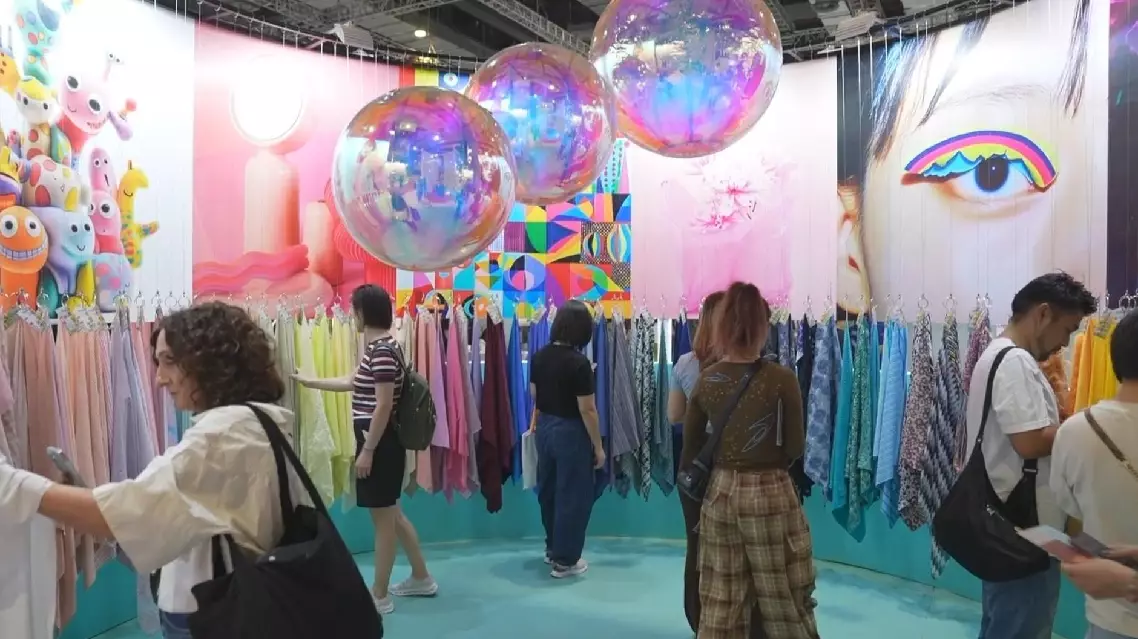
Global textile makers bring new tech to apparel fabrics show in Shanghai