Skip to Content Facebook Feature Image

Trump says US would be on 'brink of economic catastrophe' unless justices rule his tariffs are legal

News

Trump says US would be on 'brink of economic catastrophe' unless justices rule his tariffs are legal
News

News

Trump says US would be on 'brink of economic catastrophe' unless justices rule his tariffs are legal

2025-09-05 04:45 Last Updated At:04:50

WASHINGTON (AP) — President Donald Trump is seeking a swift and definitive decision on tariffs from the Supreme Court that he helped shape, saying the country would be on “the brink of economic catastrophe” without the import taxes he has imposed on U.S. rivals and allies alike.

The administration used near-apocalyptic terms that are highly unusual in Supreme Court filings as it asked the justices late Wednesday to intervene and reverse an appeals court ruling that found most of Trump’s tariffs are an illegal use of an emergency powers law. The tariffs remain in place, for now.

The case comes to a court that has so far been reluctant to check Trump’s extraordinary flex of executive power. One big question is whether the justices' own expansive view of presidential authority allows for Trump's tariffs without the explicit approval of Congress, which the Constitution endows with the power over tariffs. Three of the justices on conservative-majority court were nominated by Trump in his first term.

The tariffs and their erratic rollout have shaken global markets, alienated U.S. trading partners and allies, and raised fears of higher prices and slower economic growth.

But the Republican president has also used the trade penalties to pressure the European Union, Japan and others into accepting new deals. Revenue from tariffs totaled $159 billion by late August, more than double what it was at the same point a year earlier.

Raising the stakes even higher, Solicitor General D. John Sauer urged the Supreme Court to decide in a week's time whether to hear the case and hold arguments the first week of November. That is far faster than the pace of the typical Supreme Court case.

“The President and his Cabinet officials have determined that the tariffs are promoting peace and unprecedented economic prosperity, and that the denial of tariff authority would expose our nation to trade retaliation without effective defenses and thrust America back to the brink of economic catastrophe,” Sauer wrote.

He wrote that it is not just trade that is at issue, but also the nation's ability to reduce the flow of fentanyl and efforts to end Russia's war against Ukraine.

The tariffs will almost certainly remain in effect until a final ruling from the Supreme Court. But the Republican administration nevertheless called on the high court to intervene quickly and reverse the ruling from the U.S. Court of Appeals for the Federal Circuit.

“That decision casts a pall of uncertainty upon ongoing foreign negotiations that the President has been pursuing through tariffs over the past five months, jeopardizing both already negotiated framework deals and ongoing negotiations,” Sauer wrote. “The stakes in this case could not be higher.”

The filing cites not only Trump but also the secretaries of the departments of Treasury, Commerce and State in support of the urgent need for the justices to step in.

“The recent decision by the Federal Circuit is already adversely affecting ongoing negotiations,” Treasury Secretary Scott Bessent wrote.

The stakes are also high for small businesses battered by tariffs and uncertainty, said Jeffrey Schwab, senior counsel and director of litigation at the Liberty Justice Center.

“These unlawful tariffs are inflicting serious harm on small businesses and jeopardizing their survival. We hope for a prompt resolution of this case for our clients,” he said.

The businesses have twice prevailed, once at a federal court focused on trade and again with the appeals court's 7-4 ruling. Their lawsuit is one of several challenging the tariffs.

Most judges on the Federal Circuit found that the 1977 International Emergency Economic Powers Act, or IEEPA, does not allow Trump to usurp congressional power to set tariffs. The dissenters, though, said the gives the president the power to regulate importation during emergencies without explicit limitations.

The ruling involves two sets of import taxes, both of which Trump justified by declaring a national emergency: the tariffs first announced in April and the ones from February on imports from Canada, China and Mexico.

The Constitution gives Congress the power to impose taxes, including tariffs. But over the decades, lawmakers have ceded authority to the president, and Trump has made the most of the power vacuum.

Some Trump tariffs, including levies on foreign steel, aluminum and autos, were not covered by the appeals court ruling. It also does not include tariffs Trump imposed on China in his first term that were kept by Democratic President Joe Biden.

Trump can impose tariffs under other laws, but those have more limitations on the speed and severity with which he could act.

The government has argued that if the tariffs are struck down, it might have to refund some of the import taxes that it’s collected, delivering a financial blow to the U.S. Treasury.

The tariffs are expected to reduce deficits by $4 trillion over the next 10 years, the administration said, citing analyses by the Congressional Budget Office.

In an analysis from June, the CBO also found that the import taxes would slow growth and increase price pressures. The June analysis estimated that inflation would be 0.4% higher annually in 2025 and 2026 than it otherwise would be, hurting the purchasing power of U.S. consumers and businesses.

Trump has since revised and changed his tariff structure, making some of the estimates speculative.

Federal Reserve Chair Jerome Powell warned in an August speech that tariffs are already pushing up the prices of some goods, but “there is significant uncertainty about where all of these polices will eventually settle and what their lasting effects on the economy will be.”

Associated Press writer Josh Boak contributed to this report.
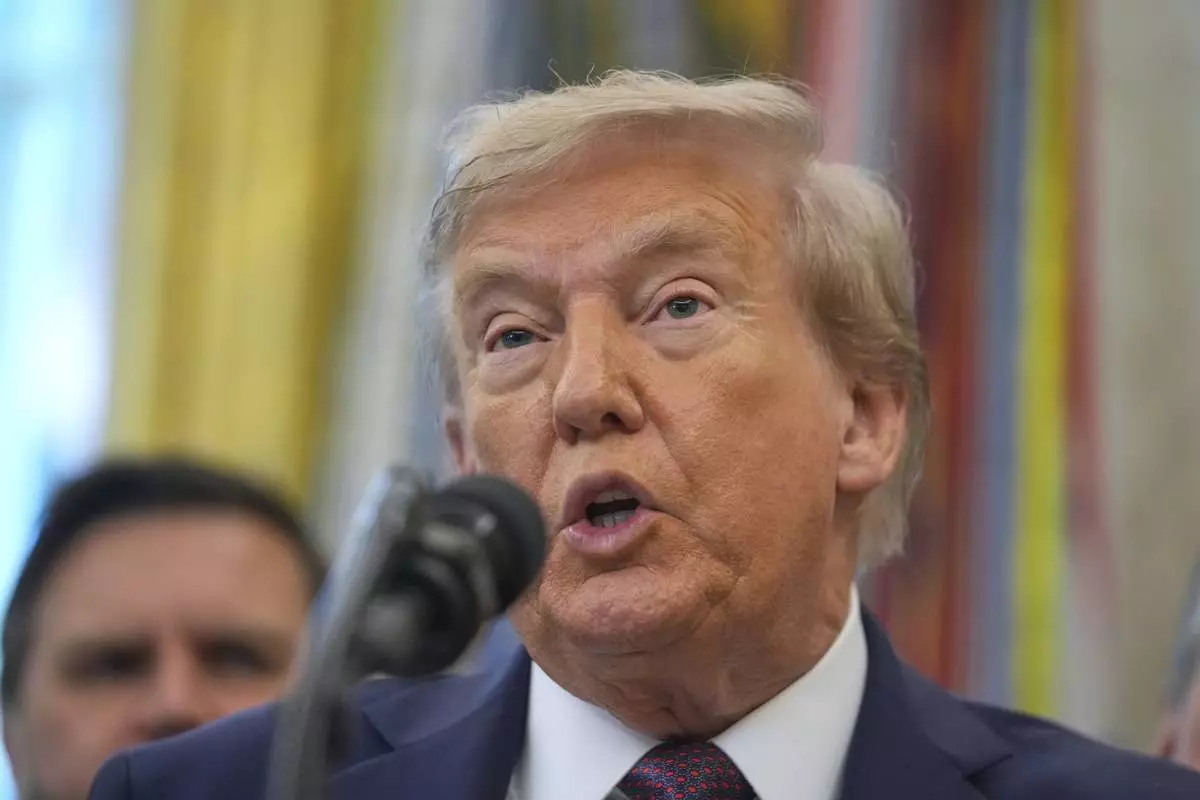
President Donald Trump speaks about the relocation of U.S. Space Command headquarters from Colorado to Alabama in the Oval Office of the White House, Tuesday, Sept. 2, 2025, in Washington. (AP Photo/Mark Schiefelbein)
President Donald Trump speaks about the relocation of U.S. Space Command headquarters from Colorado to Alabama in the Oval Office of the White House, Tuesday, Sept. 2, 2025, in Washington. (AP Photo/Mark Schiefelbein)

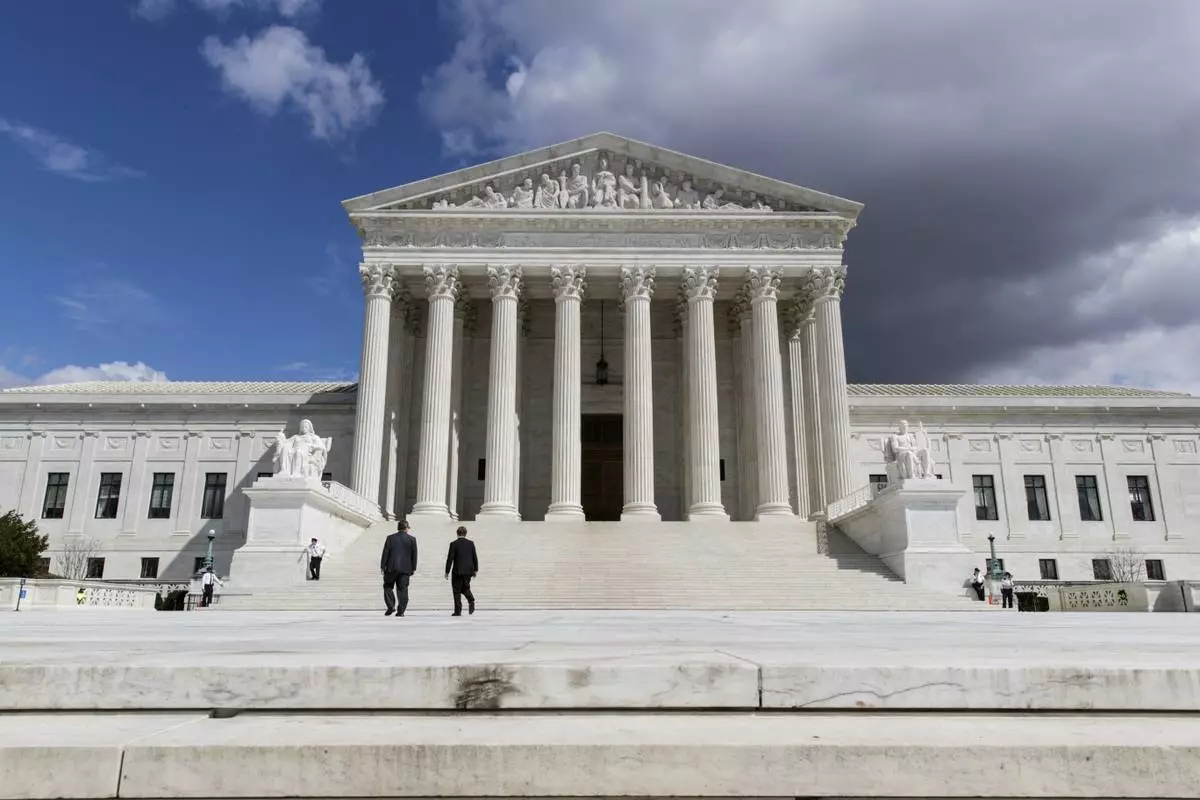
FILE - The Supreme Court Building is seen in Washington on March 28, 2017. (AP Photo/J. Scott Applewhite, File)
FILE - The Supreme Court Building is seen in Washington on March 28, 2017. (AP Photo/J. Scott Applewhite, File)

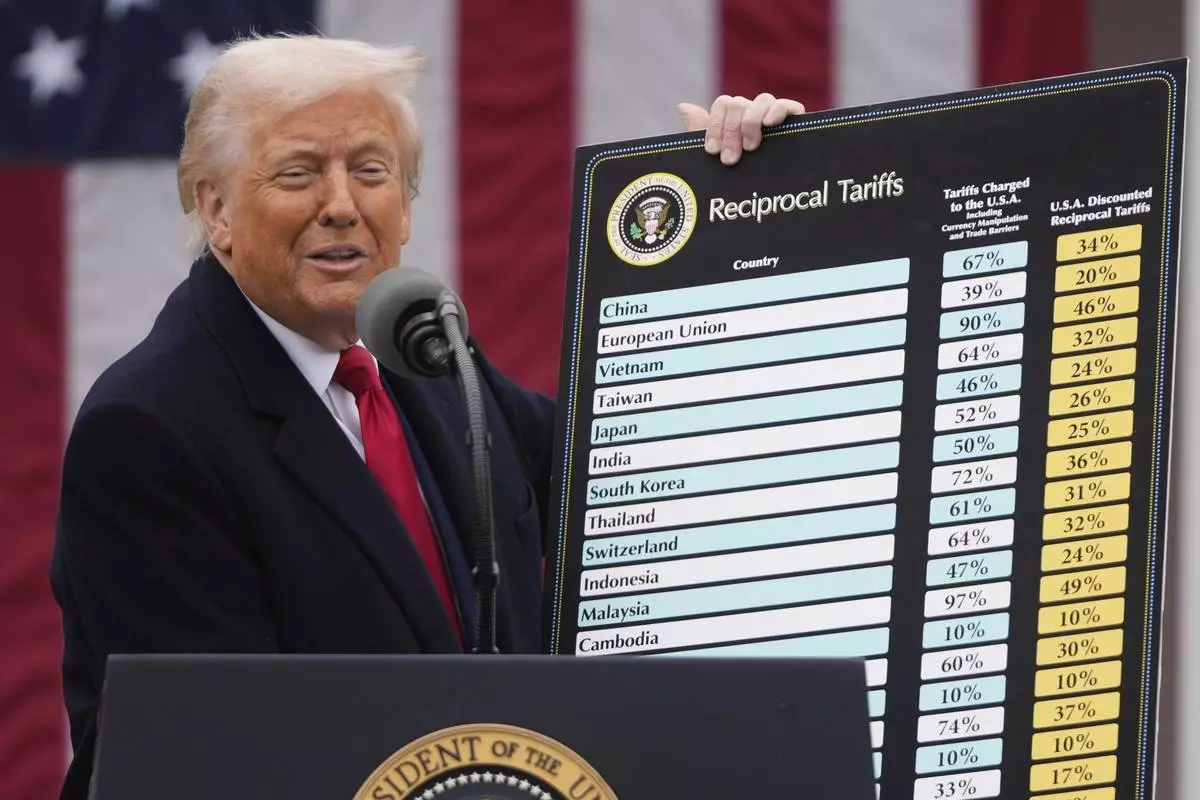
FILE - President Donald Trump speaks during an event to announce new tariffs in the Rose Garden at the White House, on April 2, 2025, in Washington. (AP Photo/Mark Schiefelbein, File)
FILE - President Donald Trump speaks during an event to announce new tariffs in the Rose Garden at the White House, on April 2, 2025, in Washington. (AP Photo/Mark Schiefelbein, File)
The Pentagon said Thursday that it is changing the independent military newspaper Stars and Stripes so it concentrates on “reporting for our warfighters” and no longer includes “woke distractions.”

That message, in a social media post from Defense Secretary Pete Hegseth's spokesman, is short on specifics and does not mention the news outlet's legacy of independence from government and military leadership. It comes a day after The Washington Post reported that applicants for jobs at Stars and Stripes were being asked what they would do to support President Donald Trump's policies.

Stars and Stripes traces its lineage to the Civil War and has reported news about the military either in its newspaper or online steadily since World War II, largely to an audience of service members stationed overseas. Roughly half of its budget comes from the Pentagon and its staff members are considered Defense Department employees.

The outlet's mission statement emphasizes that it is “editorially independent of interference from outside its own editorial chain-of-command” and that it is unique among news organizations tied to the Defense Department in being “governed by the principles of the First Amendment.”

Congress established that independence in the 1990s after instances of military leadership getting involved in editorial decisions. During Trump's first term in 2020, Defense Secretary Mark Esper tried to eliminate government funding for Stars and Stripes — to effectively shut it down — before he was overruled by the president.

Hegseth's spokesman, Sean Parnell, said on X Thursday that the Pentagon “is returning Stars and Stripes to its original mission: reporting for our warfighters.” He said the department will “refocus its content away from woke distractions.”

“Stars and Stripes will be custom tailored to our warfighters,” Parnell wrote. “It will focus on warfighting, weapons systems, fitness, lethality, survivability and ALL THINGS MILITARY. No more repurposed DC gossip columns; no more Associated Press reprints.”

Parnell did not return a message seeking details. The Daily Wire reported, after speaking a Pentagon spokeswoman, that the plan is to have all Stars and Stripes content written by active-duty service members. Currently, Congress has mandated that the publication's publisher and top editor be civilians, said Max Lederer, its publisher.

The Pentagon also said that half of the outlet's content would be generated by the Defense Department, and that it would no longer publish material from The Associated Press or Reuters news services.

Also Thursday, the Pentagon issued a statement in the Federal Register that it would eliminate some 1990s era directives that governed how Stars and Stripes operates. Lederer said it's not clear what that would mean for the outlet's operations, or whether the Defense Department has the authority to do so without congressional authorization.

The publisher said he believes that Stars and Stripes is valued by the military community precisely because of its independence as a news organization. He said no one at the Pentagon has communicated to him what it wants from Stars and Stripes; he first learned of its intentions from reading Parnell's social media post.

“This will either destroy the value of the organization or significantly reduce its value,” Lederer said.

Jacqueline Smith, the outlet's ombudsman, said Stars and Stripes reports on matters important to service members and their families — not just weapons systems or war strategy — and she's detected nothing “woke” about its reporting.

“I think it's very important that Stars and Stripes maintains its editorial independence, which is the basis of its credibility,” Smith said. A longtime newspaper editor in Connecticut, Smith's role was created by Congress three decades ago and she reports to the House Armed Services Committee.

It's the latest move by the Trump administration to impose restrictions on journalists. Most reporters from legacy news outlets have left the Pentagon rather than to agree to new rules imposed by Hegseth that they feel would give him too much control over what they report and write. The New York Times has sued to overturn the regulations.

Trump has also sought to shut down government-funded outlets like Voice of America and Radio Free Europe/Radio Liberty that report independent news about the world in countries overseas.

Also this week, the administration raided the home of a Washington Post journalist as part of an investigation into a contractor accused of stealing government secrets, a move many journalists interpreted as a form of intimidation.

The Post reported that applicants to Stars and Stripes were being asked how they would advance Trump's executive orders and policy priorities in the role. They were asked to identify one or two orders or initiatives that were significant to them. That raised questions about whether it was appropriate for a journalist to be given what is, in effect, a loyalty test.

Smith said it was the government's Office of Personnel Management — not the newspaper — that was responsible for the question on job applications and said it was consistent with what was being asked of applicants for other government jobs.

But she said it was not something that should be asked of journalists. “The loyalty is to the truth, not the administration,” she said.

David Bauder writes about the intersection of media and entertainment for the AP. Follow him at http://x.com/dbauder and https://bsky.app/profile/dbauder.bsky.social.

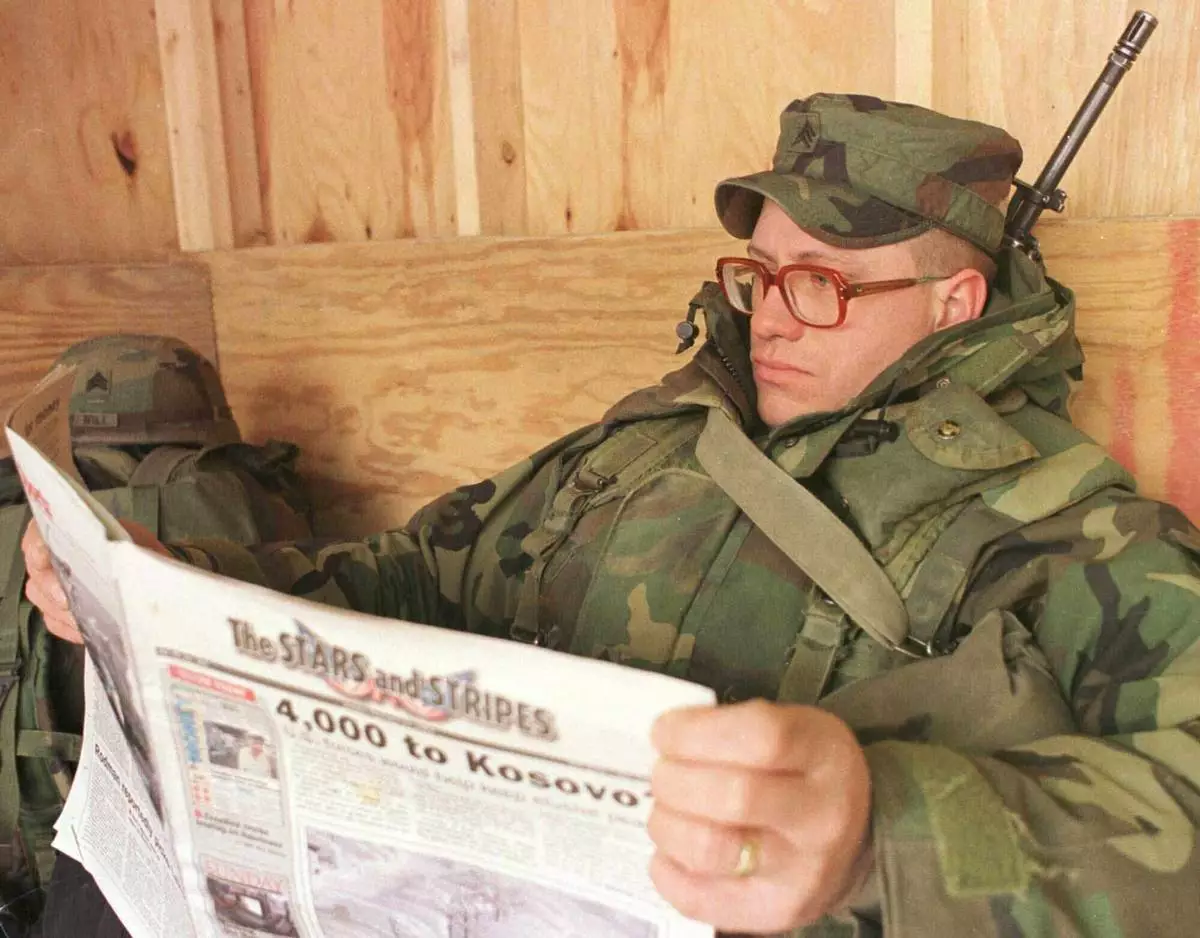
US soldier Sgt. John Hubbuch of Versailles, Ky., one of the members of NATO led-peacekeeping forces in Bosnia reads Stars and Stripes newspaper on Sunday Feb. 14, 1999. (AP Photo/Amel Emric, File)

US soldier Sgt. John Hubbuch of Versailles, Ky., one of the members of NATO led-peacekeeping forces in Bosnia reads Stars and Stripes newspaper on Sunday Feb. 14, 1999. (AP Photo/Amel Emric, File)

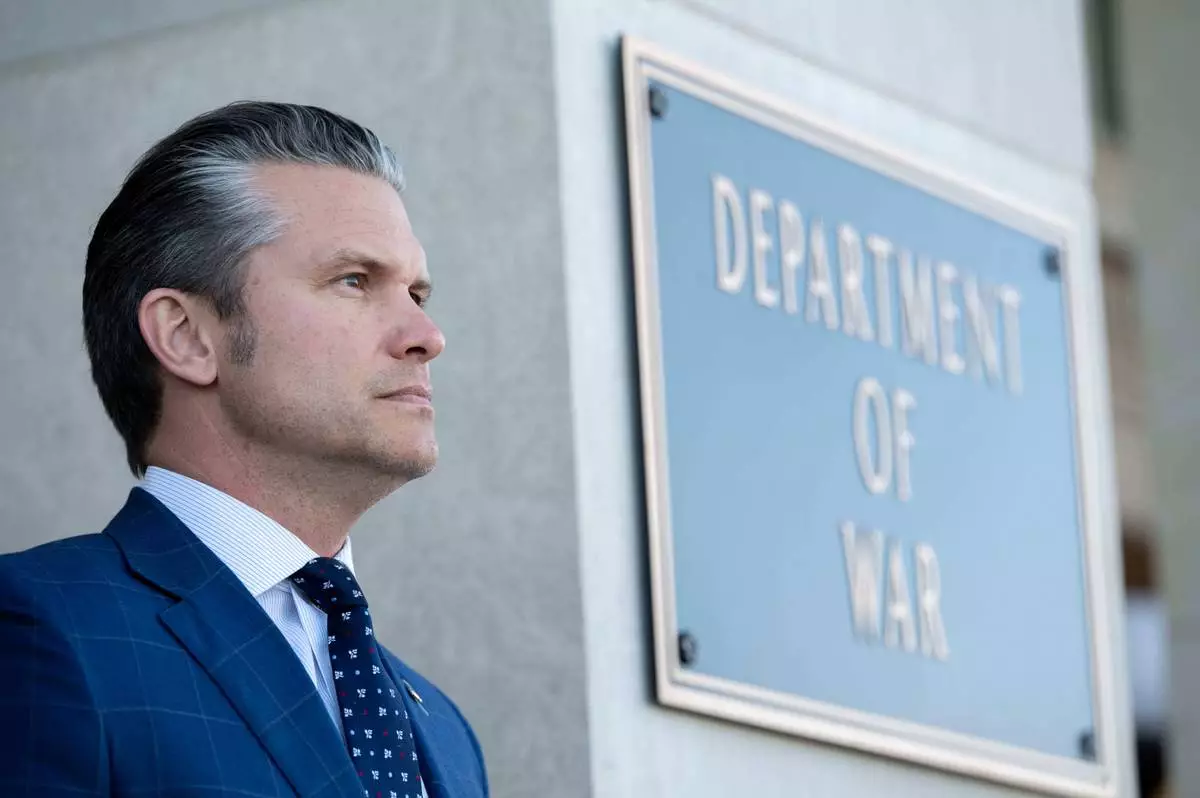
Defense Secretary Pete Hegseth stands outside the Pentagon during a welcome ceremony for Japanese Defense Minister Shinjirō Koizumi at the Pentagon, Thursday, Jan. 15, 2026 in Washington. (AP Photo/Kevin Wolf/)

Defense Secretary Pete Hegseth stands outside the Pentagon during a welcome ceremony for Japanese Defense Minister Shinjirō Koizumi at the Pentagon, Thursday, Jan. 15, 2026 in Washington. (AP Photo/Kevin Wolf/)

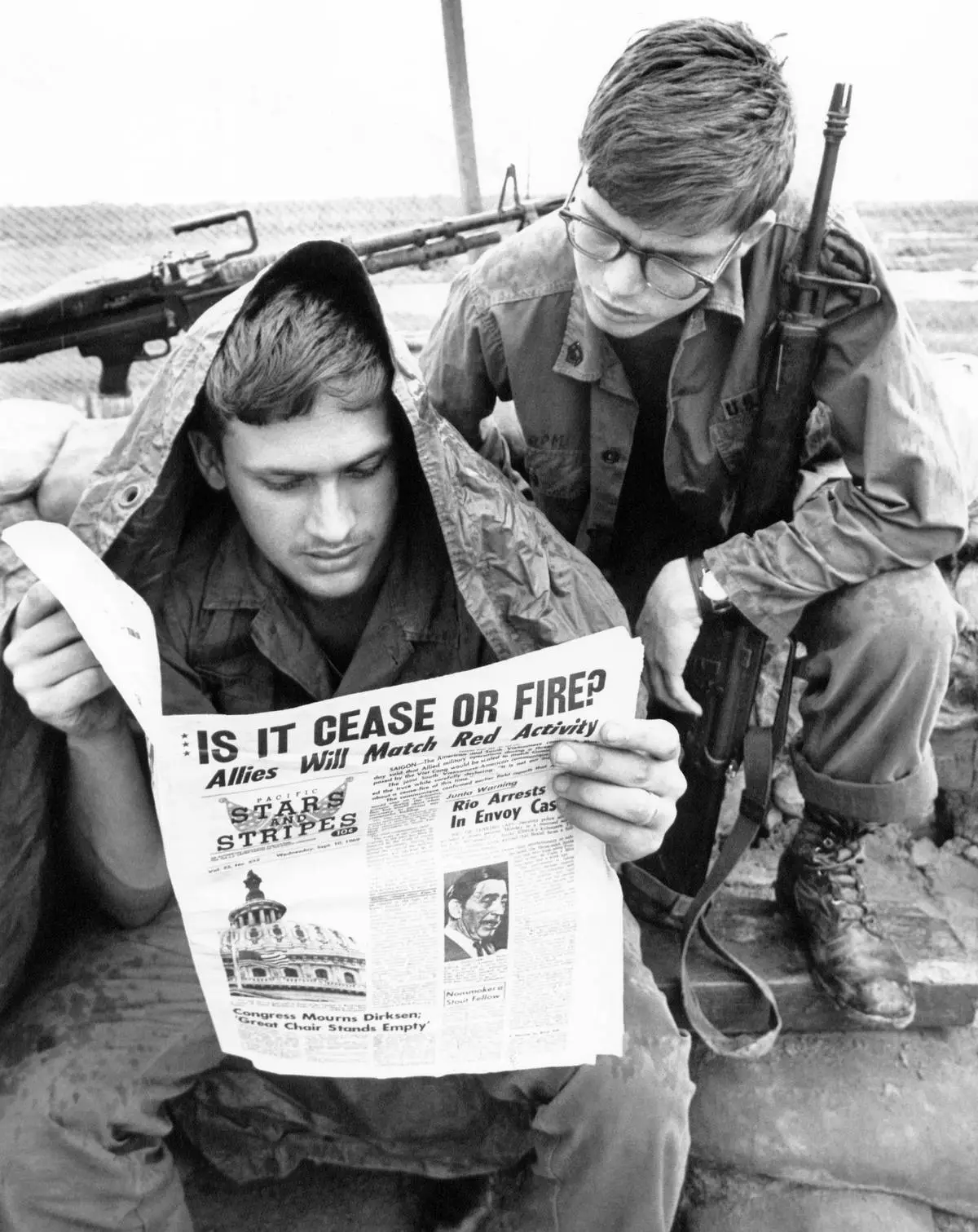
FILE - A GI with the U.S. 25th division reads Stars and Stripes newspaper at Cu Chi, South Vietnam on Sept. 10, 1969. (AP Photo/Mark Godfrey)

FILE - A GI with the U.S. 25th division reads Stars and Stripes newspaper at Cu Chi, South Vietnam on Sept. 10, 1969. (AP Photo/Mark Godfrey)

Recommended Articles