PORTLAND, Ore. (AP) — A group of mostly Democratic U.S. senators sent a letter Thursday to the U.S. Postal Service, voicing concern that mail processing changes could affect postmark dates for mail-in ballots during an election year that will determine control of Congress.
Updated agency policy says postmarks might not indicate the first day the Postal Service received the mail but rather the day it was handled in one of its processing centers. Those centers are increasingly likely to be further away from certain communities because of recent USPS consolidations, which could further delay postmarks, the 16 senators wrote.
“Postmark delays are especially problematic in states that vote entirely or largely by mail,” they wrote to Postmaster General David Steiner, noting that many states use postmark dates to determine whether a mail ballot can be counted. “These changes will only increase the likelihood of voter disenfranchisement.”
The consequences could be particularly acute in rural areas where mail has to travel farther to reach regional processing centers, they added.
“In theory, a rural voter could submit their ballot in time according to their state law, but due to the changes you are implementing, their legally-cast ballot would not be counted as it sits in a local post office,” they wrote. “As we enter a year with many local and federal elections, the risk of disrupting this vital democratic process demands your attention and action.”
The Postal Service has received the letter and will respond directly to those who sent it, spokesperson Martha Johnson said.
The agency addresses the issue on its website.
“While we are not changing our postmarking practices, we have made adjustments to our transportation operations that will result in some mailpieces not arriving at our originating processing facilities on the same day that they are mailed,” its website says. “This means that the date on the postmarks applied at our processing facilities will not necessarily match the date on which the customer’s mailpiece was collected by a letter carrier or dropped off at a retail location.”
Johnson said the language in the final rule “does not change any existing postal operations or postmarking practices.” She added that the agency looked forward to “clarifying the senators' misunderstanding.”
“Our public filing was made to enhance public understanding of exactly what a postmark represents, its relationship to the date of mailing and when a postmark is applied in the process,” she said.
People dropping off mail at a post office can request that a postmark be applied manually, ensuring the postmark date matches the mailing date, the Postal Service's website says. Manual postmarks are free of charge.
The agency said the “lack of alignment” between the mailing date and postmark date will become more common as it implements its initiative to overhaul processing and transportation networks with an emphasis on regional hubs. The aim of the initiative is to cut costs for the agency, which has grappled with losses in the billions of dollars in recent years.
Under the plan, the Postal Service got rid of twice-daily mail dispatches from local post offices to regional processing centers. That means mail received after the only transfer truck leaves sits overnight until the next daily transfer, the senators wrote.
Election officials in states that rely heavily on voting by mail expressed concern with the change.
“Not being able to have faith that the Postal Service will mark ballots on the day they are submitted and mail them in a timely manner undermines vote-by-mail voting, in turn undermining California and other elections,” California Secretary of State Shirley Weber said in a statement.
She said her office will “amplify messaging to voters” who use mailed ballots that they must return their ballots early if they plan to use the post office.
Election officials in Washington state, where voting is done almost entirely by mail, are recommending that those who return their ballot within a week of Election Day do so at a drop box or voting center.
“Given the operational and logistical priorities recently set by the USPS, there is no guarantee that ballots returned via mail will be postmarked by the USPS the same day they are mailed,” the secretary of state's office said in a statement.
The senators urged Steiner to restore “timely postmarks” and fully stand up an election mail task force. The lawmakers who signed the letter represented California, Nevada, Oregon, Washington, Minnesota, Wisconsin, Illinois, Maine, Connecticut, New Jersey and Maryland. All are Democrats but one, an independent who typically aligns with the Democratic Party.
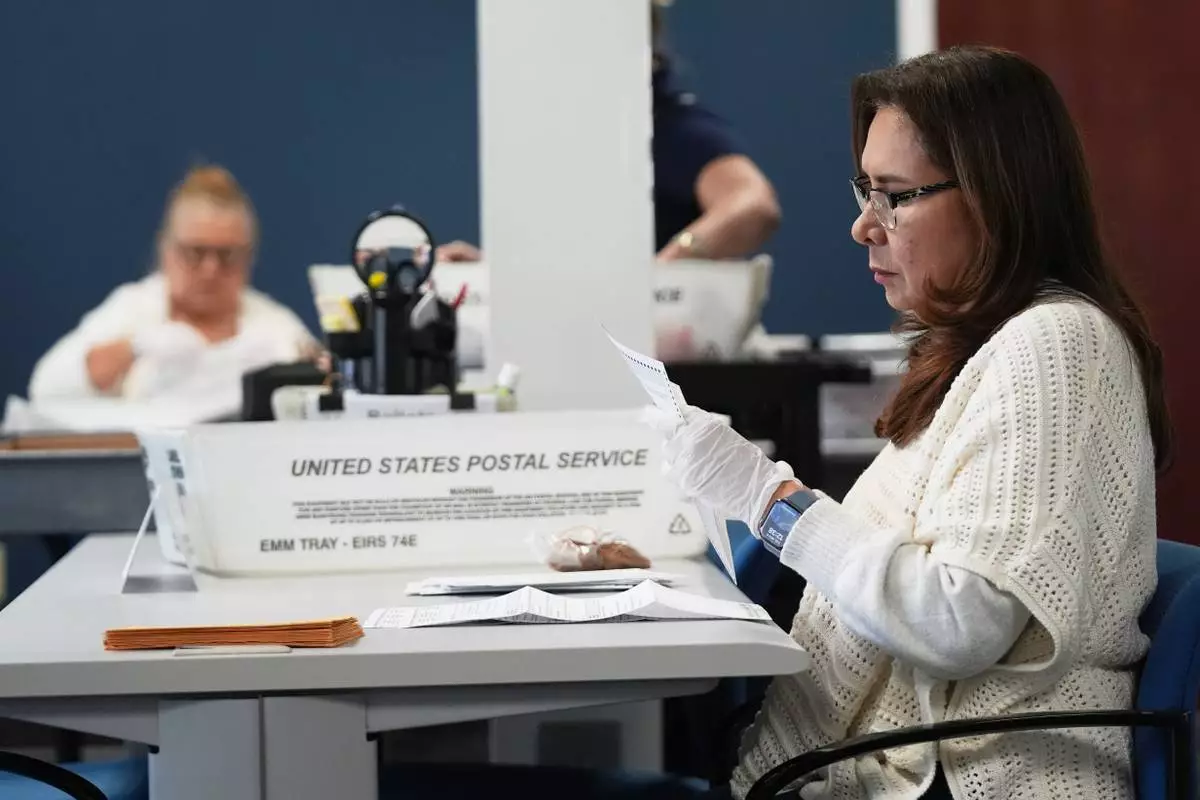
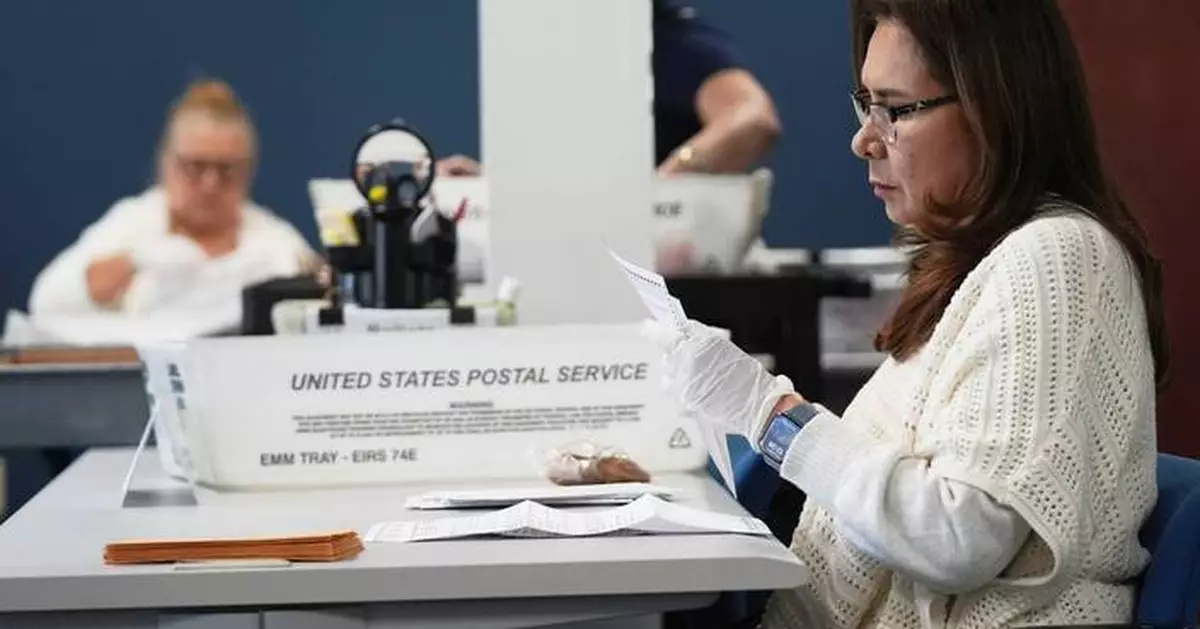
FILE - Employees sort vote-by-mail ballots from municipal elections on Election Day at the Miami-Dade County Supervisor of Elections Office, Nov. 4, 2025, in Doral, Fla. (AP Photo/Lynne Sladky, File)
WEST DES MOINES, Iowa (AP) — Sgt. 1st Class Nicole Amor was just days away from returning home to her husband and two children when a drone strike at a command center in Kuwait killed her and five other U.S. service members.
“She was almost home,” her husband, Joey Amor, said from their home in White Bear Lake, Minnesota, on Tuesday. “You don’t go to Kuwait thinking something’s going to happen, and for her to be one of the first – it hurts.”
Amor was one of four U.S. soldiers killed in the Iran war on Sunday and identified Tuesday by the Pentagon; two soldiers haven't yet been publicly identified. The members of the Army Reserve worked in logistics and kept troops supplied with food and equipment.
They died just one day after the U.S. and Israel launched its military campaign against Iran. Iran responded by launching missiles and drones against Israel and several Gulf Arab states that host U.S. armed forces.
Those killed also included Capt. Cody Khork, 35, of Winter Haven, Florida; Sgt. 1st Class Noah Tietjens, 42, of Bellevue, Nebraska; and Sgt. Declan Coady, 20, of West Des Moines, lowa, who was posthumously promoted from specialist. No other names were released.
“These men and women all bravely volunteered to defend our country, and their sacrifice will never be forgotten,” Army Secretary Daniel Driscoll said.
All were assigned to the 103rd Sustainment Command, which provides food, fuel, water and ammunition, transport equipment and supplies.
“Sadly, there will likely be more, before it ends. That’s the way it is,” President Donald Trump said of deaths.
Coady had just told his father last week that he had been recommended for a promotion from specialist to sergeant, a rank he received posthumously.
He was one of the youngest people in his class but seemed to impress his instructors, his father Andrew Coady said Tuesday.
“He was very good at what he did," he said.
Coady trained as an information technology specialist with the Army Reserves and was studying cybersecurity at Drake University in Des Moines. He was taking online classes while in Kuwait and wanted to become an officer.
“I still don’t fully think it’s real,” his sister Keira Coady said. “I just remember all of our conversations about what he was going to do when he came back.”
Amor, 39, was an avid gardener who enjoyed making salsa from the peppers and tomatoes in her garden with her son, a senior in high school. She also enjoyed rollerblading and bicycling with her fourth-grade daughter.
A week before the drone attack, Amor was moved off-base to a shipping container-style building that had no defenses, Joey Amor said.
“They were dispersing because they were in fear that the base they were on was going to get attacked and they felt it was safer in smaller groups in separate places,” he said.
He last spoke to her about two hours before she was killed. He said she was working long shifts and they had been messaging about her tripping and falling the night before.
“She just never responded in the morning,” he said.
Khork was very patriotic and drawn from a young age to serving the U.S., his family said in a statement Tuesday.
He enlisted in the Army Reserve and joined Florida Southern College’s ROTC program.
“That commitment helped shape the course of his life and reflected the deep sense of duty that was always at the core of who he was,” said his mother, Donna Burhans, father, James Khork, and stepmother, Stacey Khork, in a statement.
Khork also loved history and had a degree in political science.
His family described him as “the life of the party, known for his infectious spirit, generous heart, and deep care for those who served alongside him and for everyone blessed to know him.”
One of Khork’s friends, Abbas Jaffer, posted on Facebook on Monday that he had lost the best person he had ever known.
“My best friend, best man, and brother gave his life defending our country overseas,” Jaffer said. Khork and Jaffer had been friends for more than 16 years.
Tietjens lived with his family in the Washington Terrace mobile home park in the Omaha suburb of Bellevue, Nebraska. He was married with a son, according to a Facebook page.
Tietjens earned a black belt in Philippine Combatives and Taekwondo and was “an instructor who gave his time, discipline, and leadership to others,” the Philippine Martial Arts Alliance said in a Facebook post.
On the mat and as a soldier, “he carried the same values: honor, discipline, service, and commitment to others,” the organization said.
Nebraska Gov. Gov. Pillen paid tribute to the family Tuesday.
“Noah stepped up to serve and defend the American people from foreign enemies around the world — a sacrifice we must never forget," he wrote.
“We are holding the Tietjens family close in our hearts during this unbelievably difficult time and will keep them in our prayers," he said.
Boone contributed from Boise, Idaho, and Toropin from Washington. Associated Press reporters Sarah Raza in Sioux Falls, South Dakota; Ed White in Detroit; Josh Funk in Omaha, Nebraska; David Fischer in Miami and Hallie Golden in Seattle contributed to this report.

Keira Coady talks about her brother, Sgt. Declan Coady, 20, of West Des Moines, Iowa, outside her home, Tuesday, March 3, 2026, in West Des Moines, Iowa. (AP Photo/Charlie Neibergall)
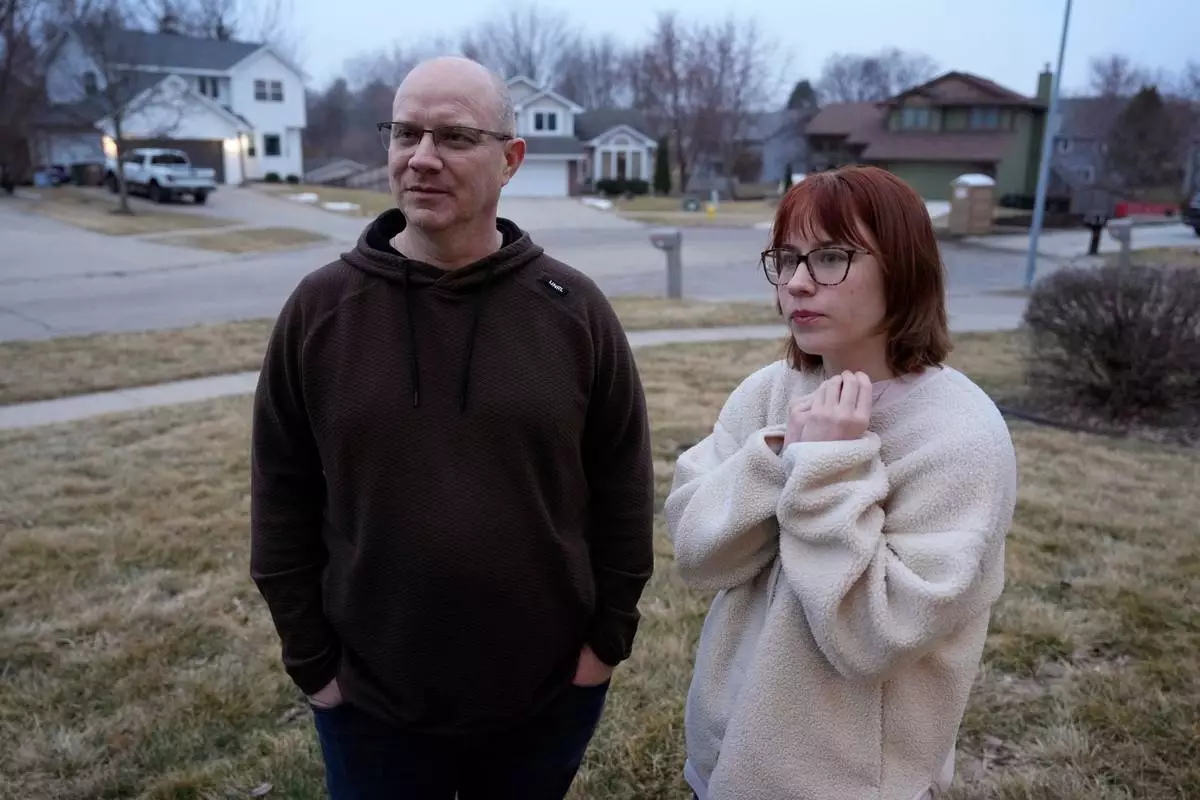
Andrew Coady and his daughter Keira, right, talk about his son, Sgt. Declan Coady, 20, of West Des Moines, Iowa, outside their home, Tuesday, March 3, 2026, in West Des Moines, Iowa. (AP Photo/Charlie Neibergall)
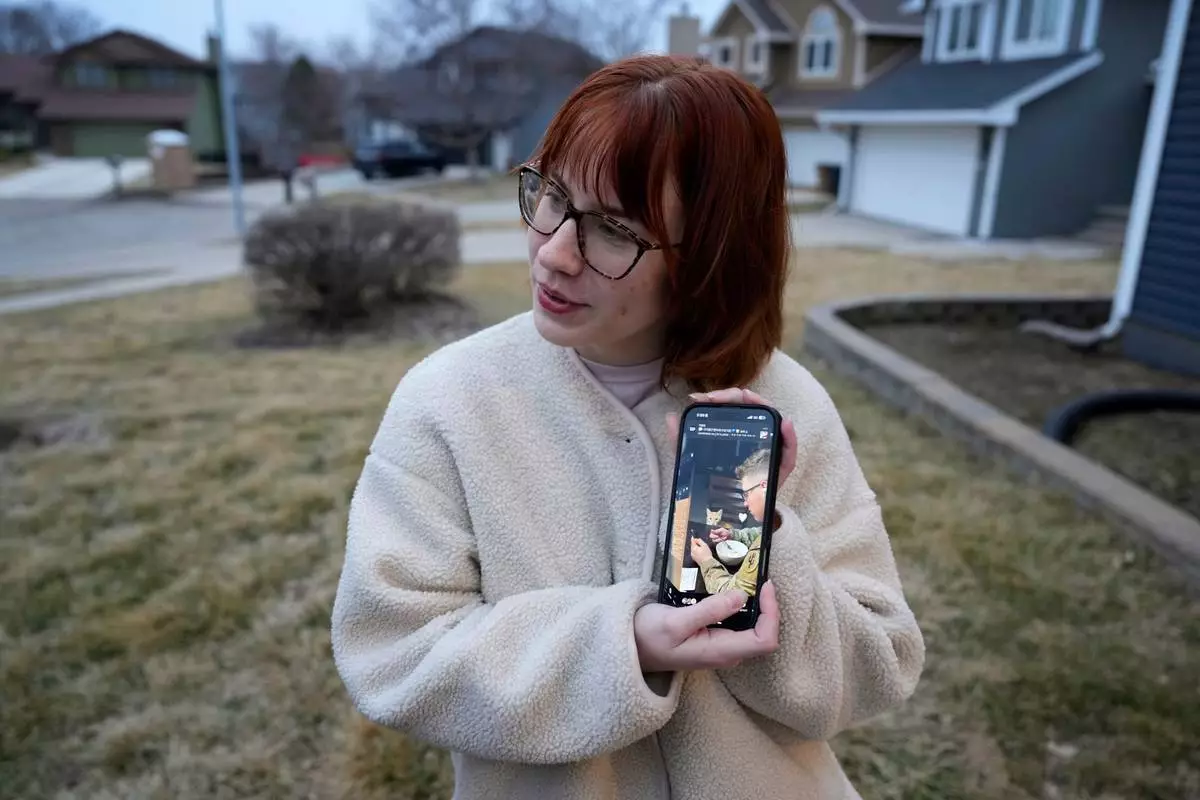
Keira Coady holds a photo of her brother, Sgt. Declan Coady, 20, of West Des Moines, Iowa, outside her home, Tuesday, March 3, 2026, in West Des Moines, Iowa. (AP Photo/Charlie Neibergall)
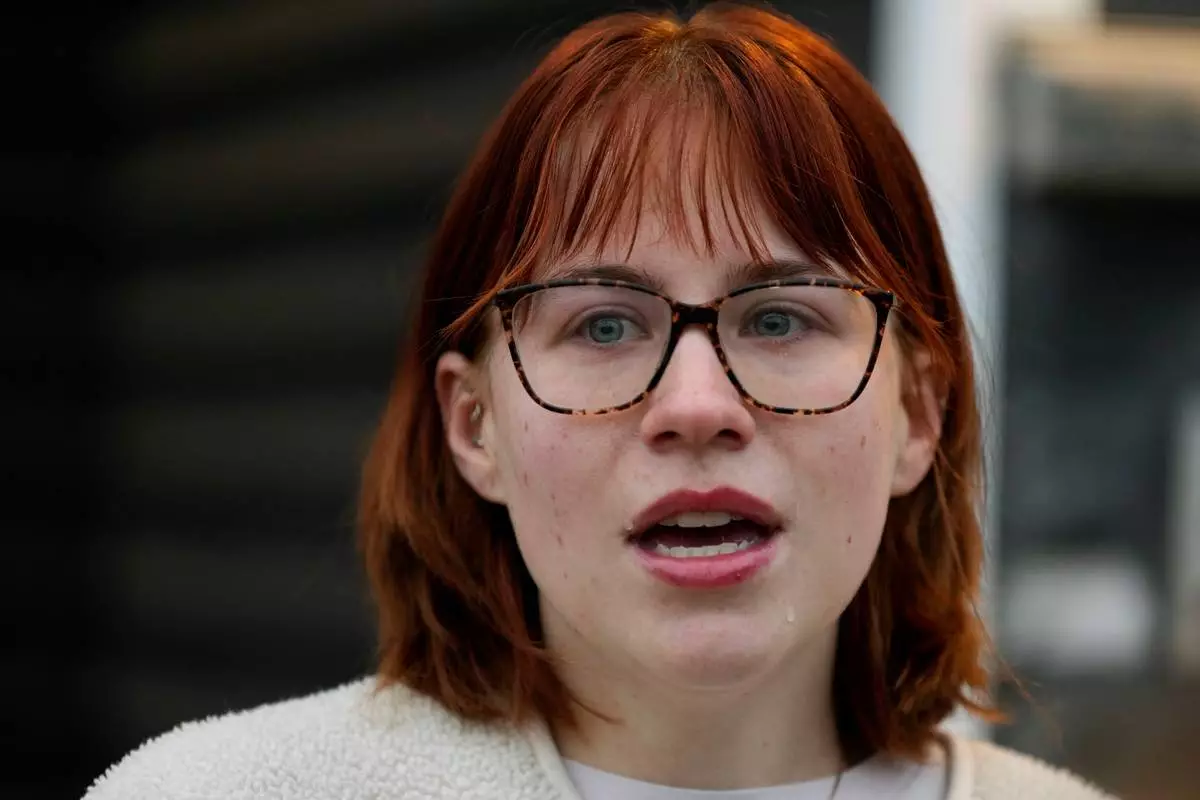
Keira Coady talks about her brother, Sgt. Declan Coady, 20, of West Des Moines, Iowa, outside her home, Tuesday, March 3, 2026, in West Des Moines, Iowa. (AP Photo/Charlie Neibergall)

This image provided by U.S. Central Command shows aircraft on the flight deck of the USS Abraham Lincoln (CVN 72) that are operating in support of the war in Iran, on Tuesday, March 3, 2026. (U.S. Navy via AP)