MONTEVIDEO (AP) — Uruguay, Colombia and Paraguay secured places at the 2026 World Cup in the next-to-last round of South American qualifiers.
The Uruguayans and Colombians had 3-0 wins Thursday, and the Paraguayans had a scoreless draw to advance to the global tournament along with already qualified Argentina, Brazil and Ecuador.
Click to Gallery
Paraguay's Alejandro Gamarra, back, and Junior Alonso embrace after qualifying for the FIFA World Cup 2026 after their match against Ecuador at Defensores del Chaco in Asuncion, Paraguay, Thursday, Sept. 4, 2025. (AP Photo/Jorge Saenz)
Players of Colombia celebrate their team's 3-0 victory over Bolivia at the end of a World Cup 2026 qualifying soccer match at Metropolitano stadium in Barranquilla, Colombia, Thursday, Sept. 4, 2025. (AP Photo/Fernando Vergara)
Colombia's Juan Fernando Quintero (20) celebrates with teammate Johan Mojica after scoring his side's third goal against Bolivia during a World Cup 2026 qualifying soccer match at Metropolitano stadium in Barranquilla, Colombia, Thursday, Sept. 4, 2025. (AP Photo/Fernando Vergara)
Uruguay's Rodrigo Aguirre, right, celebrates after scoring the opening goal against Peru during a World Cup 2026 qualifying soccer match in Montevideo, Uruguay, Thursday, Sept. 4, 2025. (AP Photo/Matilde Campodonico)
Uruguay's Rodrigo Aguirre, left, celebrates after scoring the opening goal against Peru uring a World Cup 2026 qualifying soccer match in Montevideo, Uruguay, Thursday, Sept. 4, 2025. (AP Photo/Matilde Campodonico)
“It’s a good way to qualify. The team’s offensive play was strong, there were also many highlights in individual performances," Uruguay coach Marcelo Bielsa said.
Peru, which needed wins in the last two rounds to advance, is now out of contention following the loss to Uruguay.
“It hurts to lose, it hurts because of the effort the players put in, but today the opponent outclassed us,” Peru coach Oscar Ibanez said.
James Rodriguez opened the scoring for Colombia in the 31st minute while John Cordoba and Juan Fernando Quintero added second-half goals to secure the win over Bolivia.
The Colombians return to the World Cup after missing the 2022 World Cup in Qatar.
It will be the Colombian team’s seventh appearance in the World Cup. After a debut in Chile in 1962, Colombia made three consecutive appearances between 1990 and 1998, and repeated in 2014 and 2018.
“This jersey has given me so much. I’m grateful for everything I’m doing,” said James, who is aiming to play in his third World Cup. “I’ve always given everything and I’ll keep the good things for myself.”
World Cup champion Argentina defeated Venezuela 3-0 with two goals by Lionel Messi and remained well clear at the top of the South American standings.
Also on Thursday, Estêvão, Lucas Paquetá and Bruno Guimaraes scored as Brazil got a 3-0 win over Chile to ascend to second place in the standings.
The 18-year old Estêvão, who plays for Chelsea, scored his first goal with the national team in the 38th, Paquetá followed with a strike in the 72nd and Guimaraes added one on the 76th.
AP soccer: https://apnews.com/hub/soccer

Paraguay's Alejandro Gamarra, back, and Junior Alonso embrace after qualifying for the FIFA World Cup 2026 after their match against Ecuador at Defensores del Chaco in Asuncion, Paraguay, Thursday, Sept. 4, 2025. (AP Photo/Jorge Saenz)

Players of Colombia celebrate their team's 3-0 victory over Bolivia at the end of a World Cup 2026 qualifying soccer match at Metropolitano stadium in Barranquilla, Colombia, Thursday, Sept. 4, 2025. (AP Photo/Fernando Vergara)

Colombia's Juan Fernando Quintero (20) celebrates with teammate Johan Mojica after scoring his side's third goal against Bolivia during a World Cup 2026 qualifying soccer match at Metropolitano stadium in Barranquilla, Colombia, Thursday, Sept. 4, 2025. (AP Photo/Fernando Vergara)

Uruguay's Rodrigo Aguirre, right, celebrates after scoring the opening goal against Peru during a World Cup 2026 qualifying soccer match in Montevideo, Uruguay, Thursday, Sept. 4, 2025. (AP Photo/Matilde Campodonico)

Uruguay's Rodrigo Aguirre, left, celebrates after scoring the opening goal against Peru uring a World Cup 2026 qualifying soccer match in Montevideo, Uruguay, Thursday, Sept. 4, 2025. (AP Photo/Matilde Campodonico)
RIVERHEAD, N.Y. (AP) — A Long Island architect who led a secret life as a serial killer pleaded guilty on Wednesday to murdering seven women and admitted he killed an eighth in a string of long-unsolved crimes known as the Gilgo Beach killings.
Rex Heuermann, 62, entered the pleas in a courtroom packed with reporters, police and victims’ relatives, some of whom wept as he detailed his crimes. He will be sentenced in June to life in prison without the possibility of parole.
Heuermann's guilty pleas — to three counts of first-degree murder and four of intentional murder — bring finality to a case that bedeviled investigators, tormented victims’ relatives and tantalized a true-crime obsessed public for years. Although he wasn't charged in her death, he also admitted that he killed Karen Vergata in 1996.
Under questioning by Suffolk County District Attorney Ray Tierney, Heuermann admitted that he strangled all eight victims and dismembered some of them, that he used burner phones to contact them, and that he wrapped their bodies in burlap before dumping them.
Wearing a black suit coat and white button-down shirt, Heuermann appeared matter-of-fact and unemotional as he answered questions from Tierney and the judge. He never looked back at the packed courtroom gallery, keeping his gaze fixed straight ahead.
The women, many of them sex workers, were killed over a 17-year span and buried in remote locations, including along an isolated beach highway across the bay from where he lived, authorities said.
“This defendant walked among us play acting as a normal suburban dad when in reality, all along, he was obsessively targeting innocent women for death,” Tierney said at a news conference hours after the hearing.
He thanked relatives of the victims, including some standing alongside him, for helping bring their loved ones’ stories to life. And he praised members of the Gilgo Beach Homicide Investigation Task Force, which cracked the case with the help of clues that included DNA lifted from a discarded pizza crust.
“He thought that by killing them, he could silence them forever and get away with murder,” he said. “But he was wrong.”
Investigators and members of the public packed the hearing. Reporters and camera operators swarmed Heuermann's ex-wife, Asa Ellerup, and their daughter as they entered and left the courthouse.
“My thoughts and prayers are with the victims and their families," Ellerup said afterward. "Their loss is immeasurable and the focus should be on them at this time and moment. I ask that you give some privacy to my family as they navigate through this very difficult time.”
Ellerup and her daughter, Victoria, had no knowledge of or involvement in the killings, said their lawyer, Robert Macedonio. Ellerup has said she found it very difficult to believe her husband was serial killer, because he never gave off warning signs during their time together.
Asked about Heuermann's admissions, his defense attorney Michael Brown told reporters, “There came a point in this defense where Rex said, ‘I want to plead guilty,'" noting that one of Heuermann’s concerns was sparing the victims’ families and his own family from the ordeal of the case going to trial.
In response to a question about whether Heuermann was sorry, Brown responded, “I would hope so. ... I would expect at sentencing he would have something to say.”
As part of his guilty plea, Heuermann agreed to cooperate fully with the FBI's behavioral analysis unit.
The case began in earnest in 2010 after police found numerous sets of human remains while searching for a missing woman, Shannan Gilbert, along Long Island’s South Shore, setting off a search for a potential serial killer that attracted global interest and spawned a Hollywood movie. Although her relatives disputed the finding, authorities eventually determined that Gilbert drowned, and Brown said Wednesday that Heuermann "had nothing to do with Shannan Gilbert.”
Investigators used DNA analysis and other evidence to identify victims. In some cases, they were able to connect them to remains found elsewhere on Long Island years earlier.
Remains of six victims — Melissa Barthelemy, Maureen Brainard-Barnes, Amber Lynn Costello, Valerie Mack, Jessica Taylor and Megan Waterman — were found in the scrub along Ocean Parkway near Gilgo Beach. The remains of another victim, Sandra Costilla, were found more than 60 miles (100 kilometers) away in the Hamptons.
Police also identified the remains of Vergata, which were found on Fire Island, more than 20 miles (32 kilometers) west, in 1996, and near Gilgo Beach in 2011.
But despite the attention, including a documentary series and the 2020 Netflix film, “Lost Girls,” the investigation dragged on for more than a decade, punctuated by fleeting leads and dashed hopes.
In 2022, six weeks after a new police commissioner formed the Gilgo Beach task force, detectives identified Heuermann as a suspect by using a vehicle registration database to connect him to a pickup truck that a witness reported seeing when one of the victims disappeared in 2010.
Heuermann lived for decades in Massapequa Park, about a 25-minute drive across a causeway spanning South Oyster Bay to the sandy stretch where the women’s remains were found. Some of the victims were believed to have disappeared from that community and their cellphones were found to have pinged towers in the area, authorities said.
After the truck discovery, a grand jury authorized more than 300 subpoenas and search warrants, allowing the task force to dig in to Heuermann’s life.
Detectives collected billing records for burner phones he allegedly used to arrange meetings with the victims, retested DNA found with the bodies and scoured Heuermann’s internet search history, which showed that he had viewed violent torture pornography and exhibited an intense interest in the Gilgo Beach killings and the renewed investigation. Cellphone data showed Heuermann was in contact with some victims just before they disappeared, investigators said.
To obtain Heuermann’s DNA, a task force surveillance team tailed him in Manhattan, where he worked, and watched as he threw the remnants of his lunch — a box of partially eaten pizza crusts — into a sidewalk garbage can.
Investigators rushed in, grabbed the box, and sent it to the crime lab, which matched DNA from the crust to a male hair found on burlap used to restrain one of the victims. He was arrested in July 2023.
After Heuermann’s arrest, detectives spent more than 12 days searching his yard and home, where they found a basement vault that contained 279 weapons. On his computer, investigators said, they found what they described as a “blueprint” for the killings, including a series of checklists with reminders to limit noise, clean the bodies and destroy evidence.
Associated Press writers Philip Marcelo in New York City, Dave Collins in Hartford, Connecticut, and Julie Walker in Riverhead, New York contributed to this report.
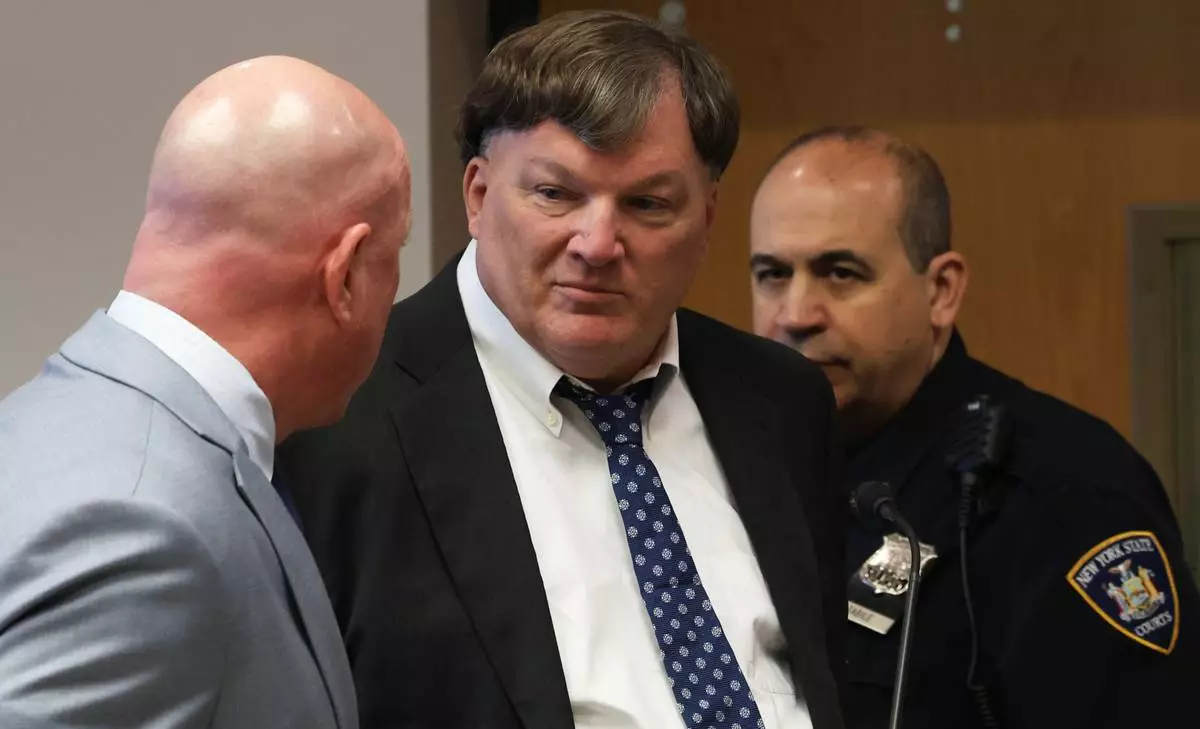
Rex A. Heuermann, center, pleads guilty to murdering seven women and admitted he killed an eighth in a string of long-unsolved crimes known as the Gilgo Beach killings, at a court hearing in Suffolk County Court in Riverhead, N.Y., Wednesday, April 8, 2026. (James Carbone/Newsday via AP, Pool)
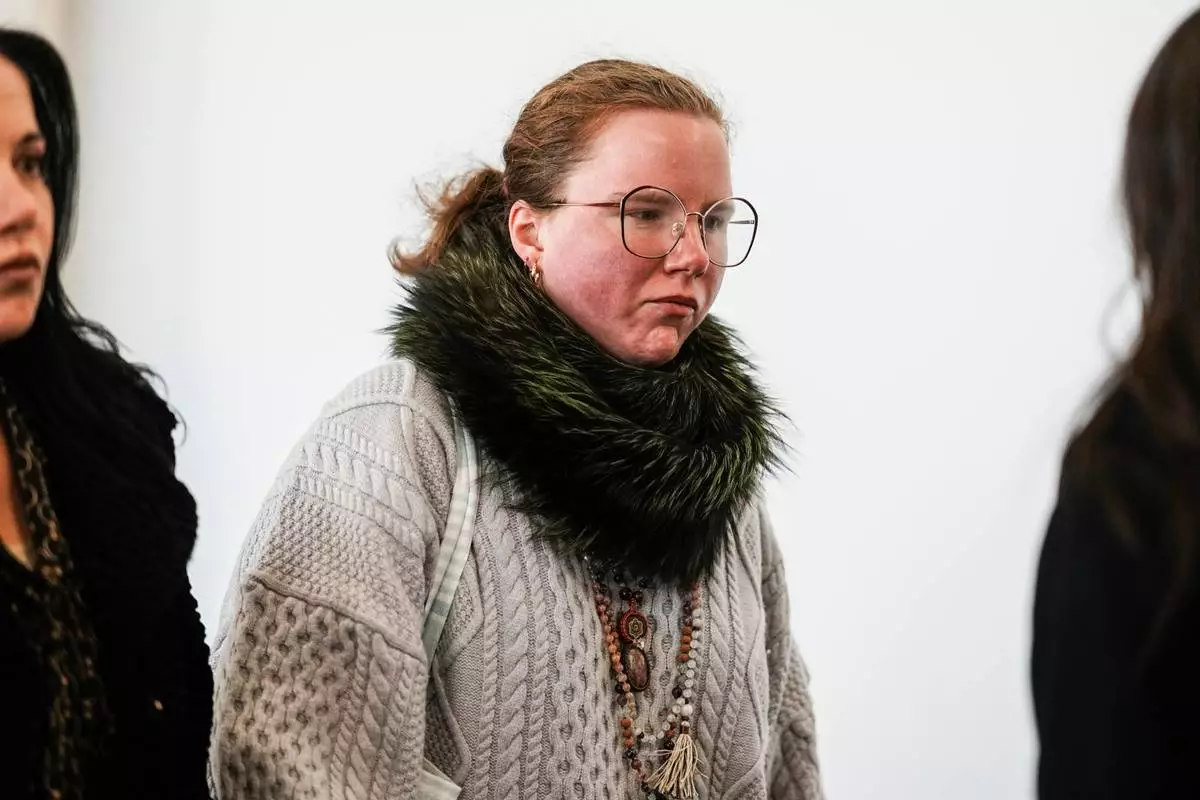
Victoria Heuermann walks to the courtroom as Rex Heuermann, accused in Long Island's infamous Gilgo Beach serial killings, is expected to plead guilty, Wednesday, April 8, 2026, at Suffolk County Court in Riverhead, N.Y. (AP Photo/Eduardo Munoz Alvarez)
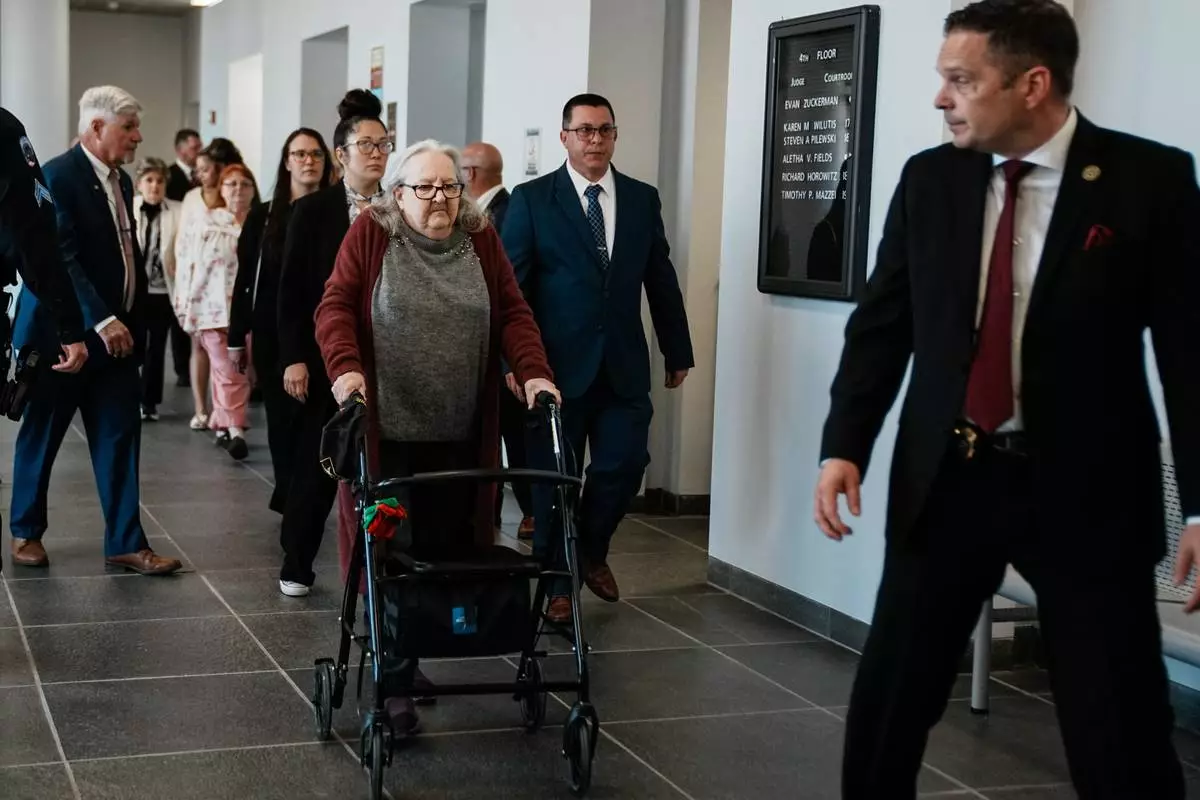
Elizabeth Baczkiel, mother of victim Jessica Taylor, walks to the courtroom as Rex Heuermann, accused in Long Island's infamous Gilgo Beach serial killings, is expected to plead guilty, Wednesday, April 8, 2026, at Suffolk County Court in Riverhead, N.Y. (AP Photo/Eduardo Munoz Alvarez)
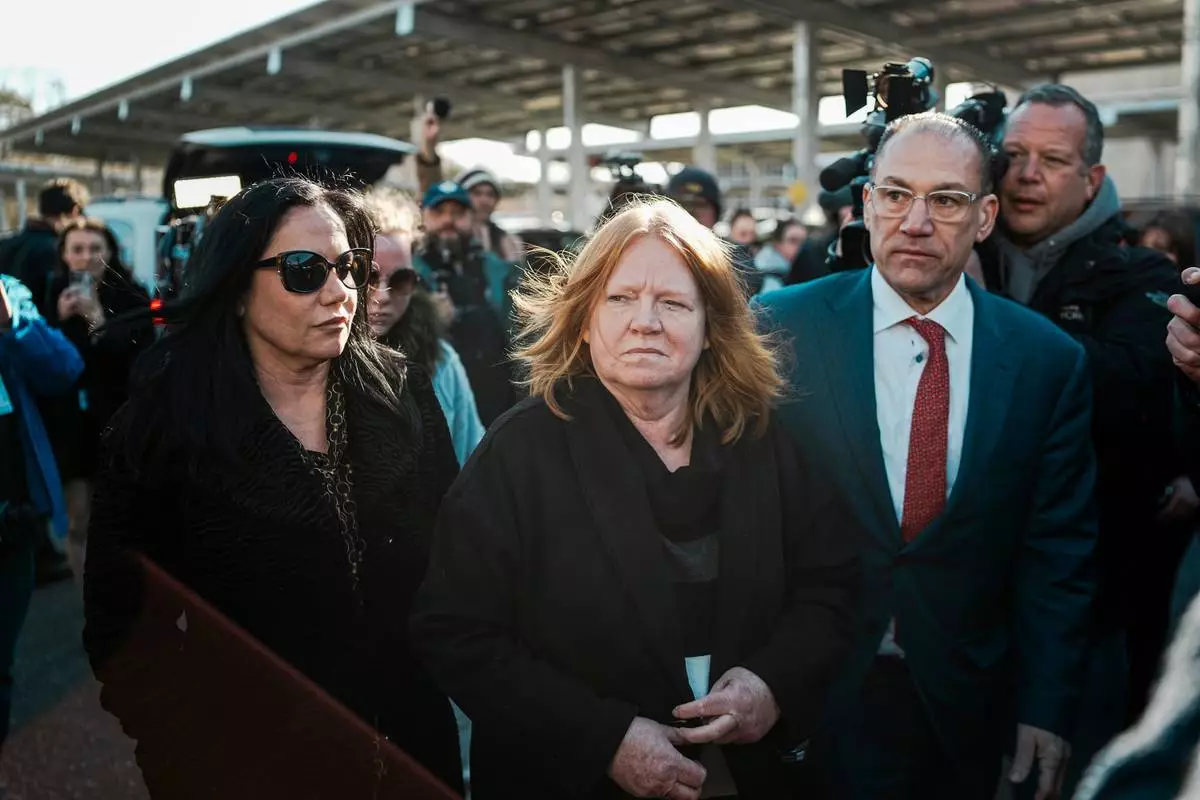
Asa Ellerup, left, wife, of Rex Heuermann and Ellerup's attorney, Robert Macedonio, right arrive outside court as Rex Heuermann, accused in Long Island's infamous Gilgo Beach serial killings, is expected to plead guilty, Wednesday, April 8, 2026, at Suffolk County Court in Riverhead, N.Y. (AP Photo/Eduardo Munoz Alvarez)
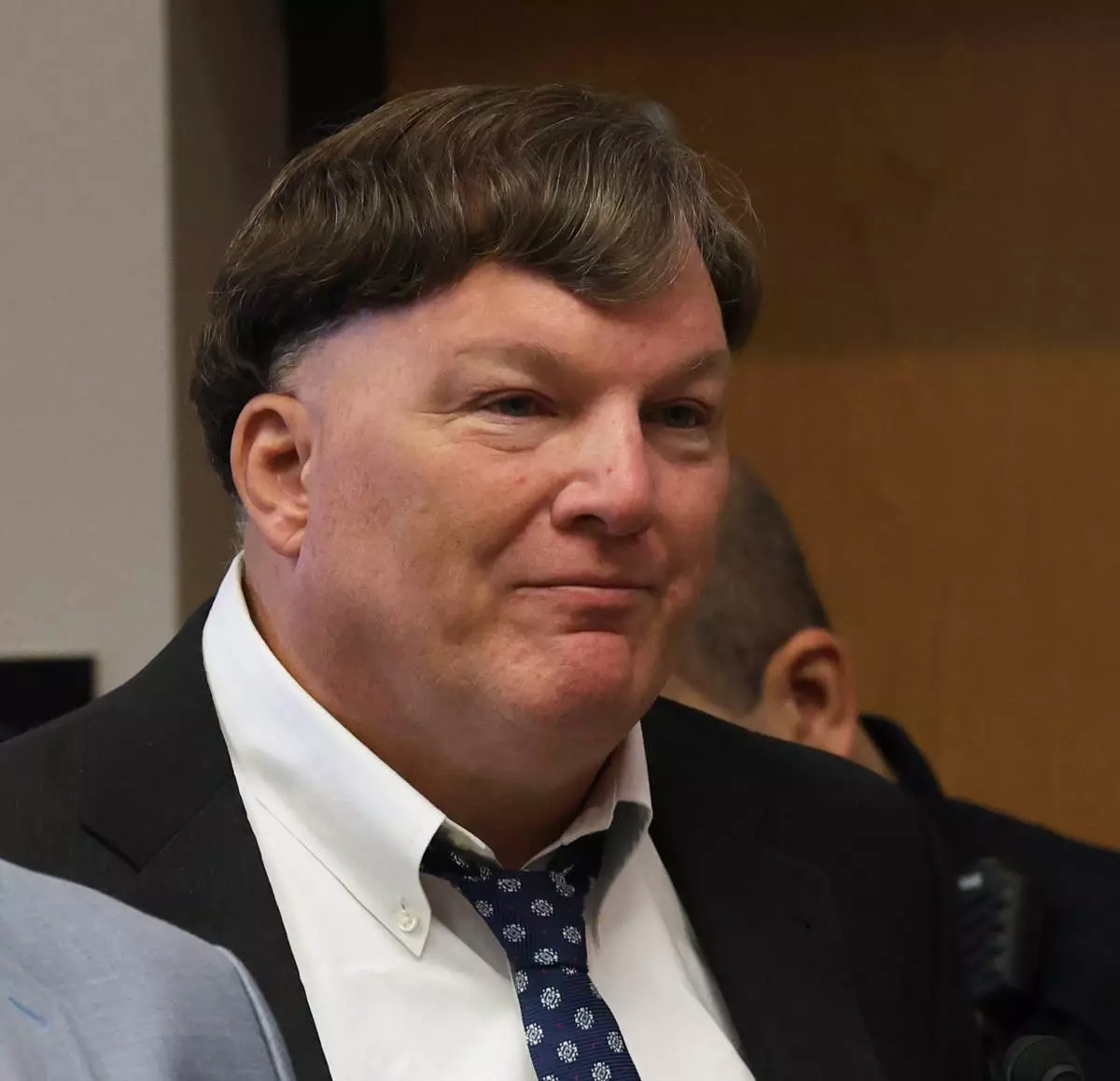
Rex A. Heuermann, pleads guilty to murdering seven women and admitted he killed an eighth in a string of long-unsolved crimes known as the Gilgo Beach killings, at a court hearing in Suffolk County Court in Riverhead, N.Y., Wednesday, April 8, 2026. (James Carbone/Newsday via AP, Pool)
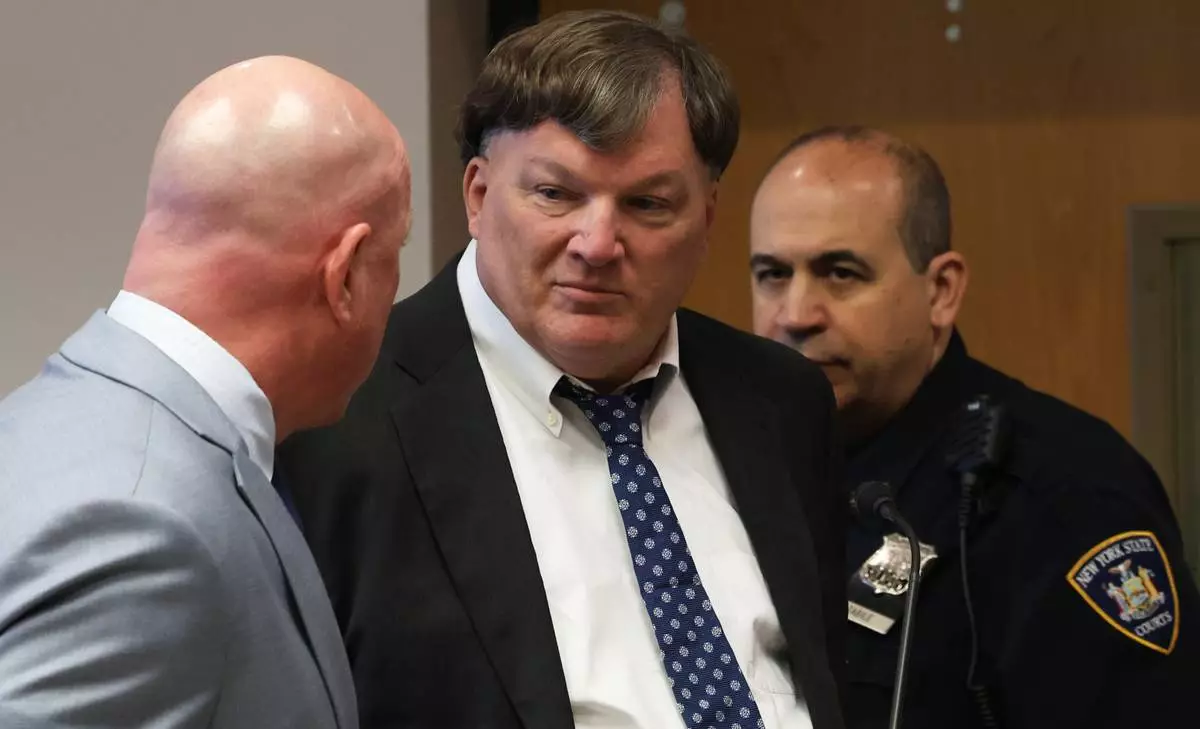
Rex A. Heuermann, pleads guilty to murdering seven women and admitted he killed an eighth in a string of long-unsolved crimes known as the Gilgo Beach killings, at a court hearing in Suffolk County Court in Riverhead, N.Y., Wednesday, April 8, 2026. (James Carbone/Newsday via AP, Pool)
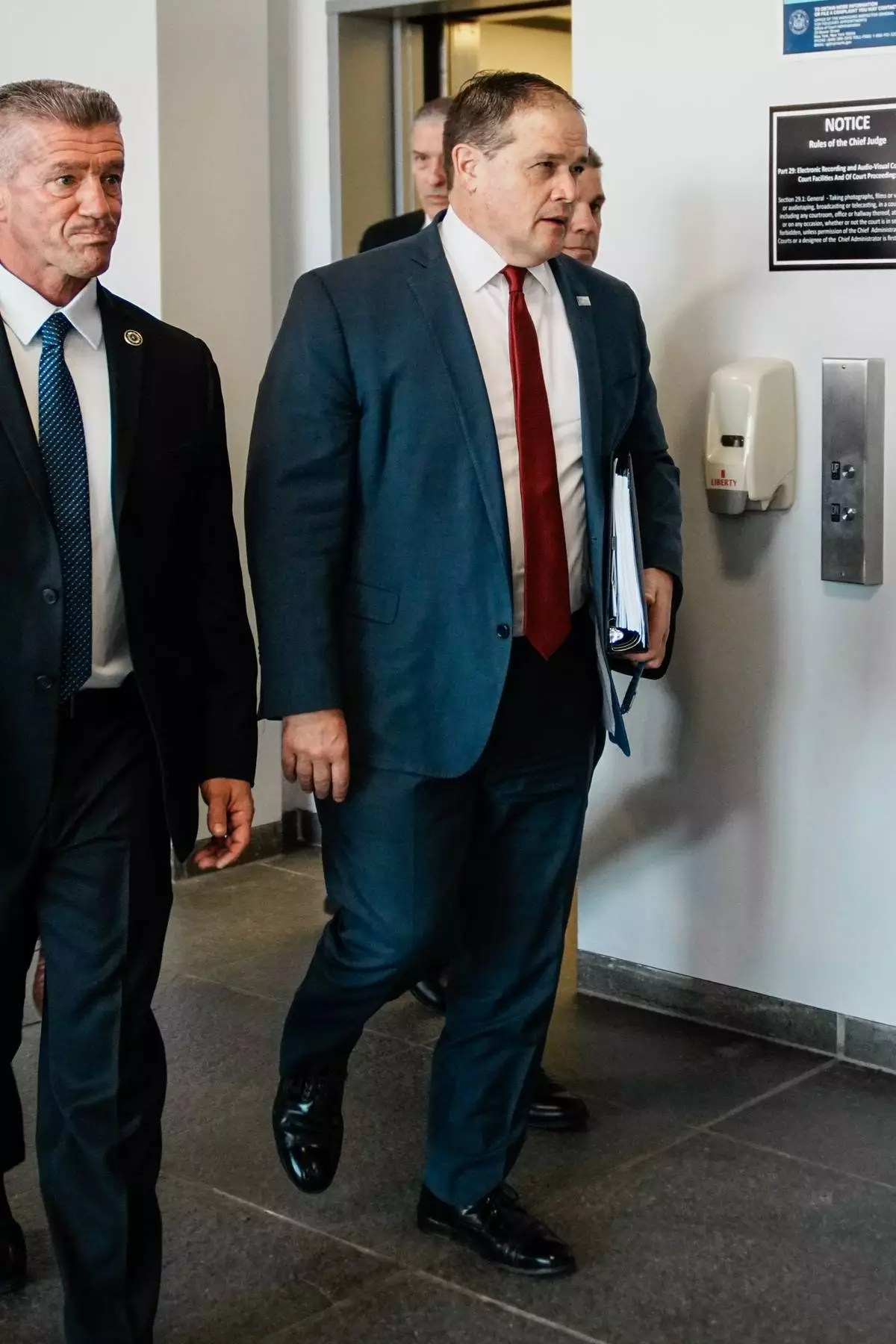
Suffolk County District Attorney Raymond A. Tierney walks to the courtroom as Rex Heuermann, accused in Long Island's infamous Gilgo Beach serial killings, is expected to plead guilty, Wednesday, April 8, 2026, at Suffolk County Court in Riverhead, N.Y. (AP Photo/Eduardo Munoz Alvarez)
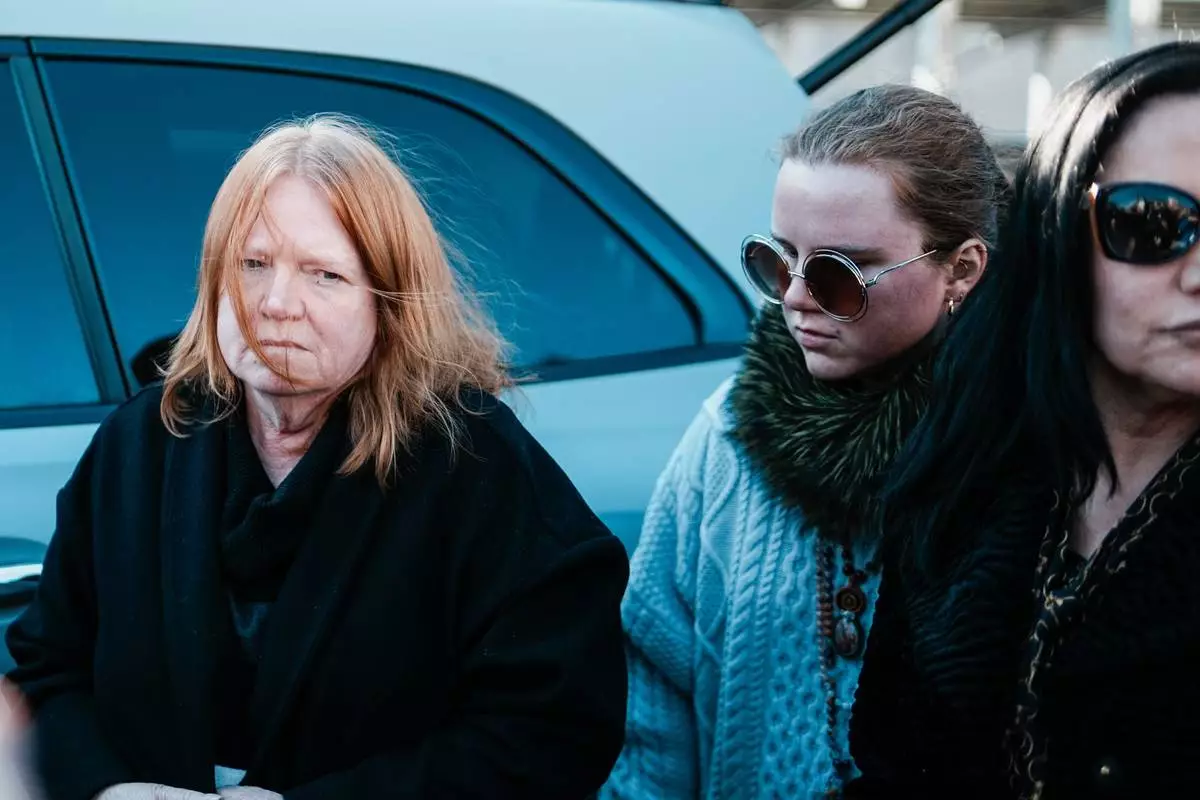
Asa Ellerup, wife, left and her daughter Victoria Heuermann arrive outside court as Rex Heuermann, accused in Long Island’s infamous Gilgo Beach serial killings, is expected to plead guilty, Wednesday, April 8, 2026, at Suffolk County Court in Riverhead, N.Y. (AP Photo/Eduardo Munoz Alvarez)
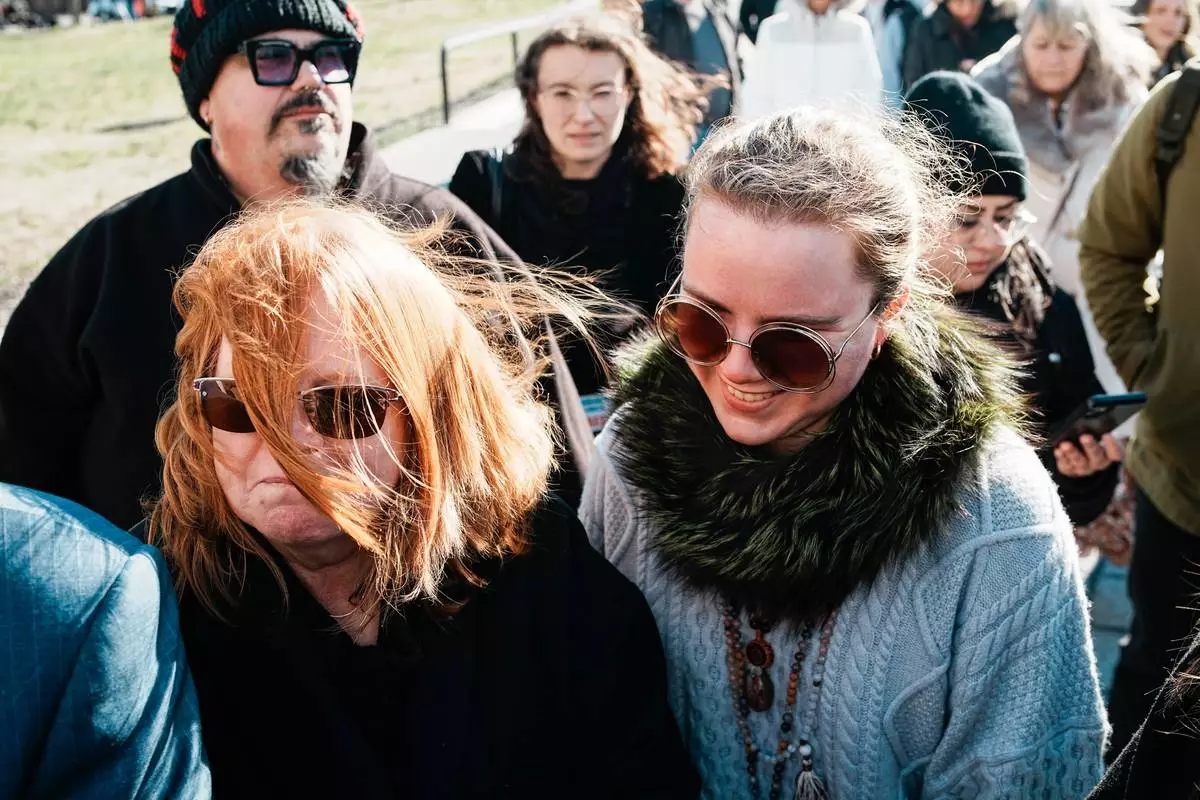
Asa Ellerup, left and her daughter Victoria Heuermann arrive outside court as Rex Heuermann, accused in Long Island’s infamous Gilgo Beach serial killings, is expected to plead guilty, Wednesday, April 8, 2026, at Suffolk County Court in Riverhead, N.Y. (AP Photo/Eduardo Munoz Alvarez)
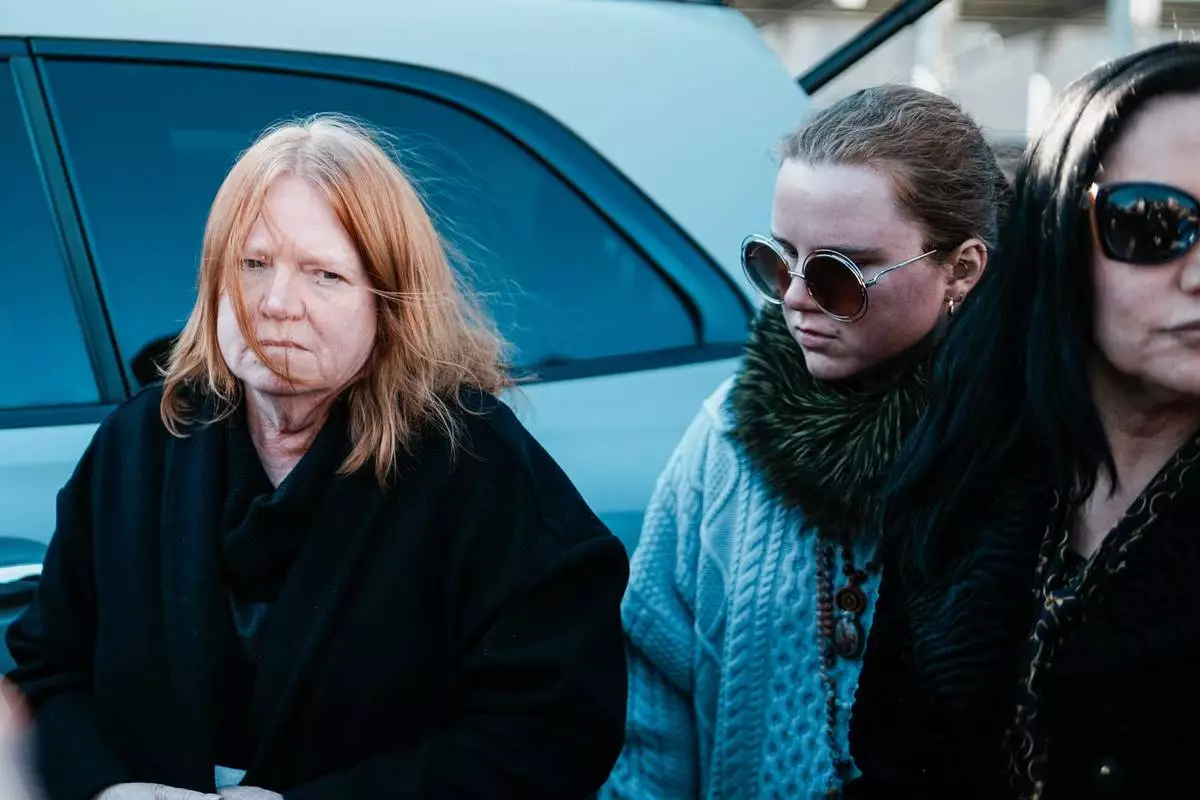
Asa Ellerup, left and her daughter Victoria Heuermann arrive outside court as Rex Heuermann, accused in Long Island’s infamous Gilgo Beach serial killings, is expected to plead guilty, Wednesday, April 8, 2026, at Suffolk County Court in Riverhead, N.Y. (AP Photo/Eduardo Munoz Alvarez)
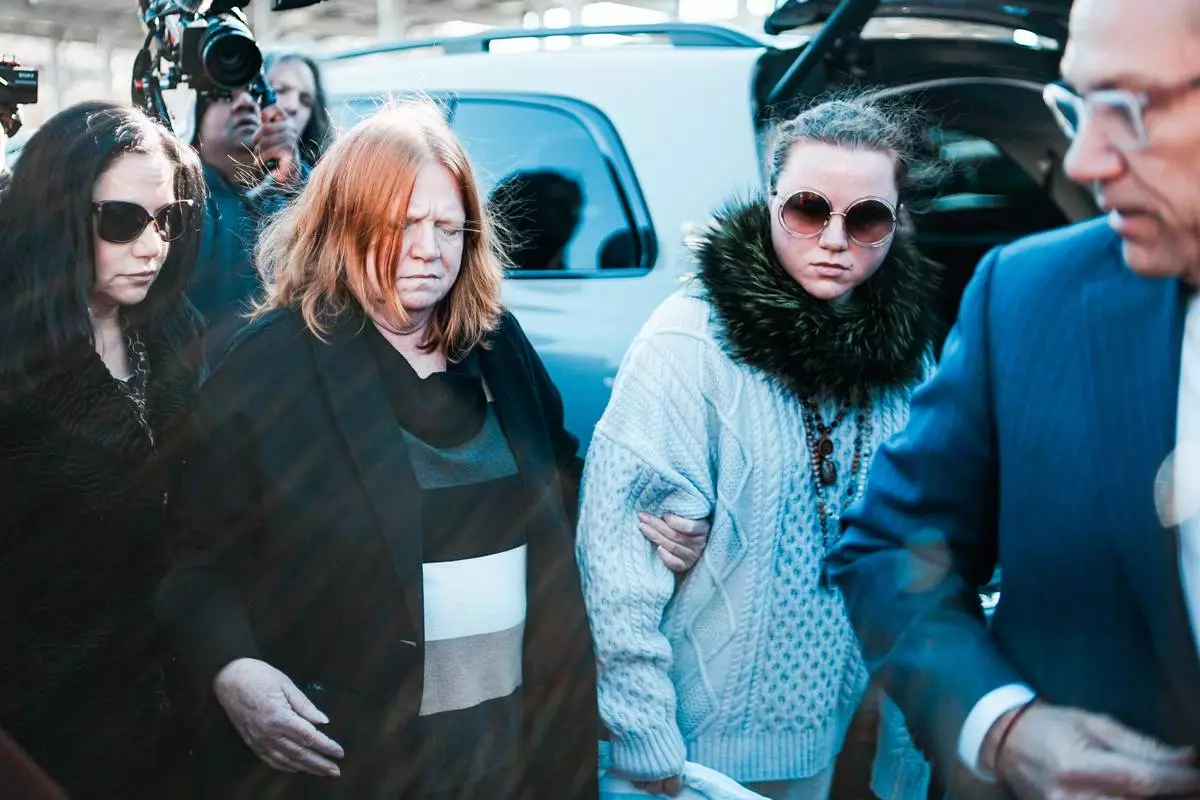
Asa Ellerup, estranged wife, center left, and her daughter Victoria Heuermann arrive outside court as Rex Heuermann, accused in Long Island’s infamous Gilgo Beach serial killings, is expected to plead guilty, Wednesday, April 8, 2026, at Suffolk County Court in Riverhead, N.Y. (AP Photo/Eduardo Munoz Alvarez)
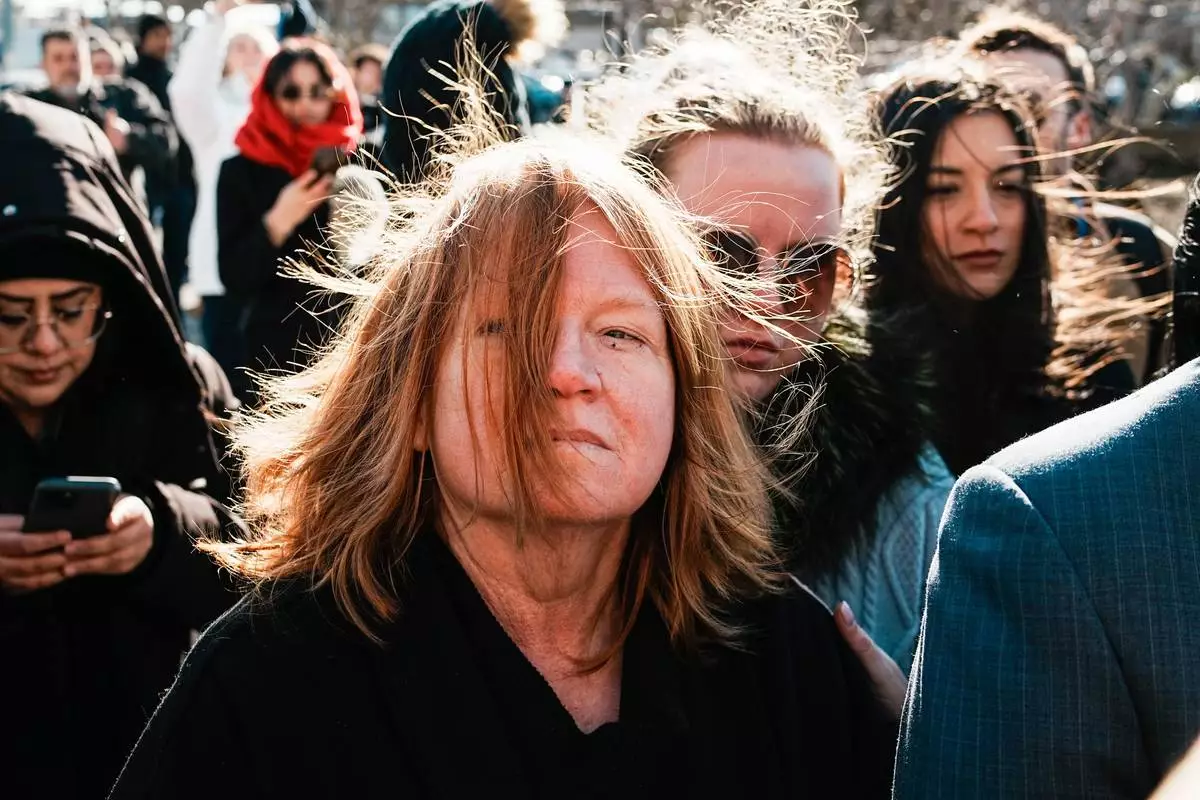
Asa Ellerup, estranged wife, of Rex Heuermann arrive outside court as Rex Heuermann, accused in Long Island’s infamous Gilgo Beach serial killings, is expected to plead guilty, Wednesday, April 8, 2026, at Suffolk County Court in Riverhead, N.Y. (AP Photo/Eduardo Munoz Alvarez)