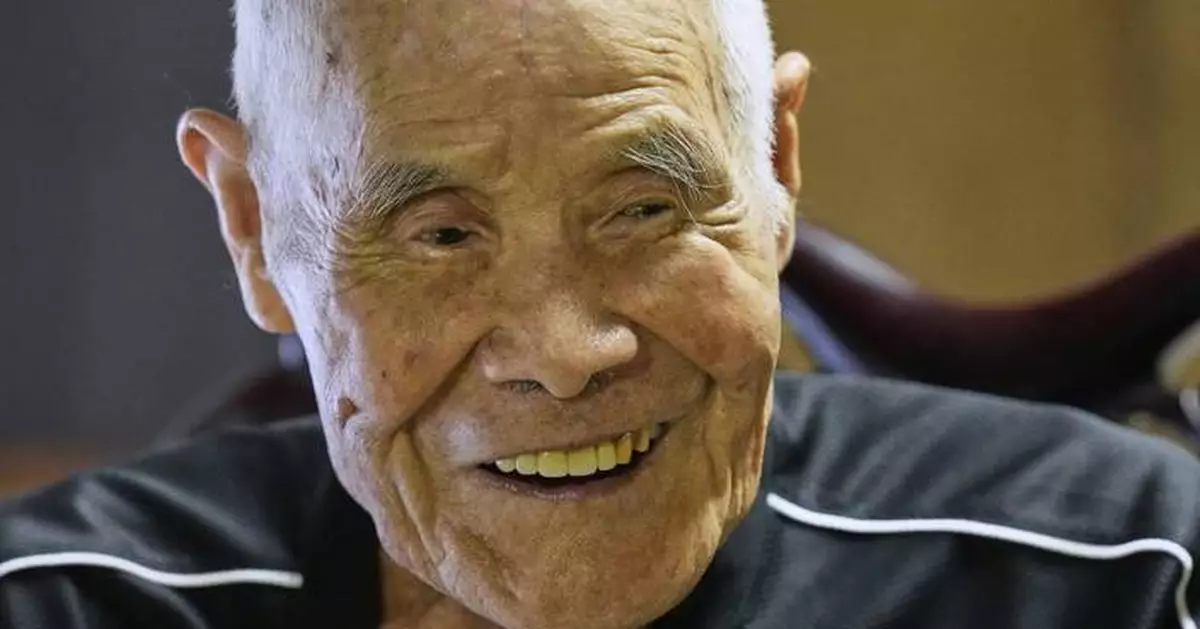
MAEBASHI, Japan (AP) — Kokichi Akuzawa almost gave up during his trek to became the oldest person to summit Mount Fuji at age 102, an achievement recognized by Guinness World Records after he reached the top in early August.
“I was really tempted to give up halfway through,” Akuzawa told The Associated Press in a recent interview. “Reaching the summit was tough, but my friends encouraged me, and it turned out well. I managed to get through it because so many people supported me.”
Akuzawa climbed with his 70-year-old daughter Motoe, his granddaughter, her husband and four friends from a local mountain climbing club.
The climbing party camped for two nights on the trail before their Aug. 5 ascent to the top of Japan’s tallest mountain, which peaks at 3,776 meters (12,388 feet).
“I’m impressed I climbed so well,” he said, communicating with the help of his 75-year-old daughter Yukiko, who repeated questions into her father’s ear because he is hard of hearing. Akuzawa added that he doesn’t take any mountain for granted at his age. “It’s better to climb while you still can.”
The trip was not Akuzawa’s first record-breaking ascent up Mount Fuji. He was 96 the first time he became the oldest person to scale the country's most famous mountain. In the six years since, he overcame heart issues, shingles and stitches from a climbing fall.
Akuzawa spent three months training before the Fuji climb, waking at 5 a.m. for hour-long walks and tackling roughly one mountain each week, mostly around Nagano prefecture to the west of Gunma in central Japan.
Surrounded by relatives and framed paintings of mountains in his home in Maebashi, about 241 kilometers (150 miles) northwest of Tokyo, Akuzawa recalls what first drew him to the mountains 88 years ago. While the magic of reaching the summit is undeniable, it was the people who kept him coming back.
“I climb because I like it,” he said. “It’s easy to make friends on the mountain.”
Akuzawa was a capable student and worked as an engine design engineer and later as a livestock artificial inseminator, a profession he held until age 85, his family said.
“Whether you liked studying or not, you could enjoy the mountain just the same,” he said. “Intelligence didn’t matter up there. We were all on equal footing and moved forward together.”
Akuzawa once enjoyed climbing solo, but with the passing years as his strength decreased he leaned more on help from others. His record climb last month was another test that he passed with assistance.
“Mount Fuji isn’t a difficult mountain, but this time was harder than six years ago. Harder than any mountain before,” he said. “I’ve never felt this weak. I didn’t have pain, but I kept wondering why I was so slow, why I had no stamina. I’d long since passed my physical limit, and it was only thanks to everyone else’s strength that I made it.”
Akuzawa has been asked if he will attempt another Mount Fuji climb.
“I’d love to keep climbing forever, but I guess I can’t anymore,” he said. “Now I’m at the level of Mount Akagi,” a nearby summit standing about half the height of Fuji with a peak of 1,828 meters (5,997 feet).
These days, Akuzawa spends his mornings volunteering at a senior care center and teaching painting at his home studio.
Mountaineering and painting demand time and dedication but both offer peace, he said.
“People who climb mountains, people who paint; if they can create something whole on that path, that’s the most fulfilling thing," Akuzawa said.
Akuzawa's daughters want him to paint Fuji at sunrise for the next addition to the depictions of mountain ranges covering his living room walls.
“I’ve got a lot of requests,” he said, prompting laughter from the assembled family. “I want to paint some scenes from the summit of Mount Fuji, places that hold special memories for me, since this was likely my last time reaching the top."
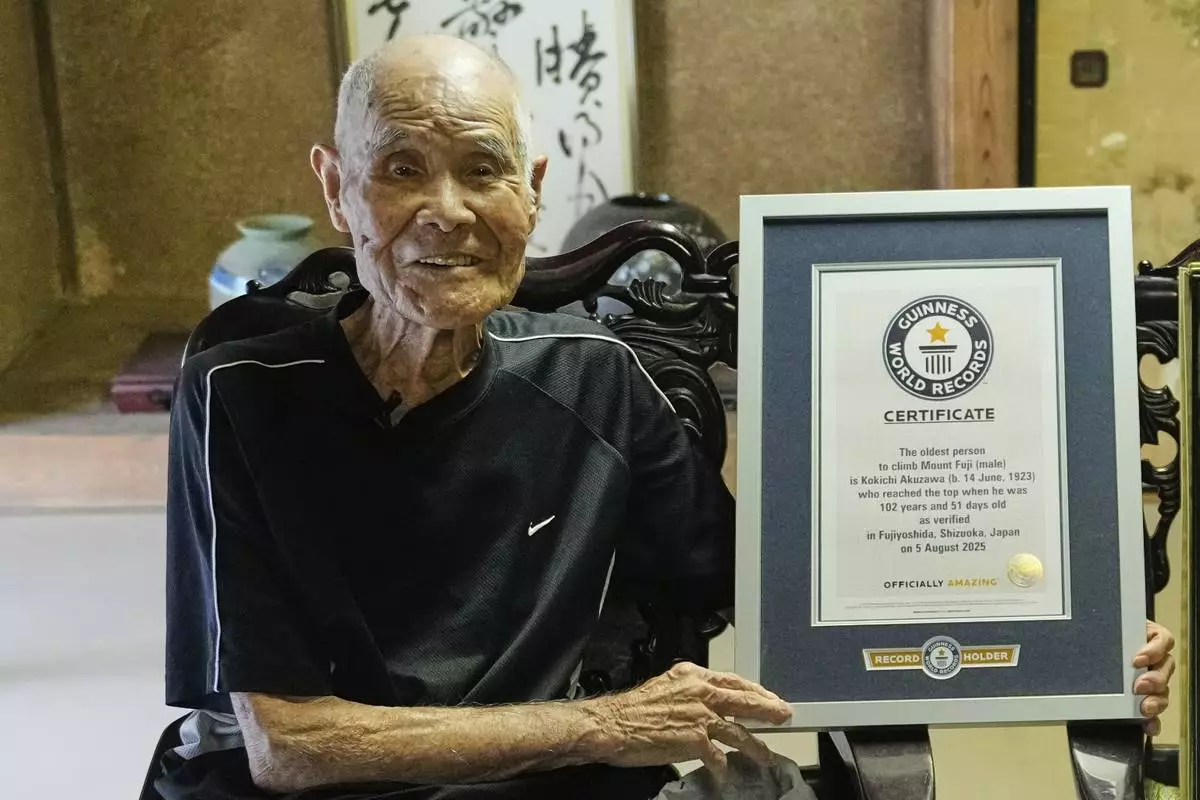
Kokichi Akuzawa, recently recognized by Guinness World Records as the oldest person to climb Mount Fuji (male), poses for a photo with his Guinness certificate during an interview with The Associated Press in Maebashi, northeast of Tokyo, Wednesday, Sept. 3, 2025. (AP Photo/Hiro Komae)
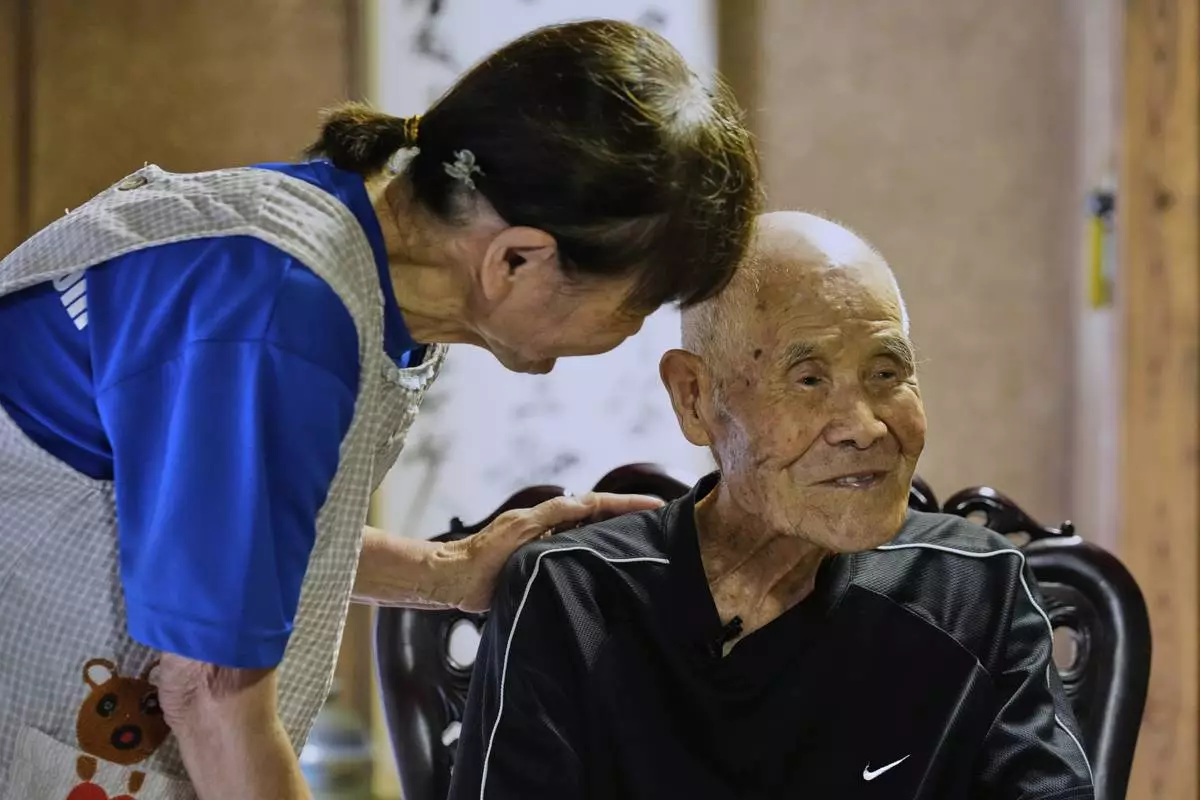
Yukiko Akuzawa, left, helps repeat a journalist's question with a bit louder voice by her father Kokichi Akuzawa, who was recently recognized by Guinness World Records as the oldest person to climb Mount Fuji (male), during an interview with The Associated Press in Maebashi, northeast of Tokyo, Wednesday, Sept. 3, 2025. (AP Photo/Hiro Komae)
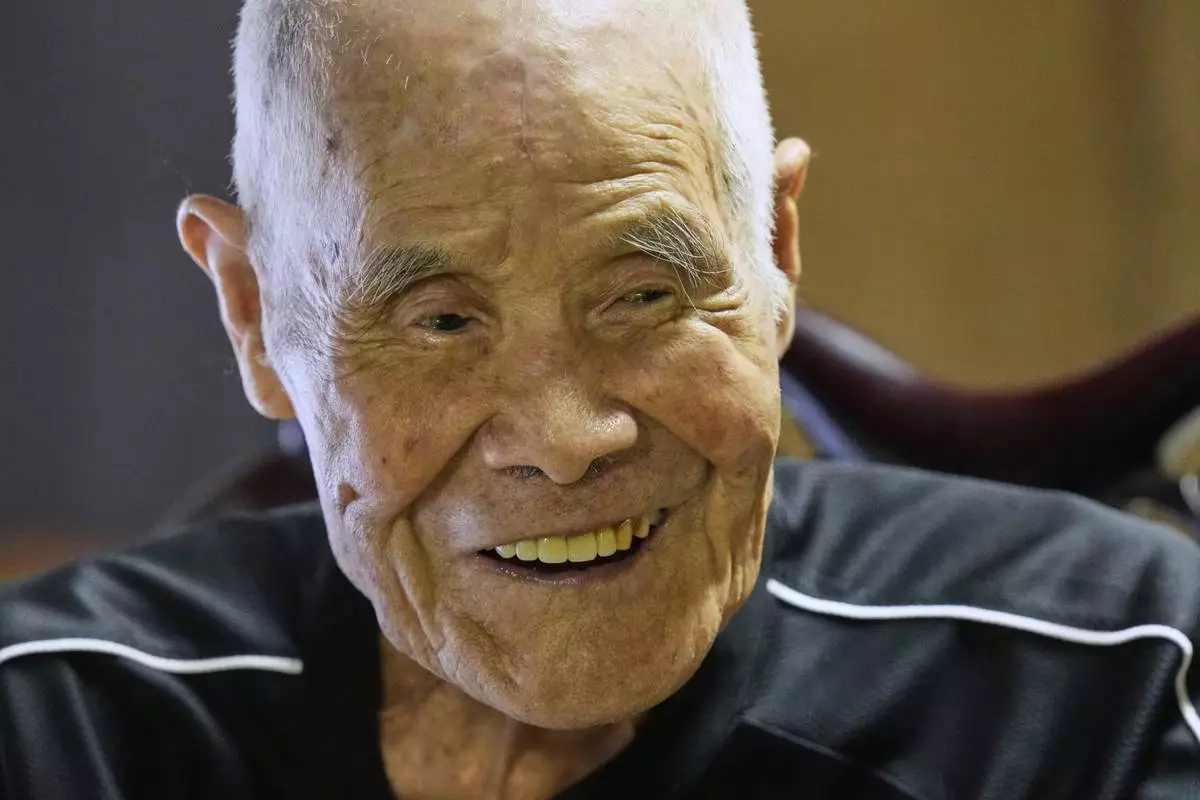
Kokichi Akuzawa, recently recognized by Guinness World Records as the oldest person to climb Mount Fuji (male), speaks during an interview with The Associated Press in Maebashi, northeast of Tokyo, Wednesday, Sept. 3, 2025. (AP Photo/Hiro Komae)
WASHINGTON (AP) — U.S. forces in the Caribbean Sea have seized another sanctioned oil tanker that the Trump administration says has ties to Venezuela, part of a broader U.S. effort to take control of the South American country’s oil.
The U.S. Coast Guard boarded the tanker, named Veronica, early Thursday, Homeland Security Secretary Kristi Noem wrote on social media. The ship had previously passed through Venezuelan waters and was operating in defiance of President Donald Trump’s "established quarantine of sanctioned vessels in the Caribbean,” she said.
U.S. Southern Command said Marines and sailors launched from the aircraft carrier USS Gerald R. Ford to take part in the operation alongside a Coast Guard tactical team, which Noem said conducted the boarding as in previous raids. The military said the ship was seized “without incident.”
Several U.S. government social media accounts posted brief videos that appeared to show various parts of the ship’s capture. Black-and-white footage showed at least four helicopters approaching the ship before hovering over the deck while armed troops dropped down by rope. At least nine people could be seen on the deck of the ship.
The Veronica is the sixth sanctioned tanker seized by U.S. forces as part of the effort by Trump’s administration to control the production, refining and global distribution of Venezuela’s oil products and the fourth since the U.S. ouster of Venezuela President Nicolás Maduro in a surprise nighttime raid almost two weeks ago.
The Veronica last transmitted its location on Jan. 3 as being at anchor off the coast of Aruba, just north of Venezuela’s main oil terminal. According to the data it transmitted at the time, the ship was partially filled with crude.
Days later, the Veronica became one of at least 16 tankers that left the Venezuelan coast in contravention of the quarantine that U.S. forces have set up to block sanctioned ships, according to Samir Madani, the co-founder of TankerTrackers.com. He said his organization used satellite imagery and surface-level photos to document the ship movements.
The ship is currently listed as flying the flag of Guyana and is considered part of the shadow fleet that moves cargoes of oil in violation of U.S. sanctions.
According to its registration data, the ship also has been known as the Gallileo, owned and managed by a company in Russia. In addition, a tanker with the same registration number previously sailed under the name Pegas and was sanctioned by the Treasury Department for being associated with a Russian company moving cargoes of illicit oil.
As with prior posts about such raids, Noem and the military framed the seizure as part of an effort to enforce the law. Noem argued that the multiple captures show that “there is no outrunning or escaping American justice.”
Speaking to reporters at the White House later Thursday, Noem declined to say how many sanctioned oil tankers the U.S. is tracking or whether the government is keeping tabs on freighters beyond the Caribbean Sea.
“I can’t speak to the specifics of the operation, although we are watching the entire shadow fleet and how they’re moving,” she told reporters.
But other officials in Trump's Republican administration have made clear they see the actions as a way to generate cash as they seek to rebuild Venezuela’s battered oil industry and restore its economy.
Trump met with executives from oil companies last week to discuss his goal of investing $100 billion in Venezuela to repair and upgrade its oil production and distribution. His administration has said it expects to sell at least 30 million to 50 million barrels of sanctioned Venezuelan oil.
Associated Press writer Ben Finley contributed to this report.
This story has been corrected to show the Veronica is the fourth, not the third, tanker seized by U.S. forces since Maduro’s capture and the ship also has been known as the Gallileo, not the Galileo.
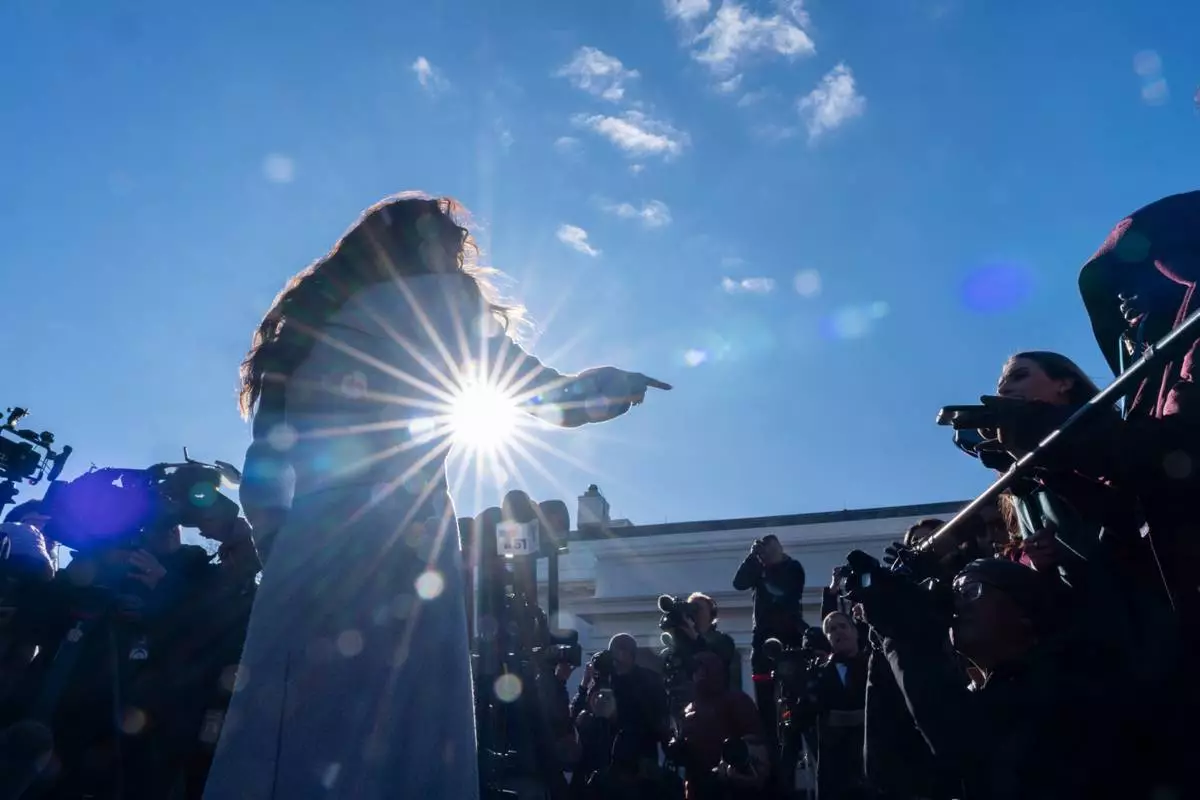
Homeland Security Secretary Kristi Noem speaks with reporters at the White House, Thursday, Jan. 15, 2026, in Washington. (AP Photo/Alex Brandon)
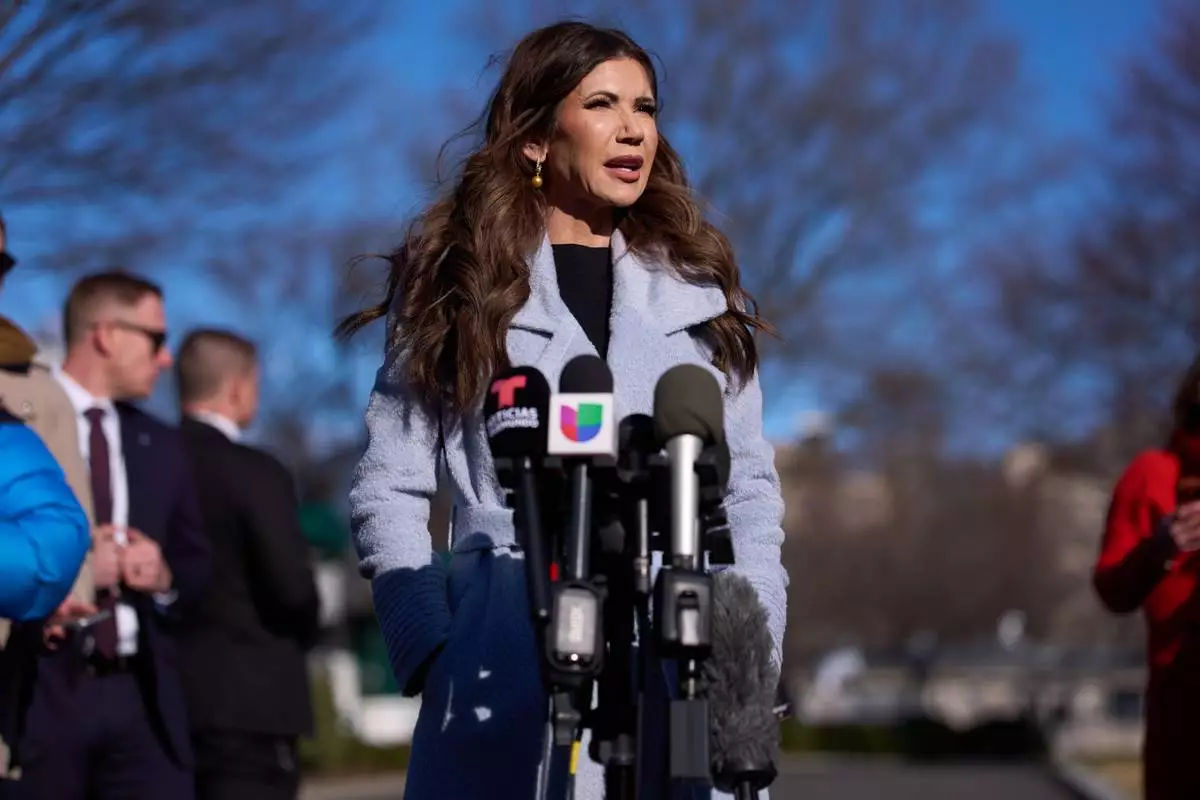
Homeland Security Secretary Kristi Noem speaks with reporters at the White House, Thursday, Jan. 15, 2026, in Washington. (AP Photo/Evan Vucci)

Homeland Security Secretary Kristi Noem speaks with reporters at the White House, Thursday, Jan. 15, 2026, in Washington. (AP Photo/Evan Vucci)
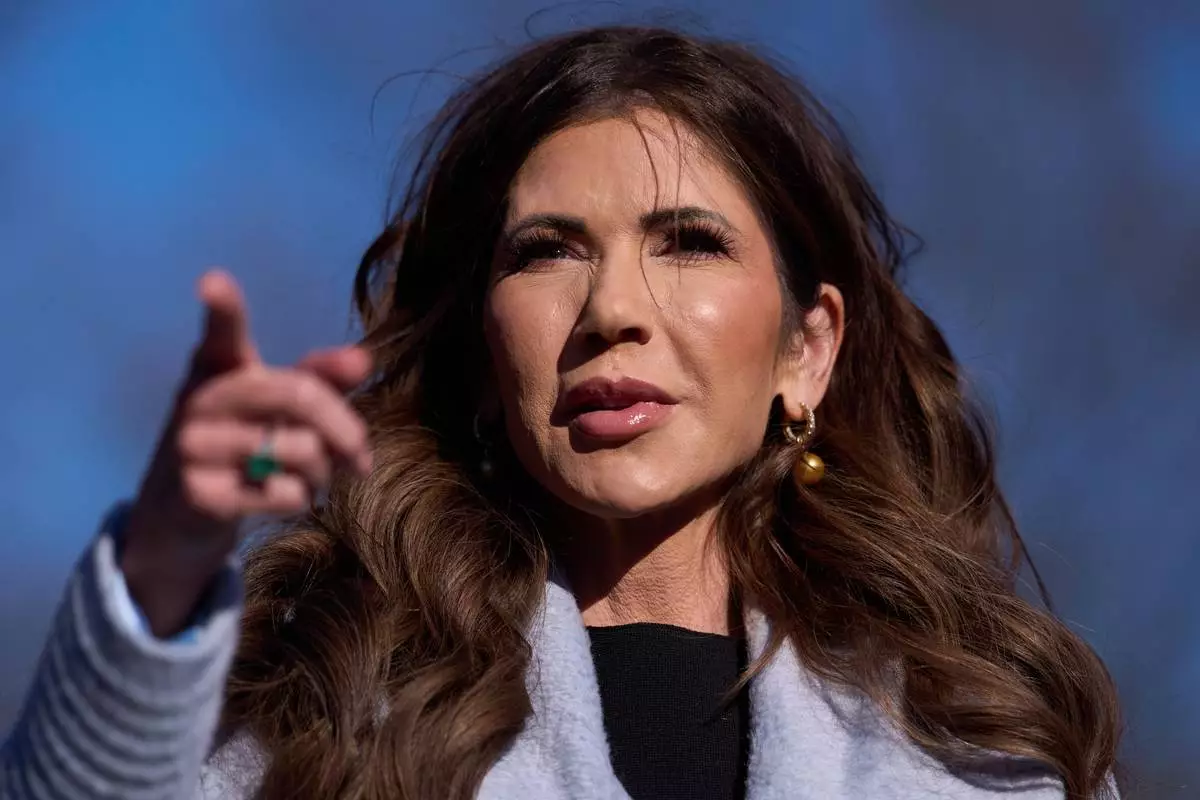
Homeland Security Secretary Kristi Noem speaks with reporters at the White House, Thursday, Jan. 15, 2026, in Washington. (AP Photo/Evan Vucci)

Homeland Security Secretary Kristi Noem speaks with reporters at the White House, Thursday, Jan. 15, 2026, in Washington. (AP Photo/Evan Vucci)

U.S. Homeland Security Secretary Kristi Noem speaks during a press conference, Thursday, Jan. 8, 2026, in New York. (AP Photo/Yuki Iwamura)

U.S. Homeland Security Secretary Kristi Noem speaks at a news conference at Harry Reid International Airport, Nov. 22, 2025, in Las Vegas. (AP Photo/Ronda Churchill, File)