WASHINGTON (AP) — The American job market, a pillar of U.S. economic strength since the pandemic, is crumbling under the weight of President Donald Trump’s erratic economic policies.
Uncertain about where things are headed, companies have grown increasingly reluctant to hire, leaving agonized jobseekers unable to find work and weighing on consumers who account for 70% of all U.S. economic activity. Their spending has been the engine behind the world’s biggest economy since the COVID-19 disruptions of 2020.
Click to Gallery
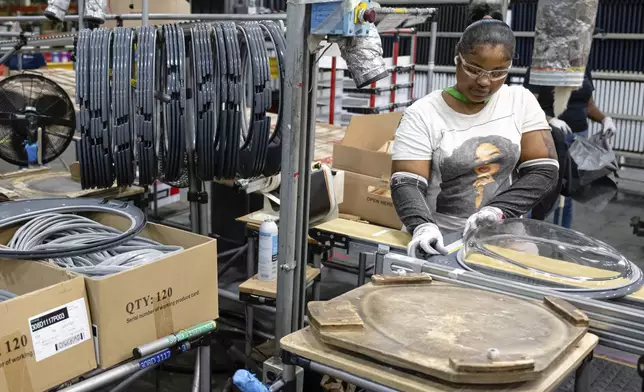
FILE - An employee pieces together components on an assembly line at GE Appliances global headquarters, Wednesday, Aug 13, 2025, in Louisville, Ky. (AP Photo/Jon Cherry, File)
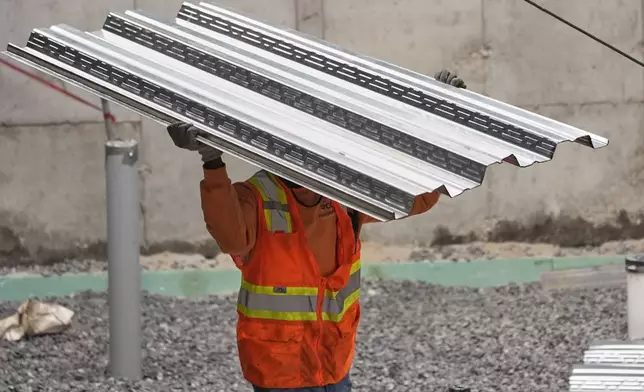
FILE - A construction worker carries steel decking at the site of a construction of a housing project, Thursday, July 31, 2025, in Portland, Maine. (AP Photo/Robert F. Bukaty, File)
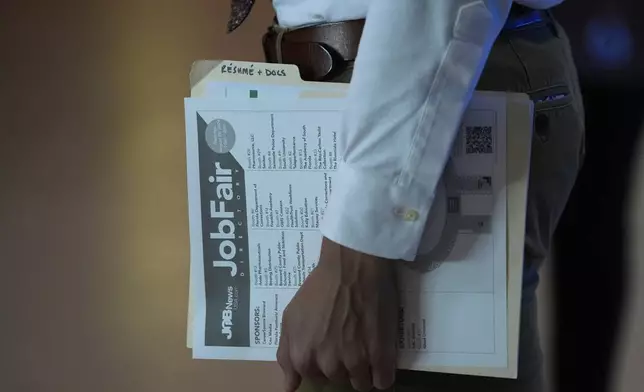
FILE - A person waits in a line for a prospective employer at a job fair, Thursday, Aug. 29, 2024, in Sunrise, Fla. (AP Photo/Lynne Sladky, File)

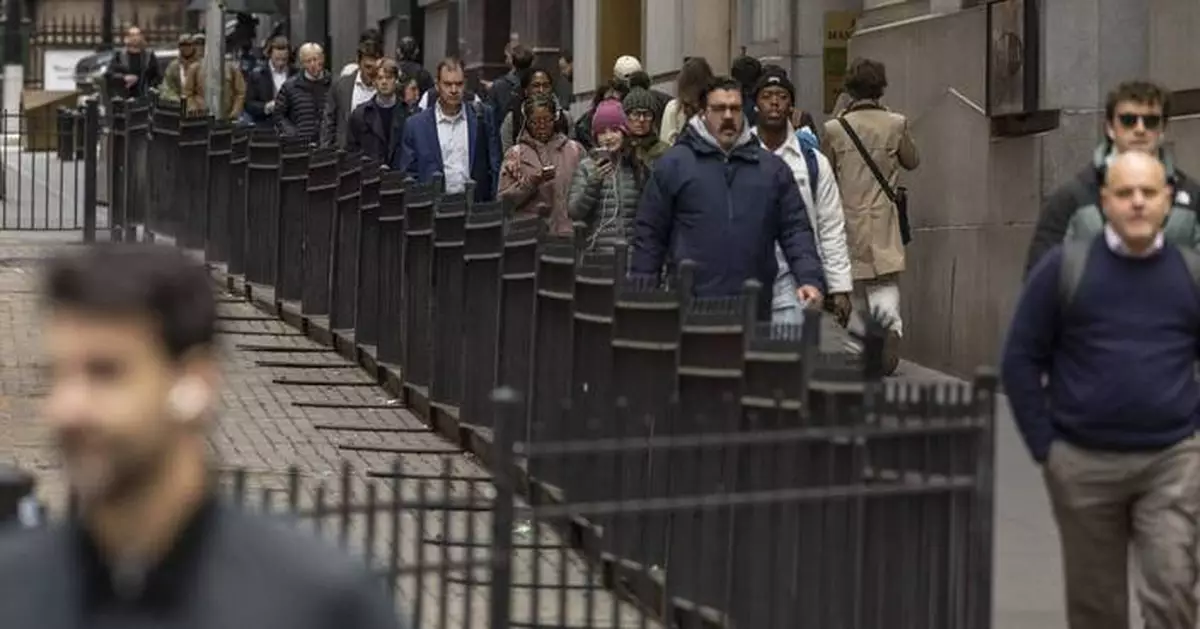
FILE - Commuters walk past the New York Stock Exchange, April 8, 2025, in New York. (AP Photo/Yuki Iwamura, File)
The Labor Department reported Friday that U.S. employers — companies, government agencies and nonprofits — added just 22,000 jobs last month, down from 79,000 in July and well below the 80,000 that economists had expected.
The unemployment rate ticked up to 4.3% last month, also worse than expected and the highest since 2021.
“U.S. labor market deterioration intensified in August,'' Scott Anderson, chief U.S. economist at BMO Capital Market, wrote in a commentary, noting that hiring was "slumping dangerously close to stall speed. This raises the risk of a harder landing for consumer spending and the economy in the months ahead.''
Alexa Mamoulides, 27, was laid off in the spring from a job at a research publishing company and has been hunting for work ever since. She uses a spreadsheet to track her progress and said she’s applied for 111 positions and had 14 interviews — but hasn't landed a job yet.
“There have been a lot of ups and downs,” Mamoulides said. “At the beginning I wasn’t too stressed, but now that September is here, I’ve been wondering how much longer it will take. It’s validating that the numbers bear out my experience, but also discouraging.''
The U.S. job market has lost momentum this year, partly because of the lingering effects of 11 interest rate hikes by the Federal Reserve’s inflation fighters in 2022 and 2023.
But the hiring slump also reflects Trump’s policies, including his sweeping and ever-changing tariffs on imports from almost every country on earth, a crackdown on illegal immigration and purges of the federal workforce.
Also contributing to the job market's doldrums are an aging population and the threat that artificial intelligence poses to young, entry-level workers.
After revisions shaved 21,000 jobs off June and July payrolls, the U.S. economy is creating fewer than 75,000 jobs a month so far this year, less than half the 2024 average of 168,000 and not even a quarter of the 400,000 jobs added monthly in the hiring boom of 2021-2023.
When the Labor Department put out a disappointing jobs report a month ago, an enraged Trump responded by firing the economist in charge of compiling the numbers and nominating a loyalist to replace her.
“The warning bell that rang in the labor market a month ago just got louder,’ Olu Sonola, head of U.S economic research at Fitch Rates, wrote in a commentary. “It’s hard to argue that tariff uncertainty isn’t a key driver of this weakness.”
Trump's protectionist policies are meant to help American manufacturers. But factories shed 12,000 workers last month and 38,000 so far this year. Many manufacturers are hurt, not helped, by Trump's tariffs on steel, aluminum and other imported raw materials and components.
Construction companies, which rely on immigrant workers vulnerable to stepped-up ICE raids under Trump, cut 7,000 jobs in August, the third straight drop. The sweeping tax-and-spending bill that Trump signed into law July 4 delivered more money for immigration officers, making threats of a massive deportations more plausible.
The federal government, its workforce targeted by Trump and by billionaire Elon Musk's Department of Government Efficiency, cut 15,000 jobs last month.
And any job gains made last month were remarkably narrow: Healthcare and social assistance companies – a category that spans hospital to daycare centers – added nearly 47,000 jobs in August and now account for 87% of the private-sector jobs created in 2025.
Nekia McNair, a 49-year-old single mother, has been searching for work for more than four months without success. “They’re not giving out jobs,” she said while sitting with neighbors outside her downtown Indianapolis apartment complex.
Despite 12 years of experience working as home health aide, McNair has had difficulty even securing an interview. “Then some jobs have you get dressed, come all the way out there for an interview, and then they’ll say, ‘Oh well, we got some more people coming and we’ll get back with you,’ and you’ll never hear from them.”
Democrats were quick to pounce on the report as evidence that Trump’s policies were damaging the economy and hurting ordinary Americans.
“Americans cannot afford any more of Trump’s disastrous economy. Hiring is frozen, jobless claims are rising, and the unemployment rate is now higher than it has been in years,” said Rep. Richard Neal of Massachusetts, the top Democrat on the House Ways and Means Committee. “The president is squeezing every wallet as he chases an illegal tariff agenda that is hiking costs, spooking investment, and stunting domestic manufacturing.″
Trump's sweeping import taxes — tariffs — are taking a toll on businesses that rely on foreign suppliers.
Trick or Treat Studios in Santa Cruz, California, for instance, gets 50% of its supplies from Mexico, 40% from China and the rest from Thailand, The company, which makes ghoulish masks that are replicas of such horror icons as Michael Myers of the "Halloween'' franchise as well as costumes, props, action figures and games, has seen its tariff bill rise to $389,000 this year, said co-founder Christopher Zephro. He was forced to raise prices across the board by 15%.
In May, Zephro had to cut 15 employees, or 25% of his workforce. That marked the first time he’s had to lay off staff since he started the company in 2009. ″That’s a lot money that could have been used to hire more people, bring in more product, develop more products,” he said. “We had to do layoffs because of tariffs. It was one of the worst days of my life.”
Josh Hirt, senior economist at the financial services firm Vanguard, said that the tumbling payroll numbers also reflect a reduced supply of workers – the consequence of an aging U.S. population and a reduction in immigration. “We should get more comfortable seeing numbers below 75,000 and below 50,000’’ new jobs a month, he said. “The likelihood of seeing negative (jobs) numbers is higher,’’ he said.
Economists are also beginning to worry that artificial intelligence is taking jobs that would otherwise have gone young or entry-level workers. In a report last month, researchers at Stanford University found "substantial declines in employment for early-career workers'' — ages 22-25 — in fields most exposed to AI. The unemployment rate for those ages 16 to 24 rose last month to 10.5%, the Labor Department reported Friday, the highest since April 2021.
Jobseeker Mamoulides is sure that competition from AI is one of the reasons she's having trouble finding work. “I know at my previous company, they were really embracing AI and trying to integrate it as much as they could into people’s workflow,” she said. “They were getting lots of (Microsoft) ‘Copilot’ licenses for people to use. From that experience, I do think companies may be relying on AI more for entry-level roles.”
Some relief may be coming.
The weak August numbers make it all but certain that Federal Reserve will cut its benchmark interest rate at its next meeting, Sept. 16-17. Under chair Jerome Powell, the Fed has been reluctant to cut rates until it sees what impact Trump’s import taxes have on inflation. Lower borrowing costs could — eventually anyway — encourage consumers and businesses to spend and invest.
Vanguard’s Hirt expects the Fed to reduce its benchmark rate – now a range of 4.25% to 4.5% – by a full percentage point over the next year and says it might cut rates at each of its next three meetings.
Trump has repeatedly pressured Powell to lower rates, and has sought to fire one Fed governor, Lisa Cook, over allegations of mortgage fraud in what Cook claims is a pretext to gain control over the central bank. The president blamed Powell again for slowing jobs numbers Friday in a social media post, saying “Jerome ‘Too Late’ Powell should have lowered rates long ago. As usual, he’s ‘Too Late!’”
The July 4 budget bill also “included a big wallop of front-loaded spending on defense and border security, as well as tax cuts that will quickly flow through to household and business after-tax incomes,'' Bill Adams, chief economist at Comerica Bank, wrote in a commentary.
But the damage that has already occurred may be difficult to repair.
James Knightley, an economist at ING, noted that the University of Michigan's consumer surveys show that 62% of Americans expect unemployment to rise over the next year. Only 13% expect it to fall. Only four times in the last 50 years has their employment outlook been so bleak
“People see and feel changes in the jobs market before they show up in the official data – they know if their company has a hiring freeze or the odd person here or there is being laid off,” Knightley wrote. "This suggests the real threat of outright falls in employment later this year.''
AP Writer Josh Boak in Washington and video journalist Obed Lamy in Indianapolis contributed to this story.
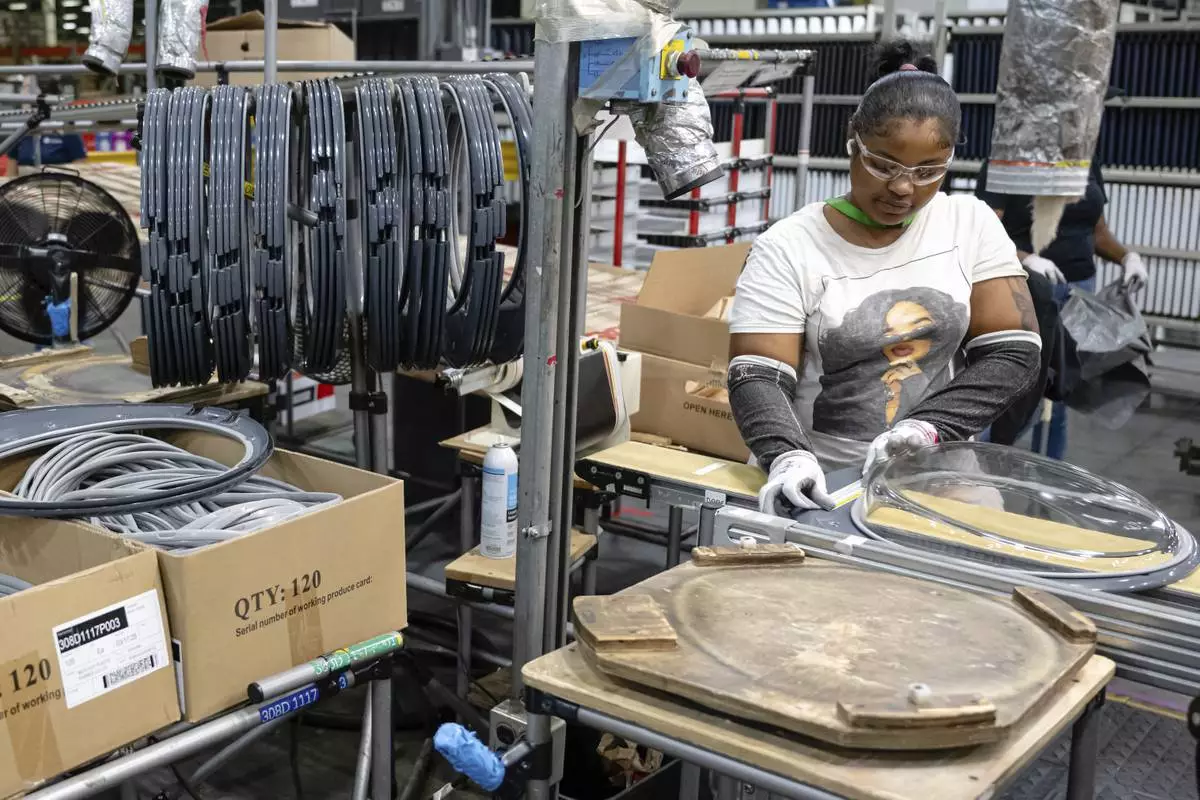
FILE - An employee pieces together components on an assembly line at GE Appliances global headquarters, Wednesday, Aug 13, 2025, in Louisville, Ky. (AP Photo/Jon Cherry, File)
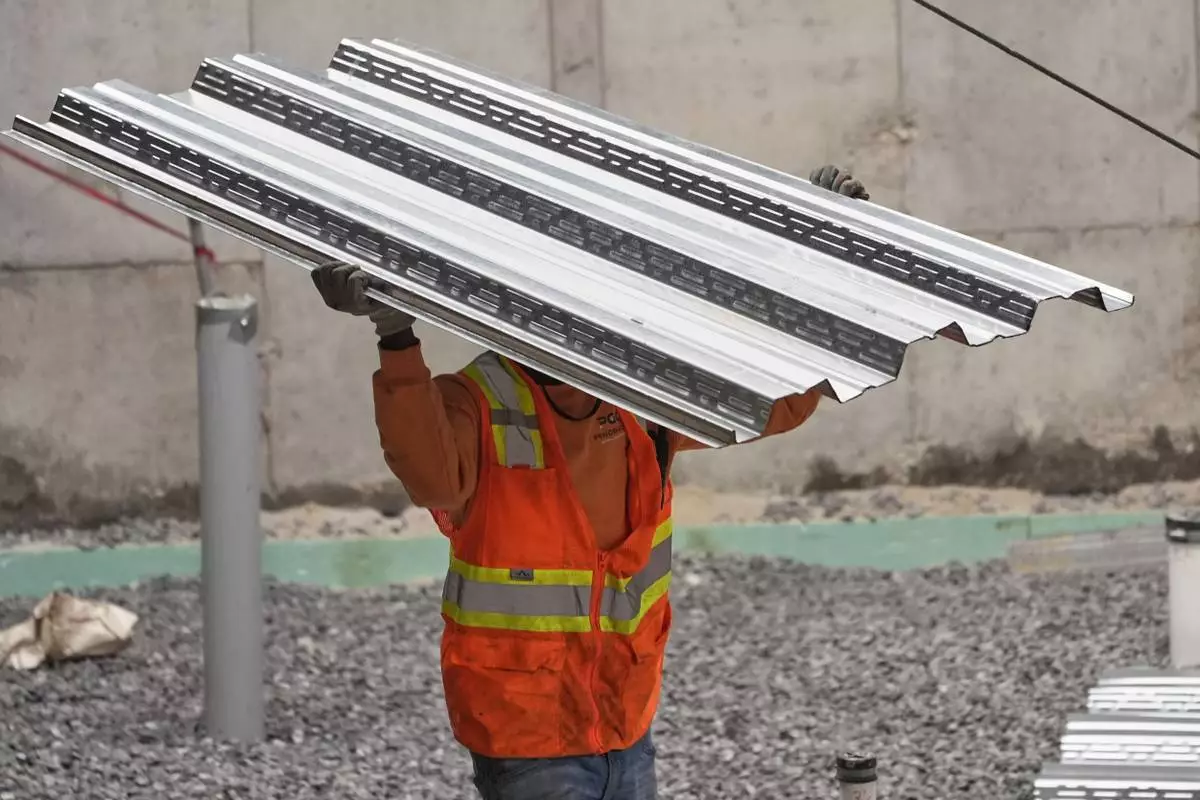
FILE - A construction worker carries steel decking at the site of a construction of a housing project, Thursday, July 31, 2025, in Portland, Maine. (AP Photo/Robert F. Bukaty, File)
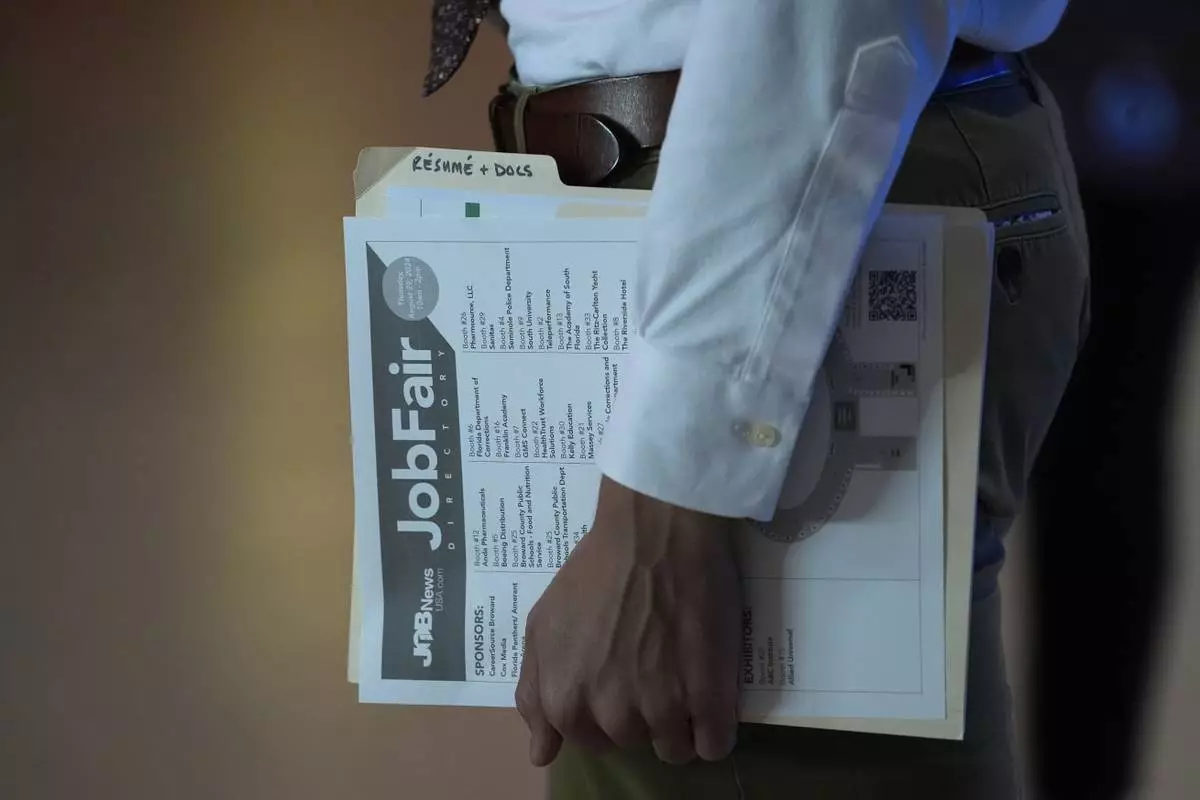
FILE - A person waits in a line for a prospective employer at a job fair, Thursday, Aug. 29, 2024, in Sunrise, Fla. (AP Photo/Lynne Sladky, File)

FILE - Commuters walk past the New York Stock Exchange, April 8, 2025, in New York. (AP Photo/Yuki Iwamura, File)