HARRISBURG, Pa. (AP) — Philadelphia's public transit agency said Friday that it will restore services that it eliminated after a judge ordered it to undo the two-week-old cuts that were challenged in court as discriminatory toward poor and minority communities.
The Southeastern Pennsylvania Transportation Authority said it is working on a plan to restore service, and it moved to divert funding set aside for capital projects to keep those services intact for another two years.
SEPTA — one of the nation's largest mass transit agencies — had described the cuts as more drastic than any undertaken by a major transit agency in the U.S. but necessary to deal with a deficit of more than $200 million.
At a news conference, SEPTA’s general manager, Scott Sauer, said the solution wasn't ideal or sustainable, and “over the last two weeks, we’ve seen the devastating effects the service cuts have had on our riders.”
In a letter to the state Department of Transportation, Sauer asked for permission to use up to $394 million in state-provided capital funds to restore services and avoid other planned cuts for the next two years.
That's about a year's worth of funding it gets from the state for capital projects, but Sauer wrote that SEPTA believes diverting the cash and deferring capital projects won't jeopardize the safety of riders. If PennDOT approves the transfer, SEPTA can restore the services Sept. 14, Sauer said.
In a statement, Gov. Josh Shapiro's office said the administration was “reviewing the request and determining next steps." The Democratic governor has said he was open to diverting capital funds as part of a broader funding package for struggling transit agencies.
Across the state, Pittsburgh Regional Transit is considering a 35% service reduction to help close what it calls a roughly $100 million deficit this year. That could include eliminating 45 bus routes, reducing 54 others and eliminating one of three light rail lines.
In the state Capitol, Shapiro and Democratic lawmakers have been unable for the past two years to persuade enough Republican lawmakers to approve hundreds of millions more dollars in new transit aid to help fill deficits at SEPTA and other transit agencies around the state.
SEPTA has said its cuts amounted to a 20% across-the-board service reduction. That included eliminating bus routes with lower ridership and reducing the frequency of bus, trolley and rail services across the region.
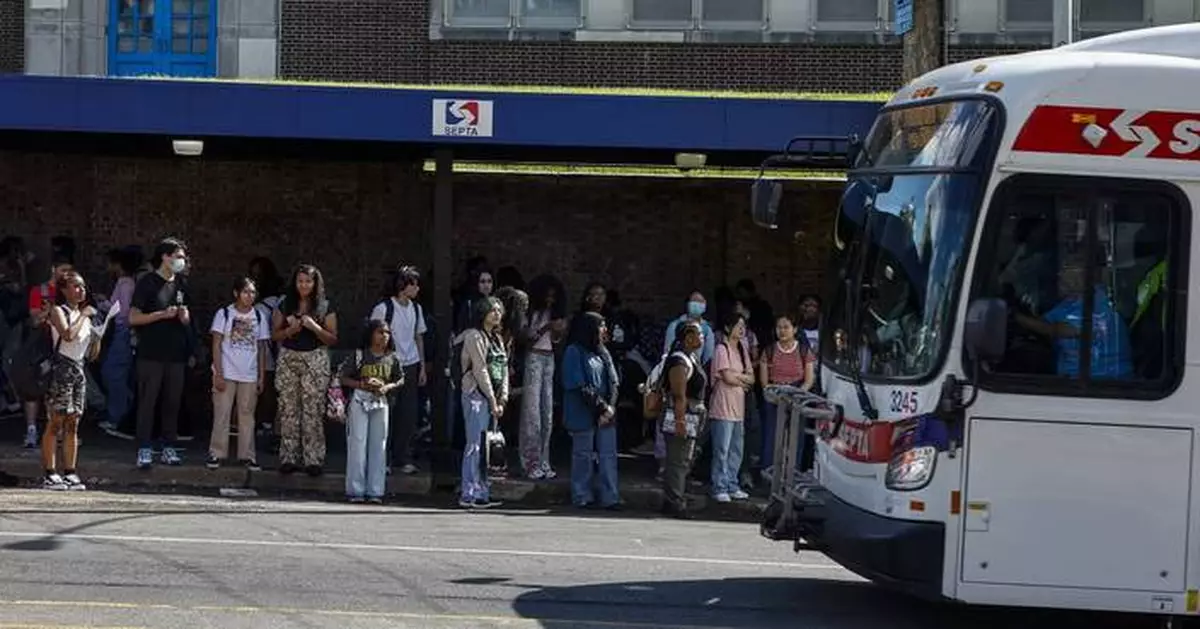
After the cuts took effect, students and commuters had talked of needing to get up much earlier to make time for longer commutes, unusually crowded buses and skipped stops. Some said they were spending more on ridesharing or worried about losing their job.
SEPTA was leaving many more people behind at bus and trolley stops due to crowded conditions, while the number of bus trips running late rose more than 26%, Sauer said.
The authority still plans to go forward with fare increases of 21.5% on Sept. 14 that it estimated will bring in $31 million a year.
That increase had been set to take effect earlier this week for the system’s approximately 800,000 daily riders before the same judge temporarily halted it. However, the judge lifted her order on the fare increases that will boost a weekday ride from $2.50 to $2.90 on a bus, train or trolley.
The struggles in the nation’s sixth-most populous city reflect similar dilemmas at major transit agencies around the U.S. as they navigate rising costs and lagging ridership after the COVID-19 pandemic disrupted commutes.
All told, SEPTA had warned that it will cut half its services by Jan. 1 and wouldn't provide enhanced service for major tourist events next year. Those include FIFA World Cup matches in Philadelphia, events surrounding the celebration of the nation’s 250th birthday, Major League Baseball’s All-Star Game, the PGA Championship and NCAA March Madness games.
Follow Marc Levy on X at: https://x.com/timelywriter
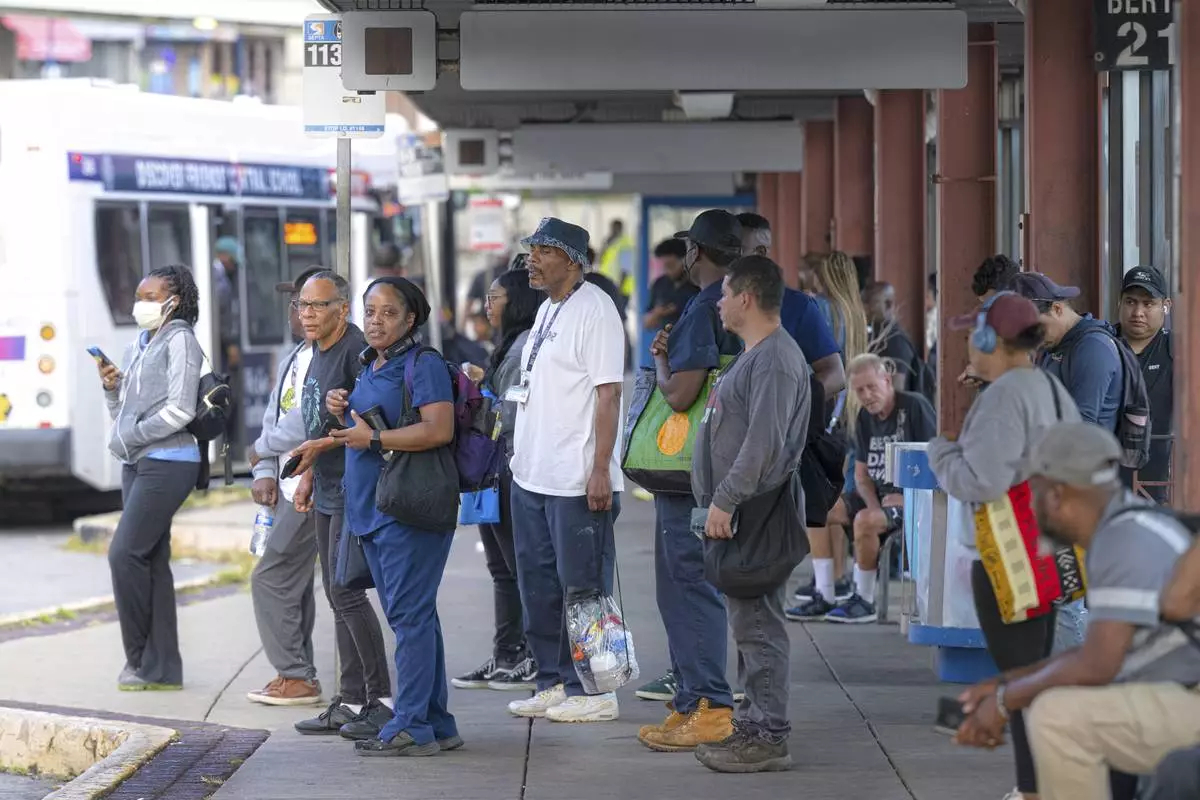
Commuters wait to board a SEPTA bus during the early morning hours at the 69th Street Bus Station in Upper Darby, Pa., Monday, Aug. 25, 2025. (Jose F. Moreno/The Philadelphia Inquirer via AP)
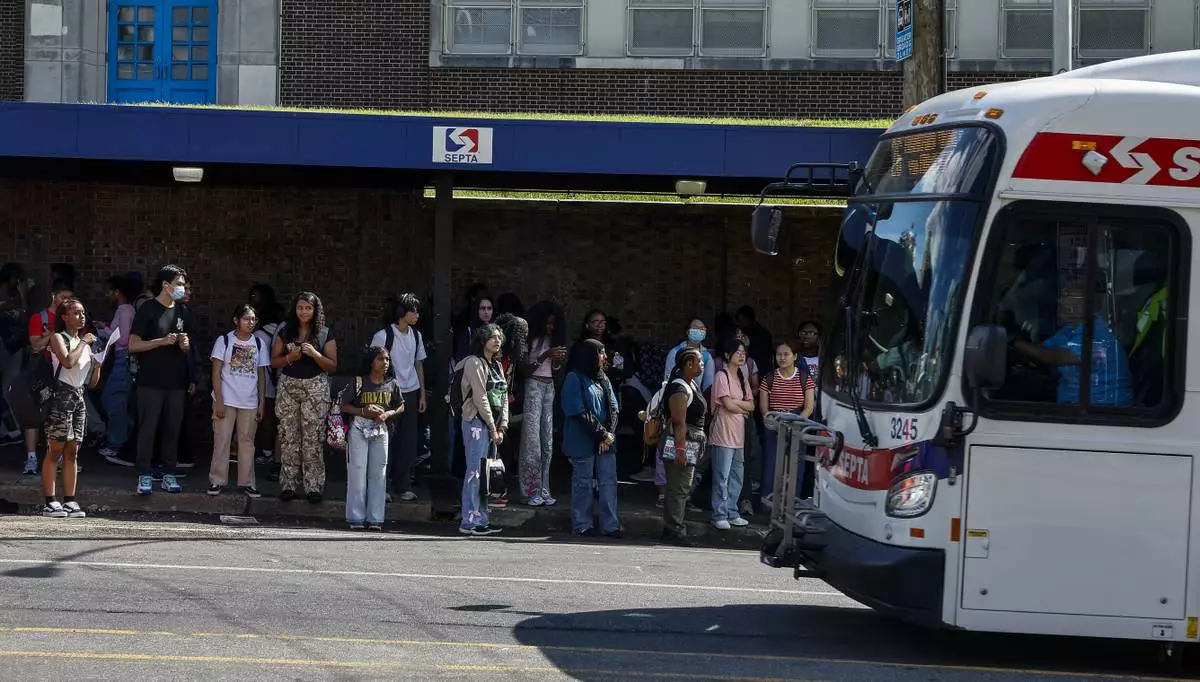
Students watch as a 26 bus passes the stop near Girls High at Broad and Olney streets Monday, Aug. 25, 2025, in Philadelphia. (Monica Herndon/The Philadelphia Inquirer via AP)
WASHINGTON (AP) — Venezuelan opposition leader María Corina Machado said on Friday she’s confident of her country’s eventual transition to democracy after the U.S. military ousted former President Nicolás Maduro.
But she acknowledged the challenge of holding free elections after decades of autocratic rule and declined to set any timetable. When pressed, she also took pains to avoid giving any details on her plans to return home, saying only that she would return “as soon as possible.”
Her struggle to offer clear answers in Friday's news conference reflects how President Donald Trump’s endorsement of a Maduro loyalist to lead Venezuela for now has frozen out the nation’s Nobel Peace Prize -winning crusader for democracy.
With little choice but to put her faith in the U.S. and hope for an eventual transition, Machado has sought to cozy up to Trump, presenting her Nobel medal to him a day earlier at the White House.
As Machado was meeting with Trump, CIA Director John Ratcliffe was in Venezuela meeting with acting President Delcy Rodríguez, further confirmation that Maduro's longtime second in command was the woman that Washington preferred to see managing Venezuela at the moment.
Speaking to reporters at the Heritage Foundation, a conservative think tank in Washington, Machado said she was “profoundly, profoundly confident that we will have an orderly transition” to democracy that would also transform Venezuela's self-proclaimed socialist government long hostile to the U.S. into a strong U.S. ally.
She dismissed the perception that, in choosing to work with Rodríguez, Trump had snubbed her opposition movement, whose candidate was widely believed to have beaten Maduro in the 2024 presidential election.
“This has nothing to do with a tension or decision between Delcy Rodríguez and myself,” she said, but avoided elaborating in favor of more general assertions about her party's popular mandate and the government's dismal human rights record.
“The only thing they have is terror,” she said of Maduro's government.
Machado waved away the suggestion that her movement wouldn't be able to assert authority over security forces that remain loyal to Maduro and have long benefited from corruption under his government.
“There are not religious tensions within the Venezuelan society or racial or regional or political or social tensions,” she said.
But she also acknowledged “the difficulty of destroying a 27-year structure allied with the Russians and the Iranians.”
“We are facing challenging times ahead,” she said.
In apparent deference to Trump, she provided almost no details on Friday about what they discussed or even what she thought the U.S. should do in Venezuela, saying, “I think I don’t need to urge the president on specific things."
Trump has said little about his administration's plans for holding new elections in Venezuela and far more about its vision for reviving the nation's crumbling oil infrastructure. He's relying on a crippling oil blockade and threats of further military action to keep the interim government in line.
In a sign that the U.S. is exploring the restoration of relations with Venezuela, U.S. officials are considering reopening the U.S. Embassy in Caracas, which Trump closed during his first administration.
Machado traveled to Washington looking to rekindle the support for democracy in Venezuela that Trump showed during his first administration. She presented him with the prize she won last year, praising him for what she said was his commitment to Venezuela’s freedom. The Nobel Institute has been clear, however, that the prize cannot be shared or transferred.
Trump, who has actively campaigned to be awarded the prize, said Machado left the medal for him to keep. “And by the way, I think she’s a very fine woman,” he said. "And we’ll be talking again.”
That was of small comfort after Trump said it would be difficult for Machado to lead because she “doesn’t have the support within or the respect within the country.”
Machado crisscrossed Venezuela ahead of the 2024 presidential elections, rallying millions of voters looking to end 25 years of single party rule. When she was barred from the race, a previously unknown former diplomat, Edmundo Gonzalez, replaced her on the ballot. But election officials loyal to the ruling party declared Maduro the winner despite ample credible evidence to the contrary.
Machado, revered by millions in Venezuela, went into hiding but vowed to continue fighting until democracy was restored. She reemerged in December to pick up her Nobel Peace Prize in Norway, the first time in more than a decade that she had left Venezuela.
DeBre reported from Buenos Aires, Argentina. Darlene Superville in Washington and Meg Kinnard in Columbia, South Carolina, contributed.
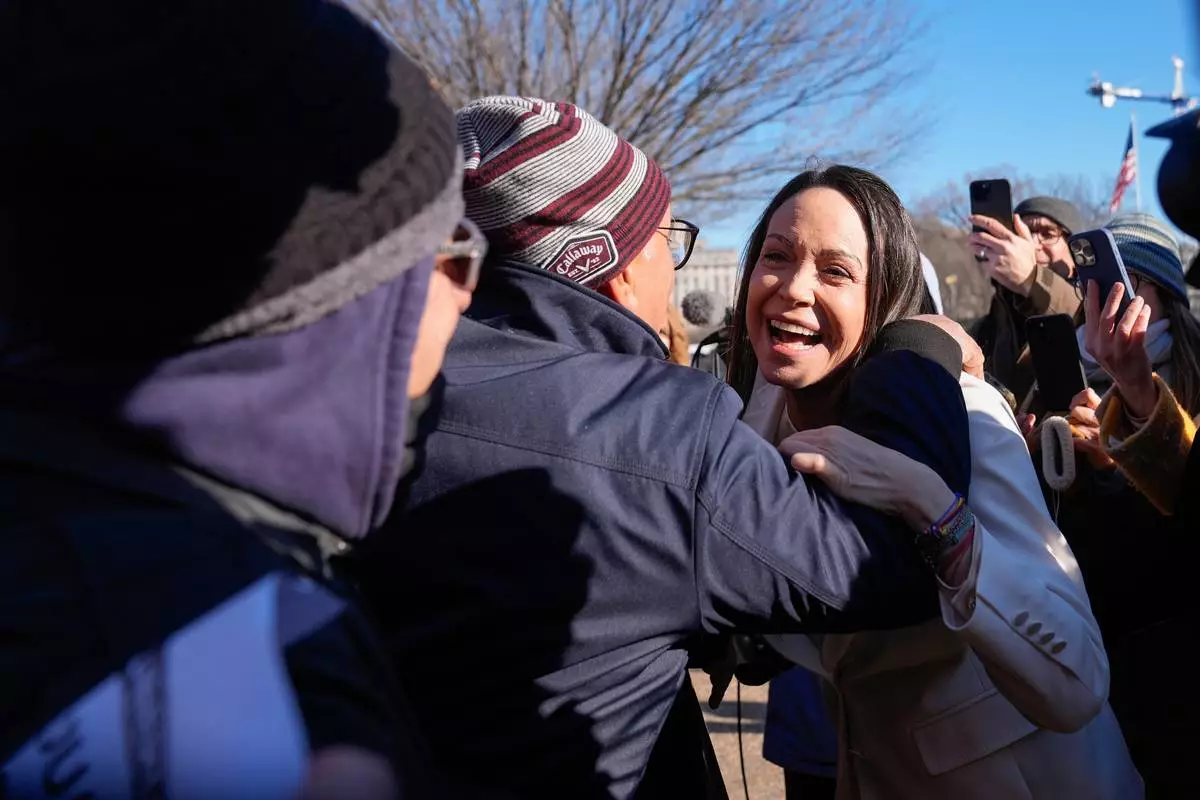
Venezuelan opposition leader MarÌa Corina Machado greets supporters on Pennsylvania Avenue near the White House after meeting with President Donald Trump Thursday, Jan. 15, 2026, in Washington. (AP Photo/Pablo Martinez Monsivais)
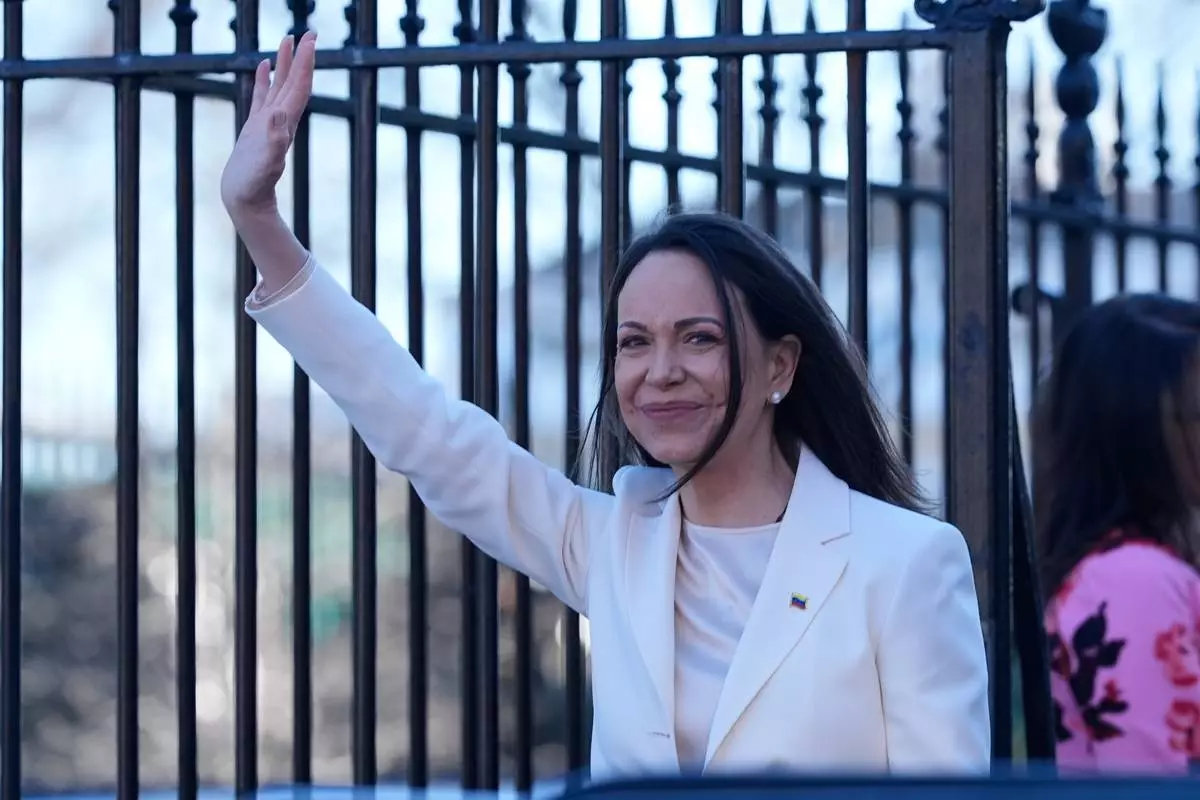
Venezuelan opposition leader María Corina Machado waves to supporters on Pennsylvania Avenue as she leaves the White House after meeting with President Donald Trump Thursday, Jan. 15, 2026, in Washington. (AP Photo/Pablo Martinez Monsivais)
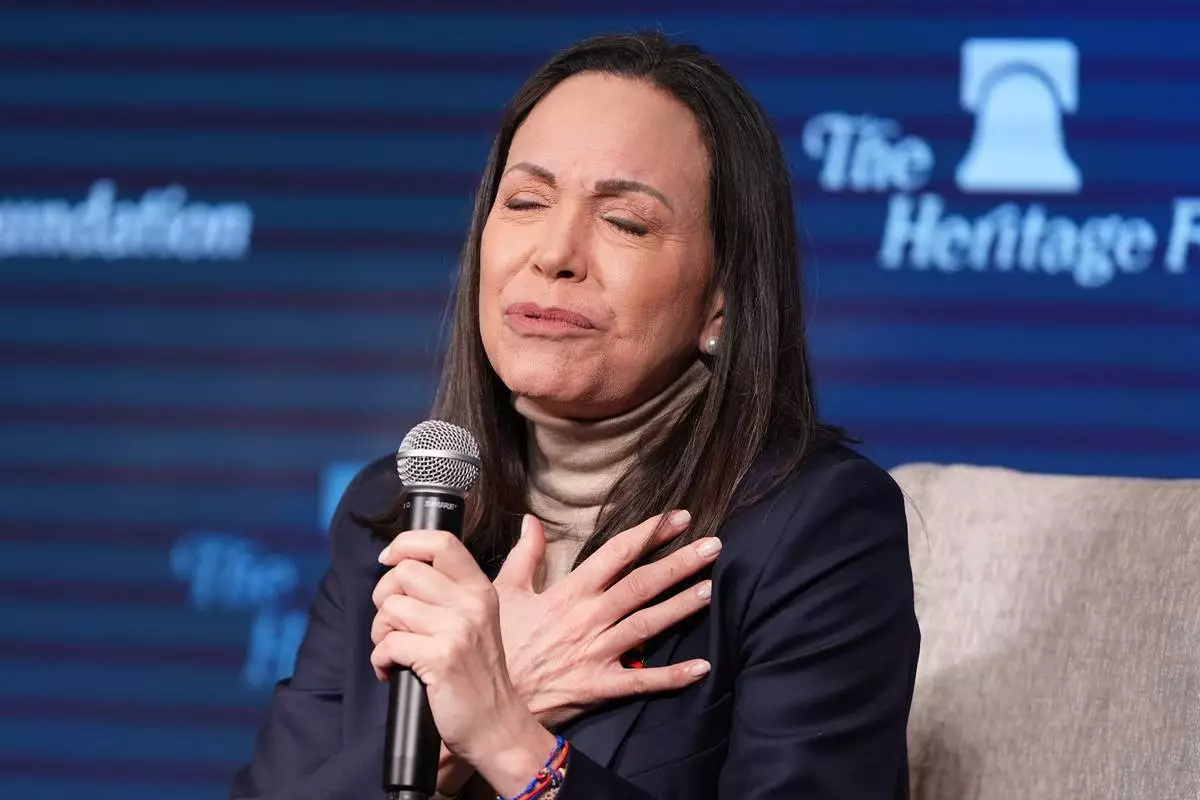
Venezuelan opposition leader Maria Corina Machado speaks at the Heritage Foundation, an influential conservative think tank, a day after meeting with President Donald Trump and members of Congress, on Capitol Hill in Washington, Friday, Jan. 16, 2026. (AP Photo/J. Scott Applewhite)
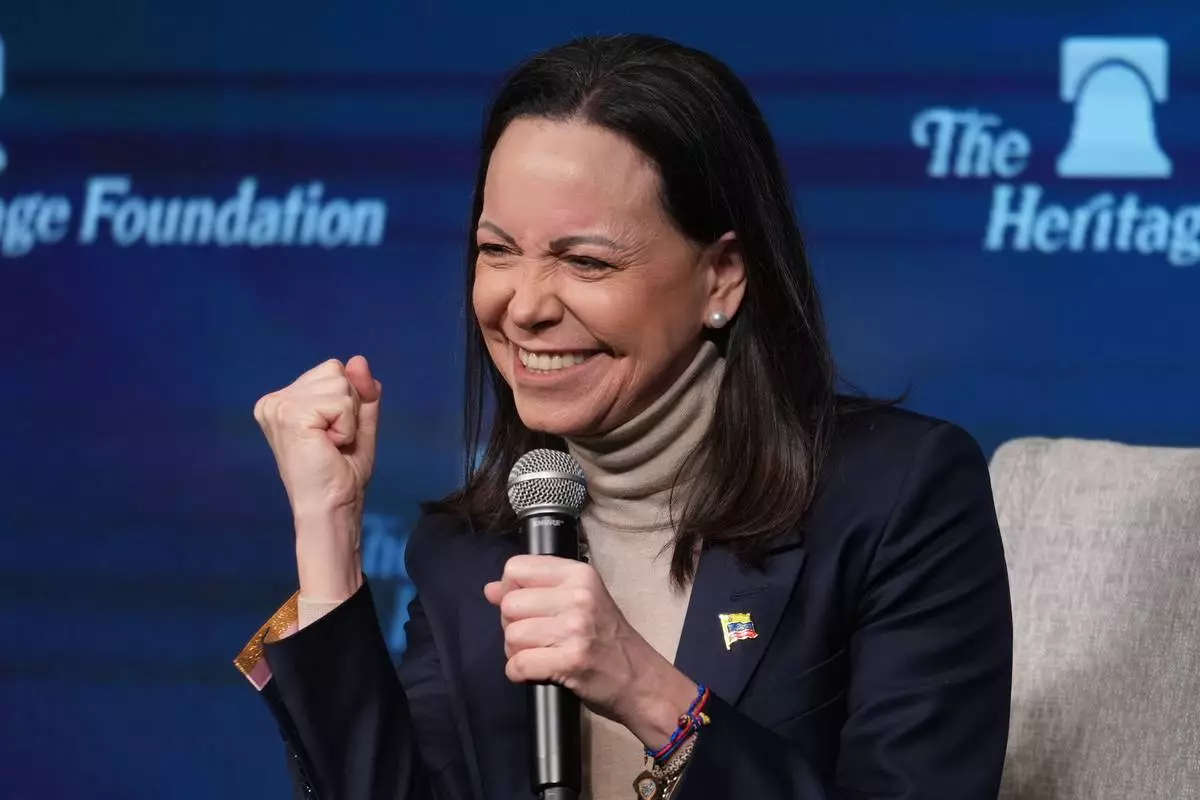
Venezuelan opposition leader Maria Corina Machado speaks at the Heritage Foundation, an influential conservative think tank, a day after meeting with President Donald Trump and members of Congress, on Capitol Hill in Washington, Friday, Jan. 16, 2026. (AP Photo/J. Scott Applewhite)