ATLANTA (AP) — President Donald Trump’s push to rename the Department of Defense goes beyond subjective word choices about whether to change a name that's been in place since 1949.
On one hand is Trump’s argument that the historical name – War Department – more plainly reflects the bottom-line mission. Yet the idea, which still requires action by Congress, also would continue Trump’s flouting of the international order established after World War II.
And, besides highlighting the president’s branding proclivities, the issue exposes tensions between Trump’s and many of his predecessors’ platitudes about peace even as the U.S. has spent much of its existence on battlefields.
“Military tasks are directed not toward war—not toward conquest—but toward peace,” President Harry Truman insisted in 1947, when Congress first jettisoned the “War Department” label.
Here is a look at the history of the U.S. military’s Cabinet structure and names.
The Continental Congress created the Army on June 14, 1775, as hostilities built against the British. The Navy and Marine Corps quickly followed. After the Constitution's ratification, Congress established a single Cabinet agency called the War Department in 1789, led by a secretary of war. The Navy broke away in 1798, separating the War Department and Navy Department.
Secretaries of war were top presidential advisers from the War of 1812 through World Wars I and II. Some Navy secretaries also wielded strong influence.
U.S. politics leaned toward isolationism before World War I. Isolationist attitudes returned after fighting ended in 1918. During the Great Depression, the government’s ample spending centered on domestic jobs and aid programs of the New Deal.
Yet the U.S. military footprint grew quietly. As war in Europe intensified before American involvement in World War II, Congress authorized construction of the Pentagon in 1941. Ground broke on Sept. 11. Japan bombed Pearl Harbor months later, prompting the U.S. to join the war.
Henry Stimson served as President Franklin D. Roosevelt's war secretary after having been secretary of state under Herbert Hoover. Stimson spent endless hours with FDR in a makeshift White House war room and presided over the secret Manhattan Project to develop atomic bombs.
Stimson's status as both a State and War Department chief previewed the sometimes blurred lines between the top diplomatic and military agencies and their roles in U.S. foreign policy across many administrations since World War II.
Roosevelt’s top military advisers mulled Pentagon reorganization during the war but FDR died before fighting concluded. Truman, who had virtually no part in war planning or execution as vice president, asked Congress after the war ended to create a “Department of National Defense” and bring military operations under one Cabinet officer.
Congress debated for two years before passing the 1947 National Security Act. The sweeping law created a single Pentagon department called “the National Military Establishment.” It also created the National Security Council to advise the president and established the Central Intelligence Agency. The new name – NME – unintentionally read as “Enemy,” prompting Congress in 1949 to rename “the Department of Defense.”
Congress has occasionally modified and built on the act, but it still underpins the nation's military and intelligence structure.
The overhaul played out as the U.S. and its allies worked to establish NATO and the United Nations, the latter inspired by the League of Nations that failed after World War I. The post-war organizations were framed as ways to prevent future conflicts.
Truman was the president who authorized dropping two atomic bombs on Japan in August 1945. Explaining his post-war approach in 1947, he noted the U.S. had ratcheted down its wartime mobilization. He promised that a robust, war-ready military would remain. He nodded to NATO and the U.N., saying the U.S. would “support a lasting peace, by force if necessary.” But he argued that even for the military, the priority was to avoid fighting.
“We seek to use our military strength solely to preserve the peace of the world,” Truman declared on Navy Day. “That is the basis of the foreign policy of the people of the United States.”
It was the original “peace through strength” argument that U.S. administrations — Republican and Democratic — carried through the Cold War nuclear buildup and that Trump himself has used as a presidential candidate and commander in chief.
Within years of Truman's speech, the U.S. was at war in Korea, then Vietnam. A brief war in Iraq followed in 1991. After the Sept. 11 attacks, the U.S. invaded Iraq and began an Afghanistan military occupation that became the longest war in American history.
Trump and Vice President JD Vance have assailed military engagements abroad as wasteful, though Trump has, in his second presidency, bombed Iran, backed shipments of weapons to Israel and approved a strike on a Venezuelan boat.
The “Department of War,” he says, “just sounded better.”
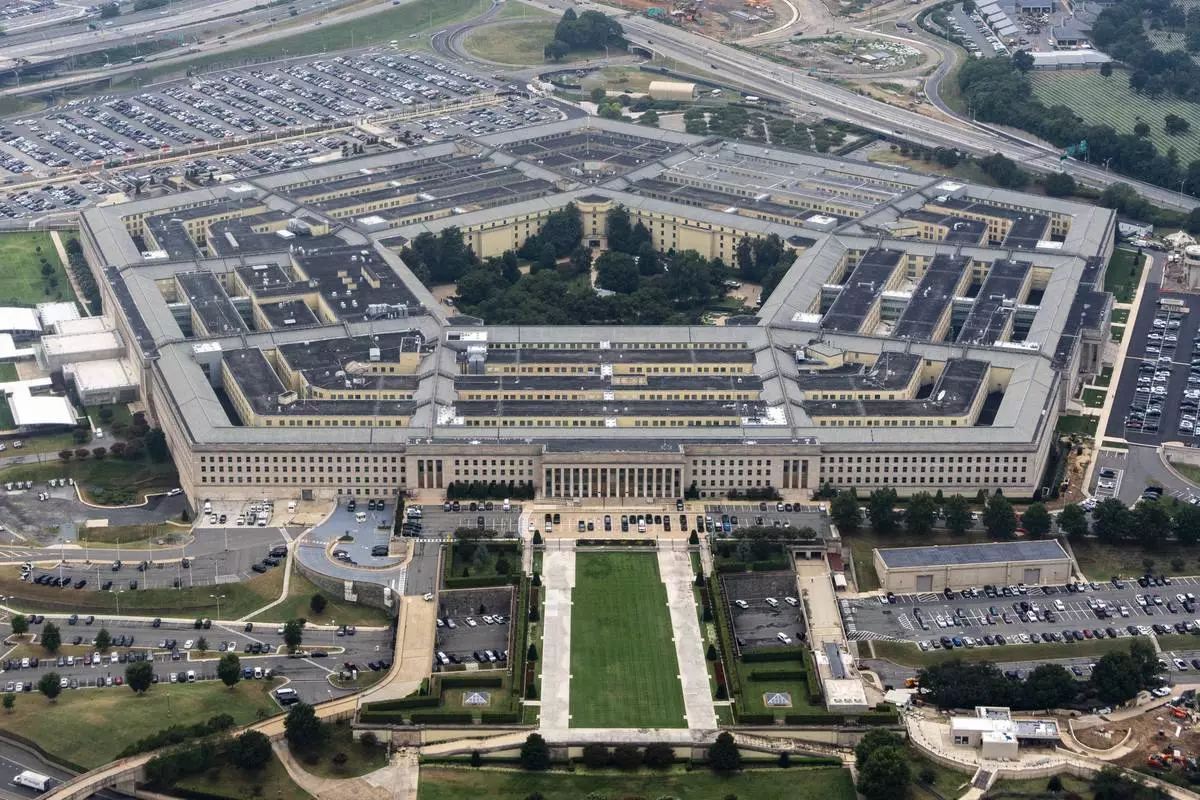
FILE - The Pentagon, the headquarters for the U.S. Department of Defense, is seen from the air, Aug. 20, 2025, in Arlington, Va. (AP Photo/Alex Brandon, File)
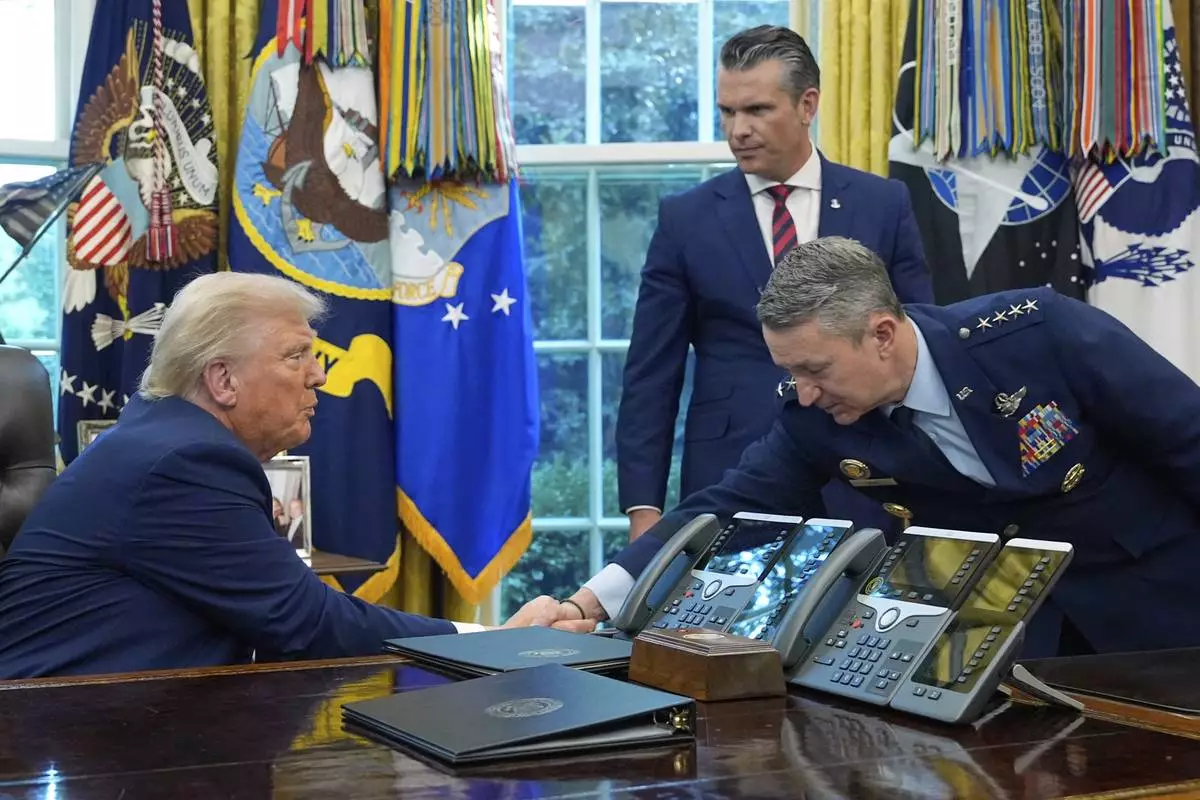
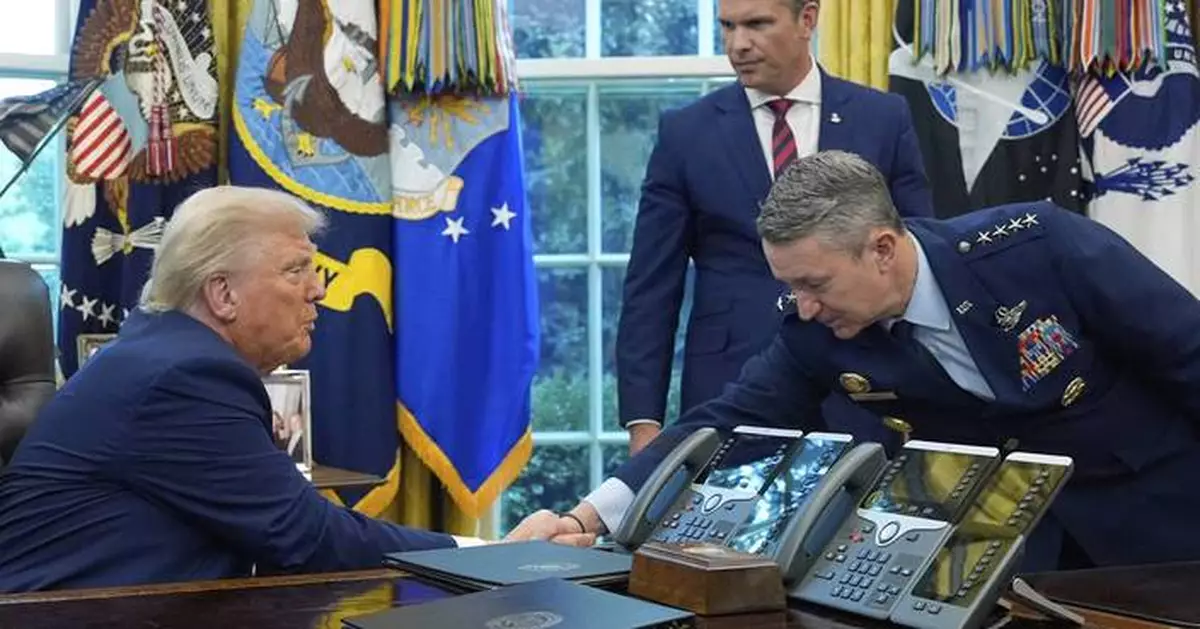
President Donald Trump shakes hands with Chairman of the Joint Chiefs of Staff Gen. Dan Caine as Defense Secretary Pete Hegseth watches in the Oval Office of the White House, Friday, Sept. 5, 2025, in Washington. (AP Photo/Alex Brandon)