Skip to Content Facebook Feature Image

Someone could win $1.8B Powerball jackpot Saturday. Odds are their identity will remain a mystery

ENT

Someone could win $1.8B Powerball jackpot Saturday. Odds are their identity will remain a mystery
ENT

ENT

Someone could win $1.8B Powerball jackpot Saturday. Odds are their identity will remain a mystery

2025-09-06 09:02 Last Updated At:09:10

After Iowa gas station employee Timothy Schultz won a $29 million lottery jackpot in 1999, he decided to hold a press conference. Lottery officials told him it would help him avoid being “hounded by media" since state law required his name to be disclosed anyway.

But the then-21-year-old soon felt the consequences of his overnight fame.

More Images
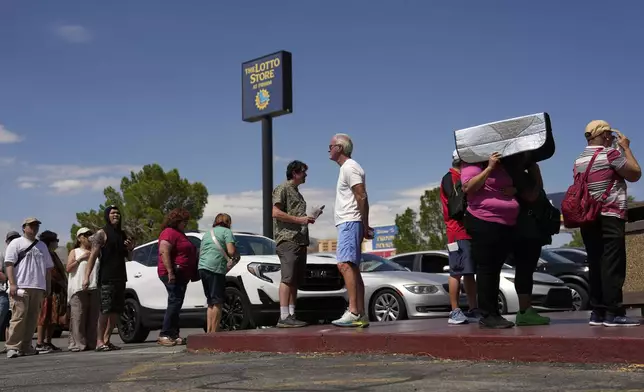
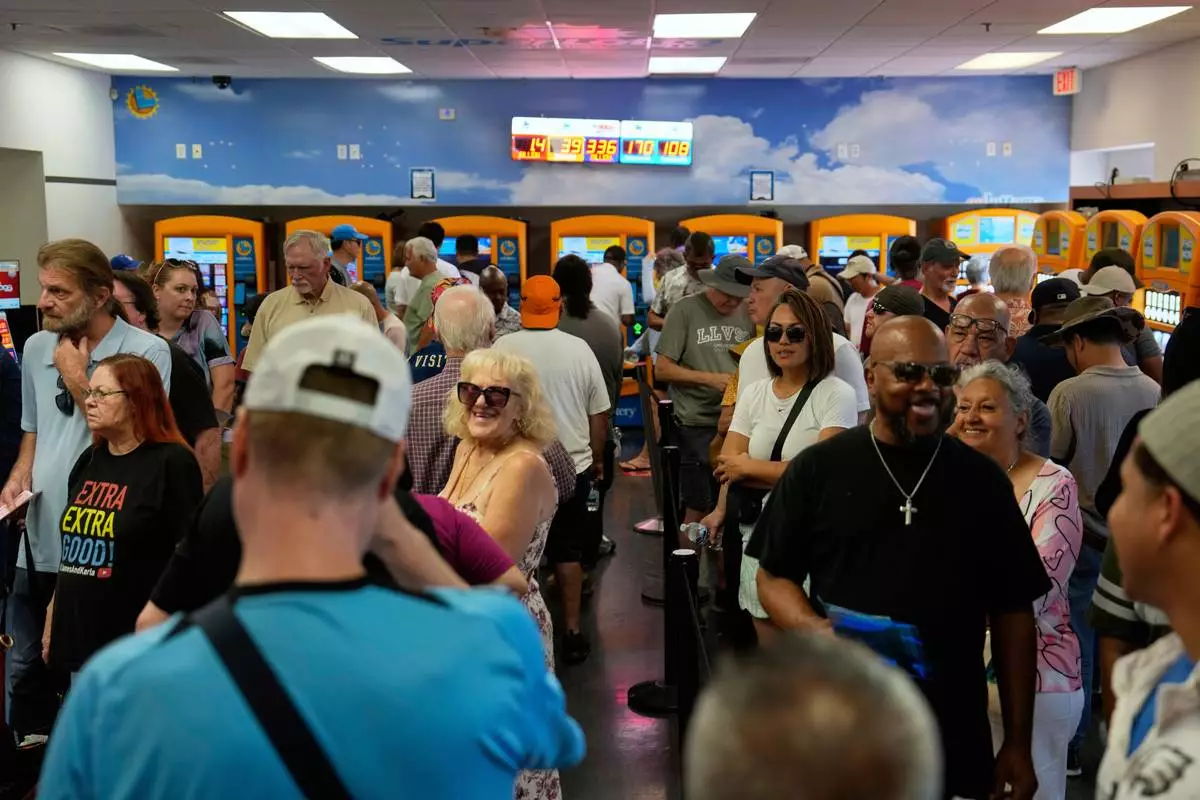
People wait in line to buy lottery tickets at the Lotto Store just inside the California border, Wednesday, Sept. 3, 2025, near Primm, Nev. (AP Photo/John Locher)
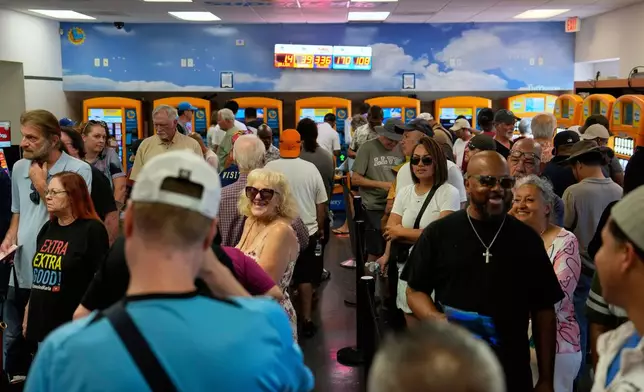
People wait in line to buy lottery tickets at the Lotto Store just inside the California border, Wednesday, Sept. 3, 2025, near Primm, Nev. (AP Photo/John Locher)
People wait in line to buy lottery tickets at the Lotto Store just inside the California border, Wednesday, Sept. 3, 2025, near Primm, Nev. (AP Photo/John Locher)

People wait in line to buy lottery tickets at the Lotto Store just inside the California border, Wednesday, Sept. 3, 2025, near Primm, Nev. (AP Photo/John Locher)

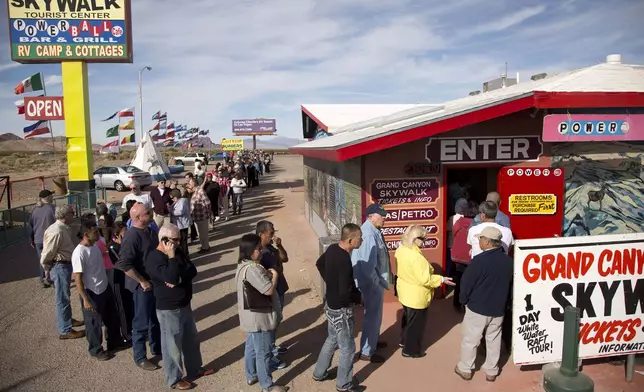
FILE - A crowd of people line up outside the Arizona Last Stop convenience store and souvenir shop to buy Powerball tickets, Tuesday, Nov. 27, 2012, in White Hills, Ariz. AP Photo/Julie Jacobson, File)
FILE - A crowd of people line up outside the Arizona Last Stop convenience store and souvenir shop to buy Powerball tickets, Tuesday, Nov. 27, 2012, in White Hills, Ariz. AP Photo/Julie Jacobson, File)

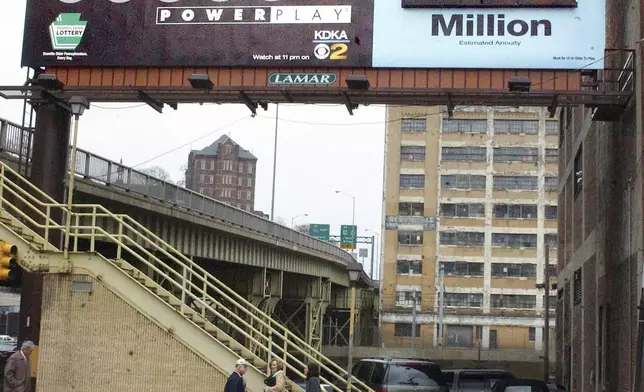
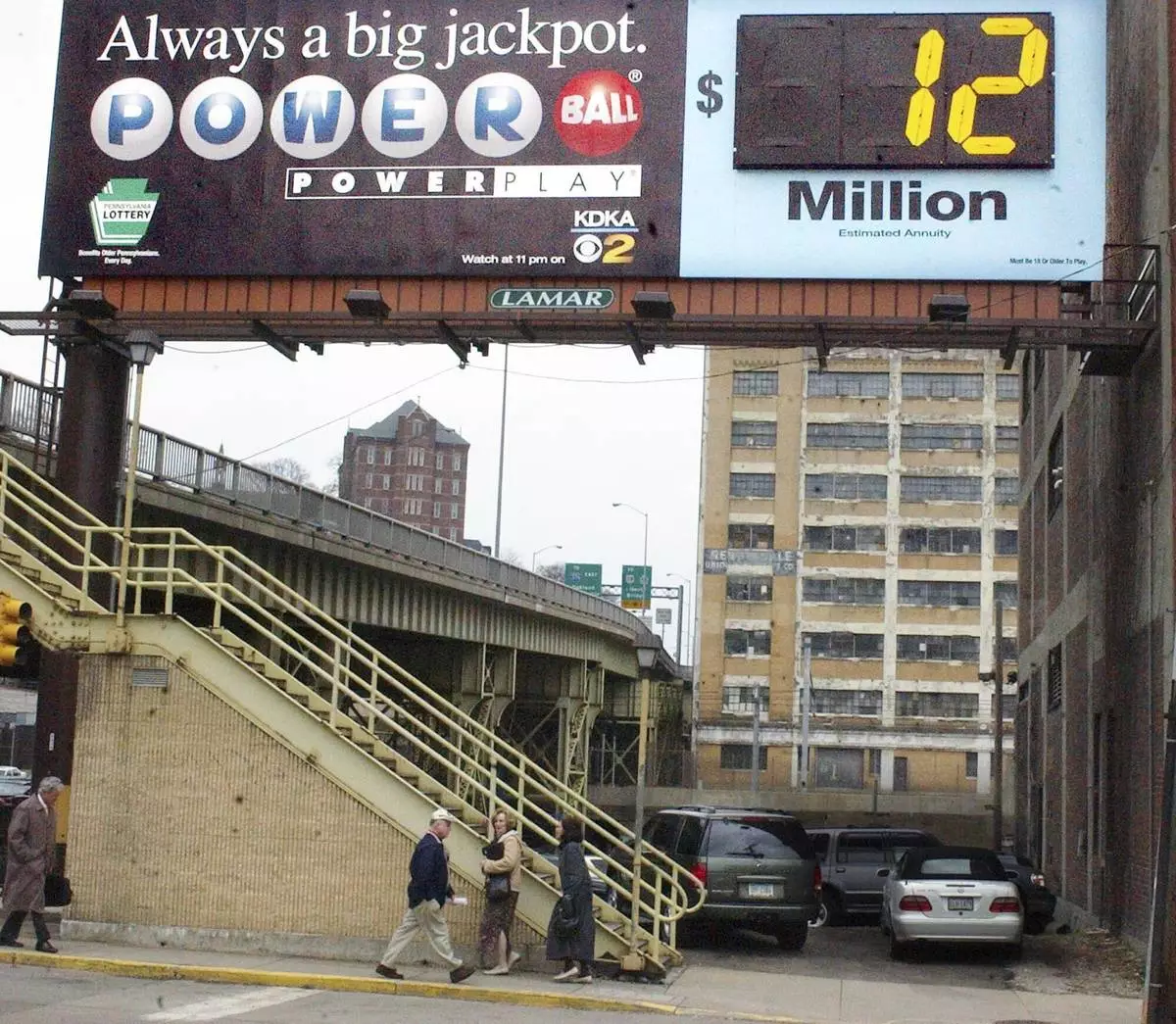
FILE - People move along the sidewalk at lunchtime in Pittsburgh in front of a billboard advertising the current Powerball Jackpot on Monday, March 21, 2005. (AP Photo/Keith Srakocic, File)
FILE - People move along the sidewalk at lunchtime in Pittsburgh in front of a billboard advertising the current Powerball Jackpot on Monday, March 21, 2005. (AP Photo/Keith Srakocic, File)

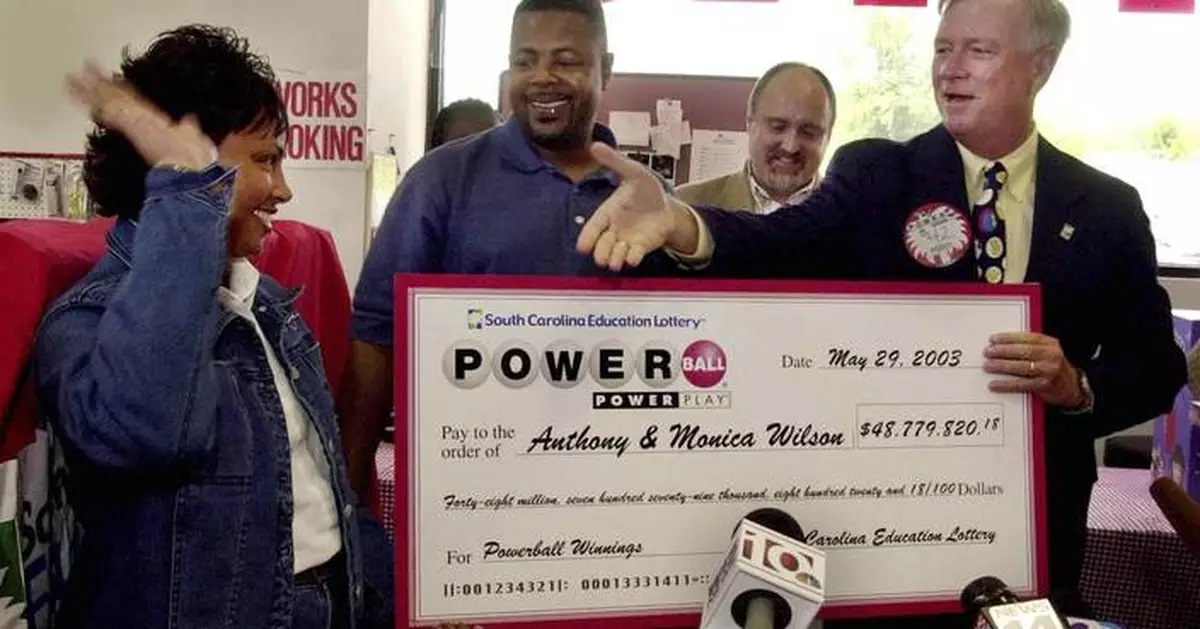
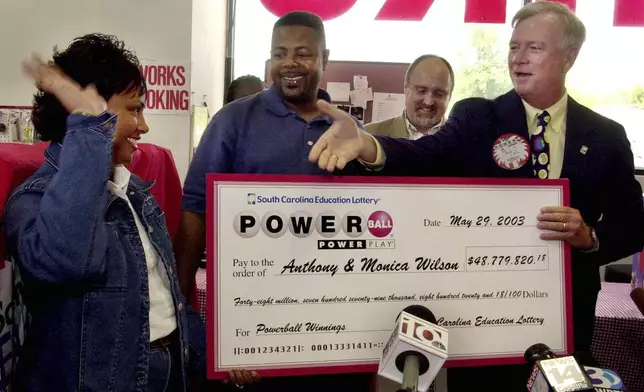
FILE - South Carolina Education Lottery Director, Ernie Passailaigue , right, extends his hand to Monica and Anthony Wilson, of Charlotte, N.C., as he presents them with a check for their Powerball winnings Thursday May 29, 2003, at Red Rocket Fireworks in Fort Mill, S.C. (AP Photo/Mary Ann Chastain, File)

FILE - South Carolina Education Lottery Director, Ernie Passailaigue , right, extends his hand to Monica and Anthony Wilson, of Charlotte, N.C., as he presents them with a check for their Powerball winnings Thursday May 29, 2003, at Red Rocket Fireworks in Fort Mill, S.C. (AP Photo/Mary Ann Chastain, File)

He felt like a “deer in headlights,” and his life immediately changed: Strangers regularly asked him for autographs or to “rub him for good luck.” Shultz, now in his 40s, said he would consider remaining anonymous today if he were given the choice.

“I wasn’t just Tim anymore, I was Tim the lottery winner,” Shultz said.

Saturday's $1.8 billion Powerball jackpot is the second-largest in history, but even if there is a winner, don’t expect to find out who they are or how they plan to use their winnings — unlike when Schultz won, most winners can now remain anonymous.

Lawmakers in many states have changed the rules in recent decades to protect winners from being targeted by criminals and unscrupulous people asking for money. And even in the approximately two dozen states where names are disclosed, winners are advised to avoid public scrutiny.

Kurt Panouses is a lottery lawyer who has represented winners for decades, including some worth hundreds of millions.

Panouses advises his clients to use intermediaries where possible and claim their prizes on busy news days, such as Election Day, to avoid coverage.

Panouses regularly fields inquiries from investors, scammers and people in need, all trying to reach his clients.

“It’s hard for people who don’t have the experience or life perspective to say no,” Panouses said.

It wasn't always this way. For centuries, public disclosure of those with winning tickets was an essential part of ensuring people could trust lotteries.

Lotteries in America date to the 1700s, when governments, like now, used them to raise money. Jonathan D. Cohen, the author of “For a Dollar and a Dream: State Lotteries in Modern America,” said they were born out of a “distinctly American desire for government services without paying taxes for them.”

Early on, they were more like raffles. Winners would be announced at fairs with ticket holders in the audience.

In the 1980s, in some states, Cohen said, people would buy tickets to jackpot games with in-person drawings. About 20 people would stand on stage and one would win. Their emotional personal stories helped fuel the popularity of lotteries.

“Here’s this housewife, here’s this orphan,” Cohen said. “The person who wins the lottery is sitting right there and, of course, immediately starts weeping.”

The big multi-state lotteries like Powerball and Mega Millions, which roll over prize money when no one wins and generate ever-larger jackpots, disrupted that approach, he said. It reduced the human element but allowed for bigger prizes.

Nine states allow all lottery winners to remain completely anonymous for all lotteries. Ten states allow lottery winners to remain anonymous for wins above a certain amount, ranging from $10,000 in Minnesota to $10 million in Virginia.

In some states where there is no anonymity for individual winners, people can still claim prizes anonymously through private trusts.

Attorney Mark K. Harder claimed the $842.4 million jackpot on behalf of a Michigan couple in 2024.

In addition to the security concerns, Harder said the couple wanted to be perceived "the way they had always been perceived."

Harder said the family also hired a public relations team to vet their social media profiles to make sure they didn't unintentionally give anything away.

In one well-known case, Andrew “Jack” Whittaker Jr. of West Virginia became an instant celebrity in 2002 when he won a lump sum of $113.4 million after taxes. It was the largest U.S. lottery jackpot won by a single ticket to date.

But he quickly fell victim to scandals, lawsuits and personal setbacks, later saying he wished he had torn up the ticket. He died in 2020.

Cohen said such well-publicized instances are outliers. The vast majority of winners are healthier and wealthier than non-winners, he said.

States, meanwhile, have an interest in disclosing the names to thwart fraud and to boost trust, he said.

“You don’t want the lottery director’s nephew to win every jackpot and just claim it anonymously and nobody knows who it is,” Cohen said.

He noted that states have mechanisms to prevent such subterfuge, like requiring that names of winners be disclosed to their lottery commissions.

The winner of the largest jackpot so far bought his ticket in California, which requires disclosure. Edwin Castro released a written statement after he claimed a 2022 jackpot worth $2.04 billion but declined to speak to reporters.

Last year, a Laotian immigrant and cancer survivor who won a $1.3 billion Powerball jackpot bucked recent trends at a press conference where he hoisted a huge check above his head. Shultz said those stories, along with his own, have value.

“I think it could be really positive, if they want to inspire other people,” he said.

People wait in line to buy lottery tickets at the Lotto Store just inside the California border, Wednesday, Sept. 3, 2025, near Primm, Nev. (AP Photo/John Locher)
People wait in line to buy lottery tickets at the Lotto Store just inside the California border, Wednesday, Sept. 3, 2025, near Primm, Nev. (AP Photo/John Locher)

People wait in line to buy lottery tickets at the Lotto Store just inside the California border, Wednesday, Sept. 3, 2025, near Primm, Nev. (AP Photo/John Locher)

People wait in line to buy lottery tickets at the Lotto Store just inside the California border, Wednesday, Sept. 3, 2025, near Primm, Nev. (AP Photo/John Locher)

FILE - A crowd of people line up outside the Arizona Last Stop convenience store and souvenir shop to buy Powerball tickets, Tuesday, Nov. 27, 2012, in White Hills, Ariz. AP Photo/Julie Jacobson, File)
FILE - A crowd of people line up outside the Arizona Last Stop convenience store and souvenir shop to buy Powerball tickets, Tuesday, Nov. 27, 2012, in White Hills, Ariz. AP Photo/Julie Jacobson, File)

FILE - People move along the sidewalk at lunchtime in Pittsburgh in front of a billboard advertising the current Powerball Jackpot on Monday, March 21, 2005. (AP Photo/Keith Srakocic, File)
FILE - People move along the sidewalk at lunchtime in Pittsburgh in front of a billboard advertising the current Powerball Jackpot on Monday, March 21, 2005. (AP Photo/Keith Srakocic, File)

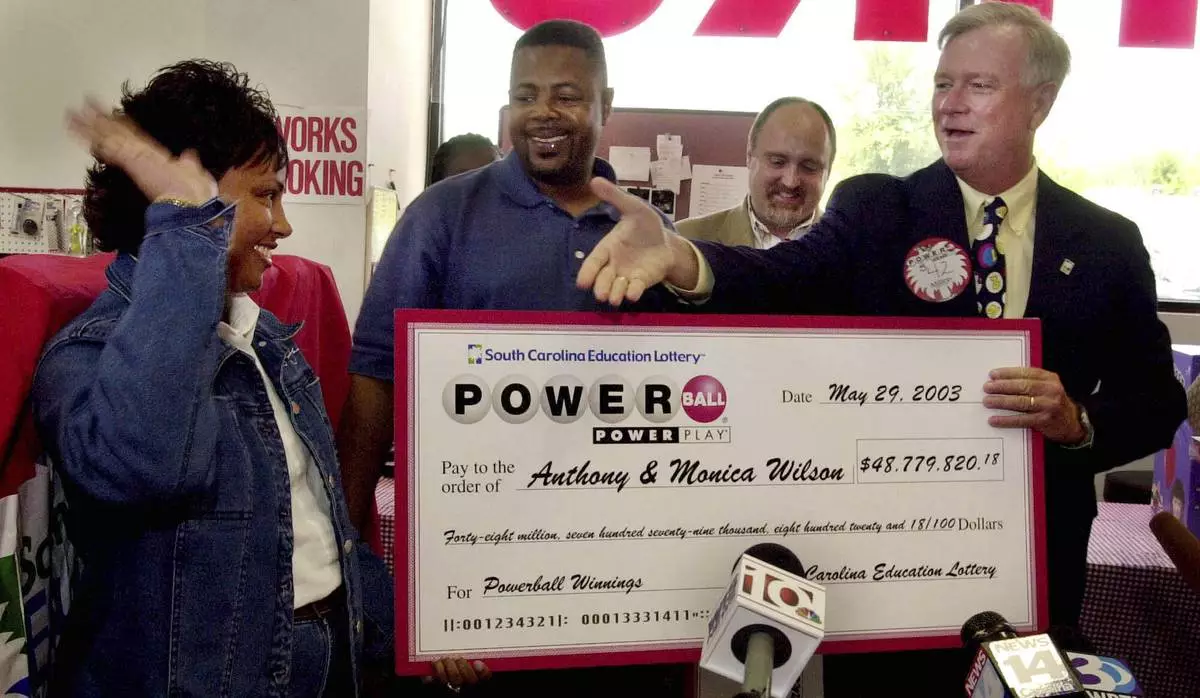
FILE - South Carolina Education Lottery Director, Ernie Passailaigue , right, extends his hand to Monica and Anthony Wilson, of Charlotte, N.C., as he presents them with a check for their Powerball winnings Thursday May 29, 2003, at Red Rocket Fireworks in Fort Mill, S.C. (AP Photo/Mary Ann Chastain, File)
FILE - South Carolina Education Lottery Director, Ernie Passailaigue , right, extends his hand to Monica and Anthony Wilson, of Charlotte, N.C., as he presents them with a check for their Powerball winnings Thursday May 29, 2003, at Red Rocket Fireworks in Fort Mill, S.C. (AP Photo/Mary Ann Chastain, File)
WASHINGTON (AP) — U.S. forces in the Caribbean Sea have seized another sanctioned oil tanker that the Trump administration says has ties to Venezuela, part of a broader U.S. effort to take control of the South American country’s oil.

The U.S. Coast Guard boarded the tanker, named Veronica, early Thursday, Homeland Security Secretary Kristi Noem wrote on social media. The ship had previously passed through Venezuelan waters and was operating in defiance of President Donald Trump’s "established quarantine of sanctioned vessels in the Caribbean,” she said.

U.S. Southern Command said Marines and sailors launched from the aircraft carrier USS Gerald R. Ford to take part in the operation alongside a Coast Guard tactical team, which Noem said conducted the boarding as in previous raids. The military said the ship was seized “without incident.”

Several U.S. government social media accounts posted brief videos that appeared to show various parts of the ship’s capture. Black-and-white footage showed at least four helicopters approaching the ship before hovering over the deck while armed troops dropped down by rope. At least nine people could be seen on the deck of the ship.

The Veronica is the sixth sanctioned tanker seized by U.S. forces as part of the effort by Trump’s administration to control the production, refining and global distribution of Venezuela’s oil products and the fourth since the U.S. ouster of Venezuela President Nicolás Maduro in a surprise nighttime raid almost two weeks ago.

The Veronica last transmitted its location on Jan. 3 as being at anchor off the coast of Aruba, just north of Venezuela’s main oil terminal. According to the data it transmitted at the time, the ship was partially filled with crude.

Days later, the Veronica became one of at least 16 tankers that left the Venezuelan coast in contravention of the quarantine that U.S. forces have set up to block sanctioned ships, according to Samir Madani, the co-founder of TankerTrackers.com. He said his organization used satellite imagery and surface-level photos to document the ship movements.

The ship is currently listed as flying the flag of Guyana and is considered part of the shadow fleet that moves cargoes of oil in violation of U.S. sanctions.

According to its registration data, the ship also has been known as the Gallileo, owned and managed by a company in Russia. In addition, a tanker with the same registration number previously sailed under the name Pegas and was sanctioned by the Treasury Department for being associated with a Russian company moving cargoes of illicit oil.

As with prior posts about such raids, Noem and the military framed the seizure as part of an effort to enforce the law. Noem argued that the multiple captures show that “there is no outrunning or escaping American justice.”

Speaking to reporters at the White House later Thursday, Noem declined to say how many sanctioned oil tankers the U.S. is tracking or whether the government is keeping tabs on freighters beyond the Caribbean Sea.

“I can’t speak to the specifics of the operation, although we are watching the entire shadow fleet and how they’re moving,” she told reporters.

But other officials in Trump's Republican administration have made clear they see the actions as a way to generate cash as they seek to rebuild Venezuela’s battered oil industry and restore its economy.

Trump met with executives from oil companies last week to discuss his goal of investing $100 billion in Venezuela to repair and upgrade its oil production and distribution. His administration has said it expects to sell at least 30 million to 50 million barrels of sanctioned Venezuelan oil.

Associated Press writer Ben Finley contributed to this report.

This story has been corrected to show the Veronica is the fourth, not the third, tanker seized by U.S. forces since Maduro’s capture and the ship also has been known as the Gallileo, not the Galileo.

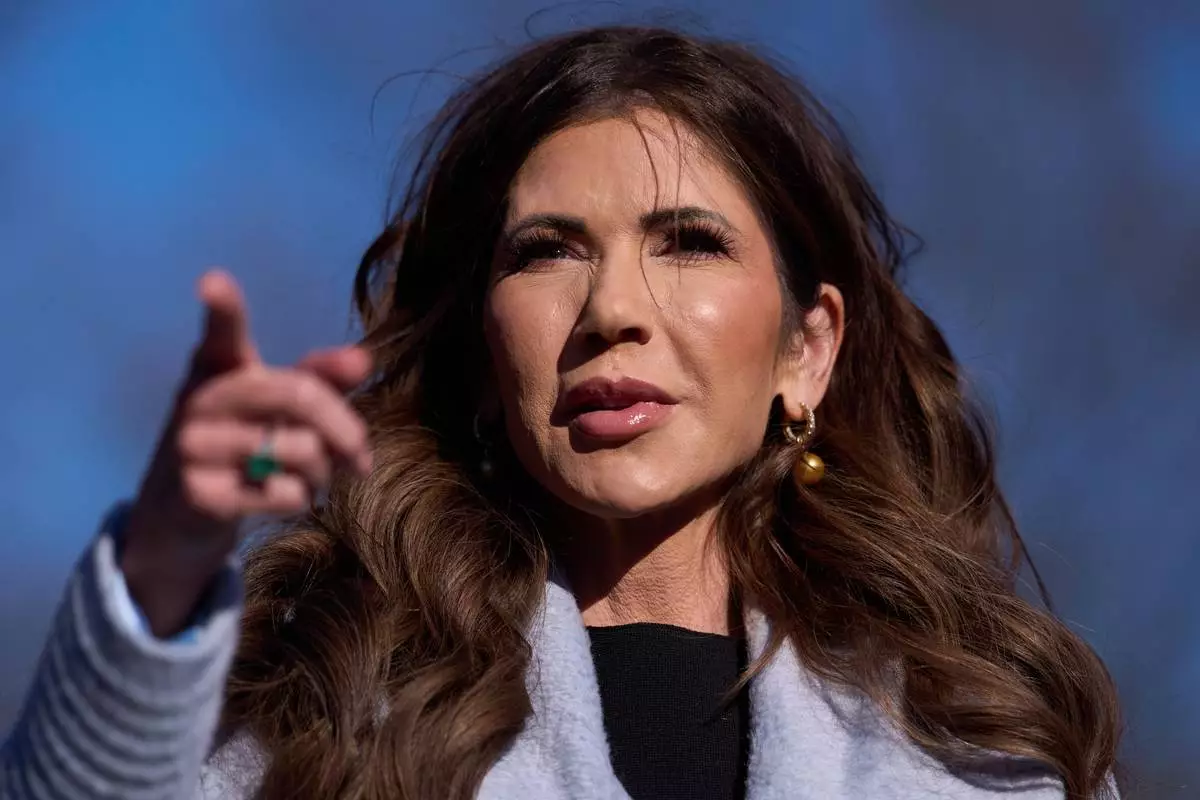
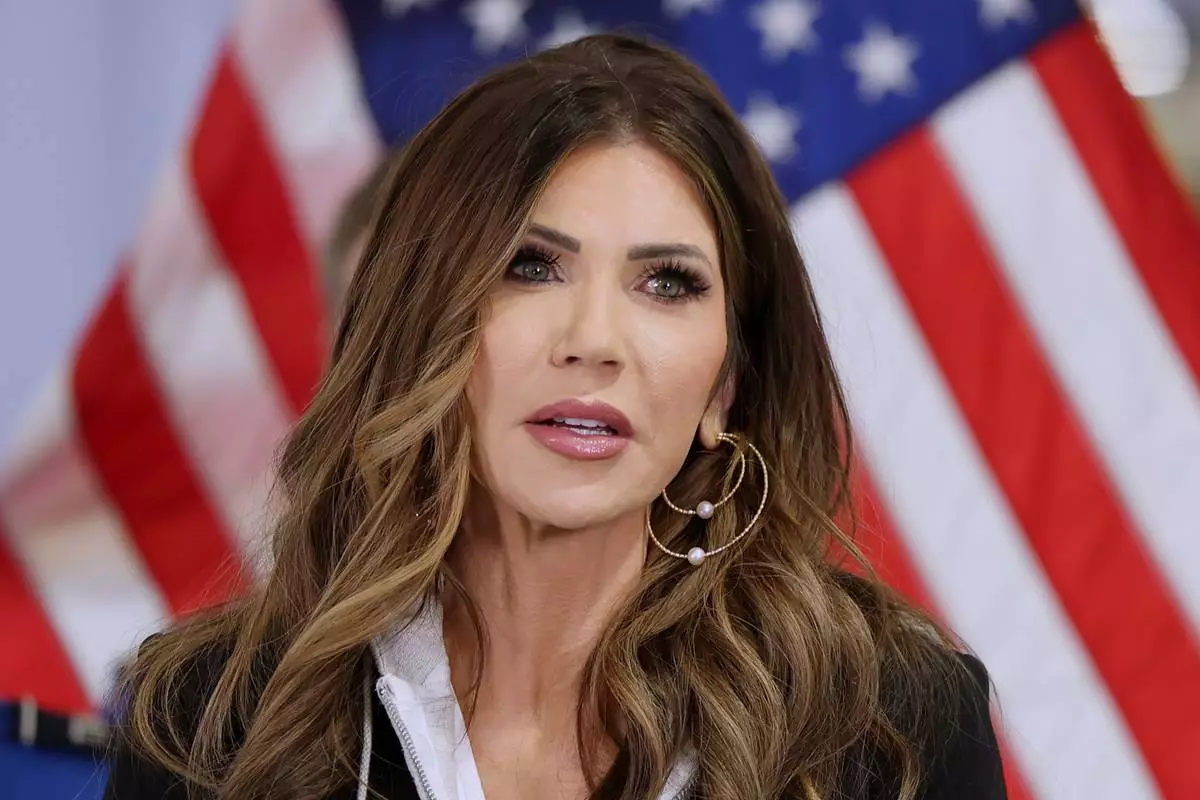
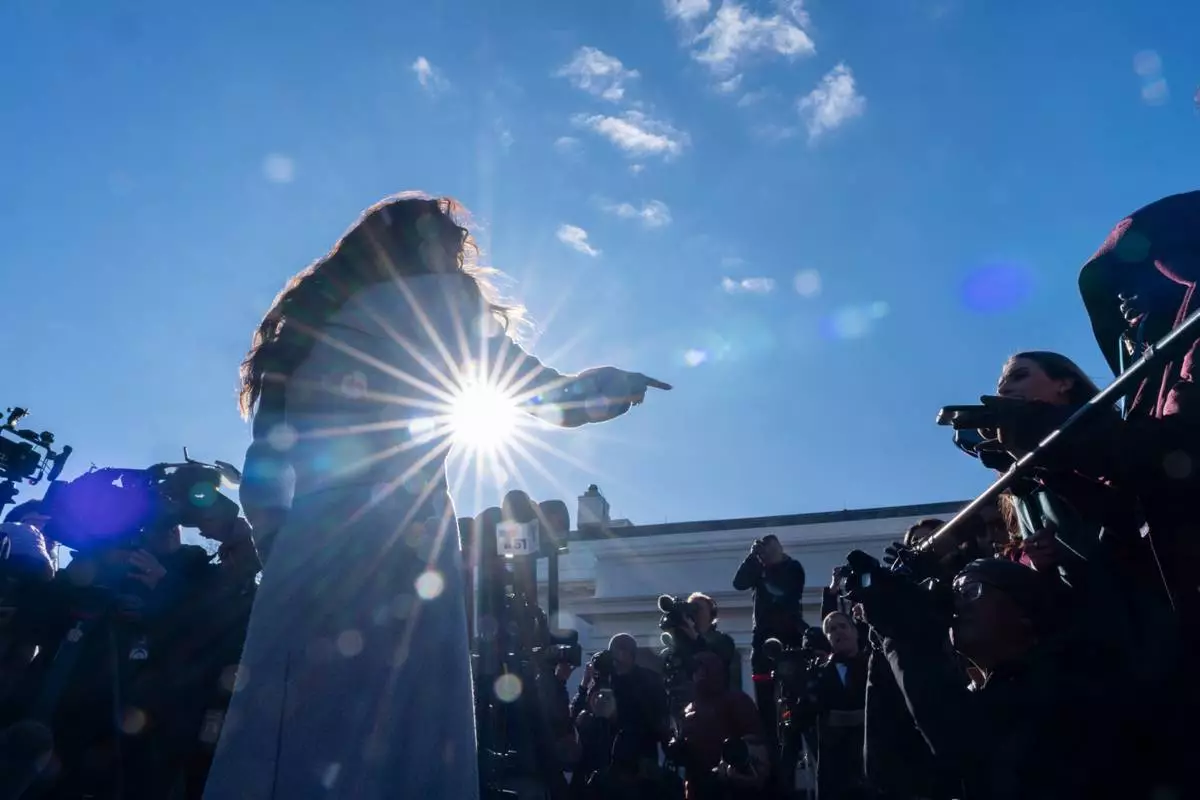
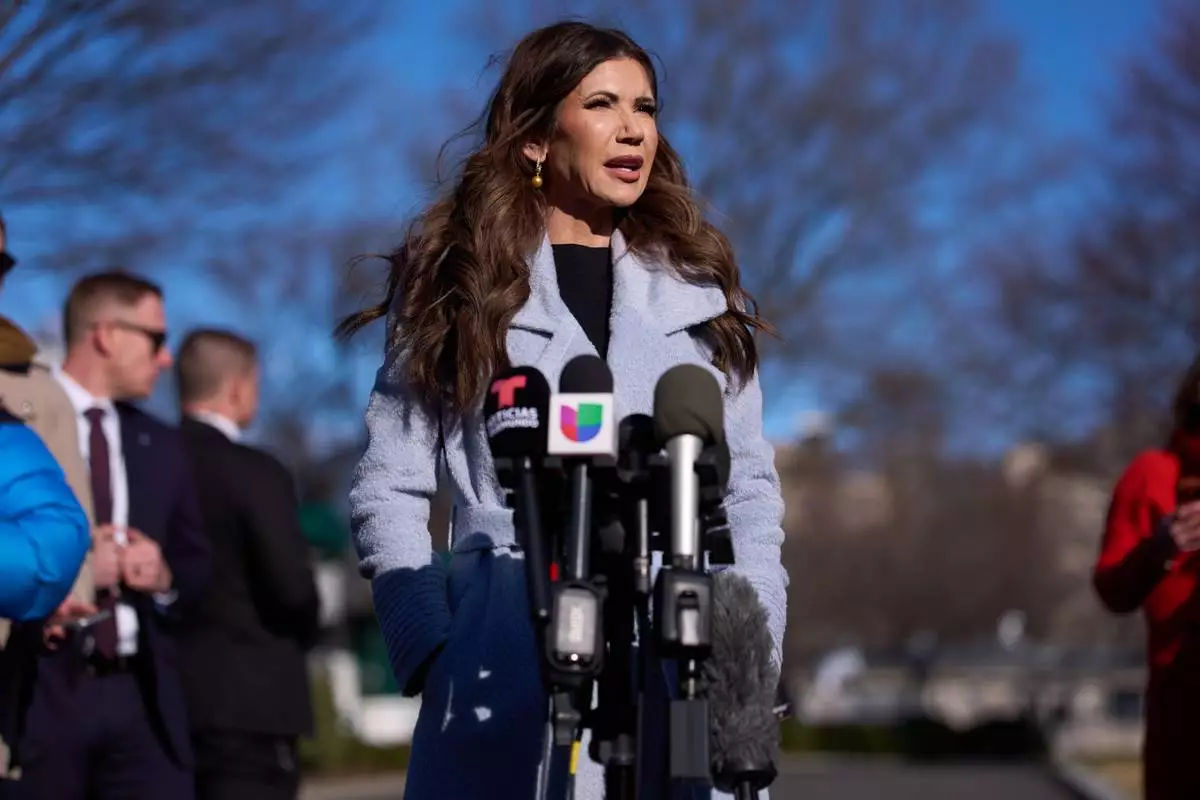
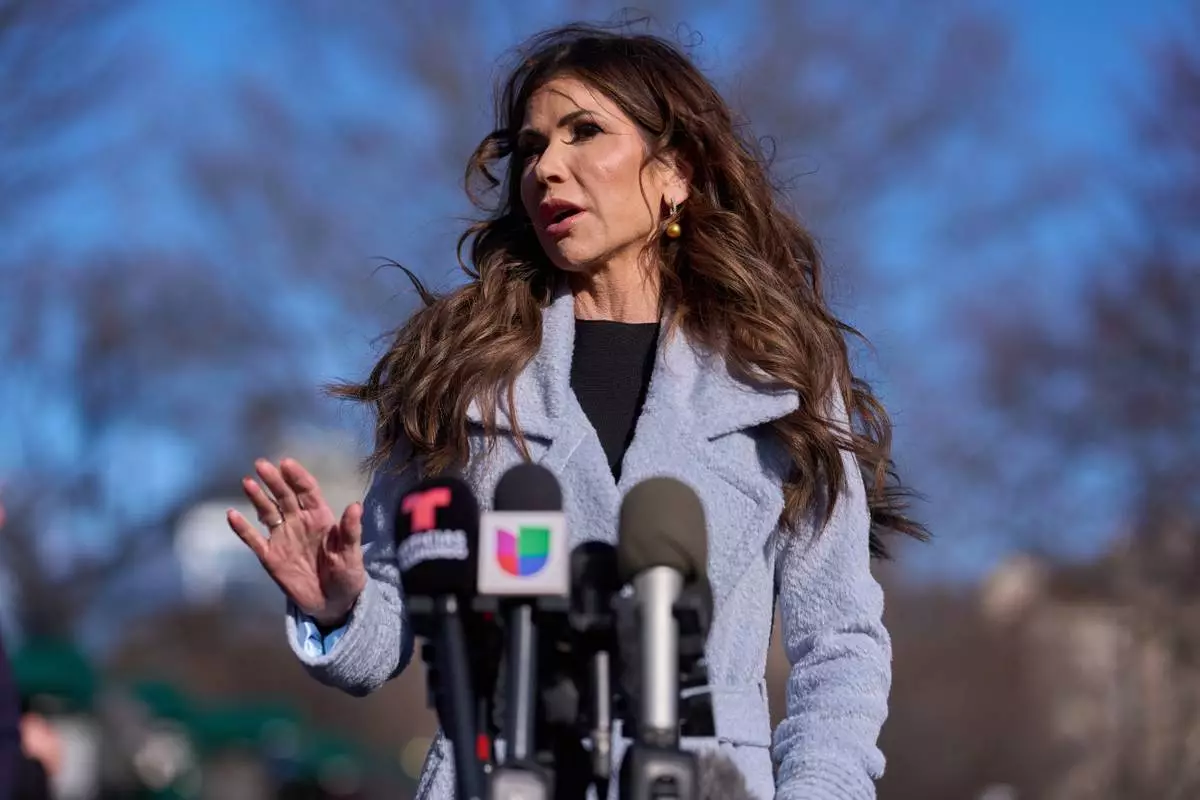
Homeland Security Secretary Kristi Noem speaks with reporters at the White House, Thursday, Jan. 15, 2026, in Washington. (AP Photo/Alex Brandon)

Homeland Security Secretary Kristi Noem speaks with reporters at the White House, Thursday, Jan. 15, 2026, in Washington. (AP Photo/Alex Brandon)

Homeland Security Secretary Kristi Noem speaks with reporters at the White House, Thursday, Jan. 15, 2026, in Washington. (AP Photo/Evan Vucci)

Homeland Security Secretary Kristi Noem speaks with reporters at the White House, Thursday, Jan. 15, 2026, in Washington. (AP Photo/Evan Vucci)

Homeland Security Secretary Kristi Noem speaks with reporters at the White House, Thursday, Jan. 15, 2026, in Washington. (AP Photo/Evan Vucci)

Homeland Security Secretary Kristi Noem speaks with reporters at the White House, Thursday, Jan. 15, 2026, in Washington. (AP Photo/Evan Vucci)

Homeland Security Secretary Kristi Noem speaks with reporters at the White House, Thursday, Jan. 15, 2026, in Washington. (AP Photo/Evan Vucci)

Homeland Security Secretary Kristi Noem speaks with reporters at the White House, Thursday, Jan. 15, 2026, in Washington. (AP Photo/Evan Vucci)

Homeland Security Secretary Kristi Noem speaks with reporters at the White House, Thursday, Jan. 15, 2026, in Washington. (AP Photo/Evan Vucci)

Homeland Security Secretary Kristi Noem speaks with reporters at the White House, Thursday, Jan. 15, 2026, in Washington. (AP Photo/Evan Vucci)

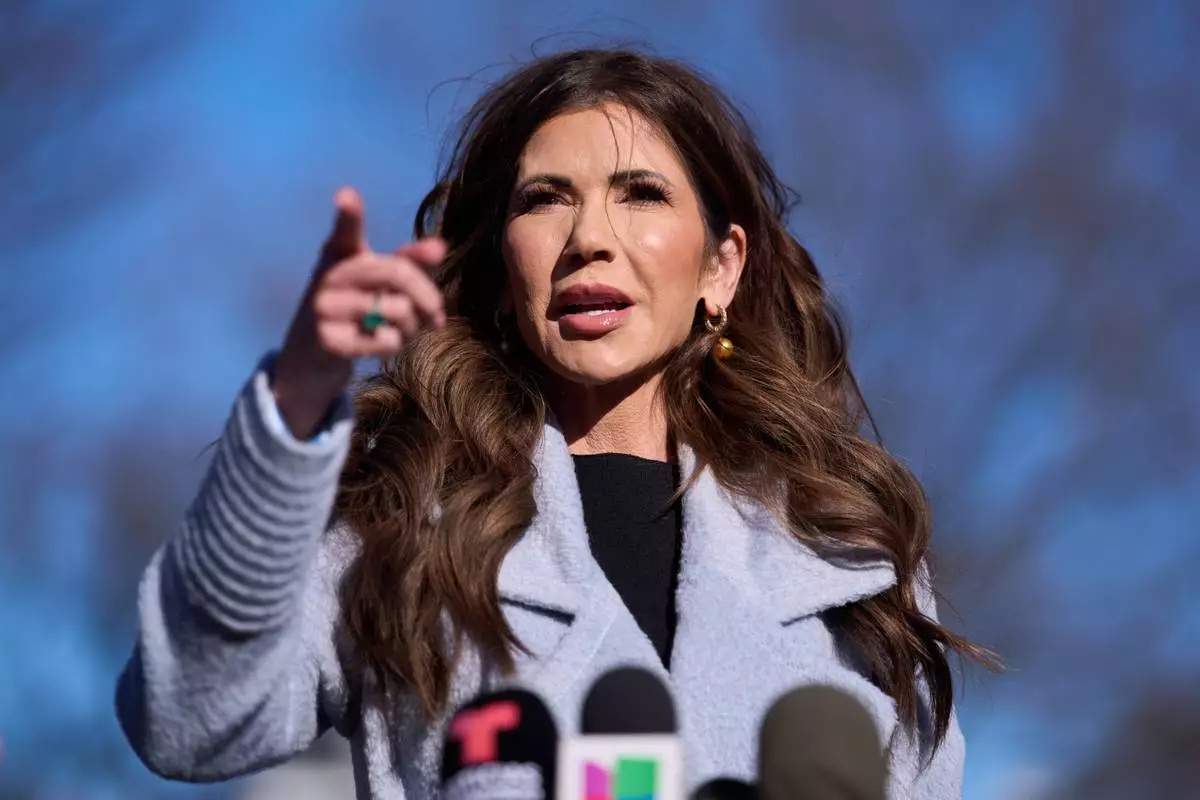
U.S. Homeland Security Secretary Kristi Noem speaks during a press conference, Thursday, Jan. 8, 2026, in New York. (AP Photo/Yuki Iwamura)

U.S. Homeland Security Secretary Kristi Noem speaks during a press conference, Thursday, Jan. 8, 2026, in New York. (AP Photo/Yuki Iwamura)

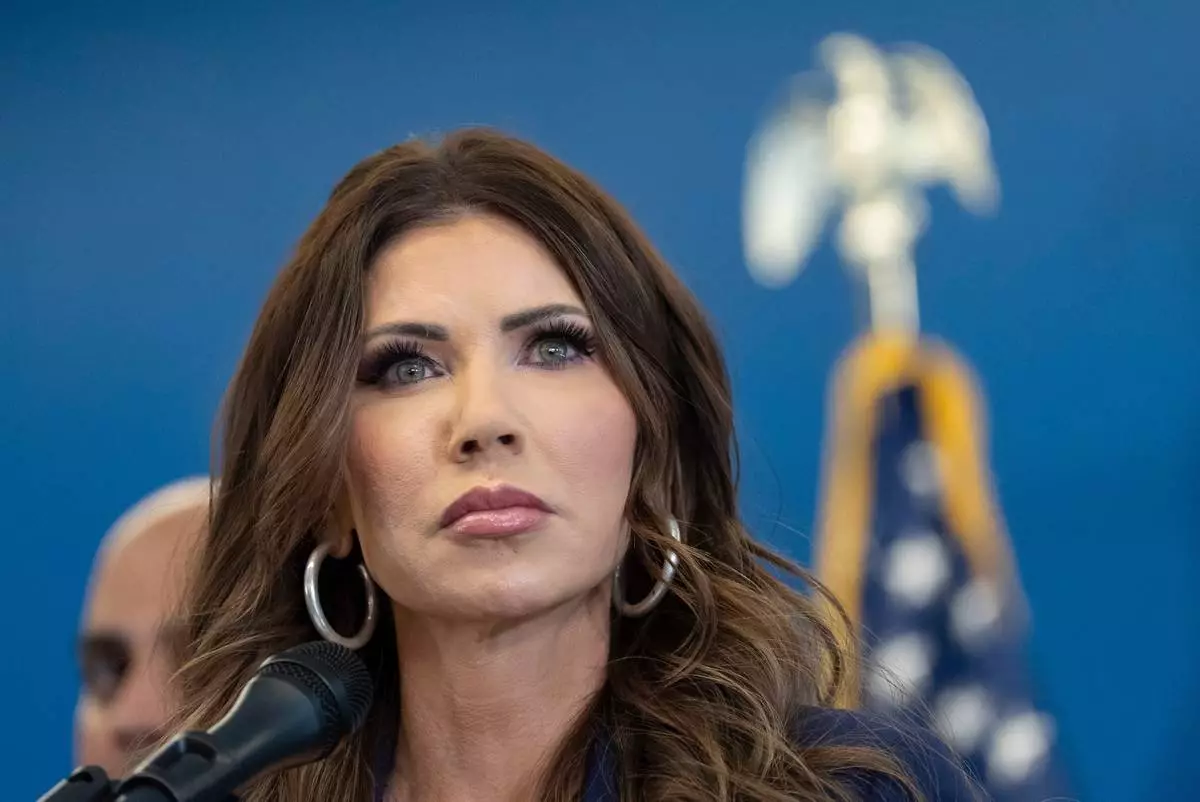
U.S. Homeland Security Secretary Kristi Noem speaks at a news conference at Harry Reid International Airport, Nov. 22, 2025, in Las Vegas. (AP Photo/Ronda Churchill, File)

U.S. Homeland Security Secretary Kristi Noem speaks at a news conference at Harry Reid International Airport, Nov. 22, 2025, in Las Vegas. (AP Photo/Ronda Churchill, File)

Recommended Articles