An Amur tigress in Northeast China Tiger and Leopard National Park has given birth to five cubs across two litters within two years, park rangers confirmed.
The growing family reflects a broader recovery of Amur tigers and leopards in the park, where populations are not only increasing but also expanding deeper into the park's interior.
A recently captured video of a mother tiger with her two cubs in the core area of the park has drawn significant attention from monitoring staff. After careful comparison and identification, the two cubs were confirmed as newly born tigers, previously unrecorded in the park.
Their mother, known as "003F" in the park's household registration archive, is a long-term resident with a well-documented territory and family history. She is also the mother of the famous "Hu Niu," a tigress widely known for her frequent appearances near National Highway 331.
Based on the timeline of 003F's previous litters, park rangers infer that this experienced mother has given birth to five cubs across two separate reproduction cycles within just a year and a half, making her a remarkably prolific tigress in the region.
This careful documentation is part of a broader effort to monitor the park's wildlife. In fact, every tiger and leopard cub in the national park is assigned a unique household registration file from the moment it is first documented. These files not only track familial relationships across generations but also record individual movement patterns.
The park's comprehensive monitoring network continuously tracks the footprints of all Amur tigers and leopards, enabling not only ongoing conservation and research but also early warnings for potential human-wildlife conflicts near villages or roads.
"We have now established detailed household registration files for more than 50 Amur tigers and over 70 Amur leopards. Basic information such as distribution ranges, activity areas, age, and reproduction records have been largely documented, and a list of key monitoring targets has been created. Through the automated recognition function of our integrated sky-ground monitoring system, we closely track these keystone species and issue timely alerts to strengthen prevention efforts," said Wang Wei, director of the scientific research and monitoring department of the park authority.
Park officials explained that young Amur tigers leave their mothers upon reaching adulthood to establish their own territories. Females typically settle closer to their birthplace, while males venture farther. Some young females even inherit or share parts of their mother's territory, a natural "privilege" that supports their survival.
Thanks to this innate wisdom and generational effort, Amur tigers, once confined to a narrow habitat along the China-Russia border two decades ago, have gradually expanded into the heart of the national park and beyond. Their footprints now cover almost the entire protected area.
"With continued conservation efforts and improving ecological conditions, the stable distribution range of Amur tigers and leopards has been expanding from the China-Russia border, the southeastern part of the park, deep into its interior. The expansion has already reached over 300 kilometers. The total activity range of these animals now exceeds 11,000 square kilometers, and breeding families of Amur tigers have been recorded at far northwest of the national park," said Duan Zhaogang, director of the park authority.
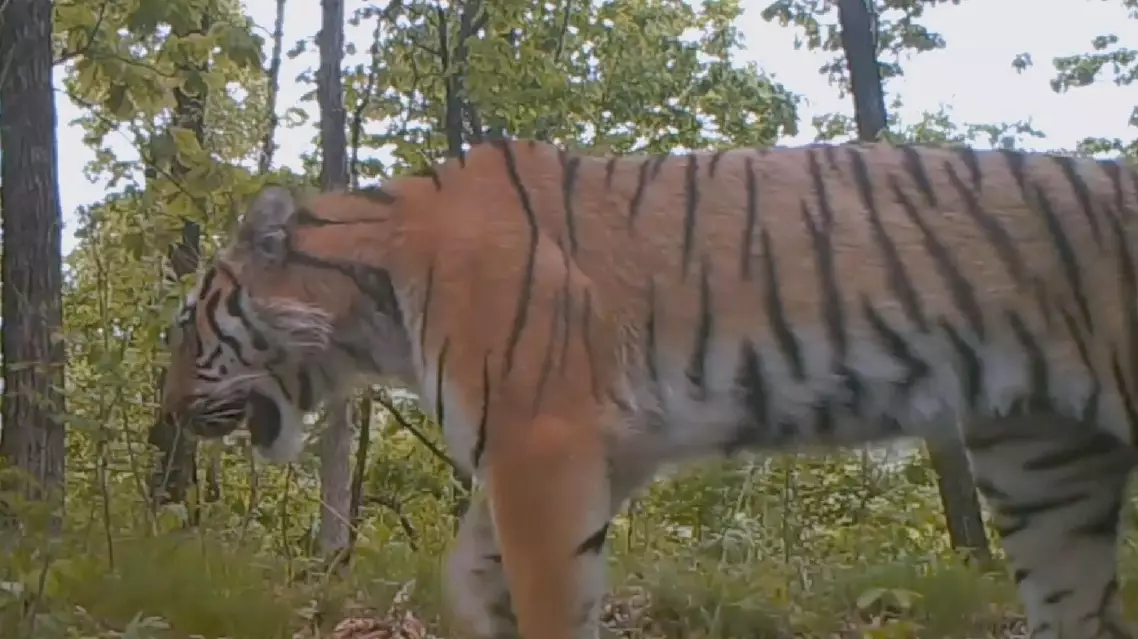
Amur tiger, leopard populations thrive thanks to conservation efforts
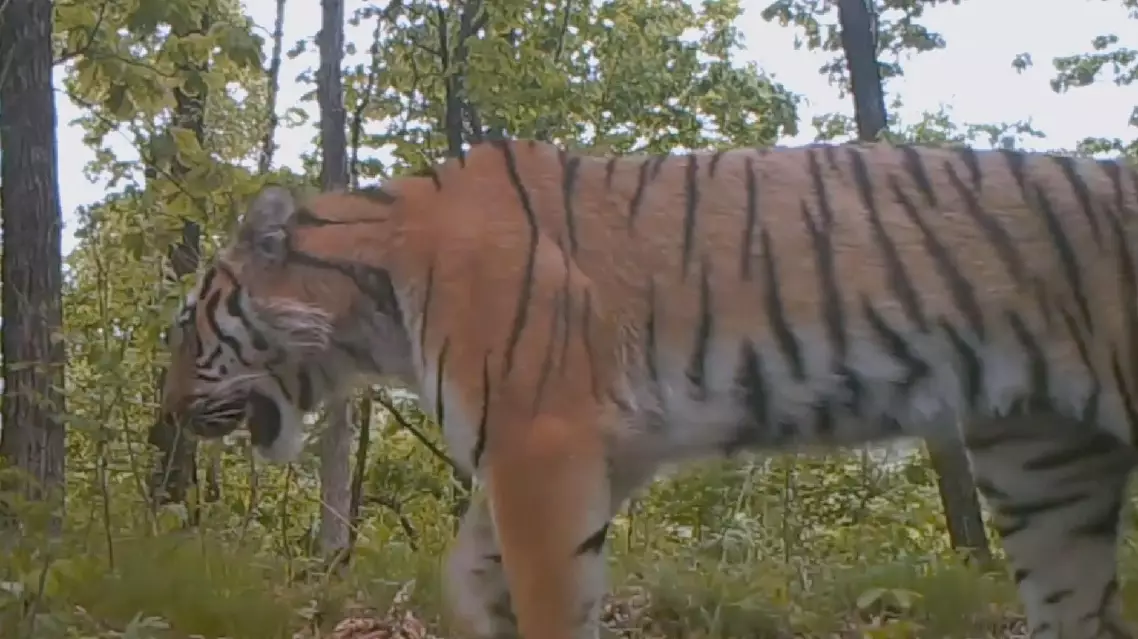
Amur tiger, leopard populations thrive thanks to conservation efforts
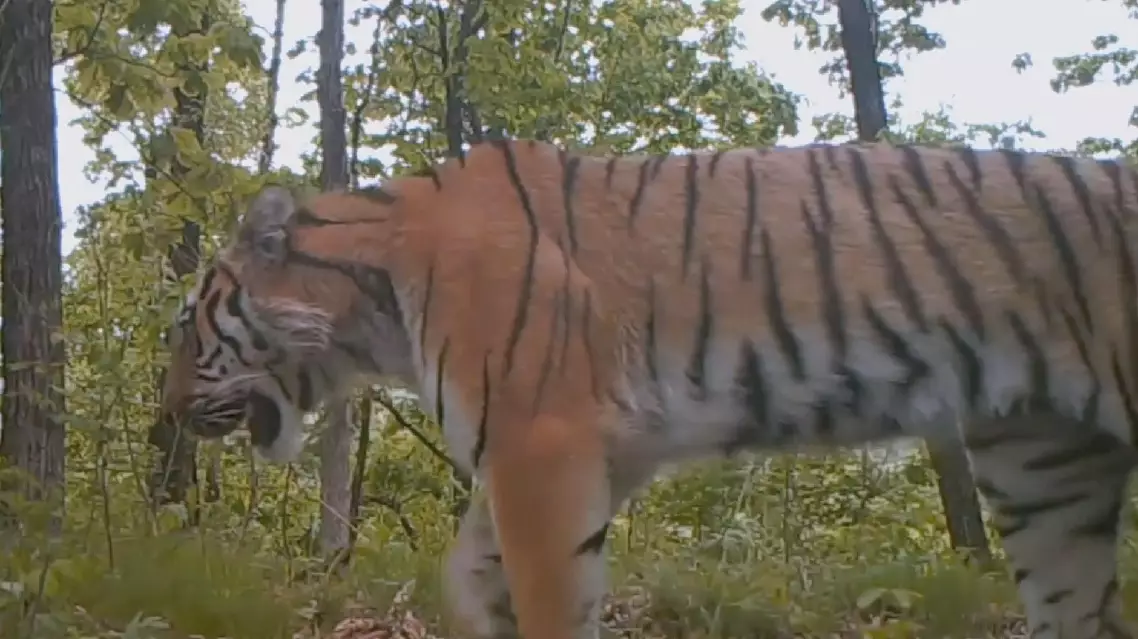
Amur tiger, leopard populations thrive thanks to conservation efforts