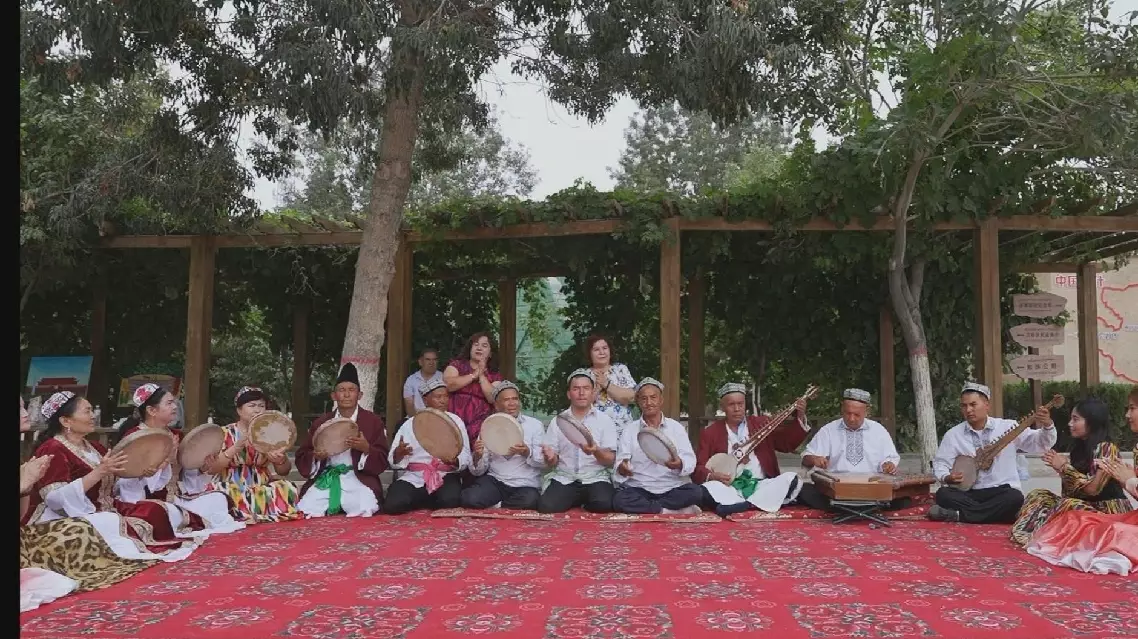
Blending song, dance, and centuries-old melodies, Dolan Muqam, a vibrant traditional art form of the Uygur ethnic group in northwest China's Xinjiang, is experiencing a revival, boosting pride among local people in their rich cultural heritage and driving tourism.
Recognized by UNESCO in 2005 as a "Masterpiece of the Oral and Intangible Heritage of Humanity," the Xinjiang Uygur Muqam Arts of China stand as a living encyclopedia of Uygur culture.
In the autonomous region's Makit County, situated on the western edge of the Taklimakan Desert, China's largest desert, the Dolan people perform it in the wildest form.
"In the past, people in Makit lived by hunting and fishing. When we perform, it feels like we're in a hunt -- masculine, powerful, and full of strength," said Ayxamgul Ahat, manager of the Makit County Dolan Art Troupe.
Rooted in centuries of tradition, Muqam has long been the soundtrack of Uygur life -- echoing through weddings, harvests, and communal gatherings.
"We sing about life, and we sing about love," said Ahat.
Now, with strong government support, Dolan Muqam is stepping onto grander stages.
"Every year, more than 500,000 yuan (about 70,000 U.S. dollars) is set aside specifically for safeguarding and transmitting our intangible heritage," said Mihirgul Muhtar, director of the Makit County Culture and Tourism Bureau.
The investment is paying off for the local economy as the ancient melodies attract tourists like Li Yang and his family, visiting from south China's Guangdong Province.
"This is the most traditional and rich Uygur culture, and we want our child to experience it," said Li.
The revival of this art form is part of a broader initiative of Xinjiang to boost tourism, diversify its economy, and advance modernization.
An ambitious action plan unveiled by Xinjiang's regional government this year targets over 400 million annual visits by 2030, expected to generate about one trillion yuan (about 140 billion U.S. dollars) in cultural and tourism revenue.
"Tourists across China are showing huge enthusiasm for Xinjiang. More tourists are interested in Dolan Muqam. It has become one of Makit's calling cards," said Muhtar.
Though Makit remains a transit point for many -- often a brief stop between the mountain majesty of Tashkurgan Tajik Autonomous County and the bustling charm of Kashgar City -- its cultural depth and desert mystique are giving travelers more reasons to linger.
"Word of mouth matters. Authentic experiences will attract more people to learn and share, and help cultures connect," said Li.
That attention gives performers pride, as well as the strength to keep their traditions alive.
"When outsiders see our Dolan culture and applaud us, we find our strength. All the hardship and worries are forgotten," said Patigul Rakhman, a master performer of Dolan Muqam.
Revival of Xinjiang's musical tradition 'Dolan Muqam' boosts cultural pride