Malaysian Prime Minister Anwar Ibrahim has highlighted unity among Global South countries in addressing political and economic challenges facing countries around the world.
Last week, Anwar sat with China Global Television network (CGTN) for an interview on the sidelines of the Shanghai Cooperation Organization (SCO) summit in north China's Tianjin and the commemorations marking the 80th anniversary of the victory in the Chinese People's War of Resistance against Japanese Aggression and the World Anti-Fascist War.
In response to a question on facing up to unilateralism and U.S. tariff policies, the prime minister underscored efforts to build up Global South unity through multilateral bodies.
"The solution is to build up that Global South understanding to be able to resolve part of the problem ourselves and not to be dependent by any superpower. So, we have the ASEAN Initiative, we have the Chinese initiative and we have the BRICS and we have the SCO. These are, I think, where we say, look, we can partly mitigate and redeem some of the contentious issues affecting us, not only in terms of global politics, but also in terms of economic, to protect economic interests of these countries," he said.
The United States raised its tariffs on Malaysia to 25 percent in July this year, later reducing the levies to 19 percent in August.
The lower rate will apply to goods entered for consumption, or withdrawn from a warehouse for consumption, on or after seven days following the date of the order, according to a White House statement.
However, the new rate will not apply to goods that are loaded onto vessels and already in transit on the final mode of transport before that time, provided they are entered for consumption or withdrawn from warehouses for consumption before Oct. 5, it added.
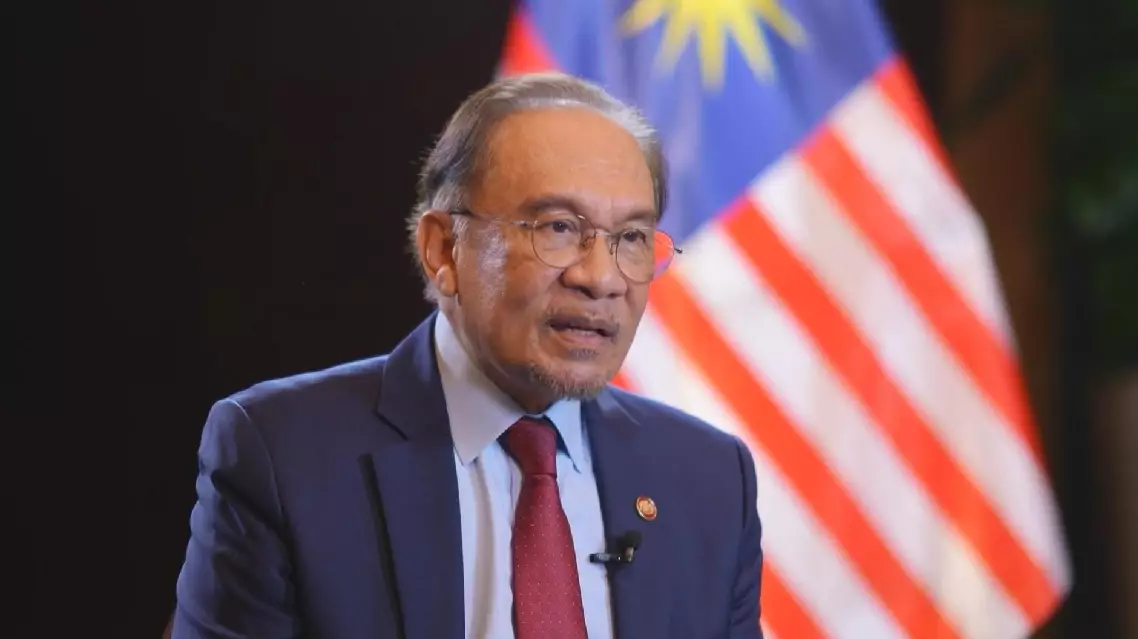
Malaysian PM highlights Global South unity, multilateralism to address common challenges
Voting for the election of the eighth-term Legislative Council (LegCo) of China's Hong Kong Special Administrative Region (HKSAR) concluded on Sunday night.
Voting for the election began at 07:30 a.m. local time on Sunday. More than 600 polling stations were opened across Hong Kong, serving approximately 4.13 million registered voters.
Long queues had already formed outside multiple polling stations across Hong Kong before the polls opened. At polling station entrances, staff and volunteers attentively assisted voters with the procedures. Some voters posed for a photo holding a thank-you card given by staff after casting their ballot.
"As a Hong Kong citizen, I think it's my responsibility to vote, and I don't want to give up my rights. That's why I come here to support," a voter said.
"We actually flew in from Thailand. Learning today is a special day to vote, we actually canceled all our appointments and canceled everything, and we flew in with the whole family just to be part of Hong Kong and to vote, and to cast our vote and be part of the community," said another voter.
HKSAR Chief Executive John Lee cast his ballot at around 08:30 a.m. at Raimondi College on Robinson Road. He said that the LegCo election is of great importance to Hong Kong's overall development and future reforms, and it also represents the expectations of Hong Kong society.
A number of voters said they look forward to the new term of the Legislative Council taking greater responsibility in advancing Hong Kong's economy, society, and public welfare.
"I think an area of focus I'd like to see is, one is the economy, and secondly is youth mobility and youth policies. I think youth are the future, and it's very important to get unity within the youth and also give us hope, right? The youth in general -- what can we do to, for us as youth, to partake in civil society and to show our responsibility, but also from the government, like, what kind of policy that can help us do that as well," said a young voter.
"I hope that there will be more fair education in the sense that even people from the poor family, they can actually receive good education in good schools," another voter said.
The new term of LegCo will be composed of 90 members, including 40 elected by the Election Committee, 30 elected by functional constituencies, and 20 elected by geographical constituencies through direct elections.
The eighth-term LegCo of the HKSAR will commence its four-year term on Jan 1, 2026.
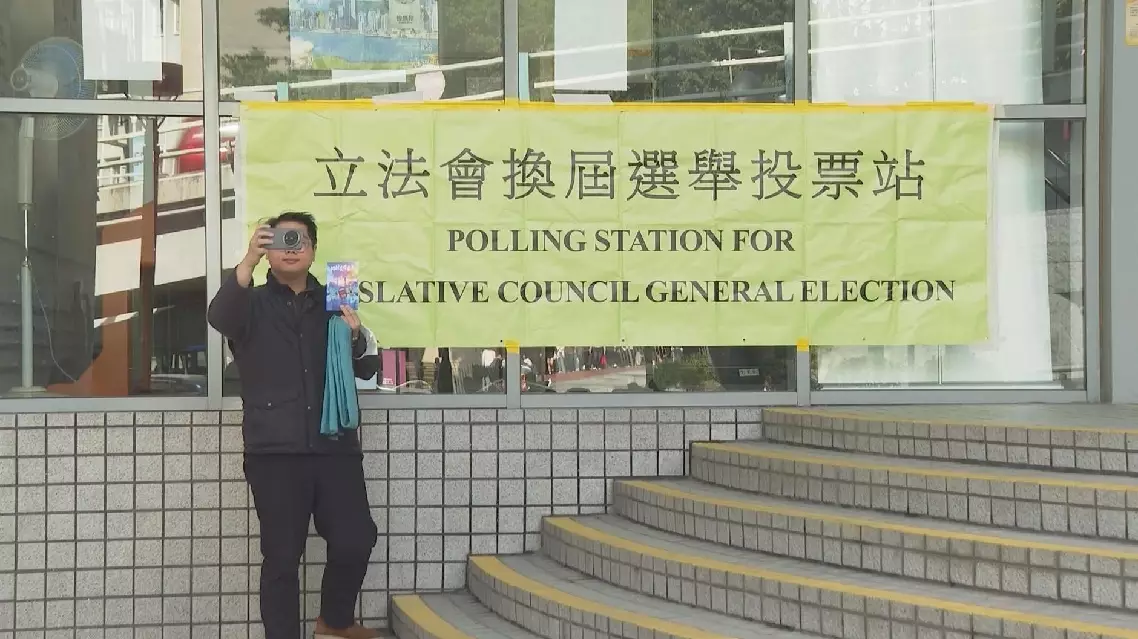
Voting for 8th-term HKSAR LegCo election concludes