Chinese automakers have increased their presence at the 2025 IAA Mobility, one of the world's largest mobility trade fairs, held in Munich, Germany, as part of a broader push to expand in Europe despite looming tariffs on China-made electric vehicles (EVs).
The event, which opened Tuesday and runs through Sunday, has attracted around 750 exhibitors from over 30 countries and regions, according to organizers. China accounts for the largest share of foreign participants, with 116 companies taking part, including EV makers BYD, Xpeng, and Leapmotor, battery giant CATL, and tech firms DeepRoute.ai and Zhuoyu.
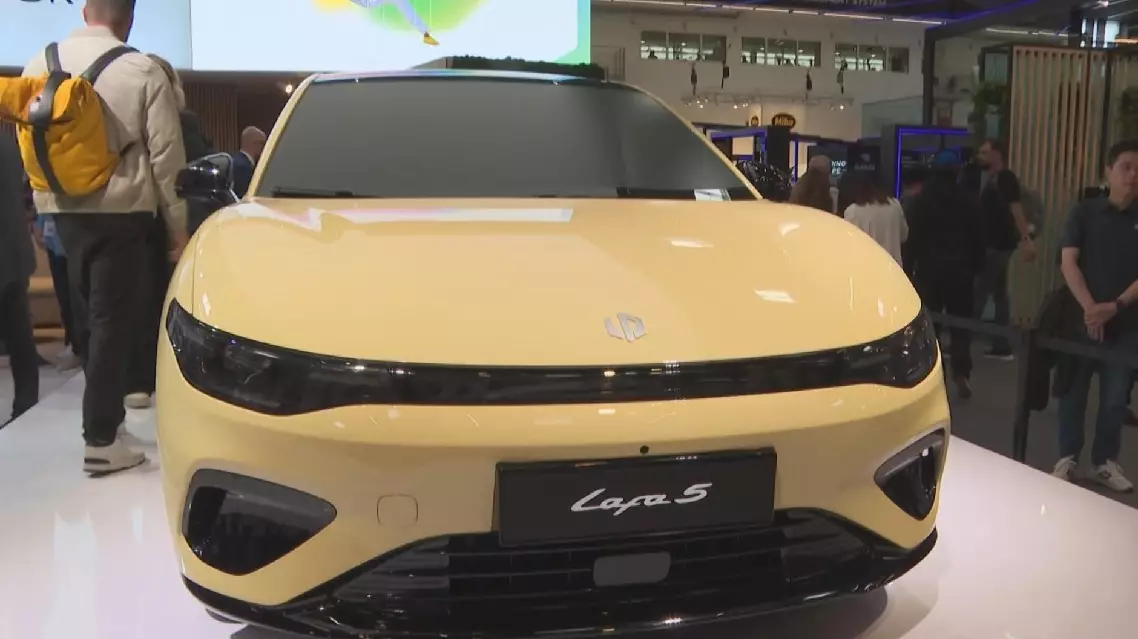
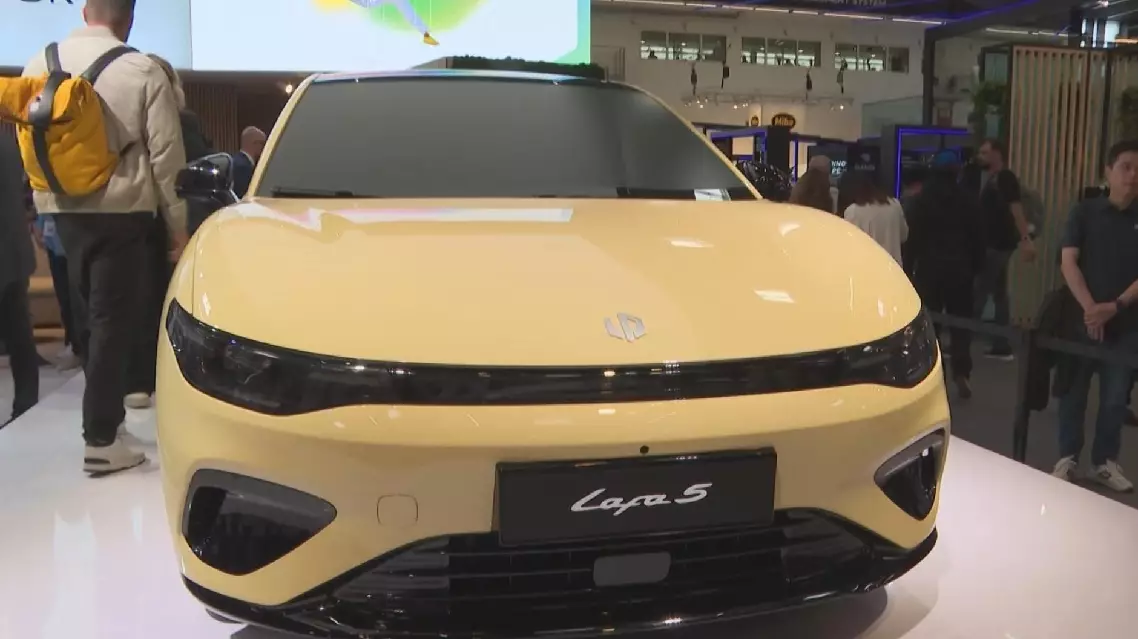
Auto manufacturer Leapmotor is showcasing its new Lafa 5 hatchback at both its city-center booth and the trade fair venue, aiming to boost sales in Europe. The company's founder also outlined a broader strategy for expanding its presence in the European market.
"Looking at the future of electrification, I believe it will follow two main paths: fully electric vehicles and hybrid vehicles. Alongside EVs, we also plan to increase our investment in hybrids so we can capture a solid share of the European market," said Zhu Jiangming, founder of Leapmotor.
Despite the European Commission's plan to impose tariffs of up to 36.3 percent on China-made EVs, the market share of Chinese automakers in Europe nearly doubled to 5.1 percent in the first half of this year.
BYD, which outperformed Tesla across Europe in July, said it's adapting to the trade environment by localizing supply chains with an eye on further growth on the continent.
"Tariffs are not a benefit for anybody, [they are] hurting European consumers. But for BYD as a global leader, as a technology leader, we have a global mindset. So we are already in the process to localize ourselves, so our Hungarian facility will start operating by the end of this year," said Stella Li, executive vice president of BYD.
Analysts noted a 40 percent increase in Chinese exhibitors at this year's IAA Mobility compared to 2023, viewing heightened brand visibility as a key strategy for market growth.
"BYD is sponsoring some of the major events we've seen in Europe. So I think brand recognition is definitely something the Chinese OEMs are working on," said Zhang Zihan, an EV research analyst of UK-based market research firm Rho Motion.
China's auto giants showcase expansion plans at Europe's premier mobility fair
A former television host from Taiwan, Zhai Xuan, has made a pivotal decision to leave mainstream broadcasting in order to create content that provides a better understanding of the Chinese mainland and cross-strait relations.
Zhai, a seasoned television host with over a decade of experience in Taiwan's media landscape, recently addressed an audience at an event in Beijing, where she revealed her complete transition into independent online media.
In her remarks, she articulated her aspiration to bridge what she perceives as a significant information gap between audiences on both sides of the Strait, highlighting her commitment to fostering a deeper understanding and connection through her new endeavors.
"I was really surprised by all the fake news. There were stories saying people on the mainland can't afford tea eggs or that they live in mud houses and in Taiwan, this was the main information many people received," said Zhai.
Zhai said she initially began producing online videos to challenge such perceptions while continuing her work as a television host.
In April 2025, she travelled to the mainland with her father to fulfill her late grandfather's wish to return to his hometown. The trip, which reunited family members separated since 1949, was recorded in a video series titled "Journey to Find Our Roots", drawing attention from viewers in both Taiwan and the mainland.
"Many people in Taiwan told me that after watching, they wanted to apply for a mainland travel permit immediately and go looking for their relatives. Some had long forgotten these things, but after seeing my story, they began thinking about their hometowns and family members they had never met and decided to search for their roots," Zhai shared her story at the event.
By mid-2025, Zhai said she began to feel increasing pressure amid rising political tensions and a tightening atmosphere around cross-Strait exchanges in Taiwan.
After more than 12 years in the industry, Zhai resigned from her position, believing it was the right thing to do.
"At that moment, I felt this was a major issue,not just for me, but for Chinese people on both sides of the Strait. If I backed down then, I wouldn’t be standing on the right side," said Zhai.
Since leaving television, Zhai has broadened her online programming to encompass a range of daily-life topics, including practical guidance on applying for a mainland travel permit and using commonly employed mobile applications, in addition to content that delves into historical memory and cultural connections across the Strait.
As the debate over cross-Strait relations continues in Taiwan, Zhai said she remains committed to her current path.
Former Taiwan TV host bridges cross-Strait divide via online media