As Xinjiang Uygur Autonomous Region in northwest China is set to mark 70 years of development, younger generations in the region are breathing new life into to its rich cultural heritage.
In Yining, a city in the region's Ili Kazak Autonomous Prefecture, a growing number of creative entrepreneurs and artists are re-imagining tradition through the lens of contemporary creativity.
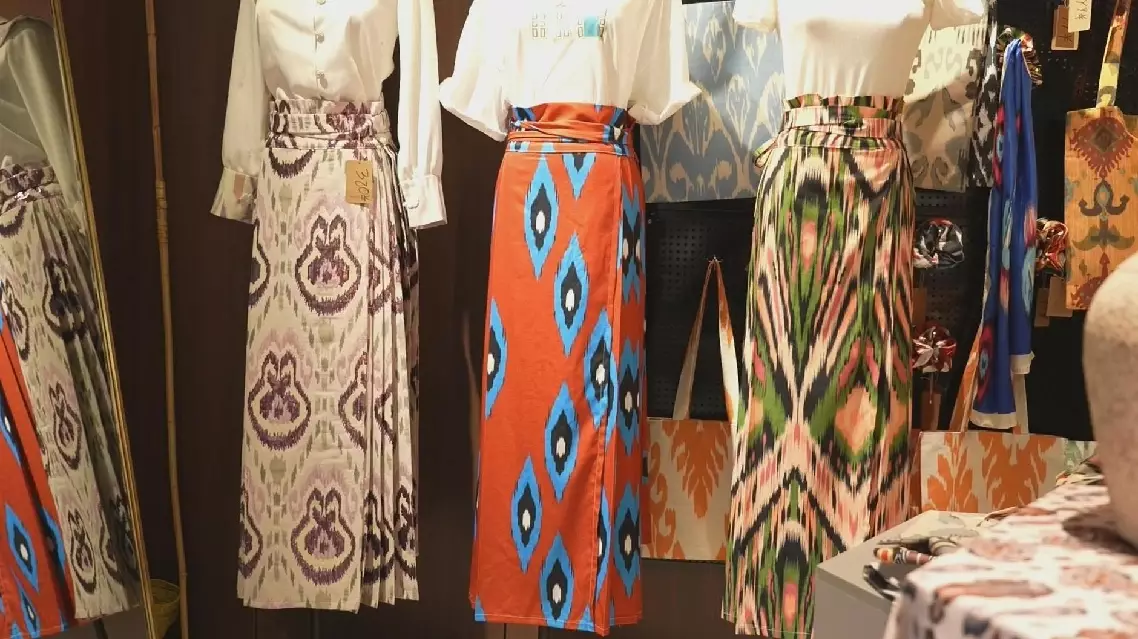
Among them is Kaidiriye Keyoumu, a Uygur fashion designer, who skillfully combines Xinjiang's traditional "Atlas Silk" with the trending "China Chic" fashion.
"I grew up wearing Atlas Silk, so it holds deep meaning for me. Now, I want to blend this traditional fabric with modern 'China Chic' style. I'm thrilled that so many young people love my designs, from locals to tourists across China," she said.
Her designs have expanded to accessories such as backpacks, scarves, hairbands, and phone cases.
She also opened an online store earlier this year, hoping to introduce Atlas Silk to a broader audience.
"We've launched an online store, shipping nationwide. I hope this helps more people discover and fall in love with Atlas Silk," said Keyoumu.
The fusion of old and new extends beyond fashion. A local coffee shop, co-founded by Kazakh and Han entrepreneurs, incorporates regional ingredients into its coffee and desserts.
"Our cafe was co-founded by a Kazakh and a Han entrepreneur. We infuse Xinjiang's specialties, like dried fruits, mulberries, and seasonal Hami melons into coffee and desserts. It’s a modern twist on local flavors," said Zhao Yuanyuan, a staff member of the coffee shop.
Artists are also contributing to the revival. Gunu Aligen, a painter, uses locally-sourced materials to create textured oil paintings that depict Xinjing's natural beauty.
"Our paints are made from Xinjiang's natural mineral and jade powders -- gifts from this land. My artwork captures the spirit of the deserts, snow-capped mountains, and grasslands, blending oil-painting techniques with 3D texture. Each piece tells a story of Xinjiang's culture, history, and beauty," said Aligen.
Xinjiang's young innovators weave tradition into modern life