Diplomats from Belt and Road Initiative partner countries attending the ongoing China International Fair for Trade in Services (CIFTIS) have voiced support for the Global Governance Initiative (CGI) proposed by Chinese President Xi Jinping, saying it is crucial for tackling global challenges and fostering development.
The CGI was unveiled at the 2025 Shanghai Cooperation Organization Summit, held from Aug 31 to Sept 1 in north China's Tianjin City.
The initiative, grounded in principles of "adhering to sovereign equality, abiding by international rule of law, practicing multilateralism, advocating the people-centered approach, and focusing on taking real actions," seeks to ameliorate global governance structures to better reflect the priorities and voices of the Global South.
Recently, diplomats and investors from around the world have gathered in Beijing for the 2025 CIFTIS, where they became even more aware of the need for a more inclusive and equitable global order in which developing nations have greater agency in shaping policies that impact their futures.
"The multilateral system has been in review for so many years and I think we are now in need more than ever of a real reform for the multilateral system that will ensure equality -- that will ensure a better addressing to the many challenges that we are facing, whether it's economic, whether it's the ecological or [about] environment or security. At the same time, I think there are plenty of challenges -- plenty of crises and problems -- that are facing our humanity nowadays, and we need to cooperate more. And the review of the multilateral system is one of the ways that we get together -- we can work more for a better solution for our problems," said Jordanian ambassador to China Hussam Al Husseini.
Abikunda Samuel, commercial counselor at the Embassy of Rwanda in China, said, "We appreciate what China is doing by opening whole market, removing trade barriers. And this shows that the government of the People's Republic of China, under the leadership of President Xi Jinping, is actually promoting global cooperation. And this is something that is very much needed -- removing trade barriers, removing trade tariffs and promoting cooperation."
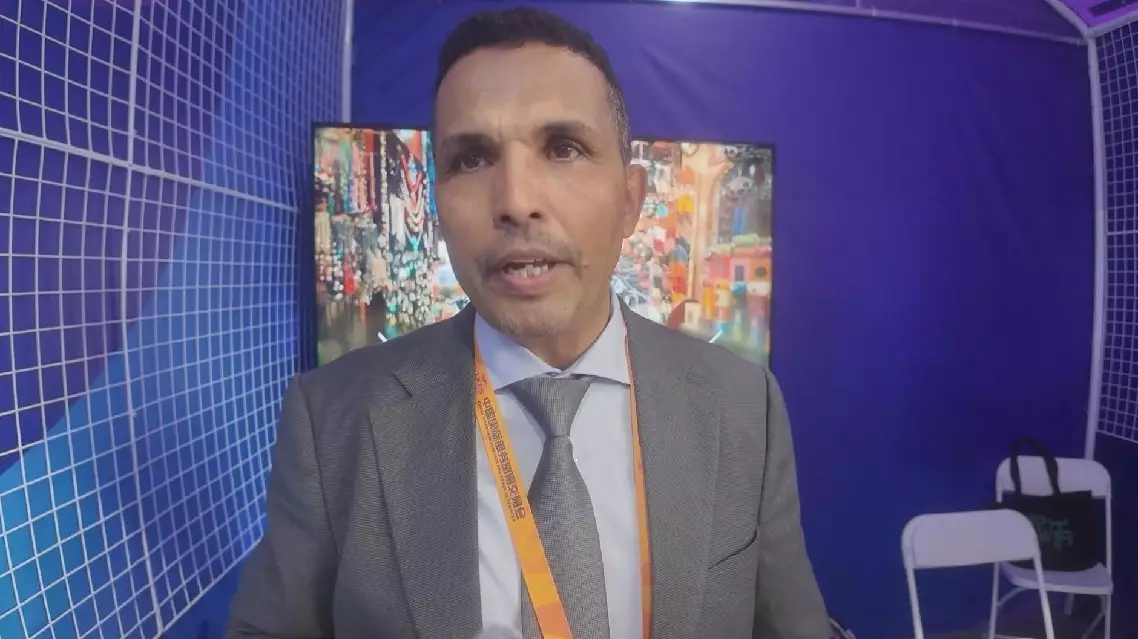
Minister Counsellor at the Embassy of the Kingdom of Morocco Moulay Zaine Elmoussaoui said he believes that the CGI's emphasis on avoiding protectionism is a principle that all countries should uphold in future cooperation.
"The proposal of His Excellency President Xi Jinping for multilateralism and to avoid protectionism is very fruitful and it will be in the interest of all African and Arab and Latin (American) countries. So we believe that the future of all countries should be based on global cooperation in all fields, and not on imposing tariffs and all these kind of irrelevant procedures. So for countries who have this win-win cooperation, they have to cooperate further and open borders," he said.
The 2025 CIFTIS opened in Beijing on Wednesday under the theme of "Embrace Intelligent Technologies, Empower Trade in Services."
The five-day event features participation from over 70 countries and international organizations, with nearly 2,000 companies planning to exhibit in person, including close to 500 Fortune Global 500 and leading international businesses.
Diplomats from BRI partner countries speak highly of China's Global Governance Initiative