The National Museum of Yemen in central Sanaa was badly damaged by Israeli airstrikes, local authorities said, urging the United Nations Educational, Scientific and Cultural Organization (UNESCO) to intervene to help protect the building and its antiquities.
Israel launched airstrikes on several sites across Yemen's capital Sanaa and al-Jawf province in the north, both Houthi-held areas, on Wednesday afternoon. The Houthi propaganda agency, located in the center of the capital city, was one of the primary targets of the airstrikes.
The area, where the agency is situated, is the most densely populated part of Sanaa, containing residential buildings, commercial districts and a large number of ancient buildings, including the UNESCO World Heritage site of the Old City of Sanaa.
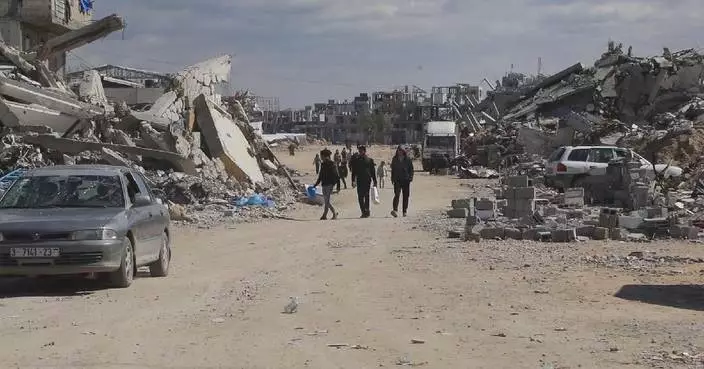
Many ancient buildings, shops, residences and vehicles were severely damaged in the airstrikes. The National Museum of Yemen, which is just cross the wall from the Houthi propaganda agency, was not spared either.
According to the museum authorities, the airstrikes caused damage to the wooden doors of the museum's exhibition hall, rendering them unable to open. The museum authorities cannot temporarily access the interior of the museum to assess the situation, making it unclear what damage has occurred to the artifacts.
"As you can see, the National Museum of Yemen and the Old City of Sanaa have been damaged. We have called on the UNESCO and hope to, through the media, appeal to all those around the world who care about culture and civilization that the cultural relics of Yemen are an inseparable part of human civilization," said Ibad Al-Hayal, head of the museum.
The museum houses a significant collection of precious relics dating back more than 2,000 years, representing the remains of multiple civilizations of ancient Yemen over the past 3,000 years. There are concerns that some of these valuable collections may have been destroyed or lost.
"Most of the artifacts collected here can be traced back to the 3rd century BC to the 9th century BC. This museum is a treasure not only for Yemen, but also for all humanity," said Al-Hayal.
Over the past decade, Yemen's archaeological heritage has faced repeated looting, smuggling, and destruction due to war and instability. Amid the current escalation of the Palestine-Israel conflict and the ongoing standoff between Israel and the Houthi forces, Yemen's historical artifacts are at an even greater risk.
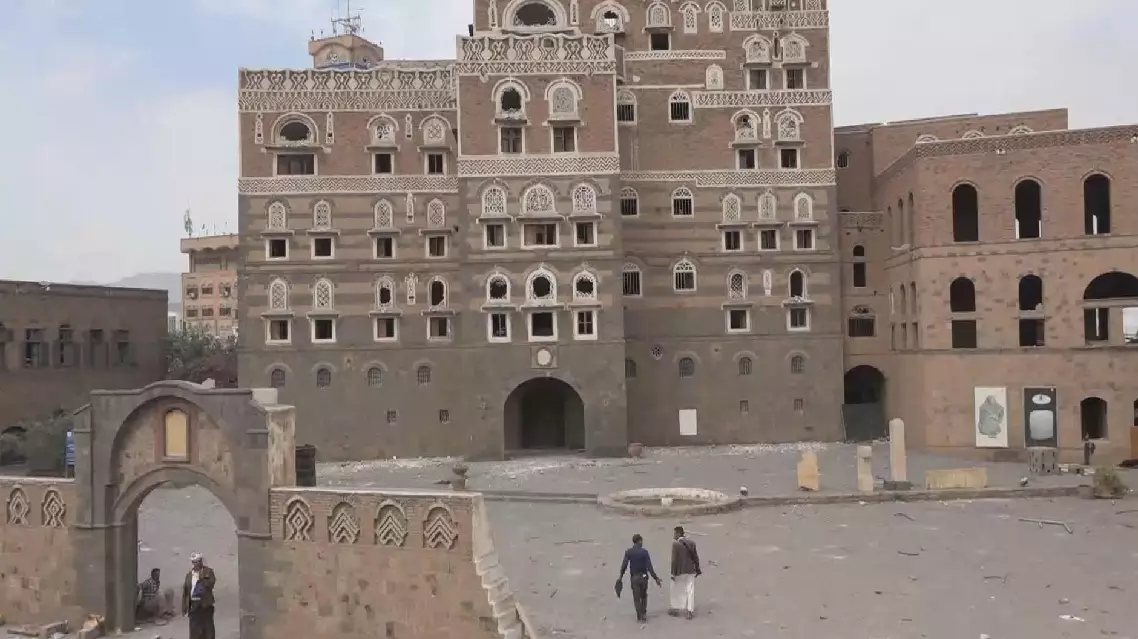
Yemen's national museum badly damaged by Israeli airstrikes
China launched the second event of its 2026 "Big Market for All: Export to China" campaign in Hangzhou City of east China's Zhejiang on Sunday, as part of the country's broader push to expand imports and tap the purchasing power of its vast consumer market.
The three-day event, co-hosted by China's Ministry of Commerce and the People's Government of Zhejiang Province, is bringing together global brands, importers and consumers under one roof.
Minister of Commerce Wang Wentao attended the launch ceremony of the event and delivered an address.
More than 1,000 imported products are on display, from food and consumer goods to advanced industrial components.
The campaign aims to turn China's massive market into a gateway for global products, according to officials.
"The event highlights China's determination to independently expand unilateral and self-reliant opening-up. It is also China's active response to the needs of its global trading partners and our practical step to work together with them to grow the pie of international trade," said Xiao Lu, deputy director of the Department of Foreign Trade at the Ministry of Commerce.
Nearly 100 import-focused companies are taking part, showcasing products and exploring opportunities in China's fast-growing consumer market.
"We have selected popular product choices favored by Chinese tourists who have visited Egypt," said Cao Kezhen, chief representative for China at the CHIMENA (China-India-Middle East-North Africa) Business Council.
Starting from May 1, 2026, China will fully implement zero-tariff treatment for 53 African countries that have established diplomatic relations with China, so many Egyptian businesses are eager to explore the Chinese market, Cao said.
New technologies are also helping bring overseas products closer to Chinese consumers.
"In recent years, China has introduced a range of policies to encourage imports. These measures allow Chinese consumers to buy quality products from around the world at competitive prices through cross-border e-commerce. Going forward, we plan to shift more focus onto the development of a digital supply chain from the traditional supply chain, customs declaration and inspection, logistics, warehousing and distribution," said Shan Li, chairman of High Store Tech, a supply chain service provider for global brands.
Sunday's event followed the inaugural gathering, which took place under the same theme in the national capital Beijing in February.
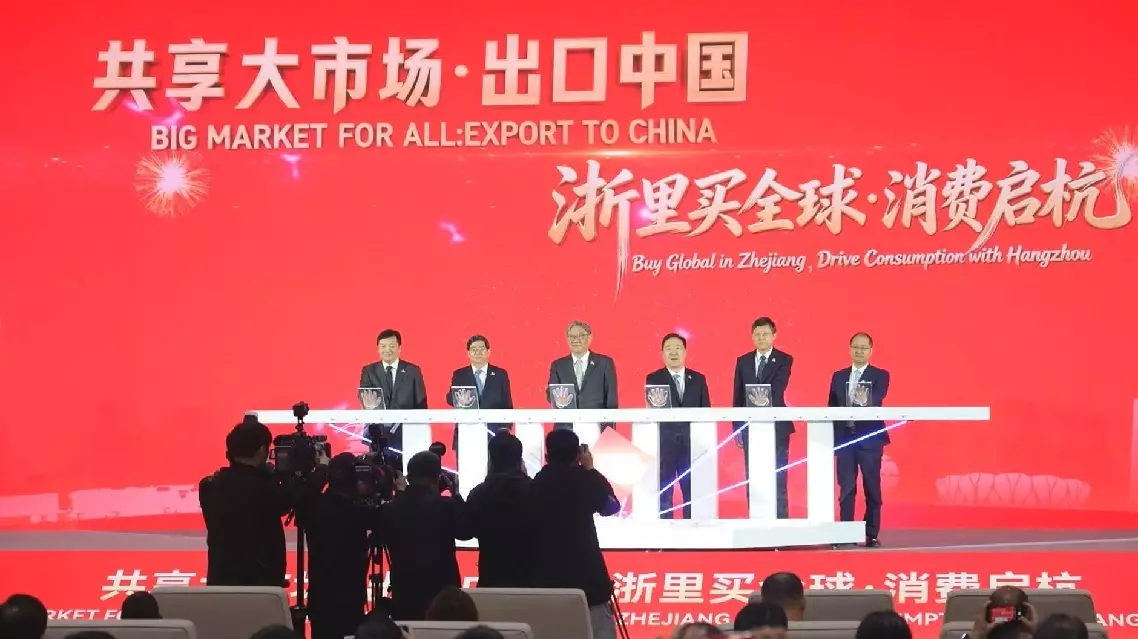
China launches event in Hangzhou to expand imports, boost consumption