Syrian farmers are facing up to a bleak period as the country has been grappling with persistently high temperatures and scarce rainfall during the summer months that has had a severely damaging impact on the agriculture sector.
Until a few years ago, much of the land across the central Homs province was known for its lush green fields with wheat, olives, and various other crops being cultivated, providing a stable livelihood for local farmers and serving as the main breadbasket of Syria.
Now, however, these fields have become barren due to a prolonged period of drought. A lack of rain and limited snowfall in the nearby mountains has drastically reduced the water supply from wells -- the only source of irrigation -- seeing this year's crop yields plummet to a record low.
Local wheat farmer Abu Muhammad said the ongoing dry spell has meant he could only plant on around one-fifth of the land he used to, while he also noted that other factors have further contributed to the difficulties.
"The water scarcity issue also stems from Israel's extraction of most water resources from Mount Hermon, where they have occupied military positions. They located the water sources and diverted all springs that used to flow into the Awaj River. All wells in the southern part of the region have dried up," he said.
The wells that used to draw water have also run dry, forcing farmers to dig three new ones. Now, they must carefully ration the irrigation time with their neighbors.
The land in this area once yielded an abundance of soybeans, corn, and wheat that not only supplied local communities but was also exported to neighboring countries such as Saudi Arabia. But now the soil here is offering up little for farmers to share amid the long and increasingly damaging dry spell.
The situation is not limited to Homs. Northeastern Syria, long known as the "granary of the peninsula," is also facing a severe drought and reduced agricultural output. Even centuries-old olive trees -- long seen as a symbol of resilience in a country that has suffered greatly over the years -- are now drying up.
Driven by extreme temperatures and environmental changes, the drought is dealing a devastating blow to Syrian agriculture, threatening both food security and the livelihoods of its people.
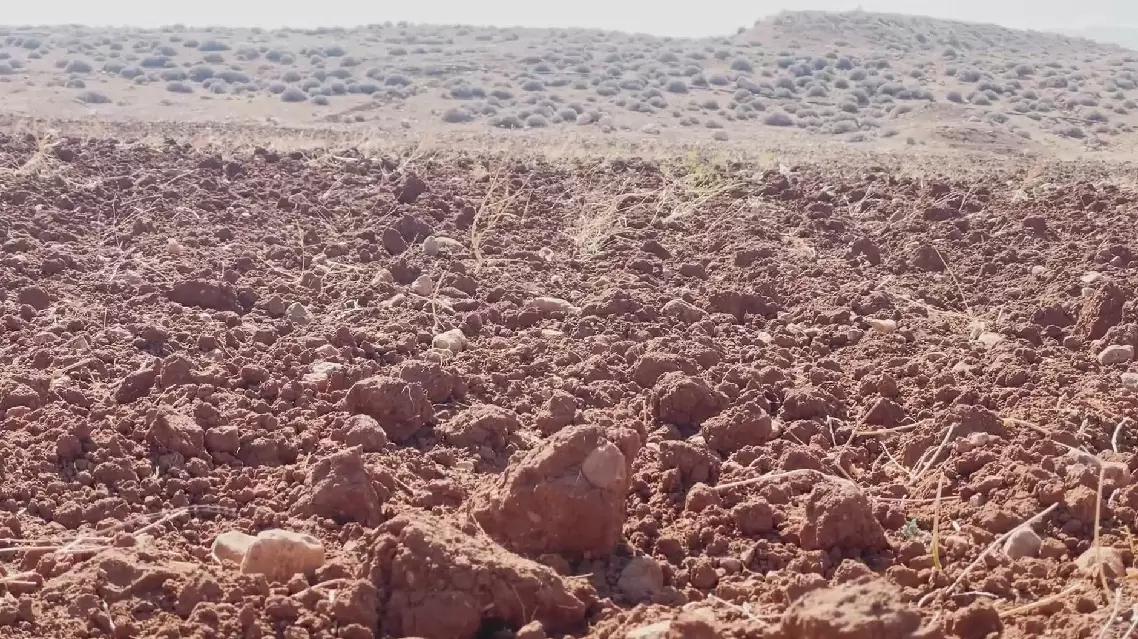
Damaging drought, prolonged heatwave hits agriculture hard in Syria's Homs province