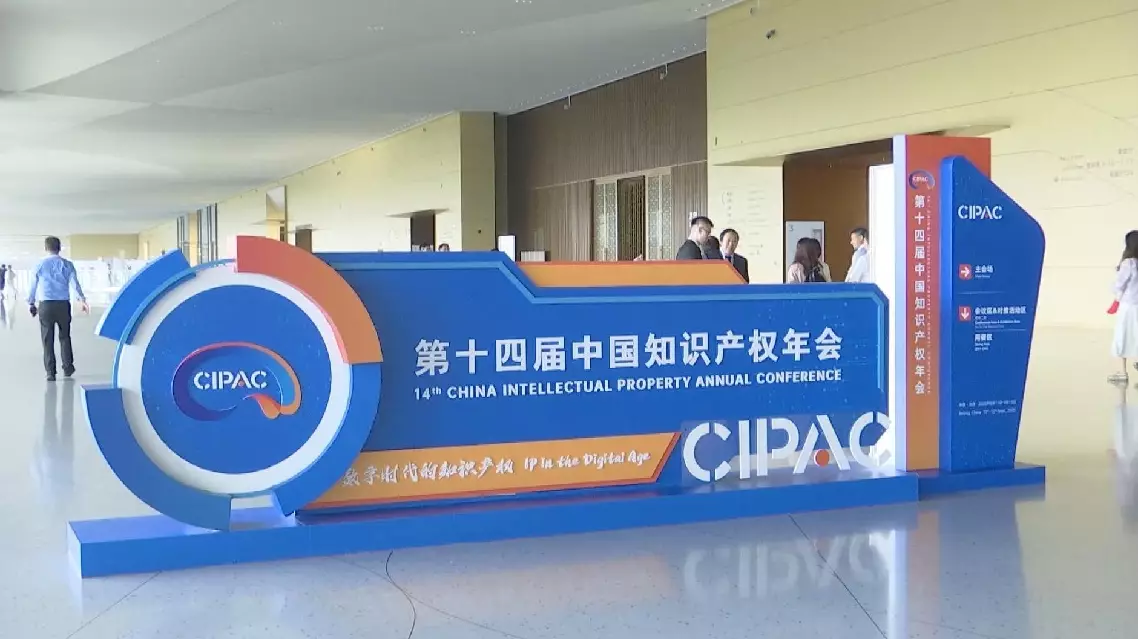
Chinese companies are leveraging robust intellectual property (IP) strategies to drive technological innovations and expand their international market presence, as emphasized at this week's China Intellectual Property Annual Conference (CIPAC) in Beijing.
Themed "IP in the Digital Age," the two-day conference concluded on Friday, with topics such as artificial intelligence-driven technological breakthroughs and the global governance of intellectual property taking the center stage.
As one of the world's leading countries in the area of IP, China has continued to attach great importance to IP protection and actively participated in global IP governance.
China has emerged as the leading country in terms of AI-related patent holdings globally, accounting for 60 percent of the world total.
Powered by AI, a number of companies have achieved technological advancements and industrial upgrading, creating a virtuous cycle of innovation investment and returns.
As one of the enterprises attending the conference, Chinese tech giant Xiaomi Corporation has utilized its self-developed multi-material AI simulation system to successfully select an alloy formula that balances strength, toughness, and stability by simulating the properties of alloys generated through different ingredient combinations.
This breakthrough has resolved key material challenges in the integrated mega-casting process during the research and manufacturing of new energy vehicles.
"We firmly believe that intellectual property and technological innovation grow together. These patents not only protect our innovations, but also provide legal assurance for our products and services. This has created a virtuous cycle where AI enables innovation, innovation drives business growth, and business growth in turn fuels further innovation," said Liu Zhen, vice president of the Legal Department of Xiaomi Corporation.
While strengthening its domestic intellectual property system, China is also actively engaged in international cooperation and plays a key role in global IP governance.
To date, China has joined multiple international agreements, including the Patent Cooperation Treaty (PCT), the Hague Agreement Concerning the International Registration of Industrial Designs, and the Madrid System for the International Registration of Marks.
The country has also established partnerships with more than 80 countries and regions in IP cooperation. The number of partners in China's Patent Prosecution Highway (PPH) has risen to 33, covering 84 countries.
Chinese electric vehicle (EV) battery maker Contemporary Amperex Technology (CATL), which also attended the conference, began fostering its global intellectual property strategy a decade ago.
Focusing on core areas such as material system, system architecture, and extreme manufacturing, the company has established an independent and comprehensive technology matrix to enhance its global competitiveness.
So far, CATL has filed more than 50,000 patent applications worldwide, including over 20,000 overseas. It currently ranks first in the world in the market share for both power batteries and energy storage batteries.
"Through pathways such as the PCT, we have implemented a systematic IP strategy in major global markets. This has allowed us to build a comprehensive framework characterized by leading technology, worldwide protection, and a self-supporting, risk-controllable strategy. This approach not only safeguards our innovations, but also ensures our business freedom in the international market," said Sun Mingyan, chief IP officer at CATL.
IP protection fuels innovation, expands global influence for Chinese firms