Canada tore apart Australia 46-5 in Bristol and set up a semifinal against defending champion New Zealand at the Women’s Rugby World Cup on Saturday.
New Zealand absorbed its most physical test yet and still overran first-time quarterfinalist South Africa 46-17 in Exeter.
Click to Gallery

Canada's Karen Paquin, right, breaks away to score a try during the Women's Rugby World Cup 2025 quarterfinal match between Canada and Australia, in Bristol, England, Saturday, Sept. 13, 2025. (AP Photo/Anthony Upton)
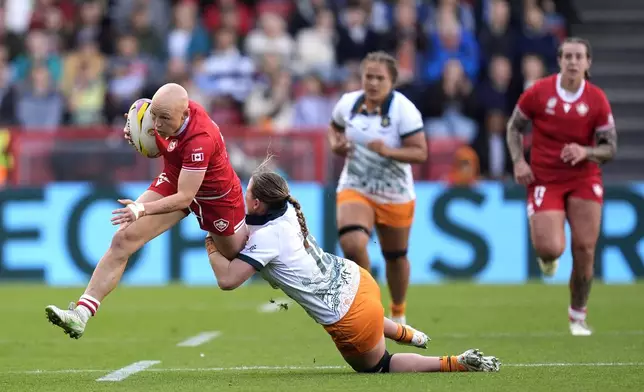
Canada's Olivia Apps is tackled by Australia's Caitlyn Halse during the Women's Rugby World Cup quarterfinal match, Saturday, Sept. 13, 2025, at Ashton Gate, Bristol, England. (Andrew Matthews/PA via AP)

Canada's celebrates a try during the Women's Rugby World Cup 2025 quarterfinal match between Canada and Australia, in Bristol, England, Saturday, Sept. 13, 2025. (AP Photo/Anthony Upton)
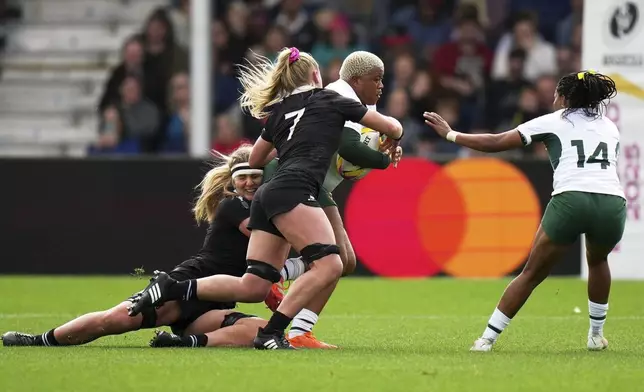
South Africa's Aphiwe Ngwevu, centre, tackled by New Zealand's Alana Bremner, bottom, and teammate Jorja Miller during the Women's Rugby World Cup 2025 quarterfinal match between New Zealand and South Africa, in Exeter, England, Saturday, Sept. 13, 2025. (AP Photo/Alastair Grant)

New Zealand's Renee Holmes scores her side's third try of the game during the Women's Rugby World Cup 2025 quarterfinal match between New Zealand and South Africa, in Exeter, England, Saturday, Sept. 13, 2025. (Ben Birchall/PA via AP)

New Zealand's Braxton Sorensen-McGee, right, scores a try as South Africa's Nadine Roos, center, tries to defend during the Women's Rugby World Cup 2025 quarterfinal match between New Zealand and South Africa, in Exeter, England, Saturday, Sept. 13, 2025. (AP Photo/Alastair Grant)
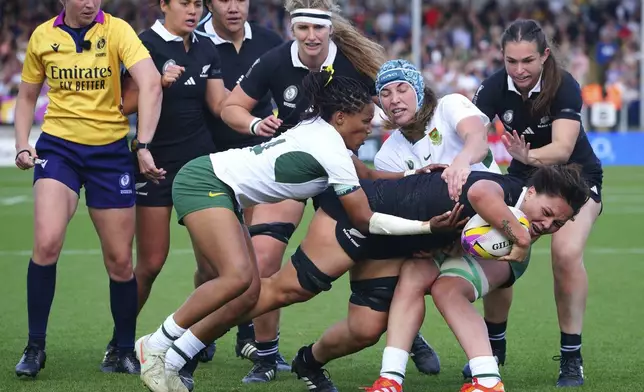
New Zealand's Kaipo Olsen-Baker scores their side's fifth try of the game during the Women's Rugby World Cup 2025 quarter-final match at Sandy Park, Exeter, England, Saturday Sept. 13, 2025. (Ben Birchall/PA via AP)
The world's No. 2 and No. 3-ranked sides will meet next Friday night in Bristol for the first time in a World Cup playoff.
“You can't be overconfident but for sure we are confident,” Canada coach Kevin Rouet said.
The other semifinalists will be found on Sunday when title favorite England plays Scotland and France meets Ireland.
Canada beat the Black Ferns for the first time last year and they drew 27-27 in May.
“(This match) is going to be a lot of fun, just like it was the time before, and the time before that,” Canada wing Asia Hogan-Rochester said.
South Africa made no secret of its muscular game plan — it was coming hard and direct. By halftime it was an impressive 10-10 with the six-time world champion Black Ferns, who haven't lost a knockout match in 27 years.
But New Zealand showed its class in the new half; scoring within 37 seconds and rolling home with ultimately a convincing victory by eight tries to three.
“They threw in some awesome innovation and put us under some pressure,” Black Ferns coach Allan Bunting said, “but that’s a good thing for us at this point in the tournament.”
New Zealand's kick chase, crisp handling and turnover skills overwhelmed the bruising Springbok Women.
No. 8 Kaipo Olsen-Baker was the player of the match, three weeks after she thought her tournament was over as she was carried from the field with a bad ankle injury, and Braxton Sorensen-McGee, the Black Ferns' youngest player at 18, extended her tournament lead in tries (eight) and points (52).
The first half was the South Africans’ best half in their history. They destroyed New Zealand in the first scrum and showed off a 15-women lineout drive. But it took 20 minutes of huffing and puffing to blow down the New Zealanders' door through prop Babalwa Latsha, the former captain who played professionally in Spain and England.
That inability to be more clinical was exposed when New Zealand struck twice quickly.
Scrumhalf Maia Joseph's chargedown led to a try by Theresa Setefano, then a kick chase forced a five-meter scrum and Sorensen-McGee finished a three-on-two untouched.
Just before halftime, South Africa showed novelty again. Scrumhalf Nadine Roos made the catch in a 13-women lineout 30 meters out, then they carried for 16 phases for inside center Aphiwe Ngwevu to crash through and tie the score.
“Every time you raise the bar they can go higher,” Bok coach Swys de Bruin said. “It's amazing what they can do. In 2022 we couldn't win a (World Cup) game. Now we get a chance in a quarterfinal and score three tries. A giant has awoken for women in South African rugby.”
Libbie Janse van Rensburg walked off with a thumb up but the promise of a second forward pack of bruisers from a 7-1 bench was blunted by New Zealand's tougher defense and ritzy backs.
Stacey Waaka regained the kickoff and fullback Renee Holmes raced over in the first minute. From there New Zealand put on a show, scoring the next three tries from its 22.
Turnovers by lock Maiakawanakaulani Roos led to second tries by Sorensen-McGee and Holmes, and Olsen-Baker got a double. The last try was by Katelyn Vaha'akolo, playing after a tournament-ending injury to South Africa-born Amy du Plessis.
Bok replacement back Lerato Makua scored their third try and 40-year-old captain Nolusindiso Booi greeted the final whistle and the end of her 15-year career with tears and joy.
“(This quarterfinal) was something we had never tasted,” Booi said. “The taste was good.”
Despite touching down only twice in the second half, Canada achieved its record score against the Wallaroos and stayed unbeaten against the same side. It is into the semifinals for a sixth time.
After halftime, Canada's scoring was slowed down by a deluge and Australian pride.
But until the break, Canada was rampant in posting five tries and having two others disallowed.
Australia couldn't handle the speed and handling of the Canadians, who scored in the second minute. A Julia Schell break was capped by Hogan-Rochester.
Australia made a nice riposte for Desiree Miller's sixth try of the tournament but seemed to spend the rest of the half chasing red jerseys.
Lock Sophie de Goede got her second player of the match award, scoring one try and having a big hand in three others. Winger Alysha Corrigan scored twice and in a third straight World Cup match, along with prop McKinley Hunt.
In the rain after halftime, No. 8 Fabiola Forteza scored from a stolen throw-in by de Goede. They didn’t score another try until near time but it was worth waiting for: 38-year-old high school coach Karen Paquin crashed through the line from 40 meters out and glided to the line.
AP rugby: https://apnews.com/hub/rugby
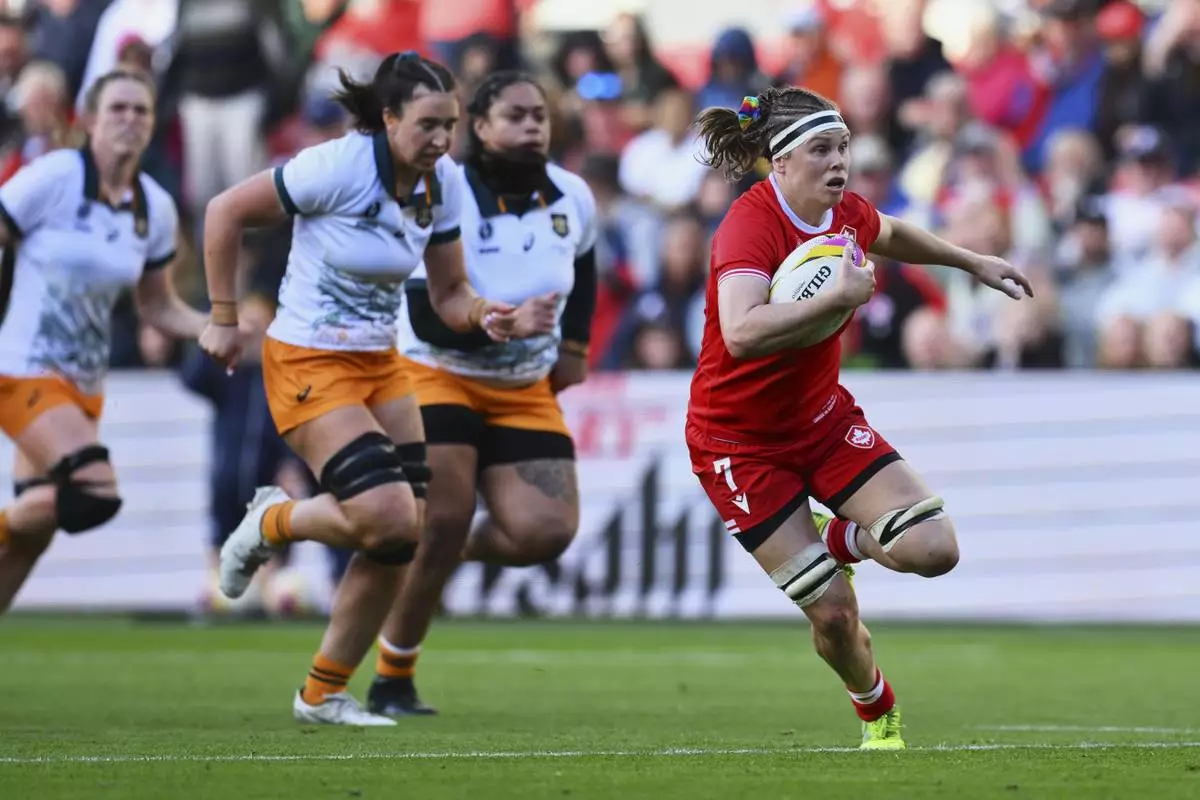
Canada's Karen Paquin, right, breaks away to score a try during the Women's Rugby World Cup 2025 quarterfinal match between Canada and Australia, in Bristol, England, Saturday, Sept. 13, 2025. (AP Photo/Anthony Upton)
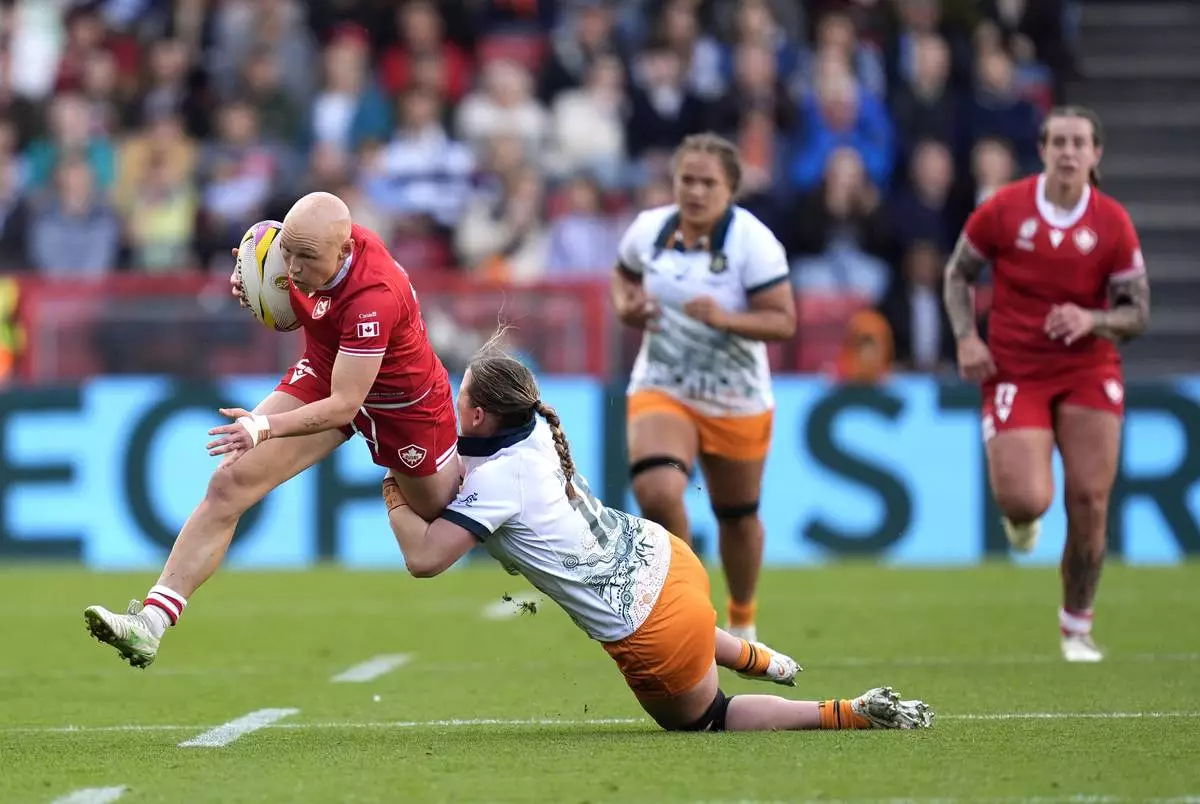
Canada's Olivia Apps is tackled by Australia's Caitlyn Halse during the Women's Rugby World Cup quarterfinal match, Saturday, Sept. 13, 2025, at Ashton Gate, Bristol, England. (Andrew Matthews/PA via AP)

Canada's celebrates a try during the Women's Rugby World Cup 2025 quarterfinal match between Canada and Australia, in Bristol, England, Saturday, Sept. 13, 2025. (AP Photo/Anthony Upton)
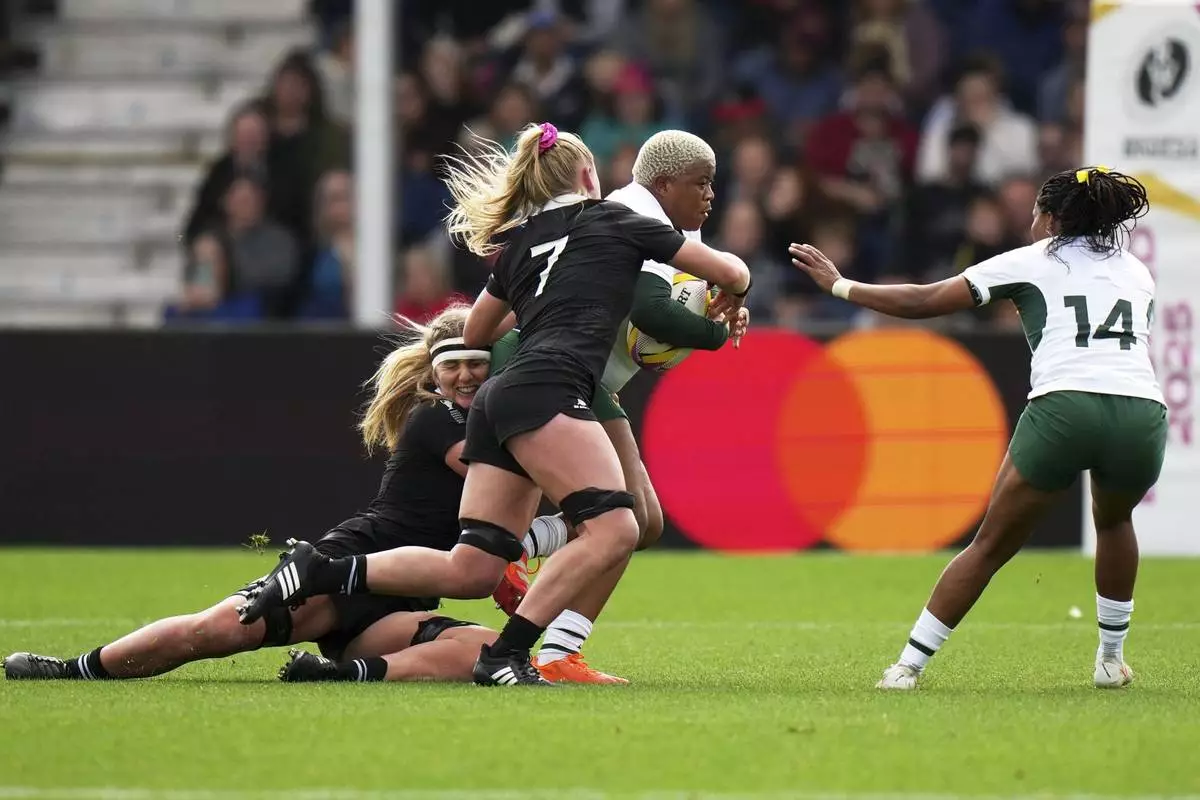
South Africa's Aphiwe Ngwevu, centre, tackled by New Zealand's Alana Bremner, bottom, and teammate Jorja Miller during the Women's Rugby World Cup 2025 quarterfinal match between New Zealand and South Africa, in Exeter, England, Saturday, Sept. 13, 2025. (AP Photo/Alastair Grant)
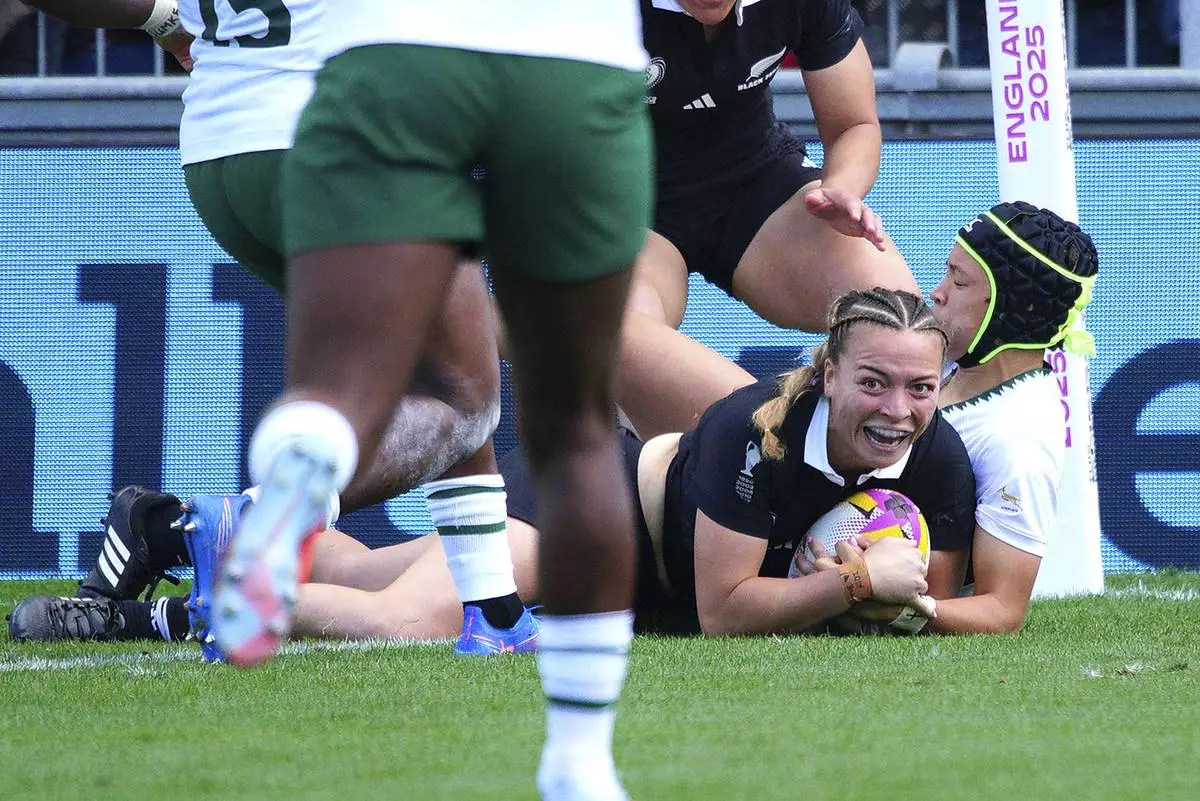
New Zealand's Renee Holmes scores her side's third try of the game during the Women's Rugby World Cup 2025 quarterfinal match between New Zealand and South Africa, in Exeter, England, Saturday, Sept. 13, 2025. (Ben Birchall/PA via AP)
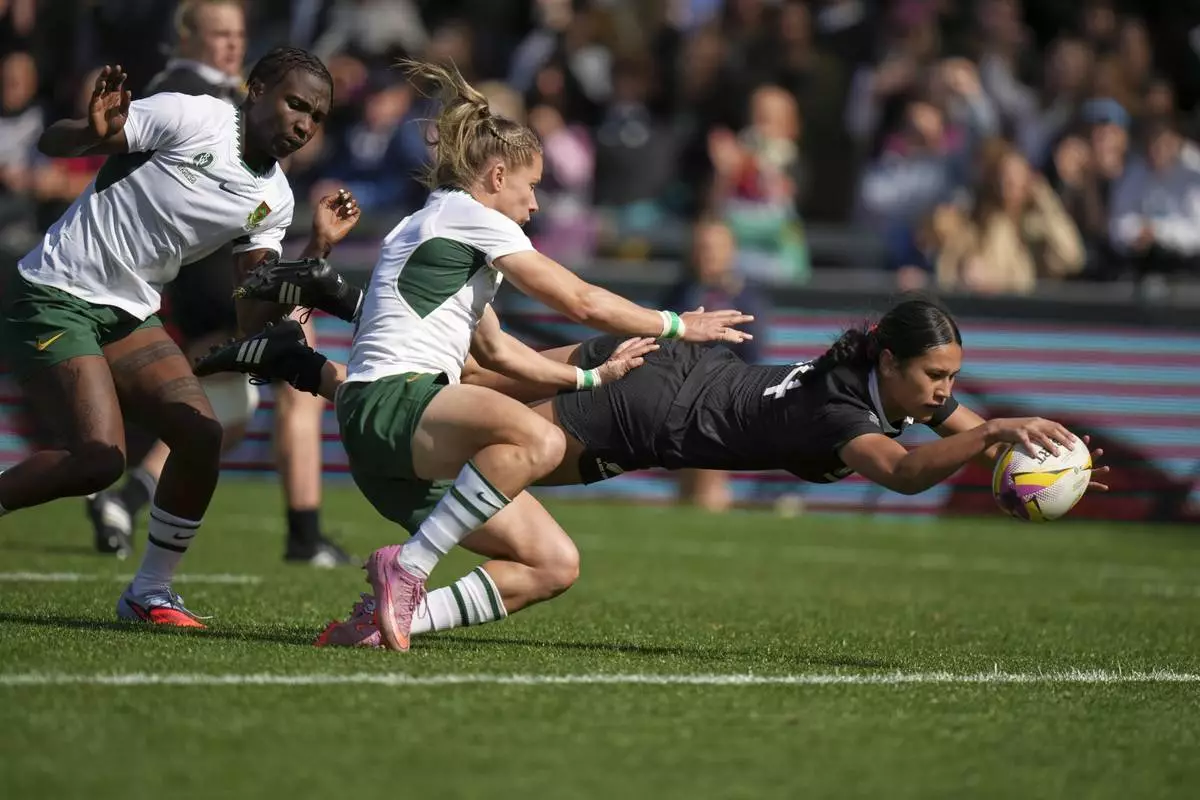
New Zealand's Braxton Sorensen-McGee, right, scores a try as South Africa's Nadine Roos, center, tries to defend during the Women's Rugby World Cup 2025 quarterfinal match between New Zealand and South Africa, in Exeter, England, Saturday, Sept. 13, 2025. (AP Photo/Alastair Grant)
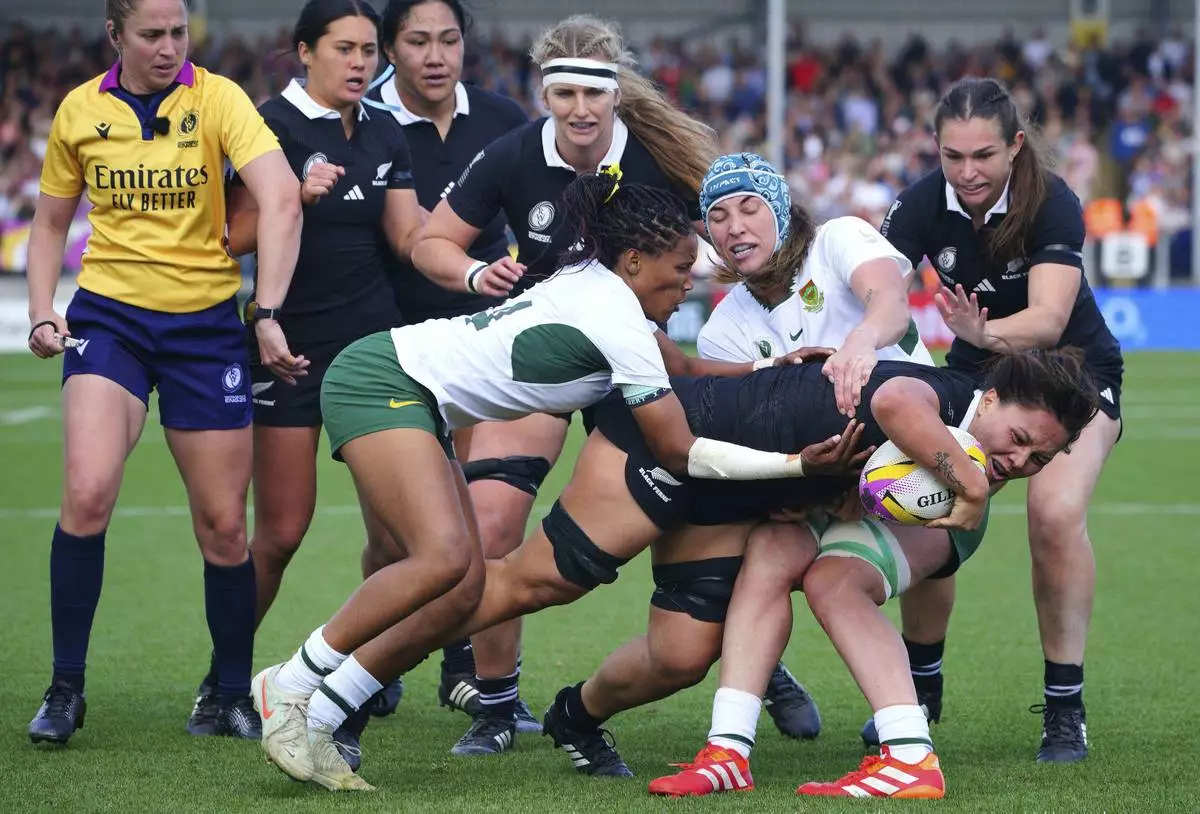
New Zealand's Kaipo Olsen-Baker scores their side's fifth try of the game during the Women's Rugby World Cup 2025 quarter-final match at Sandy Park, Exeter, England, Saturday Sept. 13, 2025. (Ben Birchall/PA via AP)