Skip to Content Facebook Feature Image

Memphis mayor says he got confirmation National Guard would be deployed from Trump's TV comments

News

Memphis mayor says he got confirmation National Guard would be deployed from Trump's TV comments
News

News

Memphis mayor says he got confirmation National Guard would be deployed from Trump's TV comments

2025-09-14 06:20 Last Updated At:06:30

NASHVILLE, Tenn. (AP) — Memphis' mayor said Saturday that President Donald Trump's TV announcement the day before was the first hard confirmation he received that the National Guard would be sent to the city an anti-crime mission.

Speaking on CNN, Mayor Paul Young said he learned the idea was under consideration when Republican Gov. Bill Lee's office informed him earlier in the week. The Democratic mayor said conversations continued throughout the week, and he had been talking about the possibility of getting more law enforcement presence through the FBI, the Drug Enforcement Administration and the Bureau of Alcohol, Tobacco, Firearms and Explosives.

Then, on Friday morning, Trump made his announcement on Fox News. He said Memphis is “deeply troubled” and “we’re going to fix that just like we did Washington,” where he deployed the National Guard and surged federal law enforcement.

Asked on CNN whether he had “hard confirmation” before Trump's announcement, Young said: “No, that was the confirmation.”

Days earlier Memphis police reported drops in every major crime category in the first eight months of 2025 compared with the same period in previous years. Overall crime hit a 25-year low, and murder a six-year low, police said.

But Memphis has dealt with stubborn gun violence problems for years. In 2023 the city saw a record 390 homicides.

The city also is still wrestling with fallout from the January 2023 death of Tyre Nichols after he was beaten by Memphis police officers. In December the Department of Justice under then-President Joe Biden found a host of civil rights violations in the police department, part of an investigation spurred by Nichols' death. The findings included the use of excessive force, illegal traffic stops and disproportionate targeting of Black people in the majority-Black city.

In May, now under the Trump administration, the department withdrew those findings.

The governor has said how the guard will factor into efforts to tackle crime is still being ironed out. Lee and Trump talked Friday and plan to do so again early next coming week, his spokesperson Elizabeth Lane Johnson said. The governor has said the deployment would add momentum to an ongoing FBI operation alongside state and local law enforcement that “has already arrested hundreds of the most violent offenders.”

The mayor said Saturday that the specifics remain unknown about how many troops will come and when, their exact role and more. He expects to learn more next week.

Asked what he would recommend the National Guard focus on in Memphis, Young suggested tasks such as support for big events, including traffic assistance. He also said they could assist law enforcement in monitoring cameras and call in backup when they see criminal activity, or lend a hand with neighborhood “beautification.”

Young has disputed Trump’s assertion that the mayor is “happy” about the introduction of the National Guard. He has said he did not ask for a deployment and does not think it will reduce crime. But he acknowledged that the city has remained high on too many “bad lists,” and since the deployment has been decided, he wants to ”drive how they engage in our city.”

Young said he understands the fears within the Memphis community and noted that the National Guard was deployed there in 1968 after Martin Luther King Jr. was assassinated.

“We don’t want to invoke those same images here,” Young said.

The guard also helped enforce school integration in Clinton in 1956.

Its troops have been deployed for aid in many large-scale disasters, such as floods, winter storms, Hurricane Helene and wildfires. They filled roles during the COVID-19 pandemic, including help in testing operations.

They also have been on the ground in Tennessee and elsewhere during tense moments, such as protests in both Washington and on the state Capitol grounds after George Floyd’s killing. The governor deployed them for some Trump-driven initiatives, including going to the southern border; doing administrative work for federal Immigration and Customs Enforcement in the state; and returning to Washington under the president's recent crime-centered mission.

A draft plan to activate 1,000 National Guard troops in the state calls for deployment to New Orleans and other urban centers to augment local law enforcement. Under the plan, obtained by The Washington Post, troops would be deployed if GOP Gov. Jeff Landry requests federal assistance.

Rep. Troy Carter, a Democrat representing the New Orleans area, said in response that the city is experiencing the lowest crime rates in decades and no emergency exists that would justify militarizing its streets.

Alexandria Mayor Jacques Roy told NOLA.com that more resources “could make a real difference" and noted that a National Guard installation, Camp Beauregard, is near his city.

The draft plan’s disclosure came after Trump told Fox News on Friday that troops could help “fix up” crime problems in Louisiana.

The Associated Press emailed Landry’s office seeking comment. State Attorney General Liz Murrill said last week that she fully supports Trump’s idea to deploy troops.

In Washington the National Guard deployment of about 2,000 troops from seven states and the D.C. guard units continues although Trump's emergency order lapsed when Congress did not extend it.

A heavy presence of armed troops remains in many public spaces traveled by tourists and visitors, including Union Station and several metro rail platforms.

Because Washington is a federal city, the guard is directly under the president’s command, making the situation somewhat different from in Memphis.

Governors control their state’s guards; it is unclear whether Memphis could see out-of-state troops.

Washington Mayor Muriel Bowser has acknowledged that the city's future includes federal law authorities doing what is more basic local work. Bowser has set up an operation center to push better coordination and communications between the Metropolitan Police and those agencies.

The one agency she has omitted from talks about cooperation is the Immigration and Naturalization Service, which has rounded up hundreds of people.

On Friday agents from Homeland Security Investigations, the FBI and the Metropolitan Police worked security side by side at a high school football game, the same day the mayor and school officials announced changes in attendance because of violence between fans at recent games.

Associated Press writers Gary Fields in Washington and Matthew Brown in Billings, Montana, contributed.
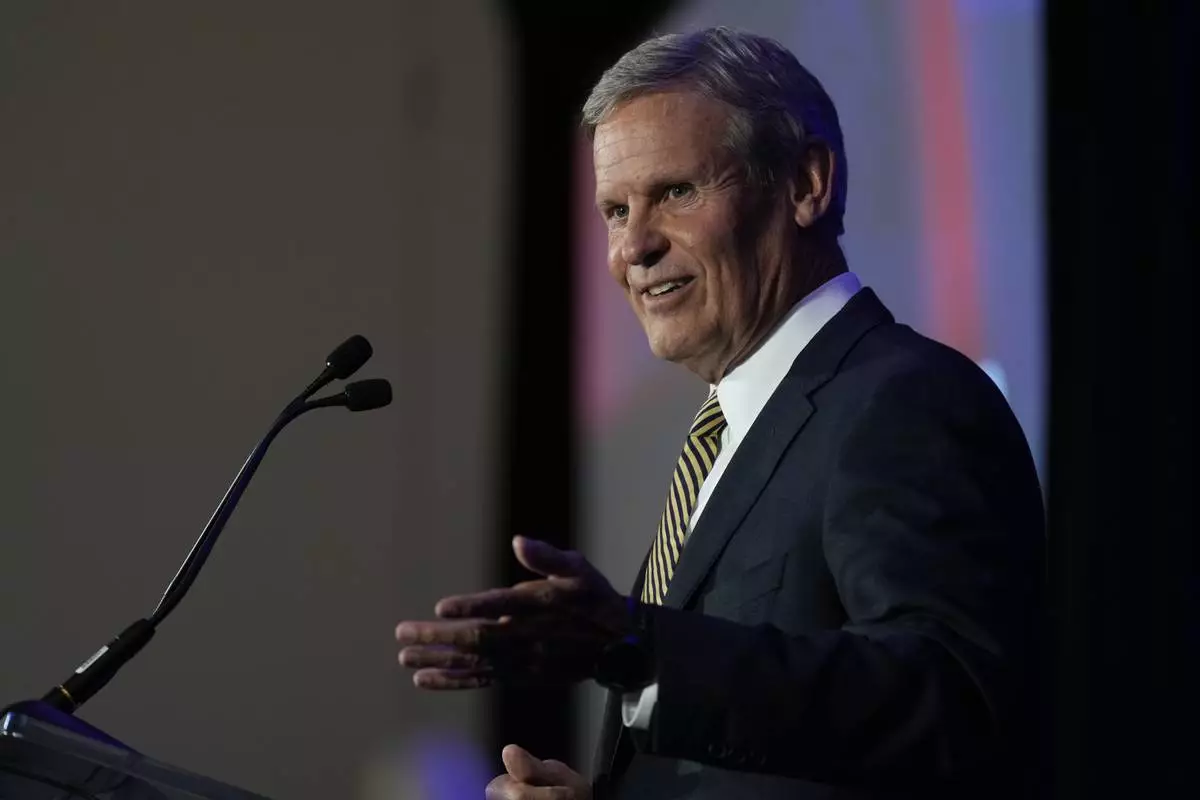
FILE - Gov. Bill Lee speaks during a news conference announcing The Boring Company's intent to build the Music City Loop, a private transportation tunnel that will connect the airport to downtown, Monday, July 28, 2025, in Nashville, Tenn. (AP Photo/George Walker IV, file)
FILE - Gov. Bill Lee speaks during a news conference announcing The Boring Company's intent to build the Music City Loop, a private transportation tunnel that will connect the airport to downtown, Monday, July 28, 2025, in Nashville, Tenn. (AP Photo/George Walker IV, file)

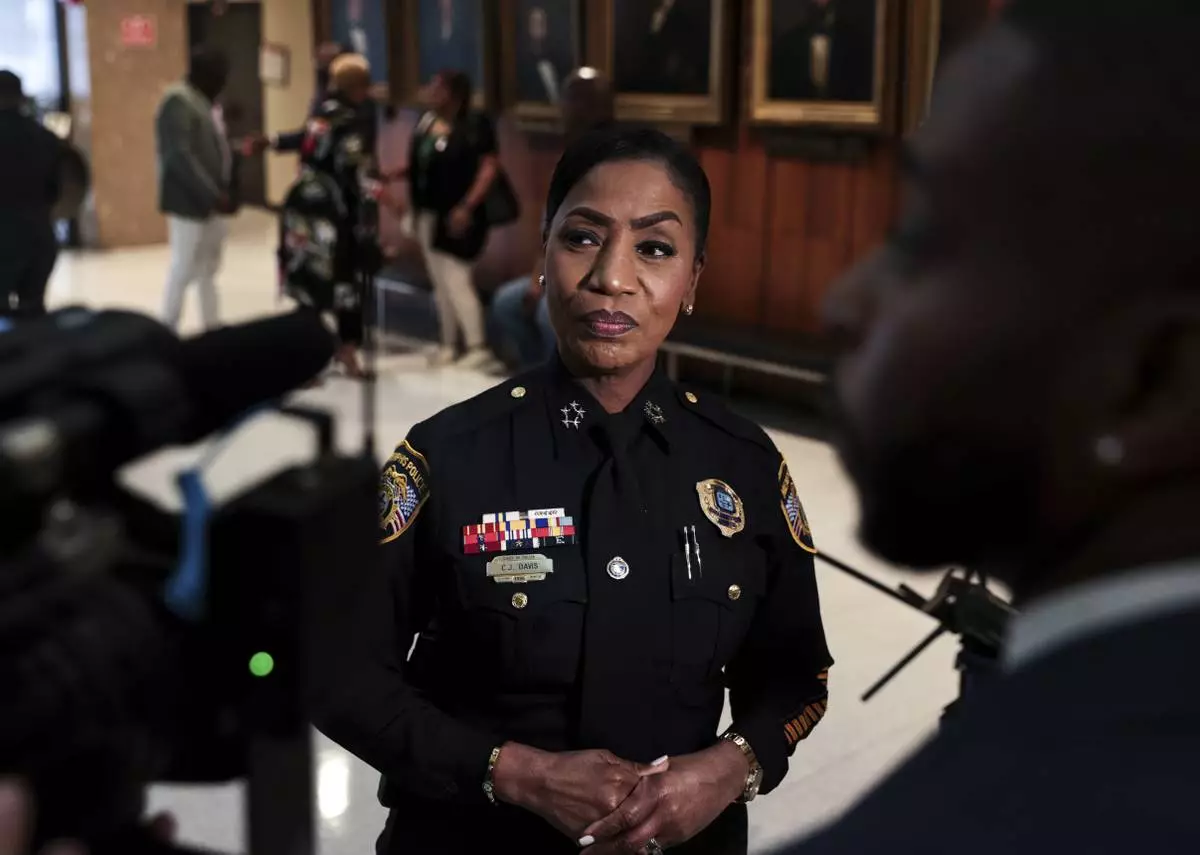
Police Chief Cerelyn "C.J." Davis speaks to a reporter about the deployment of the National Guard to the city following a news conference Friday, Sept. 12, 2025, in Memphis, Tenn. (Patrick Lantrip/Daily Memphian via AP)
Police Chief Cerelyn "C.J." Davis speaks to a reporter about the deployment of the National Guard to the city following a news conference Friday, Sept. 12, 2025, in Memphis, Tenn. (Patrick Lantrip/Daily Memphian via AP)
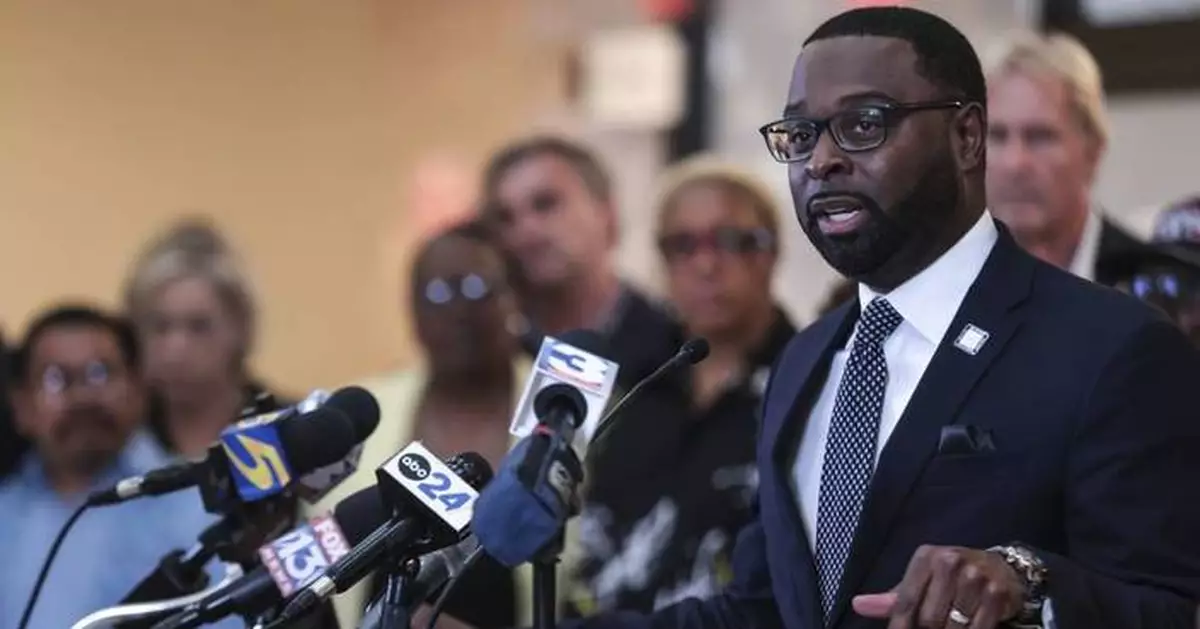
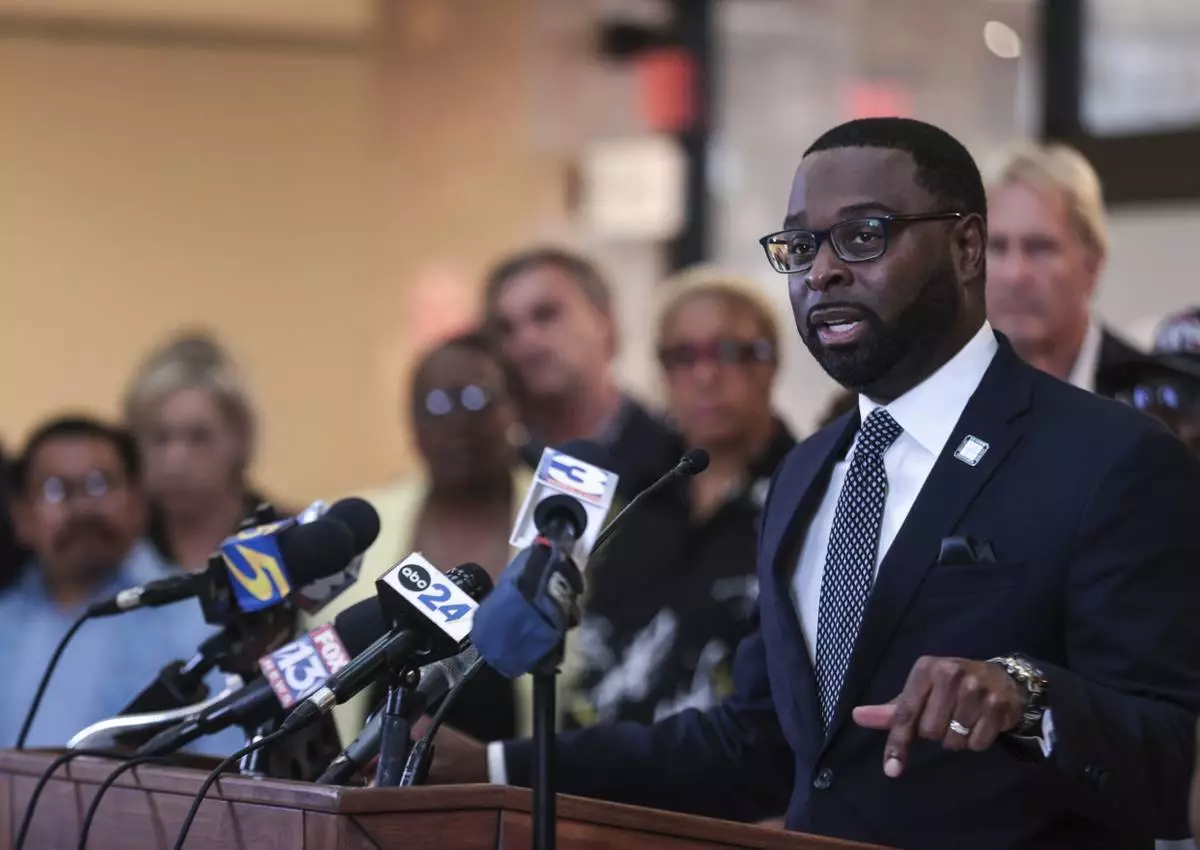
Memphis Mayor Paul Young speaks about the deployment of the National Guard to the city during a news conference Friday, Sept. 12, 2025, in Memphis, Tenn. (Patrick Lantrip/Daily Memphian via AP)
Memphis Mayor Paul Young speaks about the deployment of the National Guard to the city during a news conference Friday, Sept. 12, 2025, in Memphis, Tenn. (Patrick Lantrip/Daily Memphian via AP)
It was at a relatively minor event in upstate New York in September 2022 that Ilia Malinin, the self-anointed “Quad God" who was fast becoming the biggest name in figure skating, finally landed the jump that so many people had thought impossible.

Others had tried quad axels in competition over the years. All of them had fallen. That extra 180 degrees of rotation — necessary for the only jump in skating that starts with a forward-facing entry — proved to be a half-revolution too much.

So when Malinin landed it inside the arena made famous by the U.S. hockey team's upset of the Soviets at the 1980 Winter Olympics in Lake Placid, it not only sent shockwaves through the tight-knit skating community but made headlines around the world.

“My mind was just blown,” said two-time Olympic skater Jason Brown.

Yet by conquering the gravity-defying jump, Malinin also raised an important question: What comes next?

The six main jumps in figure skating have been standard since the early 1900s. The only difference between then and now is the number of revolutions. Dick Button landed the first double axel in 1948, and the first triple jump four years later. Kurt Browning landed the first quad, a toe loop, in 1988, and it was 10 years before Timothy Goebel landed the first quad salchow.

By landing the quad axel, Malinin may have maxed out the boundaries of human performance. Most sports scientists agree that the speed and amplitude necessary for five-revolution jumps truly is impossible, leaving figure skating at a crossroads, where a dearth of innovation threatens to take the shine off a sport already fighting to maintain popularity.

“I think it's kind of natural that we were going to get to this point,” said Malinin, the overwhelming favorite to win gold for the U.S. at the Milan Cortina Olympics. "But I haven't reached my top, whether it's in the technical and how much I can jump and spin, but also in the creativity.”

Malinin, 20, points to his signature “raspberry twist,” a somersaulting spin unlike anything that anybody else does. He created it himself, and it tends to bring down the house whenever he throws it down near the end of his programs.

Yet the flashy maneuver also underscores one of the inherent problems with trying to be creative: It doesn't get rewarded.

The International Skating Union has rigid requirements for both short programs and free skates, and it rarely pays off to deviate too far from the script. Malinin might not get a lot of extra points for landing his raspberry twist, for example, since it is not one of the six standard figure skating jumps, but a failure to land it could cost him dearly.

“Absolutely, there are a lot of things I've wanted to try,” Malinin told The Associated Press, “because I think it would be really cool and appealing. But it's a bigger risk for the program itself, and the system and scoring means it doesn't make sense.”

In other words, what's the point in trying to innovate?

“There are so many rules in your programs that you don't have too much wiggle room,” said Alysa Liu, the reigning world champion. “A lot of these rules really restrict us. Like, all of our spins look the same now, but they could look so different."

“One of my training mates, Sonja Himler, does these incredible programs," added Amber Glenn, a three-time U.S. champion, and along with Liu one of the favorites to win Olympic gold for the American team in February.

“Like, she spins the other way, jumps the other way — really cool things that, you know, someone who's watched a little bit of skating will be like, ‘Oh, I’ve never seen that before,'” Glenn said. “Whereas if I go and do, you know, the norm, and do it well, versus what she does, my scores will be better, even though what she does is way more impressive, in my opinion.”

Justin Dillon, the manager of high performance at U.S. Figure Skating, acknowledged having had hard conversations with some skaters about their programs. They may have planned something unique or interesting, but the risk wouldn't be worth the reward.

“I encourage individuality, and bringing it to the ice,” Dillon said, “but if they do something so avant-garde that it doesn't check those boxes, then it really doesn't serve them. It doesn't always mean throw it out, but what can we do to make it a home run?”

To its credit, figure skating's governing body has loosened some restrictions in recent years. The backflip, which was long banned in competition because of its inherent danger, is allowed now, though it also doesn't carry a whole lot of scoring weight.

Is that hold-your-breath element of risk and uncertainty the next big step in skating?

“I mean, you're cringing. It legit scares me," Glenn said of the backflip. “If you can do it, great. I think it's so fun. I want to learn it once I'm done competing. But the thought of practicing it in like, a warmup or in training, it just scares me.”

Brown has never been able to consistently land quad jumps in competition. Instead, he relies on near-perfect execution of triple jumps, along with arguably the best artistry in figure skating, to consistently challenge for podium placements in major competitions.

Maybe, Brown mused, the next innovation in figure skating has nothing to do with extreme feats of athletic ability.

“I have so much respect for the ways in which people are pushing the sport technically,” he said, "but I think the more that people fixate on executing an element, the less risk people take artistically, because they’re already taking these risks technically. And it is very hard to do both. So maybe the next step for figure skating is to reward the story we're trying to tell."

AP Winter Olympics: https://apnews.com/hub/milan-cortina-2026-winter-olympics

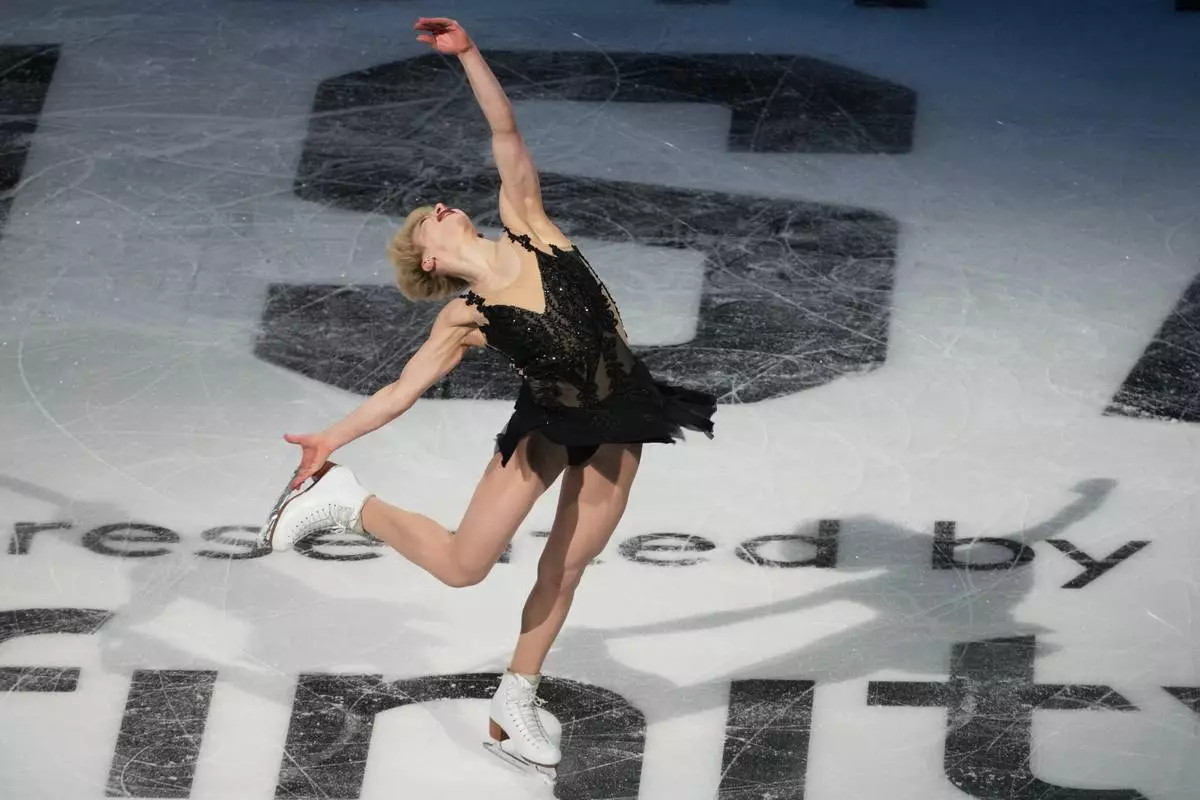
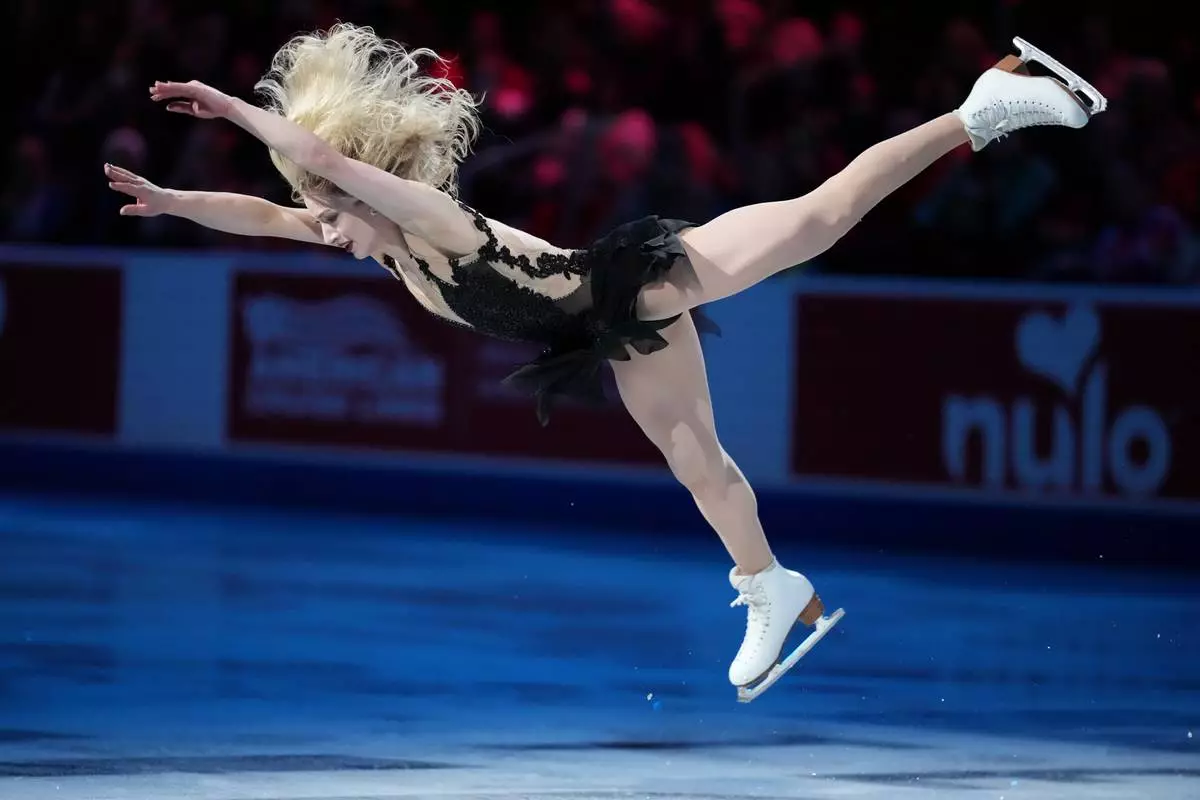
Amber Glenn skates during the "Making Team USA" performance at the U.S. Figure Skating Championships, Sunday, Jan. 11, 2026, in St. Louis. (AP Photo/Jeff Roberson)

Amber Glenn skates during the "Making Team USA" performance at the U.S. Figure Skating Championships, Sunday, Jan. 11, 2026, in St. Louis. (AP Photo/Jeff Roberson)

Amber Glenn skates during the "Making Team USA" performance at the U.S. Figure Skating Championships, Sunday, Jan. 11, 2026, in St. Louis. (AP Photo/Stephanie Scarbrough)

Amber Glenn skates during the "Making Team USA" performance at the U.S. Figure Skating Championships, Sunday, Jan. 11, 2026, in St. Louis. (AP Photo/Stephanie Scarbrough)

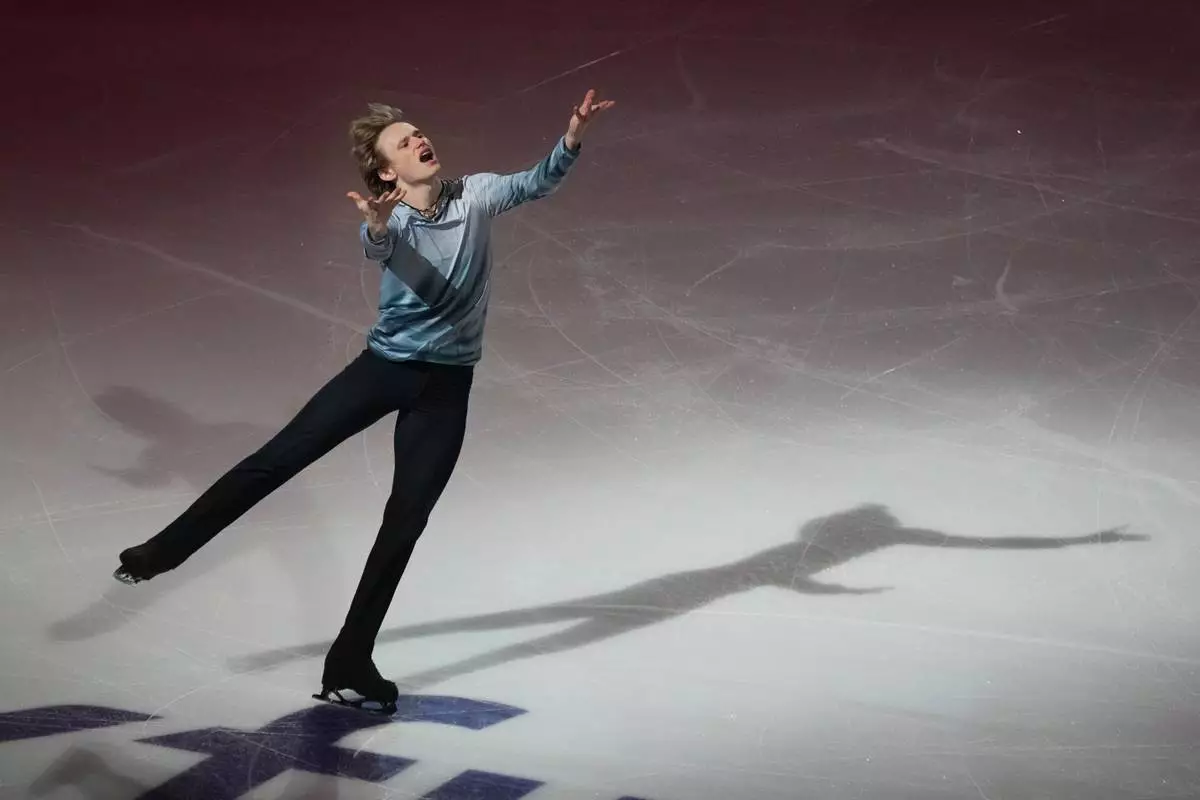
Ilia Malinin skates during the "Making Team USA" performance at the U.S. Figure Skating Championships, Sunday, Jan. 11, 2026, in St. Louis. (AP Photo/Jeff Roberson)

Ilia Malinin skates during the "Making Team USA" performance at the U.S. Figure Skating Championships, Sunday, Jan. 11, 2026, in St. Louis. (AP Photo/Jeff Roberson)

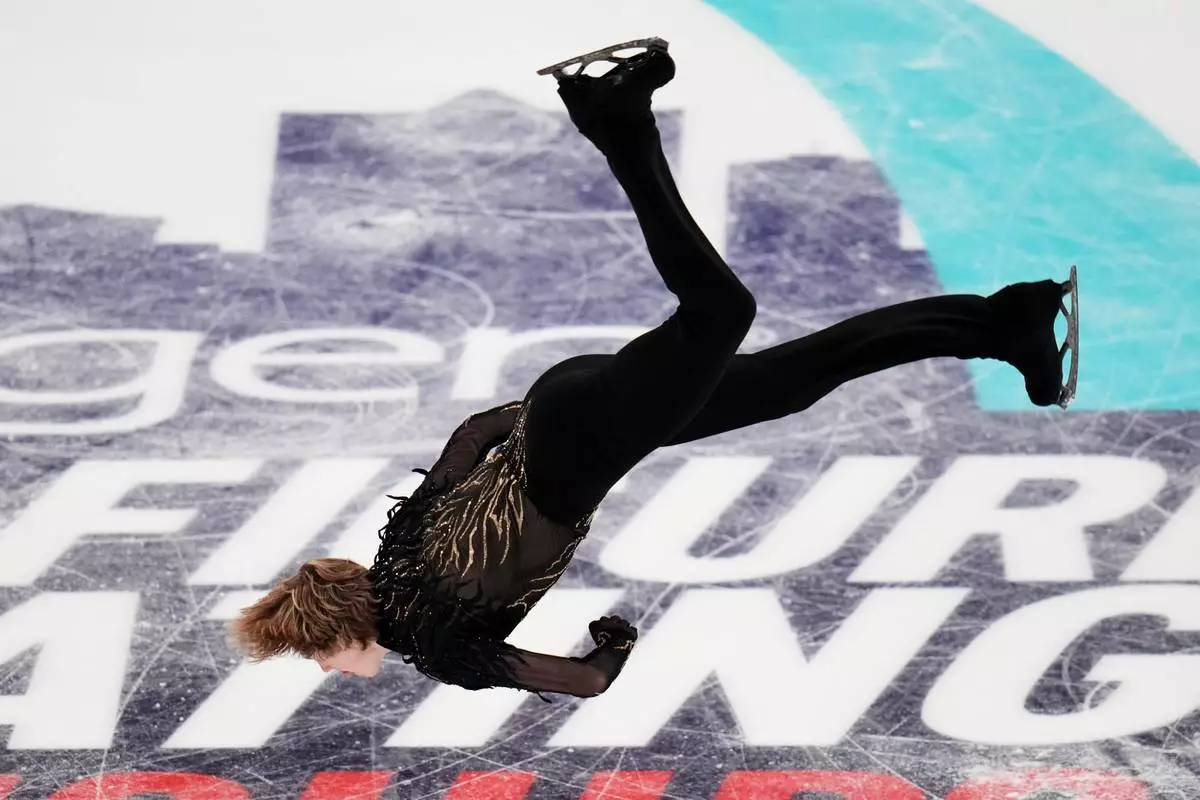
Ilia Malinin competes during the men's free skate competition at the U.S. Figure Skating Championships, Saturday, Jan. 10, 2026, in St. Louis. (AP Photo/Jeff Roberson)

Ilia Malinin competes during the men's free skate competition at the U.S. Figure Skating Championships, Saturday, Jan. 10, 2026, in St. Louis. (AP Photo/Jeff Roberson)

Ilia Malinin competes during the men's short program at the U.S. Figure Skating Championships, Thursday, Jan. 8, 2026, in St. Louis. (AP Photo/Stephanie Scarbrough)

Ilia Malinin competes during the men's short program at the U.S. Figure Skating Championships, Thursday, Jan. 8, 2026, in St. Louis. (AP Photo/Stephanie Scarbrough)

Recommended Articles