LAS VEGAS (AP) — Canelo Alvarez hadn’t been beltless since 2015.
But after being outclassed by Terence Crawford for the unified super middleweight championship on Saturday night, Alvarez (63-3-2) finds himself without a title for the first time in 10 years.
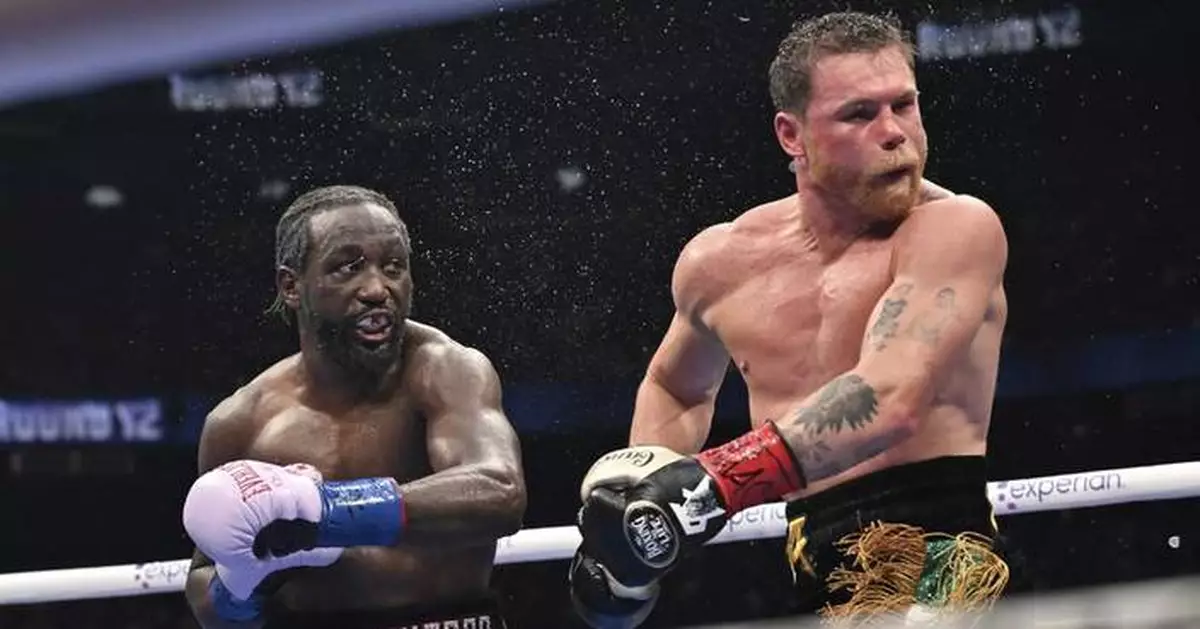
While Crawford (42-0) was masterful in everything he did, dominating the 12-round bout in front of a venue-record 70,482 fans inside Allegiant Stadium, Alvarez didn’t look like the dominating fighter he’s been for the better part of a nearly 20-year career.
“We already knew Crawford is a great fighter and I did what I was supposed to do,” Alvarez said. “I tried every way, and I trained really hard. He deserves all the credit. I try my best tonight, and I just (couldn’t) figure out the style."
Unlike performances in the past, when even a slow start didn’t take away from Canelo’s power and late-round surges, the 35-year-old appeared out of sorts at times when he’d normally turn the squared circle into his playground.
It was especially alarming with his challenger being nearly three years older, leaving the question if Alvarez’s better days are behind him.
Asked if there was anything specific Crawford did that gave him the most trouble, Alvarez was blunt.
“Everything,” he said.
The conversation may have been different had Alvarez challenged Crawford with his looping left hooks to the body, or straight punches to the head. But Alvarez was noticeably slower; he appeared frustrated at times while Crawford gained momentum, and it was the Mexican superstar who looked like the older pugilist against the soon-to-be 38-year-old pride of Omaha, Nebraska.
It wasn’t until the fourth round that Canelo landed his first significant shot, and the fifth that the fight became competitive. But even as the former champ activated his strategy, Crawford got better, like in the seventh when he snapped Canelo’s head back with a vicious shot.
Despite the dominating performance, Crawford refused to disrespect Alvarez.
“He was definitely frustrated, because what he was trying to do wasn’t working,” said Crawford, who returned to the postfight press conference to share a moment with Alvarez on stage. ”(But) I think you’re not giving him enough credit, trying to take things away from him. He was 100% prepared. I just think I was the better man.”
And while Alvarez may no longer have a championship belt, the ever-gracious face of boxing said he'll always feel like a champion.
“I win no matter what,” Alvarez said. “No matter what, I still feel (like) the champion. It is what it is. You need to take the loss and accept everything.
“But I’m gonna continue. I’m gonna continue to do it.”
AP boxing: https://apnews.com/hub/boxing
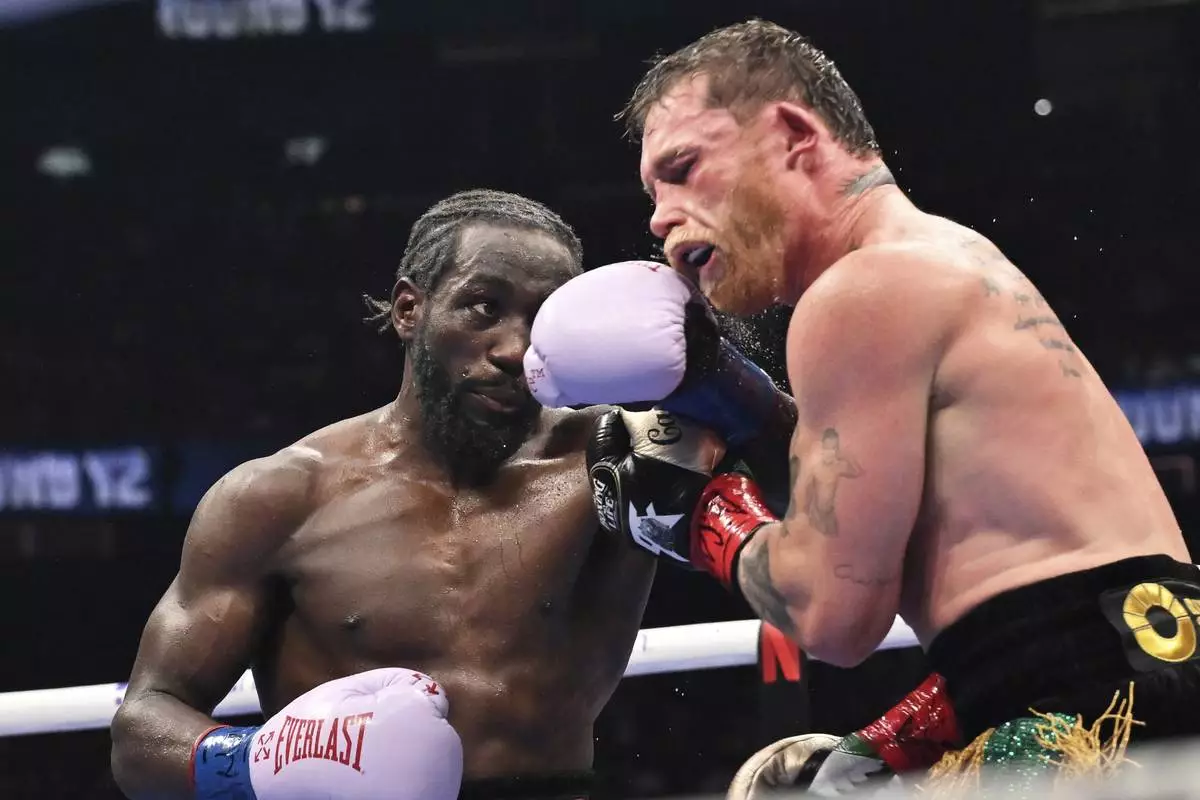
Terence Crawford, left, punches Canelo Alvarez during an undisputed super middleweight championship boxing match in Las Vegas, Saturday, Sept. 13, 2025. (AP Photo/David Becker)
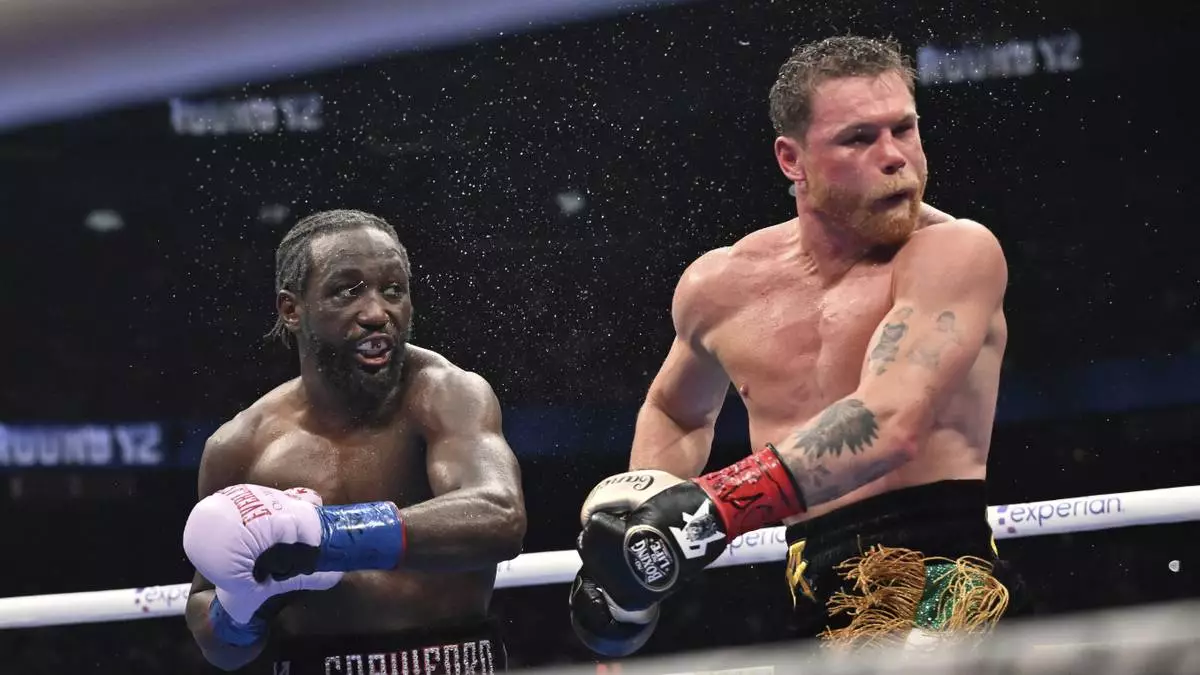
Terence Crawford, left, punches Canelo Alvarez during an undisputed super middleweight championship boxing match in Las Vegas, Saturday, Sept. 13, 2025. (AP Photo/David Becker)
MADISON, Wis. (AP) — Democrats across the country are proposing state law changes to rein in federal immigration officers and protect the public following the shooting death of a protester in Minneapolis and the wounding of two people in Portland, Oregon.
Many of the measures have been proposed in some form for years in Democratic-led states, but their momentum is growing as legislatures return to work amid President Donald Trump’s national immigration crackdown following the killing of Renee Good by an Immigration and Customs Enforcement agent in Minneapolis. Republicans are pushing back, blaming protesters for impeding enforcement of immigration laws.
Democratic Gov. Kathy Hochul wants New York to allow people to sue federal officers alleging violations of their constitutional rights. Another measure aims to keep immigration agents lacking judicial warrants out of schools, hospitals and houses of worship.
Oregon Democrats plan to introduce a bill to allow residents to sue federal agents for violating their Fourth Amendment rights against unlawful search and seizure.
New Jersey’s Democrat-led Legislature passed three bills on Monday that immigrant rights groups have long pushed for, including a measure prohibiting state law enforcement officers from cooperating with federal immigration enforcement. Democratic Gov. Phil Murphy has until his last day in office Tuesday to sign or veto them.
California lawmakers are proposing to ban local and state law enforcement from taking second jobs with the Department of Homeland Security and make it a violation of state law when ICE officers make “indiscriminate” arrests around court appearances. Other measures are pending.
“Where you have government actions with no accountability, that is not true democracy,” Democratic state Sen. Scott Wiener of San Francisco said at a news conference.
Democrats in Georgia introduced four Senate bills designed to limit immigration enforcement — a package unlikely to become law because Georgia’s conservative upper chamber is led by Lt. Gov. Burt Jones, a close Trump ally. Democrats said it's still important to take a stand.
“Donald Trump has unleashed brutal aggression on our families and our communities across our country,” said state Sen. Sheikh Rahman, an immigrant from Bangladesh whose district in suburban Atlanta’s Gwinnett County is home to many immigrants.
Democrats in New Hampshire have proposed numerous measures seeking to limit federal immigration enforcement, but the state's Republican majorities passed a new law taking effect this month that bans “sanctuary cities.”
In Tennessee, instead of considering a Democratic measure that would limit civil immigration enforcement at schools and churches, Republican House Speaker Cameron Sexton said he was working with the White House on a separate package of immigration-related bills. He hasn't said what they would do.
The Trump administration has opposed any effort to blunt ICE, including suing local governments whose “sanctuary” policies limit police interactions with federal officers.
States have broad power to regulate within their borders unless the U.S. Constitution bars it, but many of these laws raise novel issues that courts will have to sort out, said Harrison Stark, senior counsel with the State Democracy Research Initiative at the University of Wisconsin Law School.
“There’s not a super clear, concrete legal answer to a lot of these questions,” he said. “It’s almost guaranteed there will be federal litigation over a lot of these policies.”
That's already happening.
California in September was the first to ban most law enforcement officers, including federal immigration agents, from covering their faces on duty. The Justice Department said its agents won't comply and sued California, arguing that the laws threaten the safety of officers who are facing “unprecedented” harassment, doxing and violence.
The Justice Department also sued Illinois last month, challenging a law that bars federal civil arrests near courthouses, protects medical records and regulates how universities and day care centers manage information about immigration status. The Justice Department claims the law is unconstitutional and also threatens federal officers’ safety.
Minnesota and Illinois, joined by their largest cities, sued the Trump administration this week. Minneapolis and Minnesota accuse the Republican administration of violating free speech rights by punishing a progressive state that favors Democrats and welcomes immigrants. Illinois and Chicago claim “Operation Midway Blitz” made residents afraid to leave their homes.
Homeland Security spokesperson Tricia McLaughlin accused Minnesota officials of ignoring public safety and called the Illinois lawsuit “baseless.”
Associated Press writers John O’Connor in Springfield, Illinois; Sophie Austin in Sacramento, California; Mike Catalini in Trenton, New Jersey; Jonathan Mattise in Nashville, Tennessee; Anthony Izaguirre in Albany, New York; Claire Rush in Portland, Oregon; and Jeff Amy in Atlanta contributed.
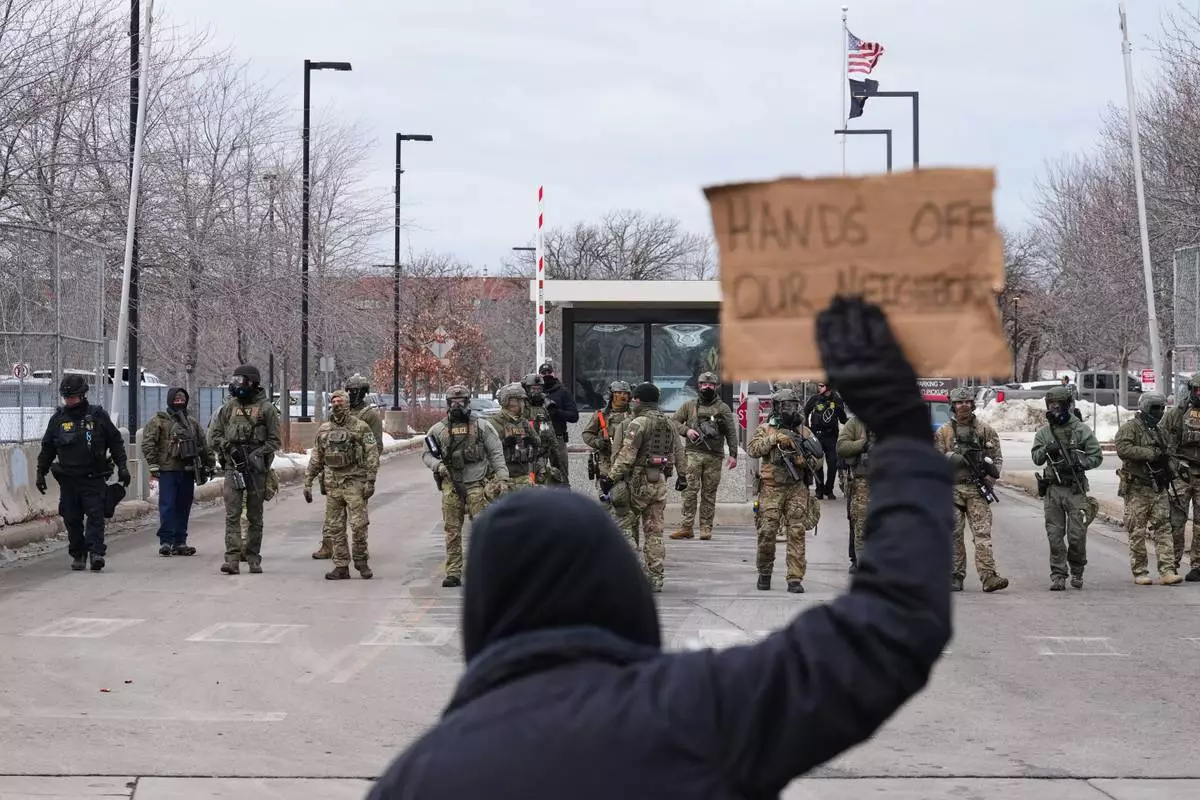
Protesters confront federal immigration officers outside the Bishop Henry Whipple Federal Building, Tuesday, Jan. 13, 2026, in Minneapolis. (AP Photo/Adam Gray)