Skip to Content Facebook Feature Image

Google Founding Board Member Ram Shriram Joins GridCARE Board of Directors

News

Google Founding Board Member Ram Shriram Joins GridCARE Board of Directors
News

News

Google Founding Board Member Ram Shriram Joins GridCARE Board of Directors

2026-01-15 22:30 Last Updated At:22:40

REDWOOD CITY, Calif.--(BUSINESS WIRE)--Jan 15, 2026--

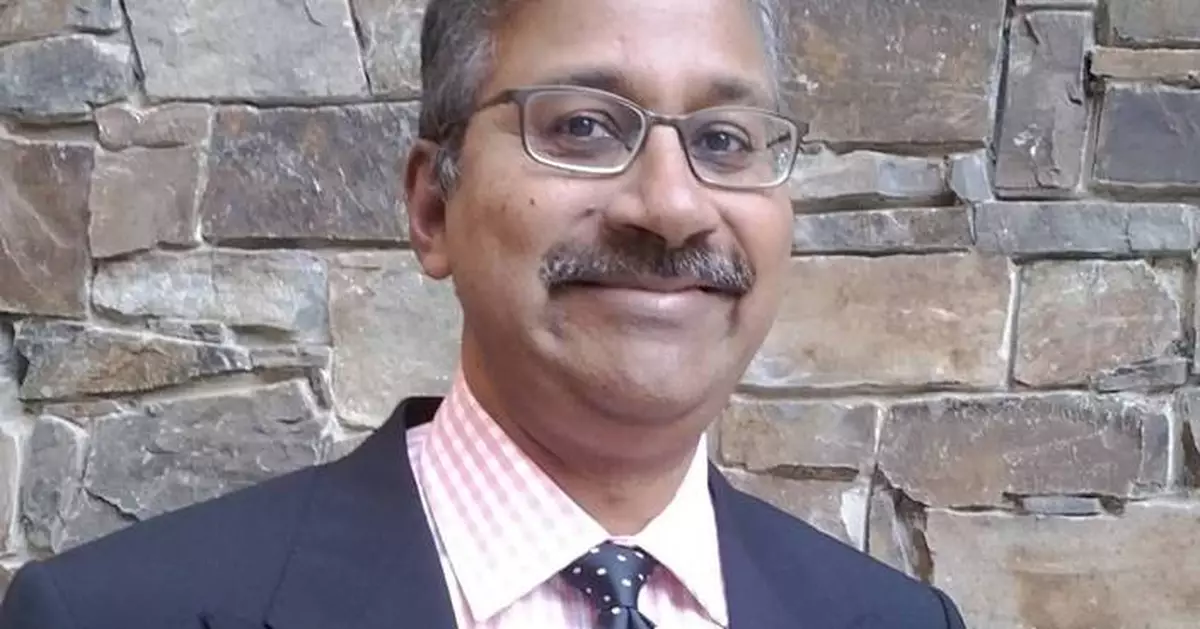
GridCARE, the company accelerating time-to-power for modern AI Factories, today announced that Ram Shriram has joined its Board of Directors. A founding board member of Google and one of Silicon Valley’s most influential technology investors, Shriram brings decades of experience scaling category-defining platforms during major industry transitions.

This press release features multimedia. View the full release here: https://www.businesswire.com/news/home/20260115435052/en/

“I’ve always invested in exceptional entrepreneurs and innovators solving real, consequential problems,” said Shriram . “The AI revolution is being throttled by a single constraint: power. GridCARE is tackling a foundational challenge for the AI economy, and its team brings unmatched depth across power systems and AI to solve it at the scale and urgency the moment demands.”

“From recognizing Google’s potential at its inception to helping shape some of the most iconic technology companies of our era, Ram’s track record speaks for itself,” said Amit Narayan, Founder and CEO of GridCARE . “His experience scaling category-defining platforms and building enduring companies will be invaluable as we meet the unprecedented demand for AI infrastructure.”

A Legendary Track Record in Technology Investing

Ram Shriram's investment acumen has shaped the modern technology landscape. In 1998, Shriram was among the first outside investors in Google, providing critical early-stage capital and strategic guidance that helped transform a Stanford research project into a global technology giant. He has served on Google’s board since its founding and continues today as a board member of Alphabet Inc.

Before his legendary Google investment, Shriram served as Vice President at Netscape during the dawn of the internet age and later as Vice President of Business Development at Amazon.com under Jeff Bezos. In 2000, he founded Sherpalo Ventures, an early-stage venture firm with a portfolio that includes category leaders such as Notion, Skyroot, and Gusto.

"The pace of AI and cloud growth demands new thinking about how we power the digital economy," said Christian Belady, a GridCARE advisor, former Vice President of Data Center R&D at Microsoft, and creator of the industry-standard PUE metric . "GridCARE's approach is exactly what the industry needs: making better use of existing infrastructure to accelerate time-to-power while keeping costs down for everyone. Ram Shriram joining the board validates what those of us in the data center world already know: this team is building something essential."

GridCARE: Rapid Momentum in AI Infrastructure

Shriram’s appointment follows a strong year of execution and growth for GridCARE. The company emerged from stealth in May 2025 as the first startup born out of the Stanford Sustainability Accelerator and closed a highly oversubscribed $13.5 million seed financing round led by Xora, a deep-tech venture capital firm backed by Temasek.

GridCARE accelerates deployment of AI Factories by reducing data centers' time-to-power from 7+ years to under 12 months. The company estimates it can activate over 100 gigawatts of capacity across the U.S. power grid — capacity that has been overlooked by traditional grid planning methods but is immediately actionable for AI infrastructure deployment. The company has rapidly secured partnerships with major utilities, including Pacific Gas & Electric and Portland General Electric. It is currently working with over a dozen hyperscalers, data centers, and powered land developers.

GridCARE has already demonstrated the impact of its platform, unlocking 400 megawatts of capacity in Hillsboro, Oregon, one of the most sought-after locations for AI data centers in the United States. The company's recently published white paper details how AI Factories can help reduce electricity costs for all ratepayers by optimizing grid utilization and enabling more efficient infrastructure deployment.

Ram Shriram understands how to build companies that matter, and this one matters,” said Mohsen Moazami, GridCARE advisor and former Office of the CEO/President of Groq (asset acquired by Nvidia) . “GridCARE makes better use of our existing infrastructure — that is good for AI, good for utilities, and good for every consumer.

World-Class Team

GridCARE brings together a founding technical team from Stanford, including Ram Rajagopal, a Stanford Professor and leading researcher in AI for power systems; Liang Min, Executive Director of Stanford’s Bits & Watts initiative; and Arun Majumdar, Dean of the Stanford Doerr School of Sustainability and former Vice President of Energy at Google. This technical foundation is complemented by seasoned operators, including Alaina Bookstein (Head of Sales and Partnerships, former AWS Global Head of Strategic Business Development), Jessica Hogle (Head of Government Relations and Regulatory Affairs, former PG&E and TVA Vice President of Regulatory Affairs), and Shaneez Mohinani (Head of Strategy & Operations, former Goldman Sachs). Amit Narayan, a serial entrepreneur with multiple successful exits, leads the company. He previously founded Berkeley Design Automation (acquired by Mentor Graphics/Siemens) and AutoGrid (acquired by Schneider Electric), scaling both into category-defining companies.

GridCARE's investor roster reflects the company’s position at the nexus of AI infrastructure and climate technology. In addition to lead investor Xora (backed by Temasek), the company has secured investments from Aina Climate AI Ventures, Overture Ventures, Breakthrough Energy Discovery, WovenEarth, Acclimate Ventures, Clearvision, Clocktower Ventures, and Sherpalo Ventures. The round also attracted prominent technology and energy leaders, including Tom Steyer, Gokul Rajaram, Bill Younger, Felix Zhang, Balaji Prabhakar, and Tarun Raisoni, reinforcing the company’s potential to reshape AI infrastructure.

About GridCARE

GridCARE delivers Speed-to-Power for AI data centers. Our physics-based AI platform identifies and activates near-term capacity on today’s grid, enabling data centers to energize faster while helping utilities grow without compromising reliability or affordability.

Founded at Stanford’s Doerr School and backed by leading AI and energy investors, GridCARE strengthens U.S. AI competitiveness by accelerating access to power at scale. To date, the GridCARE platform has created more than $10 billion in economic value for data center developers by bringing hundreds of megawatts online years ahead of schedule.

Learn more at gridcare.ai.
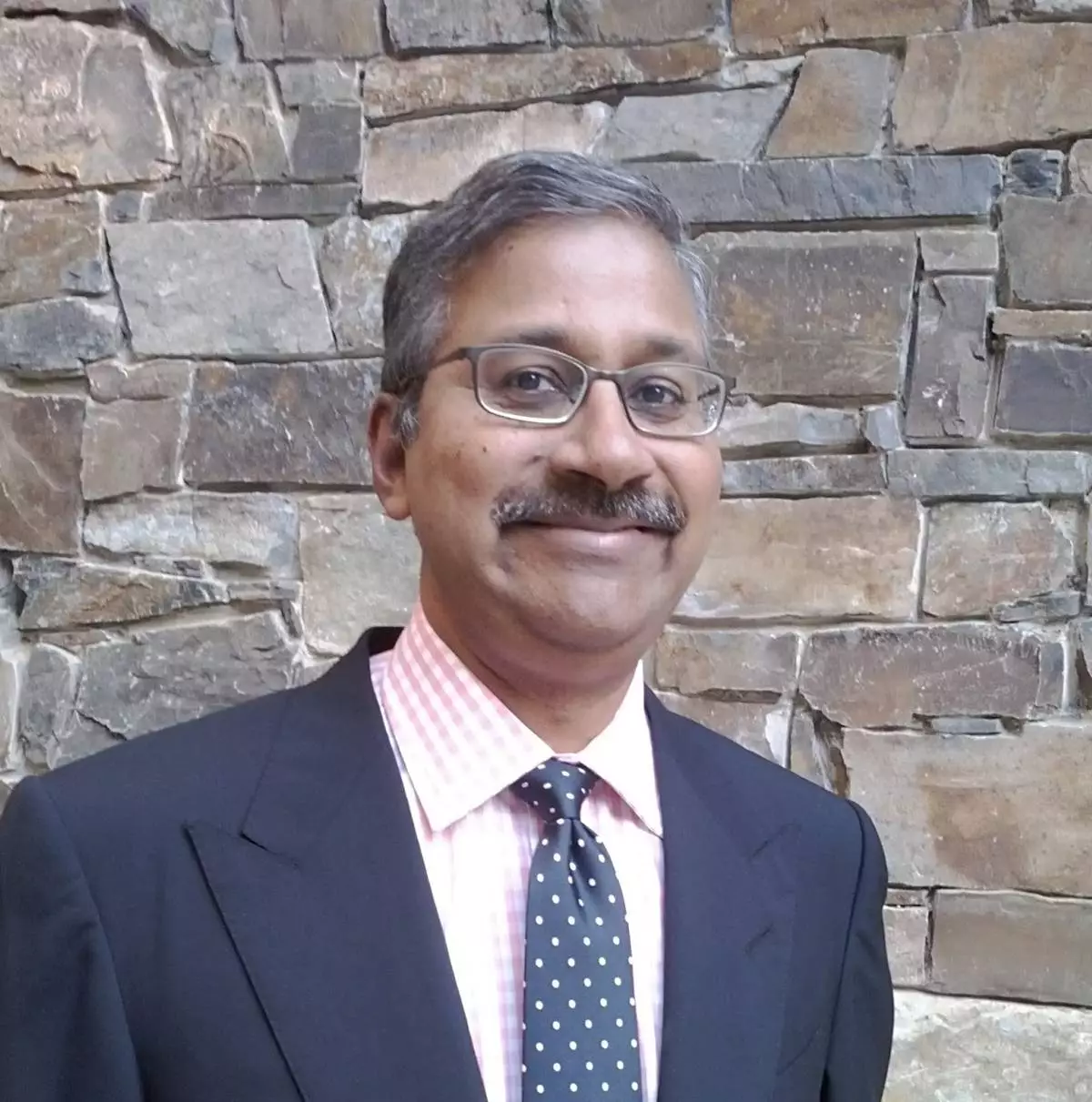
Ram Shriram, founding Google board member and early investor, joins GridCARE's Board of Directors

Ram Shriram, founding Google board member and early investor, joins GridCARE's Board of Directors
HAVANA (AP) — Cuban soldiers wearing white gloves marched out of a plane on Thursday carrying urns with the remains of the 32 Cuban officers killed during a stunning U.S. attack on Venezuela as trumpets and drums played solemnly at Havana's airport.

Nearby, thousands of Cubans lined one of the Havana’s most iconic streets to await the bodies of colonels, lieutenants, majors and captains as the island remained under threat by the administration of U.S. President Donald Trump.

The shoes of Cuban soldiers clacked as they marched stiff-legged into the headquarters of the Ministry of the Armed Forces, next to Revolution Square, with the urns and placed them on a long table next to the pictures of those slain so people could pay their respects.

Thursday’s mass funeral was only one of a handful that the Cuban government has organized in almost half a century.

Hours earlier, state television showed images of more than a dozen wounded people accompanied by Cuban Foreign Minister Bruno Rodríguez arriving Wednesday night from Venezuela. Some were in wheelchairs.

The official announcer indicated that they were “combatants” who had been “wounded” in Venezuela. They were greeted by the Minister of the Interior, Lázaro Alberto Álvarez, and the Minister of the Revolutionary Armed Forces, Álvaro López Miera.

Those injured and the bodies of those killed arrived as tensions grow between Cuba and U.S., with President Donald Trump recently demanding that the Caribbean country make a deal with him before it is “too late.” He did not explain what kind of deal.

Trump also has said that Cuba will no longer live off Venezuela's money and oil. Experts warn that the abrupt end of oil shipments could be catastrophic for Cuba, which is already struggling with serious blackouts and a crumbling power grid.

Officials unfurled a massive flag at Havana's airport as President Miguel Díaz-Canel, clad in military garb as commander of Cuba's Armed Forces, stood silent next to former President Raúl Castro, with what appeared to be the relatives of those slain looking on nearby.

Cuban Interior Minister Lázaro Alberto Álvarez Casa said Venezuela was not a distant land for those killed, but a “natural extension of their homeland.”

“The enemy speaks to an audience of high-precision operations, of troops, of elites, of supremacy,” Álvarez said in apparent reference to the U.S. “We, on the other hand, speak of faces, of families who have lost a father, a son, a husband, a brother.”

Álvarez called those slain “heroes,” saying that they were example of honor and “a lesson for those who waver.”

“We reaffirm that if this painful chapter of history has demonstrated anything, it is that imperialism may possess more sophisticated weapons; it may have immense material wealth; it may buy the minds of the wavering; but there is one thing it will never be able to buy: the dignity of the Cuban people,” he said.

Thousands of Cubans lined a street where motorcycles and military vehicles thundered by with the remains of those killed.

“They are people willing to defend their principles and values, and we must pay tribute to them,” said Carmen Gómez, a 58-year-old industrial designer, adding that she hopes no one invades given the ongoing threats.

When asked why she showed up despite the difficulties Cubans face, Gómez replied, "It’s because of the sense of patriotism that Cubans have, and that will always unite us.”

Cuba recently released the names and ranks of 32 military personnel — ranging in age from 26 to 60 — who were part of the security detail of Venezuelan President Nicolás Maduro during the raid on his residence on January 3. They included members of the Revolutionary Armed Forces and the Ministry of the Interior, the island’s two security agencies.

Cuban and Venezuelan authorities have said that the uniformed personnel were part of protection agreements between the two countries.

Meanwhile, a demonstration was planned for Friday across from the U.S. Embassy in an open-air forum known as the Anti-Imperialist Tribune. Officials have said they expect the demonstration to be massive.

“People are upset and hurt. There’s a lot of talk on social media; but many do believe that the dead are martyrs” of a historic struggle against the United States, analyst and former diplomat Carlos Alzugaray told The Associated Press.

In October 1976, then-President Fidel Castro led a massive demonstration to bid farewell to the 73 people killed in the bombing of a Cubana de Aviación civilian flight financed by anti-revolutionary leaders living in the U.S. Most of the victims were Cuban athletes returning to their island.

In December 1989, officials organized “Operation Tribute” to honor the remains of more than 2,000 Cuban combatants who died in Angola during Cuba’s participation in the war that defeated the South African army and ended the apartheid system. In October 1997, memorial services were held following the arrival of the remains of guerrilla commander Ernesto “Che” Guevara and six of his comrades, who died in 1967.

A day before the remains of those slain arrived in Cuba, U.S. Secretary of State Marco Rubio announced $3 million in relief aid to help the island recover from the catastrophic Hurricane Melissa, which struck in late October.

The first flight took off from Florida on Wednesday, and a second flight was scheduled for Friday. A commercial vessel also will deliver food and other supplies.

“We have taken extraordinary measures to ensure that this assistance reaches the Cuban people directly, without interference or diversion by the illegitimate regime,” Rubio said, adding that the U.S. government was working with Cuba's Catholic Church.

The announcement riled Cuban Foreign Minister Bruno Rodríguez.

“The U.S. government is exploiting what appears to be a humanitarian gesture for opportunistic and politically manipulative purposes,” he said in a statement. “As a matter of principle, Cuba does not oppose assistance from governments or organizations, provided it benefits the people and the needs of those affected are not used for political gain under the guise of humanitarian aid.”

Coto contributed from San Juan, Puerto Rico.

Workers fly the Cuban flag at half-staff at the Anti-Imperialist Tribune near the U.S. Embassy in Havana, Cuba, Monday, Jan. 5, 2026, in memory of Cubans who died two days before in Caracas, Venezuela during the capture of Venezuelan President Nicolas Maduro by U.S. forces. (AP Photo/Ramon Espinosa)

Workers fly the Cuban flag at half-staff at the Anti-Imperialist Tribune near the U.S. Embassy in Havana, Cuba, Monday, Jan. 5, 2026, in memory of Cubans who died two days before in Caracas, Venezuela during the capture of Venezuelan President Nicolas Maduro by U.S. forces. (AP Photo/Ramon Espinosa)

Recommended Articles