Skip to Content Facebook Feature Image

Ukrainian drones strike one of Russia's top oil refineries, sparking fire

News

Ukrainian drones strike one of Russia's top oil refineries, sparking fire
News

News

Ukrainian drones strike one of Russia's top oil refineries, sparking fire

2025-09-14 23:05 Last Updated At:23:10

Ukrainian drones have struck one of Russia’s largest oil refineries, sparking a fire, Russian officials and Ukraine’s military said Sunday.

The overnight strike on the Kirishi refinery, in Russia's northwestern Leningrad region, follows weeks of Ukrainian attacks on Russian oil infrastructure that Kyiv says fuels Moscow’s war effort.

The facility, operated by Russian company Surgutneftegas, produces close to 17.7 million metric tons per year (355,000 barrels per day) of crude, and is one of Russia's top three by output.

More than three years since Russia's full-scale invasion of Ukraine, drones continue to be a key weapon for both sides. Multiple Russian drones crossed into Poland on Wednesday, prompting NATO to send fighter jets to shoot them down and underlining long-held concerns that the fighting might spill over beyond Ukraine's borders.

According to Ukraine’s General Staff, explosions and a fire were reported at the Kirishi refinery. It posted a photo appearing to show a blaze and clouds of smoke against a night sky.

Regional Gov. Alexander Drozdenko said that three drones were downed overnight in the Kirishi area, with falling debris sparking a fire at the facility. He said that no one was injured, and the blaze was put out.

As of Sunday afternoon, Russian officials offered no further comment on the consequences of the strike, and it wasn't immediately possible to verify these. At least 80 Ukrainian drones were shot down overnight over Russia, the annexed Crimean Peninsula and the adjacent Sea of Azov, according to the Russian Defense Ministry.

Ukrainian drones previously targeted the Kirishi refinery in March, causing minor damage, according to social media posts published at the time by Drozdenko.

Russia remains the world’s second-largest oil exporter, but a seasonal rise in demand and sustained Ukrainian drone strikes have caused gasoline shortages in recent weeks. Gas stations have run dry in some regions of the country, with motorists waiting in long lines and officials resorting to rationing or cutting off sales altogether.

To try to ease the shortage, Russia has paused gasoline exports, with officials on Wednesday declaring a full ban until Sept. 30 and a partial ban affecting traders and intermediaries until Oct. 31.

Also in the Leningrad region, a diesel locomotive was derailed during the night, local Gov. Drozdenko said Sunday. He said the incident occurred near Gatchina south of St. Petersburg. Russia's No. 2 city, which was known as Leningrad during Soviet times, is surrounded by but not included in the region of the same name.

Drozdenko said the locomotive's driver was trapped in his cabin, and later died of his injuries while being transported to a hospital. He added an official investigation would check for signs of sabotage.

Separately, a bomb planted along railway lines in Russia’s Oryol region has killed three people, according to reports by local Gov. Andrey Klychkov. He said victims had been inspecting the track, and identified one as a member of Russia’s National Guard.

According to Klychkov's posts, published late Saturday and Sunday, the incident happened near the town of Maloarkhangelsk, about 200 kilometers (120 miles) from the Ukrainian border. Russian officials didn't immediately comment on what caused it.

Elsewhere, as some Russians headed to the polls to elect local governors and deputies on Sunday, the head of the Russia’s main electoral body told reporters that it and Russia’s electronic voting system were facing a large wave of cyberattacks.

Ella Pamfilova, of the Central Election Commission, said that “an unprecedented attack is underway” on its digital systems, but assured the public that it wouldn't affect the outcome of the votes.

The commission’s website appeared to be down for much of Sunday, when 21 out of Russia’s more than 80 regions were set to elect new governors. Seats in nearly a dozen regional assemblies and various municipal bodies were also up for grabs.

But few expected a meaningful challenge to President Vladimir Putin’s United Russia party and its supporters, following a sweeping crackdown on dissent that came with Moscow’s all-out invasion of Ukraine on Feb. 24, 2022.

Almost 100 denial-of-service attacks were recorded on Sunday on online resources linked to the elections, according to Alexander Izhko of Russia’s media and digital watchdog, Roskomnadzor. Izhko spoke at a media briefing Sunday. A denial-of-service attack involves flooding a site with data to overwhelm it and knock it offline.

Russian officials didn't immediately comment on who they thought might be behind the alleged attacks.

Follow AP’s coverage of the war in Ukraine at https://apnews.com/hub/russia-ukraine
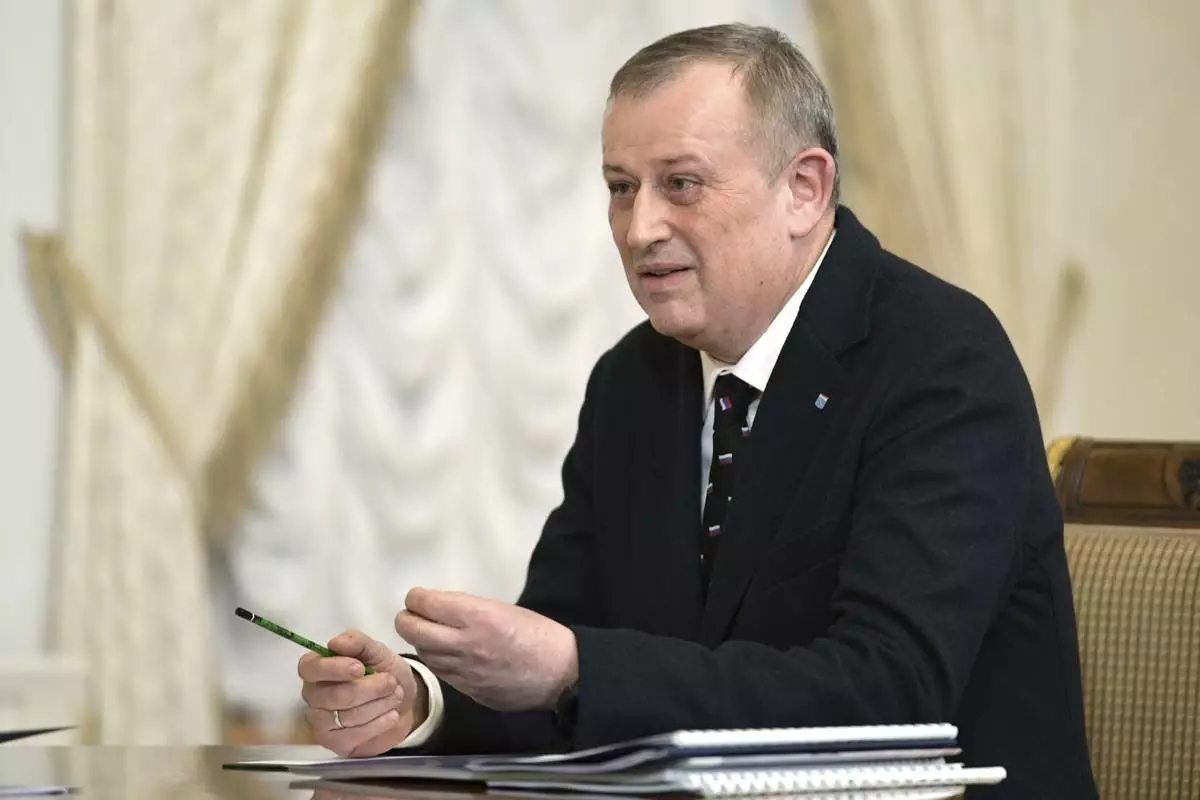
FILE - Leningrad Region Governor Alexander Drozdenko speaks to Russian President Vladimir Putin during their meeting in St. Petersburg, Russia, Monday, Jan. 29, 2024. (Alexei Danichev, Sputnik, Kremlin Pool Photo via AP, File)
FILE - Leningrad Region Governor Alexander Drozdenko speaks to Russian President Vladimir Putin during their meeting in St. Petersburg, Russia, Monday, Jan. 29, 2024. (Alexei Danichev, Sputnik, Kremlin Pool Photo via AP, File)
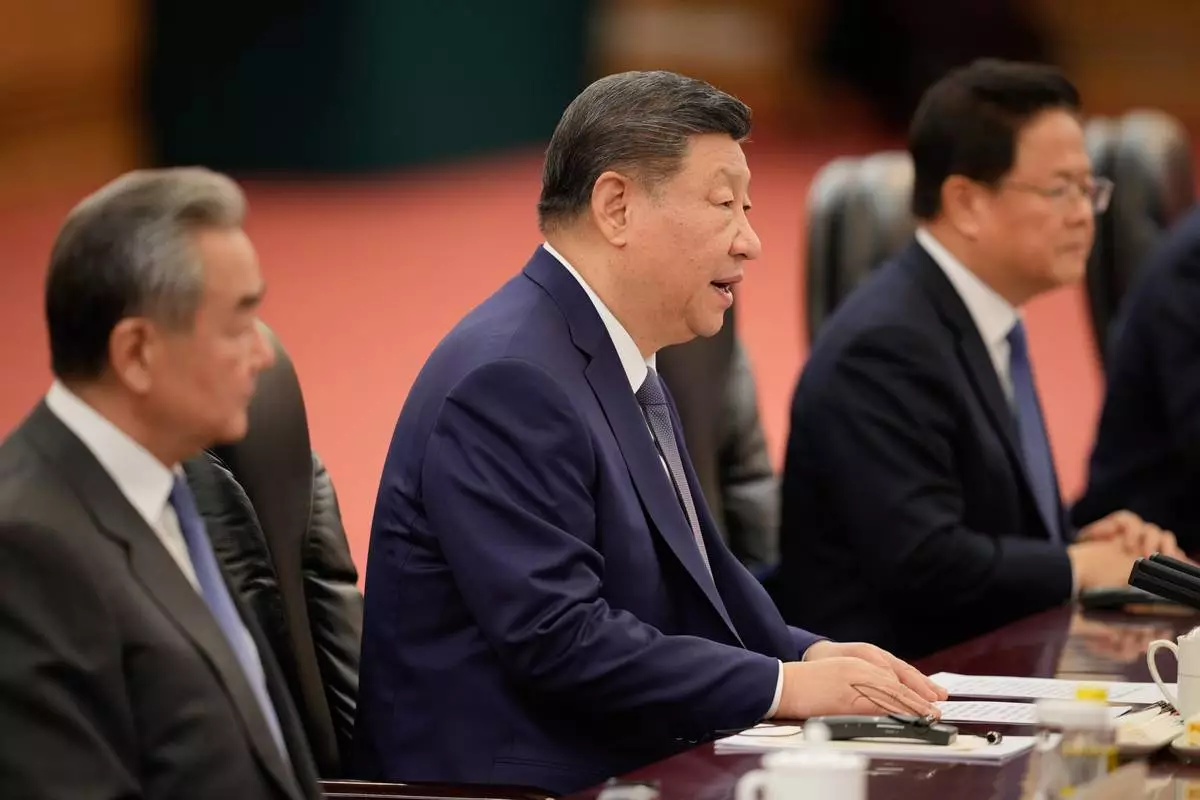
BEIJING (AP) — Breaking with the United States, Canada has agreed to cut its 100% tariff on Chinese electric cars in return for lower tariffs on Canadian farm products, Prime Minister Mark Carney said Friday.

Carney made the announcement after two days of meetings with Chinese leaders. He said there would be an initial cap of 49,000 vehicles on Chinese EV exports to Canada, growing to 70,000 over five years. China will reduce its tariff on canola seeds, a major Canadian export, from about 84% to about 15%, he told reporters.

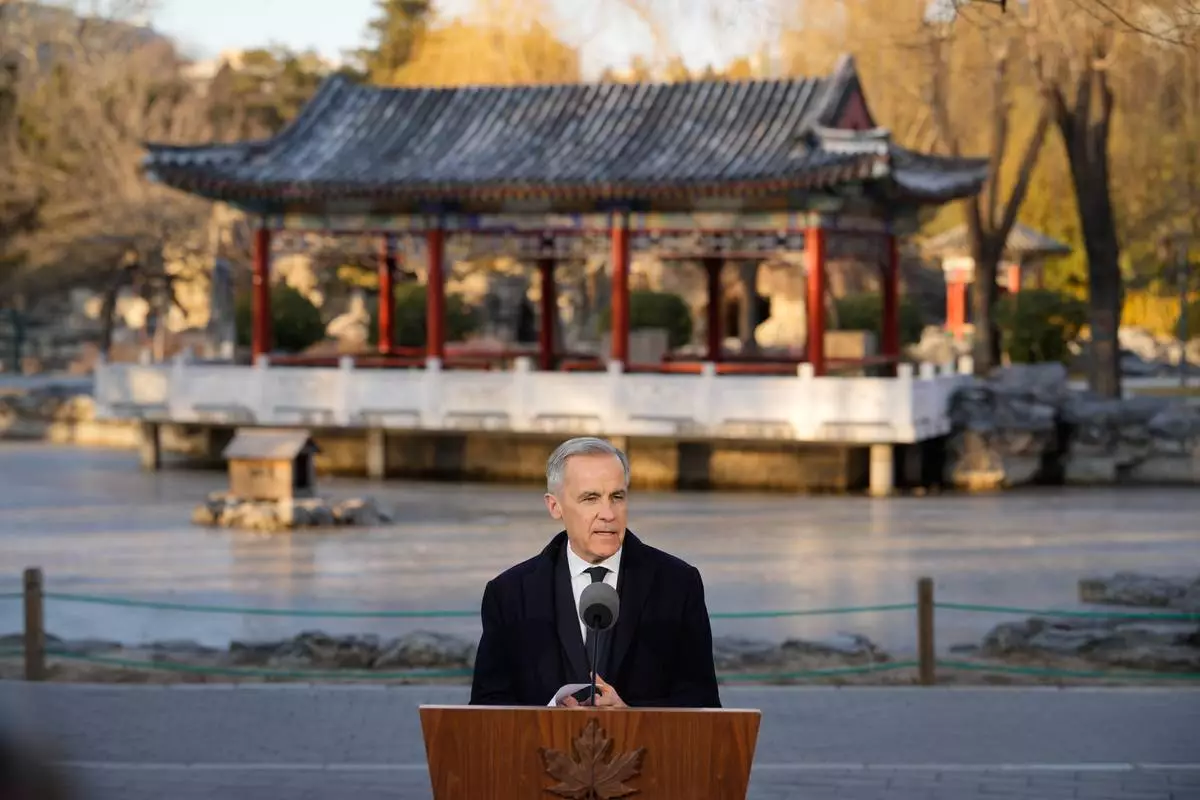
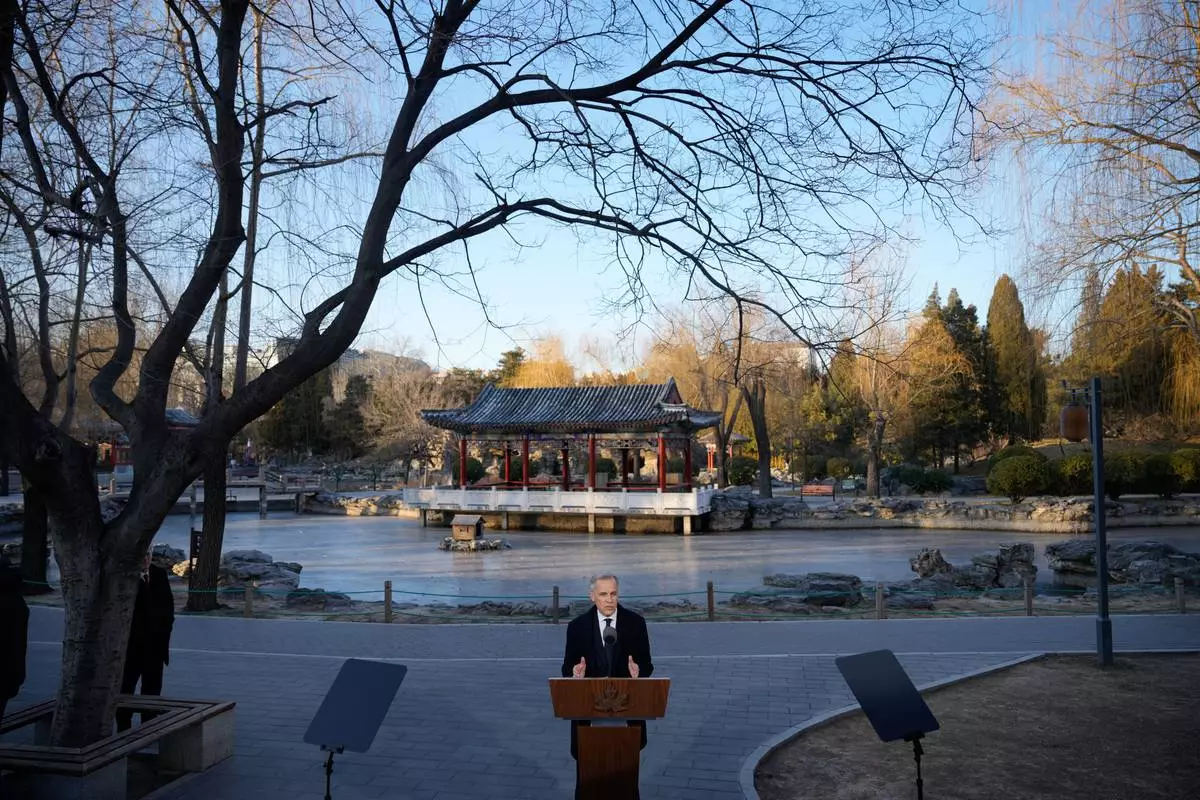
“It has been a historic and productive two days,” Carney said, speaking outside against the backdrop of a traditional pavilion and a frozen pond at a Beijing park. “We have to understand the differences between Canada and other countries, and focus our efforts to work together where we’re aligned.”

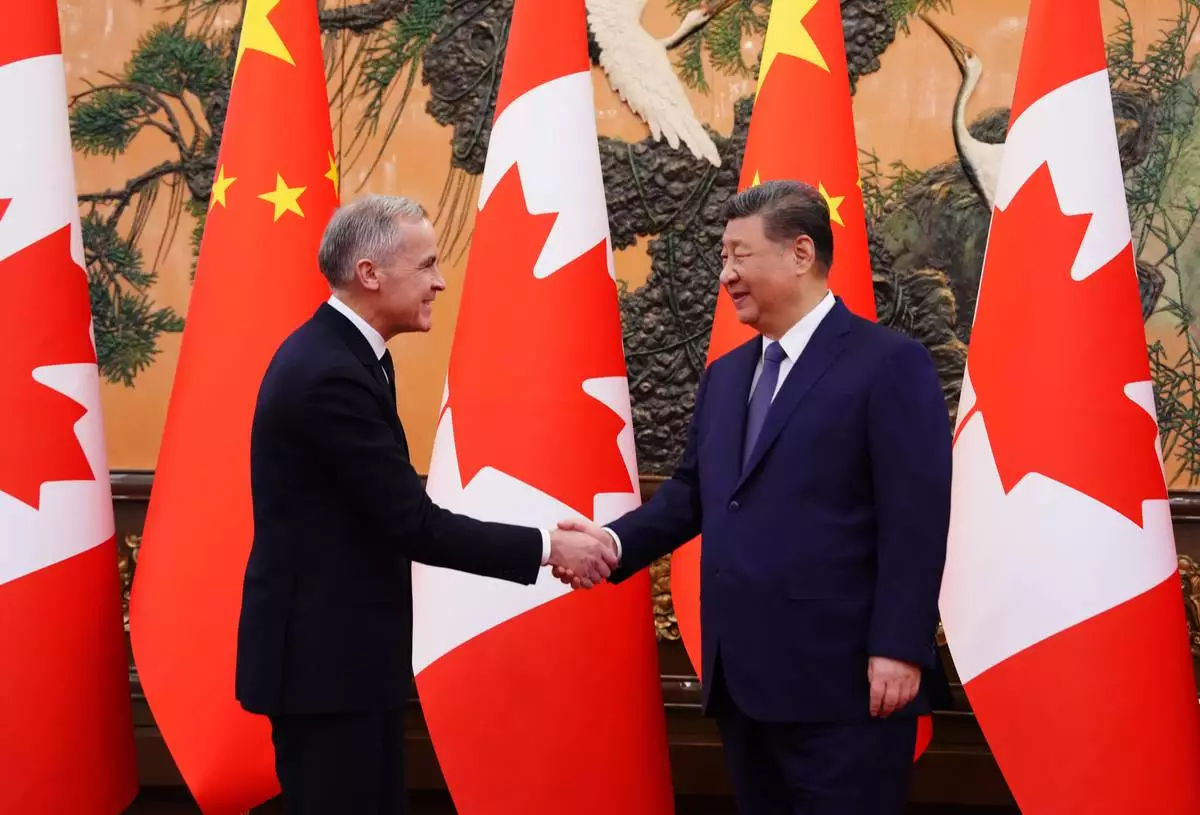
Earlier Friday, he and Chinese leader Xi Jinping pledged to improve relations between their two nations after years of acrimony.

Xi told Carney in a meeting at the Great Hall of the People that he is willing to continue working to improve ties, noting that talks have been underway on restoring and restarting cooperation since the two held an initial meeting in October on the sidelines of a regional economic conference in South Korea.

“It can be said that our meeting last year opened a new chapter in turning China–Canada relations toward improvement,” China's top leader said.

Carney, the first Canadian prime minister to visit China in eight years, said better relations would help improve a global governance system that he described as “under great strain.”

He called for a new relationship “adapted to new global realities” and cooperation in agriculture, energy and finance.

Those new realities reflect in large part the so-called America-first approach of U.S. President Donald Trump. The tariffs he has imposed have hit both the Canadian and Chinese economies. Carney, who has met with several leading Chinese companies in Beijing, said ahead of his trip that his government is focused on building an economy less reliant on the U.S. at what he called “a time of global trade disruption.”

A Canadian business owner in China called Carney's visit game-changing, saying it re-establishes dialogue, respect and a framework between the two nations.

“These three things we didn’t have,” said Jacob Cooke, the CEO of WPIC Marketing + Technologies, which helps exporters navigate the Chinese market. “The parties were not talking for years.”

Canada had followed the U.S. in putting tariffs of 100% on EVs from China and 25% on steel and aluminum under former Prime Minister Justin Trudeau, Carney’s predecessor.

China responded by imposing duties of 100% on Canadian canola oil and meal and 25% on pork and seafood. It added a 75.8% tariff on canola seeds last August. Collectively, the import taxes effectively closed the Chinese market to Canadian canola, an industry group has said. Overall, China's imports from Canada fell 10.4% last year to $41.7 billion, according to Chinese trade data.

China is hoping Trump’s pressure tactics on allies such as Canada will drive them to pursue a foreign policy that is less aligned with the United States. The U.S. president has suggested Canada could become America's 51st state.

Carney departs China on Saturday and visits Qatar on Sunday before attending the annual gathering of the World Economic Forum in Switzerland next week. He will meet business leaders and investors in Qatar to promote trade and investment, his office said.

Associated Press business writer Chan Ho-him in Hong Kong contributed to this report.

Canada's Prime Minister Mark Carney, speaks to the media at Ritan Park in Beijing, China, Friday, Jan. 16, 2026. (AP Photo/Vincent Thian)

Canada's Prime Minister Mark Carney, speaks to the media at Ritan Park in Beijing, China, Friday, Jan. 16, 2026. (AP Photo/Vincent Thian)

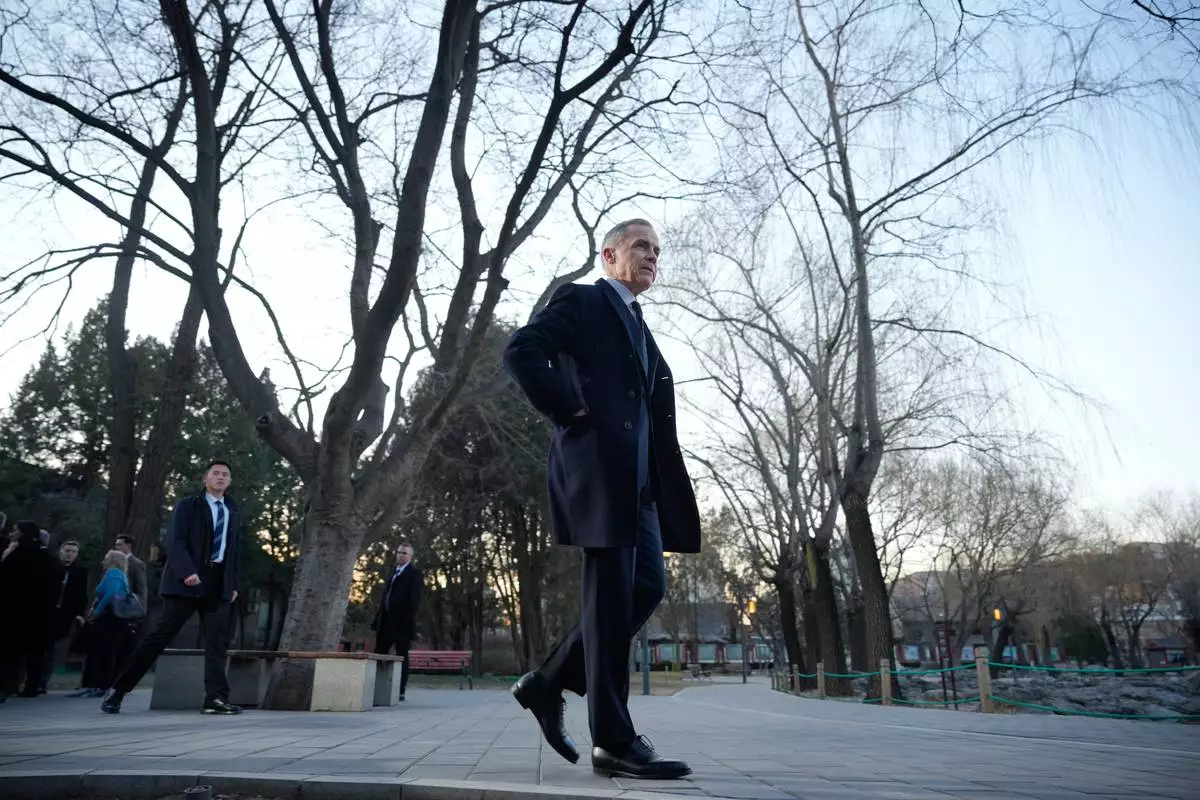
Canada's Prime Minister Mark Carney, leaves after speaking to the media at Ritan Park in Beijing, China, Friday, Jan. 16, 2026. (AP Photo/Vincent Thian)

Canada's Prime Minister Mark Carney, leaves after speaking to the media at Ritan Park in Beijing, China, Friday, Jan. 16, 2026. (AP Photo/Vincent Thian)

Chinese President Xi Jinping, centre, reacts during a meeting with Canada's Prime Minister Mark Carney (not in the picture), at the Great Hall of the People in Beijing, China, Friday, Jan. 16, 2026. (AP Photo/Vincent Thian, Pool)

Chinese President Xi Jinping, centre, reacts during a meeting with Canada's Prime Minister Mark Carney (not in the picture), at the Great Hall of the People in Beijing, China, Friday, Jan. 16, 2026. (AP Photo/Vincent Thian, Pool)

Canada's Prime Minister Mark Carney, speaks to the media at Ritan Park in Beijing, China, Friday, Jan. 16, 2026. (AP Photo/Vincent Thian)

Canada's Prime Minister Mark Carney, speaks to the media at Ritan Park in Beijing, China, Friday, Jan. 16, 2026. (AP Photo/Vincent Thian)

Canada's Prime Minister Mark Carney, center, arrives to meet with Chinese President Xi Jinping, at the Great Hall of the People in Beijing, China, Friday, Jan. 16, 2026. (AP Photo/Vincent Thian, Pool)

Canada's Prime Minister Mark Carney, center, arrives to meet with Chinese President Xi Jinping, at the Great Hall of the People in Beijing, China, Friday, Jan. 16, 2026. (AP Photo/Vincent Thian, Pool)

Canada's Prime Minister Mark Carney, left, meets with Chinese President Xi Jinping at the Great Hall of the People in Beijing Friday, Jan. 16, 2026. (Sean Kilpatrick/The Canadian Press via AP)

Canada's Prime Minister Mark Carney, left, meets with Chinese President Xi Jinping at the Great Hall of the People in Beijing Friday, Jan. 16, 2026. (Sean Kilpatrick/The Canadian Press via AP)

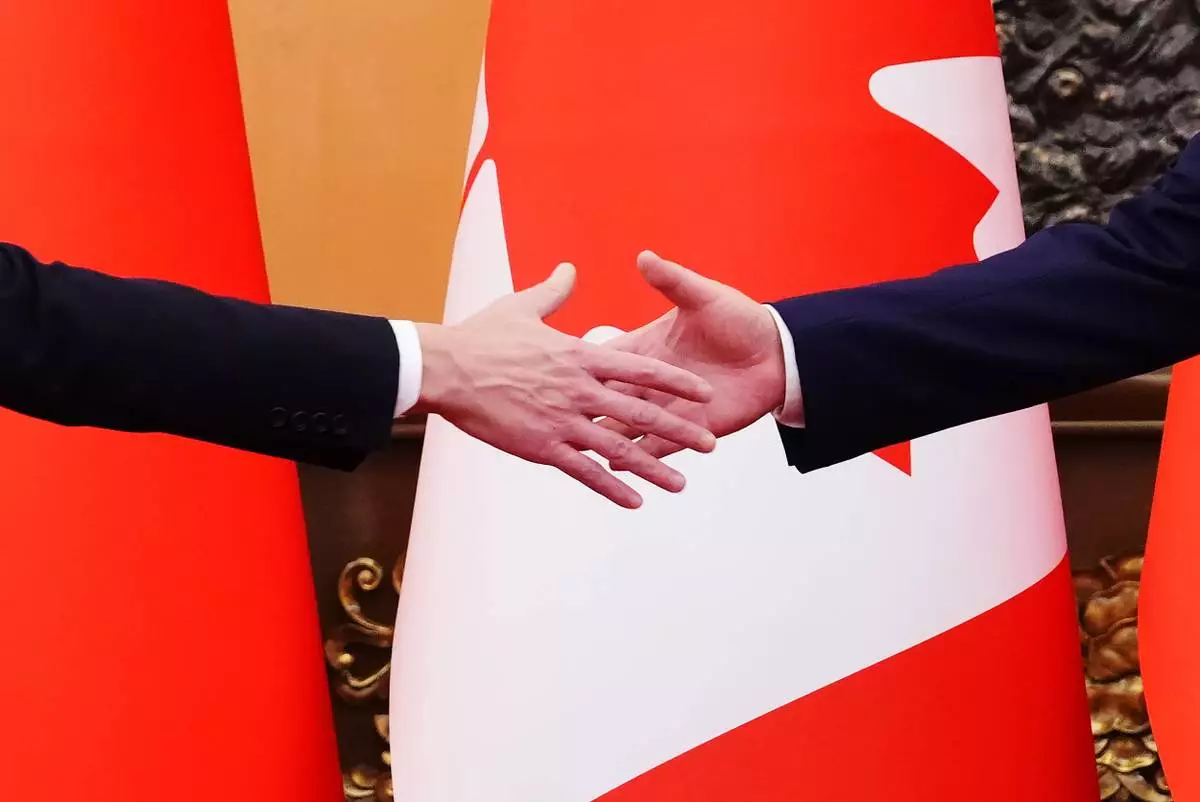
Canada's Prime Minister Mark Carney, left, shakes hands with China's President Xi Jinping at the Great Hall of the People in Beijing Friday, Jan. 16, 2026. (Sean Kilpatrick/The Canadian Press via AP)

Canada's Prime Minister Mark Carney, left, shakes hands with China's President Xi Jinping at the Great Hall of the People in Beijing Friday, Jan. 16, 2026. (Sean Kilpatrick/The Canadian Press via AP)

Recommended Articles