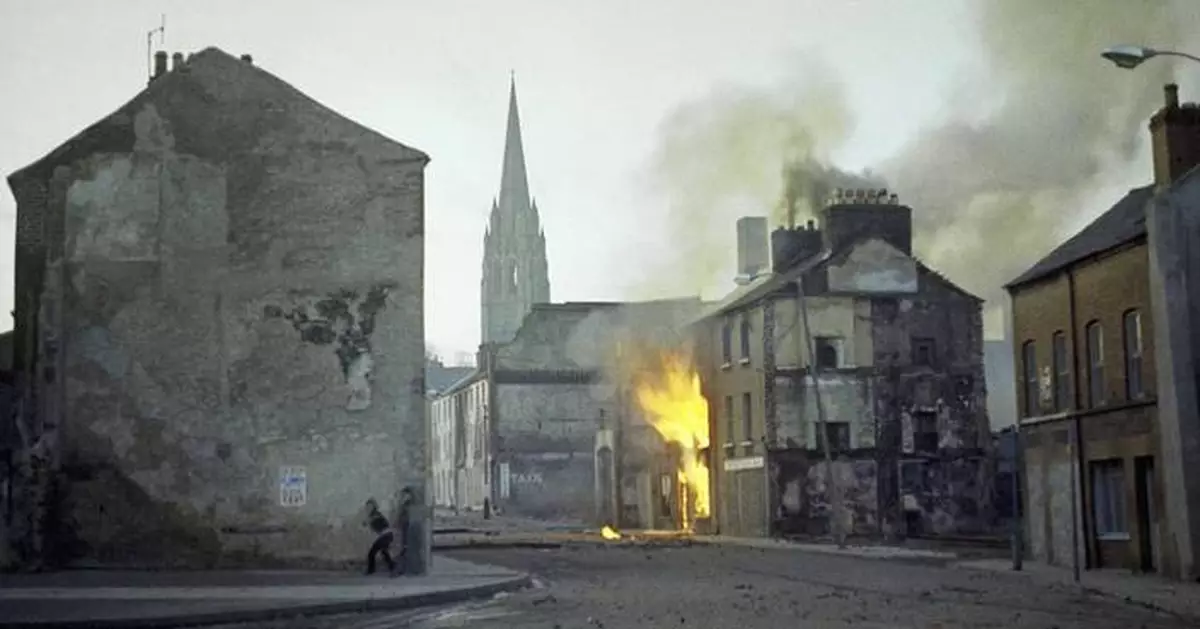
LONDON (AP) — The only British soldier to be prosecuted in the 1972 Bloody Sunday massacre in Northern Ireland went on trial Monday in Belfast on murder charges in a case that has come to symbolize the three decades of sectarian violence known as “The Troubles.”
The ex-paratrooper, a lance corporal named as “Soldier F” to protect his identity, was concealed behind a blue curtain that shielded him from view of the families of some of the 13 people killed and 15 wounded when troops opened fire on unarmed civil rights demonstrators on Jan. 30, 1972, in Londonderry, also known as Derry.
Click to Gallery
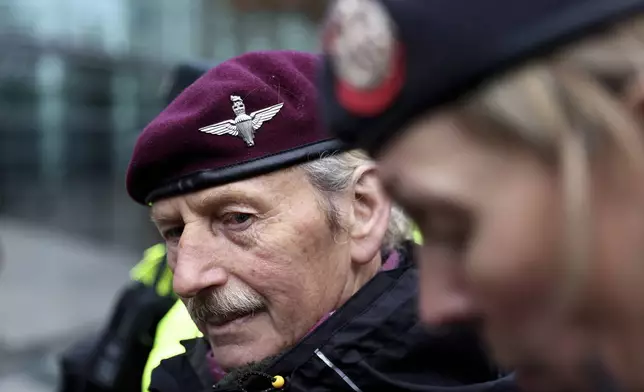
Supporters of soldier F stand outside of Belfast Crown Court, where the trial of a former paratrooper accused of the murder of two men on Bloody Sunday is taking place, in Belfast, Northern Ireland, Monday, Sept. 15, 2025. (AP Photo/Peter Morrison)
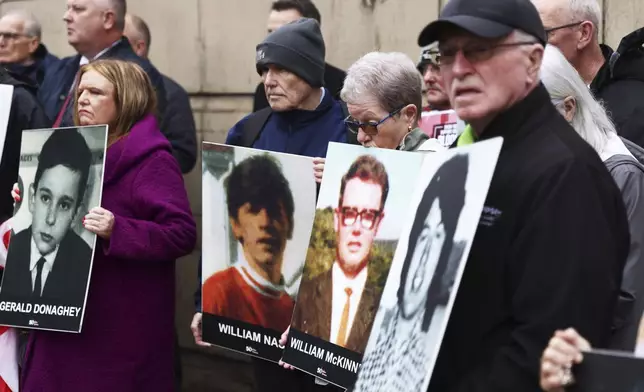
Families of the victims of the 1972 Bloody Sunday, hold a protest outside Belfast Crown court, Northern Ireland, Monday Sept. 15, 2025. (AP Photo/Peter Morrison)
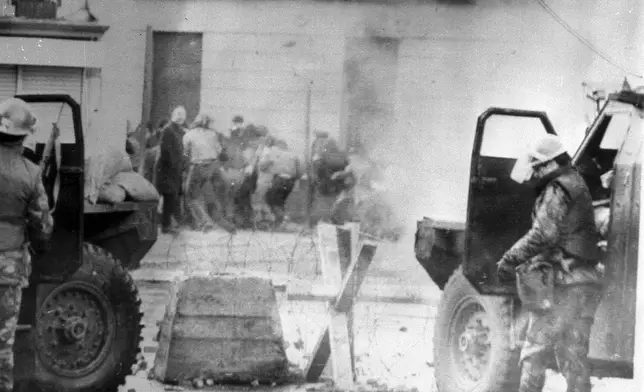
Soldiers take cover behind their sandbagged armoured cars while dispersing rioters with CS gas in Londonderry, Northern Ireland, on Jan. 1, 1972. (PA via AP)
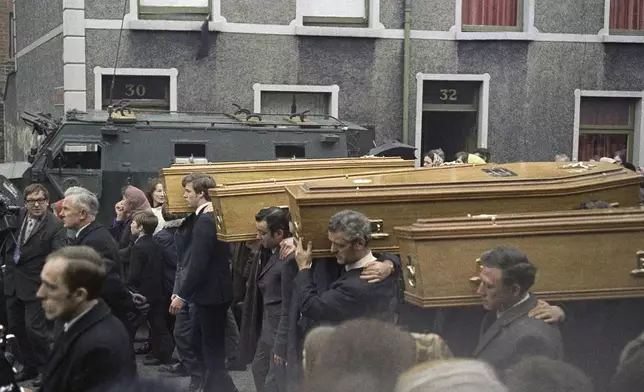
Coffins of people killed during the Bloody Sunday disturbances are carried during their funeral, in Belfast, in February 1972. (AP Photo/Michel Laurent, File)
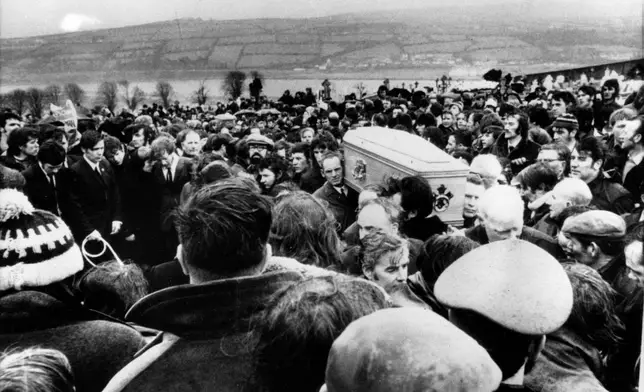
FILE - Pallbearers carry one of 13 coffins of Bloody Sunday victims to a graveside during a funeral in Londonderry, Northern Ireland, following requiem mass at nearby St. Mary's church at Creggan Hill, on Feb. 2, 1972. (AP Photo/File)
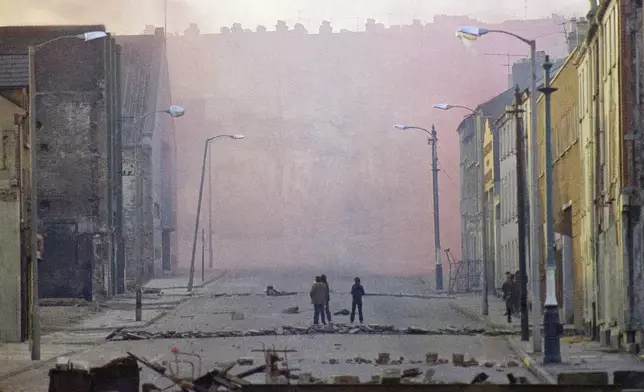
FILE - Haze from smoke bombs released by British troops in the bogside district of Londonderry, Northern Ireland, on Feb. 1, 1972. (AP Photo/Michel Laurent, File)
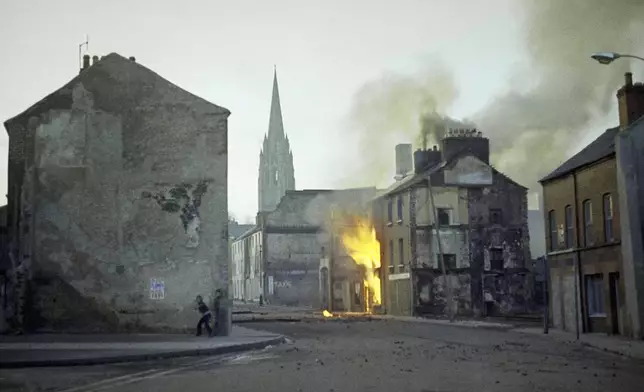
FILE - A building burns in the bogside district of Londonderry, Northern Ireland, in the aftermath of Bloody Sunday, in February 1972. (AP Photo/Michel Laurent, File)
“The civilians ... did not pose a threat to the soldiers and nor could the soldiers have believed that they did,” prosecutor Louis Mably said during an opening statement in Belfast Crown Court. “The civilians were unarmed and they were simply shot as they ran away.”
The Army veteran pleaded not guilty to two counts of murder and five counts of attempted murder in what was the deadliest shooting of the long-running conflict between mainly Catholic supporters of a united Ireland and predominantly Protestant forces that wanted to remain part of the United Kingdom.
While the conflict largely ended with the 1998 Good Friday peace accord that created a system for Republican and Unionist parties to share power in Northern Ireland, tensions remain. Families of civilians killed continue to press for justice and supporters of army veterans complain that their losses have been downplayed and that they have been unfairly targeted in investigations.
Families of the victims who have campaigned for more than a half century for accountability for the killings marched to the courthouse before the trial carrying photos of the dead and walking behind a banner reading “Towards Justice.”
John McKinney called it a momentous day.
“It has taken 53 years to get to this point, and we have battled all the odds to get here,” said McKinney, whose brother, William, was killed in the shooting.
“Everything that we have achieved to this point has been through relentless commitment and a refusal to lie down,” he said. “We will shortly occupy a courtroom very proudly with our heads held high and in the knowledge that, regardless of the ultimate outcome, that we are on the right side of history.”
The fact that it’s taken more than a half century for a trial to get underway reflects the tortured history of the shooting and foreshadows hurdles ahead for prosecutors.
The government initially said members of a parachute regiment fired in self-defense after being attacked by bombers and gunmen and a formal inquiry cleared troops of responsibility. A subsequent and lengthier review in 2010 found soldiers had fired at unarmed civilians fleeing and then lied about it for decades.
Then-Prime Minister David Cameron apologized and said the killings were “unjustified and unjustifiable."
The findings cleared the way for the eventual prosecution of Soldier F, though that, too, has been beset by delays and obstacles.
It took seven years from the time police opened their investigation until prosecutors announced in 2019 that they would only charge Soldier F. They said there wasn't enough evidence to charge 16 other former soldiers and two alleged members of the Official Irish Republican Army who were investigated for their roles in the shootings.
Two years later, the Public Prosecution Service dropped the case because they didn't think they could prevail at trial. They made the decision after a judge tossed out a case against two soldiers in the killing of an Irish Republican Army leader after ruling key prosecution evidence was inadmissible.
Although the prosecution against Soldier F was revived after McKinney's family appealed, Mably acknowledged Monday that the government would have to clear legal challenges over the use of the type of hearsay testimony that torpedoed the IRA case.
Mably also said it was not possible to identify who shot each of the victims, but the prosecution's theory is that Soldier F and others from his battalion had joint responsibility when they pulled the triggers of their self-loading rifles.
Mably described a chaotic scene as soldiers began shooting. Some mistook the sound of gunfire as troops shooting rubber bullets, though the reality quickly became clear as bullets skipped across the pavement and bodies began dropping. Most of those shot were struck in the side or the back.
“These soldiers lost control of themselves,” said Mably, adding that they had “disgraced the British Army.”
In his interview with police in 2016, Soldier F declined to answer questions, saying he had no “reliable recollection” of the events that day but was sure he had properly discharged his duties as a soldier.
Soldier F is charged with two counts of murder in the deaths of James Wray, 22, and William McKinney, 27, and five counts of attempted murder for shooting Joseph Friel, Michael Quinn, Joe Mahon, Patrick O’Donnell and for opening fire at unarmed civilians.
Three of the survivors are expected to testify in the weeks-long trial that resumes Wednesday.
While family members marched for the victims, some veterans gathered outside the courthouse in support of their brethren.
Northern Ireland Veterans Commissioner David Johnstone said it's important to remember the vast majority of nearly 300,000 British troops served with dignity and restraint and more than 1,000 lost their lives and thousands more were wounded in that tumultuous period.
“Many veterans today feel frustrated, feel angry, and indeed feel betrayed by the legacy process since 1998,” he said. “There must first be a fair and balanced legacy process, a process that does not facilitate the wholesale demonization of those who served and certainly not facilitate the rewriting of the history of the Troubles.”
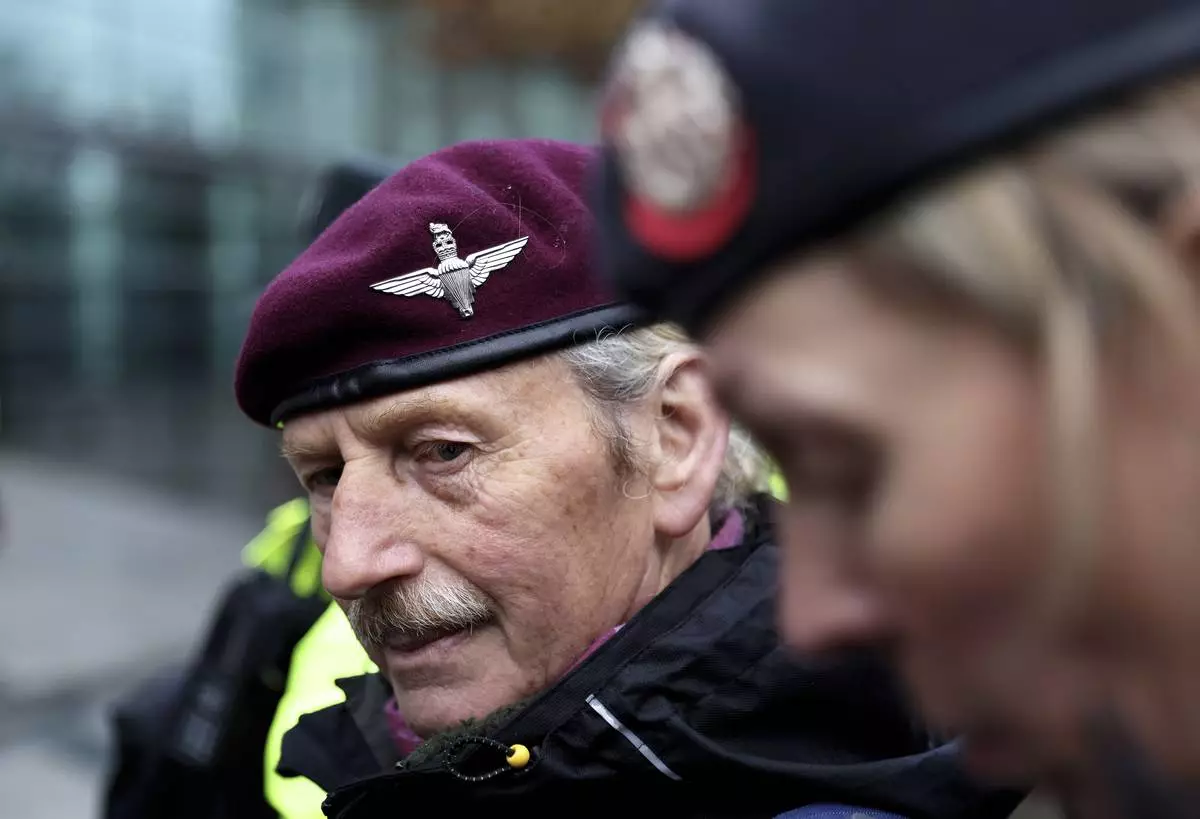
Supporters of soldier F stand outside of Belfast Crown Court, where the trial of a former paratrooper accused of the murder of two men on Bloody Sunday is taking place, in Belfast, Northern Ireland, Monday, Sept. 15, 2025. (AP Photo/Peter Morrison)
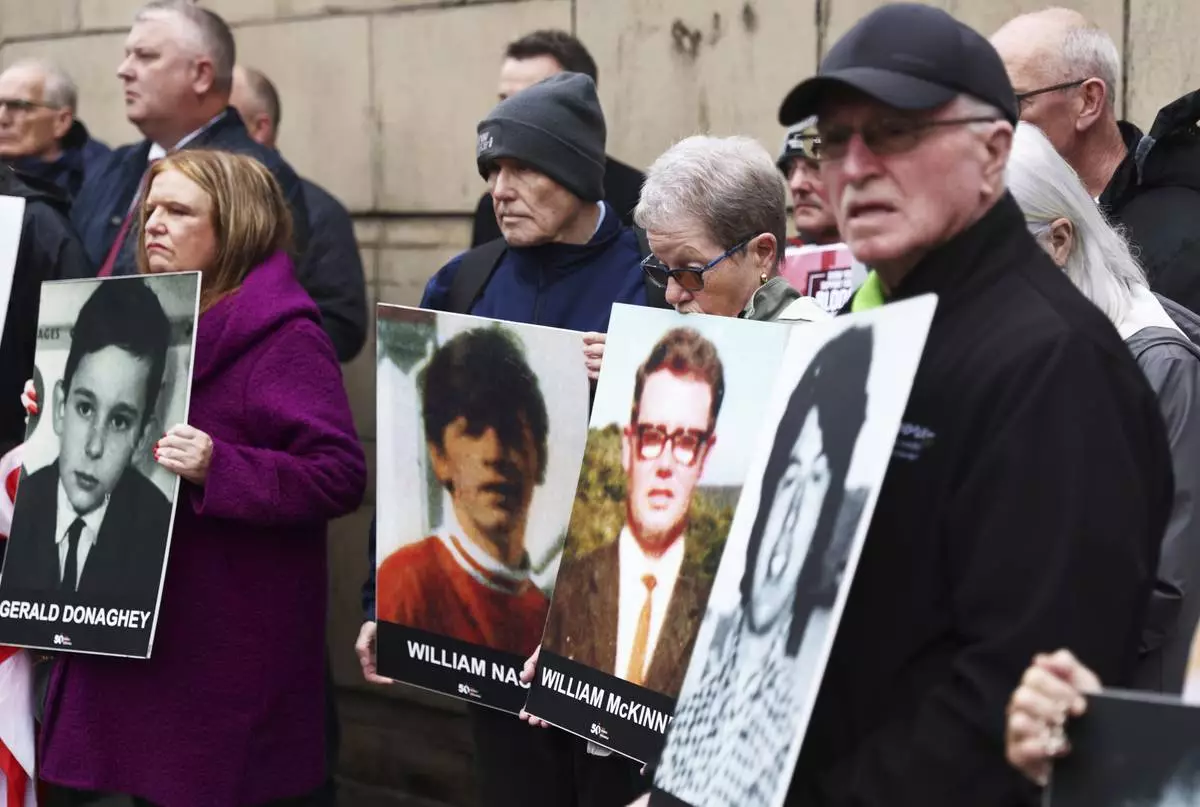
Families of the victims of the 1972 Bloody Sunday, hold a protest outside Belfast Crown court, Northern Ireland, Monday Sept. 15, 2025. (AP Photo/Peter Morrison)
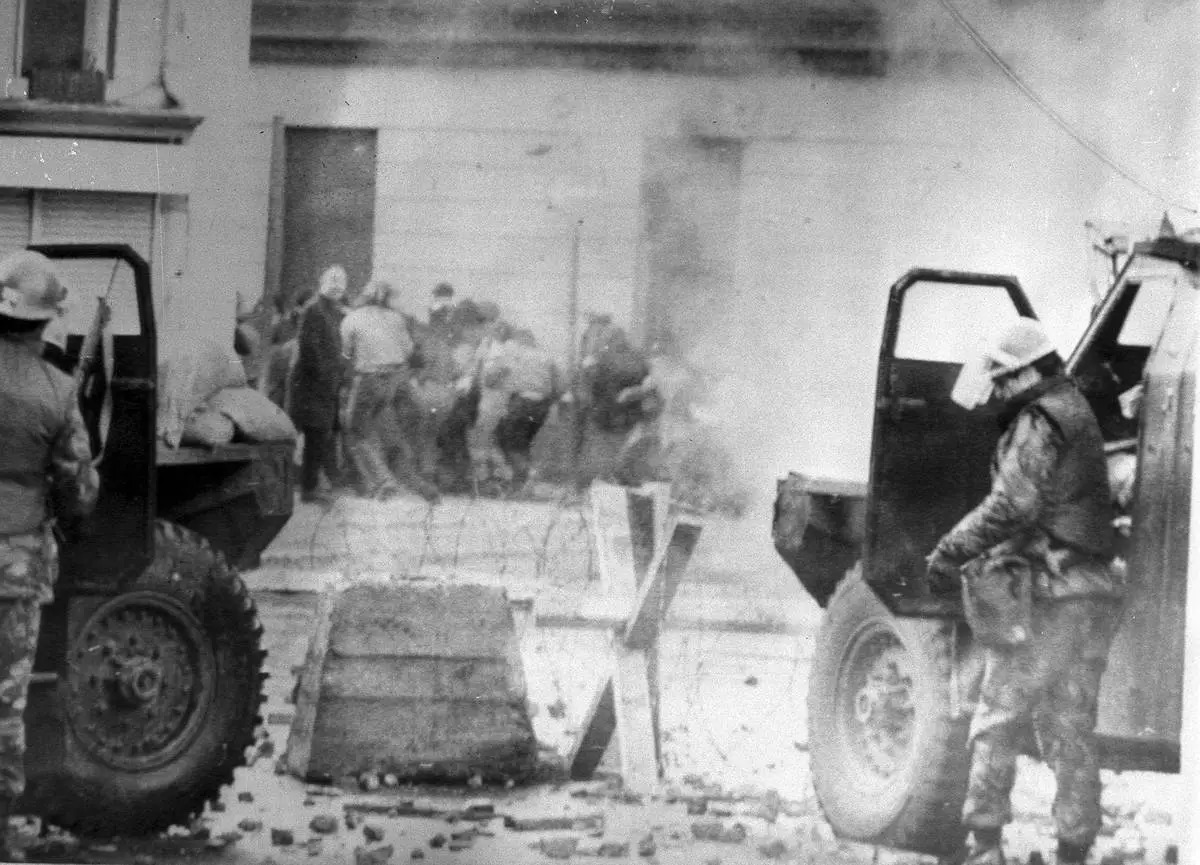
Soldiers take cover behind their sandbagged armoured cars while dispersing rioters with CS gas in Londonderry, Northern Ireland, on Jan. 1, 1972. (PA via AP)
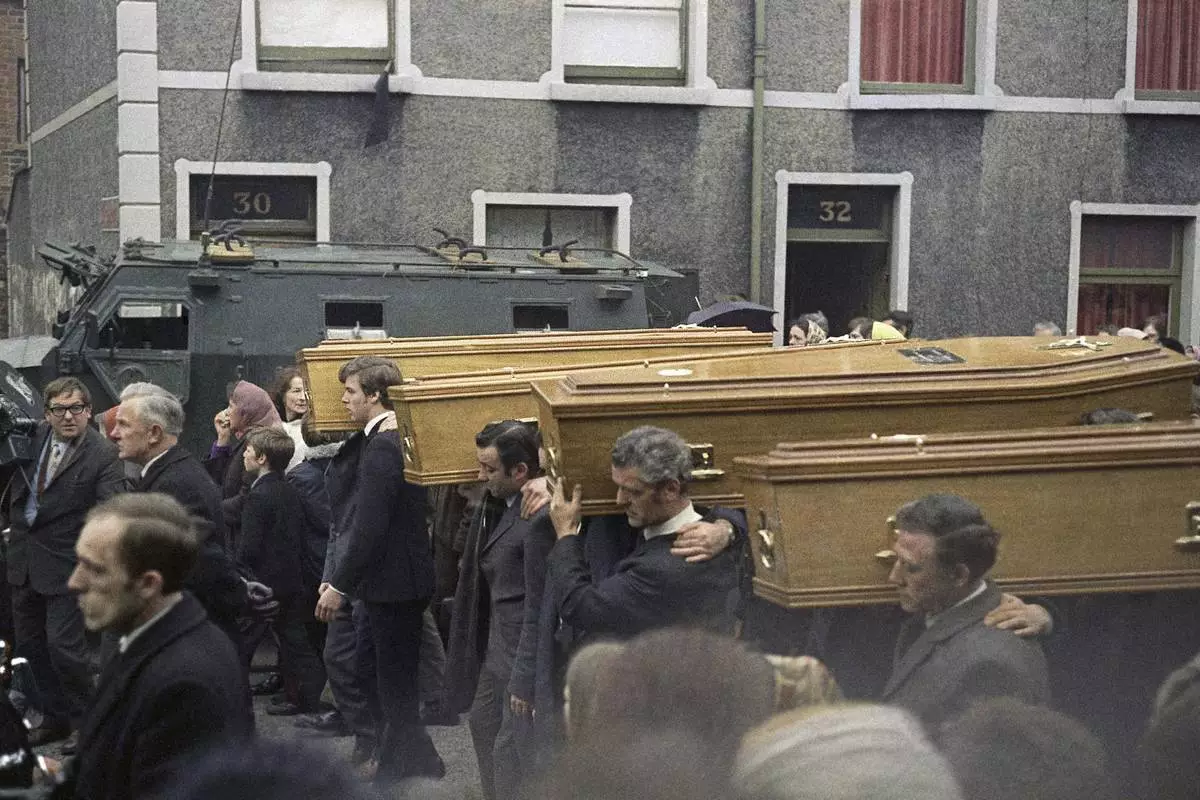
Coffins of people killed during the Bloody Sunday disturbances are carried during their funeral, in Belfast, in February 1972. (AP Photo/Michel Laurent, File)
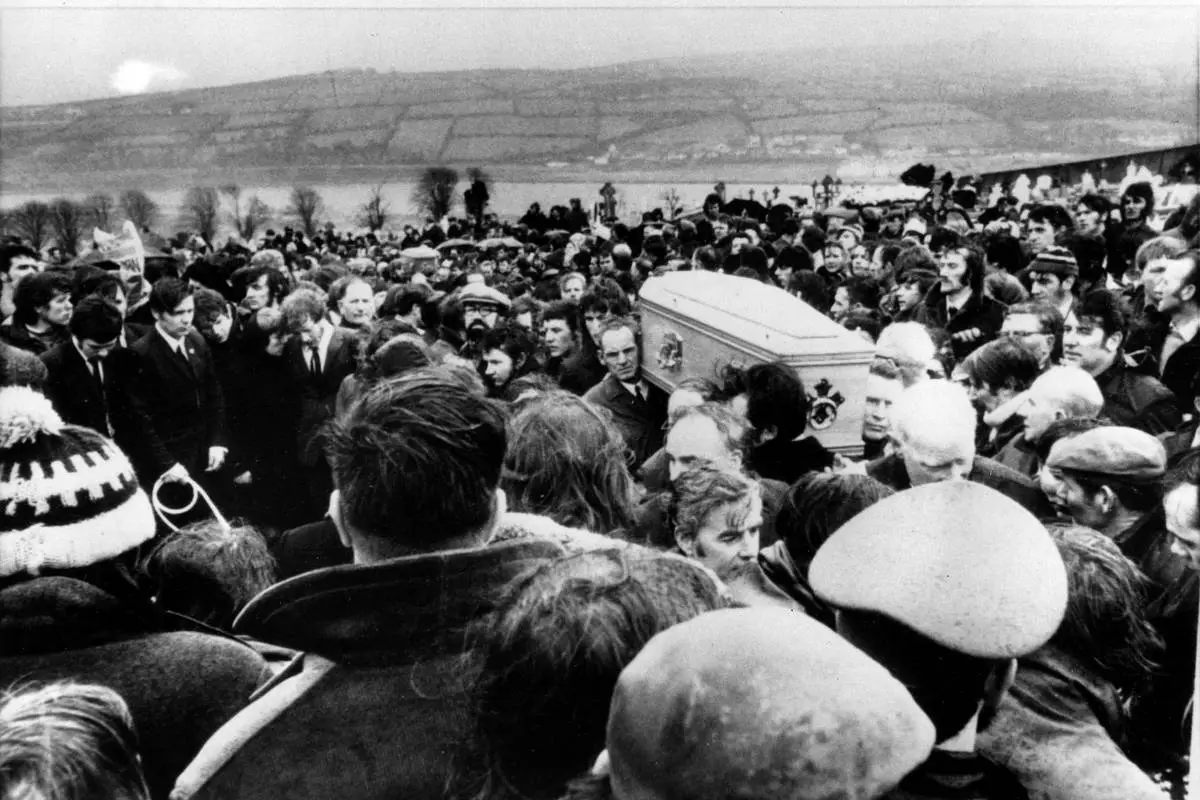
FILE - Pallbearers carry one of 13 coffins of Bloody Sunday victims to a graveside during a funeral in Londonderry, Northern Ireland, following requiem mass at nearby St. Mary's church at Creggan Hill, on Feb. 2, 1972. (AP Photo/File)
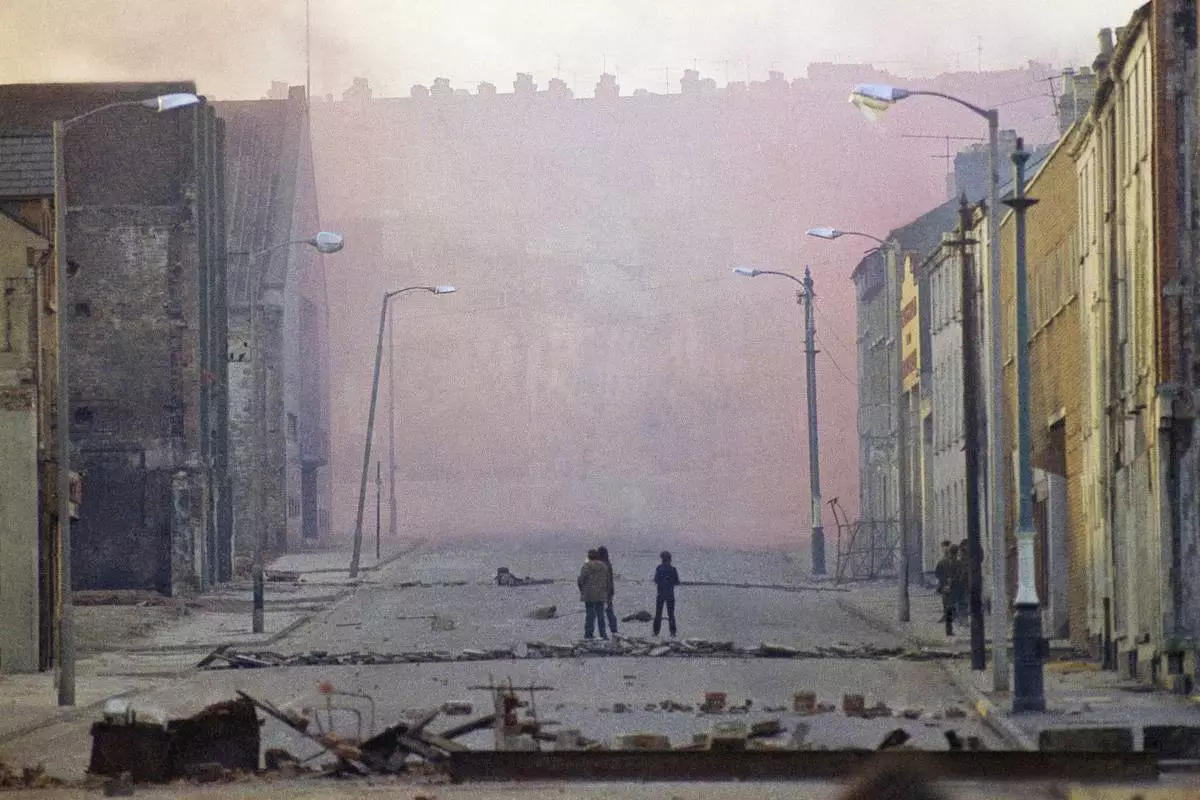
FILE - Haze from smoke bombs released by British troops in the bogside district of Londonderry, Northern Ireland, on Feb. 1, 1972. (AP Photo/Michel Laurent, File)
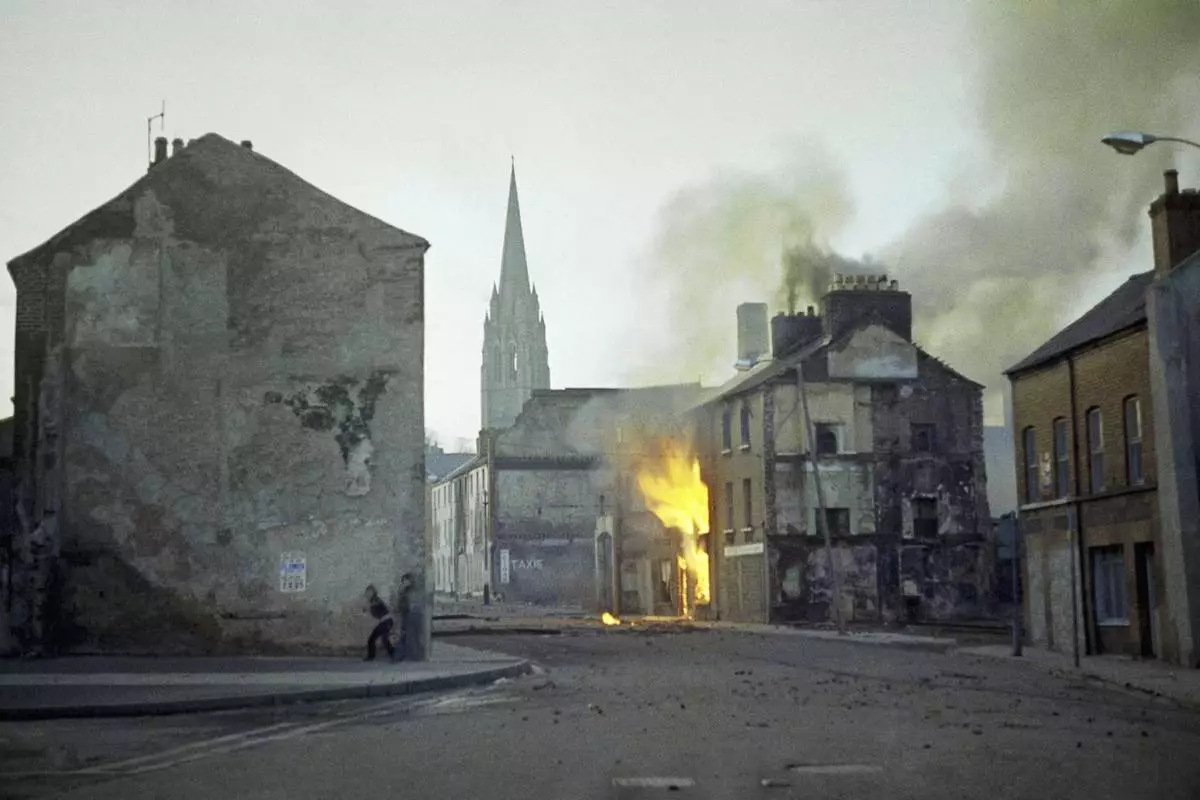
FILE - A building burns in the bogside district of Londonderry, Northern Ireland, in the aftermath of Bloody Sunday, in February 1972. (AP Photo/Michel Laurent, File)