As China's Xinjiang Uygur Autonomous Region accelerates high-level opening up and expands trade routes, local businesses are seizing new growth opportunities through booming international logistics and foreign trade.
At the cargo area of Urumqi Tianshan International Airport, heavy-duty trucks from across China fill the unloading zones. License plates bear names from dozens of provinces.
"Previously, few chose Xinjiang as a hub for air cargo. But now, just look, trucks from all over the country are lining up here to ship cargo. On busy days, we have 40 to 50 trucks waiting in line," said Wang Tianzhu, general manager of Xinjiang Wanshengtong Supply Chain Management Co.
Wang, whose company specializes in air logistics, credits much of this change to the introduction of bonded aviation fuel services in the Xinjiang Pilot Free Trade Zone (FTZ) in June 2024. This policy has dramatically reduced fuel costs by about 10,000 U.S. dollars per international flight, driving down overall shipping expenses and making Xinjiang a sought-after base for cargo shipments nationwide.
In under a year, his company's Europe-bound charter flight routes expanded from just one to 22. Weekly flights surged from one to three per day, and shipment volumes have grown tenfold.
"We used to worry about not having enough cargo to fill our planes. Now we're short on aircraft. We simply don't have enough capacity. For us, this is a tremendous development opportunity," said Wang.
Since the Xinjiang FTZ was officially launched in 2023, 129 pilot reform tasks aimed at opening up have been underway, with over 90 already implemented.
Today, Xinjiang is rapidly upgrading its role as a critical gateway for China's trade with Central Asia, Europe, and beyond.
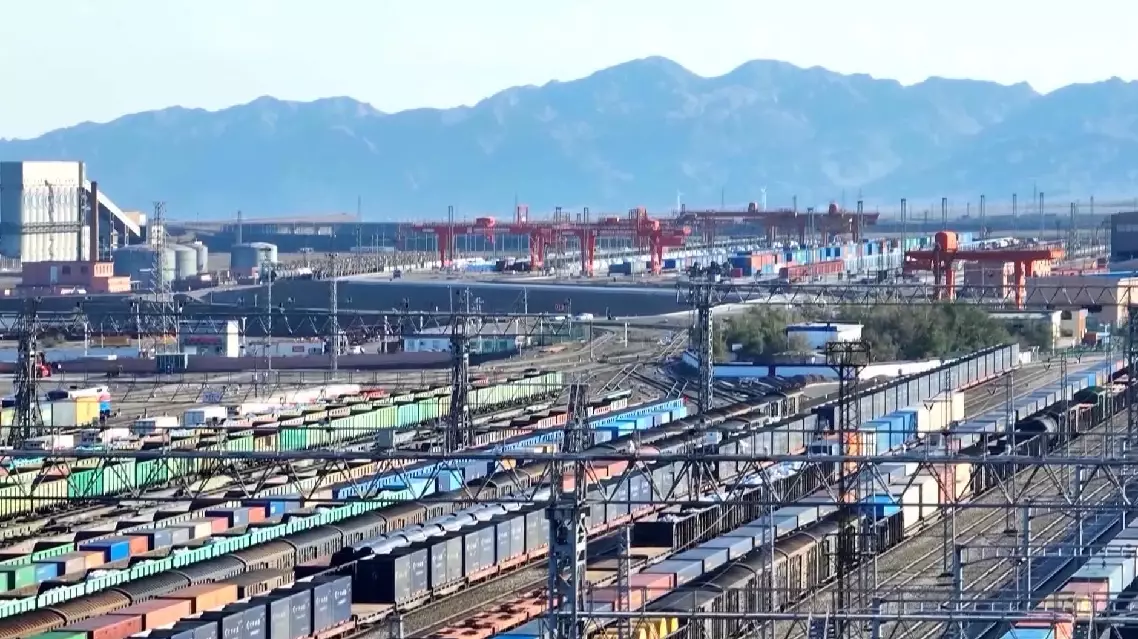
In terms of rail transport, the number of China-Europe and China-Central Asia freight trains passing through the region has surged from just 78 in 2013 to an expected 16,800 in 2024. The region also leads the country in road transport, operating 119 bilateral international road routes, ranking first in both the number of routes and their total distance. In air logistics, Xinjiang's international cargo flight routes have increased significantly, from only four in 2012 to 27 today, establishing direct connectivity with Asia, Africa, and Europe. Xinjiang's physical connectivity is translating into tangible trade growth. Wind turbines from Hami are now operating across the plains of Uzbekistan. Salmon from Ili Kazak Autonomous Prefecture are served on dinner tables in Malaysia. Kazakh flour is baked into traditional naan meat-stuffed buns in Xinjiang.
Since 2012, Xinjiang's foreign trade volume has surged from 158.9 billion yuan (22.3 billion U.S. dollars) to 434.1 billion yuan. Particularly since 2022, trade has leapt by over 100 billion yuan annually, reflecting steady and robust momentum.
Meanwhile, Xinjiang's global trade network is expanding. The number of countries and regions trading with the region has grown from 193 in 2012 to 223 in 2024, evidence of an ever-growing international "circle of friends."

Xinjiang trade soars with wider opening up
Xinjiang trade soars with wider opening up