McDonald’s said Monday it plans to invest $200 million over the next seven years to promote regenerative agriculture practices on cattle ranches.
The Chicago burger giant said the investment was its largest to date in support of regenerative agriculture in the U.S. The company has also funded regenerative projects on potato farms in Canada and Europe.
“As a brand that serves more than 90% of Americans every year, we recognize the responsibility we have to help safeguard our food systems for long-term vitality,” Cesar Piña, McDonald’s chief supply chain officer for North America, said in a statement.
Regenerative techniques aim to conserve water, enhance soil health and reduce the need for synthetic chemicals and fertilizers. Other big companies, including General Mills, Nestle, Walmart and PepsiCo, have also been investing in regenerative farming projects in recent years.
On cattle ranches, ranchers practicing regenerative agriculture move cattle frequently and let the land recover for weeks or months. That helps produce more grass with deeper roots, which take more carbon from the air to help improve soil.
McDonald’s said its investment will help accelerate regenerative grazing and water and wildlife conservation on ranches spanning 4 million acres in up to 38 states.
McDonald’s is working with the National Fish and Wildlife Foundation, which will independently award competitive grants to organizations that will assist participating ranchers. The company said some of its suppliers, including Cargill, Golden State Foods and Coca-Cola, are also providing funding to the foundation.
Jeff Trandahl, the executive director and CEO of the National Fish and Wildlife Foundation, said regenerative practices can ultimately improve the productivity of grasslands and increase ranches’ profitability. The foundation expects the first round of awards will be announced in January.
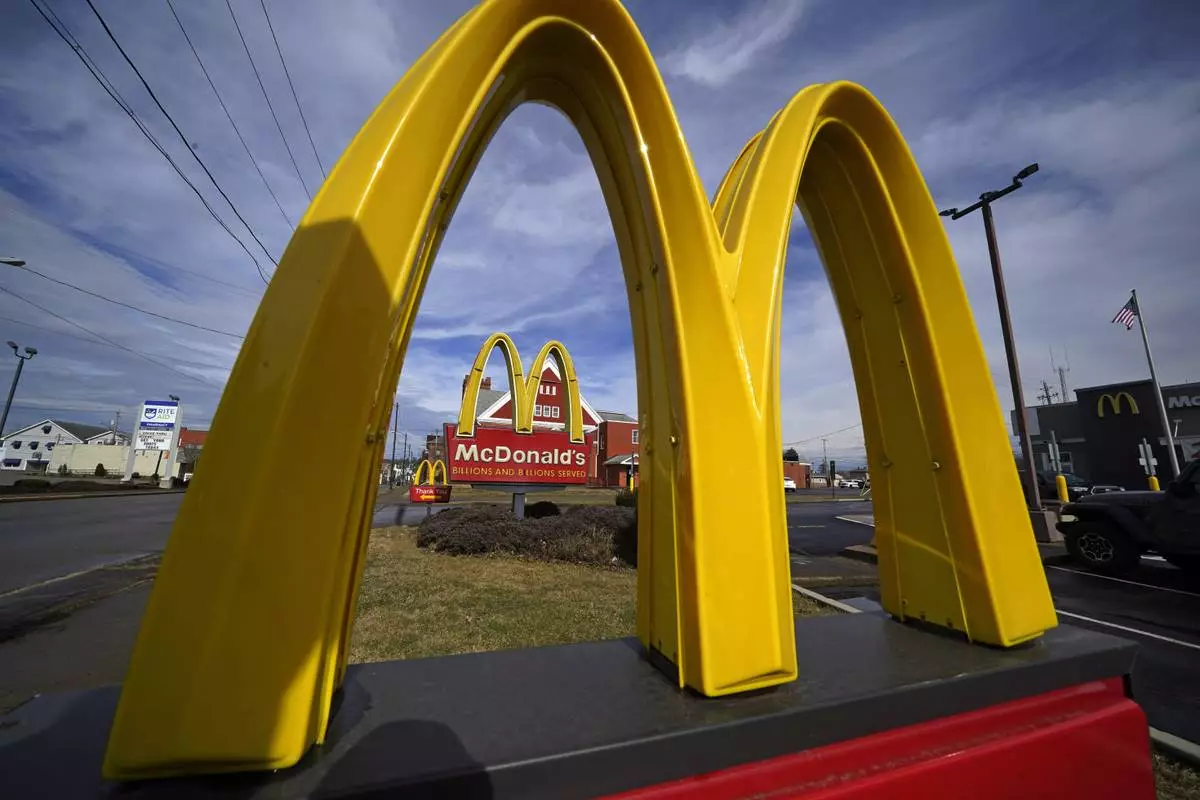
FILE - McDonald's restaurant signs are shown in in East Palestine, Ohio, Feb. 9, 2023. (AP Photo/Gene J. Puskar, File)
CAPE CANAVERAL, Fla. (AP) — NASA fueled its moon rocket Wednesday for humanity’s first lunar trip in more than half a century, aiming for an evening liftoff with four astronauts.
Tensions were high as hydrogen fuel started flowing into the rocket hours ahead of the planned launch. Dangerous hydrogen leaks erupted during a countdown test earlier this year, forcing a lengthy flight delay.
But no significant leaks occurred by the time Wednesday's fueling wrapped up. The launch team loaded more than 700,000 gallons of fuel (2.6 million liters) into the 32-story Space Launch System rocket on the pad, setting the stage for the Artemis II crew to board.
“It is time to fly,” commander Reid Wiseman said on the eve of launch via X. Favorable weather was forecast.
Three Americans and one Canadian will fly around the moon without stopping or even orbiting — then head straight back for a Pacific splashdown. They will set a new distance record for the farthest humans have traveled from Earth as they zoom some 4,000 miles (6,400 kilometers) beyond the moon and then hang a U-turn.
Astronauts last flew to the moon during Apollo 17 in 1972.
Artemis II is the opening shot of NASA's grand plans for a permanent moon base. The space program is aiming for a moon landing near the lunar south pole in 2028.
“The next era of exploration begins,” NASA Administrator Jared Isaacman posted on X.
Best wishes already have started to pour in, including from England's King Charles III to Canadian Space Agency astronaut Jeremy Hansen.
Hansen will become the first non-U. S. citizen to launch to the moon. The crew also includes Christina Koch and Victor Glover, the first woman and first Black astronaut, respectively, destined for the moon.
“In this historic moment, you stand as a bridge between nations and generations,” the king wrote in a letter to Hansen, “and I commend you for your courage, discipline and vision that have brought you to this threshold.”
The Associated Press Health and Science Department receives support from the Howard Hughes Medical Institute’s Department of Science Education and the Robert Wood Johnson Foundation. The AP is solely responsible for all content.
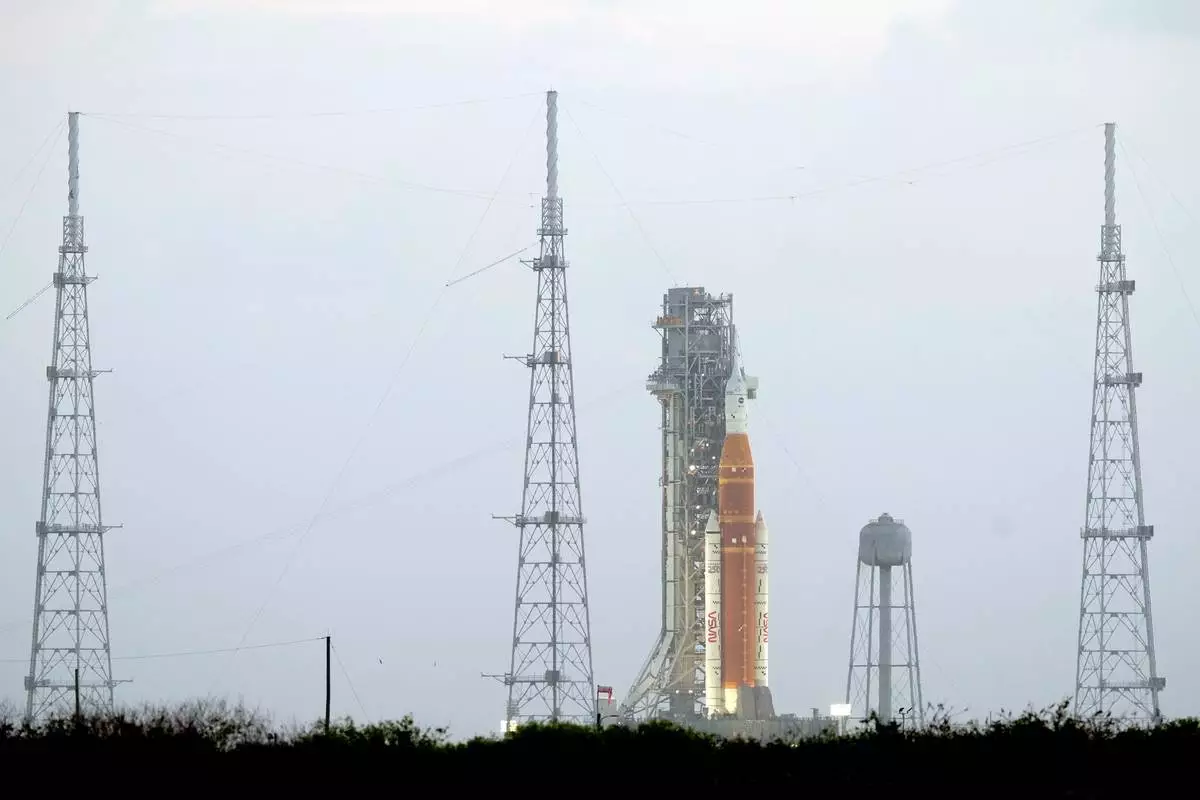
NASA's Artermis II moon rocket sits on Launch Pad 39-B at the Kennedy Space Center hours ahead of a planned launch attempt Wednesday, April 1, 2026, in Cape Canaveral, Fla. (AP Photo/Chris O'Meara)
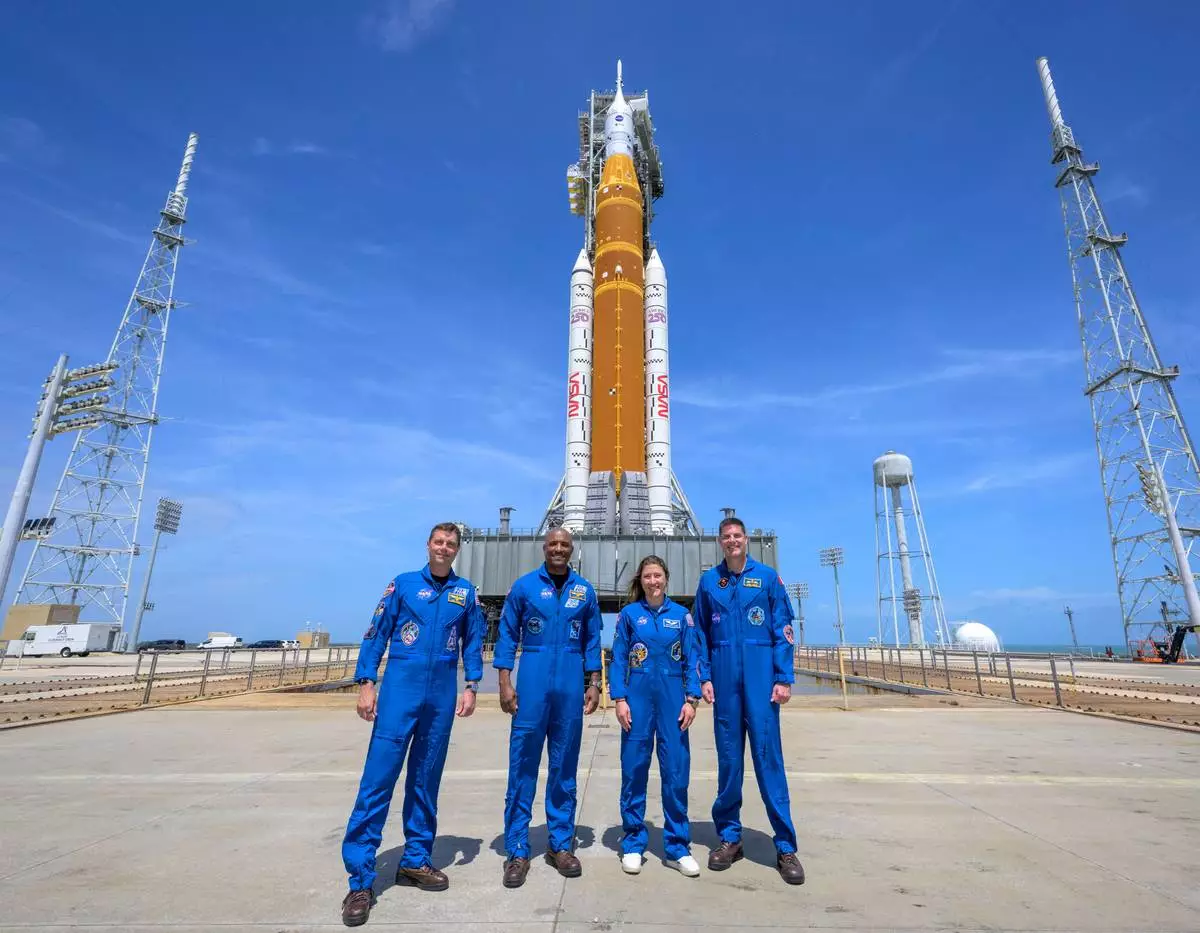
This photo provided by NASA shows NASA astronauts Reid Wiseman, Artemis II commander, from left, Victor Glover, Artemis II pilot, Christina Koch, Artemis II mission specialist, and CSA (Canadian Space Agency) astronaut Jeremy Hansen, Artemis II mission specialist, right, in a group photograph as they visit NASA's Artemis II SLS (Space Launch System) rocket and Orion spacecraft, Monday, March 30, 2026, at Launch Complex 39B of NASA's Kennedy Space Center, in Cape Canaveral, Fla. (Bill Ingalls/NASA via AP)
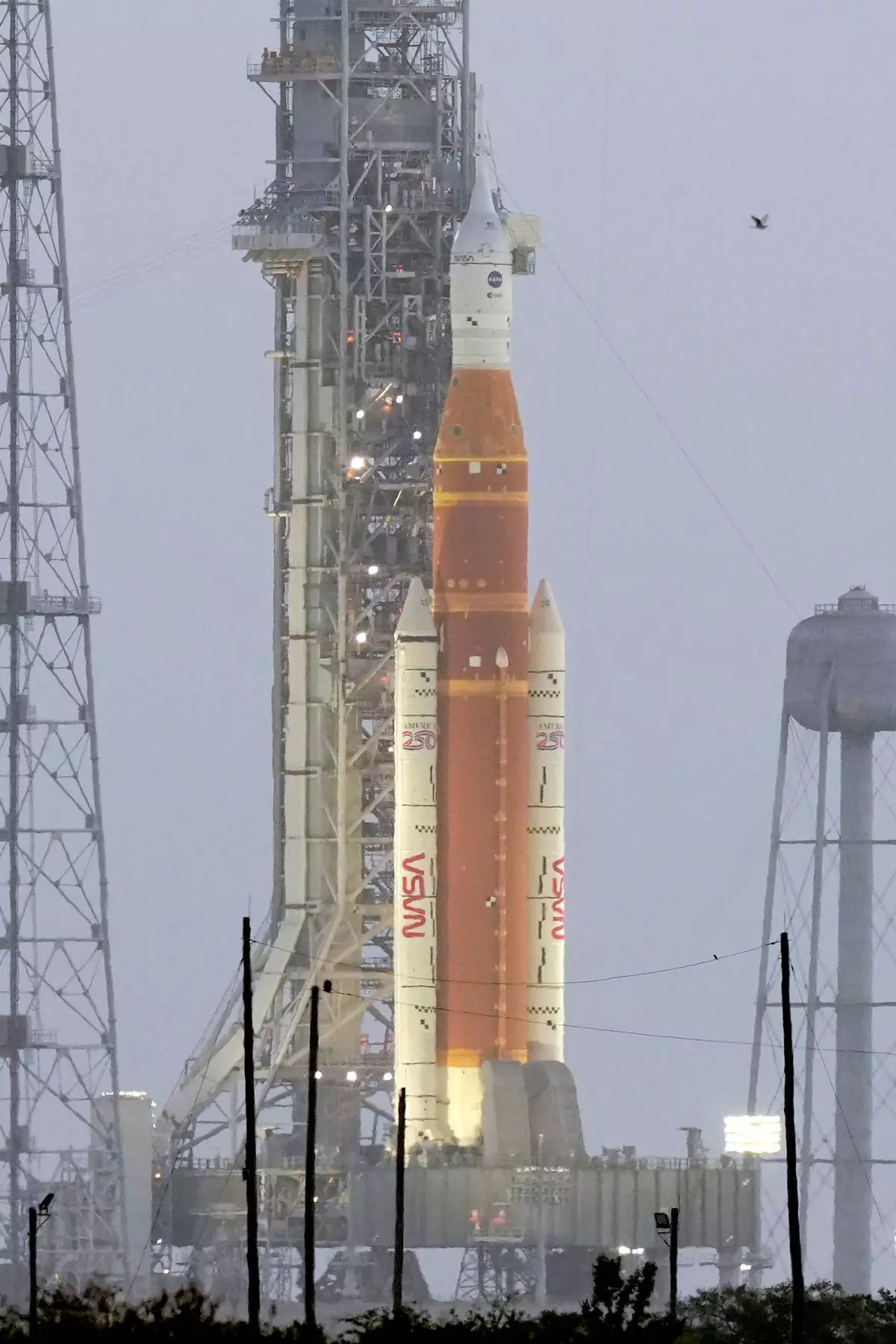
NASA's Artermis II moon rocket sits on Launch Pad 39-B at the Kennedy Space Center hours ahead of planned liftoff Wednesday, April 1, 2026, in Cape Canaveral, Fla. (AP Photo/Chris O'Meara)