MUSCATINE, Iowa (AP) — Days after an assailant’s bullet tore through two of his limbs, Felipe de Jesus Hernandez Marcelo hobbled out of the hospital on crutches.
Hernandez had nearly died in the early morning of June 21 when, police say, a troubled young man shot him during an attempted robbery in Muscatine, Iowa. A quick emergency response saved his life, but the shooting left the 28-year-old father wounded where a bullet traveled through his arm and leg.
Click to Gallery
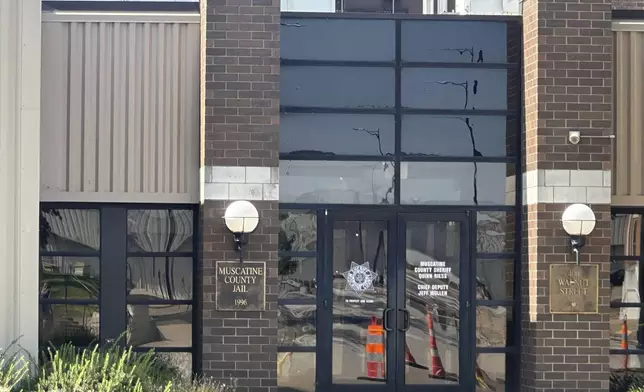
The Muscatine County Jail where Felipe de Jesus Hernandez Marcelo has been detained and doubles as an Immigration and Customs Enforcement holding facility, since late June is shown in Muscatine, Iowa, on Monday, Sept. 8, 2025. (AP Photo/Ryan J. Foley)
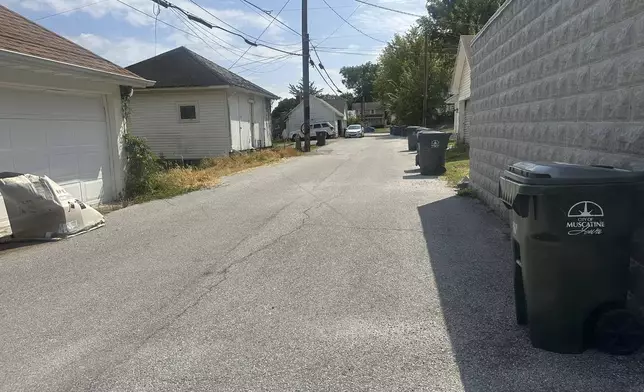
An alley in a residential neighborhood is shown in Muscatine, Iowa, on Sept. 8, 2025, where police say Felipe de Jesus Hernandez Marcelo was lured to the alley before he was shot on June 21. (AP photo by Ryan J. Foley).
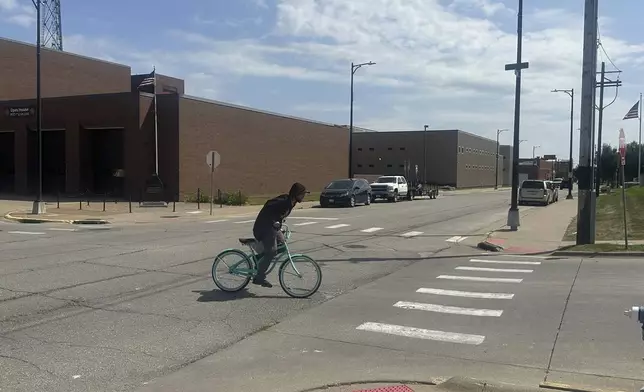
A cyclist crosses an intersection, on Monday, Sept. 8, 2025, where witnesses found Felipe de Jesus Hernandez Marcelo covered in blood after he was shot on June 21, in Muscatine, Iowa. (AP Photo/Ryan J. Foley)
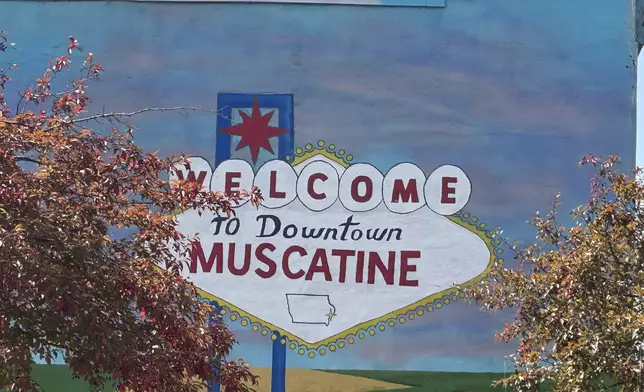
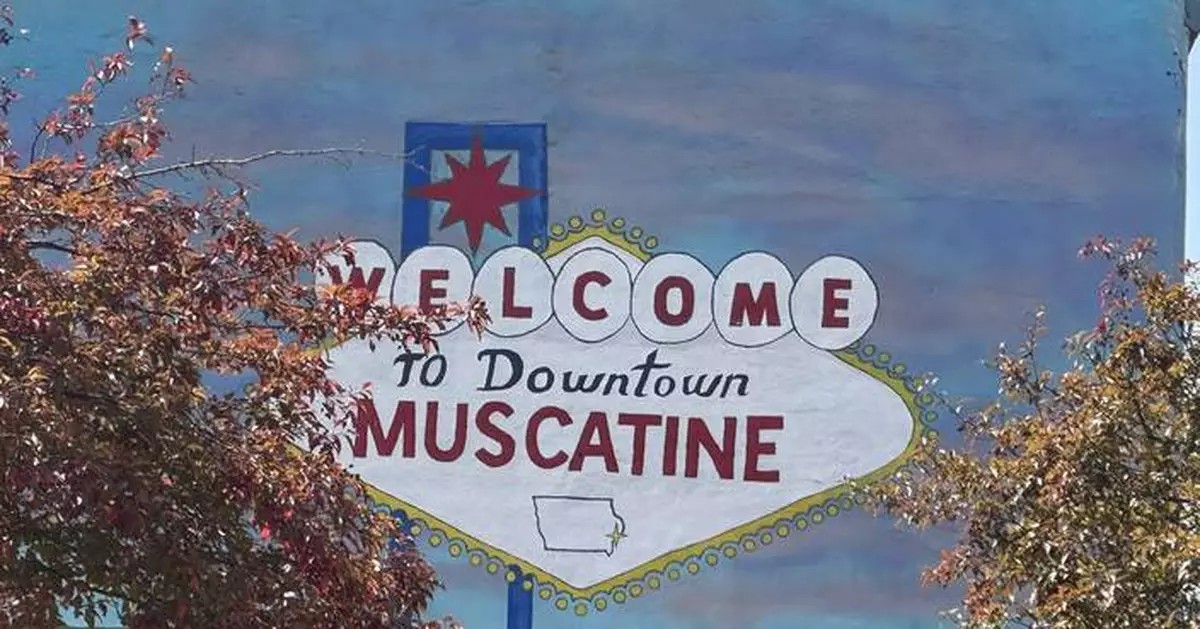
A mural on the side of a building is shown in downtown Muscatine, Iowa, on Monday, Sept. 8, 2025. (AP Photo/Ryan J. Foley.)
Police had seized the car Hernandez was driving when he was shot and the $462 cash it contained as evidence. A friend took him to the police station to ask for his belongings on June 24 — not knowing the visit could mark the last time he enjoyed freedom in the United States.
Hernandez is one of a growing number of crime victims and relatives who have been arrested and indefinitely detained pending removal proceedings during the Trump administration’s crackdown on illegal immigration.
In January, Immigration and Customs Enforcement rescinded a policy that had shielded many victims from detention and removal. The number of people applying for visas that allow some victims and their families to remain in the country has plummeted since then. Others are being detained as they go through the lengthy application process. Of those detained, many have been declared ineligible for release under another ICE policy change.
Critics say the outcome is not only cruel to victims and their families but is harming public safety by making those who are in the U.S. illegally unlikely to report crimes and cooperate with police.
“This type of thing is now the new normal. This scenario is happening every day in every city,” said Dan Kowalski, a retired attorney who has been an expert on immigration law for decades. “Any contact with any level or kind of state or federal law enforcement, civil or criminal, puts you in danger of detention by ICE.”
ICE didn't return messages seeking comment. Its new policy cites an executive order signed by President Donald Trump, titled “Protecting the American People Against Invasion,” which calls for the “ total and efficient enforcement " of immigration laws.
A native of Mexico who entered the U.S. illegally, Hernandez has been in federal custody for all of the 2 ½ months since he visited his police station. Police arrested him on an old warrant for failing to pay a traffic ticket, and he was turned over to ICE custody within hours.
Hernandez has been apart from his 9-year-old son, unable attend medical appointments critical for recovering from his gunshot wounds, and unable to work the construction job that paid his family's bills.
He was denied medicine for the first five days as he suffered in excruciating pain, he said.
“I was locked in a single cell for several days. It felt like forever,” Hernandez recalled this month in court testimony, before a federal judge ruled that his indefinite federal detention without a bond hearing was illegal.
It was 4 a.m. on June 21 when Hernandez cried out for help in downtown Muscatine, a city of 24,000 along the Mississippi River where he had lived with relatives since he arrived in the U.S. in 2021.
Witnesses saw Hernandez behind the wheel of his Volkswagen Jetta covered in blood as he struggled to convey what happened to them in Spanish. A woman called 911, saying she believed he had been stabbed in the leg.
Officers arrived from the nearby police station in minutes, and found blood pouring out of Hernandez’s inner thigh and pooling on the seat. One wrapped a tourniquet around the wound to try to stop the blooding as Hernandez appeared to close his eyes and drift in and out of consciousness.
Investigators learned that he hadn’t been stabbed, but shot with a bullet that traveled through his left wrist and right thigh before exiting onto the floor of the driver’s seat.
An ambulance took him to a nearby hospital emergency room where doctors concluded he needed to be transported 40 miles away for advanced treatment at the University of Iowa hospital.
There, doctors performed a surgery to remove bullet and bone fragments and gave him blood transfusions. His lawyer says those interventions saved Hernandez’s life, but left him with him with a $27,000 hospital bill.
Friends were stunned by the attack, saying Hernandez was a hard worker who avoided drugs and alcohol. He’d stayed out of trouble during his more than four years in Muscatine with one exception: He’d been pulled over and ticketed a couple times for driving without a license.
When Hernandez arrived at the police station seeking his belongings, investigators were still looking for the suspects involved in his attempted robbery and shooting.
Police told Hernandez that his car and cash were at an impound lot and he couldn't get them. Hernandez said an officer told him to wait while they researched his criminal history. He told them about the tickets.
Police discovered Hernandez had a 7-month-old bench warrant, stemming from his failure to pay a $250 ticket for driving with a suspended license in November 2024. A judge issued the warrant last December after Hernandez didn’t show up for a hearing that he said he didn't know about.
A few months earlier, Muscatine Police Chief Anthony Kies had assured the city where roughly one in five residents is Hispanic that his officers would never inquire about immigration status. He insisted then that “any resident who is a victim or witness of a crime should not be afraid to contact our department,” and promised that officers would only work with federal immigration authorities in cases involving violent criminals.
The chief said in an interview his department had no choice but to arrest Hernandez and take him to the Muscatine County Jail, which is run by the sheriff's office and has long doubled as an ICE holding facility. ICE took custody of Hernandez hours later pending removal proceedings, Kies said.
“If you are arrested for a local crime and you are illegal, they will make contact with ICE at the jail and that’s how that’s dealt with,” the chief said, adding that he supported the policy.
Hernandez has been held at the jail since, walking with a limp, experiencing frequent pain and a leg wound that keeps reopening.
He testified that he was initially denied the medication prescribed to him and that a jail officer told him only after five days of detention that he had to fill out a form in order to see a nurse. He's received pain medication sporadically since then, he said.
His lawyer Emily Rebelskey said Hernandez has been unable to attend follow-up appointments at a trauma clinic and is not receiving any physical rehabilitation services.
“Petitioner’s chances of ever recovering normal use of his leg dwindle with each passing day that he is confined to Muscatine County Jail,” she wrote in a recent court filing seeking his release on bond.
Due to a miscommunication with an ICE officer, Hernandez wasn't allowed to attend an immigration court bond hearing by video on July 24. That hearing was rescheduled for three weeks later, when an immigration judge agreed with ICE that he was subject to mandatory detention and ineligible for bond.
Hernandez said his mother is taking care of his 9-year-old son and that he's been only able to talk to the boy twice.
Hernandez's mother, Guadalupe Hernandez Marcelo, said she hasn't visited her son in jail because she's afraid of authorities. She said her grandson is sad because he feels that his father abandoned him. The family has taken out loans to pay its bills.
“I just feel like what's happening to my son is very unfair,” she testified. "They keep him locked up where we can’t go and visit him. We feel like we have all been separated.”
Hernandez admitted he was not initially truthful about the location and circumstances of the shooting because he didn’t want family to know the embarrassing details, according to police.
Investigators obtained social media messages showing he had been in touch with a 20-year-old woman, Kimber Kallenberger, after she asked for money and food on a community Facebook forum.
Kallenberger later told police she falsely told Hernandez she would have sex with him for cash in a plot to set him up to be robbed by her boyfriend. The plan was for her boyfriend, 18-year-old Justin Bass, to intimidate Hernandez with a gun to get the money but not to shoot him, she said.
After Hernandez pulled up to meet her in an alley in a quiet neighborhood, he refused to give the money to Kallenberger. Bass shot him, police say, and took off running. A wounded Hernandez drove for several blocks before asking witnesses for help.
The two suspects were arrested July 2 after, investigators say, Bass nearly died in a drug overdose.
Kallenberger pleaded guilty to conspiracy to commit a forcible felony and prostitution under a plea agreement that could spare her prison time. Bass is awaiting trial on first-degree robbery and other charges.
Hernandez is one of thousands of immigrants who would likely never have been arrested by ICE under other administrations, let alone held without a chance to post bond.
In January, ICE rescinded a policy that called on agents to generally avoid detaining and seeking to remove immigrants who have been crime victims. It protected those carrying so-called U and T visas that allow crime and human trafficking victims and their relatives to remain in the country. The protections extended to those who had applied for such visas and were awaiting decisions, which can take years to process.
Hernandez is seeking to apply for a U visa, and would appear to be eligible as the victim of a felony assault and key witness against the two charged in the attack. But the Muscatine County prosecutor Jim Barry has yet to certify his eligibility, according to Hernandez's attorney. Barry didn't respond to messages.
The Biden-era policy also called on ICE agents to look for signs immigrants had been victimized and to consider that as “a positive discretionary factor” when deciding whether to detain them. The goal was to avoid discouraging immigrant victims from cooperating with police in reporting and solving crimes.
But some conservatives have argued that victimization alone should not allow those in the country illegally to stay.
The new policy allows ICE agents to detain crime victims, including the U and T visa holders, as long as they check with police “to ensure criminal investigative and other enforcement actions will not be compromised." Agents aren’t required to look for any evidence of victimization.
The number of applications for U visas dropped by nearly half in the quarter that ended in March, which included the first 2 ½ months of the second Trump administration, according to data from U.S. Citizenship and Immigration Services.
Immigration lawyer Bethany Hoffmann said victims are rightly concerned that an application could put them on the government's radar. She said one of her clients, whose wife had been a kidnapping victim, was arrested by ICE when he showed up to an appointment to be fingerprinted as part of the U visa application process.
“I have been practicing for 17 years and I have never seen that before,” she said, adding that the man had no criminal history but was subject to a 10-year-old removal order.
Compounding the impact is another new practice in which ICE and immigration judges have required the indefinite detention of anyone who entered the country without permission.
Over the past 30 years, immigration lawyers say many such detainees would have been able to be released pending removal proceedings as long as they were deemed not to be a flight risk or danger to the community. With a steady job, local relatives and a minimal criminal history, Hernandez would be a prime candidate for release.
In a Sept. 5 decision, the Board of Immigration Appeals agreed with ICE's new position that all individuals who crossed the border without permission are ineligible for bond, regardless of how long they have been in the country.
Several federal judges have rejected that argument. U.S. District Judge Rebecca Goodgame Ebinger in Iowa became the latest on Sept. 10, ruling that Hernandez was not subject to mandatory detention. She ordered immigration authorities to provide Hernandez a bond hearing within seven days, saying his detention was causing “irreparable harm." A hearing is scheduled for Wednesday.
At the end of his testimony on Sept. 5, Hernandez pleaded with the judge to protect his family from retaliation, saying they had done nothing wrong.
Referring to Mexico, he said, “I come from a country where power is abused, and people use power to hurt people. I don’t want that to happen.”
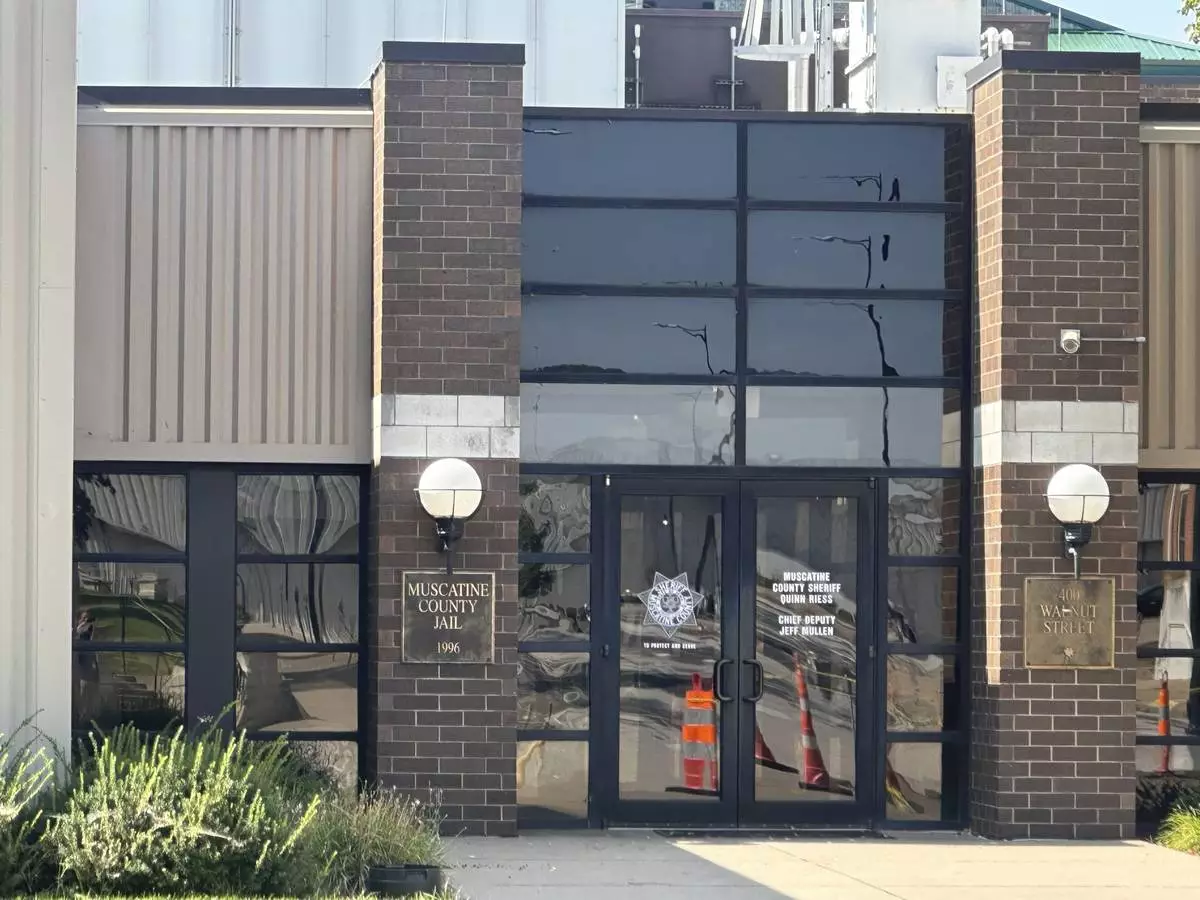
The Muscatine County Jail where Felipe de Jesus Hernandez Marcelo has been detained and doubles as an Immigration and Customs Enforcement holding facility, since late June is shown in Muscatine, Iowa, on Monday, Sept. 8, 2025. (AP Photo/Ryan J. Foley)
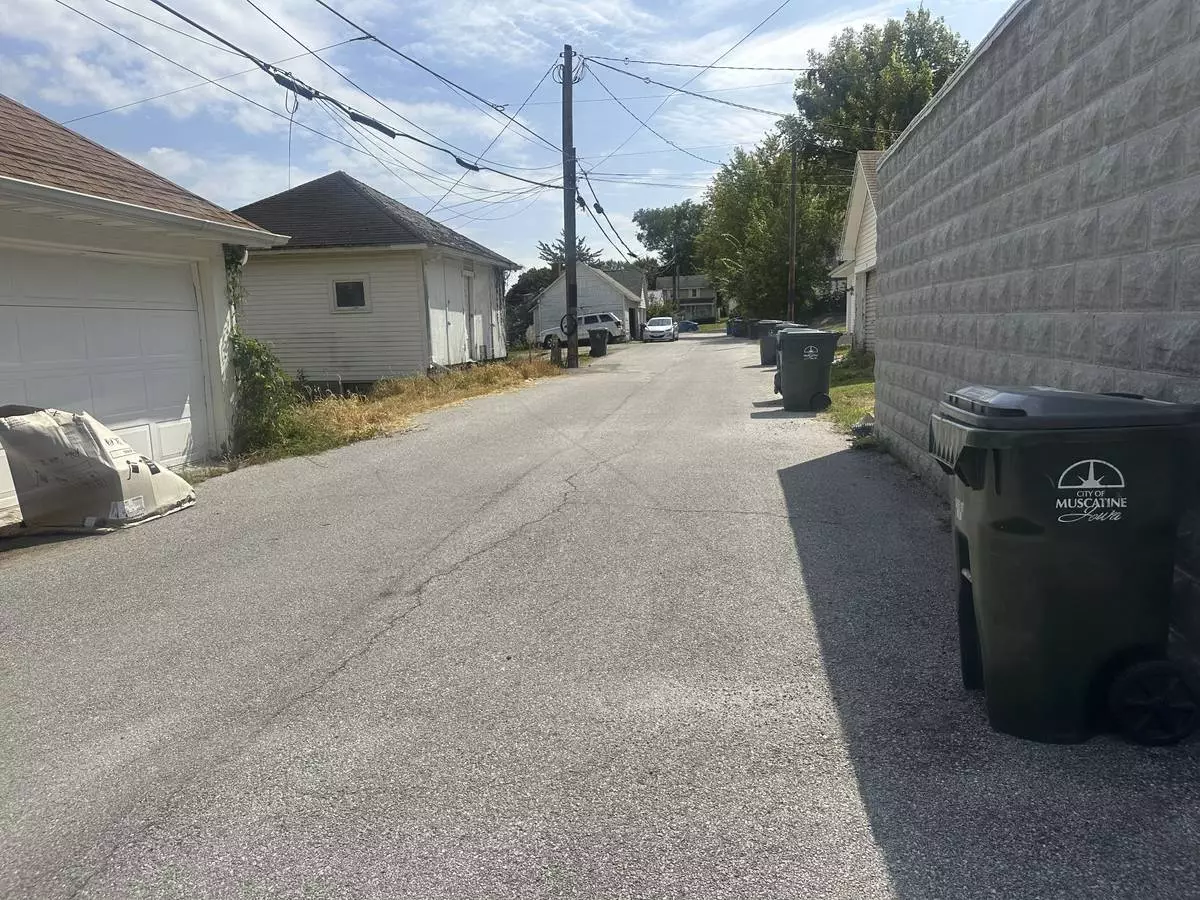
An alley in a residential neighborhood is shown in Muscatine, Iowa, on Sept. 8, 2025, where police say Felipe de Jesus Hernandez Marcelo was lured to the alley before he was shot on June 21. (AP photo by Ryan J. Foley).
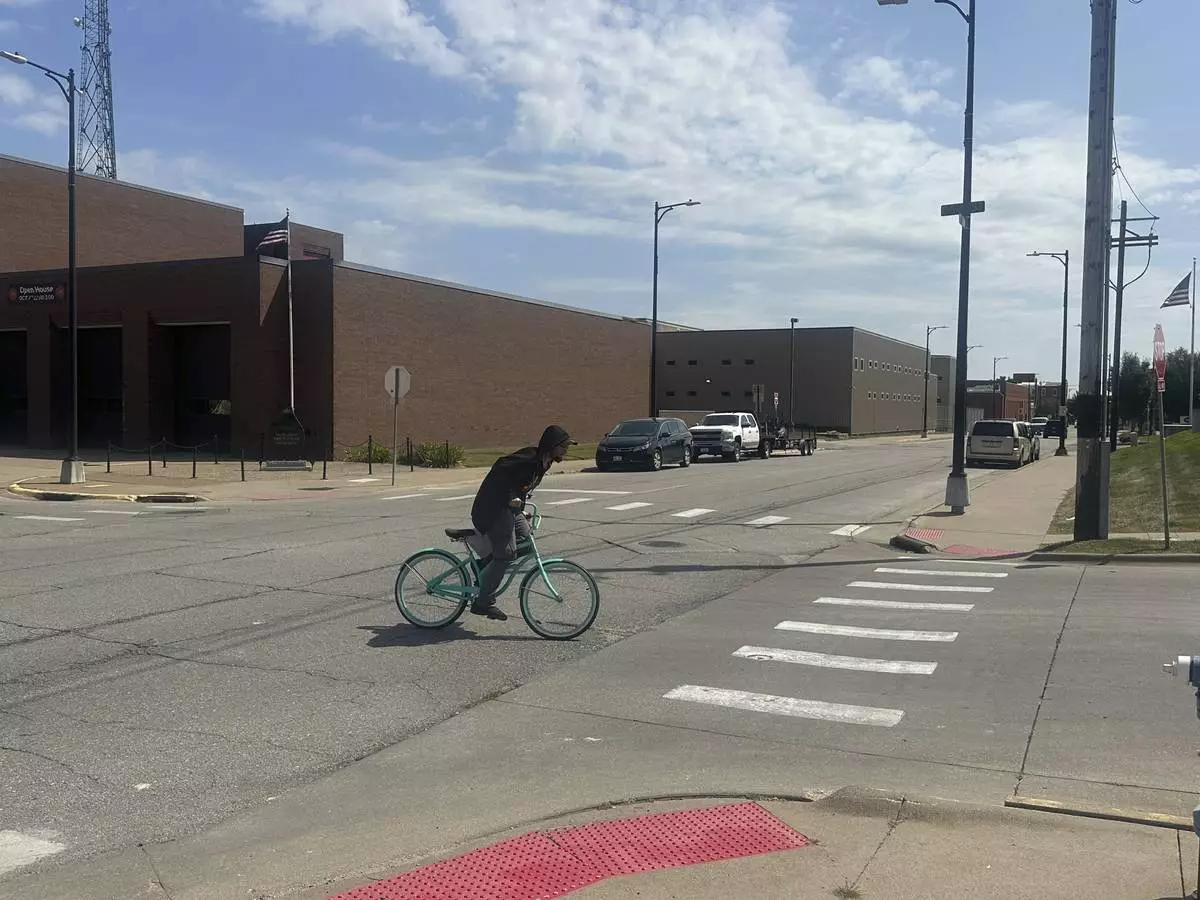
A cyclist crosses an intersection, on Monday, Sept. 8, 2025, where witnesses found Felipe de Jesus Hernandez Marcelo covered in blood after he was shot on June 21, in Muscatine, Iowa. (AP Photo/Ryan J. Foley)

A mural on the side of a building is shown in downtown Muscatine, Iowa, on Monday, Sept. 8, 2025. (AP Photo/Ryan J. Foley.)