BLANTYRE, Malawi (AP) — Malawi began counting votes Tuesday in a presidential election that's expected to be a tight race between old rivals that could go to a runoff and comes at a time of economic turmoil in one of the world’s least-developed countries.
Voters faced a choice between giving President Lazarus Chakwera, 70, a second term or selecting another leader to solve the southern African nation’s soaring inflation, cost-of-living crisis and critical fuel shortages.
Click to Gallery
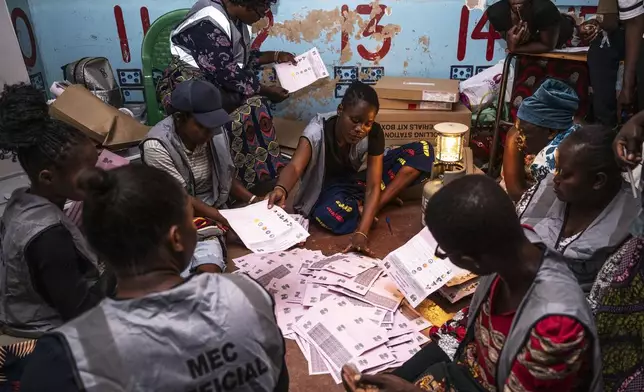
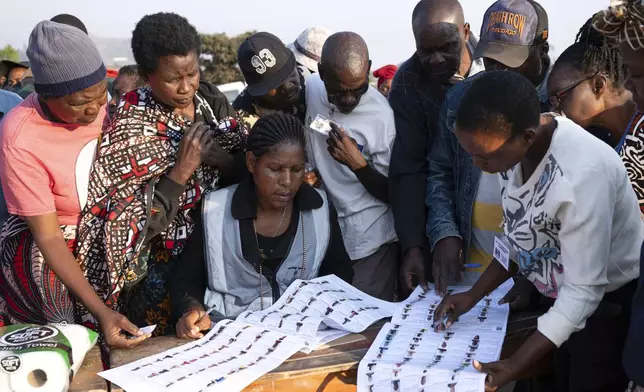
Election volunteers count ballots in Blantyre, Malawi, Tuesday, Sept. 16, 2025. (AP Photo/Thoko Chikondi)
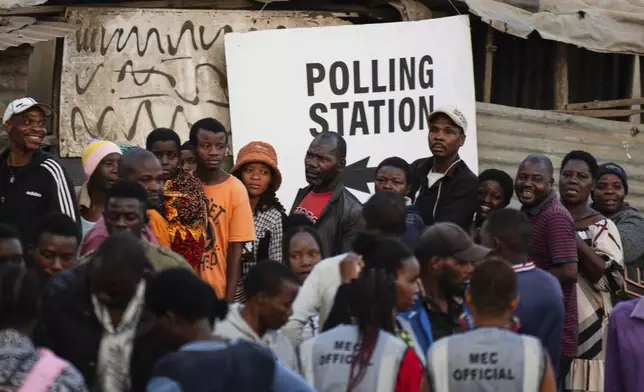
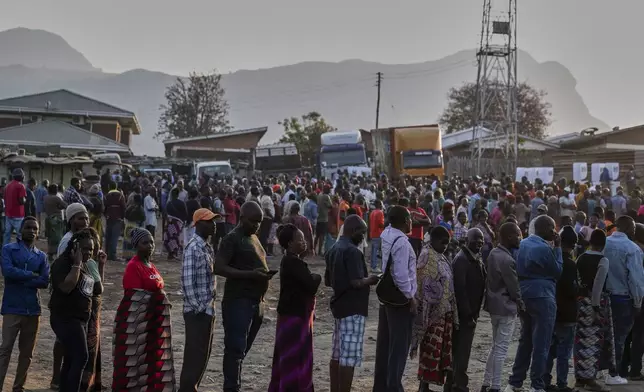
People line up to cast their votes in Blantyre, Malawi, Tuesday, Sept. 16, 2025. (AP Photo/Thoko Chikondi)
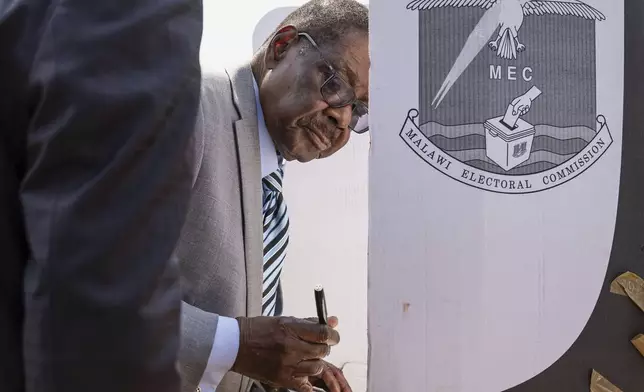
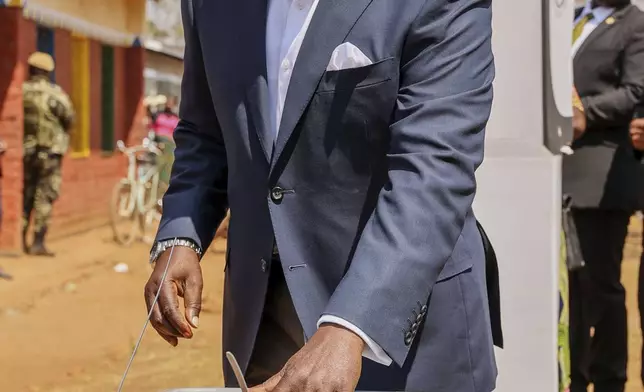
Malawi's presidential candidate, former President Peter Mutharika stands on a voting booth as he prepares to cast his vote in Thyolo District, Malawi, Tuesday, Sept. 16, 2025. (AP Photo/Thoko Chikondi)
Malawi's President Lazarus Chakwera casting his vote at Malembo polling station in Lilongwe, Malawi, Tuesday, Sept. 16, 2025. (AP Photo/Govati Nyirenda)
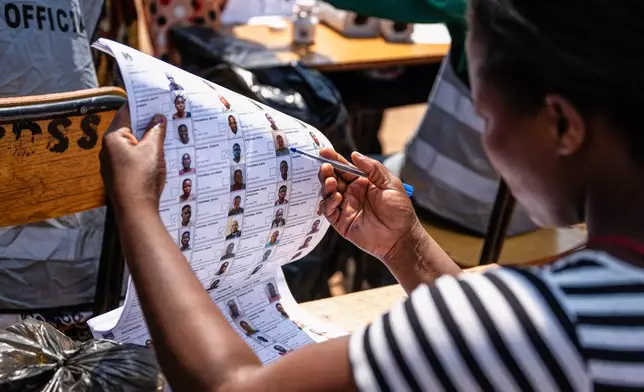
An election worker checks names in electoral rolls at a polling station in Thyolo District, Malawi, Tuesday, Sept. 16, 2025. (AP Photo/Thoko Chikondi)
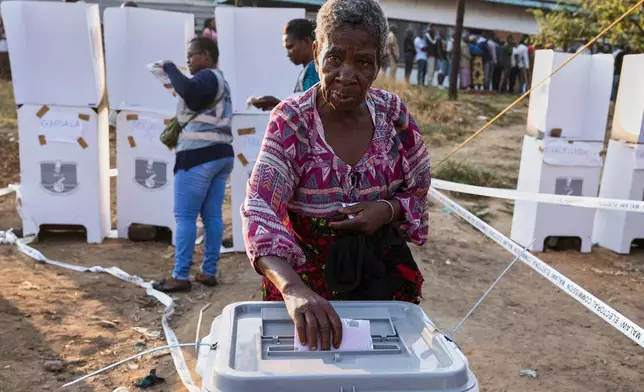
An elderly woman casts her vote during the elections, where the country will choose a president, lawmakers and local government representatives, in Blantyre, Malawi, Tuesday, Sept. 16, 2025. (AP Photo/Thoko Chikondi)
Election worker check names from electoral rolls at a polling station in Blantyre, Malawi, Tuesday, Sept. 16, 2025. (AP Photo/Thoko Chikondi)
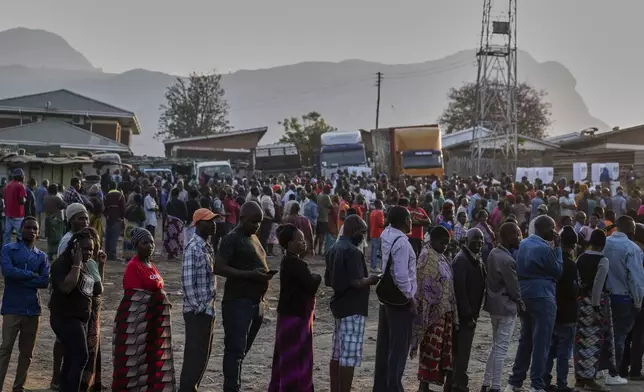
People line up to cast their votes in Blantyre, Malawi, Tuesday, Sept. 16, 2025. (AP Photo/Thoko Chikondi)
People line up to cast their votes in Blantyre, Malawi, Tuesday, Sept. 16, 2025. (AP Photo/Thoko Chikondi)
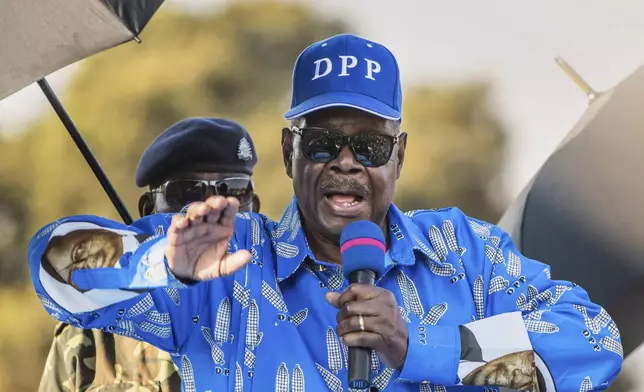
Democratic Progressive Party (DPP) leader and presidential candidate Peter Mutharika speaks to supporters at a campaign rally in Zomba, Malawi, Wednesday, Sept. 10, 2025. (AP Photo/Thoko Chikondi)
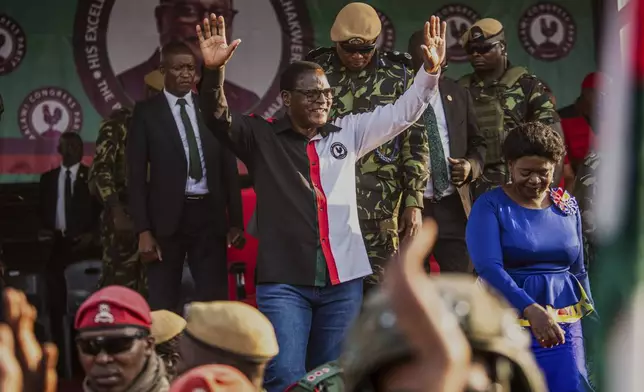
Malawi Congress Party (MCP) leader and Malawian President Lazarus Chakwera waves at supporters at a campaign rally in Blantyre, Malawi, Sunday, Sept. 7, 2025. (AP Photo/Thoko Chikondi)
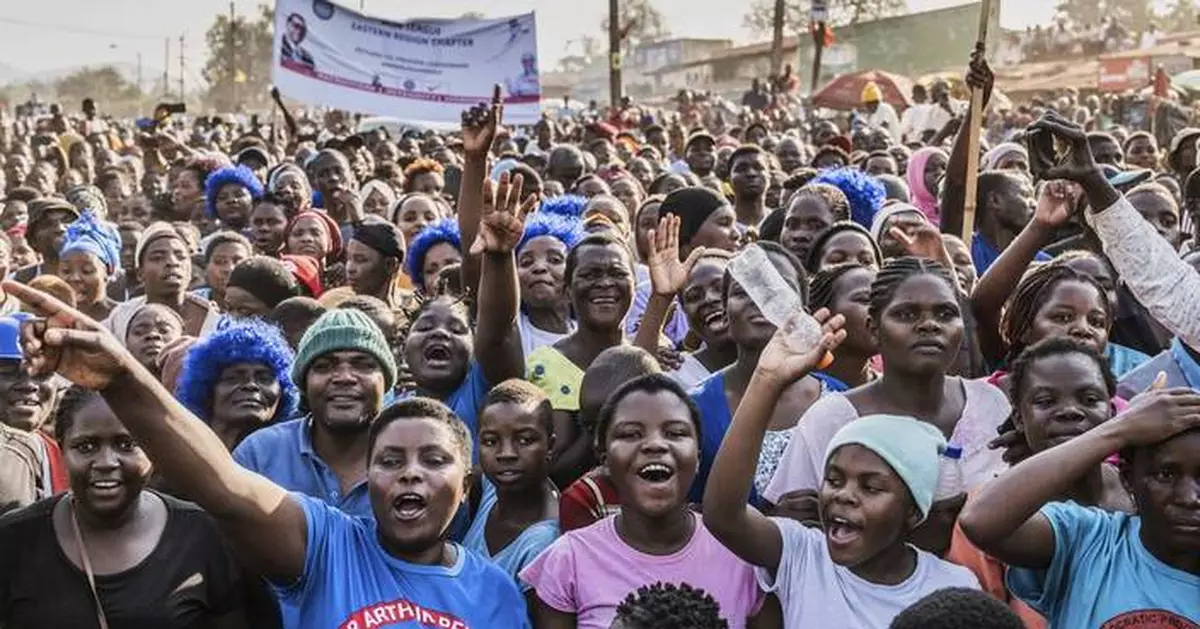
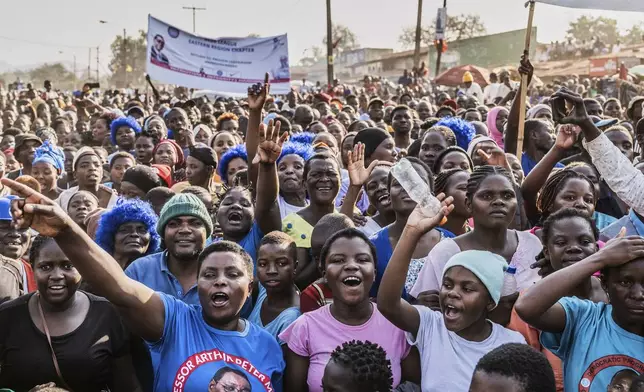
Democratic Progressive Party (DPP) supporters cheer at a campaign rally in Zomba, Malawi, Wednesday, Sept. 10, 2025. (AP Photo/Thoko Chikondi)
Among the 16 other candidates, former President Peter Mutharika, 85, is viewed as a strong challenger to return as leader.
The two rivals faced off in 2019, when Mutharika's victory as the incumbent over challenger Chakwera was nullified by a court because of widespread irregularities. Chakwera won an historic rerun of that vote in 2020.
While Chakwera’s election was greeted with an outpouring of public support, the national mood has changed after five hard years for a largely rural country that already had high levels of poverty.
Polls closed in Tuesday's one-day vote and counting began by late afternoon, according to election officials. By law the results must be announced within a week. Voters will also choose the makeup of Parliament and more than 500 local government representatives.
Another former president, Joyce Banda, is also running for the top position as is Vice President Michael Usi, but analysts see it as a two-horse race between Chakwera of the Malawi Congress Party and Mutharika of the Democratic Progressive Party.
“The cost of living is high, and with that many problems have increased,” said Patrick Holeya, a 48-year-old father of six from Thyolo.
Holeya said he cast a vote for Mutharika in the former president’s home district.
“I hope my vote will lead to caring leadership. For too long politicians have snubbed us, but today we are the kingmakers,” he said.
These are the first national elections since 2020, when Malawi redid the chaotic 2019 presidential election that was nullified by a court ruling.
Chakwera, a former theology instructor and preacher, won the redo after Mutharika’s victory was ruled to be fraudulent.
It was only the second time in Africa that a presidential election result was canceled and redone and the first time an African incumbent was removed in a redo election.
Since then, inflation has surged from around 8% to 27% under Chakwera and there are critical shortages of fuel and sugar. Long lines at gas stations have become part of daily life, while stark price increases have meant everyday food items like the staple corn have become unaffordable for many.
Cyclone Freddy in 2023 and an El Niño-inspired drought in 2024 destroyed crops, worsening hardship in a country where more than 80% of the population of 21 million live in rural areas and rely on agriculture.
A military plane crash last year killed Vice President Saulos Chilima, who was seen as a leader in waiting.
Malawians waited patiently in voting queues in the capital, Lilongwe, and the country's commercial hub, Blantyre, as polls opened soon after 6 a.m.
Chakwera voted at an elementary school in Lilongwe alongside his wife but didn't make any remarks. During the campaign he acknowledged the problems but said he had plans to resolve them, and that other candidates were making “empty promises.”
Mutharika said after voting that the elections “will change the direction of this country," adding that "It will bring a new government and maybe the new government will try its best to correct some of the problems.”
The presidential election is likely to go to a runoff after the failed 2019 vote prompted a change in Malawian electoral law. The format implemented after 2020 requires the winner to receive more than 50% of the vote. Because no candidate is expected to get more than 50% in the first round, a runoff and another vote pitting Chakwera against Mutharika is expected.
Any runoff must be held within 30 days of the results announcement.
Mutharika has a long history in Malawian politics, having served in the Cabinet under his older brother, Bingu wa Mutharika, who was president from 2004 to 2012. Peter Mutharika then served as president from 2014 to 2020. He is taking another shot at the presidency despite a court finding evidence of fraud in his win six years ago, including the use of correctional fluid to change vote tally sheets.
Around 7.2 million people registered to vote, just 65% of those who are eligible and down from 80% in 2019. The Malawi Electoral Commission is under close scrutiny to ensure a free and fair election after 2019.
Malawi is a former British protectorate that won independence in 1964. It was ruled for 30 years by the autocratic Hastings Banda until 1994 but has developed a relatively peaceful multiparty democracy over the last two decades.
AP Africa news: https://apnews.com/hub/africa
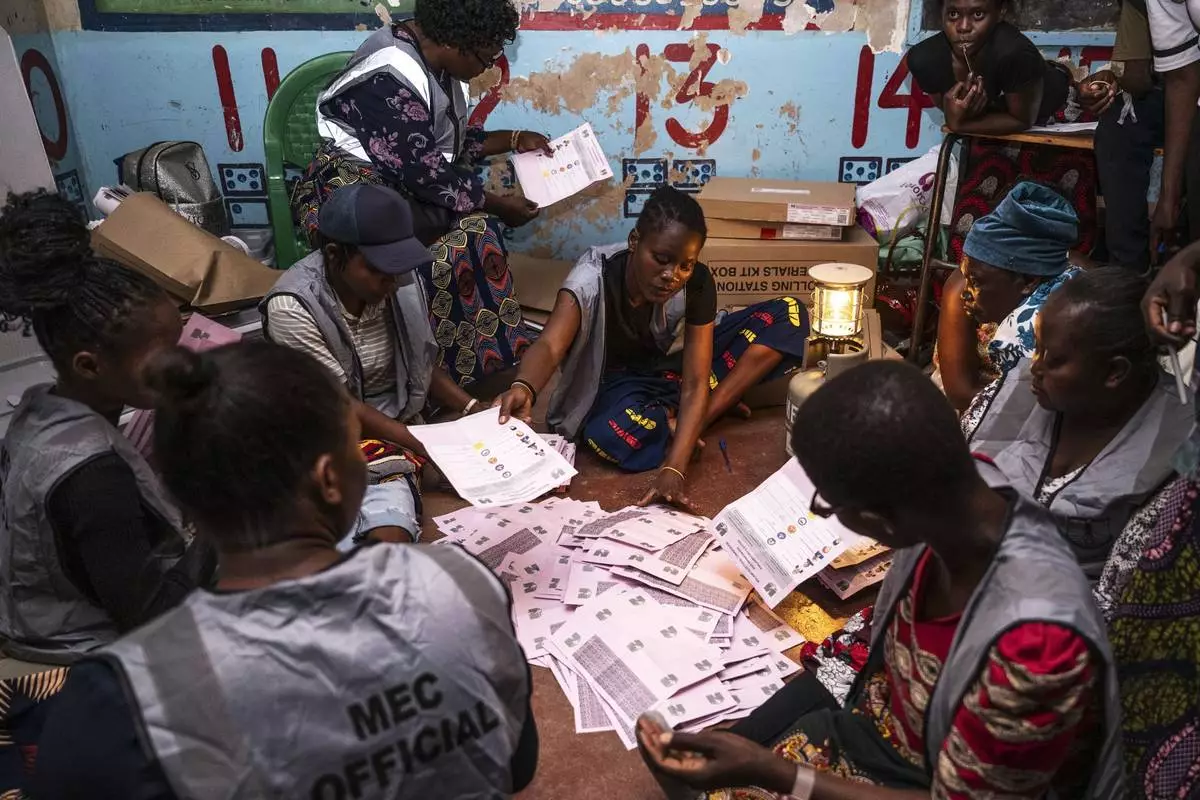
Election volunteers count ballots in Blantyre, Malawi, Tuesday, Sept. 16, 2025. (AP Photo/Thoko Chikondi)
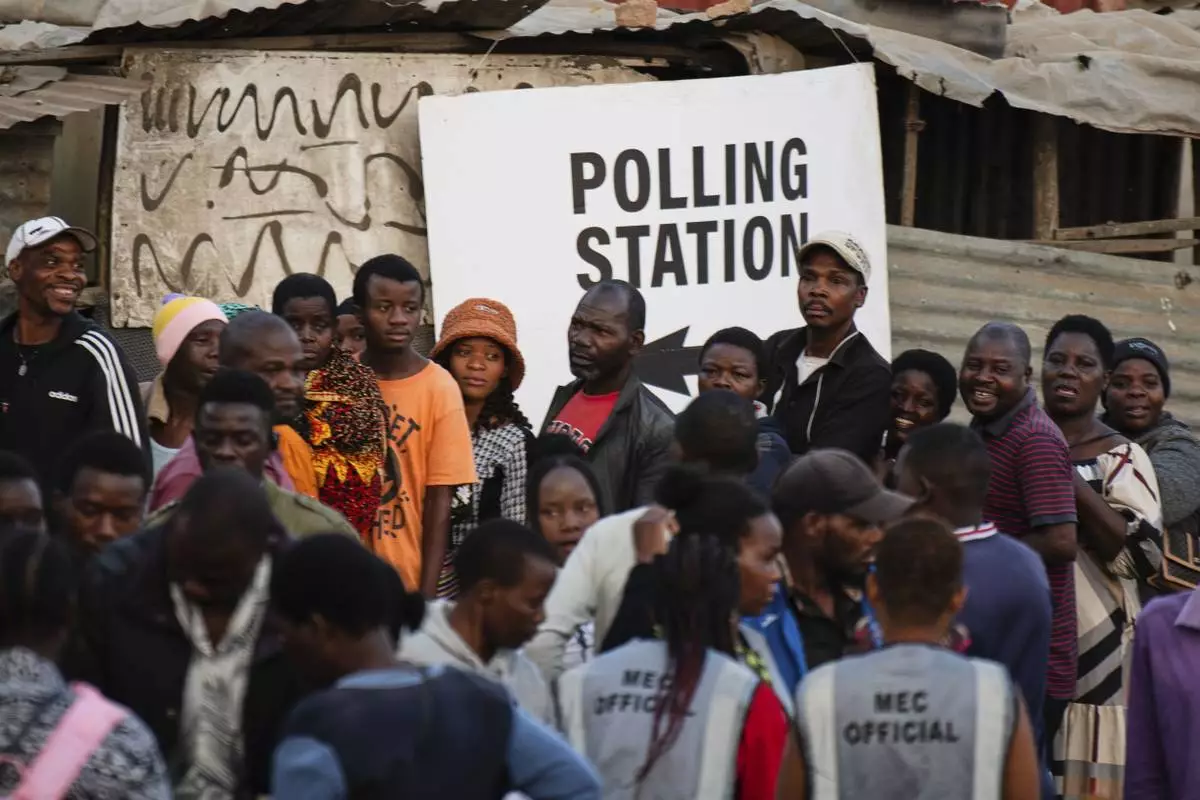
People line up to cast their votes in Blantyre, Malawi, Tuesday, Sept. 16, 2025. (AP Photo/Thoko Chikondi)
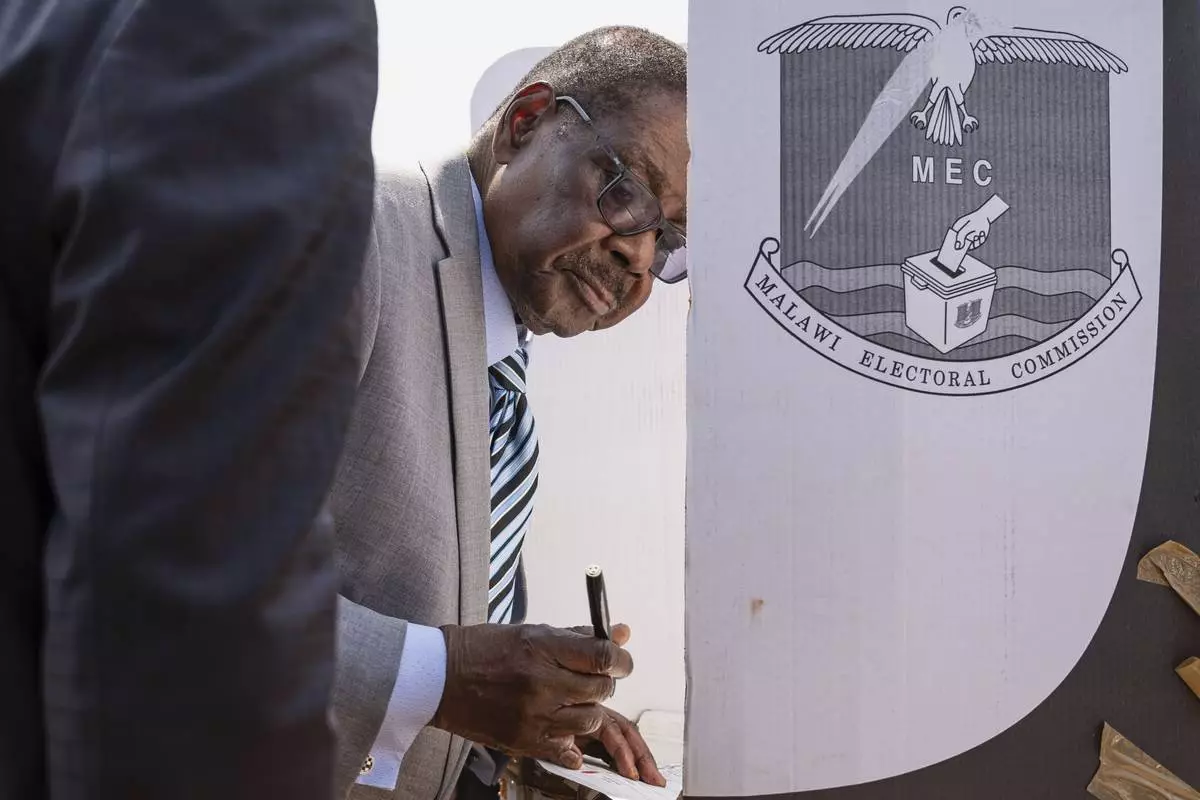
Malawi's presidential candidate, former President Peter Mutharika stands on a voting booth as he prepares to cast his vote in Thyolo District, Malawi, Tuesday, Sept. 16, 2025. (AP Photo/Thoko Chikondi)
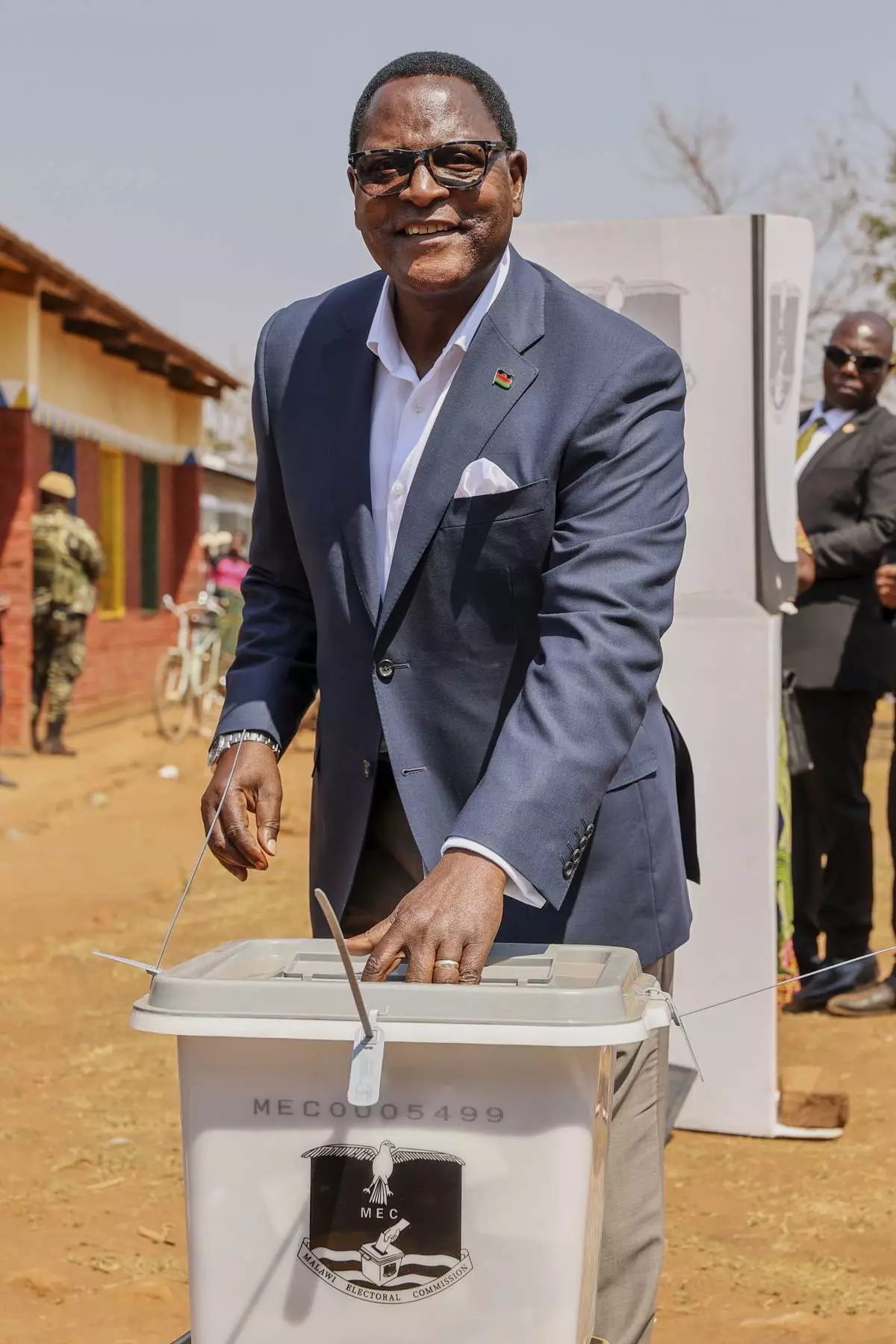
Malawi's President Lazarus Chakwera casting his vote at Malembo polling station in Lilongwe, Malawi, Tuesday, Sept. 16, 2025. (AP Photo/Govati Nyirenda)
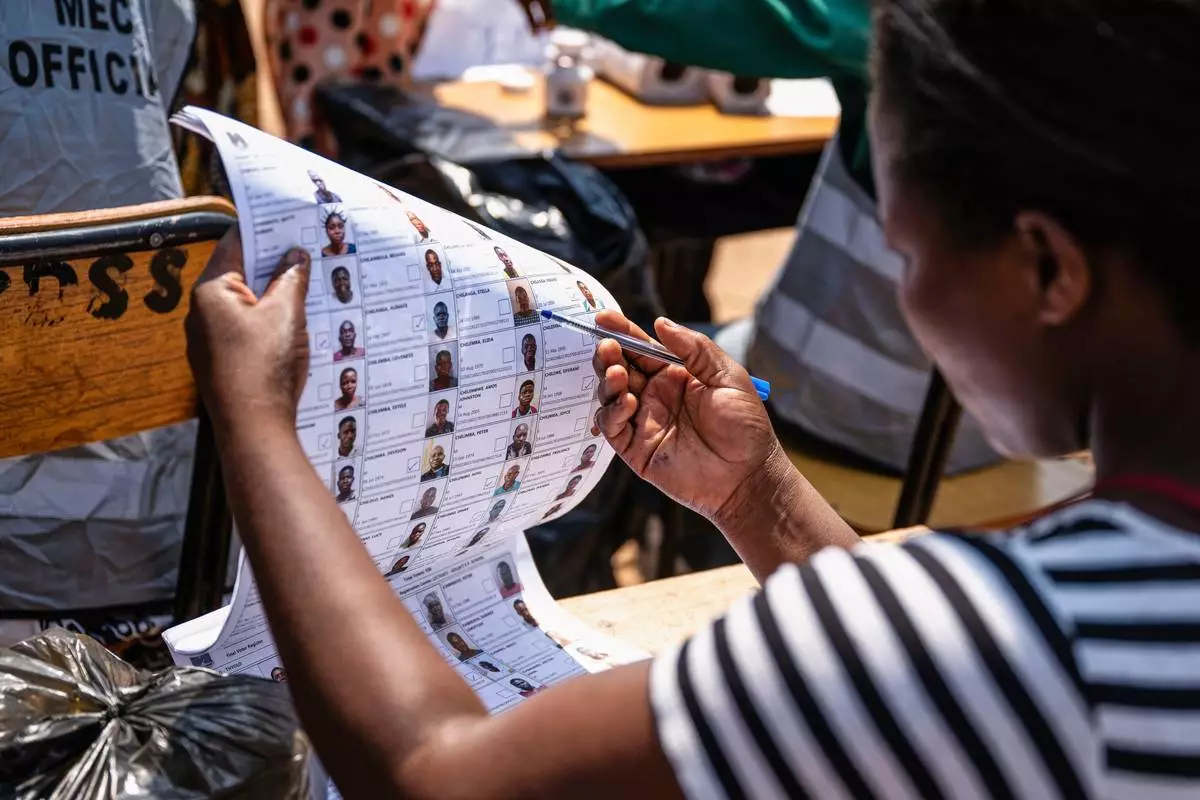
An election worker checks names in electoral rolls at a polling station in Thyolo District, Malawi, Tuesday, Sept. 16, 2025. (AP Photo/Thoko Chikondi)
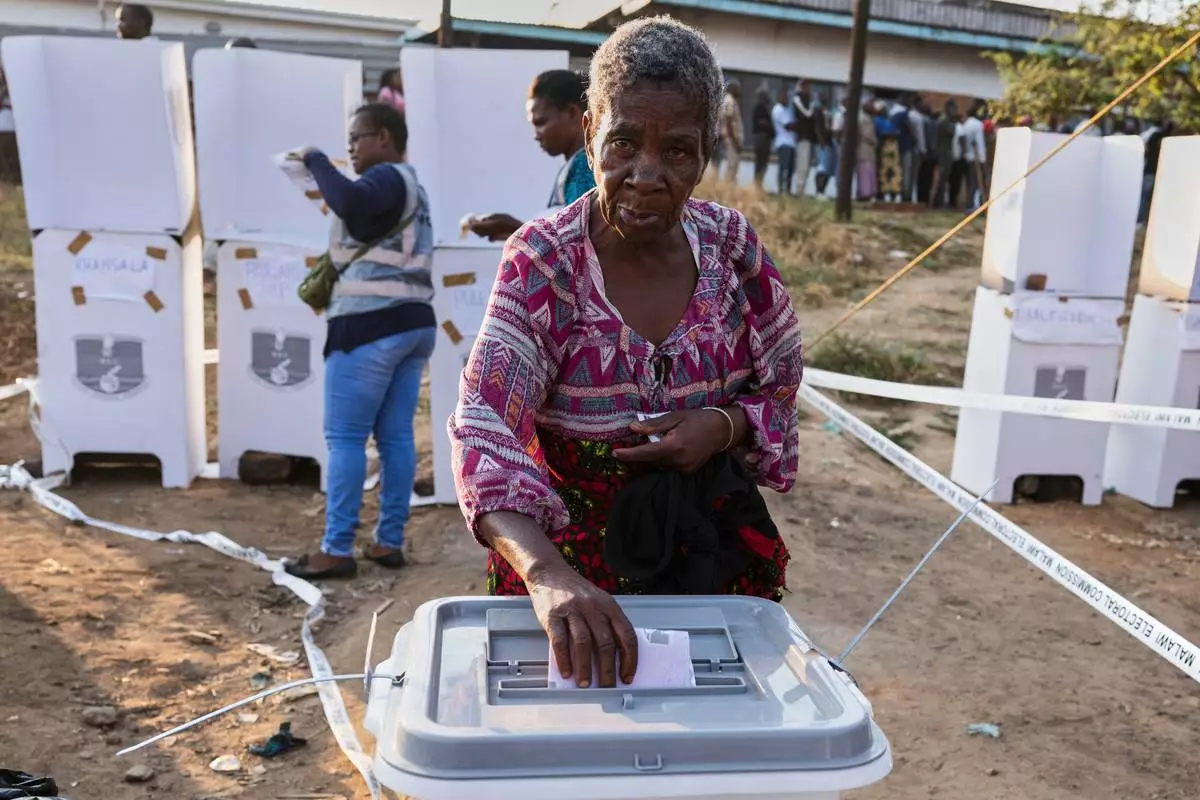
An elderly woman casts her vote during the elections, where the country will choose a president, lawmakers and local government representatives, in Blantyre, Malawi, Tuesday, Sept. 16, 2025. (AP Photo/Thoko Chikondi)
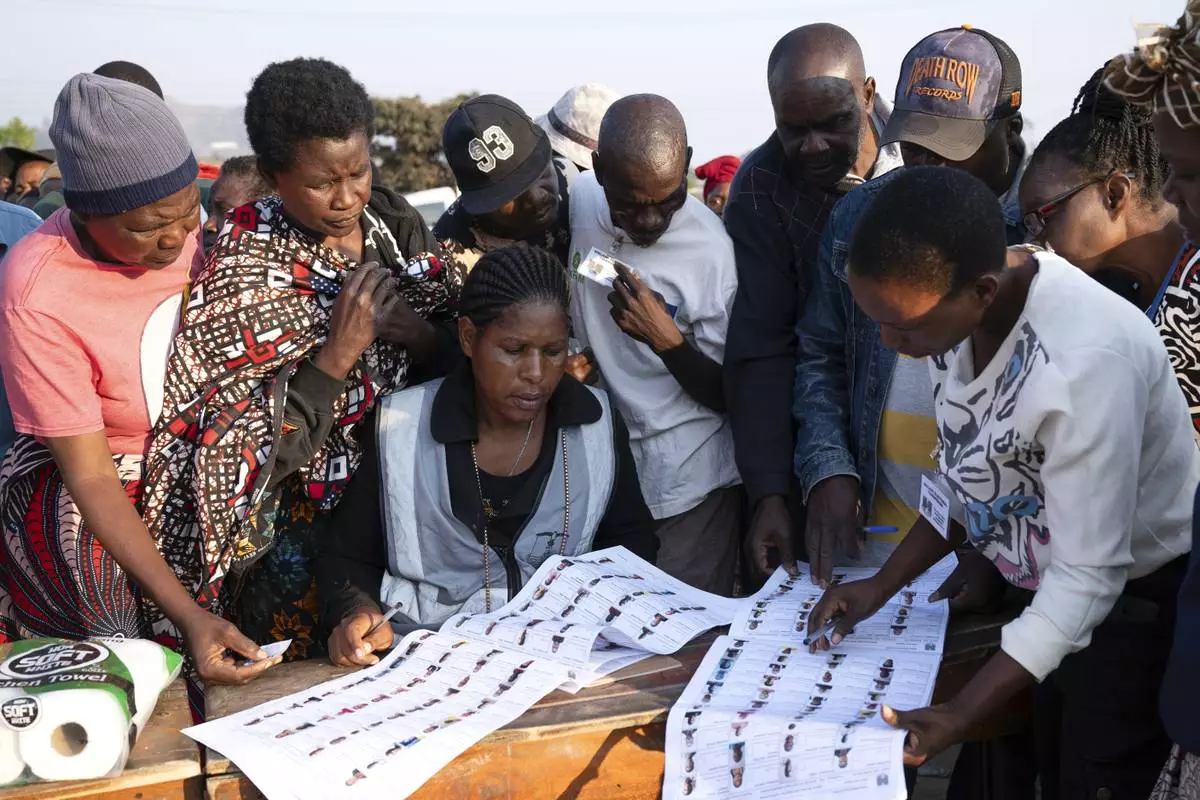
Election worker check names from electoral rolls at a polling station in Blantyre, Malawi, Tuesday, Sept. 16, 2025. (AP Photo/Thoko Chikondi)
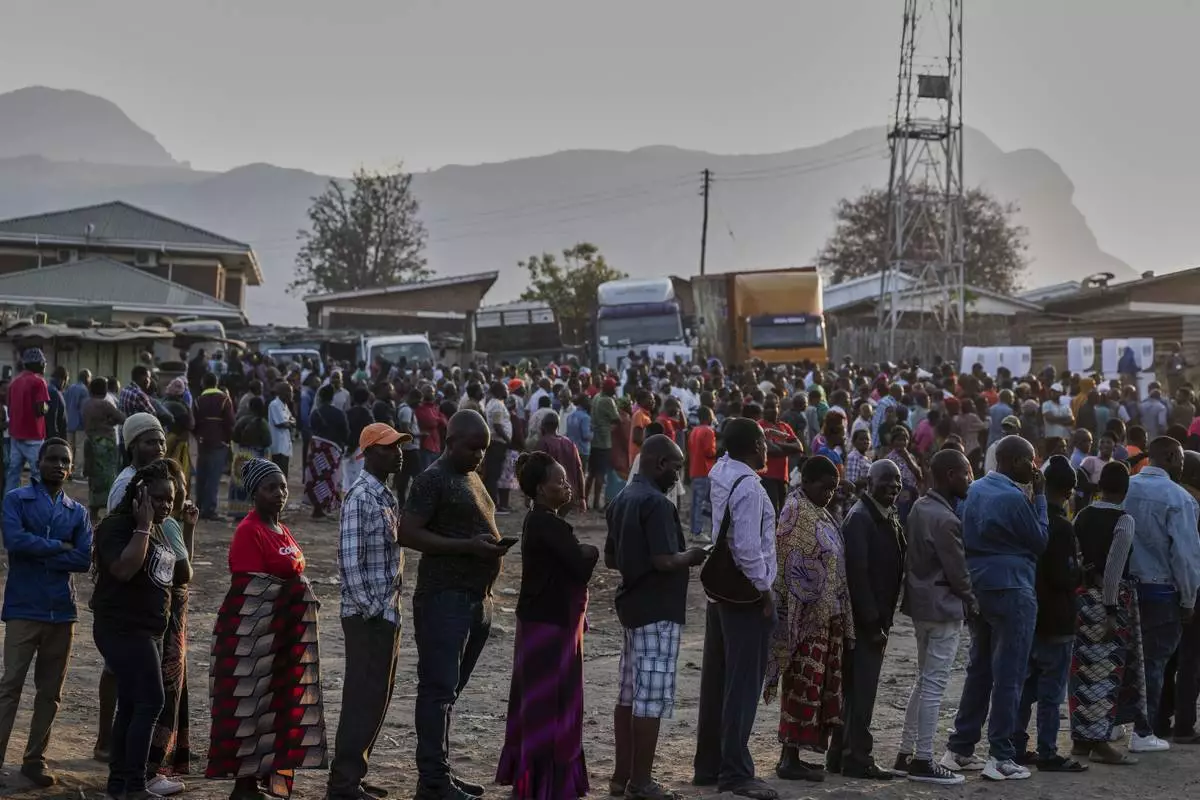
People line up to cast their votes in Blantyre, Malawi, Tuesday, Sept. 16, 2025. (AP Photo/Thoko Chikondi)
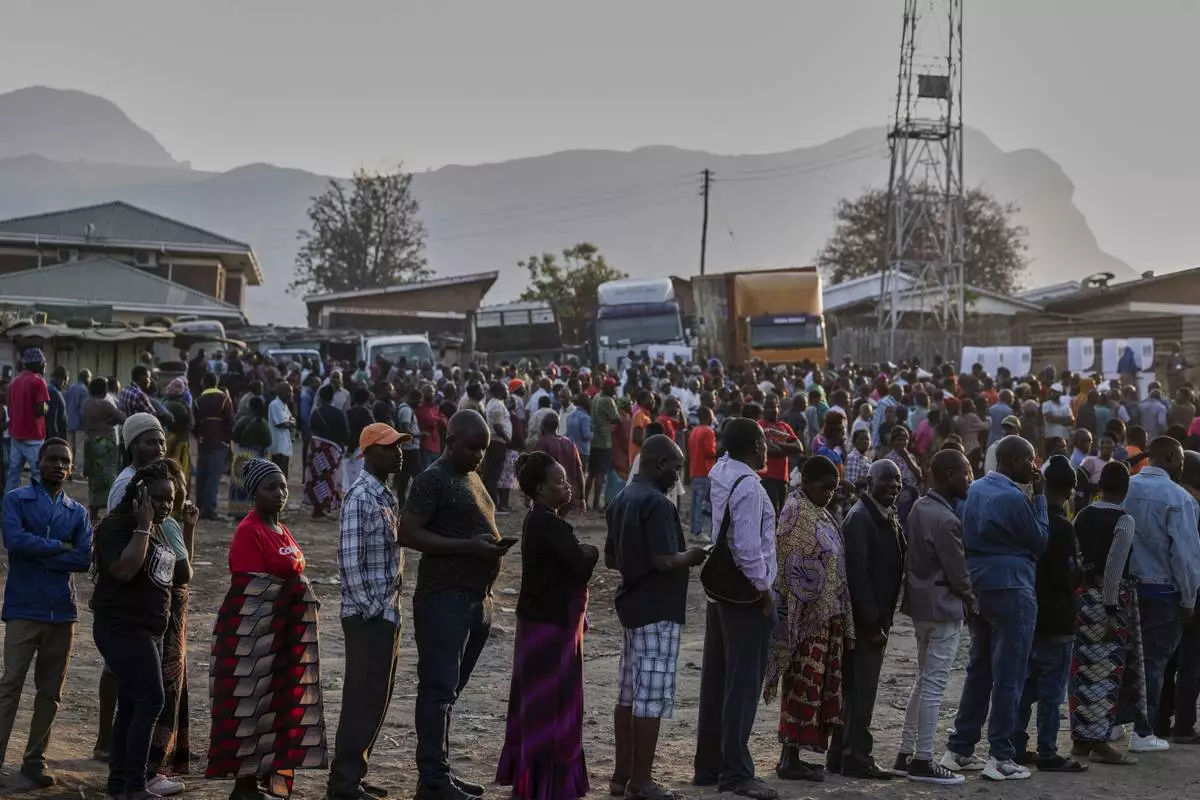
People line up to cast their votes in Blantyre, Malawi, Tuesday, Sept. 16, 2025. (AP Photo/Thoko Chikondi)
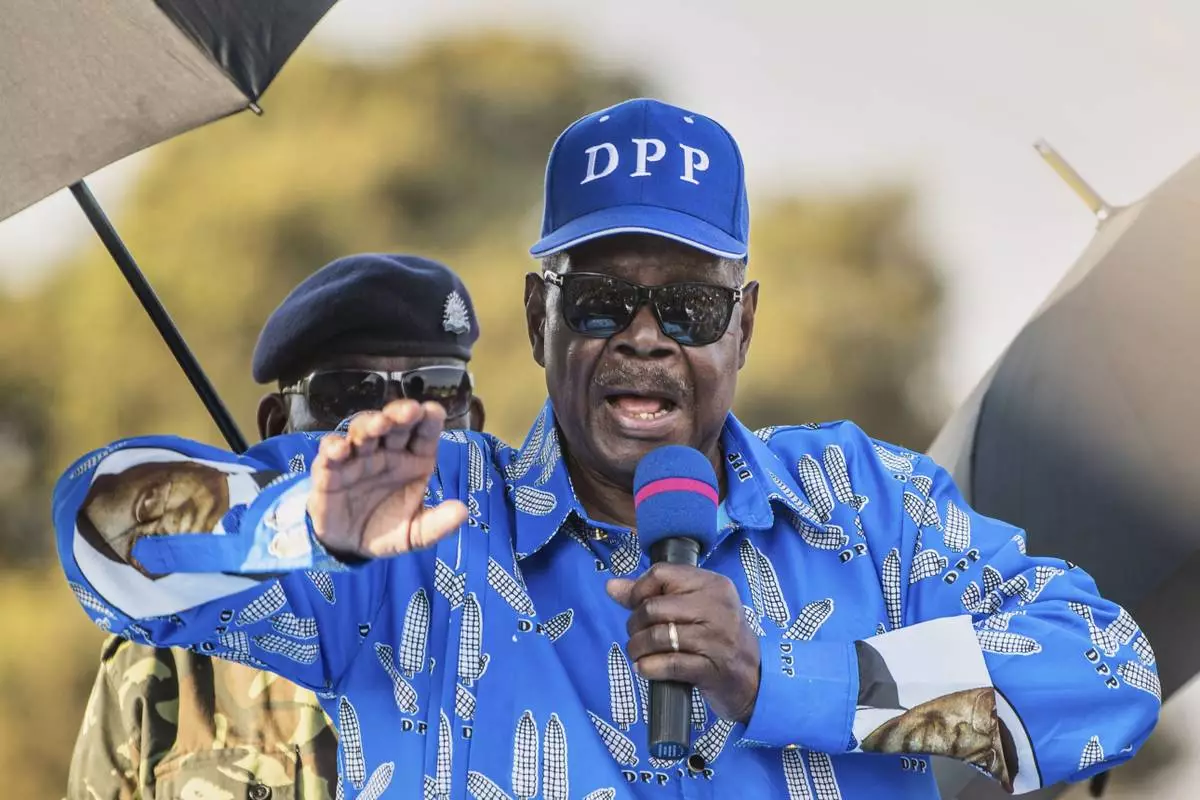
Democratic Progressive Party (DPP) leader and presidential candidate Peter Mutharika speaks to supporters at a campaign rally in Zomba, Malawi, Wednesday, Sept. 10, 2025. (AP Photo/Thoko Chikondi)
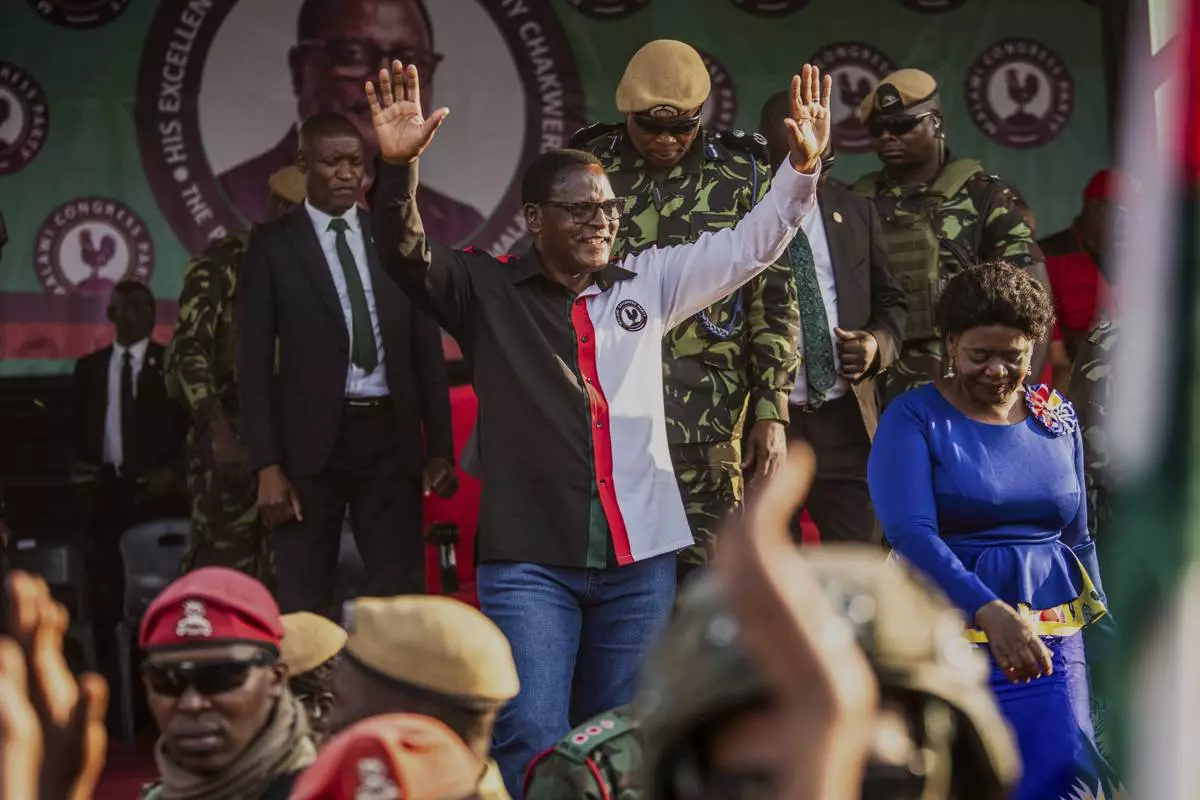
Malawi Congress Party (MCP) leader and Malawian President Lazarus Chakwera waves at supporters at a campaign rally in Blantyre, Malawi, Sunday, Sept. 7, 2025. (AP Photo/Thoko Chikondi)
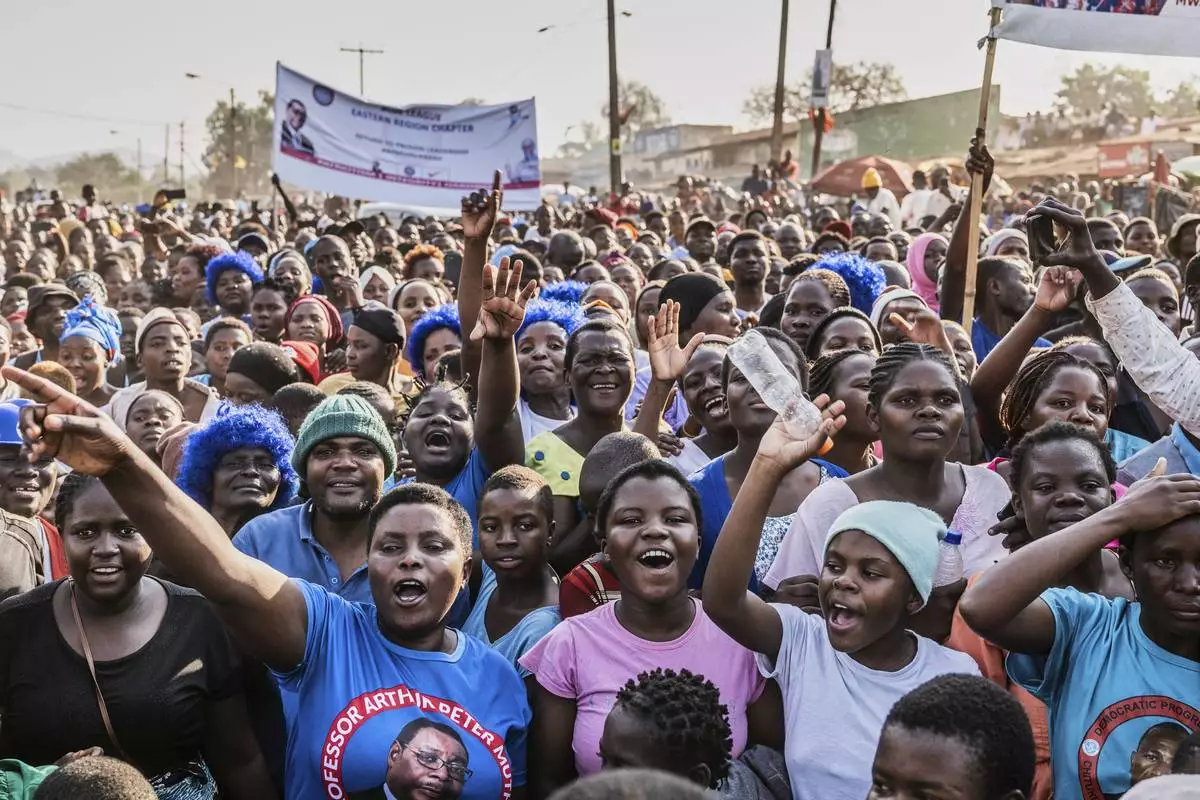
Democratic Progressive Party (DPP) supporters cheer at a campaign rally in Zomba, Malawi, Wednesday, Sept. 10, 2025. (AP Photo/Thoko Chikondi)
YEREVAN, Armenia (AP) — Armenians voted in a parliamentary election on Sunday as the incumbent government, under mounting Russian pressure, sought to loosen ties with Moscow and deepen cooperation with the West.
Prime Minister Nikol Pashinyan and his governing Civil Contract party are looking for a strong mandate for a new geopolitical course for Armenia. The opposition they face includes some parties that are vocally pro-Russia.
Casting his vote on Sunday, Pashinyan said that the country would continue strengthening its independence, statehood, democracy and rule of law.
"The European Union is our main partner in democratic reform implementation, and we will continue that path,” he said.
He also stressed that there were no tensions between Armenia and Moscow, saying "our relations with Russia are institutional and based on mutual respect,” the Armenpress news agency reported.
Russian officials have hit Armenian exports with a barrage of restrictions in recent weeks. President Vladimir Putin and other Russian officials have made thinly veiled threats comparing Armenia’s path to that already taken by Ukraine, which was invaded by Russia.
Meanwhile, Armenian investigators said that they issued six arrest warrants for members of the opposition Strong Armenia party the day before the election, accusing them of buying votes. The nation's Central Election Committee confirmed Saturday that the party could run after a member of another opposition party, Republic, appealed for Strong Armenia to be barred over corruption allegations.
Commenting on the arrests on Sunday, the head of the Strong Armenia party, Russian Armenian businessman Samvel Karapetyan, said that they “would not change the minds of Armenian voters.”
Karapetyan is under house arrest for allegedly advocating for the government’s overthrow, a charge that the billionaire has rejected as politically motivated. He was escorted to a polling station where he spoke briefly to the media before returning home.
“The Armenian people will make the right choice and Armenia will finally have a legitimate government,” he said.
Armenia’s National Assembly must consist of at least 101 members who are elected for five-year terms. Parties must win at least 4% of the vote to take a seat, while blocs made up of three or more parties must hit 8%.
Two political blocs and 17 parties are taking part in Sunday's election. Most pollsters and experts have predicted Pashinyan, who came to power in 2018 following sweeping street protests, will come out ahead.
“I think Armenians expect, first of all, a peaceful, independent and prosperous Armenia from this election, as we have today,” said Hripsime Grigoryan, a Civil Contract member of the outgoing parliament.
Pashinyan has spoken on several occasions about the need for a balanced foreign policy to ensure that Armenia maintains good relations with the United States, Europe and Russia, as well as regional powers such as Turkey and Iran — both of which border Armenia.
Despite this, Pashinyan has attracted far more enthusiasm in the West than in Moscow. He has been endorsed by several European leaders, and U.S. President Donald Trump.
“Prime Minister Nikol Pashinyan, of Armenia, a great friend and Leader, is making his Country strong, wealthy, and very secure,” Trump wrote on social media, urging Armenians to “Make (Armenia) Great Again.”
This has displeased the Kremlin. Speaking to journalists after Russia’s Victory Day parade on May 9, Putin said if the Armenian people saw benefits in joining the European Union, then “we will certainly have nothing to say against it.”
Yet he also reminded reporters, “We are currently living through everything that is happening in respect of Ukraine. And how did it start? It started with Ukraine’s joining or attempting to join the EU.”
Unlike the Civil Contract party, most of Armenia’s opposition supports building stronger relations with Moscow.
The Strong Armenia party seeks to develop business ties with Russia and has accused Pashinyan of attempting to start a war with Moscow.
Other potential contenders include former President Robert Kocharyan, who leads the Hayastan bloc and also has accused Pashinyan of undermining relations with Russia, and the Prosperous Armenia Party, led by pro-Russia business owner Gagik Tsarukyan.
These parties also have strongly criticized Pashinyan for attempting to normalize relations with neighboring Azerbaijan. The Armenian leader and Azerbaijani President Ilham Aliyev initialed a document on moving toward a peace deal at the White House alongside Trump in August.
Armenia and Azerbaijan were locked in a decades-long conflict over the fate of Karabakh, a breakaway region that had been controlled for decades by ethnic Armenian forces backed by Armenia. Azerbaijan took control of the entire Karabakh region during a rapid offensive in 2023.
“I want this government to change, because the condition of our country is getting worse,” Sahakyan Elina, a supporter of the Prosperous Armenia Party, told The Associated Press at a rally Thursday. “I don’t want to live with my enemies in unity.”
Russian officials have imposed new restrictions on Armenian produce in the lead-up to the parliamentary vote, banning the import of Armenian flowers, certain types of cognac and wine, eggplant, potatoes, dried fruits, fish and more.
Russia says the bans are related to violations of agricultural import rules.
The European Commission on Thursday described the move as “nothing short of economic coercion.”
“By extending export restrictions on Armenian products, Moscow is weaponizing economic relations for political pressure. We know this playbook all too well,” the commission said in a statement.
Moscow also controls a significant portion of Armenia’s energy and infrastructure, and supplies it with cheap gas, which is a point that Putin has been quick to drive home in his meetings with Pashinyan.
Putin also has stressed that Armenia can't join the EU and remain within the Eurasian Economic Union, a Russia-led customs bloc.
“Being in a customs union with the European Union and the Eurasian Economic Union is impossible,” Putin said. “It’s simply impossible by definition.”
Katie Marie Davies in Manchester, England, and Sam McNeil in Brussels, contributed to this report.
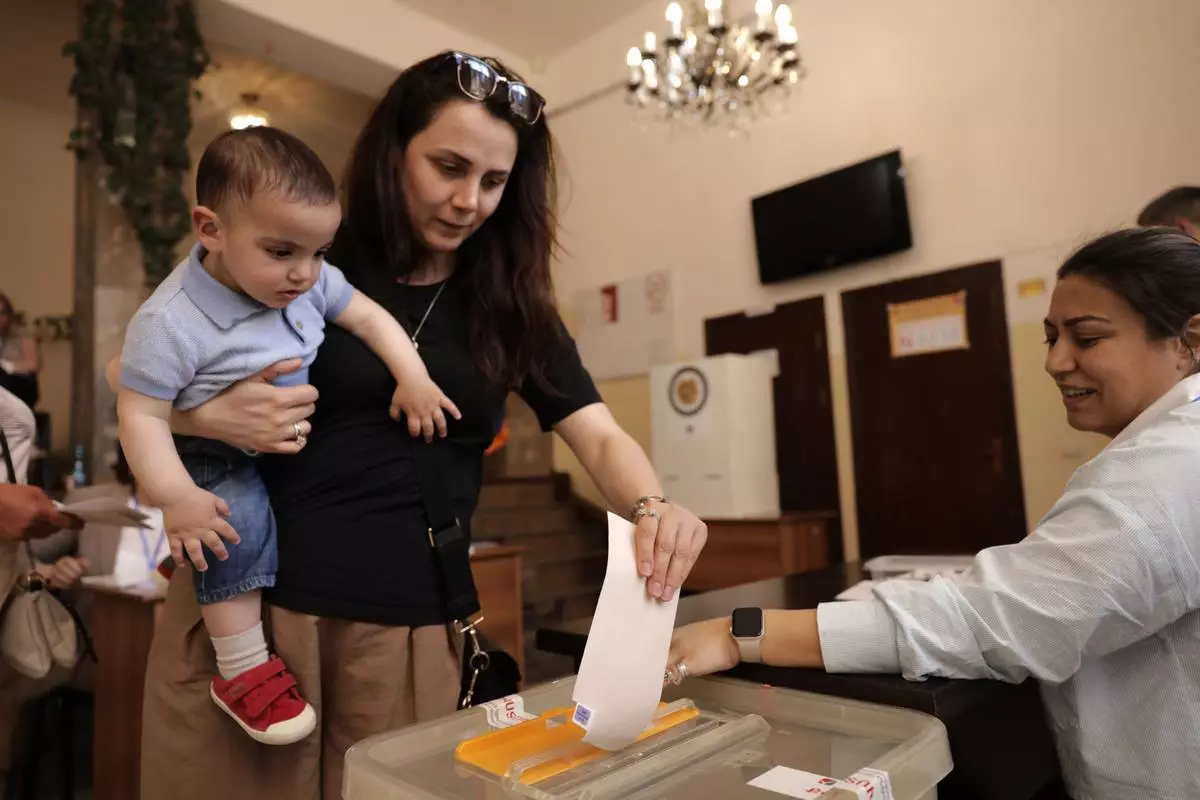
A woman holding a child casts her ballot at a polling station during a parliamentary election in Yerevan, Armenia, Sunday, June 7, 2026. (AP Photo/Anthony Pizzoferrato)
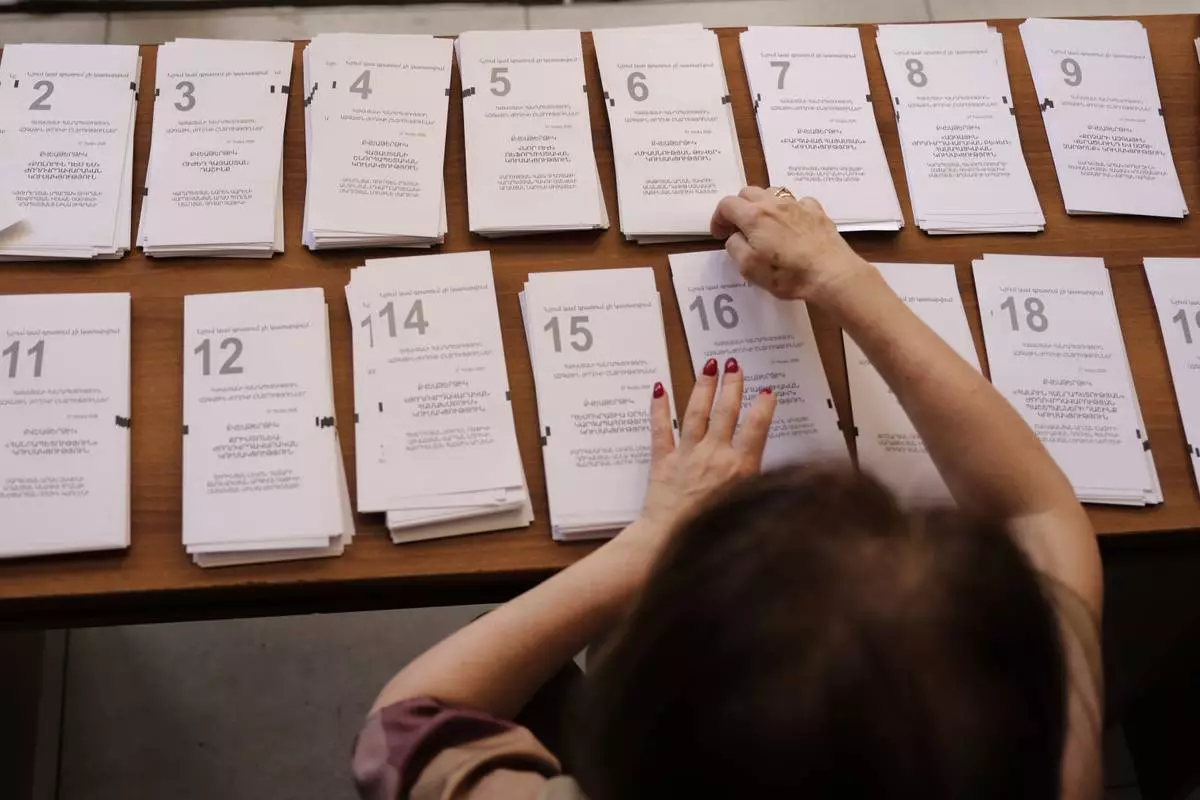
A member of an election commission prepares the ballots while waiting for voters at a polling station, during a parliamentary election in Yerevan, Armenia, Sunday, June 7, 2026. (AP Photo/Anthony Pizzoferrato)
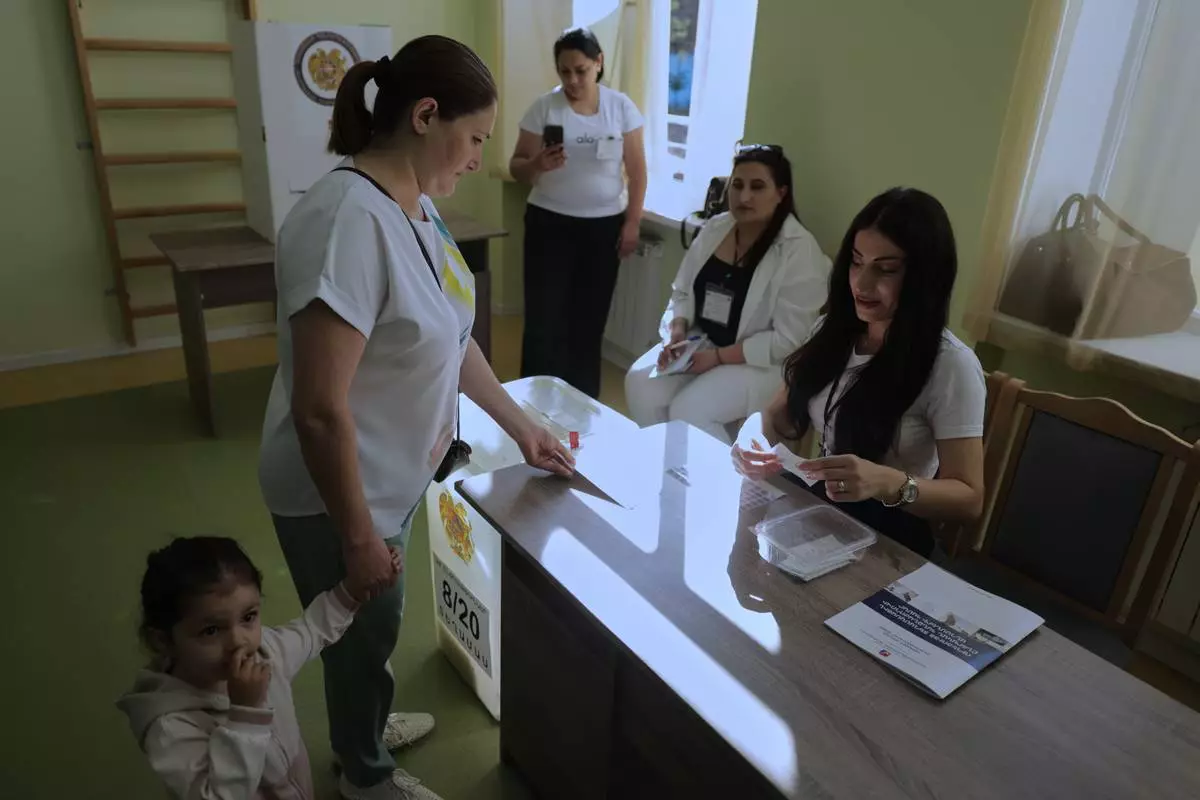
A woman gets a ballot at a polling station during the parliamentary election in Yerevan, Armenia, Sunday, June 7, 2026. (AP Photo/Anthony Pizzoferrato)
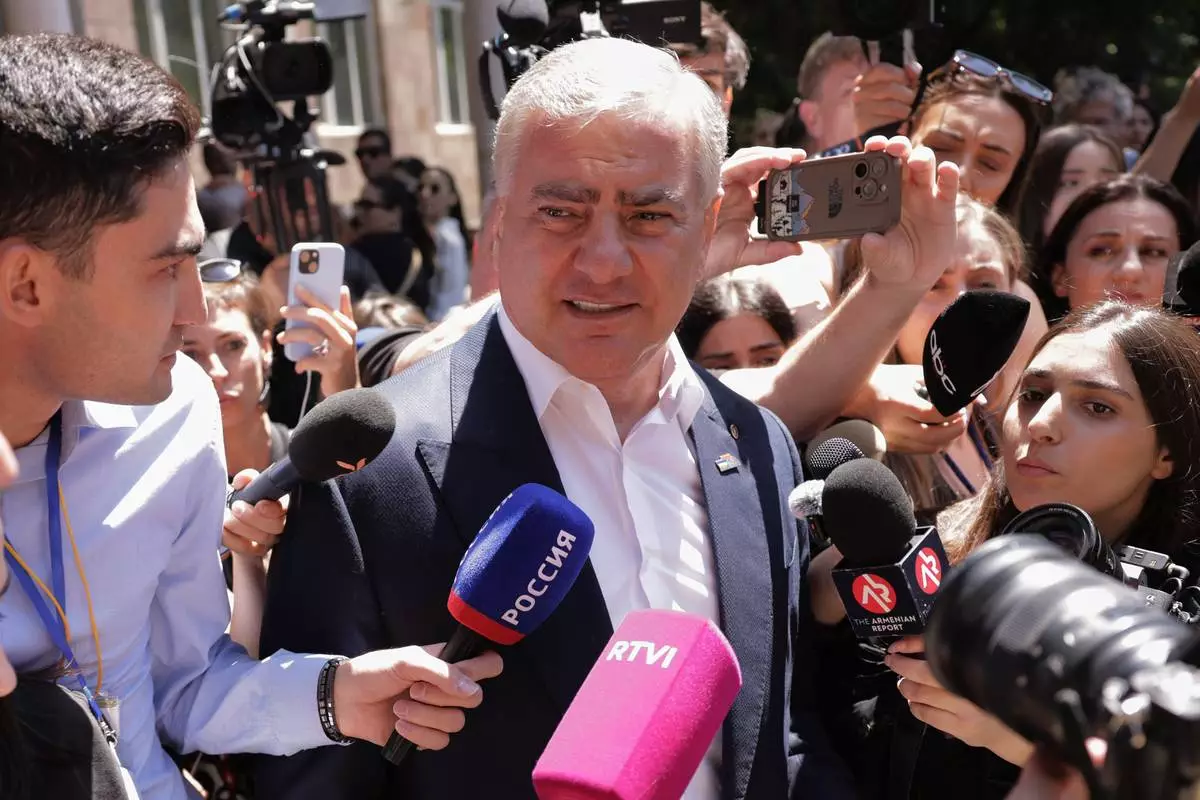
Russian-Armenian tycoon Samvel Karapetyan speaks to the media after voting at a polling station during a parliamentary election in Yerevan, Armenia, Sunday, June 7, 2026. (AP Photo/Anthony Pizzoferrato)
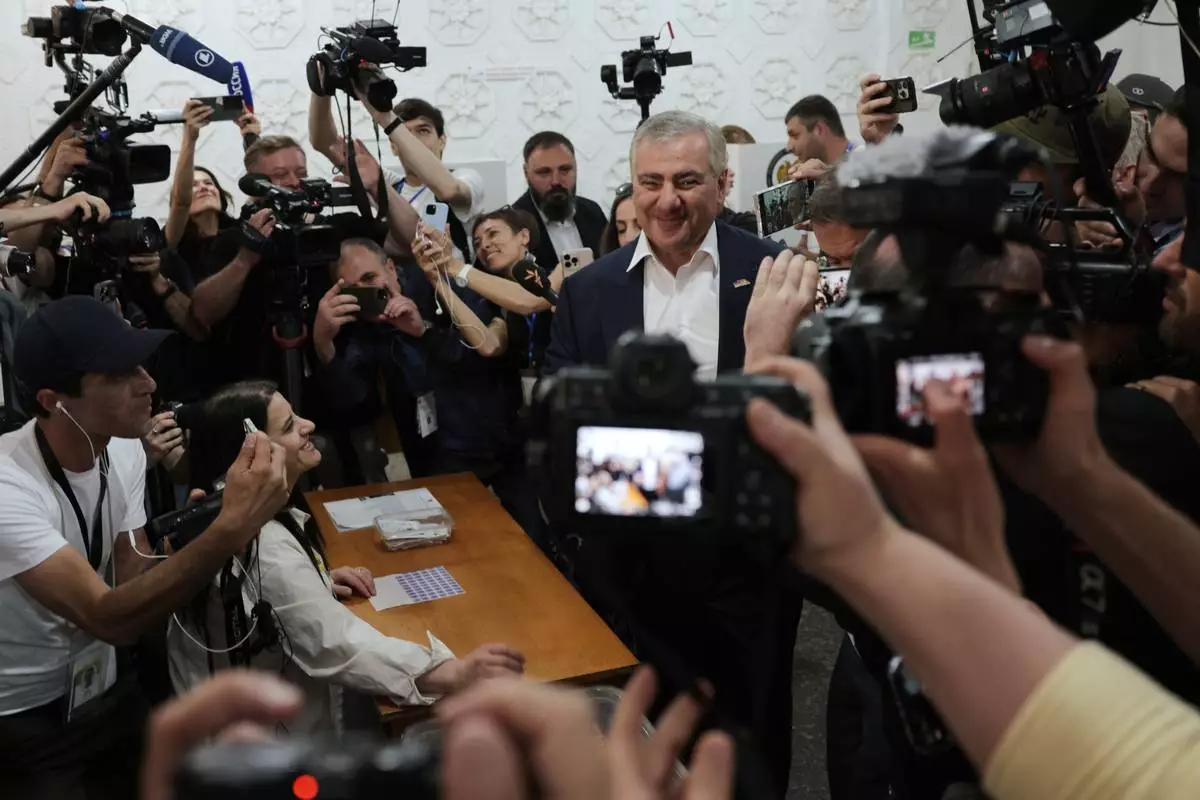
Russian-Armenian tycoon Samvel Karapetyan, center, speaks to the media after voting at a polling station during parliamentary election in Yerevan, Armenia, Sunday, June 7, 2026. (AP Photo/Anthony Pizzoferrato)
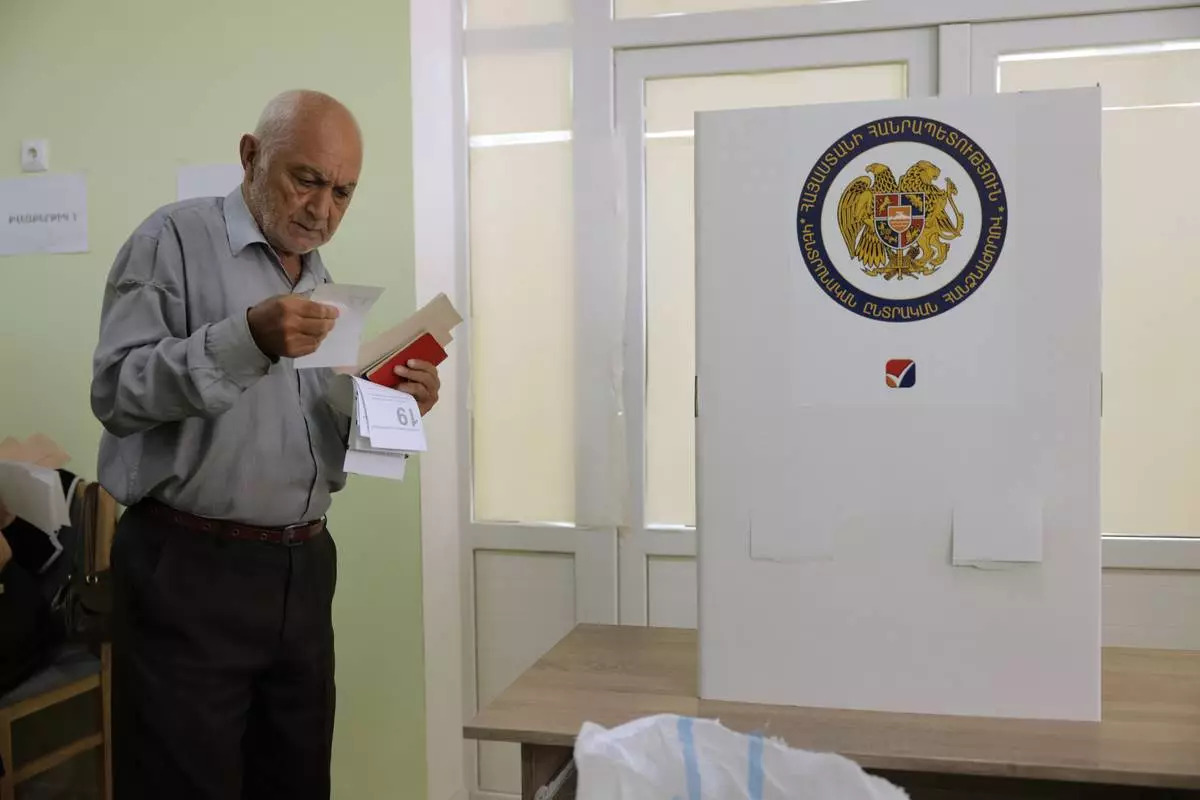
A man looks at his ballot at a polling station during the parliamentary election in Yerevan, Armenia, Sunday, June 7, 2026. (AP Photo/Anthony Pizzoferrato)
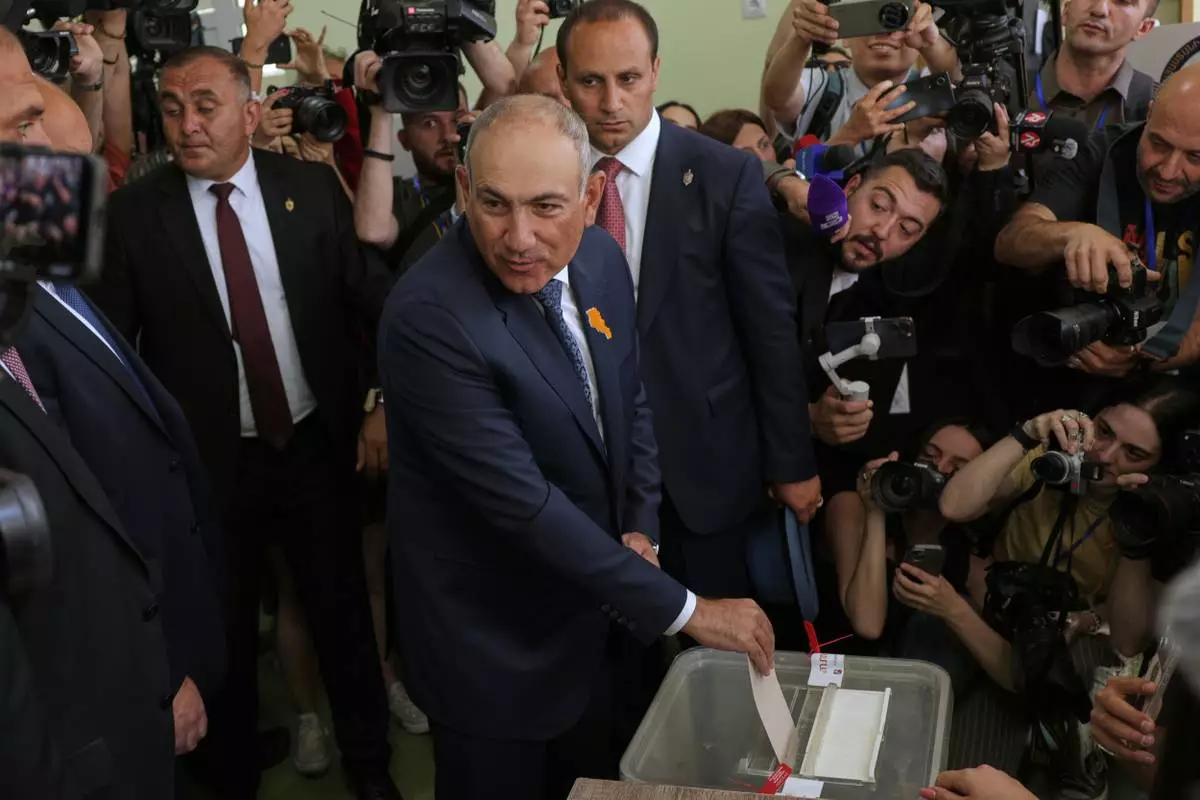
Armenian Prime Minister Nikol Pashinyan, center, casts his ballot at a polling station during the parliamentary election in Yerevan, Armenia, Sunday, June 7, 2026. (AP Photo/Anthony Pizzoferrato)
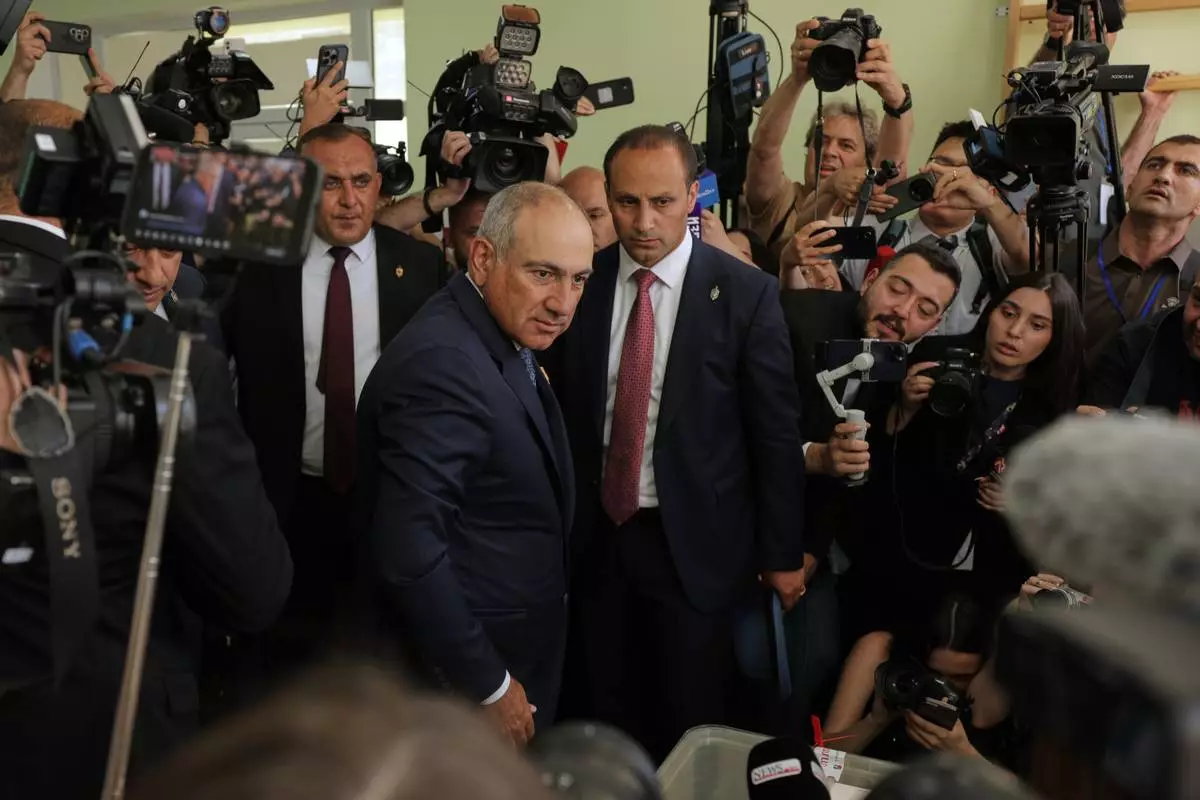
Armenian Prime Minister Nikol Pashinyan, center, looks at photographers after voting at a polling station during the parliamentary election in Yerevan, Armenia, Sunday, June 7, 2026. (AP Photo/Anthony Pizzoferrato)
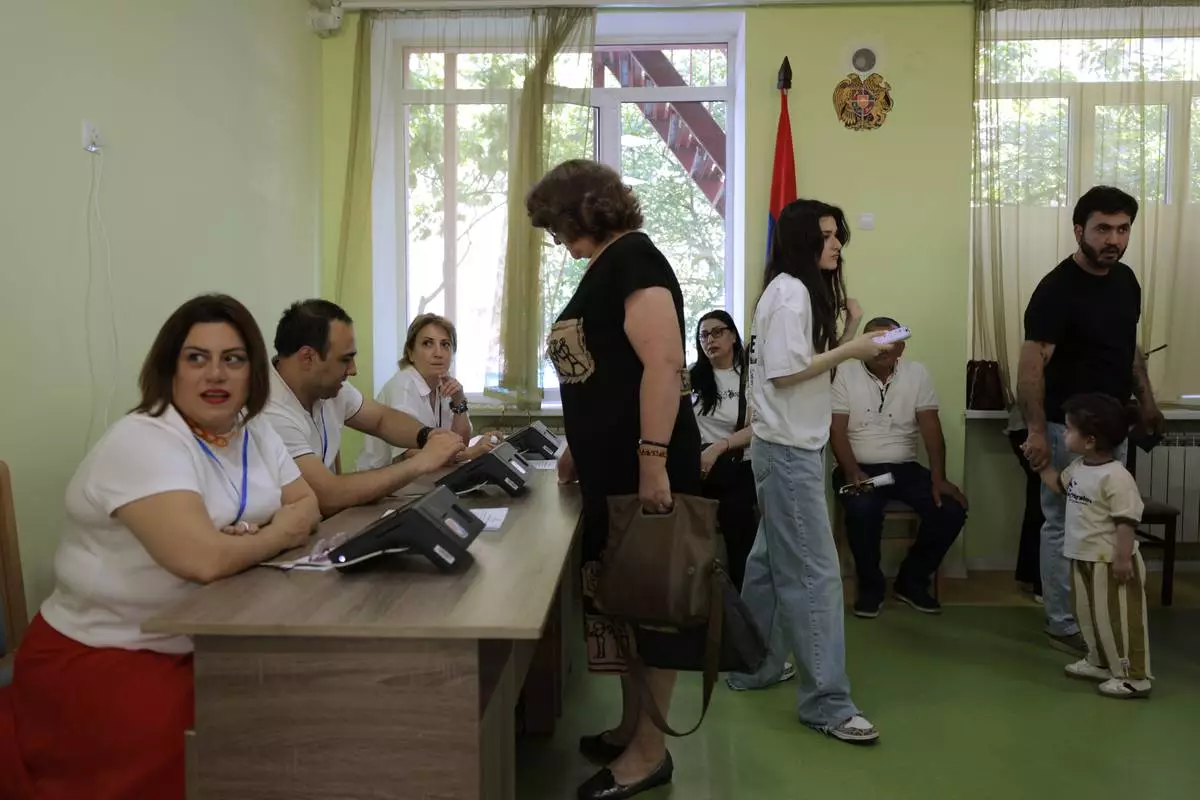
Voters gather to get their ballots at a polling station during the parliamentary election in Yerevan, Armenia, Sunday, June 7, 2026. (AP Photo/Anthony Pizzoferrato)
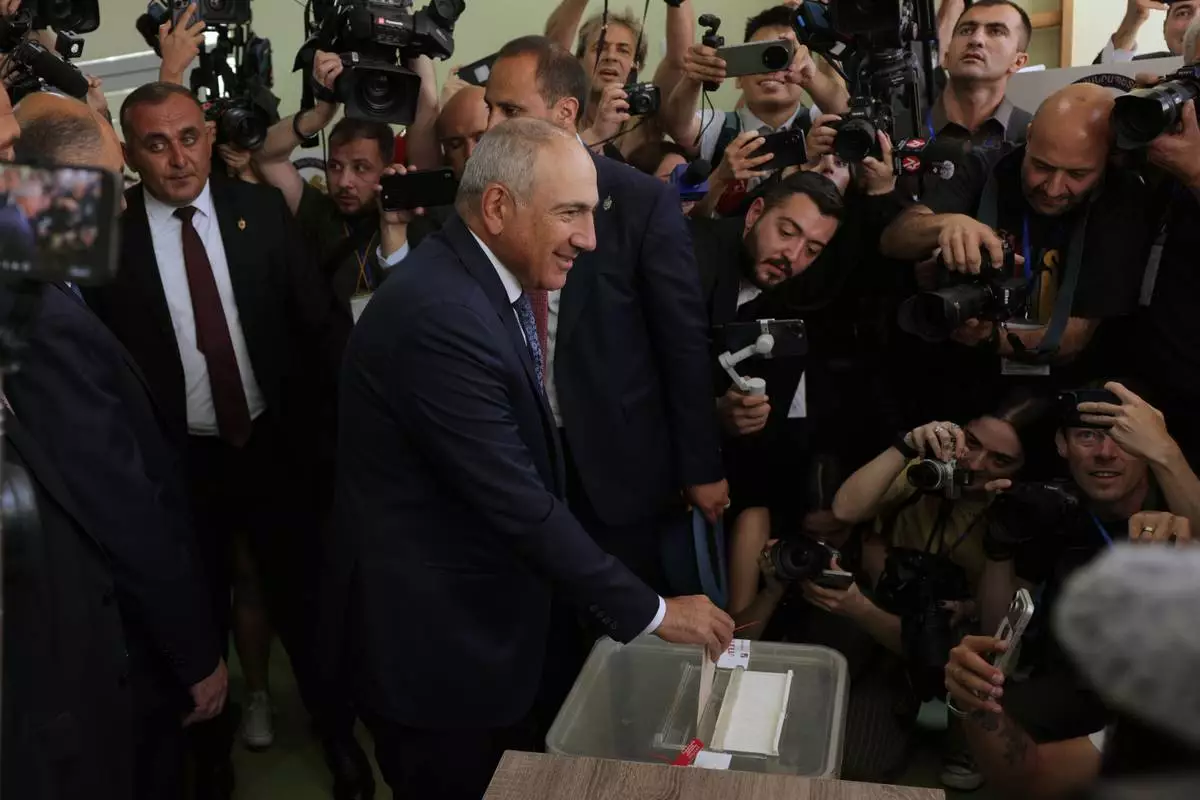
Armenian Prime Minister Nikol Pashinyan, center, casts his ballot at a polling station during the parliamentary election in Yerevan, Armenia, Sunday, June 7, 2026. (AP Photo/Anthony Pizzoferrato)
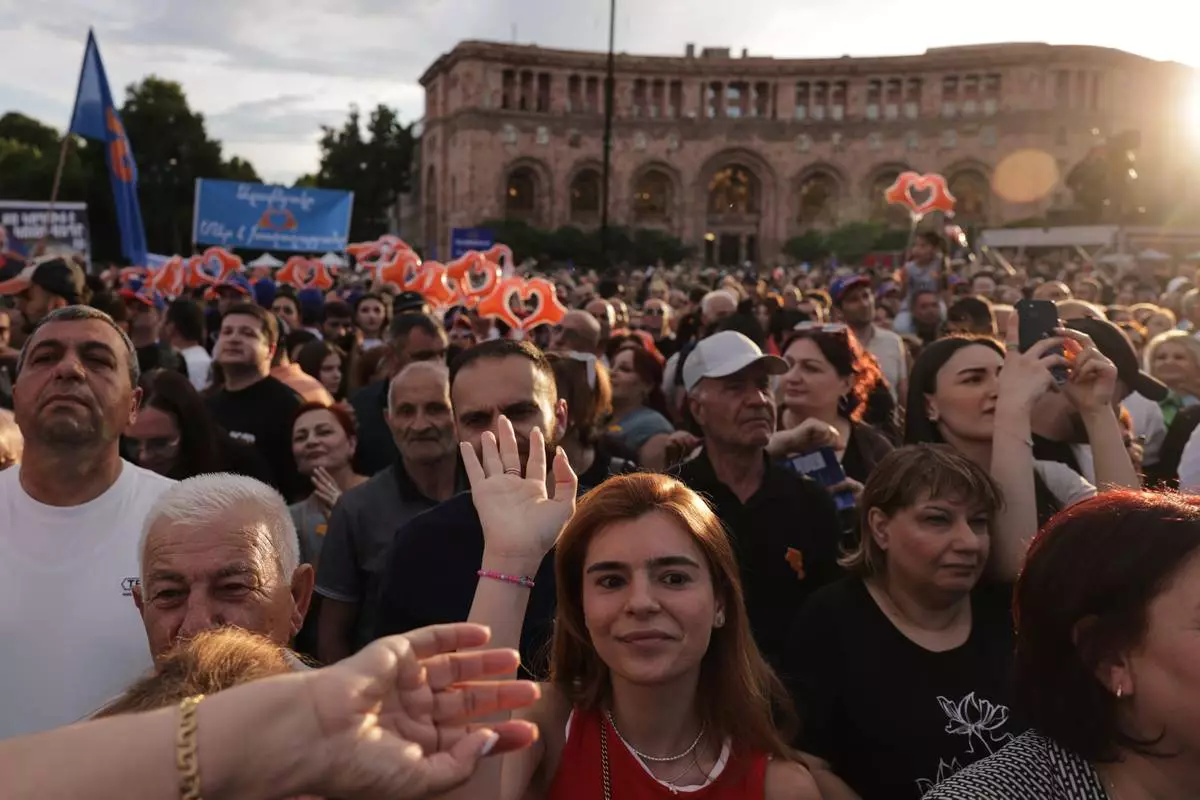
Supporters of Armenia's ruling Civil Contract party led by Prime Minister Nikol Pashinyan gather in Republic Square in Yerevan, Armenia, Friday, June 5, 2026, for the party's final campaign rally ahead of the upcoming parliamentary elections. (AP Photo/Anthony Pizzoferrato)
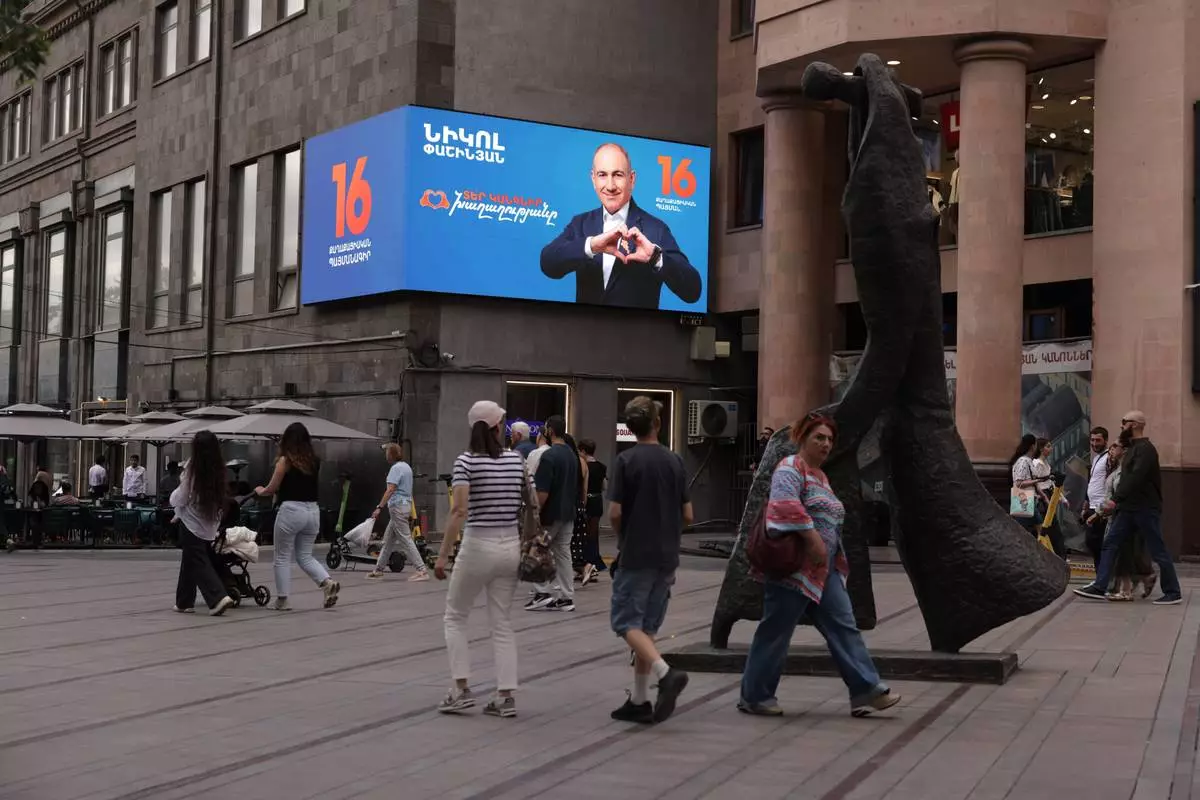
People walk along a street near a campaign advertisement for Armenian Prime Minister Nikol Pashinyan in Yerevan, Armenia, on Thursday, June 4, 2026. (AP Photo/Anthony Pizzoferrato)
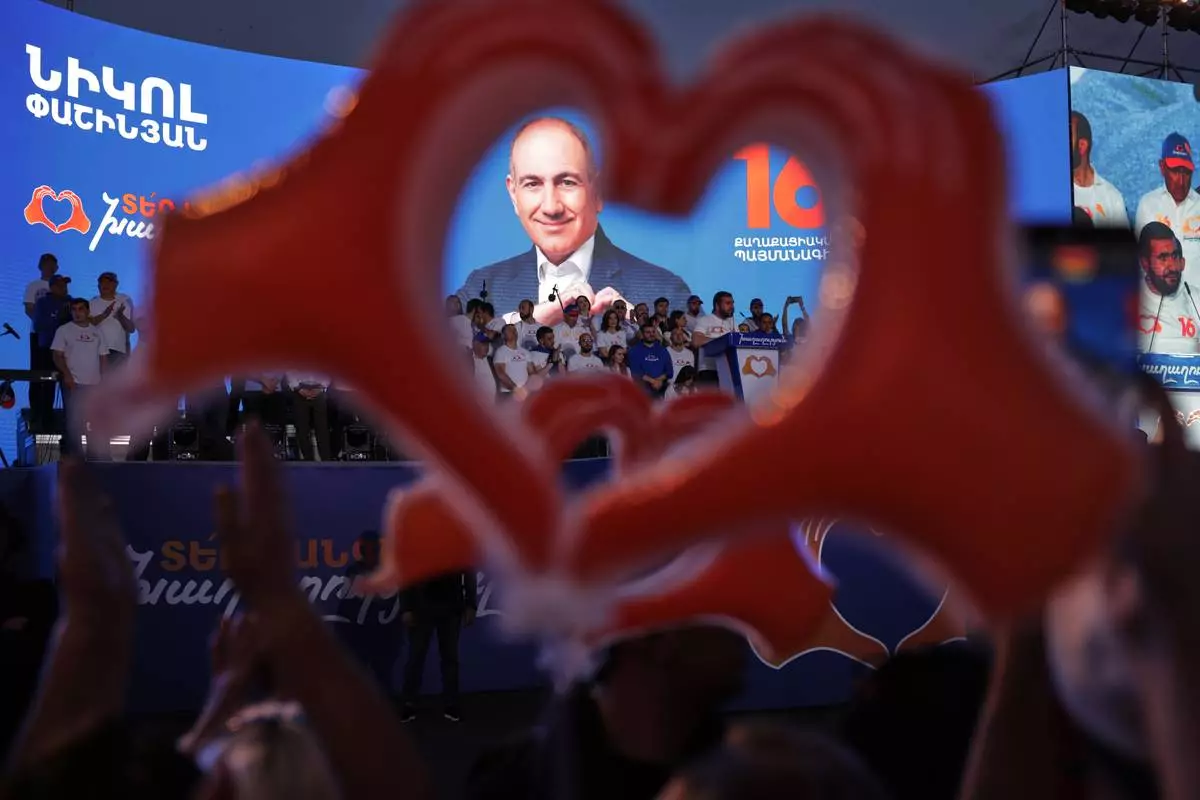
Supporters of Armenia's ruling Civil Contract party leading by Prime Minister Nikol Pashinyan hold up heart signs while gathering in Republic Square in Yerevan, Armenia, Friday, June 5, 2026, for the party's final campaign rally ahead of the upcoming parliamentary elections. (AP Photo/Anthony Pizzoferrato)
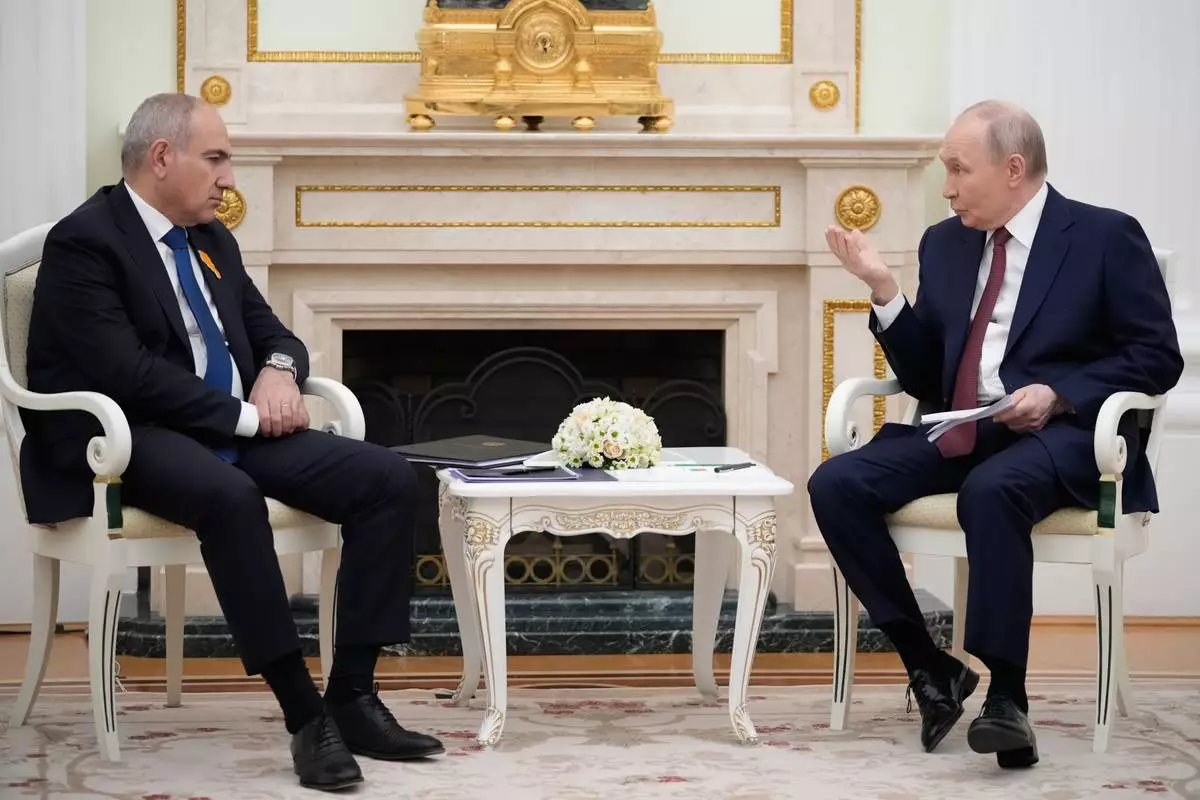
FILE - Russian President Vladimir Putin, right, and Armenian Prime Minister Nikol Pashinyan meet at the Kremlin in Moscow, Russia, on April 1, 2026. (AP Photo/Pavel Bednyakov, Pool, File)
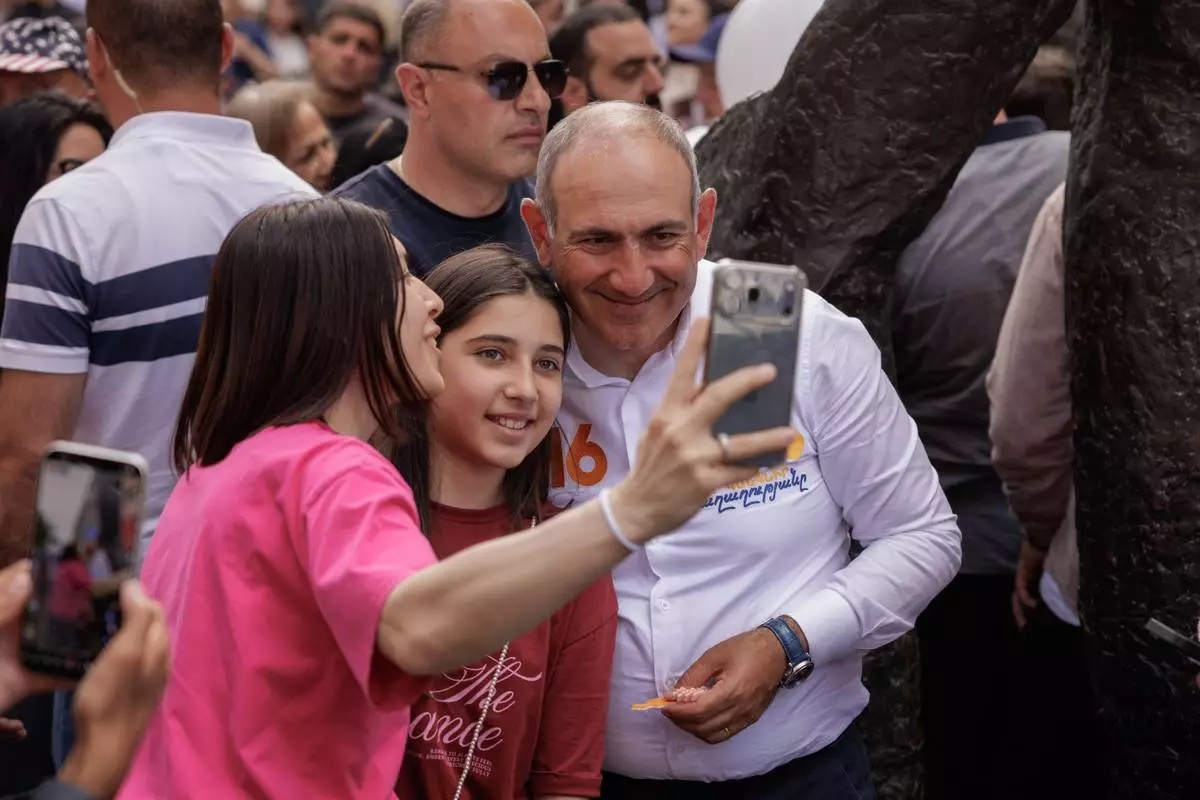
Armenian Prime Minister Nikol Pashinyan poses for a selfie photo with a supporter as he walks on Northern Avenue in Yerevan, Armenia, Monday, June 1, 2026, during public celebrations marking International Children's Day. (AP Photo/Anthony Pizzoferrato)