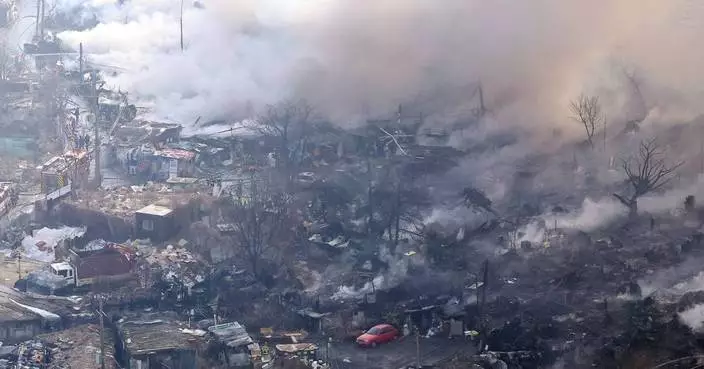
PORT-AU-PRINCE, Haiti (AP) — Naika and Erica Lafleur stared at a pile of rubble where their house once stood in Haiti's capital and began to cry.
Their mother had instructed the two sisters, ages 10 and 13, to visit the home they fled last year and report back on its condition after powerful gangs raided their community in November.
Click to Gallery
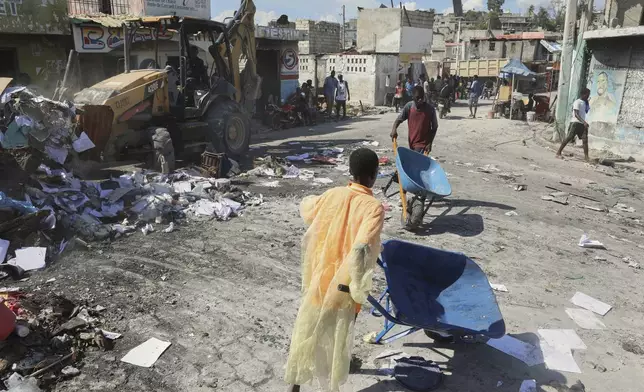
Youths use wheelbarrows to carry debris out of their homes, which were damaged by gang violence, in the Solino neighborhood of Port-au-Prince, Haiti, Wednesday, Sept. 10, 2025. (AP Photo/Odelyn Joseph)
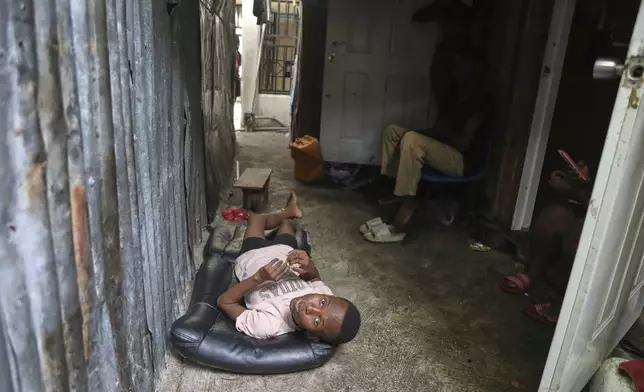
People displaced by gang violence live at the Ministry of Public Works, Transport and Communications office converted into a shelter in Port-au-Prince, Haiti, Tuesday, Sept. 9, 2025. (AP Photo/Odelyn Joseph)
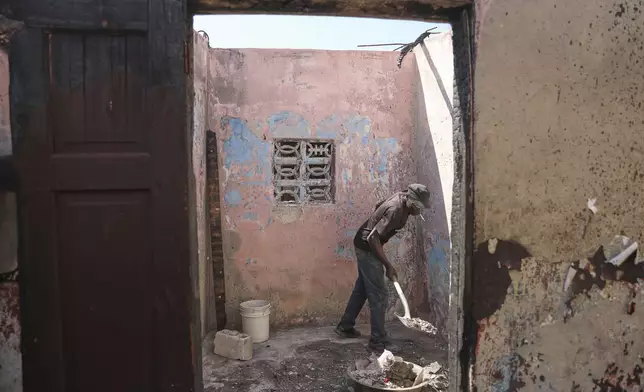
Francick Ferolis cleans his house after it was damaged by gang violence in the Solino neighborhood of Port-au-Prince, Haiti, Wednesday, Sept. 10, 2025. (AP Photo/Odelyn Joseph)
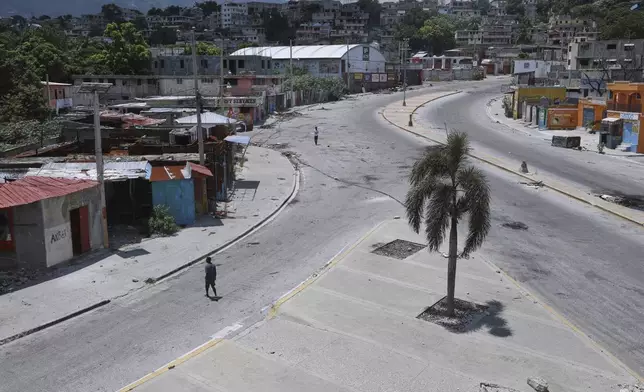
A main street is empty due to insecurity in the Delmas neighborhood of Port-au-Prince, Haiti, Tuesday, Sept. 2, 2025. (AP Photo/Odelyn Joseph)

People displaced by gang violence live at the Ministry of Public Works, Transport and Communications office converted into a shelter in Port-au-Prince, Haiti, Tuesday, Sept. 9, 2025. (AP Photo/Odelyn Joseph)
“I was hoping to have a place to come back to,” Erica Lafleur said. “There’s nothing to see.”
The sisters lived in Solino, home to one of Haiti’s most powerful vigilante groups that proudly fended off gangs for years until their leader was killed and gunmen invaded.
Gangs seized control of the area for almost a year only to abruptly leave in recent weeks as they encouraged residents to return.
Many Haitians are anxious to flee crowded and dangerous shelters and want to either rebuild their shattered communities or recover what’s left of their home and belongings.
Police have told Haitians that it’s not safe to do so, but hundreds of people are ignoring the warnings. Being able to return home is a rare opportunity in a capital nearly entirely controlled by gangs.
The sound of shovels scraping against asphalt echoed in western Port-au-Prince this month as hundreds of people cleaned their communities and shuffled their feet or ran their hands through mounds of ashes that once were books, clothes, photo albums and furniture.
Neighborhoods like Solino, Nazon and Delmas 30 became ghost towns after gangs razed them in November, forcing thousands to flee.
“There is nothing left to save,” said Samuel Alexis, 40, who asked the government to help Haitians return home. “I did not lose any family, but I lost everything I worked for.”
As he mulled whether to return to Solino, gunfire erupted nearby. He flinched.
In August, Jimmy Chérizier, a leader of a gang coalition known as Viv Ansanm that was blamed for last year’s attacks, stressed that it was safe to return home.
Few people believed him at first, but then small groups began tentatively entering their old neighborhoods.
“I’m just now visiting my home,” said Ronald Amboise, a 42-year-old tile setter. “What I saw, I can’t explain. It’s like a bomb went off.”
He moved to Solino after the devastating 2010 earthquake and remained there until gangs invaded his neighborhood in November. He yearns to return because he, his partner and their two children, ages 6 and 13, are staying at a cramped and dirty shelter. But he’s undecided.
“Police have a radio announcement telling people not to return. Gangs are saying it’s safe to return. I don’t know which one to trust yet,” he said.
Amboise doesn’t make enough money to properly feed his family, who lives under a plastic tarp and gets soaked when it rains.
“I don’t know if your notebook can hold everything I’ve endured for the past nine months,” he told an Associated Press reporter.
One recent Sunday, Gerald Jean fished for 50 cents in his pants — the only money he had that day — and bought a small bag of corn chips. It was his breakfast, lunch and dinner.
Once the proud owner of a funeral home, a hardware store, a botanica and eight homes in Solino, he now is homeless and without a job. Gangs set fire to his buildings in mid-November, forcing him and his family to flee.
“I was left with one pair of pants and sandals,” he said. “I worked all my life and lost everything.”
Jean fled to Delmas 30 after the attack, but gangs stormed that neighborhood three months later, forcing him to find shelter at a friend’s house in Delmas 75.
He doesn’t know if he’ll live again in Delmas 30, but he recently returned to shovel debris into a pile in front of the ransacked funeral home bearing his name.
Nearby, Marie-Marthe Vernet, 68, shuffled through a thick rug of ashes inside her home. She had not returned since gunmen shot her in the back last year as she fled.
“There is no way I will return to live here. I am not going to live with Viv Ansanm,” she said. “If you have a young girl, they’re going to take her without your consent. If you have a young man, they will ask him to hold a gun.”
The fall of Solino, Nazon, Delmas 30 and other nearby communities was a blow to Haiti’s psyche and a triumph for Viv Ansanm, a gang coalition that the U.S. designated as a foreign terrorist organization.
Seizing control of that area meant gangs now had an easier path to places of power including the offices of the prime minister and the transitional presidential council, said Diego Da Rin, an analyst with the International Crisis Group.
“Everybody used to say that if Solino fell, the entire capital would fall,” he said.
It’s still not clear why Viv Ansanm pulled out of those neighborhoods, but it’s possible gangs needed their manpower and firepower elsewhere, or they want to form an alliance with vigilante groups to overthrow the government, Da Rin said.
Either way, the arrival of explosive drones manned by armed forces likely interrupted the gangs’ plans, he said.
“Whatever their real motive may be to withdraw from these zones, they are using this to have a modicum of credibility with the Haitian people, saying that their conflict is not directed at civilians,” Da Rin said.
But gang violence already has displaced a record 1.3 million people, with many living in dilapidated shelters.
“It’s desperate, it’s completely desperate,” said Tom Fletcher, the U.N.’s under-secretary general for humanitarian affairs and emergency relief coordinator.
He recently visited a shelter packed with thousands of people.
“Almost everyone said to me, ‘We want to go home, we want to rebuild our lives, but we’re really, really terrified,’” he said. “Women and girls bear the brunt of this violence.”
Last year, the number of grave violations against children soared by 500% compared with 2023, while there was a 700% increase in the first quarter of this year in the recruitment of children by armed groups, he said.
There also was a 1,000% increase in cases of sexual violence against children last year, and a 54% increase in verified killings and executions of children in the first quarter of this year.
“These stats are just unconscionable,” Fletcher said.
Undeterred, Haitians continue to return to communities like Solino.
“It’s hard staying in a camp,” said Stephanie Saint-Fleure, a 39-year-old mother who planned to move back. “It’s been months and months of humiliation. Can you imagine having three kids staying in a camp that smells, and you can’t sleep at night because you’re awake all the time protecting your kids from evil?”
Coto reported from San Juan, Puerto Rico.
Follow AP’s coverage of Latin America and the Caribbean at https://apnews.com/hub/latin-america
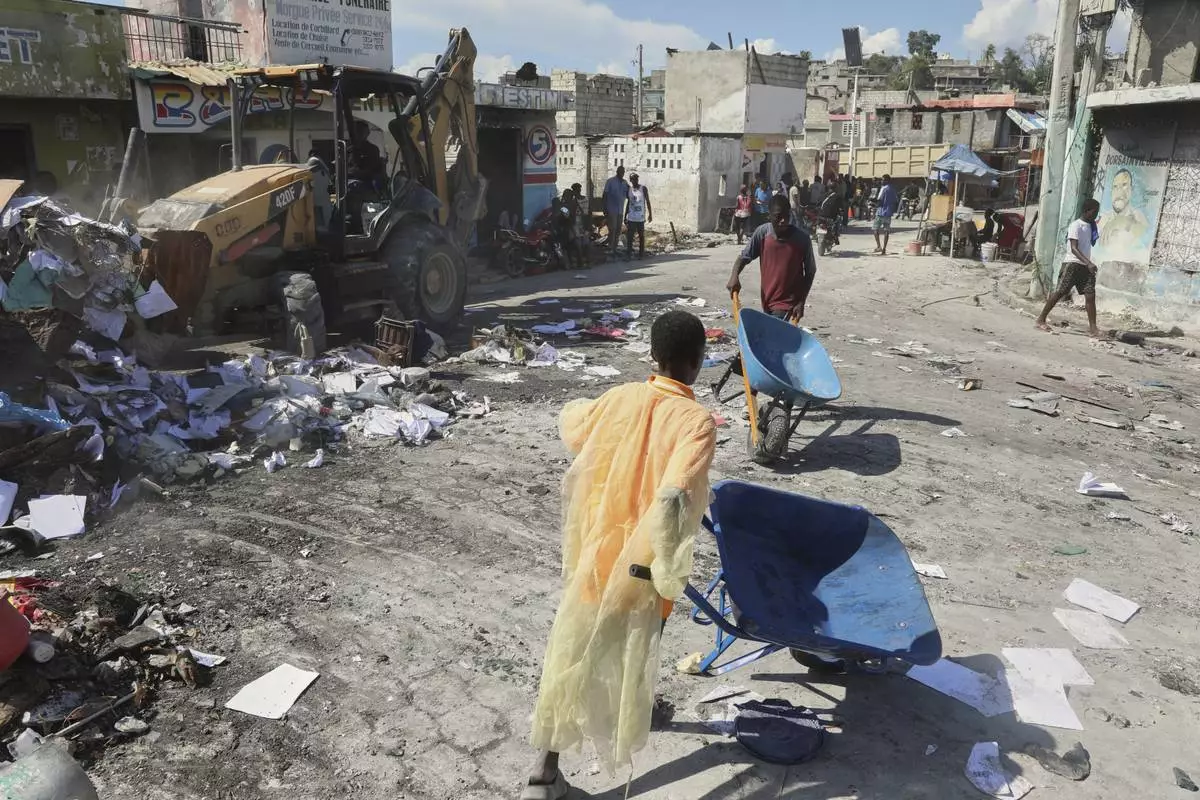
Youths use wheelbarrows to carry debris out of their homes, which were damaged by gang violence, in the Solino neighborhood of Port-au-Prince, Haiti, Wednesday, Sept. 10, 2025. (AP Photo/Odelyn Joseph)
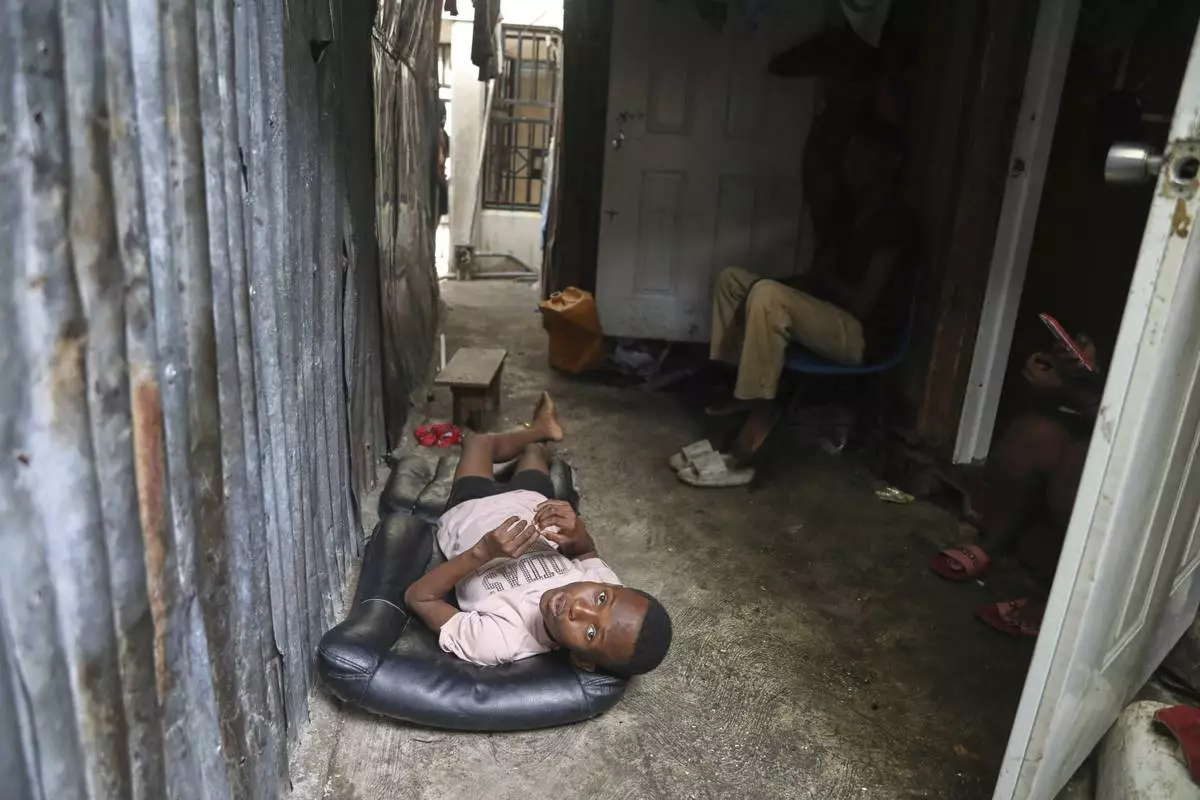
People displaced by gang violence live at the Ministry of Public Works, Transport and Communications office converted into a shelter in Port-au-Prince, Haiti, Tuesday, Sept. 9, 2025. (AP Photo/Odelyn Joseph)
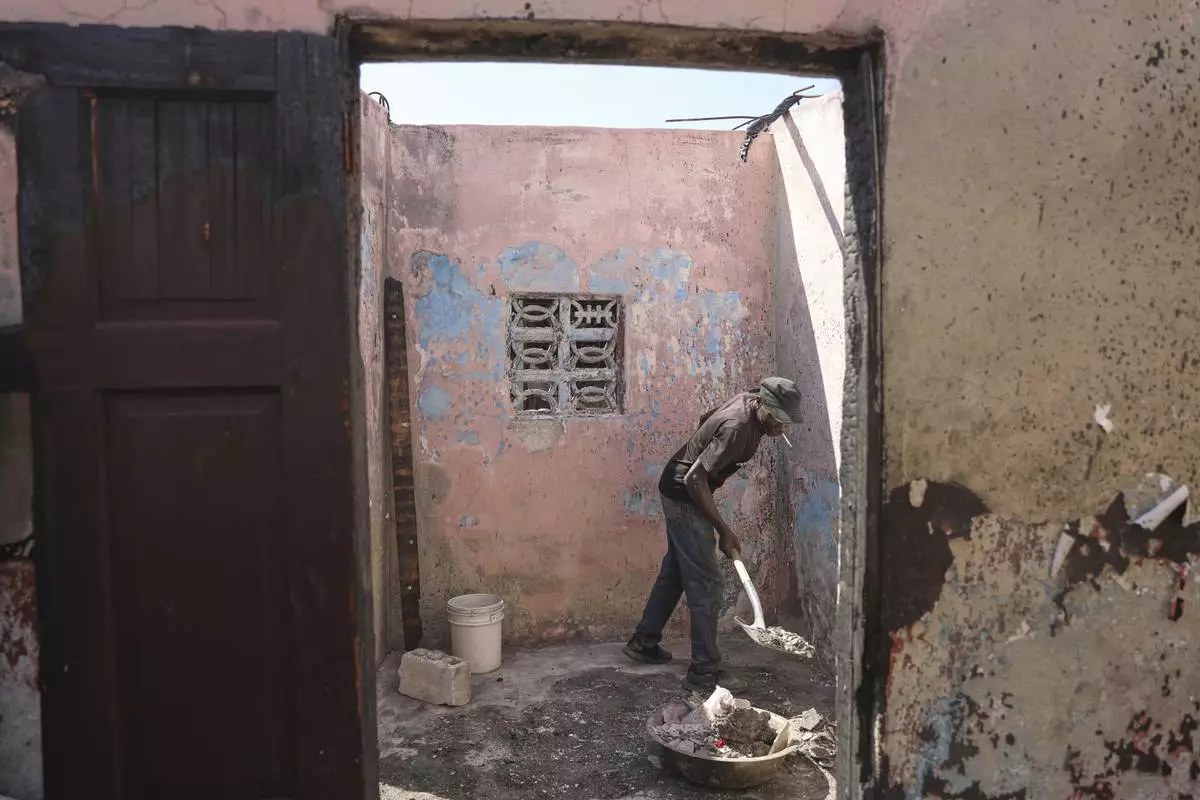
Francick Ferolis cleans his house after it was damaged by gang violence in the Solino neighborhood of Port-au-Prince, Haiti, Wednesday, Sept. 10, 2025. (AP Photo/Odelyn Joseph)
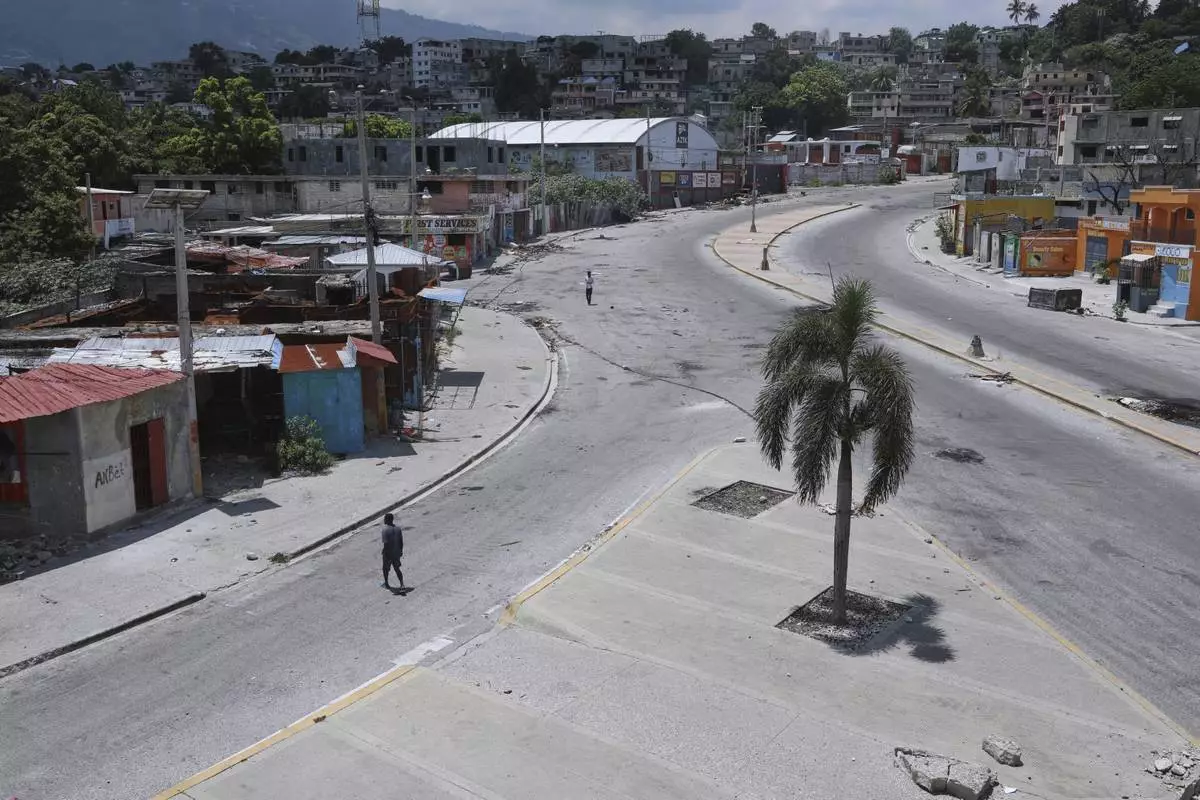
A main street is empty due to insecurity in the Delmas neighborhood of Port-au-Prince, Haiti, Tuesday, Sept. 2, 2025. (AP Photo/Odelyn Joseph)

People displaced by gang violence live at the Ministry of Public Works, Transport and Communications office converted into a shelter in Port-au-Prince, Haiti, Tuesday, Sept. 9, 2025. (AP Photo/Odelyn Joseph)