SOCIAL CIRCLE, Ga. (AP) — It seems like a terrible time to build an electric vehicle plant in the United States, but Rivian Automotive leaders say they're confident as the company starts long-delayed work on a $5 billion facility in Georgia.
The money-losing California-based company broke ground Tuesday east of Atlanta despite President Donald Trump’s successful push to roll back electric vehicle tax credits. Starting Sept. 30, buyers will no longer qualify for savings of up to $7,500 per car.
CEO RJ Scaringe said Tuesday that Rivian will sell its R2 sport utility vehicles not for environmental or tax incentive reasons, but because it's a superior vehicle.
“The description I’ll say for R2 is it isn’t an electric vehicle," he said. "I describe R2 as an incredible five-passenger offroad machine. And it happens to be electric.”
The Georgia plant, first announced in 2021, is Rivian’s key to reaching profitability. Now the company makes the high-end R1T pickup truck and the R1S SUV in Normal, Illinois, as well as delivery vans for Amazon and others. Its truck prices start at $71,000.
The Illinois plant will begin making the smaller R2 next year, with prices starting at $45,000. An expanded Illinois plant will be able to assemble 215,000 vehicles yearly. But if the R2 is a hit, and if Rivian successfully produces an even smaller R3, it will need more capacity. Scaringe said the Georgia operation, able to make 200,000 vehicles yearly starting in 2028, is the “foundation for our growth.” Rivian plans another 200,000 in capacity in phase two, volume that would spread fixed costs over many more vehicles.
The projections would be a big leap from the 40,000 to 46,000 vehicles Rivian expects to deliver this year, down from 52,000 last year. The company says it’s limiting production in part to launch 2026 models.
“For Rivian, it’s do-or-die time,” said Alex Oyler, North American director of auto research firm SBD Automotive. “We saw with Tesla that the key to profitability is scale, and you can’t scale if your cheapest vehicle is $70,000. So they need that plant online to achieve a level of scale of R2 and ultimately R3.”
Sales growth is slowing for electric vehicles in the United States, rising only 1.5% in 2025's first half, according to Cox Automotive.
Tesla accounted for almost 45% of U.S. electric vehicle sales in that period, according to Cox. But the giant is losing market share as others gain: General Motors' slice of American EV sales has climbed to 13%. By comparison, Rivian had a 3% share in the first half of the year, behind Tesla and six traditional automakers.
But excluding Tesla, Rivian is the most successful startup automaker.
The company initially tapped a largely unfilled niche: demand for electric pickups and SUVs. But competition now includes Ford’s F-150 Lightning and the electric Chevrolet Silverado.
After an initial public offering in 2021, Rivian shares have fallen by more than 80%, while automaker shares overall have outpaced the broader stock market. Rivian lost $1.66 billion in 2025’s first half.
At the same time, some automakers’ ardor for electric vehicles is cooling. Stellantis last week canceled Ram’s electric truck program. Ford has delayed production at a new Tennessee plant. And General Motors abandoned plans to build electric vehicles in suburban Detroit.
“With all the competition out there in this market and the slowing growth of EVs, it does not play in Rivian’s favor,” said Sam Fiorani, a vice president at AutoForecast Solutions. “However, there still is an EV market out there.”
Georgia has pledged $1.5 billion of incentives to Rivian in exchange for 7,500 company jobs paying at least $56,000 a year on average. Rivian can’t benefit from most incentives unless it meets employment goals, but the state is already spending $175 million to buy and grade land and improve roads.
Georgia Republican Gov. Brian Kemp, says he wants to make Georgia “the electric mobility capital of America,” but acknowledged Tuesday that “the road to get here has not been smooth.” He voiced confidence that Rivian can deliver “an innovation revolution” benefitting Georgians.
While Tesla has thousands of employees in California and Texas, some new electric vehicle plants have sputtered. Two separate EV makers that hoped to assemble vehicles in a former GM plant in Lordstown, Ohio, went bankrupt. Georgia’s Hyundai complex near Savannah is faring better, with production underway. However, a battery plant there has been delayed by U.S. Immigration and Customs Enforcement arresting 475 people on site, including more than 300 South Koreans.
Rivian was supposed to be making trucks by now at the 2,000-acre (800-hectare) site near Social Circle, about 45 miles (70 kilometers) east of Atlanta. As the company burned through cash in 2024, it paused construction. But German automaker Volkswagen agreed to invest $5.8 billion in Rivian in exchange for software and electrical technology. And then-President Joe Biden's administration agreed to loan Rivian $6.6 billion to build the Georgia plant.
Despite the Trump administration's hostility toward EVs, Scaringe said Tuesday that Rivian has built “a very close relationship” with the U.S. Department of Energy and that the company's goals align with some of Trump's big ones, including “U.S. manufacturing, U.S. technology, U.S. technology that supports global business, and leading in all those areas.”
Kemp said he has urged Energy Secretary Chris Wright to back Rivian.
Rivian also faces opposition from some residents who say the plant is an inappropriate neighbor to farms and will pollute the groundwater.
“I planned on dying and retiring on the front porch and the biggest project in Georgia has to go next door to me, of all places in the country?” asked Eddie Clay, who lives less than a mile away. He says his well water turned mud-choked after excavation at the Rivian site.
There are other challenges for Rivian, including tariffs costing $2,000 per vehicle, the Trump administration ending a tax-credit program that will cost the company $140 million in revenue this year, and long-term threats from low-priced, cutting-edge Chinese EVs. But Scaringe said the start of construction shows Rivian is working through its challenges.
“These are not the kinds of things you start without having clear sight to be able to fully finish and launch,” he said.
St. John reported from Detroit.
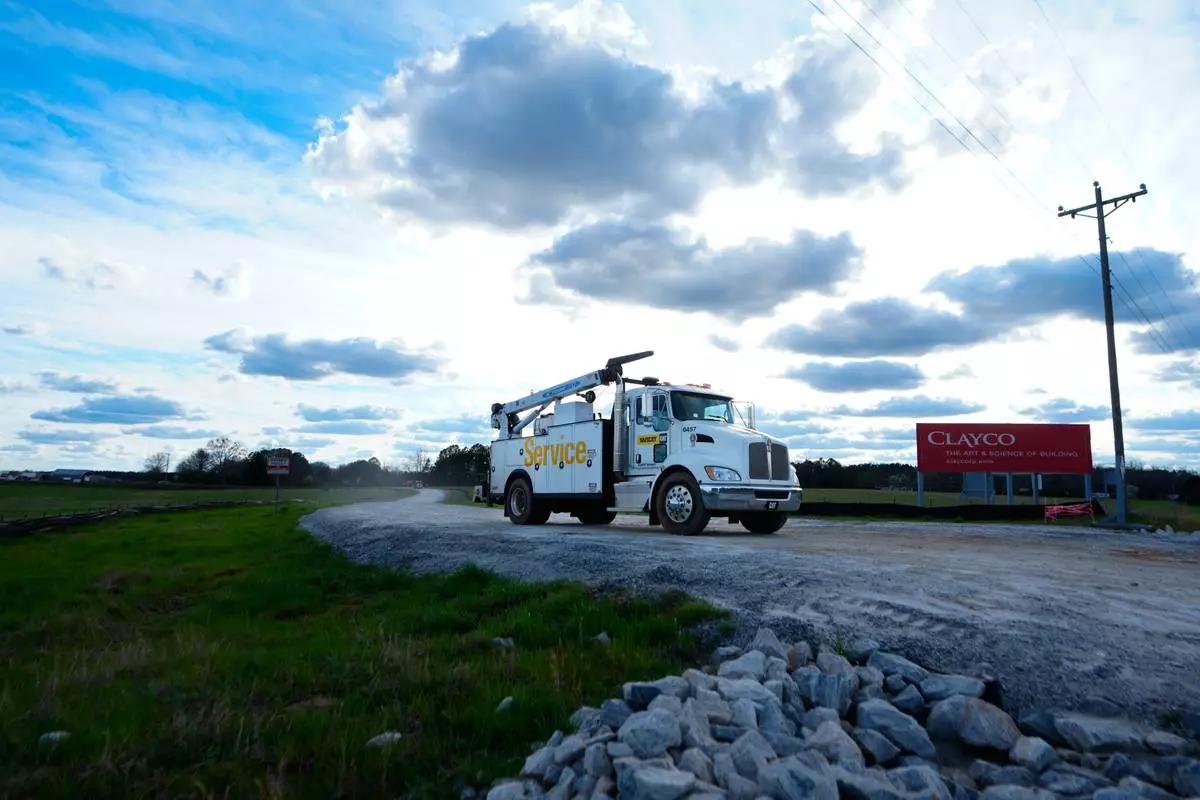
FILE - A truck leaves the site of a planned Rivian electric truck plant Thursday, March 7, 2024, in Social Circle, Ga. (AP Photo/John Bazemore, File)
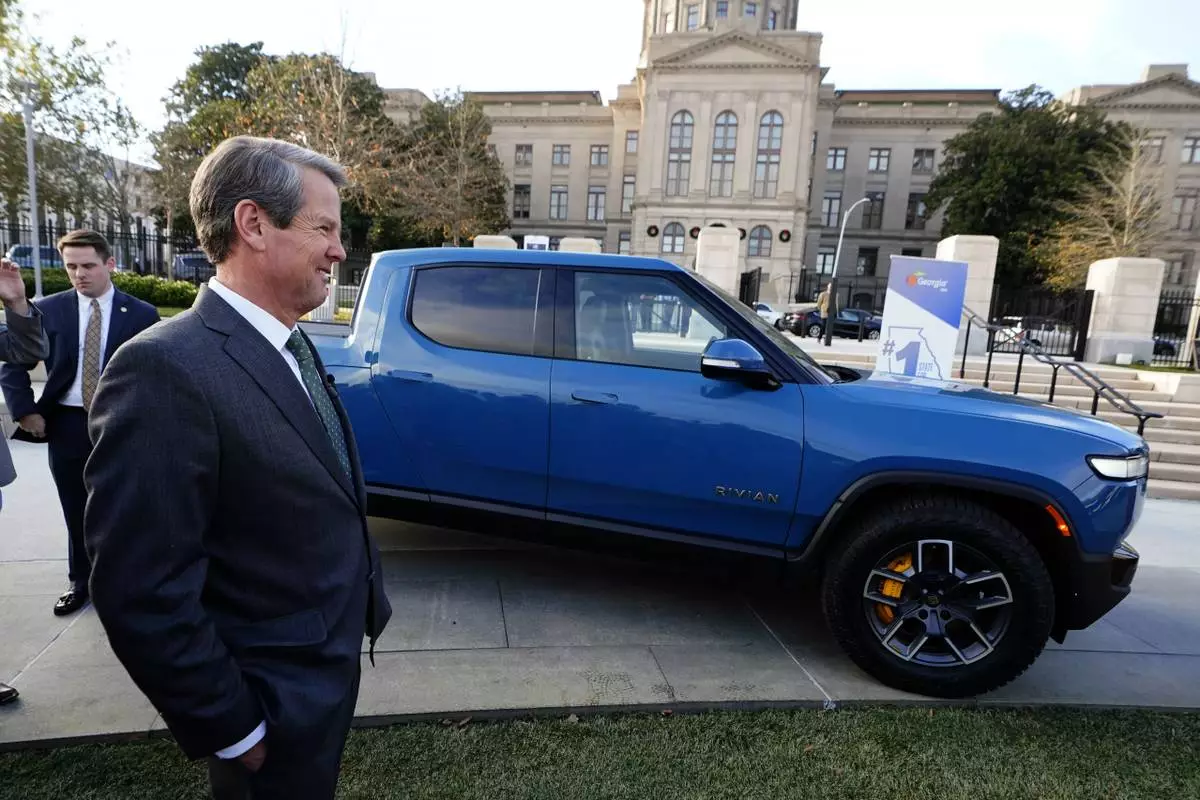
FILE - Gov. Brian Kemp smiles as he stands next to a Rivian electric truck during a ceremony to announce that the electric truck maker plans to build a $5 billion battery and assembly plant east of Atlanta projected to employ 7,500 workers, Dec. 16, 2021, in Atlanta. (AP Photo/John Bazemore, File)
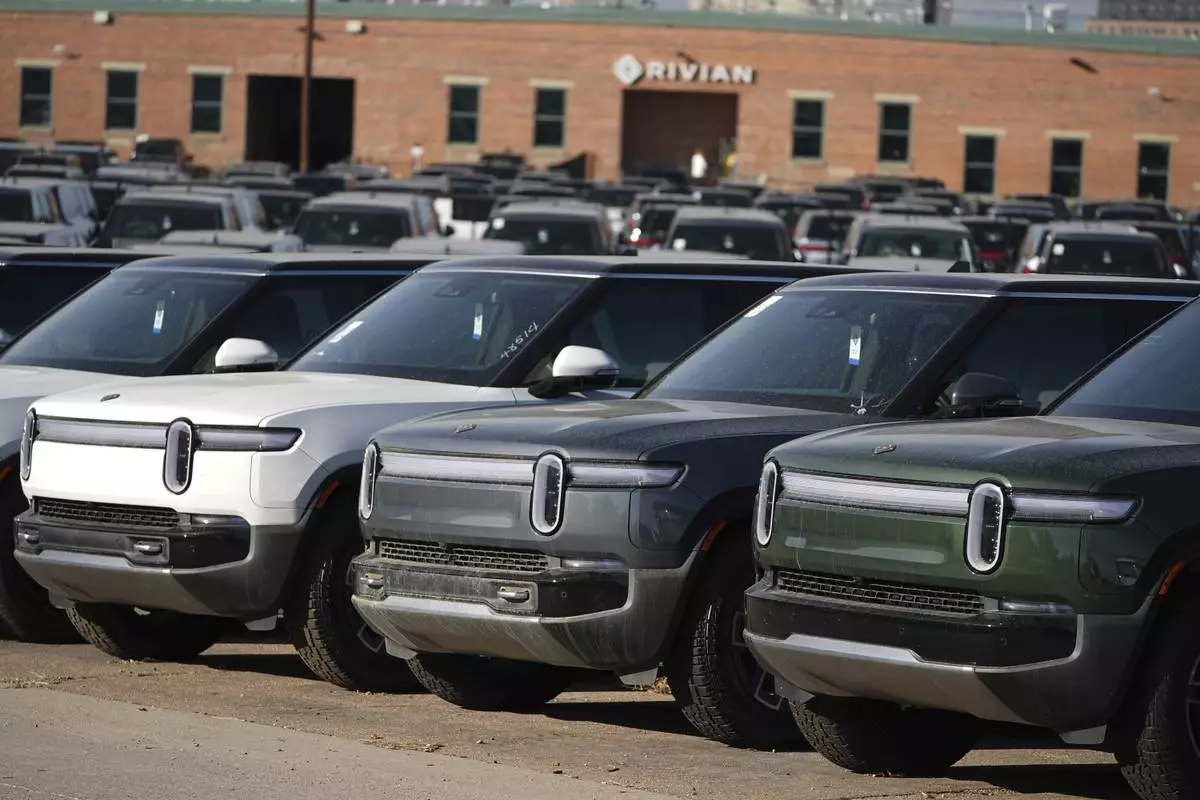
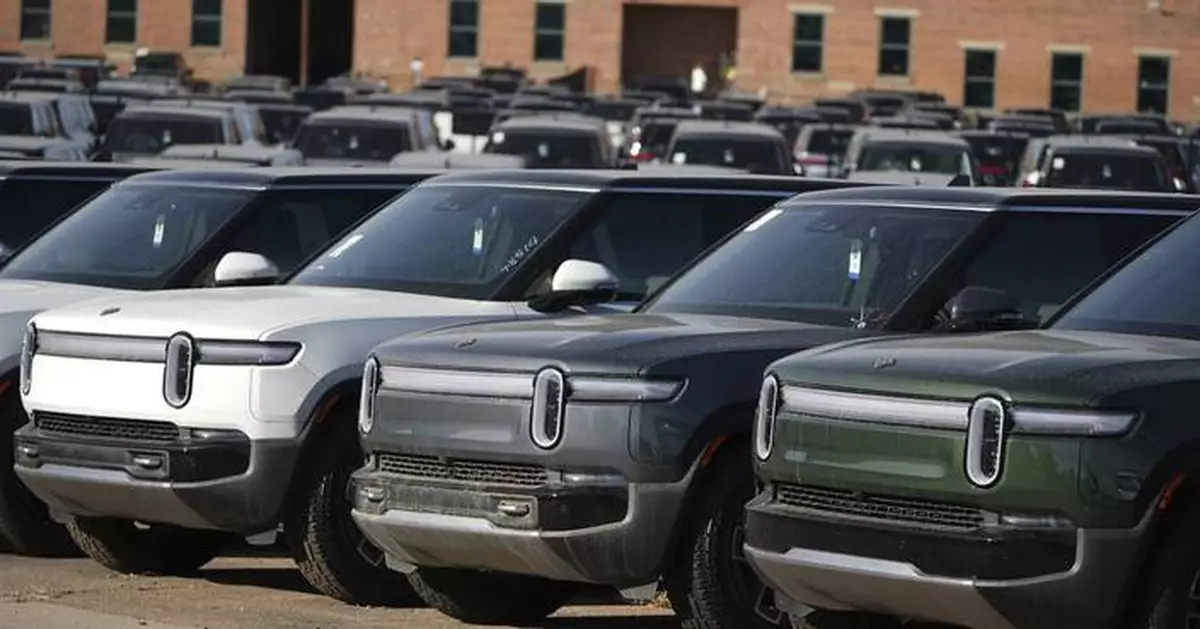
FILE - A long line of unsold 2024 R1S electric utility vehicles sits at a Rivian service center Nov. 26, 2024, in east Denver. (AP Photo/David Zalubowski, File)
WASHINGTON (AP) — The Supreme Court seemed poised Wednesday to reject President Donald Trump’s restrictions on birthright citizenship in a consequential case that was magnified by his unparalleled presence in the courtroom.
Conservative and liberal justices questioned whether Trump's order declaring that children born to parents who are in the United States illegally or temporarily are not American citizens comports with either the Constitution or federal law.
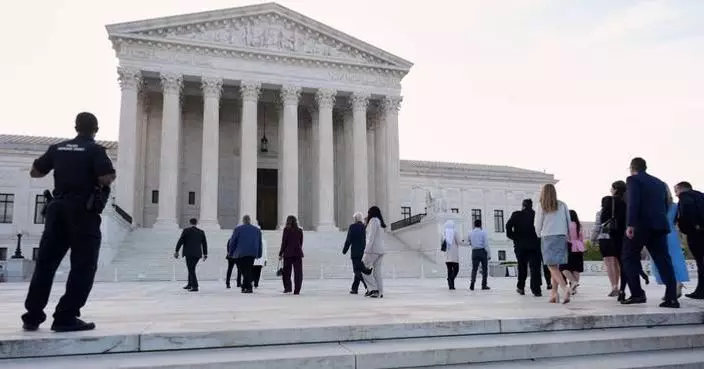
Arguments lasted more than two hours in a crowded courtroom that included not only Trump, the first sitting president to attend arguments at the nation’s highest court, but also Attorney General Pam Bondi and Commerce Secretary Howard Lutnick, and in seats reserved for the justices' guests, actor Robert De Niro.
Trump spent just over an hour inside the courtroom for arguments made by the Republican administration's top Supreme Court lawyer, Solicitor General D. John Sauer. The president departed shortly after lawyer Cecillia Wang began her presentation in defense of broad birthright citizenship.
After court adjourned, Trump posted on Truth Social: “We are the only Country in the World STUPID enough to allow ‘Birthright’ Citizenship!” Actually, about three dozen countries, nearly all of them in the Americas, guarantee citizenship to children born on their territory.
Trump heard Sauer face one skeptical question after another. Justices asked about the legal basis for the order and voiced more practical concerns.
“Is this happening in the delivery room?” Justice Ketanji Brown Jackson asked, drilling down into the logistics of how the government would actually figure out who’s entitled to citizenship and who’s not.
Chief Justice John Roberts suggested that Sauer was relying on quirky exceptions to citizenship to make a broad argument about people who are in the country illegally. “I’m not quite sure how you can get to that big group from such tiny and sort of idiosyncratic examples,” Roberts said.
Justice Clarence Thomas sounded the most likely among the nine justices to side with Trump.
“How much of the debates around the 14th Amendment had anything to do with immigration?” Thomas asked, pointing out that the purpose of the amendment was to grant citizenship to Black people, including freed slaves.
The justices heard Trump’s appeal of a lower-court ruling from New Hampshire that struck down the citizenship restrictions, one of several courts that have blocked them. The restrictions have not taken effect anywhere in the country.
The case frames another test of Trump's assertions of executive power that defy long-standing precedent for a court that has largely ruled in the president's favor — but with some notable exceptions that Trump has responded to with starkly personal criticisms of the justices. A definitive ruling is expected by early summer.
The birthright citizenship order, which Trump signed the first day of his second term, is part of his Republican administration’s broad immigration crackdown.
Birthright citizenship is the first Trump immigration-related policy to reach the court for a final ruling. The justices previously struck down global tariffs Trump had imposed under an emergency powers law that had never been used that way.
Trump reacted furiously to the late February tariffs decision, saying he was ashamed of the justices who ruled against him and calling them unpatriotic.
He issued a preemptive broadside against the court on Sunday on his Truth Social platform. “Birthright Citizenship is not about rich people from China, and the rest of the World, who want their children, and hundreds of thousands more, FOR PAY, to ridiculously become citizens of the United States of America. It is about the BABIES OF SLAVES!,” the president wrote. “Dumb Judges and Justices will not a great Country make!”
Trump's order would upend the long-standing view that the Constitution’s 14th Amendment, ratified in 1868, and federal law since 1940 confer citizenship on everyone born on American soil, with narrow exceptions for the children of foreign diplomats and those born to a foreign occupying force.
The 14th Amendment was intended to ensure that Black people, including former slaves, had citizenship, though the Citizenship Clause is written more broadly. “All persons born or naturalized in the United States, and subject to the jurisdiction thereof, are citizens of the United States and of the State wherein they reside,” it reads.
In a series of decisions, lower courts have struck down the executive order as illegal, or likely so, under the Constitution and federal law. The decisions have invoked the high court's 1898 ruling in Wong Kim Ark, which held that the U.S.-born child of Chinese nationals was a citizen.
The Trump administration argues that the common view of citizenship is wrong, asserting that children of noncitizens are not “subject to the jurisdiction” of the United States and therefore are not entitled to citizenship.
The court should use the case to set straight “long-enduring misconceptions about the Constitution’s meaning,” Sauer wrote.
Appearing before the court, Sauer said unrestricted citizenship encourages illegal immigration and “birth tourism” by pregnant women who visit the U.S. only to give birth.
Roberts asked Sauer how significant “birth tourism” is.
No one knows for sure, he said, adding, “but of course, we’re in a new world now” where 8 billion people are a plane ride away “from having a child who’s a U.S. citizen.”
The chief justice replied, “It’s a new world. It’s the same Constitution.”
Justice Neil Gorsuch, a Trump appointee, also revealed his skepticism of Sauer's position when the solicitor general said the 1898 Supreme Court case should be read to endorse Trump's view of citizenship. "I’m not sure how much you want to rely on Wong Kim Ark,” Gorsuch said.
Yet another conservative justice appointed by Trump, Brett Kavanaugh, suggested to Wang that the court could resolve the case in Wang’s favor either with a “short opinion” saying that the Wong Kim Ark case was correctly decided and it means Trump’s order is unconstitutional.
Or, he said, the justices could avoid constitutional questions and find that the order is illegal under federal law.
No court has accepted the Trump administration's argument, and lawyers for pregnant women whose children would be affected by the order said the Supreme Court should not be the first to do so, Wang told the justices.
The most difficult questions Wang faced, from several justices, dealt with the repeated use of the word “domicile” in Wong Kim Ark, which the administration says indicates that the court's view of birthright citizenship excluded people in the country temporarily or illegally.
Roberts said the word is used 20 times in the 1898 decision. “Isn’t it at least something to be concerned about?” he asked.
Wang says it’s true that the Chinese parents in that case were domiciled in the U.S. but that the decision did not turn on that fact.
Generally, though, the intensity of the justices' questions dropped off during her presentation, often a signal of where the court will come out.
More than one-quarter of a million babies born in the U.S. each year would be affected by the executive order, according to research by the Migration Policy Institute and Pennsylvania State University’s Population Research Institute.
While Trump has largely focused on illegal immigration in his rhetoric and actions, the birthright restrictions also would apply to people who are legally in the United States, including students and applicants for green cards, or permanent resident status.
Associated Press writer Darlene Superville contributed to this report.
Follow the AP’s coverage of the U.S. Supreme Court at https://apnews.com/hub/us-supreme-court.
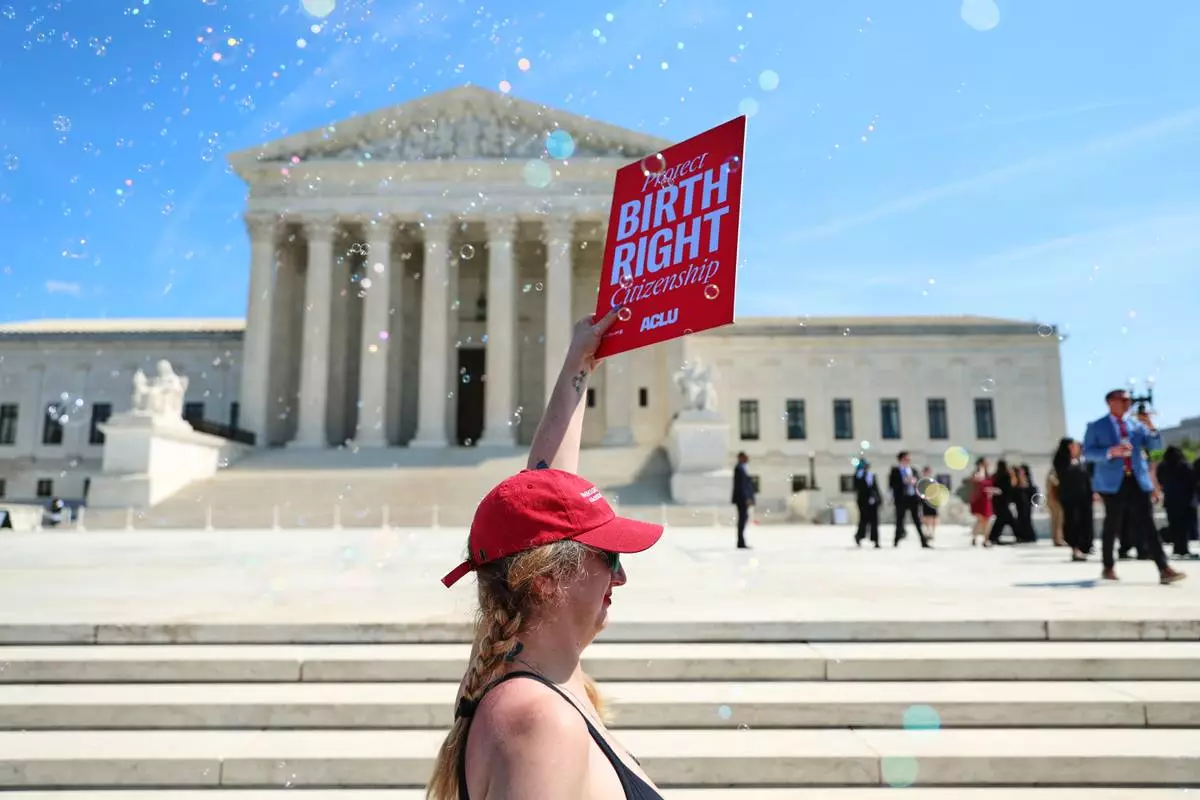
Demonstrators rally outside the U.S. Supreme Court after justices hear oral arguments on whether President Donald Trump can deny citizenship to children born to parents who are in the United States illegally or temporarily, on Capitol Hill in Washington, Wednesday, April 1, 2026. (AP Photo/Tom Brenner)
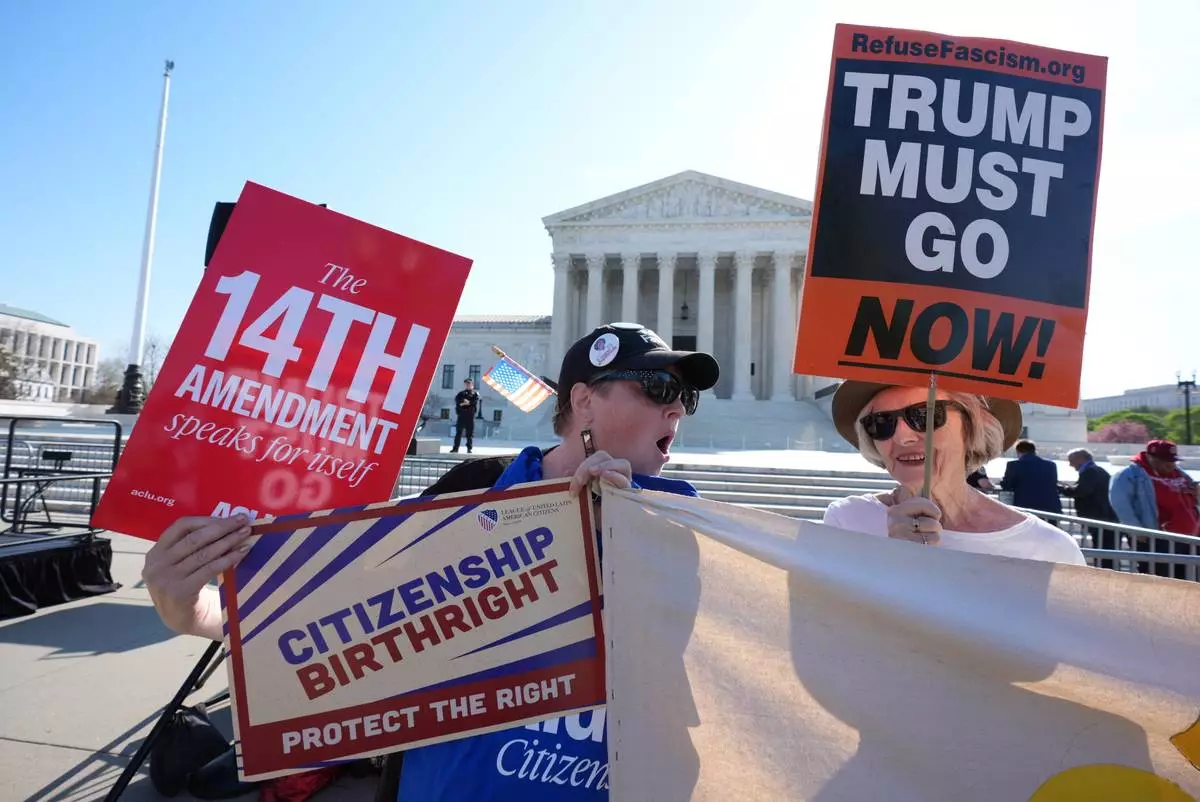
Pro and anti-Trump demonstrators rally outside the U.S. Supreme Court, before justices hear oral arguments on whether President Donald Trump can deny citizenship to children born to parents who are in the United States illegally or temporarily, on Capitol Hill, in Washington, Wednesday, April 1, 2026. (AP Photo/J. Scott Applewhite)
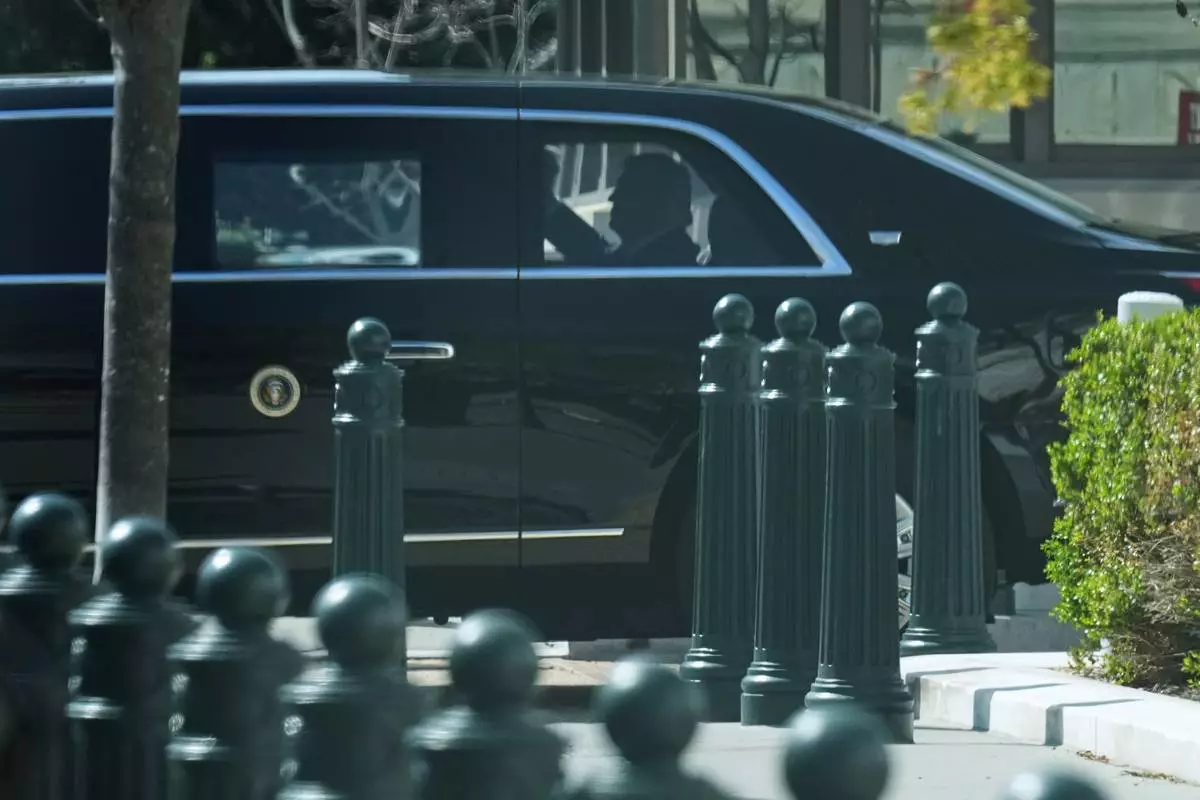
President Donald Trump leaves the U.S. Supreme Court, Wednesday, April 1, 2026, in Washington. (AP Photo/Mark Schiefelbein)

President Donald Trump's motorcade arrives at the U.S. Supreme Court, Wednesday, April 1, 2026, in Washington. (AP Photo/Tom Brenner)
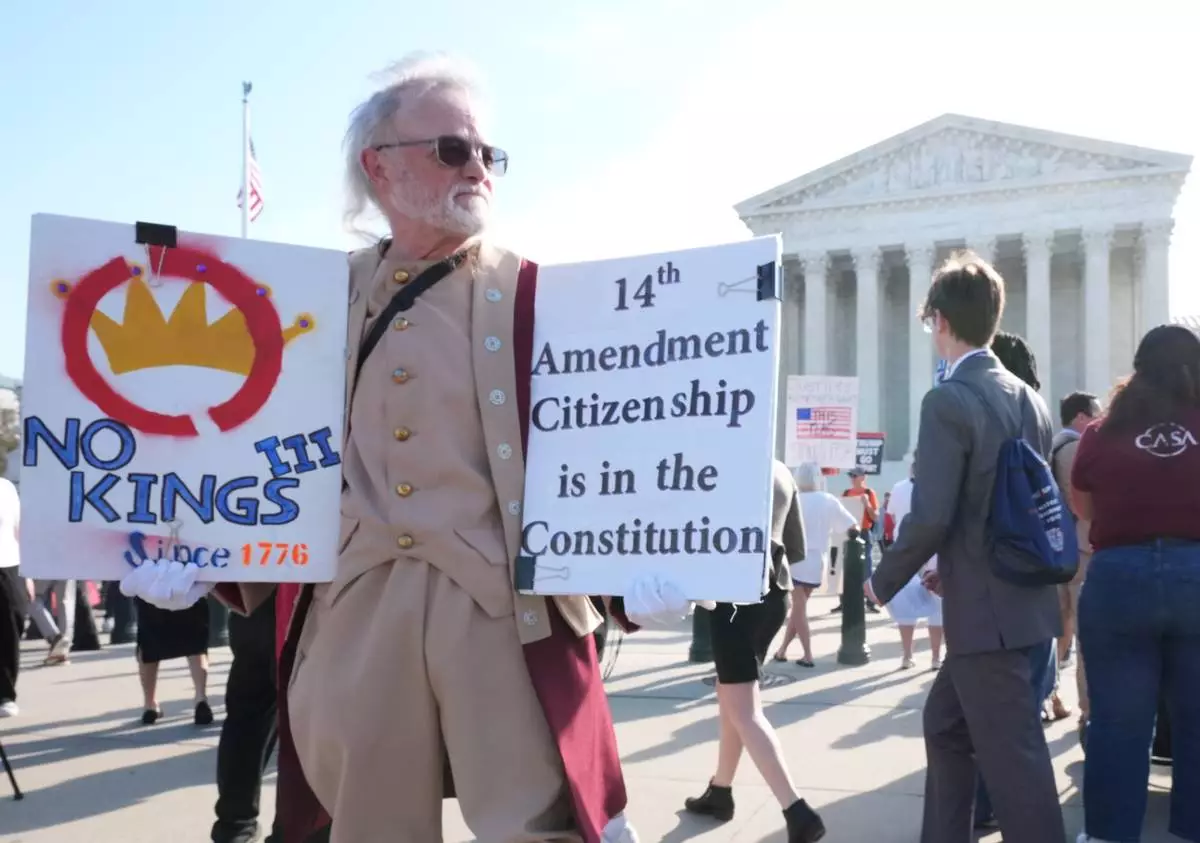
Pro and anti-Trump demonstrators rally outside the U.S. Supreme Court, before justices hear oral arguments on whether President Donald Trump can deny citizenship to children born to parents who are in the United States illegally or temporarily, on Capitol Hill, in Washington, Wednesday, April 1, 2026. (AP Photo/J. Scott Applewhite)

President Donald Trump's motorcade arrives at the U.S. Supreme Court, Wednesday, April 1, 2026, in Washington. (AP Photo/Tom Brenner)
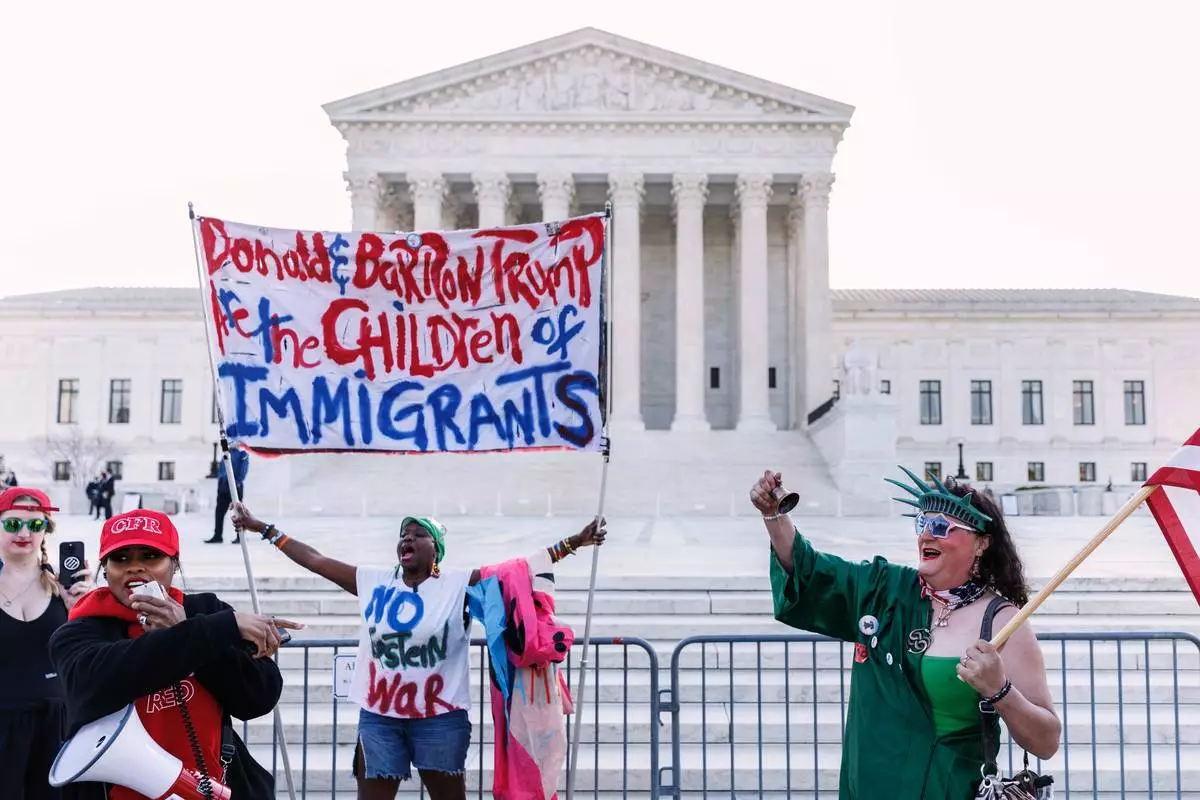
Demonstrators holding opposing views verbally engage ahead of President Donald Trump's arrival at the U.S. Supreme Court, Wednesday, April 1, 2026, in Washington. (AP Photo/Tom Brenner)
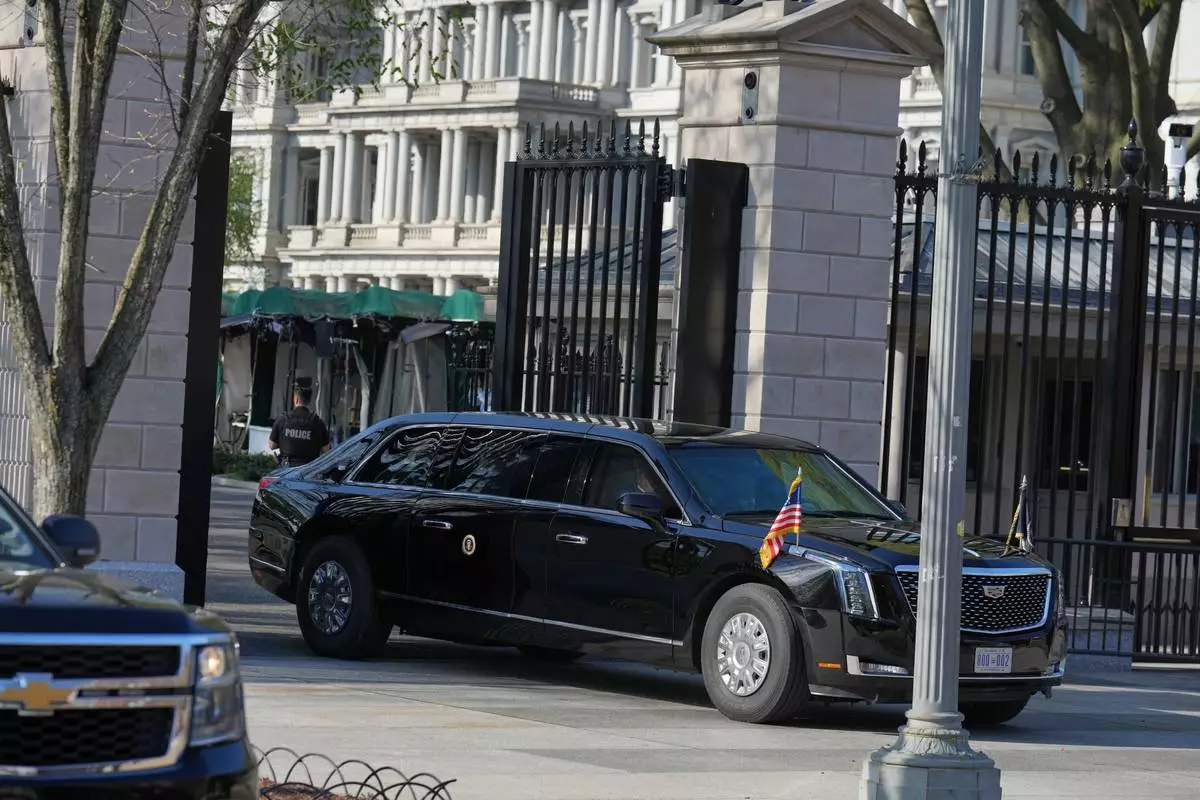
President Donald Trump's limo exits the White House en route to the Supreme Court, Wednesday, April 1, 2026, in Washington. (AP Photo/Mark Schiefelbein)
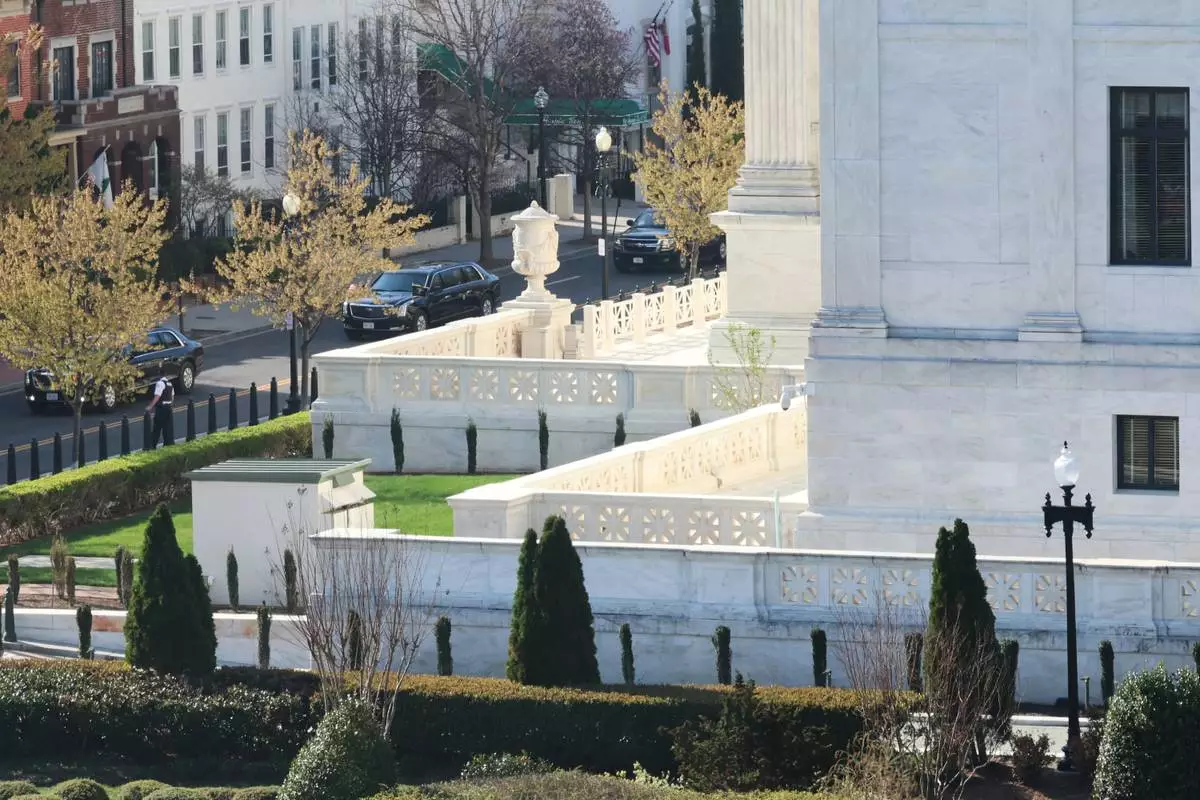
President Donald Trump's motorcade arrives at the U.S. Supreme Court, Wednesday, April 1, 2026, in Washington. (AP Photo/Tom Brenner)

Pro and anti-Trump demonstrators rally outside the U.S. Supreme Court, before justices hear oral arguments on whether President Donald Trump can deny citizenship to children born to parents who are in the United States illegally or temporarily, on Capitol Hill, in Washington, Wednesday, April 1, 2026. (AP Photo/J. Scott Applewhite)
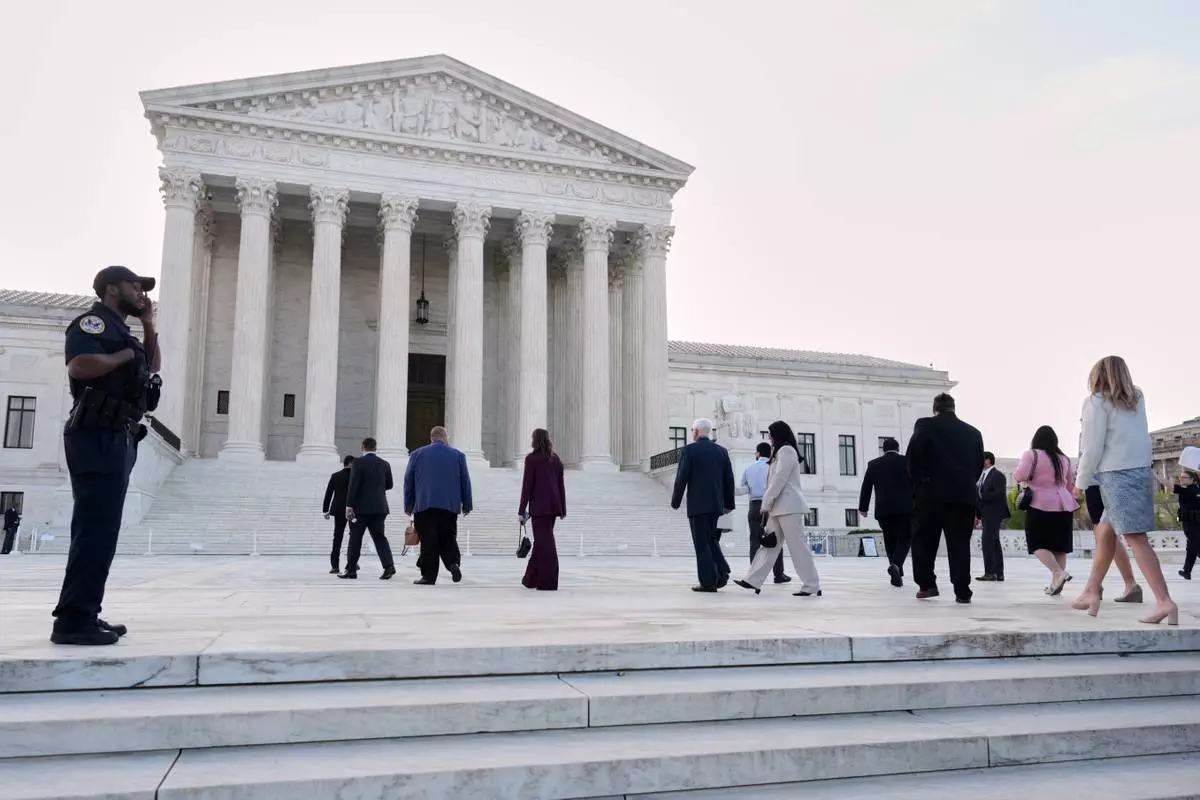
People arrive to walk inside the U.S. Supreme Court, on Capitol Hill in Washington, Wednesday, April 1, 2026. The Supreme Court justices will hear oral arguments today on whether President Donald Trump can deny citizenship to children born to parents who are in the United States illegally or temporarily. (AP Photo/J. Scott Applewhite)
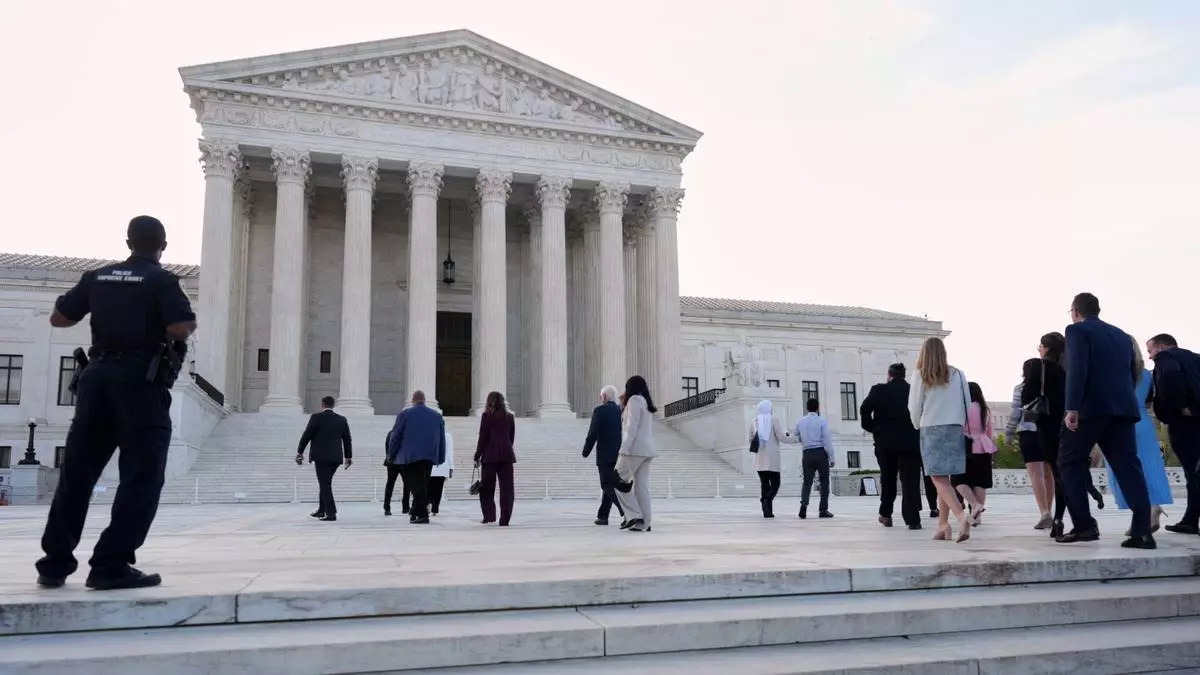
People arrive to walk inside the U.S. Supreme Court, on Capitol Hill in Washington, Wednesday, April 1, 2026. The Supreme Court justices will hear oral arguments today on whether President Donald Trump can deny citizenship to children born to parents who are in the United States illegally or temporarily. (AP Photo/J. Scott Applewhite)
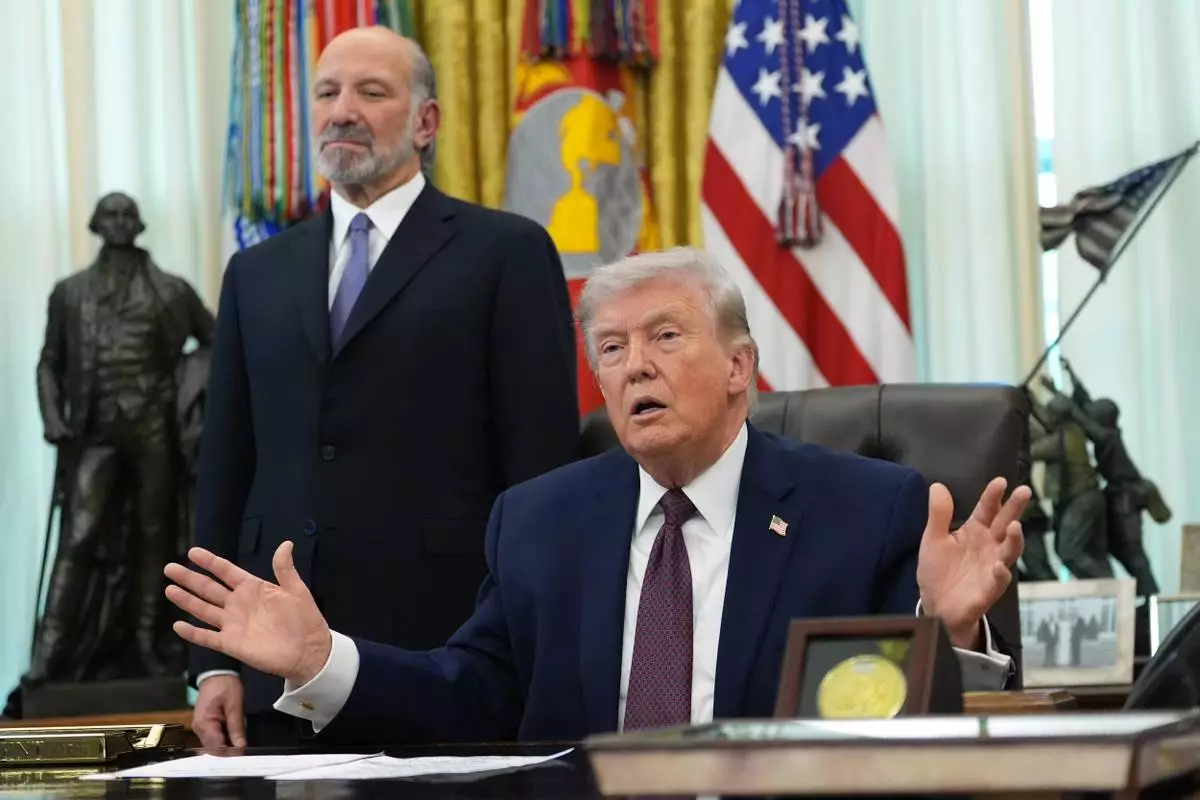
President Donald Trump answers questions from reporters after signing an executive order in the Oval Office of the White House Tuesday, March 31, 2026, in Washington, as Commerce Secretary Howard Lutnick listens. (AP Photo/Alex Brandon)
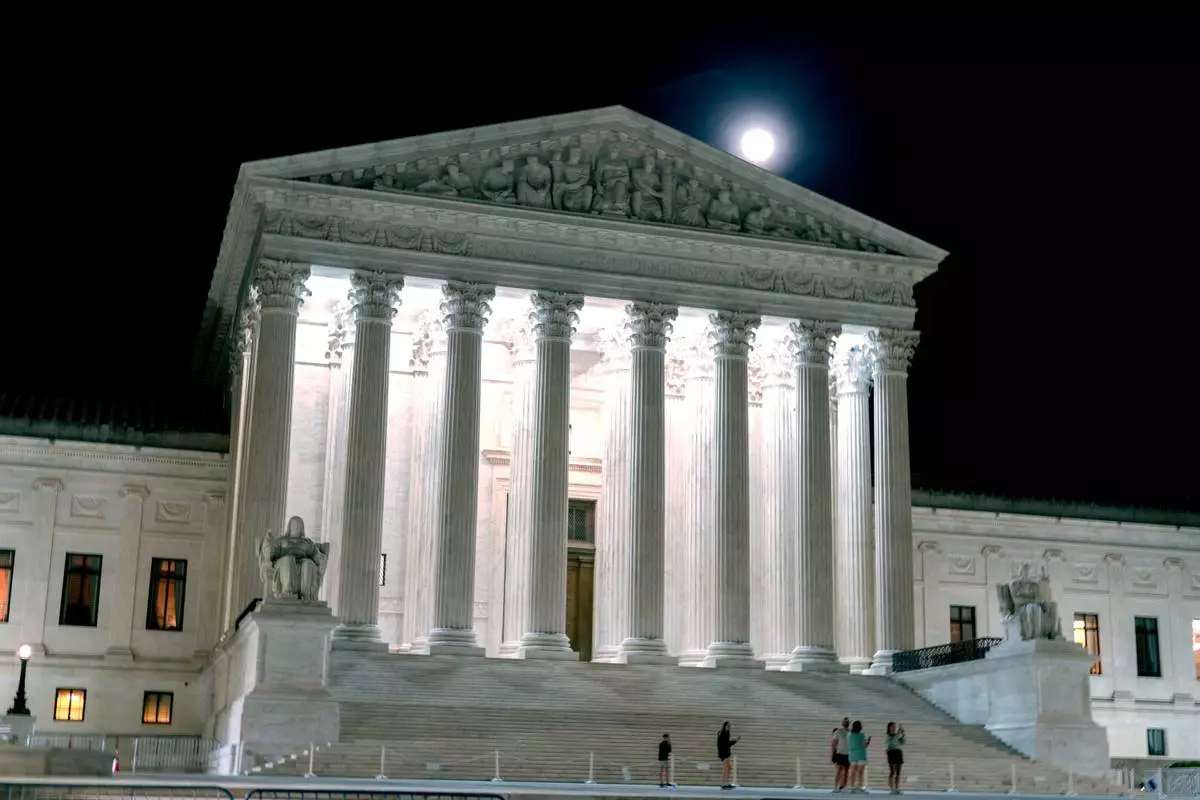
The U.S. Supreme Court is seen as the moon rises Tuesday, March 31, 2026, in Washington. (AP Photo/Jose Luis Magana)