Skip to Content Facebook Feature Image

ICE crackdowns intensify across Boston as sanctuary cities face Trump’s latest operation

News

ICE crackdowns intensify across Boston as sanctuary cities face Trump’s latest operation
News

News

ICE crackdowns intensify across Boston as sanctuary cities face Trump’s latest operation

2025-09-17 04:12 Last Updated At:04:20

BOSTON (AP) — Immigrants are being detained while going to work, outside courthouses, and at store parking lots in Metro Boston as President Donald Trump targets so-called sanctuary cities in his effort to ramp up immigration enforcement.

As families hole up in homes — afraid to leave and risk detainment — advocates are reporting an increased presence of unmarked U.S. Immigration and Customs Enforcement vehicles sitting in parking lots and other public areas throughout immigrant communities, where agents appeared to target work vans. One man captured a video of three landscapers who were working on the Saugus Town Hall property being arrested after agents smashed their truck window.

More Images
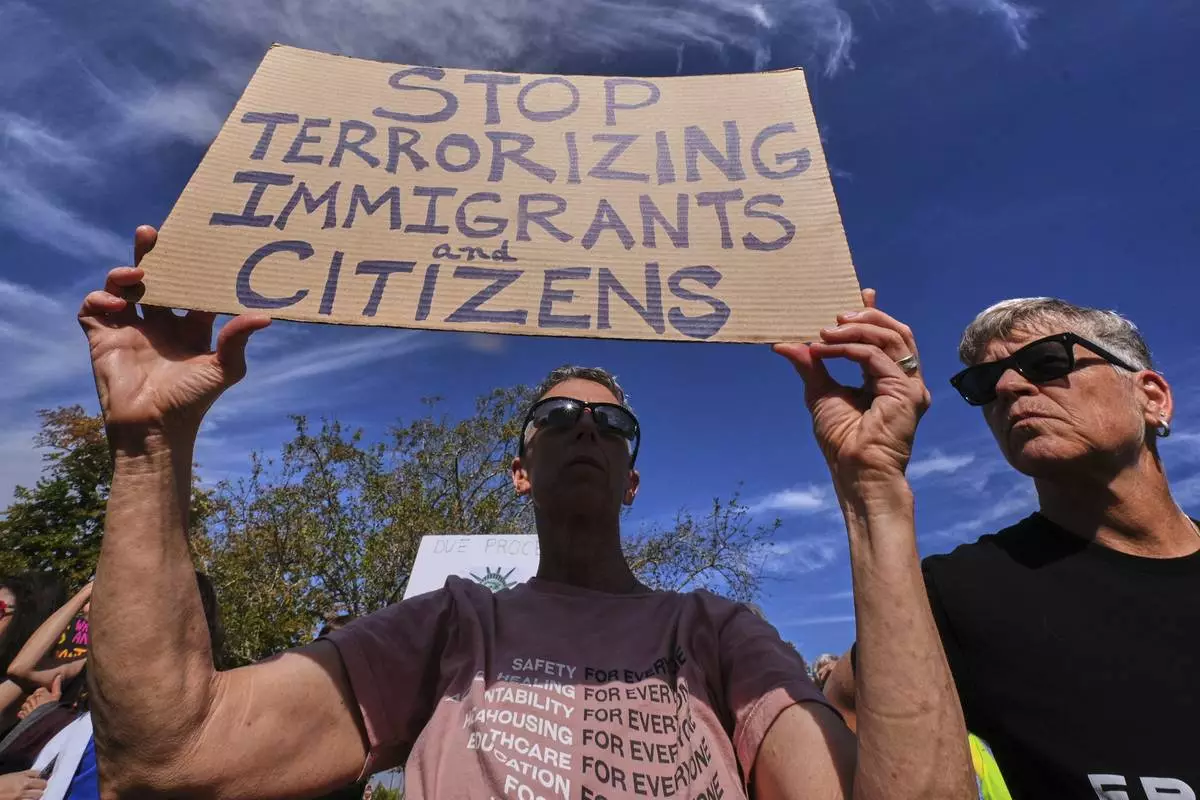
Protesters gather outside the U.S. Immigration and Customs Enforcement regional field office, Tuesday, Sept. 16, 2025, in Burlington, Mass. (AP Photo/Charles Krupa)
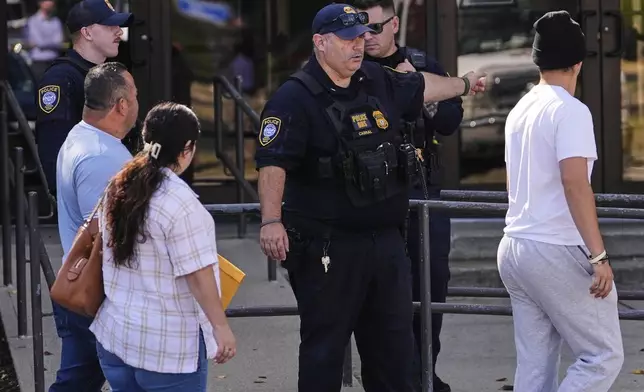
Protesters gather outside the U.S. Immigration and Customs Enforcement regional field office, Tuesday, Sept. 16, 2025, in Burlington, Mass. (AP Photo/Charles Krupa)
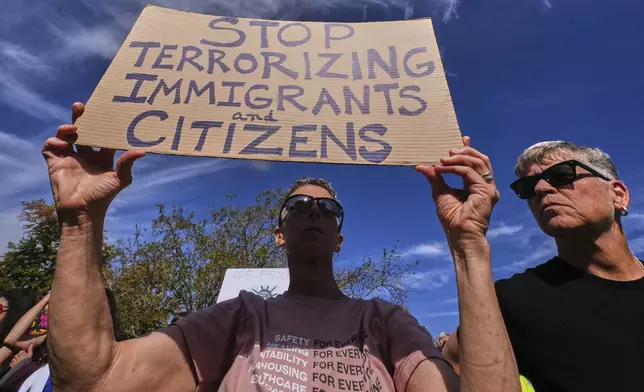
A Department of Homeland Security police officer directs visitors towards the front door of the U.S. Immigration and Customs Enforcement regional field office, Tuesday, Sept. 16, 2025, in Burlington, Mass. (AP Photo/Charles Krupa)
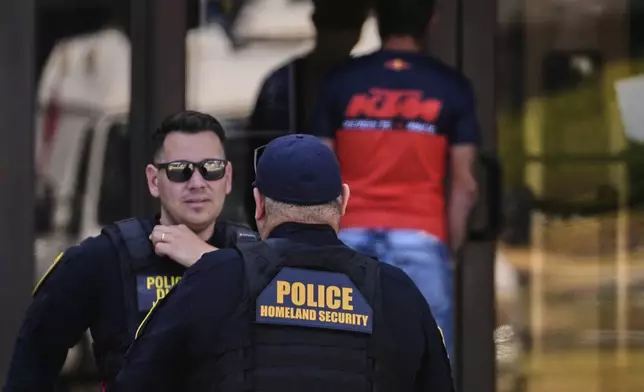
A Department of Homeland Security police officer directs visitors towards the front door of the U.S. Immigration and Customs Enforcement regional field office, Tuesday, Sept. 16, 2025, in Burlington, Mass. (AP Photo/Charles Krupa)
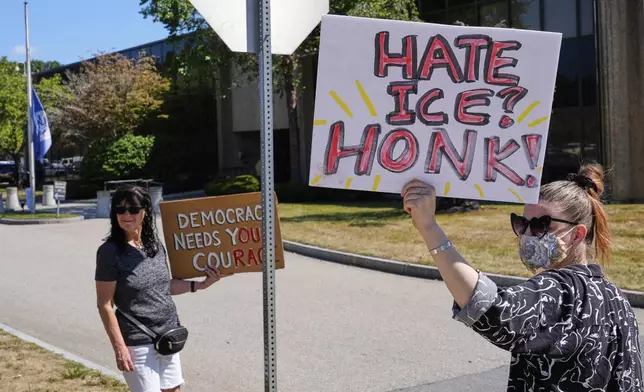
Protesters gather outside the U.S. Immigration and Customs Enforcement regional field office, Tuesday, Sept. 16, 2025, in Burlington, Mass. (AP Photo/Charles Krupa)

Protesters gather outside the U.S. Immigration and Customs Enforcement regional field office, Tuesday, Sept. 16, 2025, in Burlington, Mass. (AP Photo/Charles Krupa)

Department of Homeland Security police officers are stationed at the front door of the U.S. Immigration and Customs Enforcement regional field office, Tuesday, Sept. 16, 2025, in Burlington, Mass. (AP Photo/Charles Krupa)

Department of Homeland Security police officers are stationed at the front door of the U.S. Immigration and Customs Enforcement regional field office, Tuesday, Sept. 16, 2025, in Burlington, Mass. (AP Photo/Charles Krupa)

Protesters picket outside the U.S. Immigration and Customs Enforcement regional field office, at rear, Thursday, Sept. 11, 2025, in Burlington, Mass. (AP Photo/Charles Krupa)
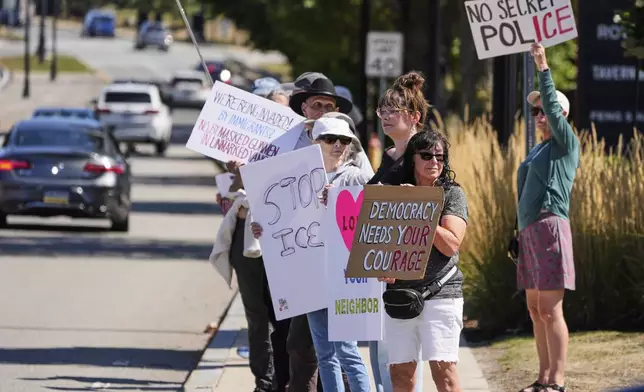
Protesters picket outside the U.S. Immigration and Customs Enforcement regional field office, at rear, Thursday, Sept. 11, 2025, in Burlington, Mass. (AP Photo/Charles Krupa)

Protesters picket near the U.S. Immigration and Customs Enforcement regional field office, Thursday, Sept. 11, 2025, in Burlington, Mass. (AP Photo/Charles Krupa)
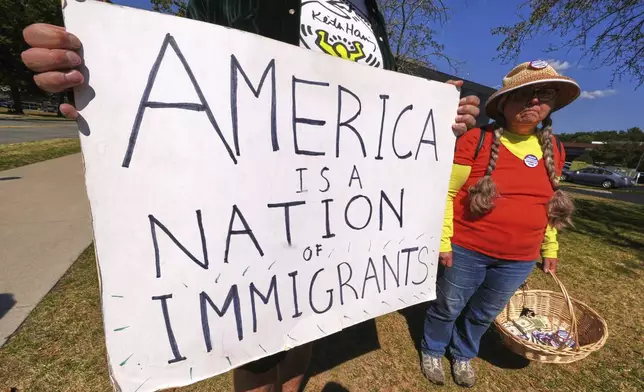
Protesters picket near the U.S. Immigration and Customs Enforcement regional field office, Thursday, Sept. 11, 2025, in Burlington, Mass. (AP Photo/Charles Krupa)
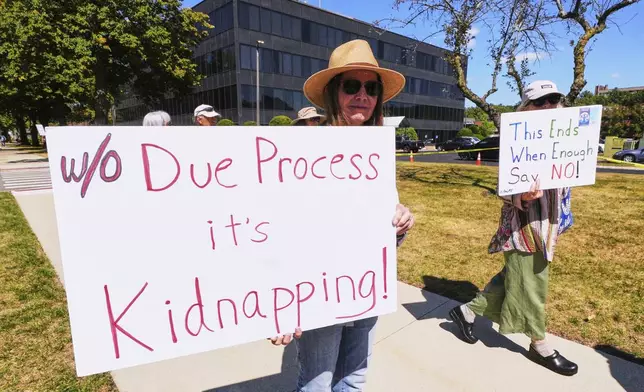
Protesters picket outside the U.S. Immigration and Customs Enforcement regional field office, Thursday, Sept. 11, 2025, in Burlington, Mass. (AP Photo/Charles Krupa)
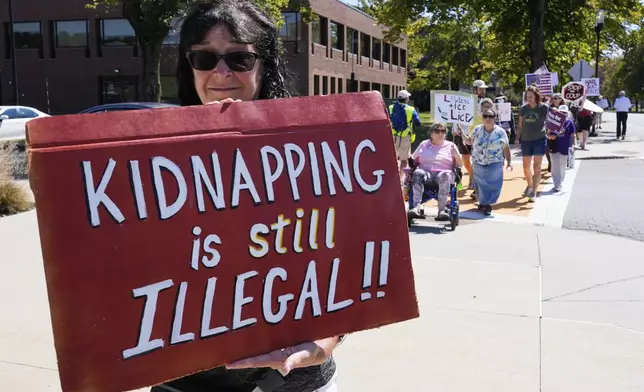
Protesters picket outside the U.S. Immigration and Customs Enforcement regional field office, Thursday, Sept. 11, 2025, in Burlington, Mass. (AP Photo/Charles Krupa)

Protesters picket outside the U.S. Immigration and Customs Enforcement regional field office, Thursday, Sept. 11, 2025, in Burlington, Mass. (AP Photo/Charles Krupa)

Protesters picket outside the U.S. Immigration and Customs Enforcement regional field office, Thursday, Sept. 11, 2025, in Burlington, Mass. (AP Photo/Charles Krupa)

Protesters picket near the U.S. Immigration and Customs Enforcement regional field office, Thursday, Sept. 11, 2025, in Burlington, Mass. (AP Photo/Charles Krupa)

Protesters picket near the U.S. Immigration and Customs Enforcement regional field office, Thursday, Sept. 11, 2025, in Burlington, Mass. (AP Photo/Charles Krupa)

Just north of Boston, the city of Everett canceled its annual Hispanic Heritage Month festival after its mayor said it wouldn't be right to "hold a celebration at a time when community members may not feel safe attending.”

The actions have been praised by public officials like New Hampshire Republican Gov. Kelly Ayotte, who signed legislation this year banning sanctuary city policies in her state, vowing not to let New Hampshire “go the way of Massachusetts." ICE this summer began utilizing a New Hampshire airport about an hour from Boston to transport New England detainees.

However, others argue that ICE's presence in Massachusetts is doing more harm than good.

“This is really increasing the fear in communities, which is already incredibly high,” said Elizabeth Sweet, executive director of the Massachusetts Immigrant and Refugee Advocacy Coalition.

Cities like Boston and Chicago — where Mayor Brandon Johnson has also condemned the Trump administration’s recent immigration crackdown, calling it an example of “tyranny” — have become targets for enforcement in recent days. Trump also threatened to potentially deploy the National Guard to Chicago, though he had wavered on a military deployment last week.

The U.S. Department of Justice on Sept. 4 filed a lawsuit against Mayor Michelle Wu, the city of Boston and its police department over its sanctuary city policies, claiming they’re interfering with immigration enforcement. In response, Wu accused Trump of “attacking cities to hide his administration’s failures.”

Now, ICE has launched an operation it called “Patriot 2.0" on the heels of a May crackdown where nearly 1,500 immigrants were detained in Massachusetts. Its latest operation came days before a preliminary mayoral election, where incumbent Wu won easily. The mayor has become a frequent target over her defense of the city and its so-called sanctuary policies, which limit cooperation between local police and federal immigration agents.

Homeland Security Assistant Secretary Tricia McLaughlin said the Boston surge would focus on “the worst of the worst criminal illegal aliens” living in Massachusetts.

“Sanctuary policies like those pushed by Mayor Wu not only attract and harbor criminals but protect them at the peril of law-abiding American citizens," she said in a press release early last week, which detailed the arrest of seven individuals by ICE, including a 38-year-old man from Guatemala who had previously been arrested on assault-related charges.

The agency did not respond to requests from The Associated Press about the number of immigrants detained since “Patriot 2.0” began.

ICE has contracts to detain people at multiple correctional facilities across New England, including county jails as well as the federal prison in Berlin, New Hampshire, and a publicly-owned, privately operated prison in Central Falls, Rhode Island.

Volunteers monitoring flights carrying detainees from New Hampshire’s Portsmouth International Airport at Pease have documented the transfer of more than 300 individuals since early August, with at least five flights per week transferring people from New Hampshire, Vermont, Maine and Massachusetts. All of the detainees have been in shackles, said David Holt, who has been organizing regular protests at Pease.

Protesters gathered at venues like the ICE office in Burlington, where three participants were arrested on trespassing charges.

Luce, the Immigrant Justice Network of Massachusetts, staffed its hotline with interpreters who speak English, Spanish, Portuguese, French, Mandarin, and Haitian Creole to collect information about ICE sightings. The organization put out a call for volunteers who speak languages like Cape Verdean Kriolu, Nepali and Vietnamese to help manage the influx.

Kevin Lam, co-executive director with the Asian American Resource Workshop, a community group that works on immigration and other issues, said they have seen a “spike” in ICE activity, including five Vietnamese residents from a Boston neighborhood who were detained last week.

He and other advocates said many immigrants have expressed fear about everyday tasks like picking up their kids at school and riding on public transportation. However, he said many are still attending work, with some willing to risk being detained because they are the primary breadwinners for their families.

"Many of them are like, ‘Yeah, it is a risk every day when I step out, but I need to work to be able to provide for my family,’” he said.

Republican Massachusetts U.S. Attorney Leah Foley said she is “100% supportive” of ICE's latest operation in the state and that her office will not hesitate to prosecute immigrants without legal status who commit crimes. Noncriminals have also been swept up in raids that ICE calls “collateral arrests.”

"We stand ready to charge individuals who violate all federal laws, including those who enter our country without authorization after being deported and those who assault federal law enforcement officers or impede or interfere with federal officers doing their jobs," she said in a statement to the AP.

Advocates like Lam pushed back on claims that ICE agents are only targeting criminals, saying that with fewer protections for asylum-seekers and others who are here legally, the strategy seems to be going well beyond “bad immigrants” with records.

Alexandra Peredo Carroll, director of legal Education and advocacy at the Boston-based Mabel Center for Immigrant Justice, said the Trump administration is "trying to fit folks into this narrative of being illegal or having broken the law, when in fact, many of these are individuals who are actually going through the legal process.”

“I think you’re going to see more and more how families are going to be torn apart, how individuals with no criminal history, with pending forms of relief, pending applications are just going to be rounded up,” she said.

Ramer reported from Concord, New Hampshire.
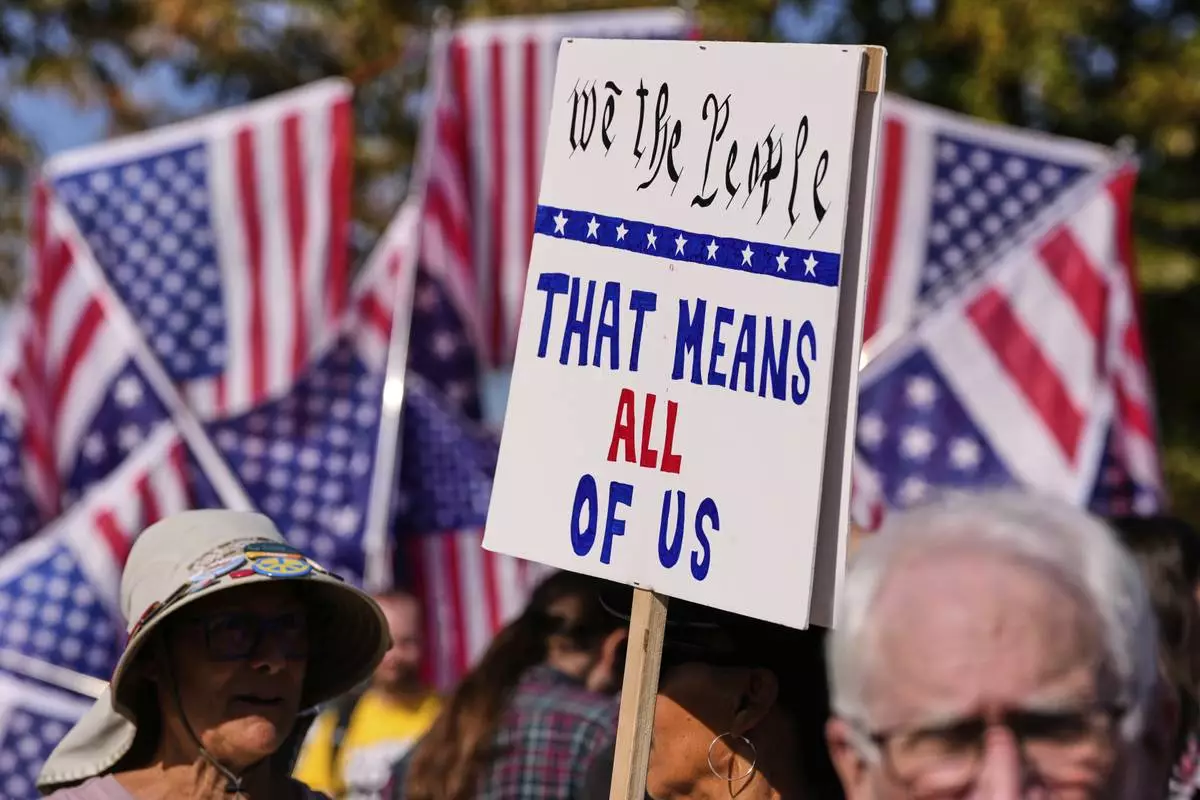
Protesters gather outside the U.S. Immigration and Customs Enforcement regional field office, Tuesday, Sept. 16, 2025, in Burlington, Mass. (AP Photo/Charles Krupa)
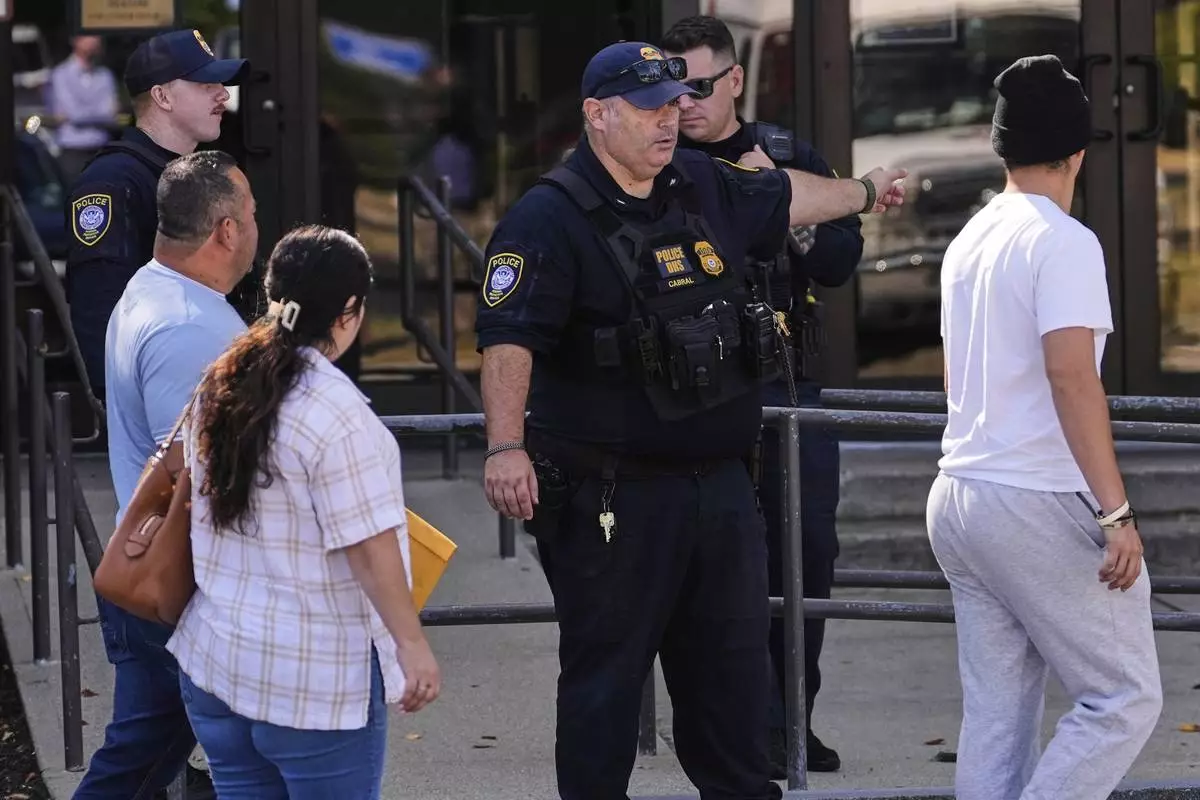
Protesters gather outside the U.S. Immigration and Customs Enforcement regional field office, Tuesday, Sept. 16, 2025, in Burlington, Mass. (AP Photo/Charles Krupa)
A Department of Homeland Security police officer directs visitors towards the front door of the U.S. Immigration and Customs Enforcement regional field office, Tuesday, Sept. 16, 2025, in Burlington, Mass. (AP Photo/Charles Krupa)
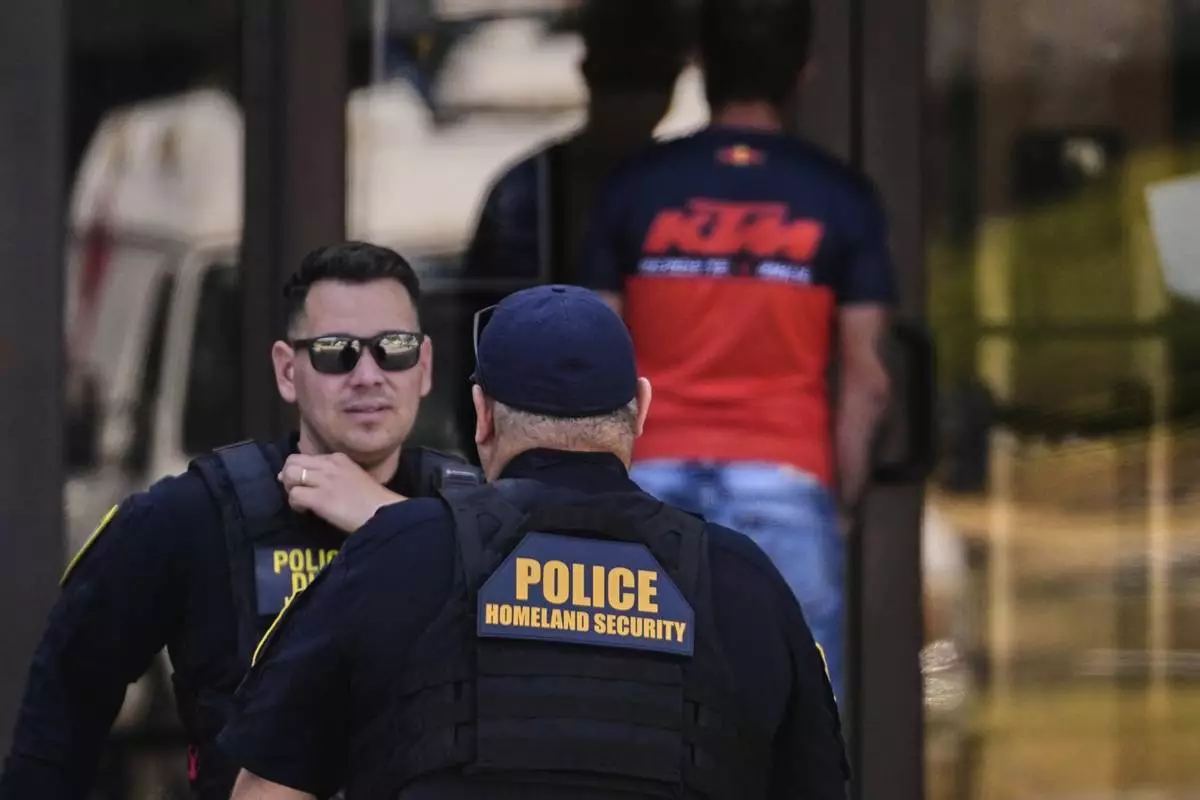
A Department of Homeland Security police officer directs visitors towards the front door of the U.S. Immigration and Customs Enforcement regional field office, Tuesday, Sept. 16, 2025, in Burlington, Mass. (AP Photo/Charles Krupa)
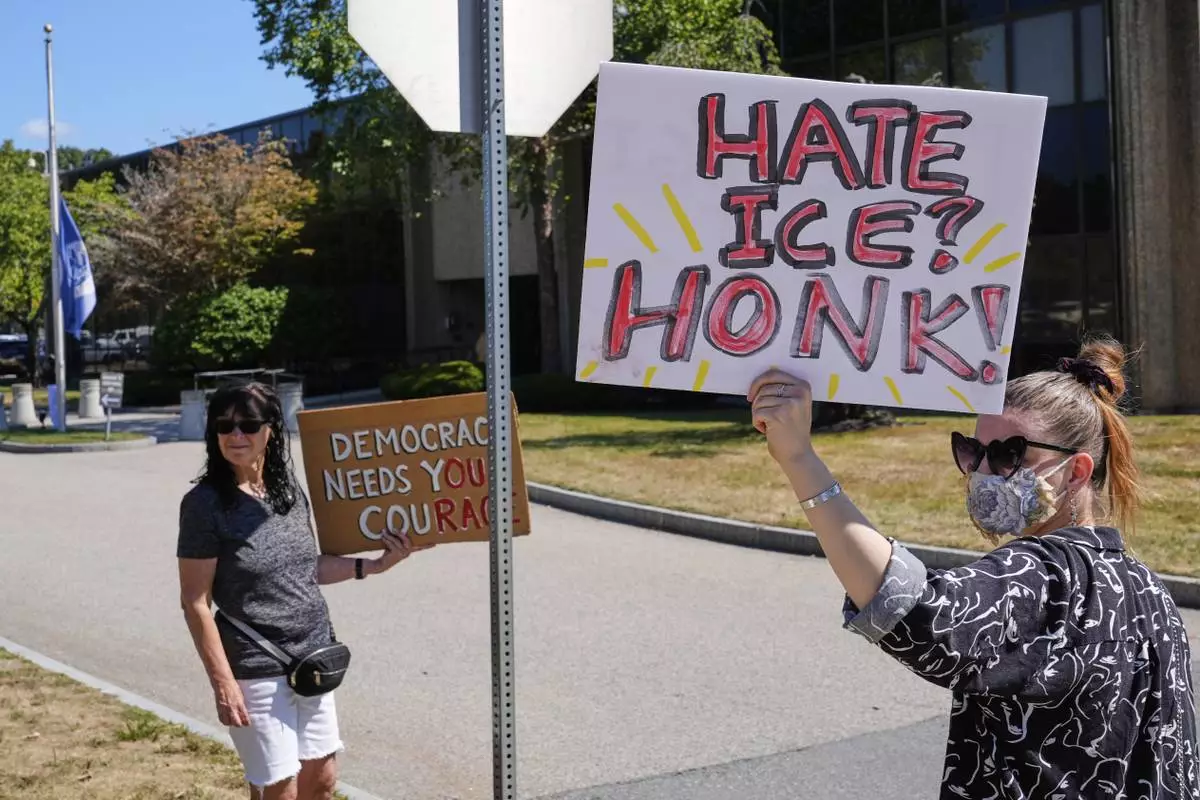
Protesters gather outside the U.S. Immigration and Customs Enforcement regional field office, Tuesday, Sept. 16, 2025, in Burlington, Mass. (AP Photo/Charles Krupa)

Protesters gather outside the U.S. Immigration and Customs Enforcement regional field office, Tuesday, Sept. 16, 2025, in Burlington, Mass. (AP Photo/Charles Krupa)

Department of Homeland Security police officers are stationed at the front door of the U.S. Immigration and Customs Enforcement regional field office, Tuesday, Sept. 16, 2025, in Burlington, Mass. (AP Photo/Charles Krupa)

Department of Homeland Security police officers are stationed at the front door of the U.S. Immigration and Customs Enforcement regional field office, Tuesday, Sept. 16, 2025, in Burlington, Mass. (AP Photo/Charles Krupa)

Protesters picket outside the U.S. Immigration and Customs Enforcement regional field office, at rear, Thursday, Sept. 11, 2025, in Burlington, Mass. (AP Photo/Charles Krupa)
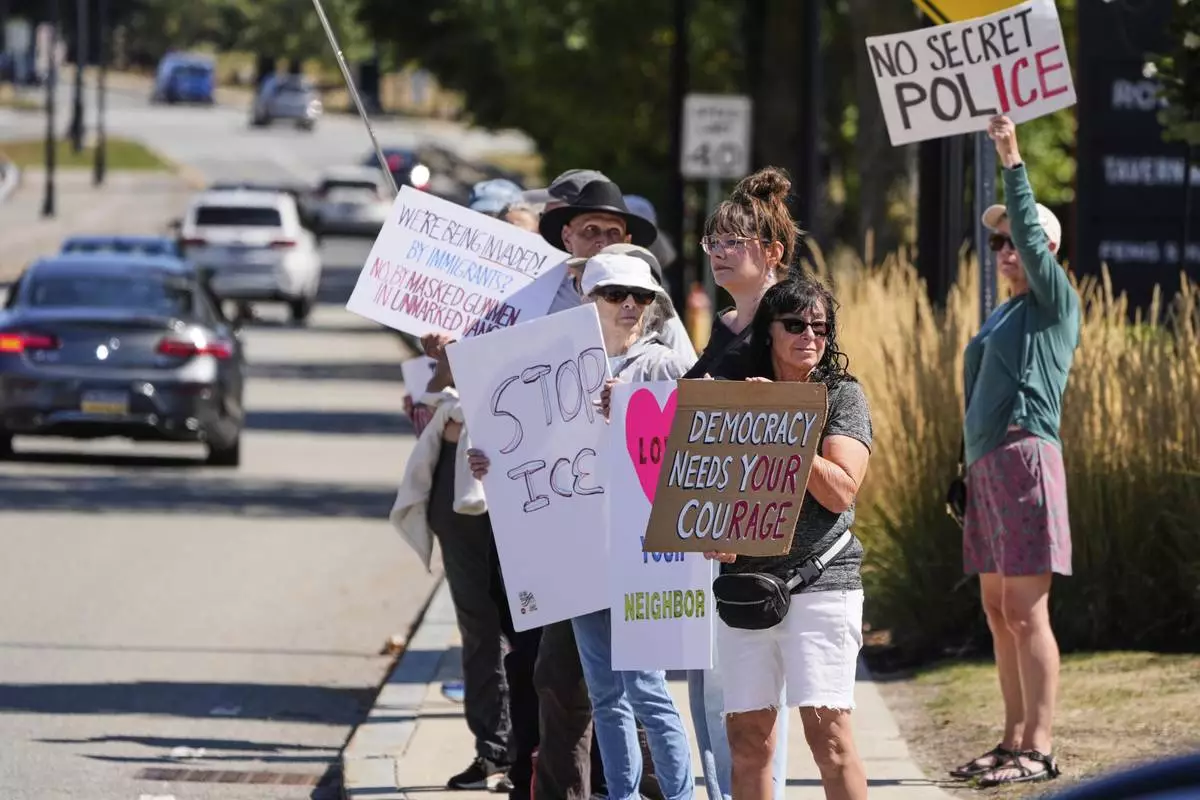
Protesters picket outside the U.S. Immigration and Customs Enforcement regional field office, at rear, Thursday, Sept. 11, 2025, in Burlington, Mass. (AP Photo/Charles Krupa)

Protesters picket near the U.S. Immigration and Customs Enforcement regional field office, Thursday, Sept. 11, 2025, in Burlington, Mass. (AP Photo/Charles Krupa)
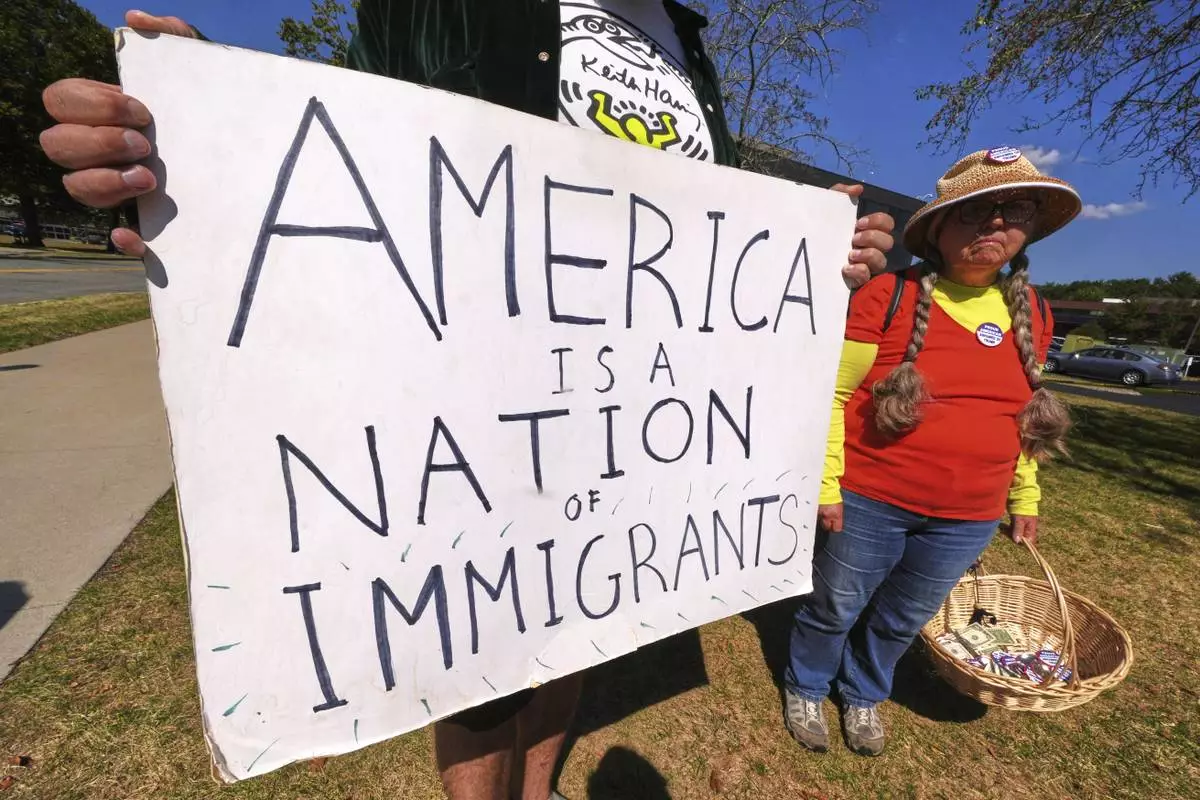
Protesters picket near the U.S. Immigration and Customs Enforcement regional field office, Thursday, Sept. 11, 2025, in Burlington, Mass. (AP Photo/Charles Krupa)
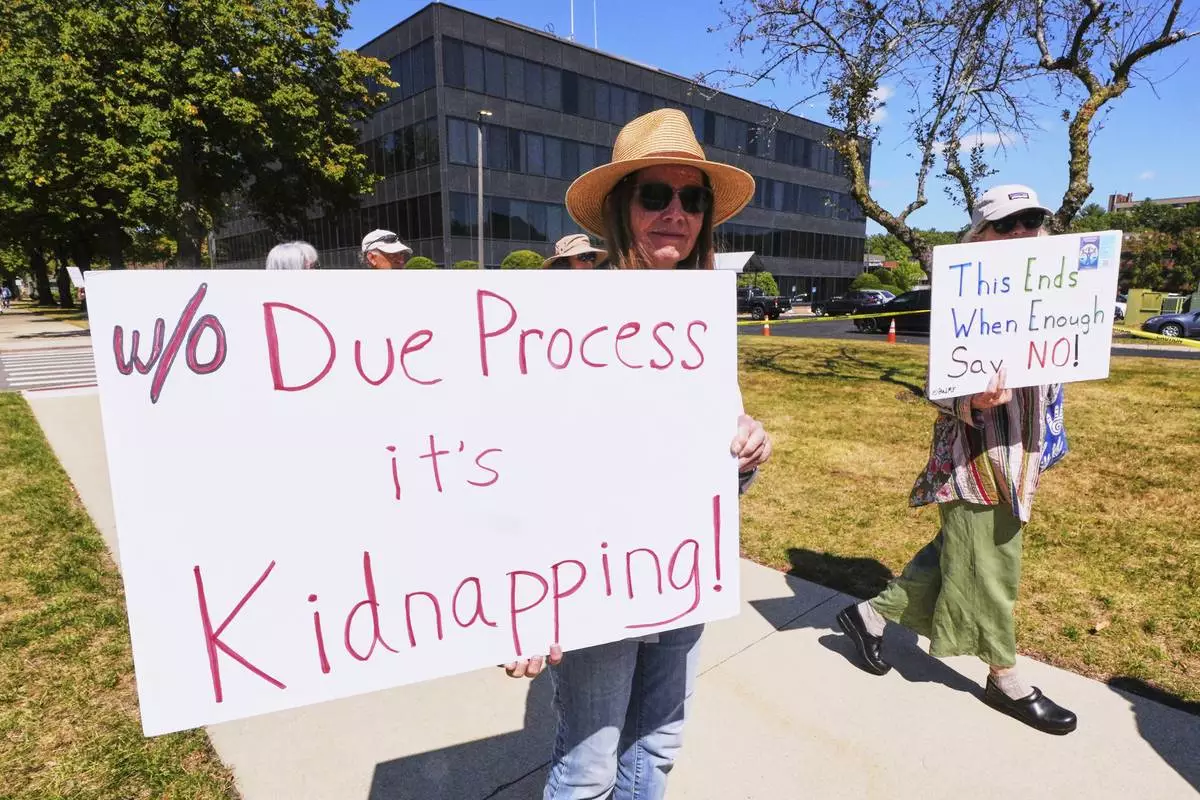
Protesters picket outside the U.S. Immigration and Customs Enforcement regional field office, Thursday, Sept. 11, 2025, in Burlington, Mass. (AP Photo/Charles Krupa)
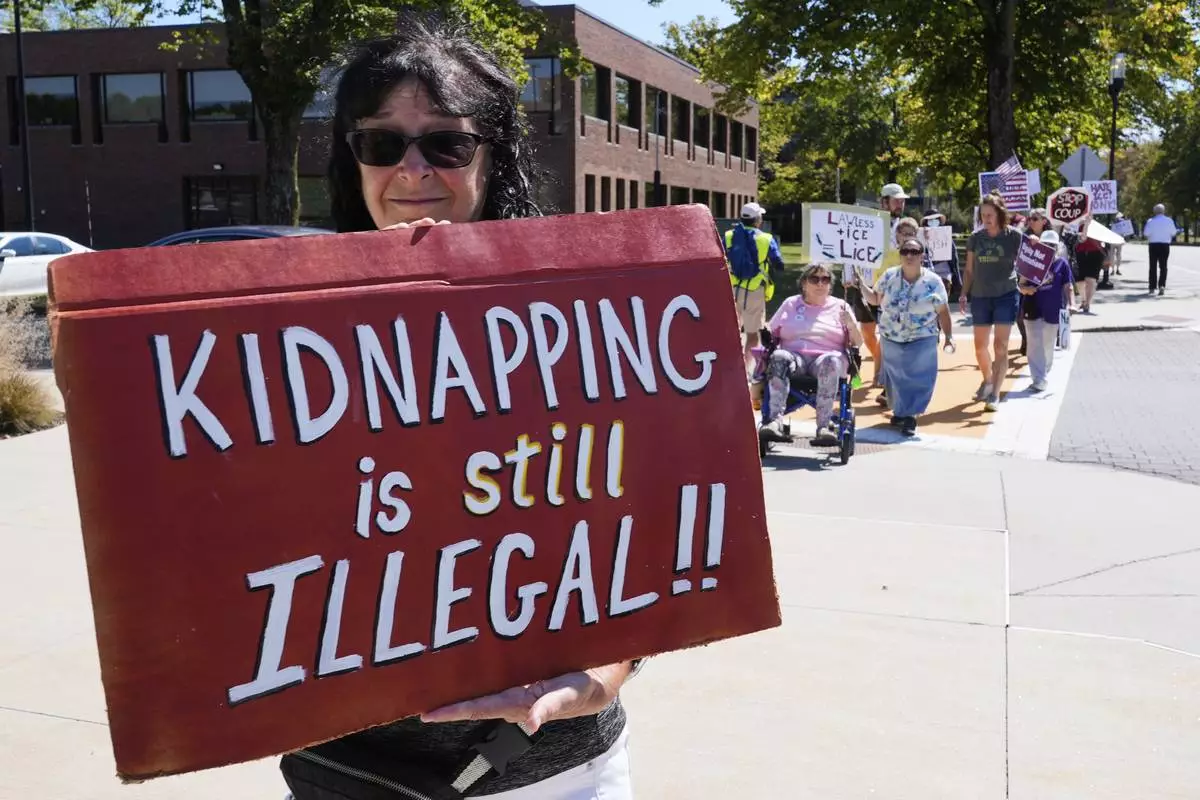
Protesters picket outside the U.S. Immigration and Customs Enforcement regional field office, Thursday, Sept. 11, 2025, in Burlington, Mass. (AP Photo/Charles Krupa)
Protesters picket outside the U.S. Immigration and Customs Enforcement regional field office, Thursday, Sept. 11, 2025, in Burlington, Mass. (AP Photo/Charles Krupa)
Protesters picket outside the U.S. Immigration and Customs Enforcement regional field office, Thursday, Sept. 11, 2025, in Burlington, Mass. (AP Photo/Charles Krupa)
Protesters picket near the U.S. Immigration and Customs Enforcement regional field office, Thursday, Sept. 11, 2025, in Burlington, Mass. (AP Photo/Charles Krupa)
Protesters picket near the U.S. Immigration and Customs Enforcement regional field office, Thursday, Sept. 11, 2025, in Burlington, Mass. (AP Photo/Charles Krupa)
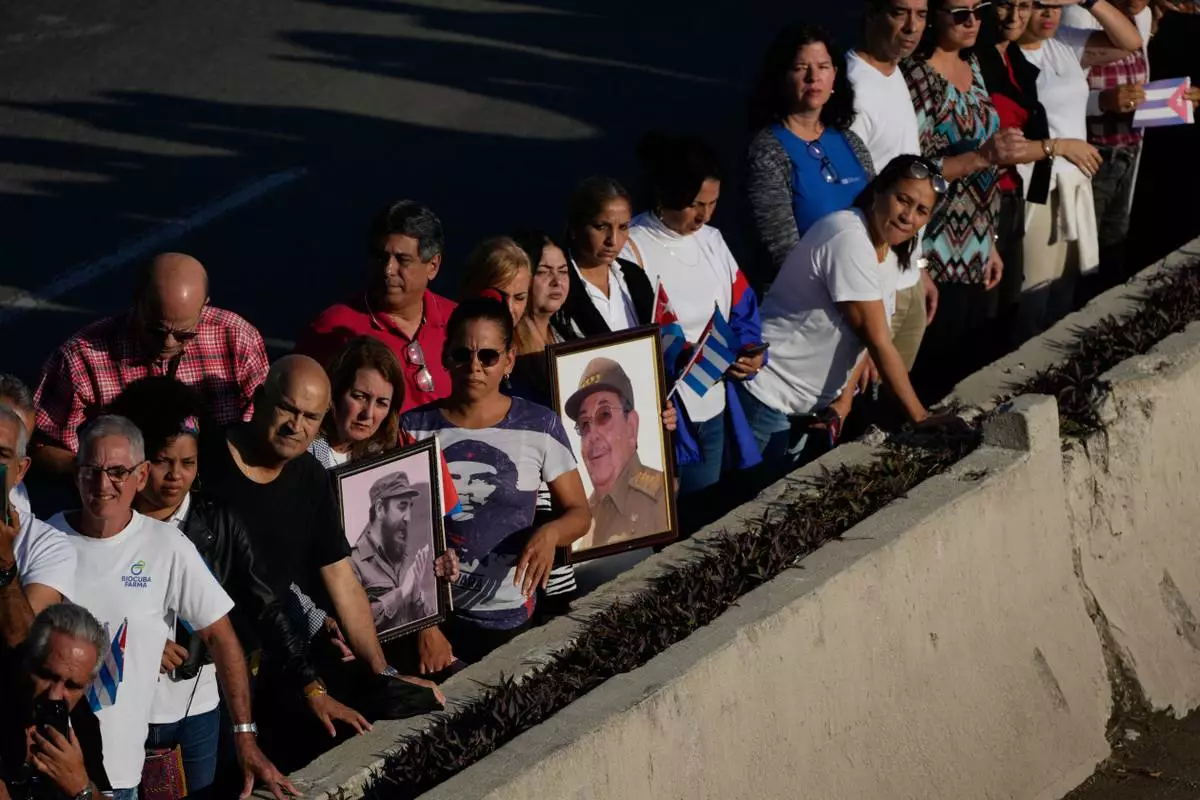
HAVANA (AP) — Cuban soldiers wearing white gloves marched out of a plane on Thursday carrying urns with the remains of the 32 Cuban officers killed during a stunning U.S. attack on Venezuela as trumpets and drums played solemnly at Havana's airport.

Nearby, thousands of Cubans lined one of Havana’s most iconic streets to await the bodies of colonels, lieutenants, majors and captains as the island remained under threat by the administration of U.S. President Donald Trump.

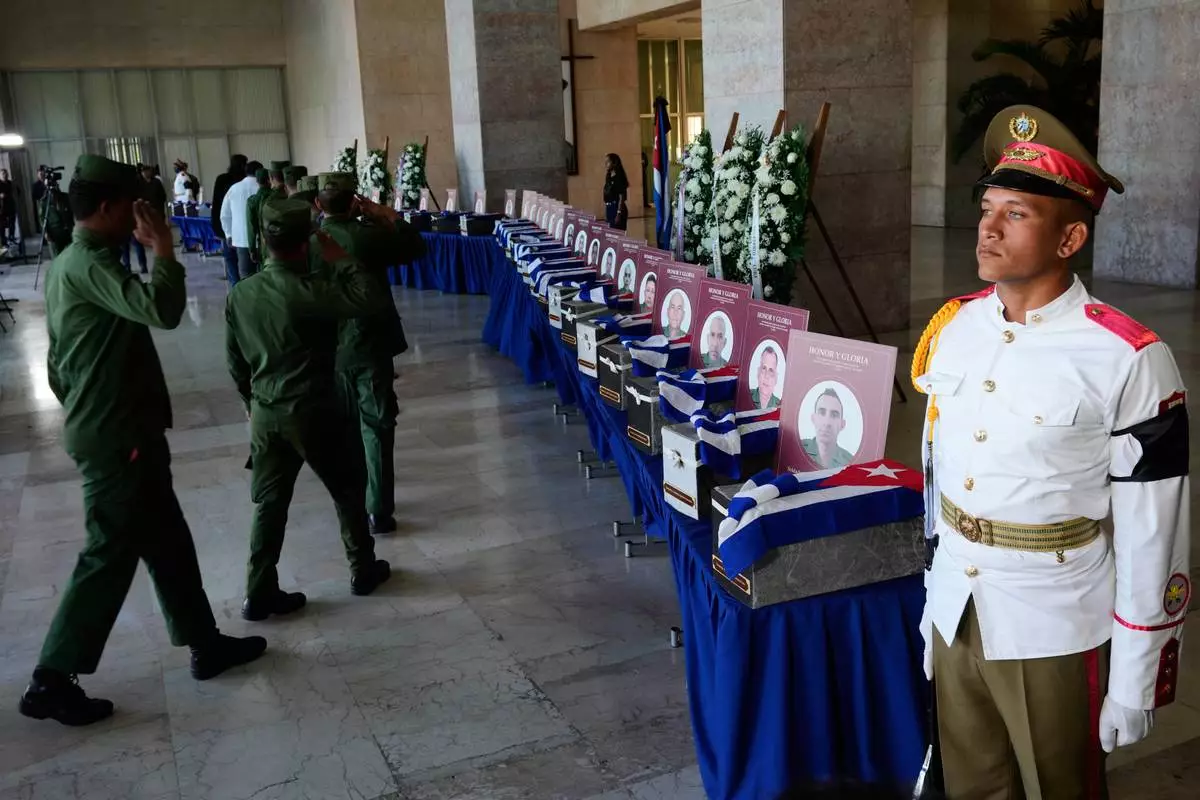
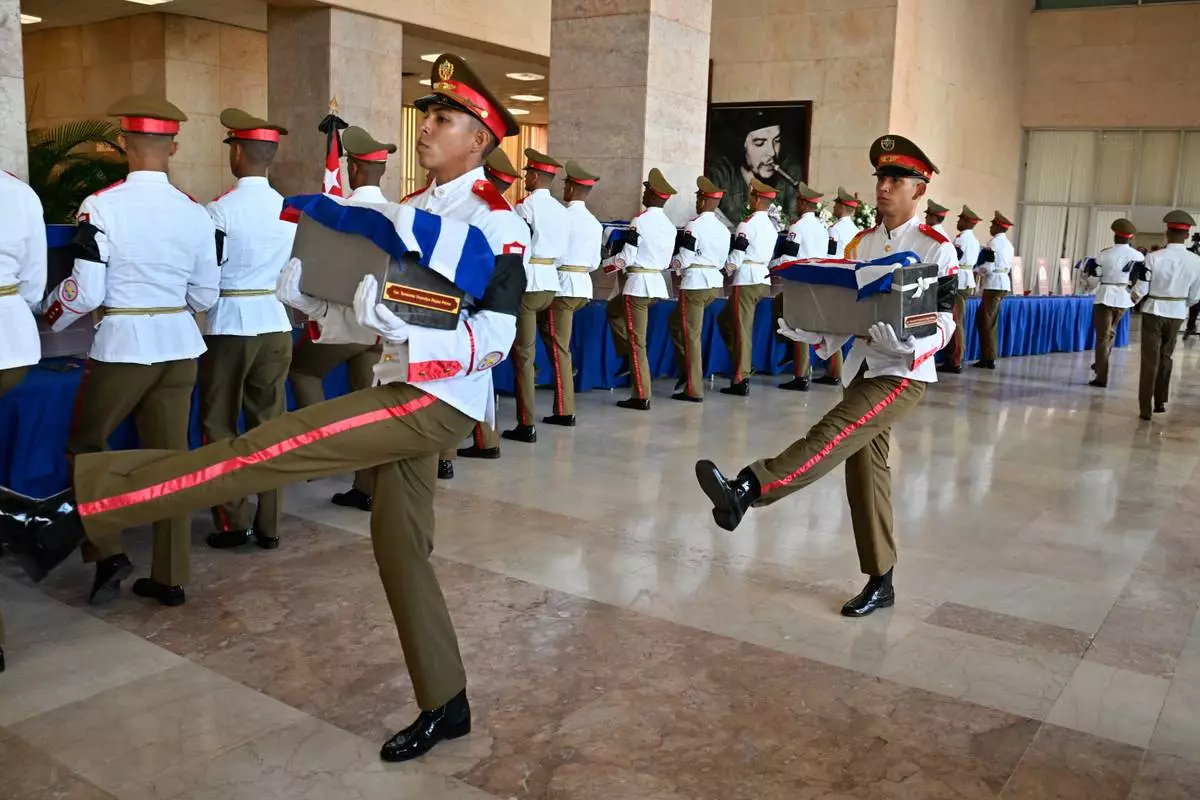
The soldiers' shoes clacked as they marched stiff-legged into the headquarters of the Ministry of the Armed Forces, next to Revolution Square, with the urns and placed them on a long table next to the pictures of those killed so people could pay their respects.

Thursday’s mass funeral was only one of a handful that the Cuban government has organized in almost half a century.

Hours earlier, state television showed images of more than a dozen wounded people described as “combatants” accompanied by Cuban Foreign Minister Bruno Rodríguez arriving Wednesday night from Venezuela. Some were in wheelchairs.

Those injured and the remains of those killed arrived as tensions grow between Cuba and the U.S., with Trump recently demanding that the Caribbean country make a deal with him before it is “too late.” He did not explain what kind of deal.

Trump also has said that Cuba will no longer live off Venezuela's money and oil. Experts warn that the abrupt end of oil shipments could be catastrophic for Cuba, which is already struggling with serious blackouts and a crumbling power grid.

Officials unfurled a massive flag at Havana's airport as President Miguel Díaz-Canel, clad in military garb as commander of Cuba's Armed Forces, stood silent next to former President Raúl Castro, with what appeared to be the relatives of those killed looking on nearby.

Cuban Interior Minister Lázaro Alberto Álvarez Casa said Venezuela was not a distant land for those killed, but a “natural extension of their homeland.”

“The enemy speaks to an audience of high-precision operations, of troops, of elites, of supremacy,” Álvarez said in apparent reference to the U.S. “We, on the other hand, speak of faces, of families who have lost a father, a son, a husband, a brother.”

Álvarez called those slain “heroes,” saying that they were an example of honor and “a lesson for those who waver.”

“We reaffirm that if this painful chapter of history has demonstrated anything, it is that imperialism may possess more sophisticated weapons; it may have immense material wealth; it may buy the minds of the wavering; but there is one thing it will never be able to buy: the dignity of the Cuban people,” he said.

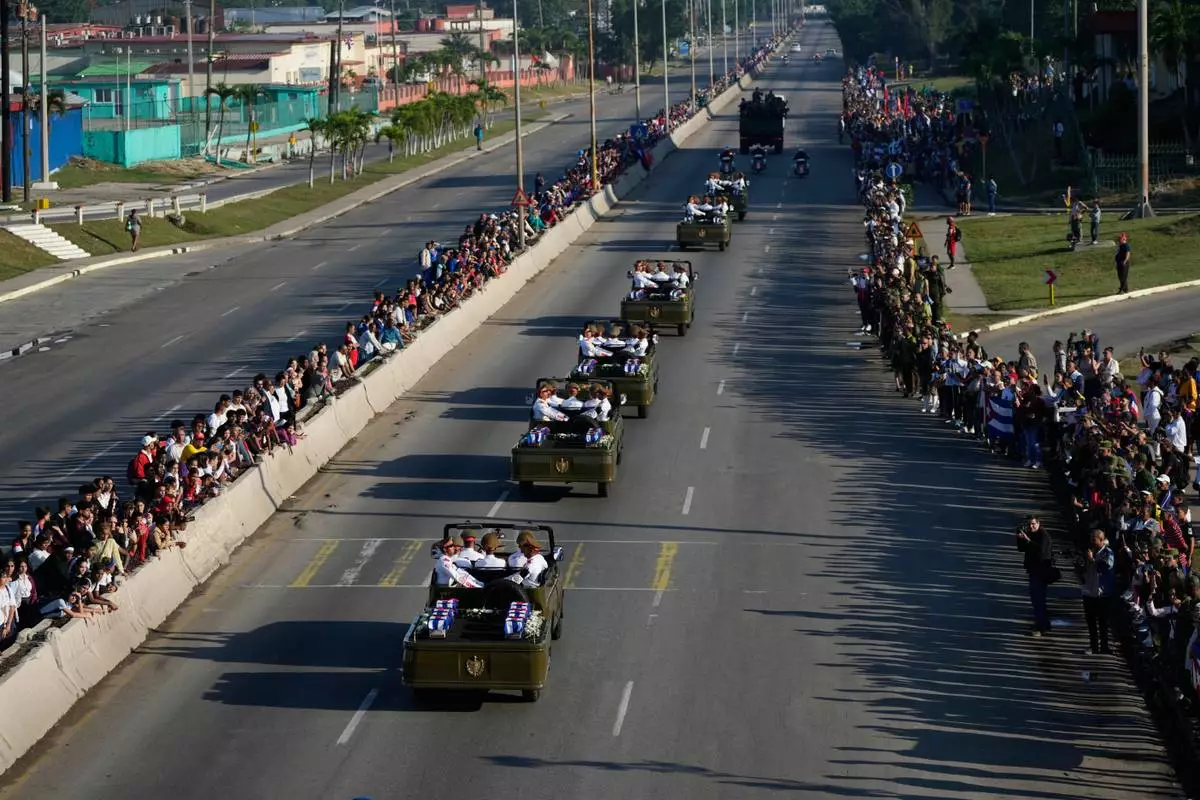
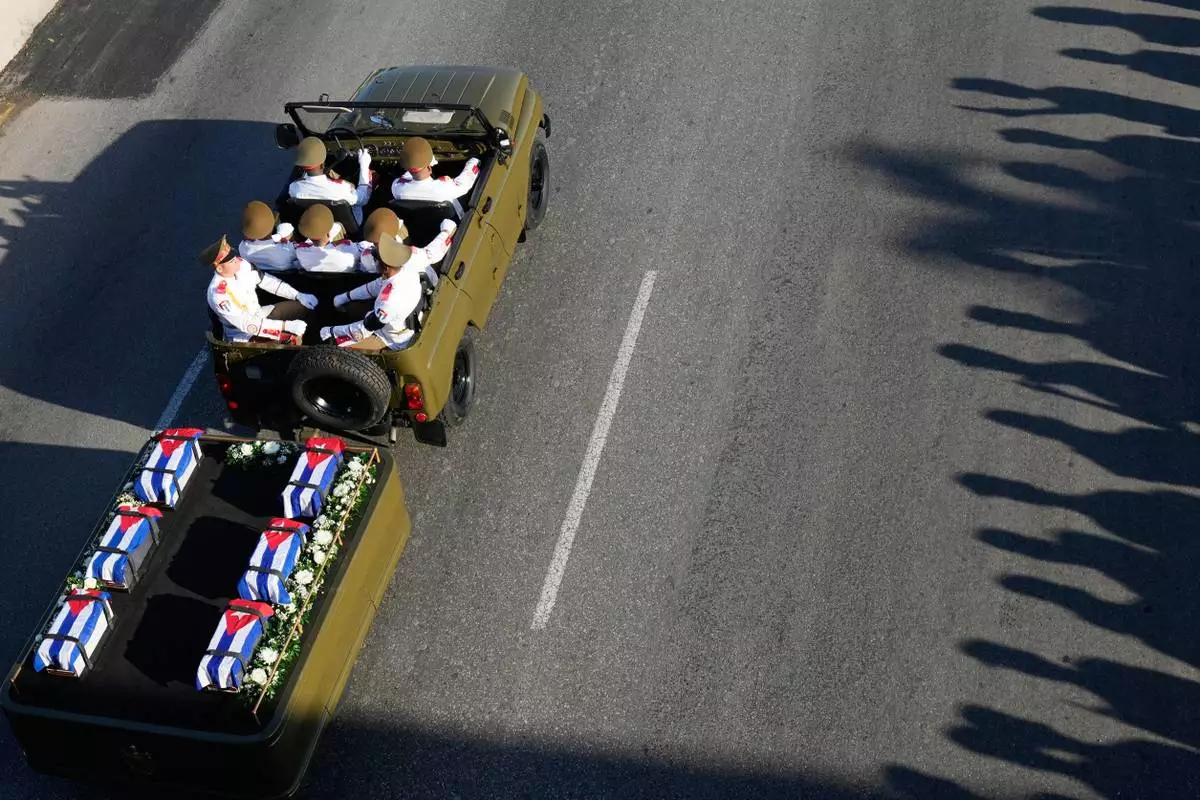
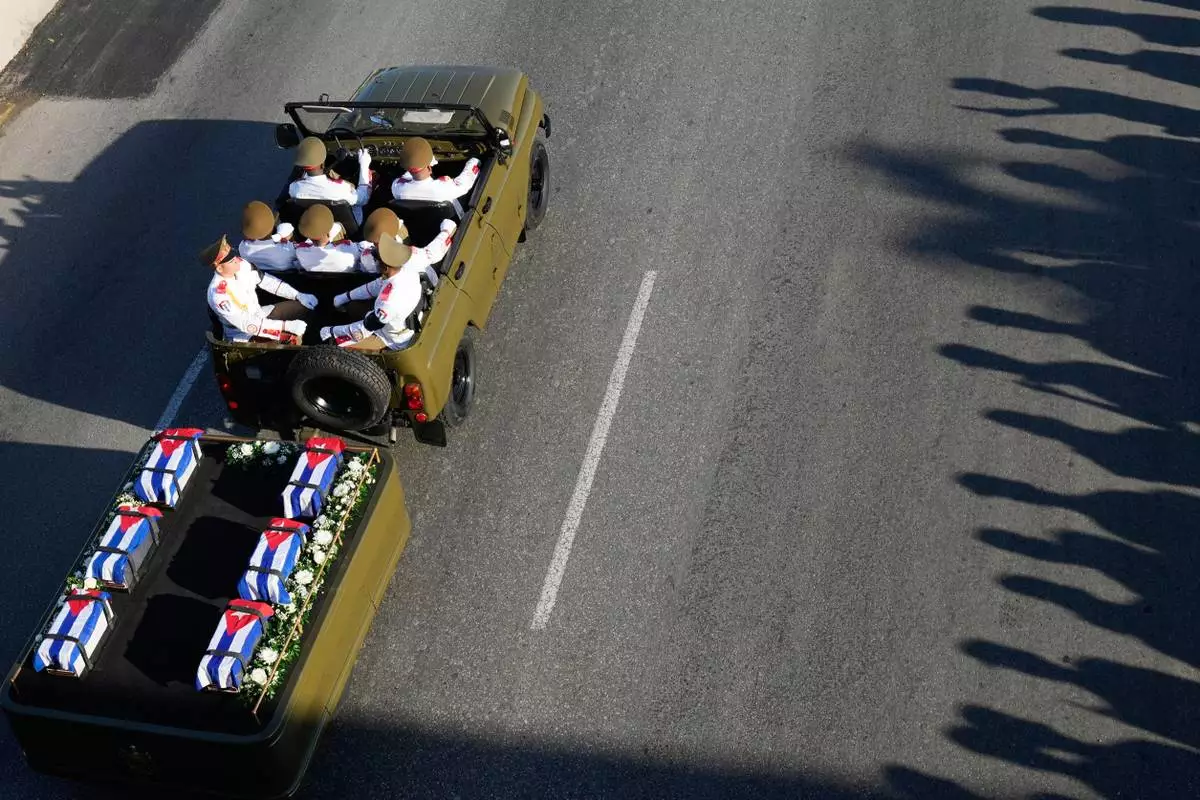
Thousands of Cubans lined a street where motorcycles and military vehicles thundered by with the remains of those killed.

“They are people willing to defend their principles and values, and we must pay tribute to them,” said Carmen Gómez, a 58-year-old industrial designer, adding that she hopes no one invades given the ongoing threats.

When asked why she showed up despite the difficulties Cubans face, Gómez replied, “It’s because of the sense of patriotism that Cubans have, and that will always unite us.”

Cuba recently released the names and ranks of 32 military personnel — ranging in age from 26 to 60 — who were part of the security detail of Venezuelan President Nicolás Maduro during the raid on his residence on January 3. They included members of the Revolutionary Armed Forces and the Ministry of the Interior, the island’s two security agencies.

Cuban and Venezuelan authorities have said that the uniformed personnel were part of protection agreements between the two countries.

A demonstration was planned for Friday across from the U.S. Embassy in an open-air forum known as the Anti-Imperialist Tribune. Officials have said they expect the demonstration to be massive.

“People are upset and hurt. There’s a lot of talk on social media; but many do believe that the dead are martyrs” of a historic struggle against the United States, analyst and former diplomat Carlos Alzugaray told The Associated Press.

In October 1976, then-President Fidel Castro led a massive demonstration to bid farewell to the 73 people killed in the bombing of a Cubana de Aviación civilian flight financed by anti-revolutionary leaders in the U.S. Most of the victims were Cuban athletes.

In December 1989, officials organized “Operation Tribute” to honor the more than 2,000 Cuban combatants who died in Angola during Cuba’s participation in the war that defeated the South African army and ended the apartheid system. In October 1997, memorial services were held following the arrival of the remains of guerrilla commander Ernesto “Che” Guevara and six of his comrades, who died in 1967.

The latest mass burial is critical to honor those slain, said José Luis Piñeiro, a 60-year-old doctor who lived four years in Venezuela.

“I don’t think Trump is crazy enough to come and enter a country like this, ours, and if he does, he’s going to have to take an aspirin or some painkiller to avoid the headache he’s going to get,” Piñeiro said. “These were 32 heroes who fought him. Can you imagine an entire nation? He’s going to lose.”

A day before the remains of those killed arrived in Cuba, U.S. Secretary of State Marco Rubio announced $3 million in aid to help the island recover from the catastrophic Hurricane Melissa, which struck in late October.

The first flight took off from Florida on Wednesday, and a second flight was scheduled for Friday. A commercial vessel also will deliver food and other supplies.

“We have taken extraordinary measures to ensure that this assistance reaches the Cuban people directly, without interference or diversion by the illegitimate regime,” Rubio said, adding that the U.S. government was working with Cuba's Catholic Church.

The announcement riled Cuban Foreign Minister Bruno Rodríguez.

“The U.S. government is exploiting what appears to be a humanitarian gesture for opportunistic and politically manipulative purposes,” he said in a statement. “As a matter of principle, Cuba does not oppose assistance from governments or organizations, provided it benefits the people and the needs of those affected are not used for political gain under the guise of humanitarian aid.”

Coto contributed from San Juan, Puerto Rico.

Follow AP’s coverage of Latin America and the Caribbean at https://apnews.com/hub/latin-america

Military members pay their last respects to Cuban officers who were killed during the U.S. operation in Venezuela that captured Venezuelan President Nicolas Maduro, at the Ministry of the Revolutionary Armed Forces where the urns containing the remains are displayed during a ceremony in Havana, Cuba, Thursday, Jan. 15, 2026. (AP Photo/Ramon Espinosa)

Military members pay their last respects to Cuban officers who were killed during the U.S. operation in Venezuela that captured Venezuelan President Nicolas Maduro, at the Ministry of the Revolutionary Armed Forces where the urns containing the remains are displayed during a ceremony in Havana, Cuba, Thursday, Jan. 15, 2026. (AP Photo/Ramon Espinosa)

A motorcade transports urns containing the remains of Cuban officers, who were killed during the U.S. operation in Venezuela that captured Venezuelan President Nicolas Maduro, through Havana, Cuba, Thursday, Jan. 15, 2026. (AP Photo/Ramon Espinosa)

A motorcade transports urns containing the remains of Cuban officers, who were killed during the U.S. operation in Venezuela that captured Venezuelan President Nicolas Maduro, through Havana, Cuba, Thursday, Jan. 15, 2026. (AP Photo/Ramon Espinosa)

Soldiers carry urns containing the remains of Cuban officers, who were killed during the U.S. operation in Venezuela that captured Venezuelan President Nicolas Maduro, at the Ministry of the Revolutionary Armed Forces in Havana, Cuba, Thursday, Jan. 15, 2026. (Adalberto Roque /Pool Photo via AP)

Soldiers carry urns containing the remains of Cuban officers, who were killed during the U.S. operation in Venezuela that captured Venezuelan President Nicolas Maduro, at the Ministry of the Revolutionary Armed Forces in Havana, Cuba, Thursday, Jan. 15, 2026. (Adalberto Roque /Pool Photo via AP)

A motorcade transports urns containing the remains of Cuban officers, who were killed during the U.S. operation in Venezuela that captured Venezuelan President Nicolas Maduro, through Havana, Cuba, Thursday, Jan. 15, 2026. (AP Photo/Ramon Espinosa)

A motorcade transports urns containing the remains of Cuban officers, who were killed during the U.S. operation in Venezuela that captured Venezuelan President Nicolas Maduro, through Havana, Cuba, Thursday, Jan. 15, 2026. (AP Photo/Ramon Espinosa)

A motorcade transports urns containing the remains of Cuban officers, who were killed during the U.S. operation in Venezuela that captured Venezuelan President Nicolas Maduro, through Havana, Cuba, Thursday, Jan. 15, 2026. (AP Photo/Ramon Espinosa)

A motorcade transports urns containing the remains of Cuban officers, who were killed during the U.S. operation in Venezuela that captured Venezuelan President Nicolas Maduro, through Havana, Cuba, Thursday, Jan. 15, 2026. (AP Photo/Ramon Espinosa)

People line the streets of Havana, Cuba, Thursday, Jan. 15, 2026, to watch the motorcade carrying urns containing the remains of Cuban officers killed during the U.S. operation in Venezuela that captured Venezuelan President Nicolas Maduro. (AP Photo/Ramon Espinosa)

People line the streets of Havana, Cuba, Thursday, Jan. 15, 2026, to watch the motorcade carrying urns containing the remains of Cuban officers killed during the U.S. operation in Venezuela that captured Venezuelan President Nicolas Maduro. (AP Photo/Ramon Espinosa)

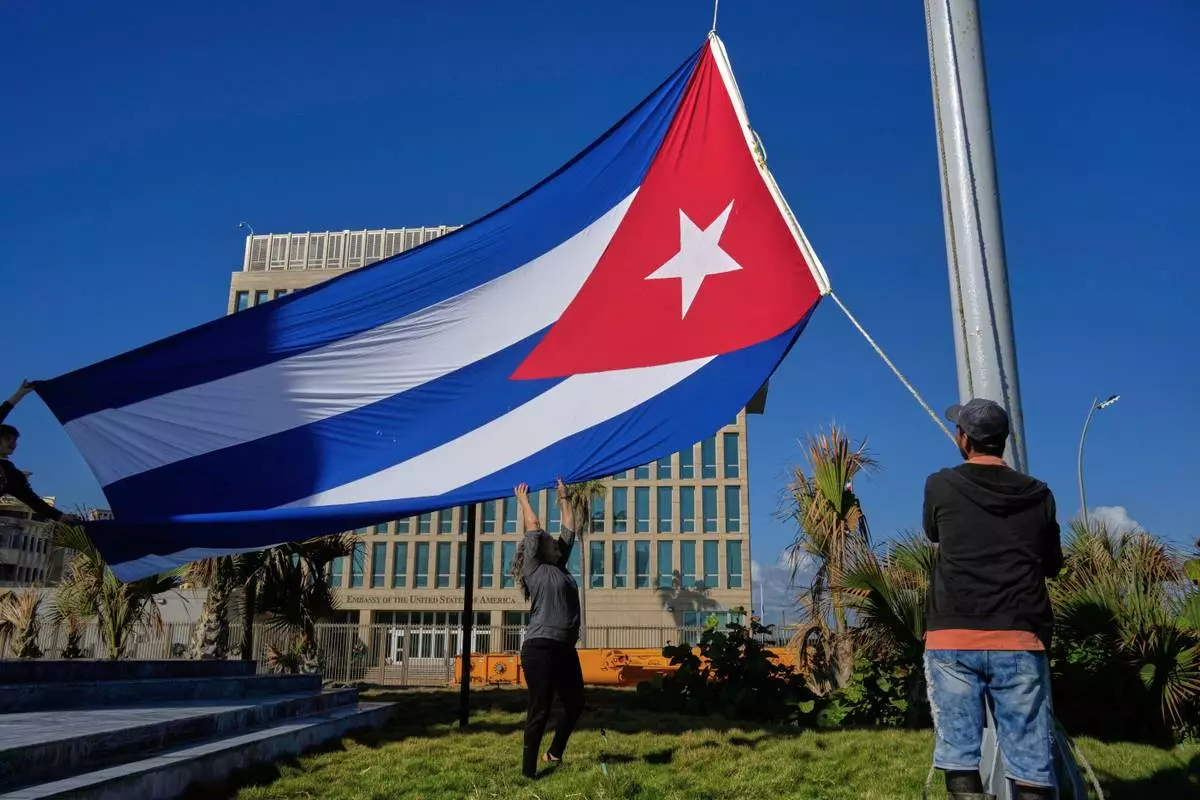
Workers fly the Cuban flag at half-staff at the Anti-Imperialist Tribune near the U.S. Embassy in Havana, Cuba, Monday, Jan. 5, 2026, in memory of Cubans who died two days before in Caracas, Venezuela during the capture of Venezuelan President Nicolas Maduro by U.S. forces. (AP Photo/Ramon Espinosa)

Workers fly the Cuban flag at half-staff at the Anti-Imperialist Tribune near the U.S. Embassy in Havana, Cuba, Monday, Jan. 5, 2026, in memory of Cubans who died two days before in Caracas, Venezuela during the capture of Venezuelan President Nicolas Maduro by U.S. forces. (AP Photo/Ramon Espinosa)

Recommended Articles