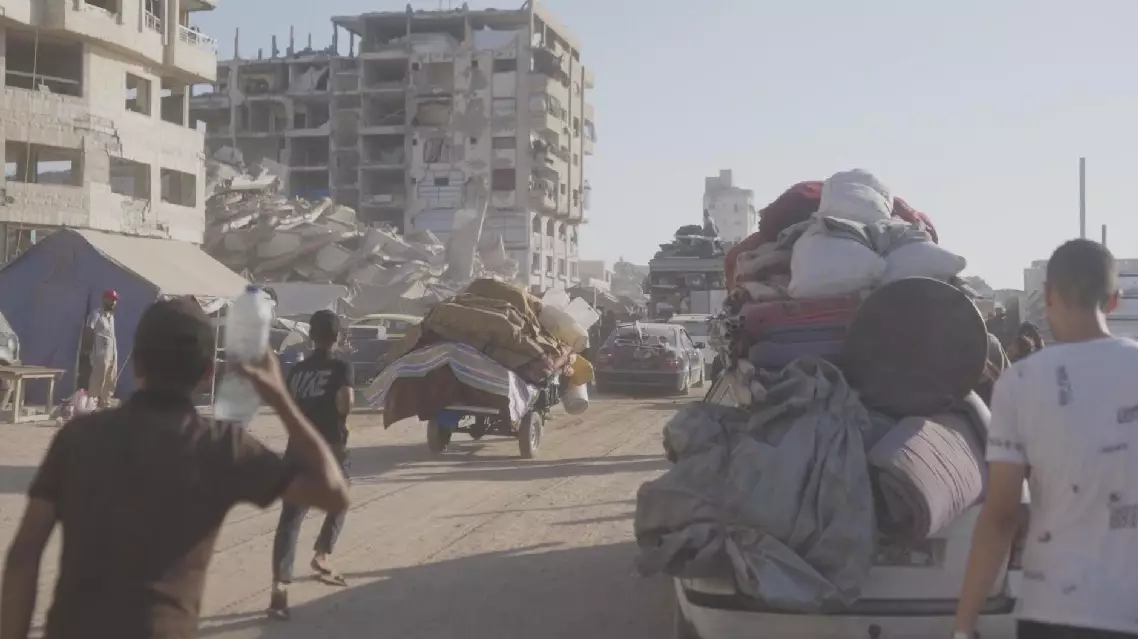
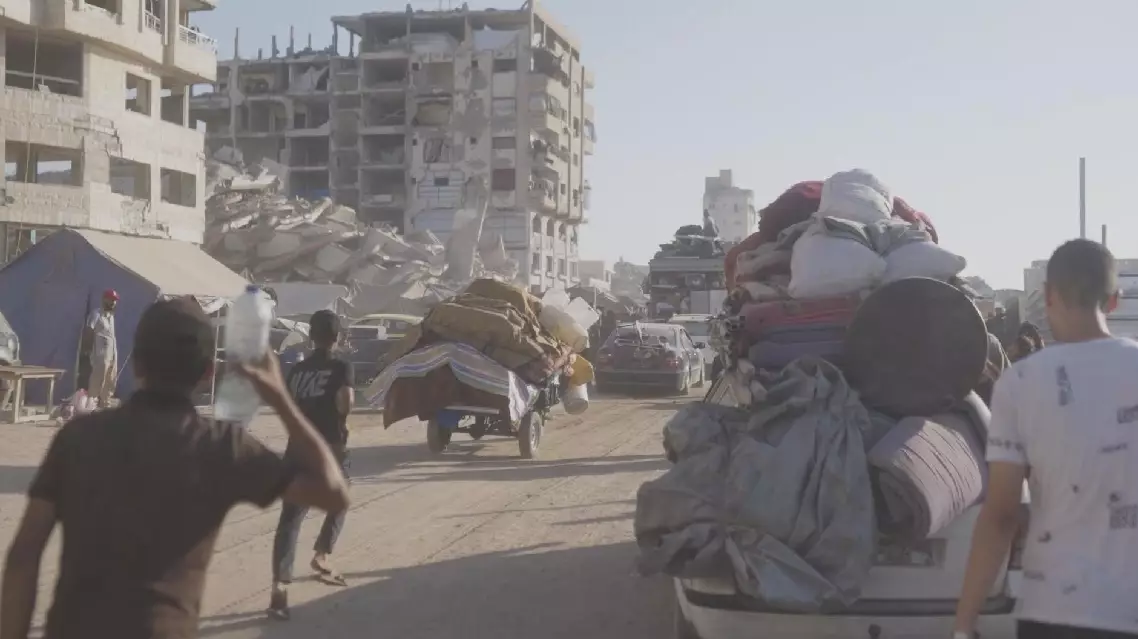
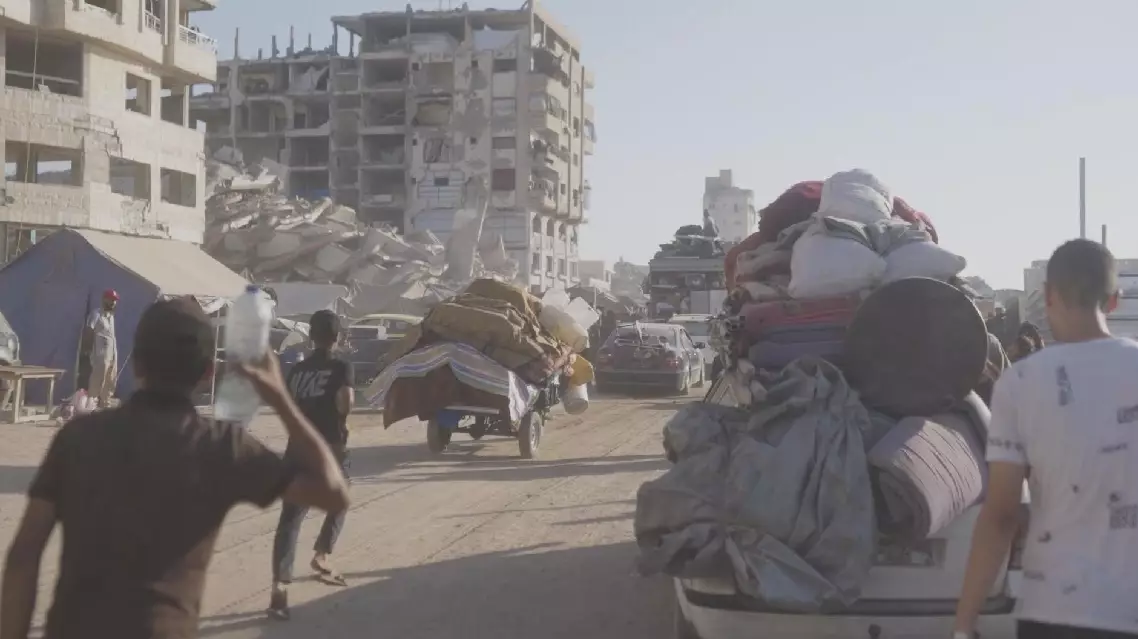
Nearly 48,000 Palestinians have fled southward in the last two days from the Israeli military's ground offensive in Gaza City, UN humanitarians said on Tuesday.
The UN Office for the Coordination of Humanitarian Affairs (OCHA) said that between mid-August and Monday, its partners observed more than 190,000 such movements, with many people traveling on foot due to the extremely high cost of transport.
The partners reported that displaced families, often led by women and older people, were walking up to nine hours in extreme heat, frequently barefoot and with injured children, OCHA said.
OCHA said its partners, providing support to those on the move, reported that more than 1,500 people, including more than 900 children, received urgent assistance, including psychosocial aid, water and medical care.
Israeli forces dropped leaflets, urging people in Gaza City to move toward overcrowded "humanitarian zones" in central and southern Gaza.
They said that Gaza City has become "a dangerous combat zone" and that they are determined to defeat Hamas there.
"The situation is very difficult for us, and we have no money at all. My father is in poor health and needs help to push the handcart. There is no safe place in Gaza, and we'll have to sleep on the street like others tonight," said Alaa Ismail, a resident fleeing Gaza City, the Gaza Strip's largest urban center.
"There is no safe place anywhere in Gaza. We don't know where our fate will lead to, and I can't be ensured that the place I'm heading to is really safe. As long as Israel wants it, their so-called 'safe zones' will become targets of attacks. As we stand here, news has just come in that tall buildings are facing strikes. Who can guarantee that Israel won't attack us?" said another displaced Gazan named Khalil Matar.
While promoting southern Gaza as a safe zone for fleeing Palestinians, Israel has been implementing air strikes and bombardments on the areas, causing heavy casualties.
The Gaza media office said in a statement on Tuesday that around 800,000 Gazans had gathered in southern Gaza Strip's Al-Mawasi area, where more than 2,000 people had been killed in more than 109 attacks by Israel, who designated the area as a "humanitarian zone."
Nearly 48,000 flee Israel's Gaza City ground offensive in two days: UN
Nearly 48,000 flee Israel's Gaza City ground offensive in two days: UN
Nearly 48,000 flee Israel's Gaza City ground offensive in two days: UN
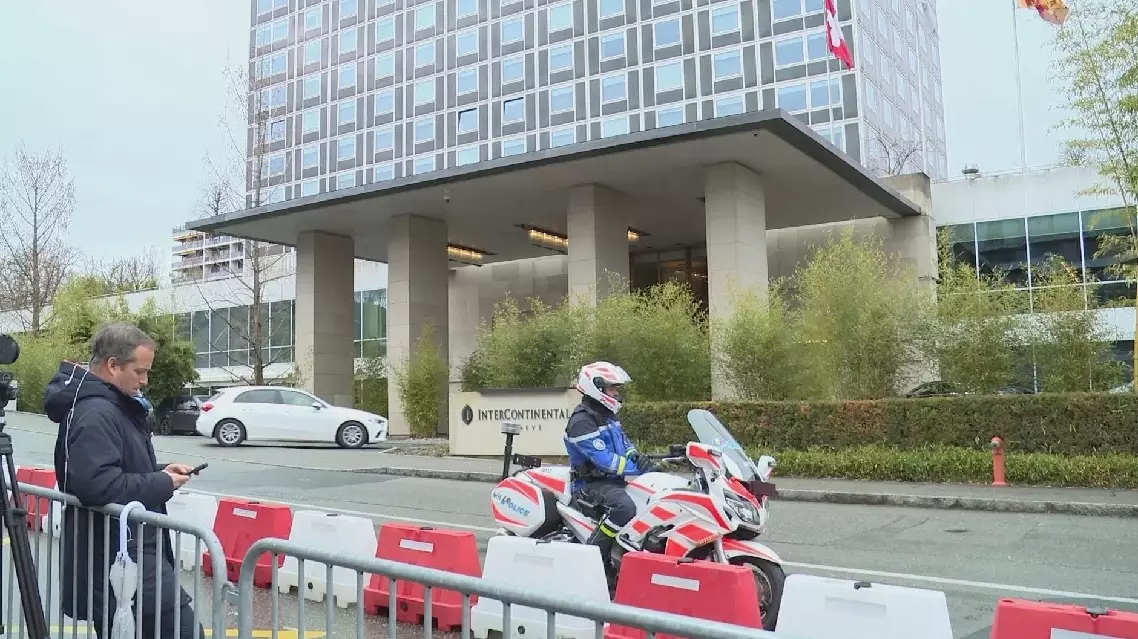
Days before the fourth anniversary of the start of the Ukraine-Russia conflict, the two-day talks among Ukraine, the United States and Russia, marking the third round of trilateral talks this year, concluded in Geneva on Wednesday with no breakthrough on key issues.
The first-day talks lasted six hours in both bilateral and trilateral formats, while the second-day talks lasted two hours, Russian media reported.
Ukrainian President Volodymyr Zelensky said that no agreement on key issues was reached, according to media reports.
"We can see that some groundwork has been done, but for now, positions differ because the negotiations were not easy," Zelensky told reporters on Wednesday.
Zelensky also told Ukrainian media that monitoring of a ceasefire with U.S. participation, as well as sensitive political issues such as Donbas and the Zaporizhzhia Nuclear Power Plant, were all discussed during the talks.
Ukraine's chief negotiator Rustem Umerov, also Ukraine's National Security and Defense Council Secretary, said that the work was intense and subjective.
"There is progress, but no details at this stage," he wrote in a Facebook post.
Umerov said on Facebook that the next stage is to reach the required level of consensus to make well-known decisions for the presidents' consideration. He emphasized that the ultimate goal remains unchanged: a just and sustainable peace.
A separate meeting with representatives of the United States and European countries, including France, Britain, Germany, Italy and Switzerland, was also held on Tuesday, Umerov wrote in a Facebook post on Tuesday.
Describing the talks as difficult but business-like, Russia's presidential aide Vladimir Medinsky noted that a new round of negotiations will be held in the near future. No documents were signed during the talks, RIA Novosti reported Wednesday.
The Russian Foreign Ministry announced on Wednesday that the Russian delegation had clear instructions to act within the framework of understanding from the meeting between Russian President Vladimir Putin and U.S. President Donald Trump that was held in the U.S. city of Anchorage, Alaska in August last year.
Two previous rounds of trilateral talks, held in Abu Dhabi on Jan 23-24 and Feb 4-5, did not resolve key territorial issues.
The latest talks focused on key issues including a ceasefire mechanism, security guarantees, humanitarian issues and territorial disputes.
Analysts said that although some limited progress was achieved, the parties' wide gaps on key issues make a major breakthrough in the near term unlikely.
Latest round of trilateral talks on Ukraine ends without agreement on key issues