NEW YORK (AP) — Lorie Lee Sekayumptewa, a former administrator with the Navajo Nation Film Office, remembers seeing Robert Redford at traditional cultural dances at the Hopi village of Hotevilla in New Mexico. It was more than 30 years ago and he was serving as executive producer of the 1991 release “The Dark Wind," a drama about Navajo life.
Redford stood out for his Hollywood looks and for his un-Hollywood behavior, from his earnest desire to learn more about the tribe’s spiritual knowledge to his visits to the Navajo Nation, where Sekayumptewa’s father served as the dean of students at the tribal college and would show Redford’s movies at the student union building.
“Even at home, he would bring that camera and film home to us, put up a sheet and we would invite our neighbors and the kids and we would all be there in our living room, watching these movies,” the 54-year-old Sekayumptewa, who is Navajo, Hopi and Sac and Fox Nation, said of Redford.
“We were all fans.”
Redford, who died Tuesday at age 89, was hardly the only liberal activist to emerge out of Hollywood, but few matched his knowledge and focus, his humility and dedication. Fellow actors and leaders of the causes he fought for spoke of his unusually deep legacy, his fight for Native Americans and the environment that began at the height of his stardom.
In the mid-1970s, around the same time he was appearing in such blockbusters as “The Sting” and “The Way We Were," he immersed himself in the emerging environmental movement. He successfully opposed a power plant being built in his adopted state, Utah, and lobbied for the landmark bills the Clean Air Act and the Clean Water Act. He also joined the board of the non-profit Natural Resources Defense Council, where he remained a guiding force up to his death.
“His legacy was extraordinary,” says NRDC CEO and President Manish Bapna. “One of the things that was most extraordinary about him was that he understood the power of storytelling. He could talk about climate change and the toll it was inflicting on people and communities — the fisherman coping with rising seas, a family fleeing for their lives from a raging wildfire. He would record messages, give talks or speak in front of Congress."
Bapna last saw Redford a few months ago, when they dined in New York City.
“He chose his words carefully, and every word he said was profound. He said we must continue to find ways to tell stories that reach people,” Bapna said.
Redford had a longtime affinity for the environment. After growing up in Southern California in the 1930s and '40s, he was disheartened to see Los Angeles transform after World War II into a mecca of pollution and traffic jams. In the early 1960s, when he came upon Provo Canyon, Utah, during a cross-country motorcycle trip, he was so awed and invigorated by the landscape that he eventually settled in the area.
Entertainers over time have come to identify and, be identified with, a given cause: Harry Belafonte and civil rights, Paul Newman and nuclear disarmament, Jane Fonda and the Vietnam War. Redford, as much as anyone, helped make the environment an issue for the Hollywood elite, whether for Fonda or Julia Louis-Dreyfus or Leonardo DiCaprio, a fellow NRDC board member who called Redford's death “a huge loss to our community” and cited his legacy an actor and activist.
“More so than anything, he was a staunch environmental leader,” DiCaprio said Monday.
In 2013, Redford joined with then-Gov. Bill Richardson to create the Foundation to Protect New Mexico Wildlife to fight efforts by a Roswell, New Mexico, company and others to slaughter horses. The following year, the foundation reached an agreement with the Navajo Nation to manage thousands of wild horses on the reservation and keep the animals from being sent to slaughter houses.
For Redford, the wild horse was representative of the American West. His advocacy also was channeled through the nonprofit group Return to Freedom, Wild Horse Conservation. The group posted on social media Tuesday that they were heartbroken.
“We have all lost an irreplaceable artist, activist and environmentalist,” said Neda DeMayo, founder of RTF. “Robert Redford was and is an iconic and inspiring human being forever interwoven with the beauty and majesty of the West. I feel very grateful to have known him and to have had his support.”
Redford's activism extended to some of his film projects, whether the probes of the political system in “All the President's Men” and “The Candidate” or the drama “The Milagro Beanfield War,” in which a local resident fights a real estate mogul for control of his land. His final work was “Dark Winds,” an AMC show that premiered in 2022 and is based, like “The Dark Wind,” on the fiction of Tony Hillerman.
John Wirth, the series showrunner, said that “Dark Winds” wouldn’t exist without Redford, who served as an executive producer and appeared in a short cameo that aired earlier this year. The show, Wirth said, gives audiences a look into the Navajo community, with actors and writers largely holding Native identities.
Redford “endeavored to give people a shot at making art, you know, where they maybe hadn’t had the ability to have access to mainstream media.”
Susan Montoya Bryan in Albuquerque, New Mexico; Itzel Luna in Los Angeles; and Sian Watson in London contributed to this report.
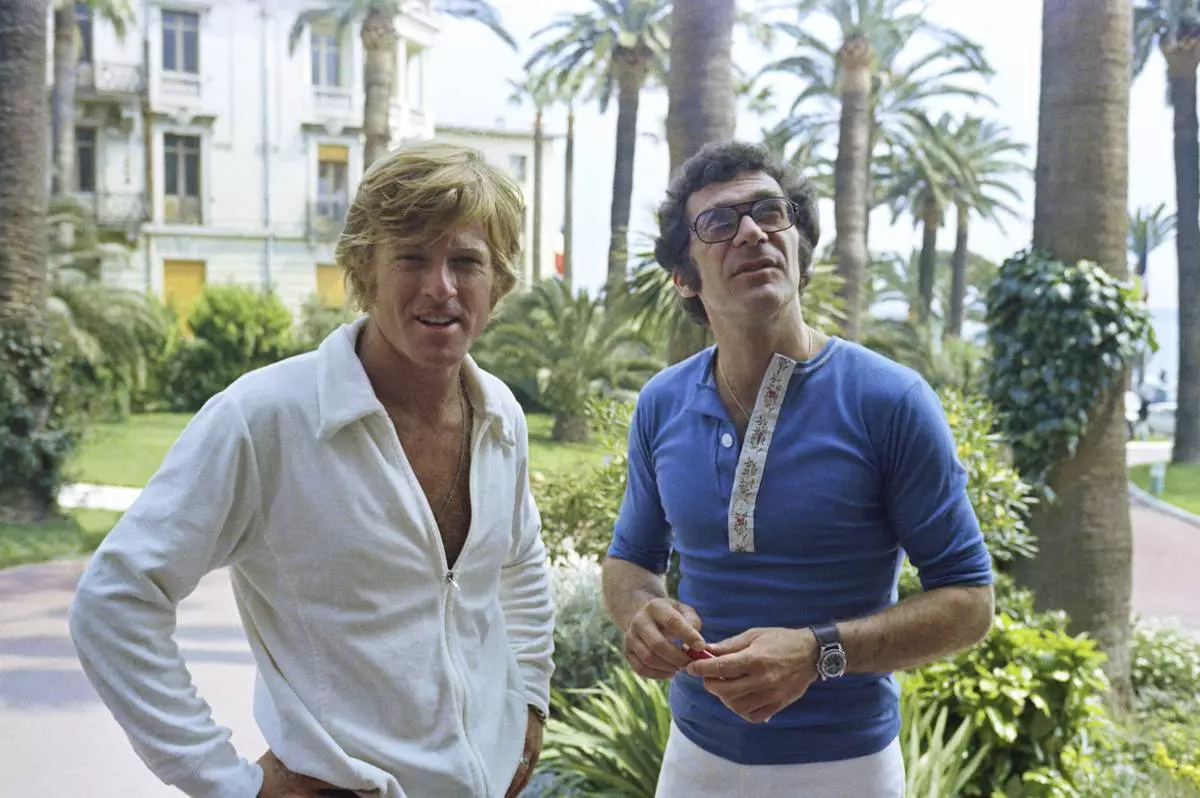
FILE - Actor Robert Redford, left, and director Sydney Pollack appear at the Cannes Film Festival before the presentation of their film "Jeremiah Johnson" in Cannes, France, on May 6, 1972. (AP Photo/Jean Jacques Levy, File)
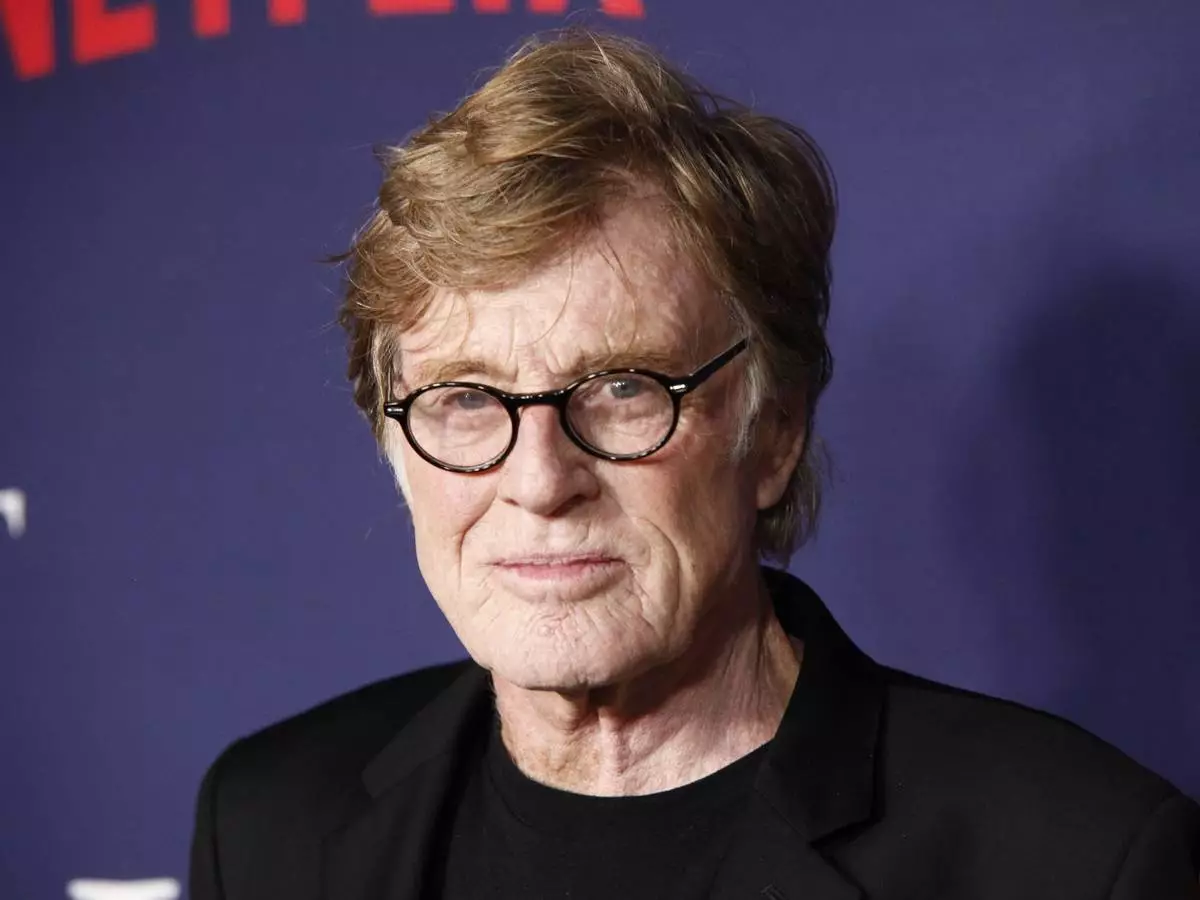
FILE - Robert Redford attends the premiere of Netflix's "Our Souls at Night" on Sept. 27, 2017, in New York. (Photo by Andy Kropa/Invision/AP, File)

FILE - Actors Robert Redford and Jane Fonda hug as they pose for photographers at the photo call of the film "Our Souls at Night" during the 74th edition of the Venice Film Festival in Venice, Italy, on Sept. 1, 2017. (Photo by Joel Ryan/Invision/AP, File)
NUUK, Greenland (AP) — Troops from several European countries continued to arrive in Greenland on Thursday in a show of support for Denmark as talks between representatives of Denmark, Greenland and the U.S. highlighted “fundamental disagreement” over the future of the Arctic island.
The disagreement came into starker focus Thursday, with the White House describing plans for more talks with officials from Denmark and Greenland as “technical talks on the acquisition agreement" for the U.S. to acquire Greenland.
That was a far cry from the way Danish Foreign Minister Lars Løkke Rasmussen described it as a working group that would discuss ways to work through differences between the nations.
“The group, in our view, should focus on how to address the American security concerns, while at the same time respecting the red lines of the Kingdom of Denmark,” he said Wednesday after the meeting.
Before the talks began Wednesday, Denmark announced it would increase its military presence in Greenland. Several European partners — including France, Germany, the U.K., Norway, Sweden and the Netherlands — started sending symbolic numbers of troops or promised to do so in the following days.
The troop movements were intended to portray unity among Europeans and send a signal to President Donald Trump that an American takeover of Greenland is not necessary as NATO together can safeguard the security of the Arctic region amid rising Russian and Chinese interest.
The European troops did little to dissuade Trump.
His White House spokeswoman Karoline Leavitt said Thursday that it had no impact on the U.S. president's decision-making or goal of acquiring Greenland.
“The president has made his priority quite clear, that he wants the United States to acquire Greenland. He thinks it’s in our best national security to do that,” she said.
Rasmussen, flanked by his Greenlandic counterpart Vivian Motzfeldt, said Wednesday that a “fundamental disagreement” over Greenland remained after they met at the White House with Vice President JD Vance and Secretary of State Marco Rubio.
Rasmussen said it remains “clear that the president has this wish of conquering over Greenland” but dialogue with the U.S. would continue at a high level over the following weeks.
Meanwhile, French President Emmanuel Macron announced Wednesday that "the first French military elements are already en route” and “others will follow,” as French authorities said about 15 soldiers from the mountain infantry unit were already in Nuuk for a military exercise.
Germany will deploy a reconnaissance team of 13 personnel to Greenland on Thursday, the Defense Ministry said.
On Thursday, Danish Defense Minister Troels Lund Poulsen said the intention was “to establish a more permanent military presence with a larger Danish contribution,” according to Danish broadcaster DR. He said soldiers from several NATO countries will be in Greenland on a rotation system.
Inhabitants of Greenland and Denmark reacted with anxiety but also some relief that negotiations with the U.S. would go on and European support was becoming visible.
Greenland's Prime Minister Jens-Frederik Nielsen welcomed the continuation of “dialogue and diplomacy.”
“Greenland is not for sale,” he said Thursday. “Greenland does not want to be owned by the United States. Greenland does not want to be governed from the United States. Greenland does not want to be part of the United States.”
In Greenland’s capital, Nuuk, local residents told The Associated Press they were glad the first meeting between Greenlandic, Danish and American officials had taken place but suggested it left more questions than answers.
Several people said they viewed Denmark’s decision to send more troops, and promises of support from other NATO allies, as protection against possible U.S. military action. But European military officials have not suggested the goal is to deter a U.S. move against the island.
Maya Martinsen, 21, said it was “comforting to know that the Nordic countries are sending reinforcements” because Greenland is a part of Denmark and NATO.
The dispute, she said, is not about “national security” but rather about “the oils and minerals that we have that are untouched.”
On Wednesday, Poulsen announced a stepped-up military presence in the Arctic “in close cooperation with our allies,” calling it a necessity in a security environment in which “no one can predict what will happen tomorrow.”
“This means that from today and in the coming time there will be an increased military presence in and around Greenland of aircraft, ships and soldiers, including from other NATO allies,” Poulsen said.
Asked whether the European troop movements were coordinated with NATO or what role the U.S.-led military alliance might play in the exercises, NATO referred all questions to the Danish authorities. However, NATO is currently studying ways to bolster security in the Arctic.
The Russian embassy in Brussels on Thursday lambasted what it called the West's “bellicose plans” in response to “phantom threats that they generate themselves”. It said the planned military actions were part of an “anti-Russian and anti-Chinese agenda” by NATO.
“Russia has consistently maintained that the Arctic should remain a territory of peace, dialogue and equal cooperation," the embassy said.
Commenting on the outcome of the Washington meeting on Thursday, Poulsen said the working group was “better than no working group” and “a step in the right direction.” He added nevertheless that the dialogue with the U.S. did not mean “the danger has passed.”
The most important thing for Greenlanders is that they were directly represented at the meeting in the White House and that “the diplomatic dialogue has begun now,” Juno Berthelsen, a lawmaker for the pro-independence Naleraq opposition party, told AP.
A relationship with the U.S. is beneficial for Greenlanders and Americans and is “vital to the security and stability of the Arctic and the Western Alliance,” Berthelsen said. He suggested the U.S. could be involved in the creation of a coast guard for Greenland, providing funding and creating jobs for local people who can help to patrol the Arctic.
In Washington, Rasmussen and Motzfeldt also met with a bipartisan group of senators at the U.S. Capitol.
“We really appreciate that we have close friends in the Senate and the House as well,” Rasmussen told reporters, adding that Denmark would work to “accommodate any reasonable American requests” with Greenland.
There has been significant concern among lawmakers of both political parties that Trump could upend the NATO alliance by insisting on using military force to possess Greenland. Key Republicans lawmakers have pushed back on those plans and suggested that the Trump administration should work with Denmark to enhance mutual security in the Arctic.
Line McGee, 38, from Copenhagen, told AP that she was glad to see some diplomatic progress. “I don’t think the threat has gone away,” she said. “But I feel slightly better than I did yesterday.”
Trump, in his Oval Office meeting with reporters, said: “We’ll see how it all works out. I think something will work out.”
Niemann reported from Copenhagen, Denmark, and Ciobanu from Warsaw, Poland. Associated Press writers Stephen Groves and Michelle L. Price in Washington and Meg Kinnard in Columbia, South Carolina, contributed to this report.
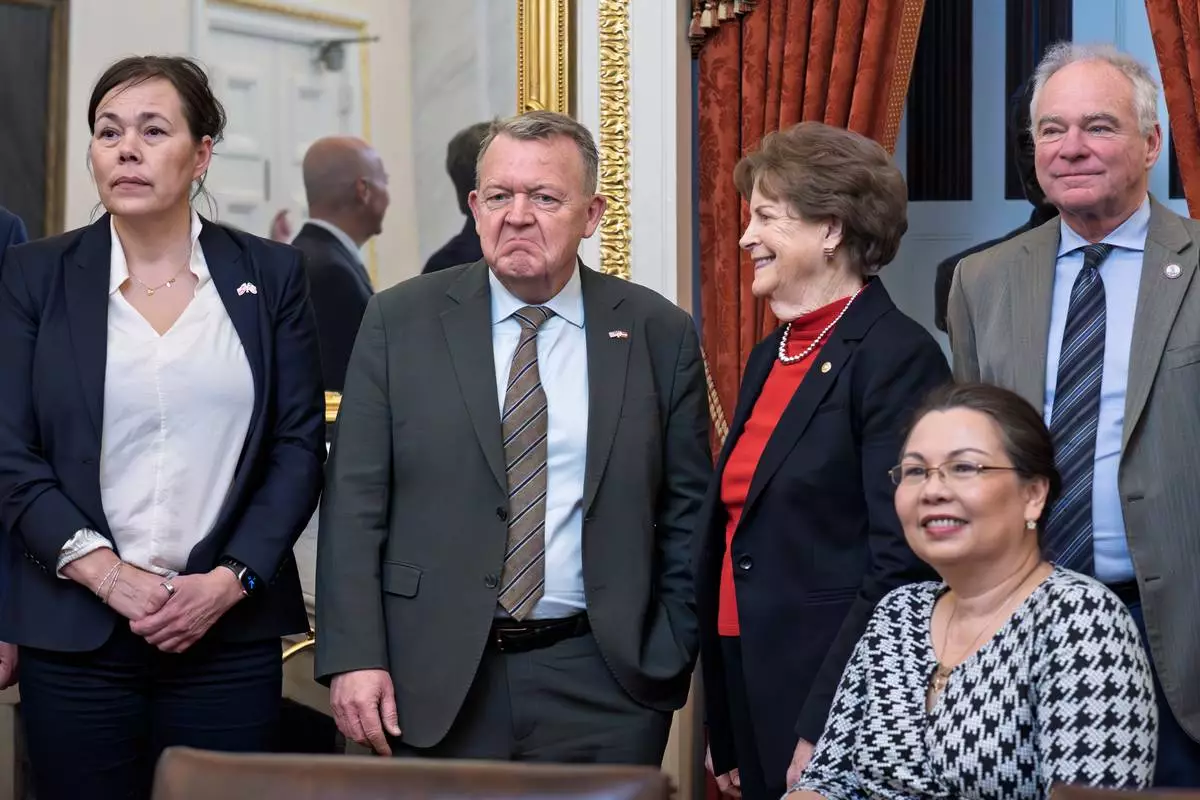
From left, Greenland Foreign Minister Vivian Motzfeldt, Danish and Foreign Minister Lars Løkke Rasmussen, stand with members of the Senate Foreign Relations Committee, Sen. Jeanne Shaheen, D-N.H., Sen. Tammy Duckworth, D-Ill., and Sen. Tim Kaine, D-Va., amid President Donald Trump's ambitions to take control of Greenland, a semiautonomous territory of Denmark, during a meeting at the Capitol in Washington, Thursday, Jan. 15, 2026. (AP Photo/J. Scott Applewhite)
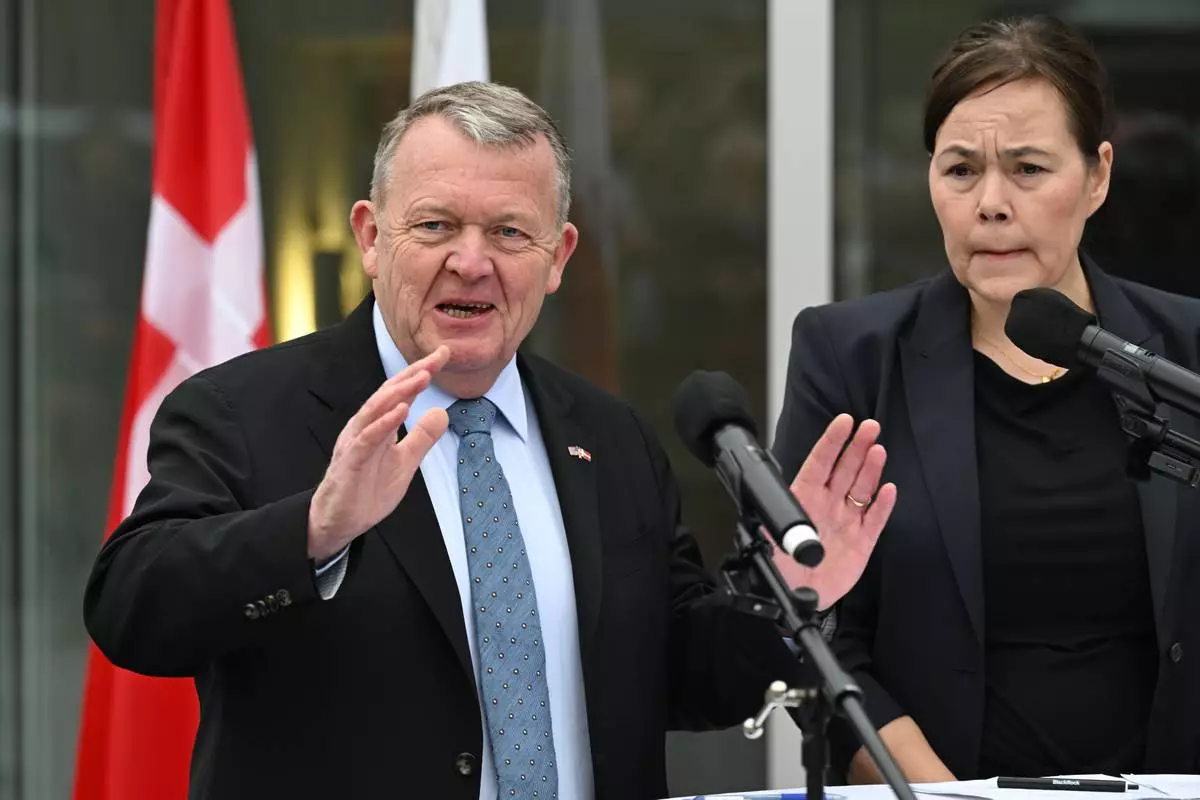
Denmark's Foreign Minister Lars Løkke Rasmussen and Greenland's Foreign Minister Vivian Motzfeldt speak at a news conference at the Embassy of Denmark, Wednesday, Jan. 14, 2026, in Washington. (AP Photo/John McDonnell)
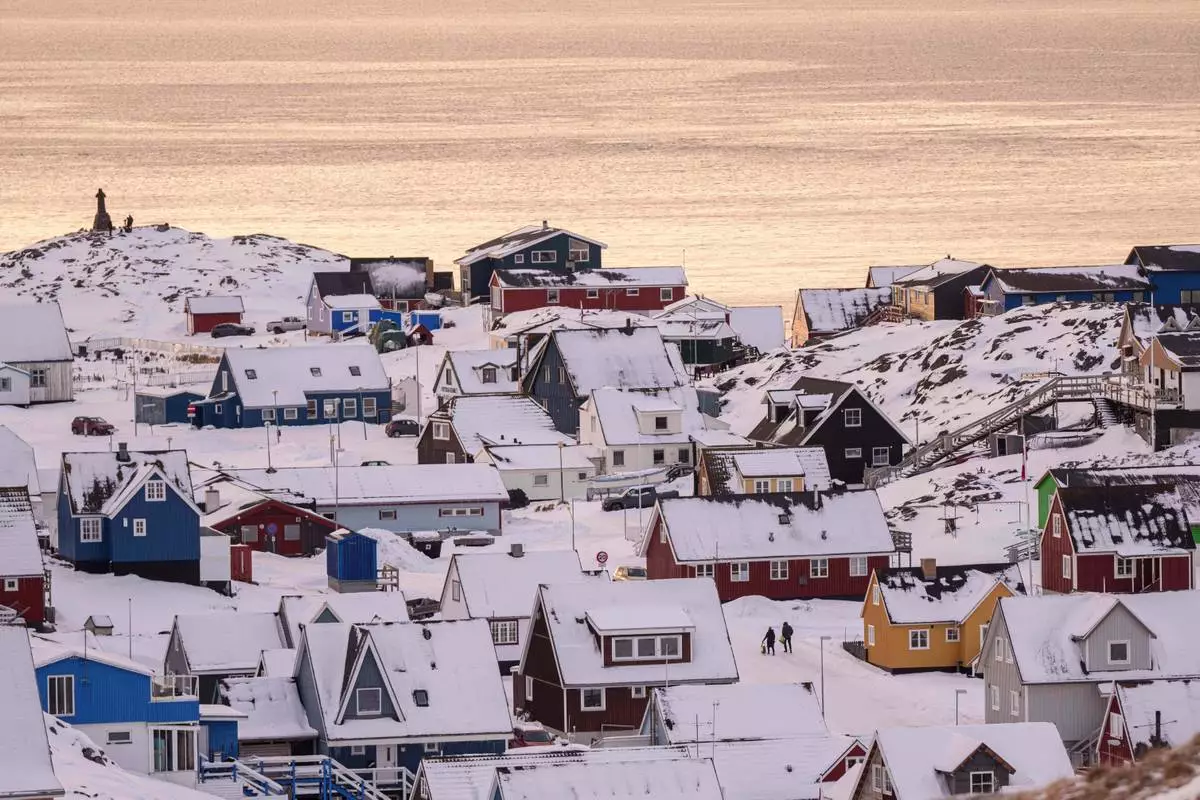
People walk on a street in Nuuk, Greenland, Wednesday, Jan. 14, 2026. (AP Photo/Evgeniy Maloletka)
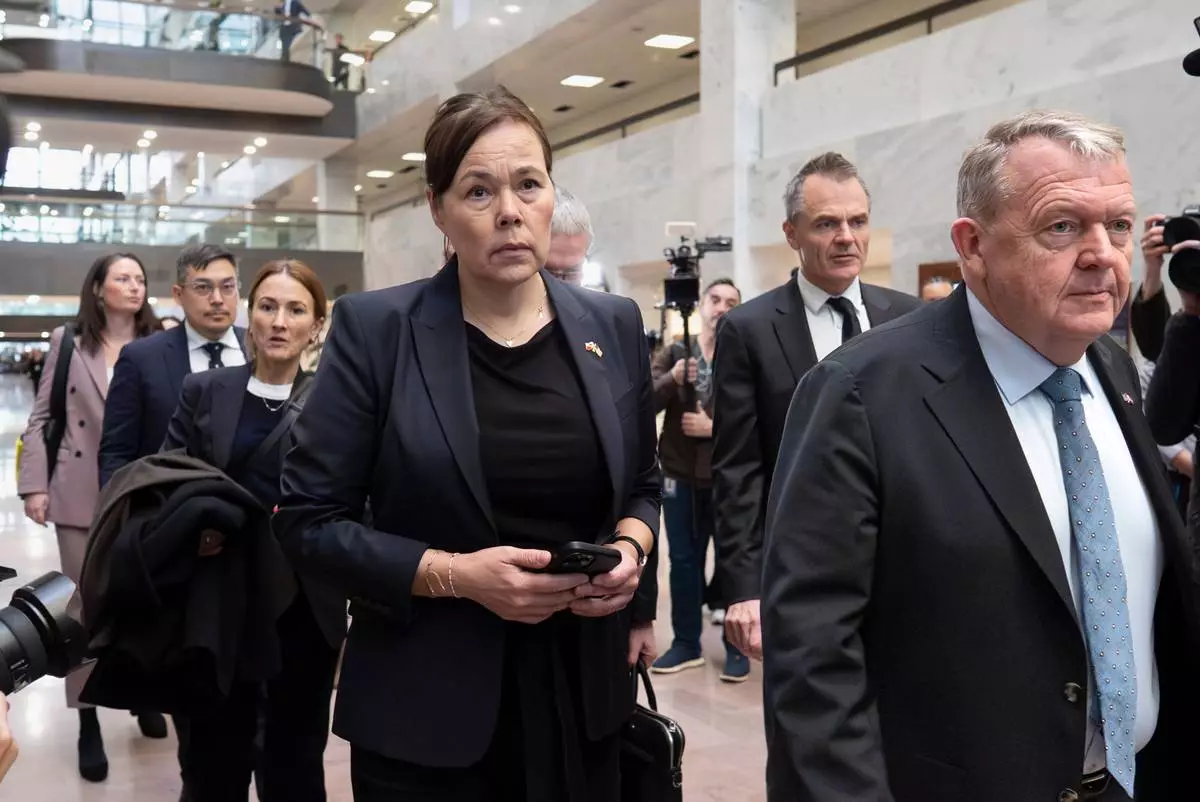
From center to right, Greenland Foreign Minister Vivian Motzfeldt, Denmark's Ambassador Jesper Møller Sørensen, rear, and Danish Foreign Minister Lars Løkke Rasmussen, right, arrive on Capitol Hill to meet with senators from the Arctic Caucus, in Washington, Wednesday, Jan. 14, 2026. (AP Photo/J. Scott Applewhite)

An Airbus A400M transport aircraft of the German Air Force taxis over the grounds at Wunstorf Air Base in the Hanover region, Germany, Thursday, Jan. 15, 2026 as troops from NATO countries, including France and Germany, are arriving in Greenland to boost security. (Moritz Frankenberg/dpa via AP)
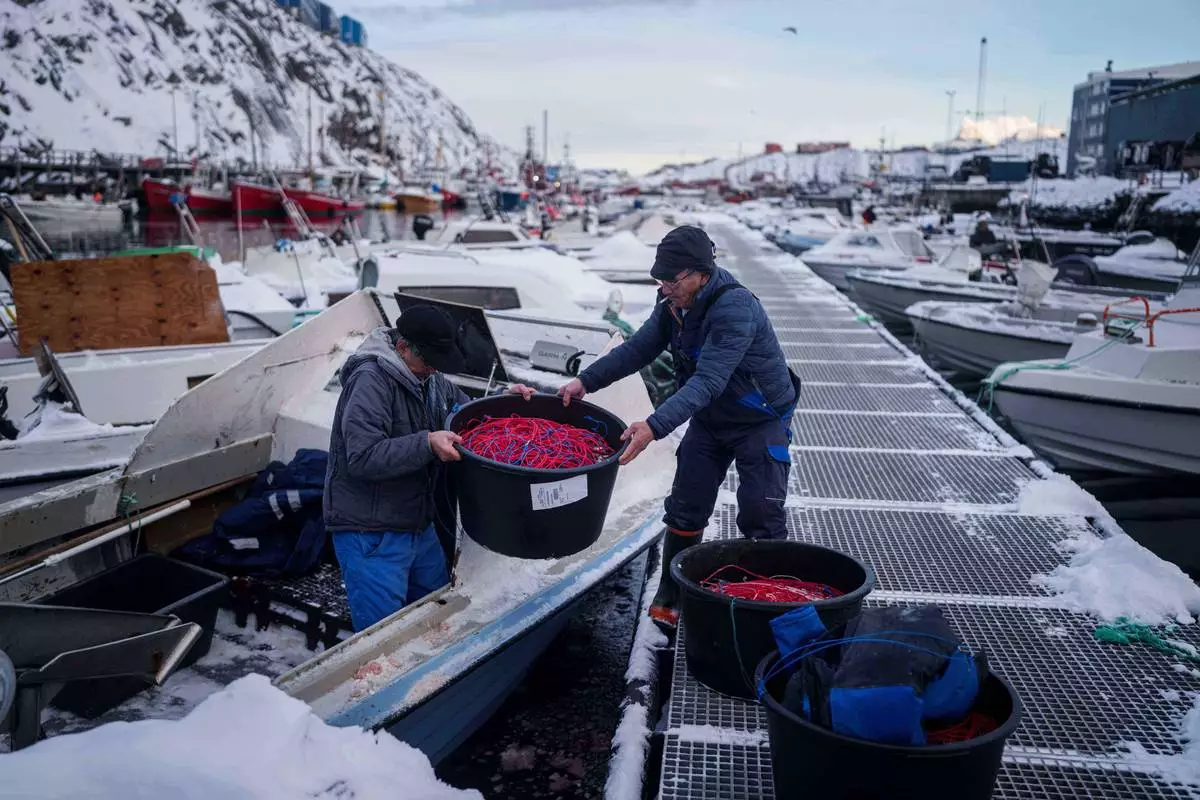
Fishermen load fishing lines into a boat in the harbor of Nuuk, Greenland, Wednesday, Jan. 14, 2026. (AP Photo/Evgeniy Maloletka)
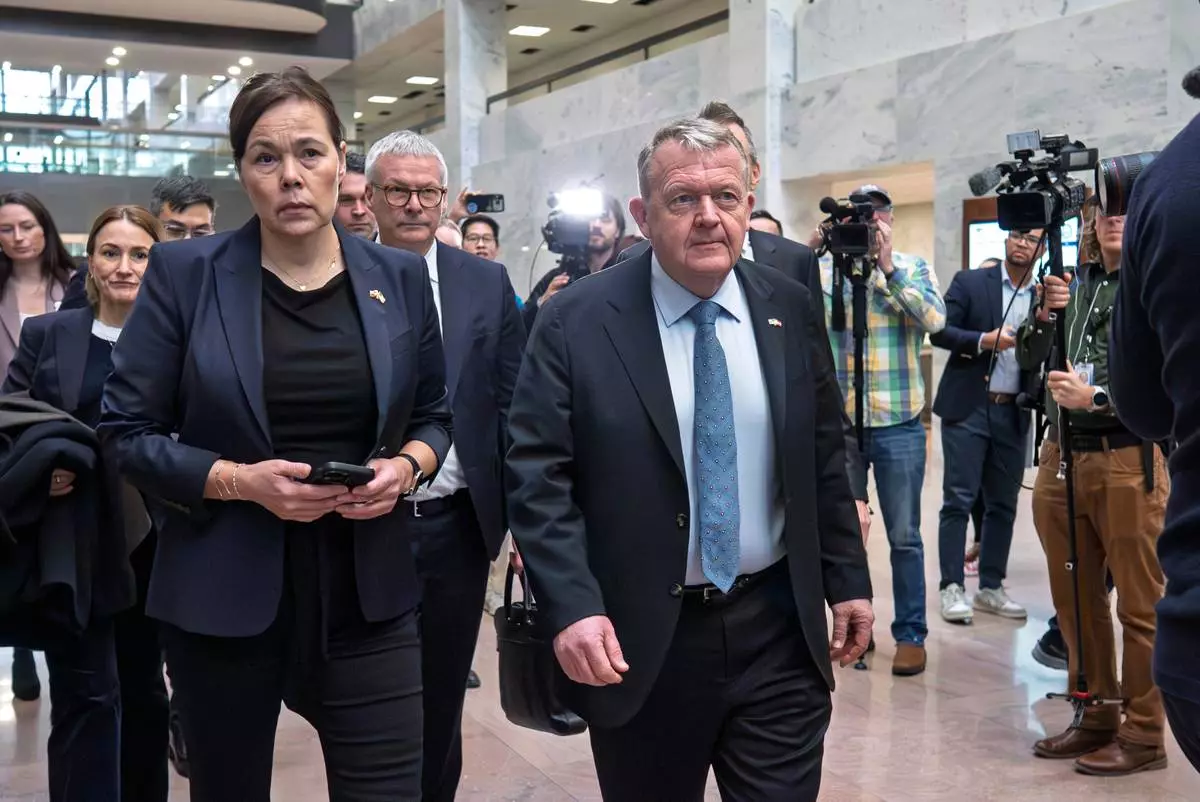
Greenland Foreign Minister Vivian Motzfeldt, left, and Danish Foreign Minister Lars Løkke Rasmussen, arrive on Capitol Hill to meet with members of the Senate Arctic Caucus, in Washington, Wednesday, Jan. 14, 2026. (AP Photo/J. Scott Applewhite)