Skip to Content Facebook Feature Image

National Academy of Sciences rebuffs Trump EPA's effort to undo regulations fighting climate change

News

National Academy of Sciences rebuffs Trump EPA's effort to undo regulations fighting climate change
News

News

National Academy of Sciences rebuffs Trump EPA's effort to undo regulations fighting climate change

2025-09-18 04:55 Last Updated At:05:00

WASHINGTON (AP) — Evidence that climate change harms public health is “beyond scientific dispute,” the independent National Academy of Sciences said Wednesday in response to the Trump administration's efforts to revoke a landmark U.S. government finding to that effect that underpins key environmental regulations.

The NAS, a non-governmental nonprofit set up to advise the government on science, said human activity is releasing greenhouse gases that are warming the planet, increasing extreme temperatures and changing the oceans, all dangerous developments for the health and welfare of the United States public. Evidence to that effect has only grown stronger since 2009, the group said.

In July, the Trump administration proposed revoking what's known as the 2009 “endangerment” finding, the concept that climate change is a threat. Overturning it could pave the way for cutting a range of rules that limit pollution from cars, power plants and other sources.

“EPA’s 2009 finding that the human-caused emissions of greenhouse gases threaten human health and welfare was accurate, has stood the test of time, and is now reinforced by even stronger evidence,” the NAS said. Science that was uncertain or tentative in 2009 has now been resolved, it said, and new risks have been found, too.

The NAS was established in 1863 under President Abraham Lincoln and has played a significant public role in scientific policy for more than a century, including consulting on the Clean Air Act.

“The importance of getting the science right weighed heavily on the committee’s deliberations, given the potential significant implications of a changing climate and of the actions proposed to address it,” NAS committee chair and former Princeton University President Shirley Tilghman wrote in the preface to Wednesday's report.

“Unlike earthquakes and volcanoes, over which we have no control, responding to the potential harm to human health and welfare from changes in the climate is actionable now,” Tilghman wrote.

Under President Donald Trump, the Department of Energy has suggested that climate models used by scientists to predict warming have overreached, that long-term trends for disasters generally don’t show much change and that climate has little impact on the economy. The DOE also said there are advantages to a world with more carbon, like increased plant growth.

On Wednesday, the National Academy had a series of scientists explain their findings in a webcast.

Addressing the administration's assertion that U.S. wildfires aren't more common recently than they were in the 1980s, the NAS provided evidence that climate change has worsened them. Earlier springs; longer, dry summers; and cumulative drought have lengthened the fire window and raised the probability of large, fast-spreading fires, especially in the West, the NAS report said.

And while Trump's Department of Energy attributes rising sea levels in part to sinking land and other factors, it relied on only a few tidal stations to inform its analysis, said NAS co-author Charles Driscoll, a Syracuse engineering professor.

Data from all the stations, plus from satellites, shows “very, very strong” evidence that the rise in sea levels is accelerating, Driscoll said.

In a statement, EPA said the endangerment finding was used by the Obama and Biden administrations to justify “trillions of dollars of greenhouse gas regulations” and that many of the “extremely pessimistic predictions and assumptions EPA relied upon have not materialized as expected.”

The Trump administration's work has already been met by strong pushback from the scientific community, including dozens of experts who responded to a survey from The Associated Press. The vast majority of respondents were highly critical of science the administration put forward as it argued to revoke the endangerment finding. Many described it as filled with errors, bias and distortion.

Paul Higgins, an associate executive director of the American Meteorological Society, said the NAS's work is trustworthy in part because of the rigorous scientific process it uses.

“The National Academy of Sciences is the premier scientific organization in the United States,” said Paulina Jaramillo, a Carnegie Mellon University professor of engineering and public policy. “In contrast, the DOE report was authored by five scientists known to be climate skeptics."

Other mainstream groups have also criticized the administration’s work. A group of 85 climate experts found it “full of errors, and not fit to inform policy making.” Environmental groups are already challenging the administration’s documents in court.

A White House spokesperson previously told The Associated Press that the Trump administration “is producing Gold Standard Science research driven by verifiable data” and that the endangerment finding had long been misused to justify expensive regulations “that have jeopardized our economic and national security.”

The Trump administration maintains that while climate change is real, its future effects are unclear and likely weaker than projected by many mainstream scientists. The administration also contends that U.S. cuts in greenhouse gas emissions, which largely come from burning fuels like oil and coal, would mean little globally.

The authors of the Department of Energy report said in August that any errors found in the work would be corrected and that the report is not meant to be a comprehensive review of climate science. They said the report was intended to focus on topics that have been “underreported or overlooked in media and political discussions.”

The National Academy of Sciences said in its report released Wednesday that harm to Americans from climate change is real. People are exposed to more extreme heat, air pollution and extreme weather events, just to name a sampling of the threats, NAS said. And it said the science of climate change reveals the potential for a frightening future.

“The United States faces a future in which climate-induced harm continues to worsen and today's extremes become tomorrow's norms,” the NAS said.

Associated Press writer Matthew Daly contributed.

The Associated Press’ climate and environmental coverage receives financial support from multiple private foundations. AP is solely responsible for all content. Find AP’s standards for working with philanthropies, a list of supporters and funded coverage areas at AP.org.
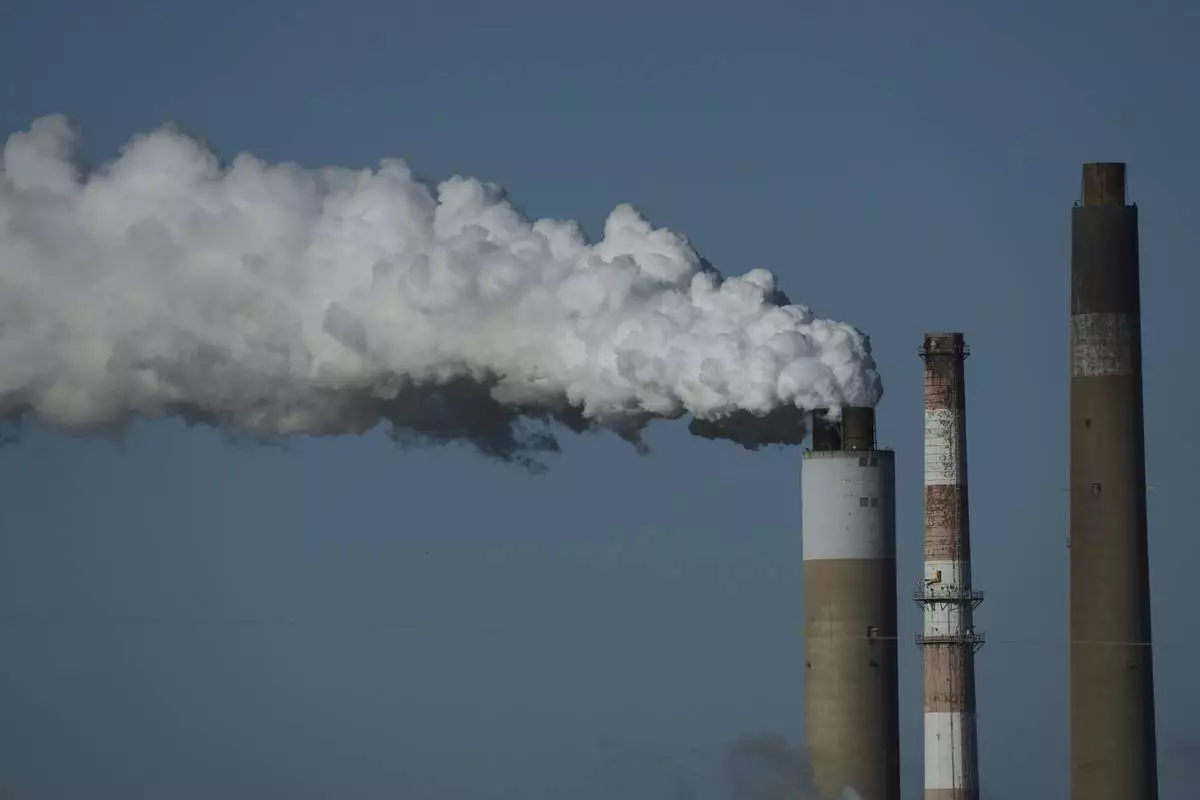
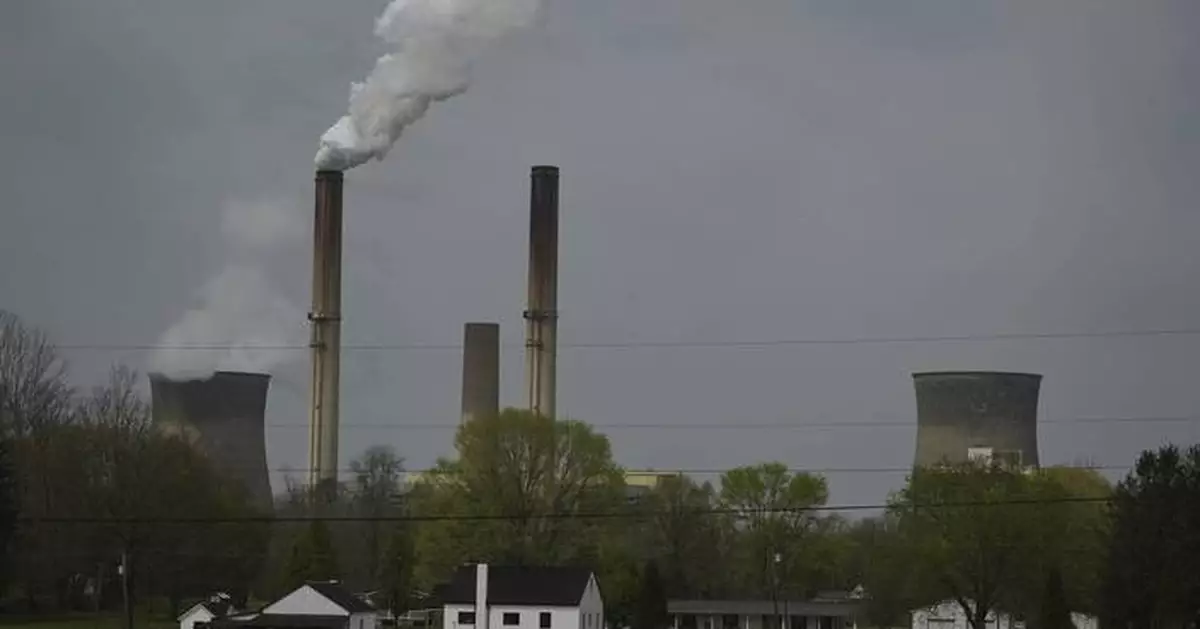
FILE - The Warrick Power Plant, a coal-powered generating station, operates April 8, 2025, in Newburgh, Ind. (AP Photo/Joshua A. Bickel, File)
FILE - The Warrick Power Plant, a coal-powered generating station, operates April 8, 2025, in Newburgh, Ind. (AP Photo/Joshua A. Bickel, File)

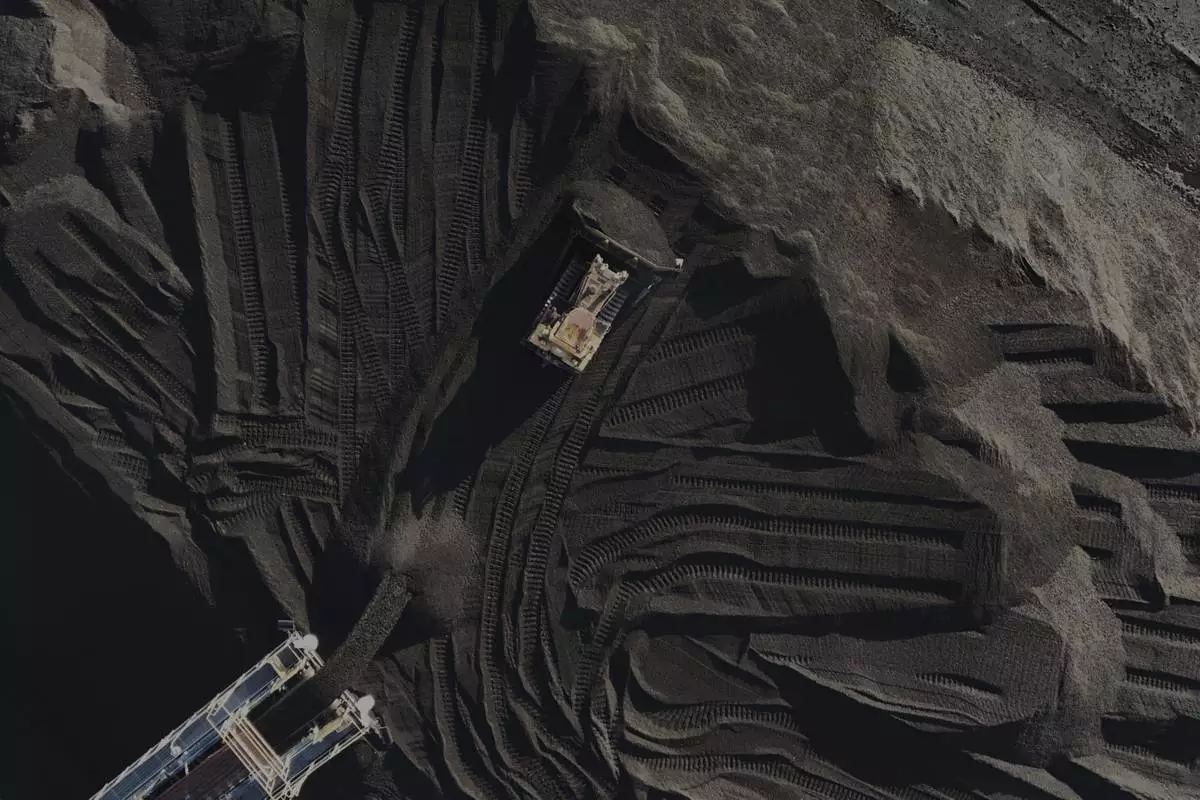
FILE - A bulldozer moves coal April 10, 2025, in Princeton, Ind. (AP Photo/Joshua A. Bickel, File)
FILE - A bulldozer moves coal April 10, 2025, in Princeton, Ind. (AP Photo/Joshua A. Bickel, File)

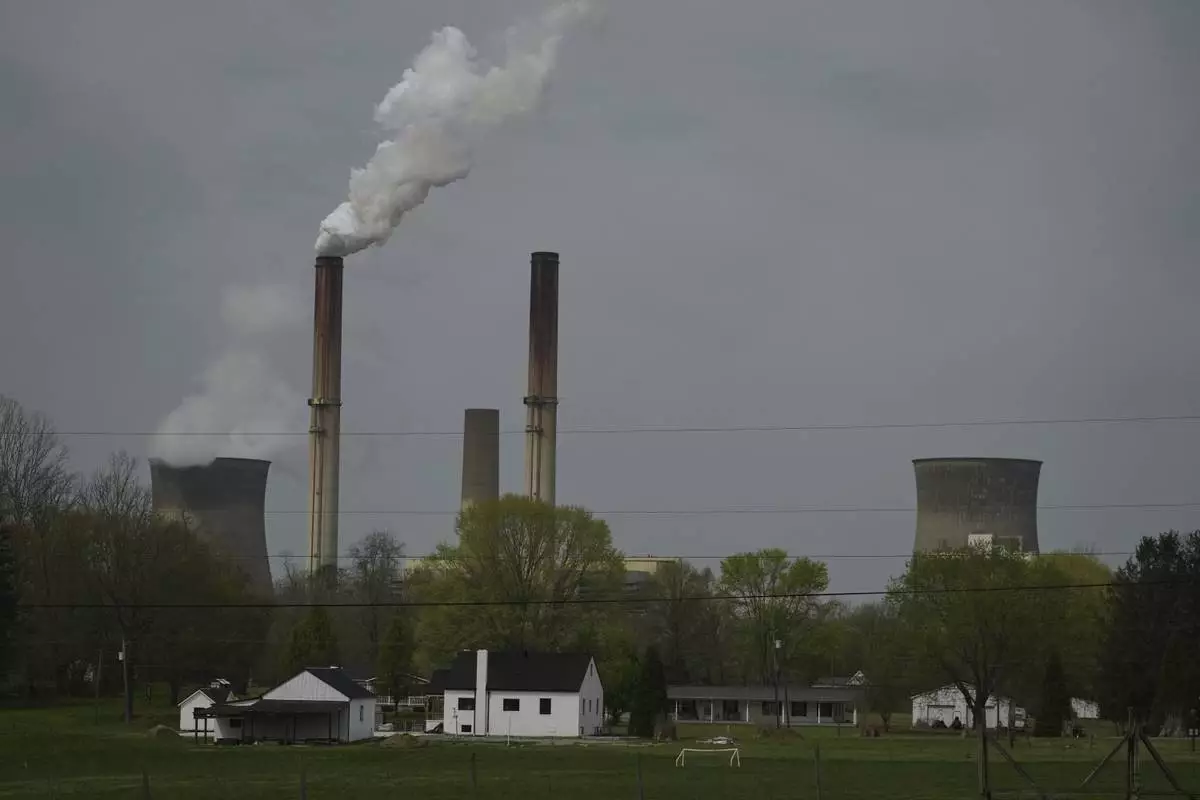
FILE - A home sits near the Gen. James Gavin Power Plant, a coal-fired power plant, April 14, 2025, in Point Pleasant, W.Va. (AP Photo/Joshua A. Bickel, File)


FILE - A home sits near the Gen. James Gavin Power Plant, a coal-fired power plant, April 14, 2025, in Point Pleasant, W.Va. (AP Photo/Joshua A. Bickel, File)

BEIJING (AP) — Breaking with the United States, Canada has agreed to cut its 100% tariff on Chinese electric cars in return for lower tariffs on Canadian farm products, Prime Minister Mark Carney said Friday.

Carney made the announcement after two days of meetings with Chinese leaders. He said there would be an initial cap of 49,000 vehicles on Chinese EV exports to Canada, growing to 70,000 over five years. China will reduce its tariff on canola seeds, a major Canadian export, from about 84% to about 15%, he told reporters.

“It has been a historic and productive two days,” Carney said, speaking outside against the backdrop of a traditional pavilion and a frozen pond at a Beijing park. “We have to understand the differences between Canada and other countries, and focus our efforts to work together where we’re aligned.”

Earlier Friday, he and Chinese leader Xi Jinping pledged to improve relations between their two nations after years of acrimony.

Xi told Carney in a meeting at the Great Hall of the People that he is willing to continue working to improve ties, noting that talks have been underway on restoring and restarting cooperation since the two held an initial meeting in October on the sidelines of a regional economic conference in South Korea.

“It can be said that our meeting last year opened a new chapter in turning China–Canada relations toward improvement,” China's top leader said.

Carney, the first Canadian prime minister to visit China in eight years, said better relations would help improve a global governance system that he described as “under great strain.”

He called for a new relationship “adapted to new global realities” and cooperation in agriculture, energy and finance.

Those new realities reflect in large part the so-called America-first approach of U.S. President Donald Trump. The tariffs he has imposed have hit both the Canadian and Chinese economies. Carney, who has met with several leading Chinese companies in Beijing, said ahead of his trip that his government is focused on building an economy less reliant on the U.S. at what he called “a time of global trade disruption.”

A Canadian business owner in China called Carney's visit game-changing, saying it re-establishes dialogue, respect and a framework between the two nations.

“These three things we didn’t have,” said Jacob Cooke, the CEO of WPIC Marketing + Technologies, which helps exporters navigate the Chinese market. “The parties were not talking for years.”

Canada had followed the U.S. in putting tariffs of 100% on EVs from China and 25% on steel and aluminum under former Prime Minister Justin Trudeau, Carney’s predecessor.

China responded by imposing duties of 100% on Canadian canola oil and meal and 25% on pork and seafood. It added a 75.8% tariff on canola seeds last August. Collectively, the import taxes effectively closed the Chinese market to Canadian canola, an industry group has said. Overall, China's imports from Canada fell 10.4% last year to $41.7 billion, according to Chinese trade data.

China is hoping Trump’s pressure tactics on allies such as Canada will drive them to pursue a foreign policy that is less aligned with the United States. The U.S. president has suggested Canada could become America's 51st state.

Carney departs China on Saturday and visits Qatar on Sunday before attending the annual gathering of the World Economic Forum in Switzerland next week. He will meet business leaders and investors in Qatar to promote trade and investment, his office said.

Associated Press business writer Chan Ho-him in Hong Kong contributed to this report.

Canada's Prime Minister Mark Carney, speaks to the media at Ritan Park in Beijing, China, Friday, Jan. 16, 2026. (AP Photo/Vincent Thian)

Canada's Prime Minister Mark Carney, speaks to the media at Ritan Park in Beijing, China, Friday, Jan. 16, 2026. (AP Photo/Vincent Thian)

Canada's Prime Minister Mark Carney, leaves after speaking to the media at Ritan Park in Beijing, China, Friday, Jan. 16, 2026. (AP Photo/Vincent Thian)

Canada's Prime Minister Mark Carney, leaves after speaking to the media at Ritan Park in Beijing, China, Friday, Jan. 16, 2026. (AP Photo/Vincent Thian)

Chinese President Xi Jinping, centre, reacts during a meeting with Canada's Prime Minister Mark Carney (not in the picture), at the Great Hall of the People in Beijing, China, Friday, Jan. 16, 2026. (AP Photo/Vincent Thian, Pool)

Chinese President Xi Jinping, centre, reacts during a meeting with Canada's Prime Minister Mark Carney (not in the picture), at the Great Hall of the People in Beijing, China, Friday, Jan. 16, 2026. (AP Photo/Vincent Thian, Pool)

Canada's Prime Minister Mark Carney, speaks to the media at Ritan Park in Beijing, China, Friday, Jan. 16, 2026. (AP Photo/Vincent Thian)

Canada's Prime Minister Mark Carney, speaks to the media at Ritan Park in Beijing, China, Friday, Jan. 16, 2026. (AP Photo/Vincent Thian)

Canada's Prime Minister Mark Carney, center, arrives to meet with Chinese President Xi Jinping, at the Great Hall of the People in Beijing, China, Friday, Jan. 16, 2026. (AP Photo/Vincent Thian, Pool)

Canada's Prime Minister Mark Carney, center, arrives to meet with Chinese President Xi Jinping, at the Great Hall of the People in Beijing, China, Friday, Jan. 16, 2026. (AP Photo/Vincent Thian, Pool)

Canada's Prime Minister Mark Carney, left, meets with Chinese President Xi Jinping at the Great Hall of the People in Beijing Friday, Jan. 16, 2026. (Sean Kilpatrick/The Canadian Press via AP)

Canada's Prime Minister Mark Carney, left, meets with Chinese President Xi Jinping at the Great Hall of the People in Beijing Friday, Jan. 16, 2026. (Sean Kilpatrick/The Canadian Press via AP)

Canada's Prime Minister Mark Carney, left, shakes hands with China's President Xi Jinping at the Great Hall of the People in Beijing Friday, Jan. 16, 2026. (Sean Kilpatrick/The Canadian Press via AP)

Canada's Prime Minister Mark Carney, left, shakes hands with China's President Xi Jinping at the Great Hall of the People in Beijing Friday, Jan. 16, 2026. (Sean Kilpatrick/The Canadian Press via AP)

Recommended Articles