ISLAMABAD (AP) — Saudi Arabia and nuclear-armed Pakistan have signed a mutual defense pact that defines any attack on either nation as an attack on both — a key accord in the wake of Israel's strike on Qatar last week.
The kingdom has long had close economic, religious and security ties to Pakistan, including reportedly providing funding for Islamabad's nuclear weapons program as it developed. Analysts — and Pakistani diplomats in at least one case — have suggested over the years that Saudi Arabia could be included under Islamabad's nuclear umbrella, particularly as tensions have risen over Iran's atomic program.
Click to Gallery
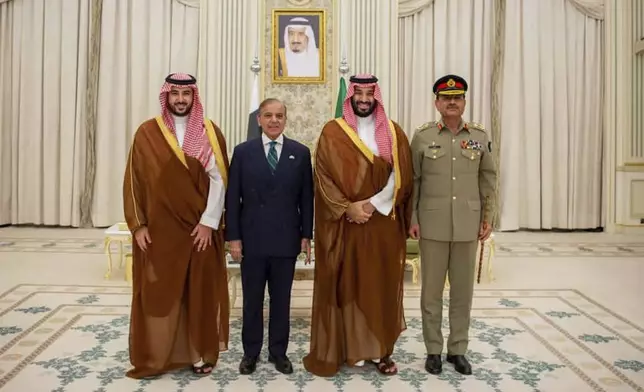
In this photo released by Pakistan's Press Information Department, Saudi Arabia's Crown Prince Mohammed bin Salman, second right, Saudi Arabia's Defence Minister Khalid bin Salman, left, Pakistan's Prime Minister Shehbaz Sharif, second left, and Pakistan's Army Chief Field Marshal Asim Munir, pose for photographs after signing a mutual defense pact, in Riyadh, Saudi Arabia, Wednesday, Sept. 17, 2025. (Press Information Department via AP)
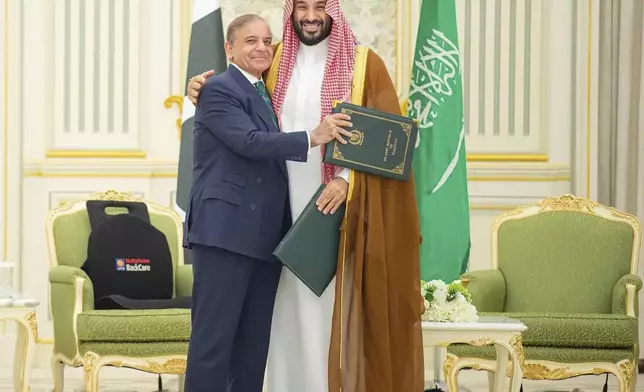
In this photo released by Pakistan's Press Information Department, Saudi Arabia's Crown Prince Mohammed bin Salman, right, and Pakistan's Prime Minister Shehbaz Sharif pose for photograph after signing a mutual defense pact, in Riyadh, Saudi Arabia, Wednesday, Sept. 17, 2025. (Press Information Department via AP)
In this photo released by Pakistan's Press Information Department, Saudi Arabia's Crown Prince Mohammed bin Salman, second right, Saudi Arabia's Defence Minister Khalid bin Salman, left, Pakistan's Prime Minister Shehbaz Sharif, second left, and Pakistan's Army Chief Field Marshal Asim Munir, pose for photographs after signing a mutual defense pact, in Riyadh, Saudi Arabia, Wednesday, Sept. 17, 2025. (Press Information Department via AP)
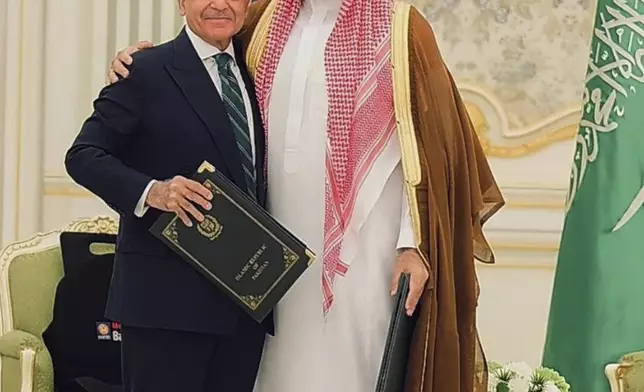
This handout photograph released by the state-run Saudi Press Agency shows Pakistani Prime Minister Shehbaz Sharif, left, embracing Saudi Arabia's Crown Prince Mohammed bin Salman after signing a joint defense pact in Riyadh, Saudi Arabia, Wednesday, Sept. 17, 2025. (Saudi Press Agency via AP)
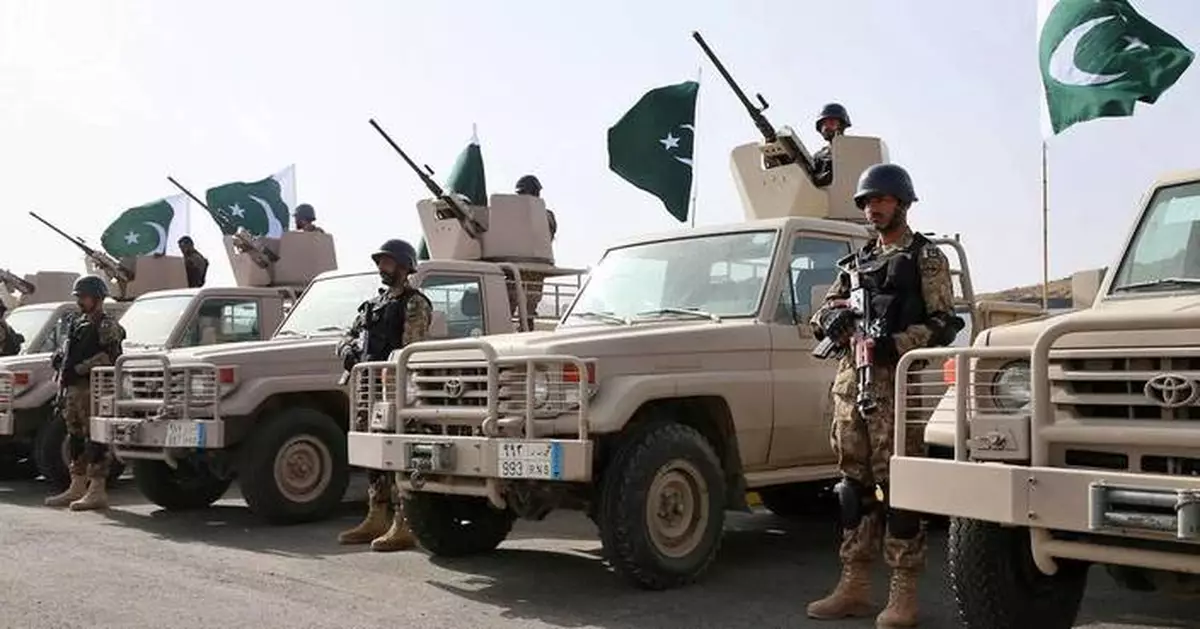
FILE - In this Monday, March 30, 2015 file photo provided by the Saudi Press Agency (SPA), Royal Saudi Land Forces and units of Special Forces of the Pakistani army take part in a joint military exercise called "Al-Samsam 5" in Shamrakh field, north of Baha region, southwest Saudi Arabia. (AP Photo/SPA, File)
But the timing of the pact appeared to be a signal to Israel, long suspected to be the Middle East's only nuclear-armed state, which has conducted a sprawling military offensive since Hamas' Oct. 7, 2023, attack on Israel stretching across Iran, Lebanon, the Palestinian territories, Qatar, Syria and Yemen.
Israel did not respond to requests for comment. The pact marks the first major defense decision by a Gulf Arab country since the Qatar attack. The United States, long the security guarantor for the Gulf Arab states, also did not respond to questions posed to the State Department.
Saudi Arabia’s powerful Crown Prince Mohammed bin Salman signed the pact on Wednesday with Pakistan’s Prime Minister Shehbaz Sharif.
While not specifically discussing the bomb, the agreement states “any aggression against either country shall be considered an aggression against both,” according to statements issued by both Pakistan’s Foreign Affairs Ministry and the state-run Saudi Press Agency.
“This agreement ... aims to develop aspects of defense cooperation between the two countries and strengthen joint deterrence against any aggression,” the statement said.
A senior Saudi official, speaking on condition of anonymity to The Financial Times, seemed to suggest that Pakistan's nuclear protection was a part of the deal, saying it "will utilize all defensive and military means deemed necessary depending on the specific threat."
Zalmay Khalilzad, a former U.S. diplomat with long experience in Afghanistan and Pakistan, expressed concern over the deal, saying it comes in “dangerous times.”
“Pakistan has nuclear weapons and delivery systems that can hit targets across the Middle East, including Israel. It also is developing systems that can reach targets in the U.S.," Khalilzad wrote on X.
Pakistan and Saudi Arabia have a defense relationship stretching back decades, in part due to Islamabad's willingness to defend the Islamic holy sites of Mecca and Medina in the kingdom. Pakistani troops first traveled to Saudi Arabia in the late 1960s over concerns about Egypt's war in Yemen at the time.
Those ties increased after Iran's 1979 Islamic Revolution and the kingdom's fears of a confrontation with Tehran.
Pakistan developed its nuclear weapons program to counter India's atomic bombs. The two neighbors have fought multiple wars against each other and again came close to open warfare after an attack on tourists in April in Indian-controlled Kashmir. India is believed to have an estimated 172 nuclear warheads, while Pakistan has 170, according to the U.S.-published Bulletin of Atomic Scientists.
On Thursday, India's Foreign Ministry acknowledged the Saudi-Pakistan pact and said it “will study the implications of this development for our national security as well as for regional and global stability.” Saudi Arabia also maintains close ties with India.
Retired Pakistani Brig. Gen. Feroz Hassan Khan, in his book on his country's nuclear weapons program called “Eating Grass: The Making of the Pakistani Bomb,” said Saudi Arabia provided “generous financial support to Pakistan that enabled the nuclear program to continue, especially when the country was under sanctions."
Pakistan faced U.S. sanctions for years over its pursuit of the bomb — and saw new ones imposed over its ballistic missile work at the end of the Biden administration.
In a 2007 U.S. diplomatic cable published by WikiLeaks, American diplomats in Saudi Arabia noted that their Pakistani counterparts had brought up the idea of the kingdom pursuing a weapons program alongside Islamabad in order to be the “physical protector” of the Mideast.
Both Pakistan and Saudi Arabia did not respond to questions from The Associated Press on Thursday on whether the pact extended to Islamabad's nuclear weapons arsenal. Pakistan “has historically maintained a deliberately ambiguous nuclear doctrine,” according to the Bulletin of Atomic Scientists.
Syed Muhammad Ali, an Islamabad-based security analyst, noted on Thursday that Pakistan's National Command Authority — which oversees the country's atomic weapons — had not made any statement on the pact. However, he said he believed Pakistan capable of responding to Israel even without the deterrent effect of atomic weapons.
“Pakistan is more than confident that its conventional capability is adequate,” he said. “Pakistan's military ... is adequate enough to improve the security of Saudi Arabia without having to resort to the nuclear option.”
Saudi Arabia has sought U.S. assistance to advance a civilian nuclear power program, in part with what had been a proposed diplomatic recognition deal with Israel prior to the 2023 Hamas attack that triggered the nearly two-year war in Gaza. That could allow Saudi Arabia to enrich uranium in the kingdom — something that worries nonproliferation experts as spinning centrifuges opens the door to a possible weapons program.
That deal — and a Saudi recognition of Israel — seem further away than ever as the kingdom has condemned Israel's actions in Gaza and the crown prince has come out saying that Israel is committing a “genocide” in the Gaza Strip.
However, Prince Mohammed has also said the kingdom would pursue a nuclear weapon if Iran had one. Saudi Arabia already is believed to have a domestic ballistic missile program, which can be a delivery system for a nuclear weapon. Still, the kingdom is a member of the Nuclear Nonproliferation Treaty and is not known to have move toward acquiring the bomb through its own work. Saudi Arabia has had a Chinese-mediated detente with Iran since 2023.
Iranian Foreign Minister Abbas Araghchi had a call Thursday with his Saudi counterpart, Prince Faisal bin Farhan, to discuss the pact.
Gambrell reported from Dubai, United Arab Emirates. Associated Press writer Vineeta Deepak in New Delhi contributed to this report.
The Associated Press receives support for nuclear security coverage from the Carnegie Corporation of New York and Outrider Foundation. The AP is solely responsible for all content.
Additional AP coverage of the nuclear landscape: https://apnews.com/projects/the-new-nuclear-landscape/
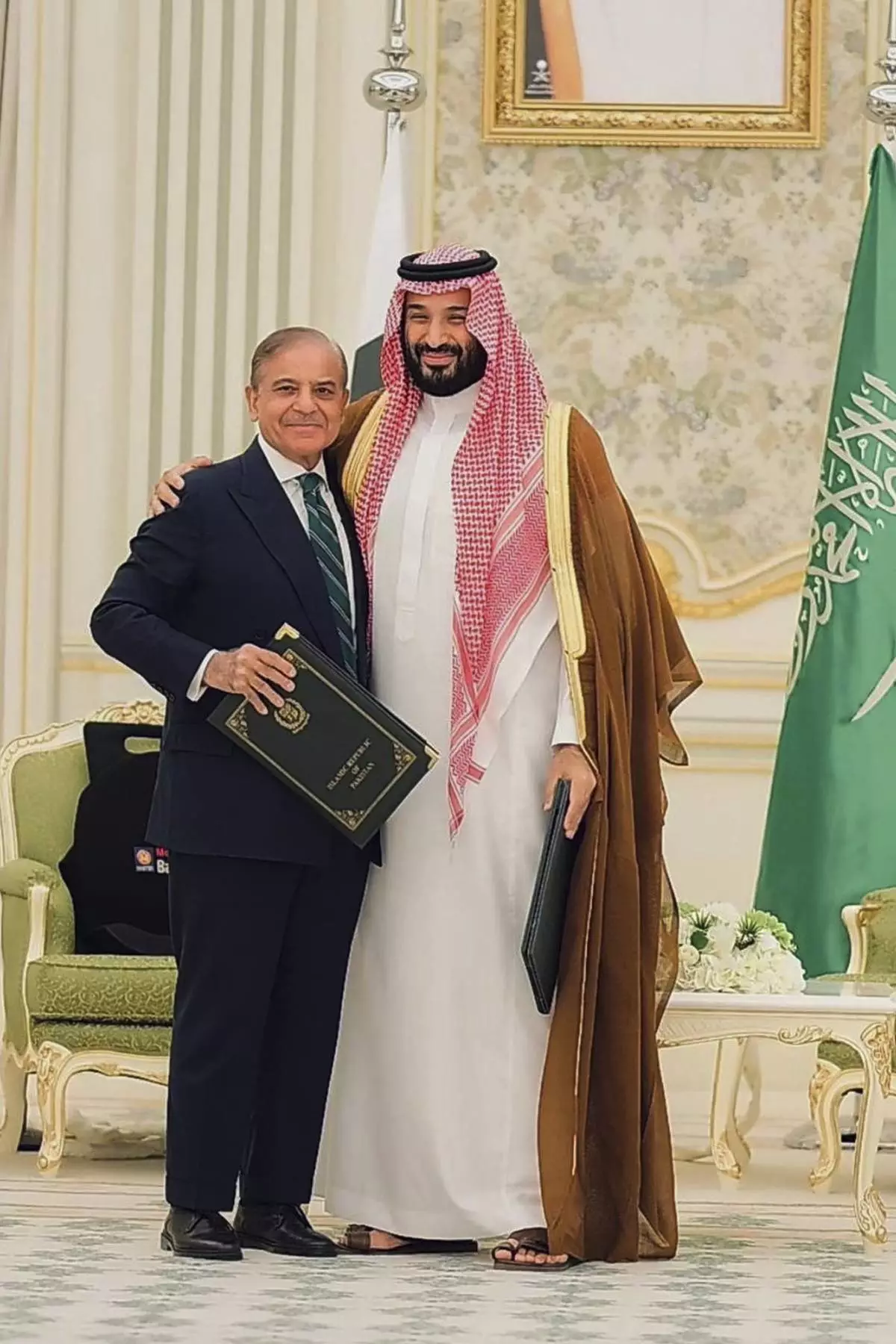
In this photo released by Pakistan's Press Information Department, Saudi Arabia's Crown Prince Mohammed bin Salman, right, and Pakistan's Prime Minister Shehbaz Sharif pose for photograph after signing a mutual defense pact, in Riyadh, Saudi Arabia, Wednesday, Sept. 17, 2025. (Press Information Department via AP)
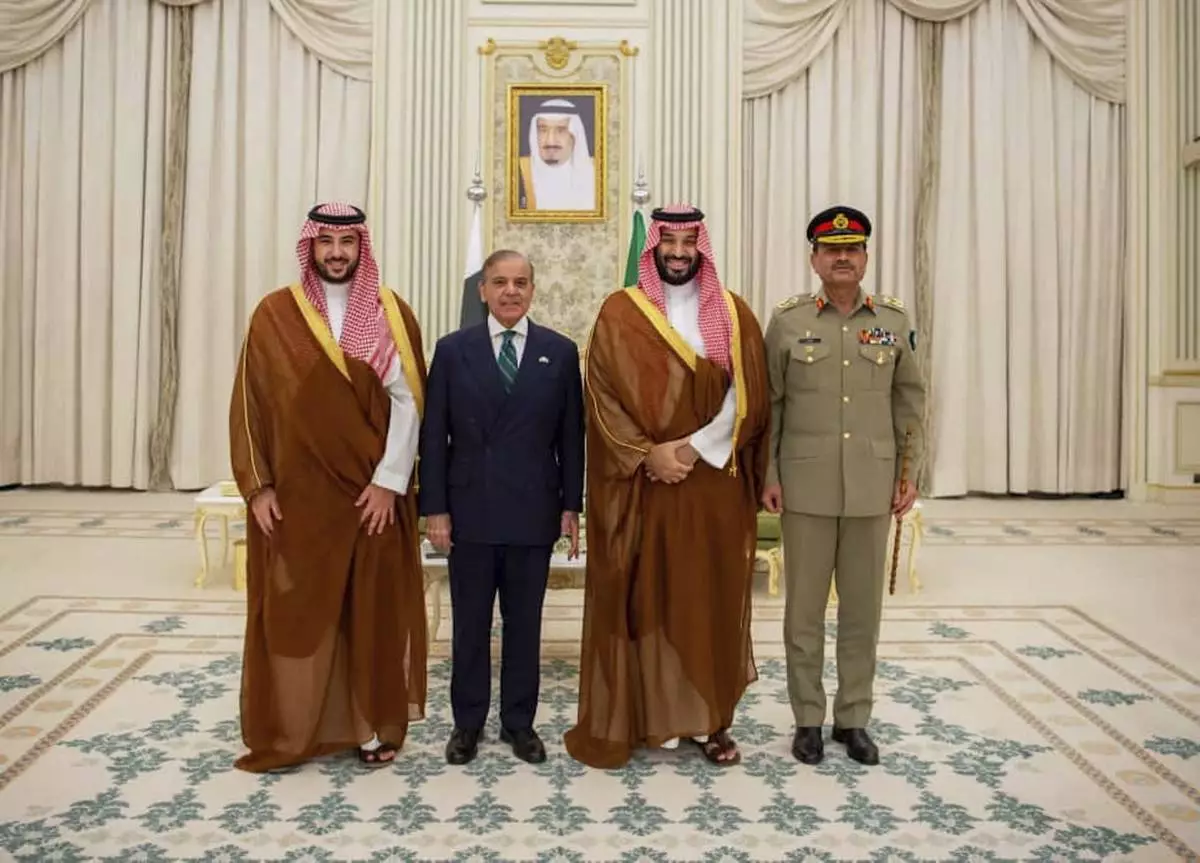
In this photo released by Pakistan's Press Information Department, Saudi Arabia's Crown Prince Mohammed bin Salman, second right, Saudi Arabia's Defence Minister Khalid bin Salman, left, Pakistan's Prime Minister Shehbaz Sharif, second left, and Pakistan's Army Chief Field Marshal Asim Munir, pose for photographs after signing a mutual defense pact, in Riyadh, Saudi Arabia, Wednesday, Sept. 17, 2025. (Press Information Department via AP)
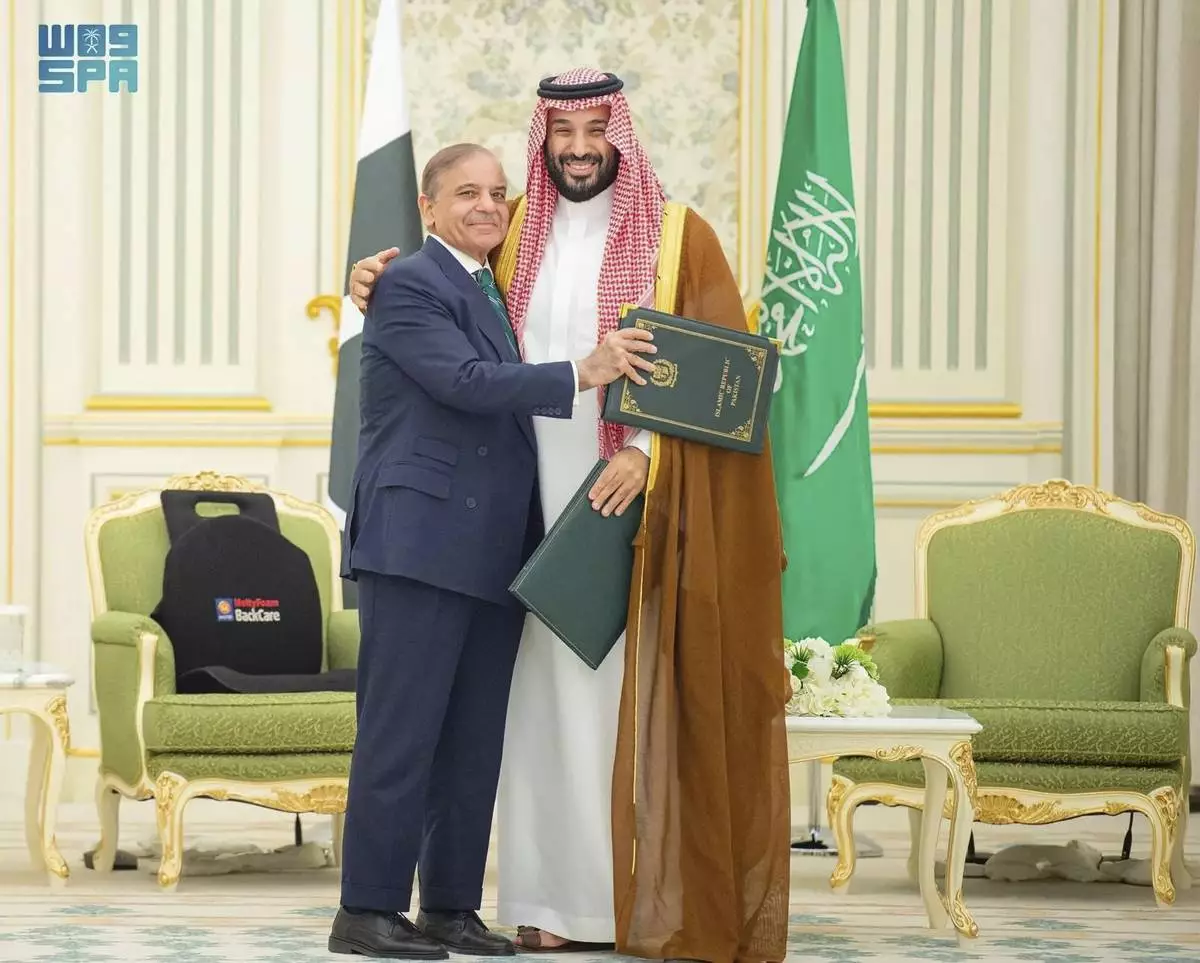
This handout photograph released by the state-run Saudi Press Agency shows Pakistani Prime Minister Shehbaz Sharif, left, embracing Saudi Arabia's Crown Prince Mohammed bin Salman after signing a joint defense pact in Riyadh, Saudi Arabia, Wednesday, Sept. 17, 2025. (Saudi Press Agency via AP)
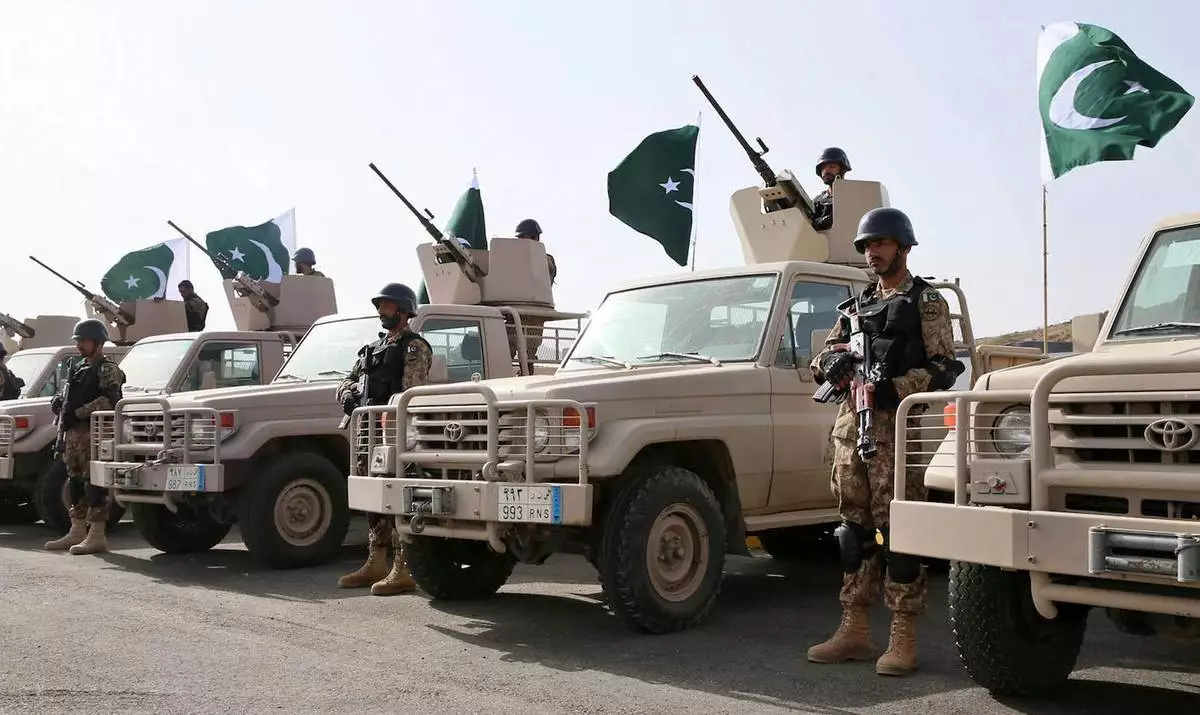
FILE - In this Monday, March 30, 2015 file photo provided by the Saudi Press Agency (SPA), Royal Saudi Land Forces and units of Special Forces of the Pakistani army take part in a joint military exercise called "Al-Samsam 5" in Shamrakh field, north of Baha region, southwest Saudi Arabia. (AP Photo/SPA, File)
The U.N. Security Council scheduled an emergency meeting Thursday to discuss Iran's deadly protests at the request of the United States, even as President Donald Trump left unclear what actions he would take against the Islamic state.
Tehran appeared to make conciliatory statements in an effort to defuse the situation after Trump threatened to take action to stop further killing of protesters, including the execution of anyone detained in Tehran’s bloody crackdown on nationwide protests.
Iran’s crackdown on the demonstrations has killed at least 2,615, the U.S.-based Human Rights Activists News Agency reported. The death toll exceeds any other round of protest or unrest in Iran in decades and recalls the chaos surrounding the country’s 1979 Islamic Revolution.
The sound of gunfire faded Thursday in the capital, Tehran. The country closed its airspace to commercial flights for hours without explanation early Thursday and some personnel at a key U.S. military base in Qatar were advised to evacuate. The U.S. Embassy in Kuwait also ordered its personnel to “temporary halt” travel to the multiple military bases in the small Gulf Arab country.
Here is the latest:
Abdul Malik al-Houthi, leader of the Iran-backed Yemeni rebel group, said on Thursday that “criminal gangs” were responsible for the situation in Iran, accusing them of carrying out an “American-Israeli” scheme.
“Criminal gangs in Iran killed Iranian citizens, security forces and burned mosques,” he said without providing evidence. “What’s being committed by criminal gangs in Iran is horrific, bearing an American stamp as it includes slaughter and burning some people alive.”
He also said that the U.S. imposed economic sanctions on Iran to create a crisis leading to the current issues in the country with the end goal of controlling Iran.
Yet he said the U.S. has “failed in Iran” and that Iranians “will not yield to America.”
The president of the European Union’s executive arm says the 27-member bloc is looking to strengthen sanctions against Iran as ordinary Iranians continue their protests against Iran’s theocratic government.
Commission President Ursula von der Leyen said Thursday following a meeting of the EU’s commissioners in Limassol, Cyprus that current sanctions against Iran are “weakening the regime.”
Von der Leyen said that the EU is looking to sanction individual Iranians —apart from those who belong to Iran’s Islamic Revolutionary Guard — who “are responsible for the atrocities.”
She added that the people of Iran who are “bravely fighting for a change” have the EU’s “full political support.”
Canada’s foreign minister says a Canadian citizen has died in Iran “at the hands of the Iranian authorities.”
“Peaceful protests by the Iranian people — asking that their voices be heard in the face of the Iranian regime’s repression and ongoing human rights violations — has led the regime to flagrantly disregard human life,” Canadian Foreign Affairs Minister Anita Anand posted on social media Thursday.
“This violence must end. Canada condemns and calls for an immediate end to the Iranian regime’s violence,” she added.
Anand said consular officials are in contact with the victim’s family in Canada. She did not provide details.
The International Federation of Red Cross and Red Crescent Societies announced Thursday that a local staff member was killed and several others were wounded during the deadly protests in Iran over the weekend.
Amir Ali Latifi, an Iranian Red Crescent Society worker, was working in the country’s Gillan province on Jan. 10 when he was killed “in the line of duty,” the organization said in a statement.
“The IFRC is deeply concerned about the consequences of the ongoing unrest on the people of Iran and is closely monitoring the situation in coordination with the Iranian Red Crescent Society,” the statement continued.
U.S. President Donald Trump has hailed as “good news” reports that the death sentence has been lifted for an Iranian shopkeeper arrested in a violent crackdown on protests.
Relatives of 26-year-old Erfan Soltani had said he faced imminent execution.
Trump posed Thursday on his Truth Social site: “FoxNews: ‘Iranian protester will no longer be sentenced to death after President Trump’s warnings. Likewise others.’ This is good news. Hopefully, it will continue!”
Iranian state media denied Soltani had been condemned to death. Iranian judicial authorities said Soltani was being held in a detention facility outside of the capital. Alongside other protesters, he has been accused of “propaganda activities against the regime,” state media said.
Trump sent tensions soaring this week by pledging that “help is on its way” to Iranian protesters and urging them to continue demonstrating against authorities in the Islamic Republic.
On Wednesday Trump signaled a possible de-escalation, saying he had been told that “the killing in Iran is stopping.”
In a joint statement, the foreign ministers of Canada, France, Germany, Italy, Japan, the United Kingdom, the United States and the European Union’s main foreign policy chief said the G7 members were “gravely concerned” by the developments surrounding the protests, and that they “strongly oppose the intensification of the Iranian authorities’ brutal repression of the Iranian people.”
The statement, published on the EU’s website Thursday, said the G7 were “deeply alarmed at the high level of reported deaths and injuries” and condemned “the deliberate use of violence” by Iranian security forces against protesters.
The G7 members “remain prepared to impose additional restrictive measures if Iran continues to crack down on protests and dissent in violation of international human rights obligations,” the statement said.
China’s Foreign Minister Wang Yi has spoken with his counterpart in Iran, who said the situation was “now stable,” China’s Ministry of Foreign Affairs said.
Abbas Araghchi said “he hoped China will play a greater role in regional peace and stability” during the talks, according to the statement from the ministry.
“China opposes imposing its will on other countries, and opposes a return to the ‘law of the jungle’,” Wang said.
“China believes that the Iranian government and people will unite, overcome difficulties, maintain national stability, and safeguard their legitimate rights and interests,” he added. “China hopes all parties will cherish peace, exercise restraint, and resolve differences through dialogue. China is willing to play a constructive role in this regard.”
“We are against military intervention in Iran,” Turkish Foreign Minister Hakan Fidan told journalists in Istanbul on Thursday. “Iran must address its own internal problems… They must address their problems with the region and in global terms through diplomacy so that certain structural problems that cause economic problems can be addressed.”
Ankara and Tehran enjoy warm relations despite often holding divergent interests in the region.
Fidan said the unrest in Iran was rooted in economic conditions caused by sanctions, rather than ideological opposition to the government.
Iranians have been largely absent from an annual pilgrimage to Baghdad, Iraq, to commemorate the death of Imam Musa al-Kadhim, one of the twelve Shiite imams.
Many Iranian pilgrims typically make the journey every year for the annual religious rituals.
Streets across Baghdad were crowded with pilgrims Thursday. Most had arrived on foot from central and southern provinces of Iraq, heading toward the shrine of Imam al-Kadhim in the Kadhimiya district in northern Baghdad,
Adel Zaidan, who owns a hotel near the shrine, said the number of Iranian visitors this year compared to previous years was very small. Other residents agreed.
“This visit is different from previous ones. It lacks the large numbers of Iranian pilgrims, especially in terms of providing food and accommodation,” said Haider Al-Obaidi.
Europe’s largest airline group said Thursday it would halt night flights to and from Tel Aviv and Jordan's capital Amman for five days, citing security concerns as fears grow that unrest in Iran could spiral into wider regional violence.
Lufthansa — which operates Swiss, Austrian Airlines, Brussels Airlines and Eurowings — said flights would run only during daytime hours from Thursday through Monday “due to the current situation in the Middle East.” It said the change would ensure its staff — which includes unionized cabin crews and pilots -- would not be required to stay overnight in the region.
The airline group also said its planes would bypass Iranian and Iraqi airspace, key corridors for air travel between the Middle East and Asia.
Iran closed its airspace to commercial flights for several hours early Thursday without explanation.
A spokesperson for Israel’s Airport Authority, which oversees Tel Aviv’s Ben Gurion Airport, said the airport was operating as usual.
Iranian state media has denied claims that a young man arrested during Iran’s recent protests was condemned to death. The statement from Iran’s judicial authorities on Thursday contradicted what it said were “opposition media abroad” which claimed the young man had been quickly sentenced to death during a violent crackdown on anti-government protests in the country.
State television didn’t immediately give any details beyond his name, Erfan Soltani. Iranian judicial authorities said Soltani was being held in a detention facility outside of the capital. Alongside other protesters, he has been accused of “propaganda activities against the regime,” state media said.
New Zealand’s Foreign Minister Winston Peters said Thursday that his government was “appalled by the escalation of violence and repression” in Iran.
“We condemn the brutal crackdown being carried out by Iran’s security forces, including the killing of protesters,” Peters posted on X.
“Iranians have the right to peaceful protest, freedom of expression, and access to information – and that right is currently being brutally repressed,” he said.
Peters said his government had expressed serious concerns to the Iranian Embassy in Wellington.
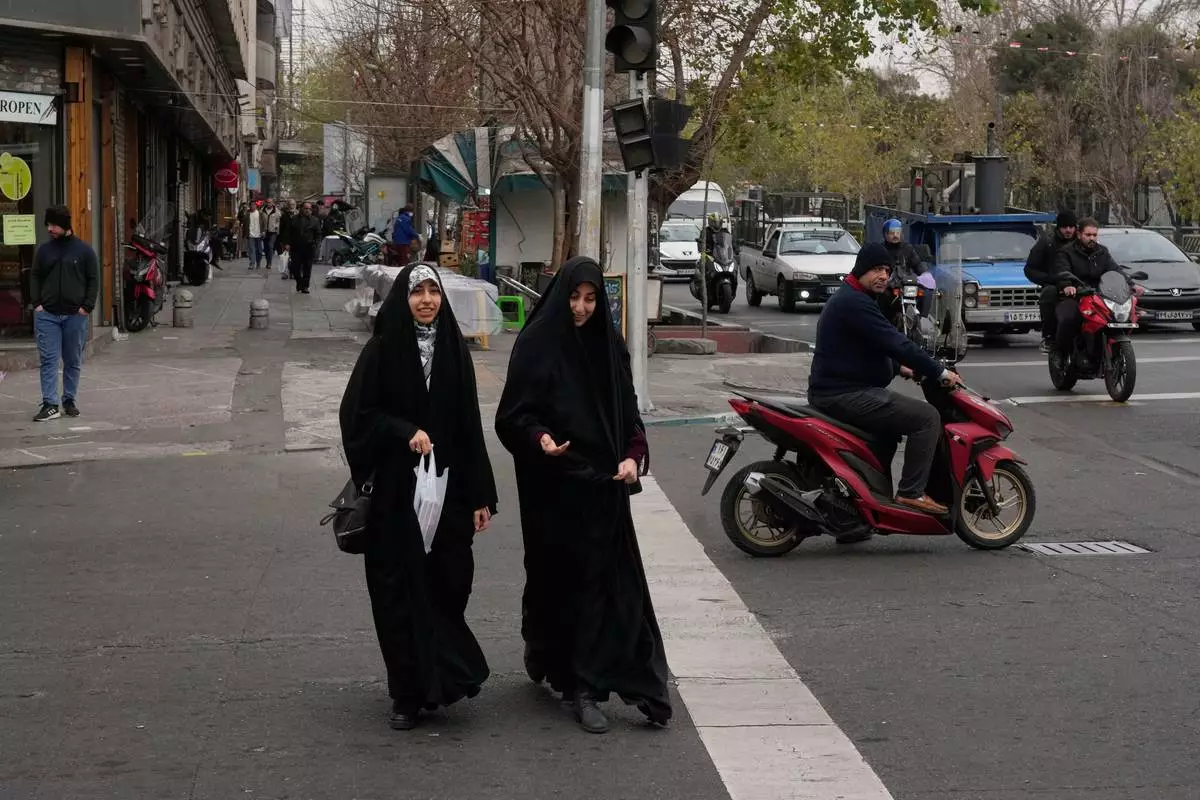
Women cross an intersection in downtown Tehran, Iran, Thursday, Jan. 15, 2026. (AP Photo/Vahid Salemi)
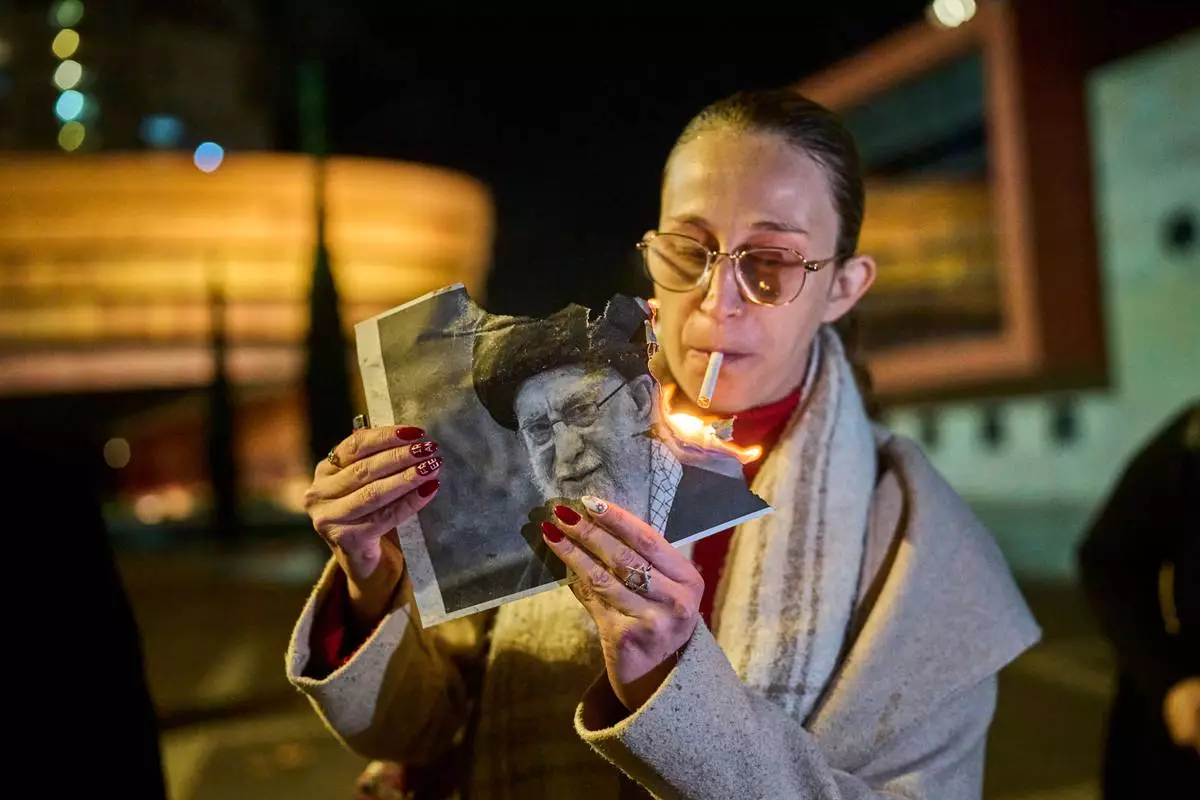
A demonstrator lights a cigarette with a burning poster depicting Supreme Leader Ayatollah Ali Khamenei during a rally in support of Iran's anti-government protests, in Holon, Israel, Wednesday, Jan. 14, 2026. (AP Photo/Ohad Zwigenberg)
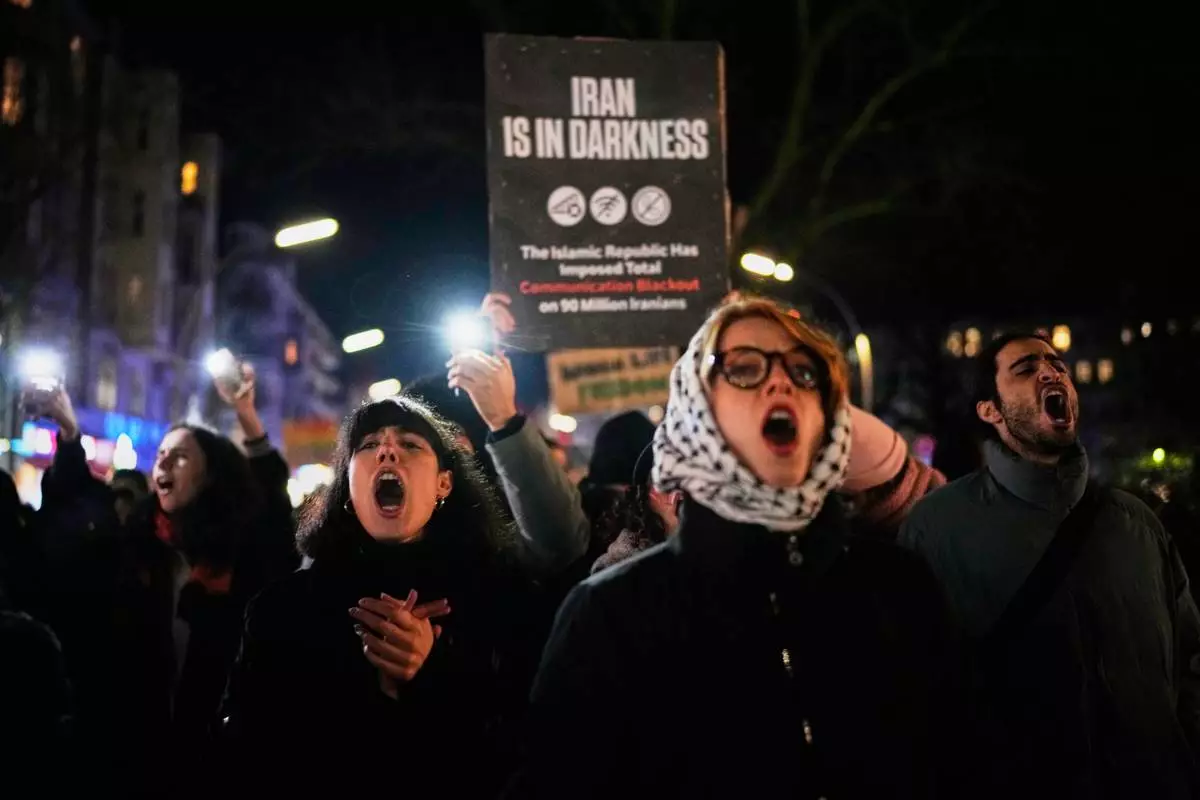
Protesters participate in a demonstration in support of the nationwide mass protests in Iran against the government, in Berlin, Germany, Wednesday, Jan. 14, 2026. (AP Photo/Ebrahim Noroozi)
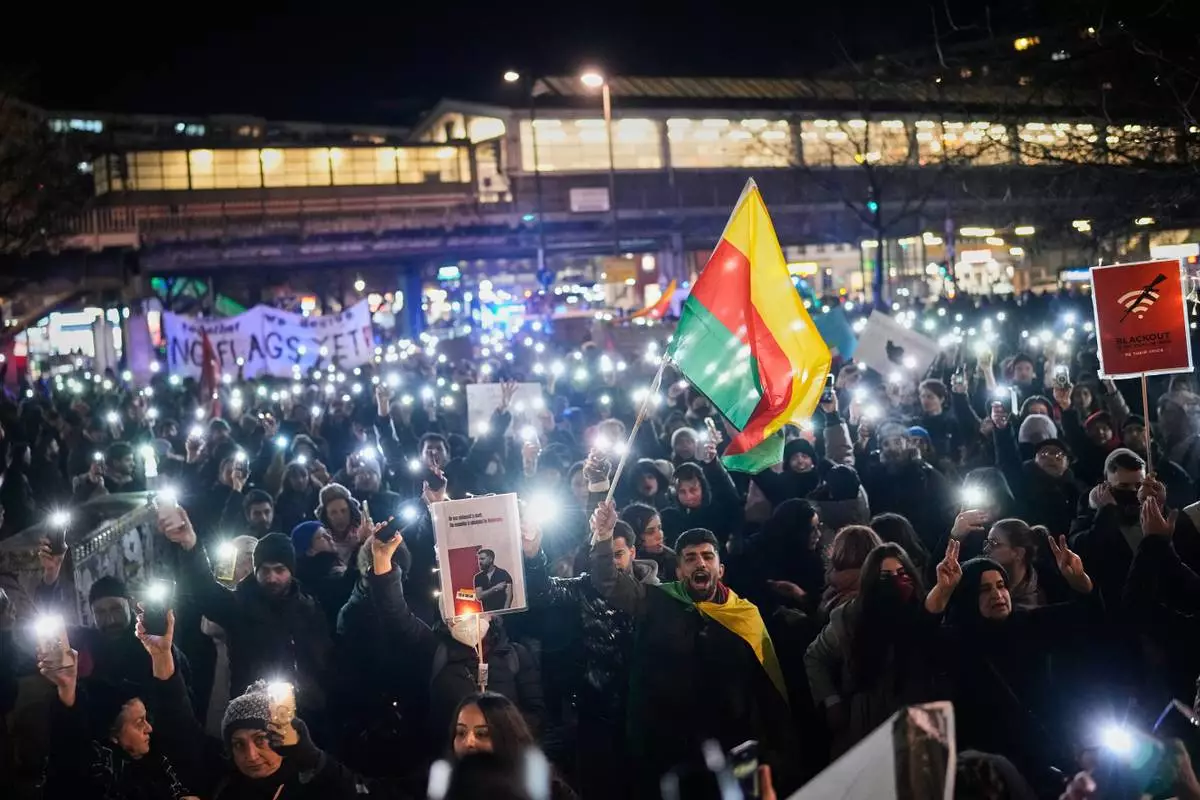
Protesters participate in a demonstration in support of the nationwide mass protests in Iran against the government, in Berlin, Germany, Wednesday, Jan. 14, 2026. (AP Photo/Ebrahim Noroozi)