Northeast China's Heilongjiang Province released on Thursday archival documents that provide fresh and irrefutable evidence of Japan's forced recruitment and enslavement of Chinese laborers during World War II.
The Heilongjiang Provincial Archives in the provincial capital, Harbin City, made public a collection of 62 historical documents, dating back to the Japanese puppet regime period, which reveal policies of so-called "labor control," plans for mass abduction, the inhumane treatment of Chinese workers, and their resistance against oppression.
Archive staff explained that after launching its full‑scale invasion of China in 1937, Japan faced an acute labor shortage and responded with the mass conscription of Chinese workers. Under the guise of the puppet state of Manchukuo’s so-called Military Supplies Requisition Law, labor was seized by force and "legitimized" through state violence.
"Article 16 of the Military Supplies Requisition Law explicitly stated that whenever the Japanese army required laborers or materials, it could override the authority of the highest commander of the puppet state of Manchukuo and exercise supreme requisition powers. Article 17 stipulates that anyone resisting or obstructing the requisition of labor could be subjected to a prison term of up to three years, and a fine of up to 3,000 yuan, as a means of suppressing opposition," said Ge Hongqiu, a staff member of the Heilongjiang Provincial Archives.
The new records reveal how the Manchukuo regime categorized and allocated Chinese workers in accordance with Japan's military and administrative needs. Those who resisted or tried to flee were rounded up violently.
"One document, sent from the puppet Binjiang Provincial Office to Shuangcheng County, ordered the supply of labor and materials to Japan’s Unit 731. It specified the provision of 90 carts, 180 horses, and 90 cart drivers," said Ge.
Other documents detail the appalling living conditions of conscripted workers and the harsh surveillance they endured.
"Among the materials released this time is a top‑secret document: a report from the puppet Suifenhe Border Police to their headquarters concerning the situation of 'special laborers.' The report states that in early June 1941, these people - prisoners captured near Xuzhou in central China - were assigned to build fortifications at Guanyuetai, Lumingtai, and Suifenhe. In Suifenhe, they were confined to dorms surrounded by barbed wire and kept under constant surveillance by Japanese sentries," said Ge.
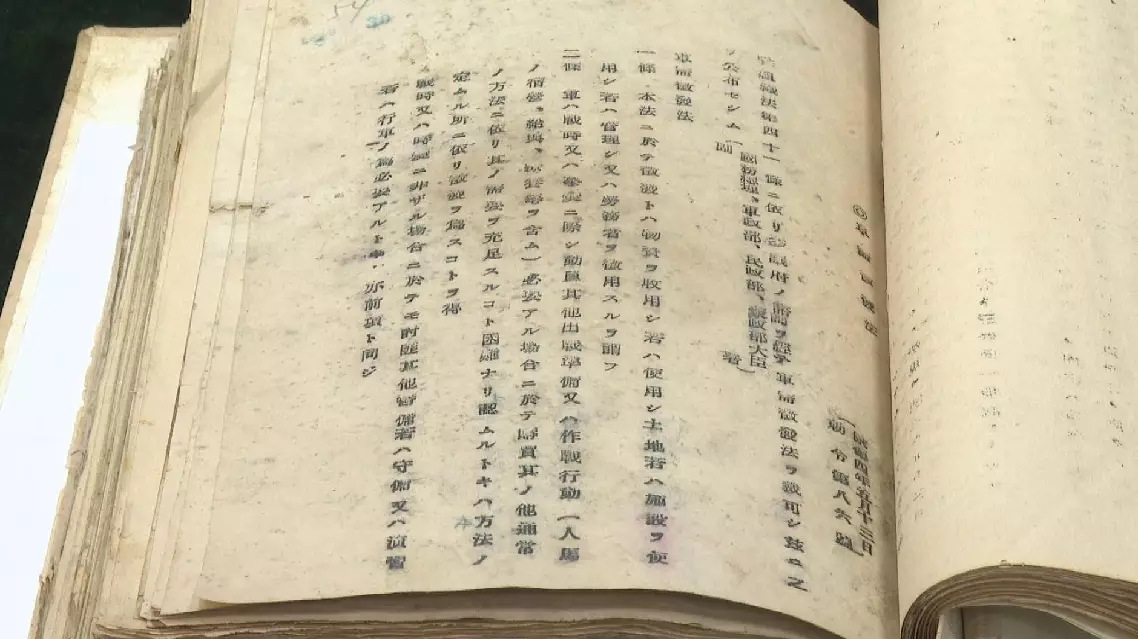
Archival documents released in Heilongjiang on Japan's forced recruitment of Chinese laborers during invasion