Skip to Content Facebook Feature Image

Senate rejects competing bills to fund government, increasing risk of shutdown on Oct. 1

News

Senate rejects competing bills to fund government, increasing risk of shutdown on Oct. 1
News

News

Senate rejects competing bills to fund government, increasing risk of shutdown on Oct. 1

2025-09-20 06:45 Last Updated At:06:50

WASHINGTON (AP) — The Senate rejected competing measures on Friday to fund federal agencies for a few weeks when the new budget year begins on Oct. 1, increasing prospects for a partial government shutdown on that date.

Leaders of the two parties sought to blame the other side for the standoff. Democrats accused Republicans of not negotiating with them to address some of their priorities on health care as part of the funding measure, even though they knew Democratic votes would be needed to get a bill to the president's desk.

Republicans said Democrats were making demands that would dramatically increase spending and were not germane to the core issue of keeping agencies fully running for a short period of time while negotiations continued on a full-year spending package.

It's unclear how the two sides will be able to avoid a shutdown. Republicans are planning on what amounts to a do-over vote on their proposal close to the deadline in the hopes that more Democrats will have second thoughts. Democrats are repeating their demand that Republicans sit down with them and work on a compromise.

“The theater must end,” Senate Democratic Leader Chuck Schumer, D-N.Y., said after the vote. “Let's sit down and negotiate.”

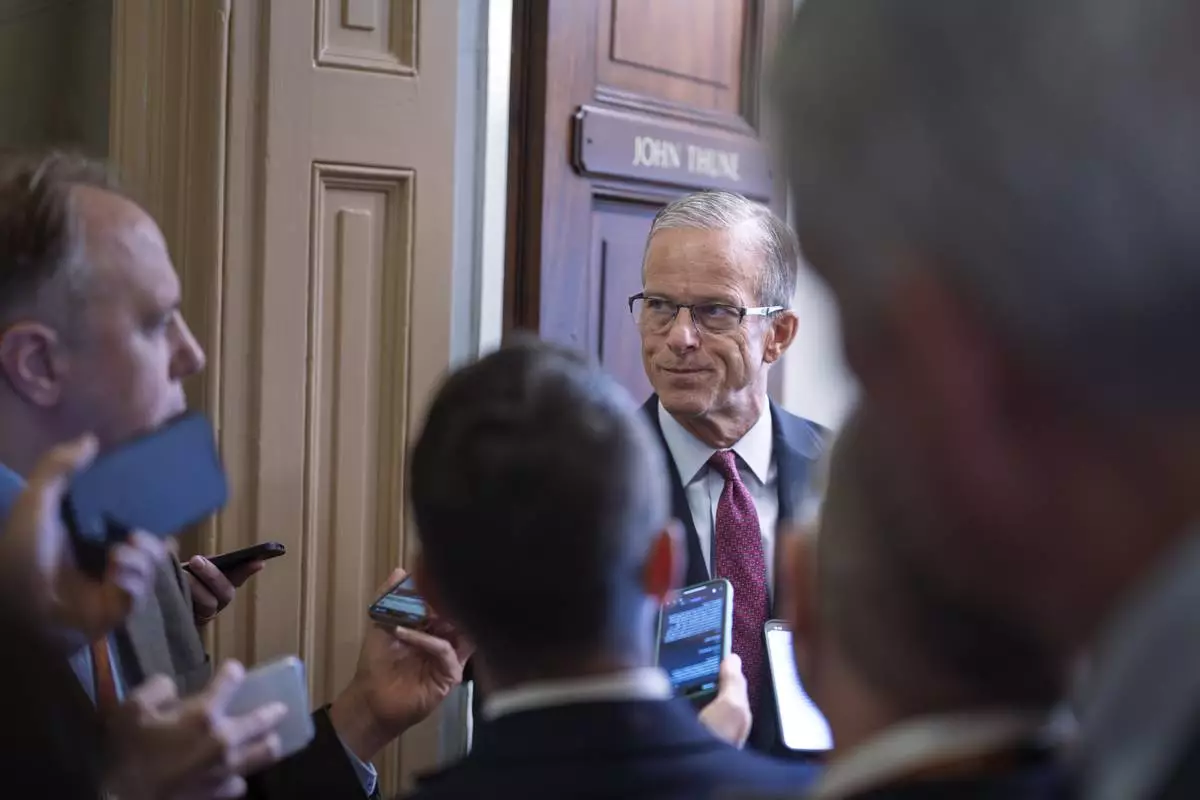
Senate Majority Leader John Thune, R-S.D., gave no indication of a change in course.

“All it takes is a handful of Democrats to join the Republicans in keeping the government open and funded, and to ensure we have a chance to get the appropriations process completed in the way it was intended,” Thune said.

The Senate action came after the House earlier in the day passed the Republican-led funding bill. The measure would extend government funding generally at current levels for seven weeks. The bill would also add about $88 million in security funding for lawmakers and members of the Supreme Court and executive branch in the wake of the assassination of conservative activist Charlie Kirk.

The vote was 217-212. Rep. Jared Golden of Maine was the lone Democratic member to support the bill. Rep. Marie Gluesenkamp Perez, D-Wash., also said she tried to vote for the bill but was not recognized by the presiding officer. She was listed officially as not voting.

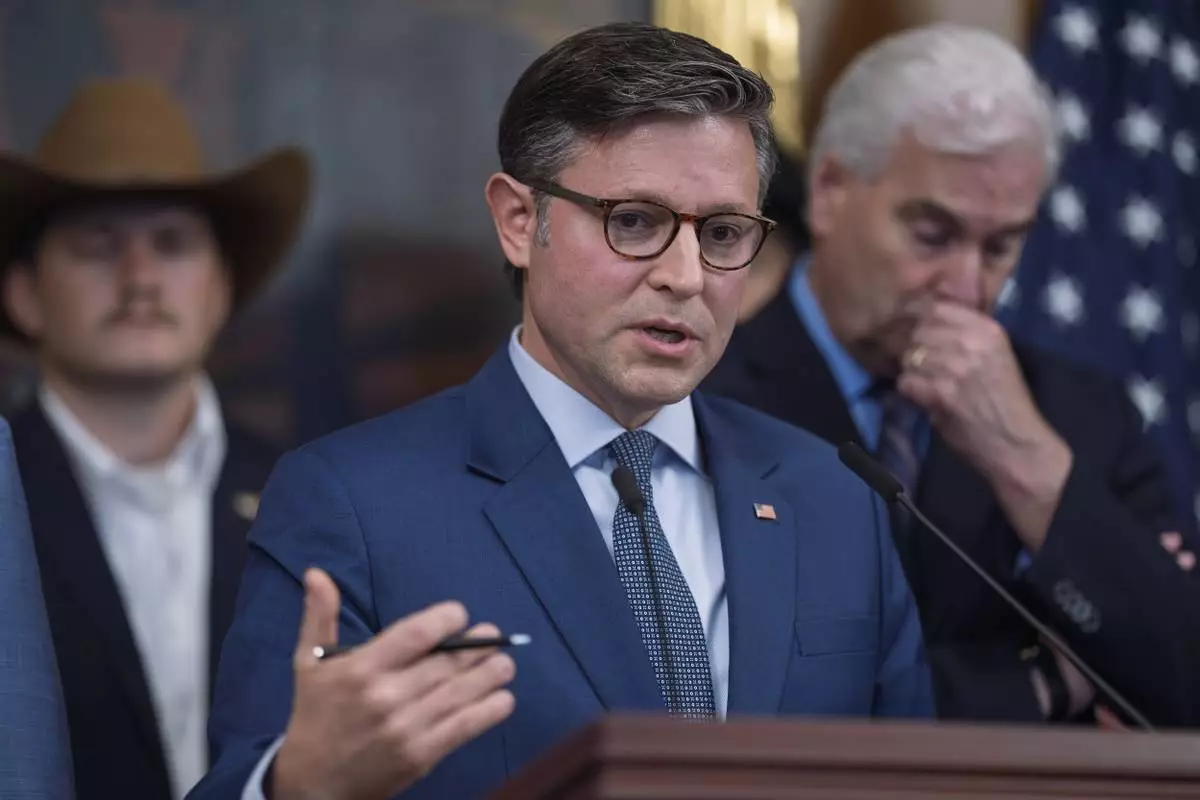
House Speaker Mike Johnson of Louisiana said he knew he had few votes to spare as he sought to persuade fellow Republicans to vote for the funding patch, something many in his conference have routinely opposed in past budget fights. But this time, GOP members saw a chance to portray the Democrats as responsible for a shutdown.

“The ball is in Chuck Schumer’s court. I hope he does the right thing. I hope he does not choose to shut the government down and inflict pain on the American people,” Johnson said.

President Donald Trump had urged House Republicans to pass the bill and put the burden on Democrats to oppose it. GOP leaders often need Trump’s help to win over holdouts on legislation.

Trump predicted Friday that there could be "a closed country for a period of time.” He said the government will continue to “take care” of the military and Social Security payments in a closure.

Democratic leader Hakeem Jeffries, D-N.Y., said that in opposing the continuing resolution, Democrats were working to protect the health care of the American people. He said that with Republicans controlling the White House and both branches of Congress, “Republicans will own a government shutdown. Period. Full stop.”

The Senate moved quickly after the House vote to take up the measure plus the Democratic counter. Both bills fell far short of the 60 votes required for passage.

The Democratic proposal would extend enhanced health insurance subsidies set to expire at the end of the year, plus reverse Medicaid cuts that were included in Republicans’ big tax breaks and spending cuts bill enacted earlier this year.

The Democratic measure actually received more votes than the Republican one due to absences. The 47-45 vote went strictly along party lines.

“The American people will look at what Republicans are doing, look at what Democrats are doing, and it will be clear that public sentiment will be on our side,” Schumer said.

The Republican measure gained 44 votes, including from Democratic Sen. John Fetterman of Pennsylvania. But 48 voted against it, including two Republicans, Sens. Rand Paul of Kentucky and Lisa Murkowski of Alaska.

Both chambers of Congress are out of session next week because of Rosh Hashanah, the Jewish new year. Senators will return on Sept. 29. House Republicans don't plan to be back until October. They were advised by leadership Friday that no votes would take place on Sept. 29-30, as previously scheduled.

The move by House GOP leadership essentially forces the Senate to approve the House-passed measure or risk a shutdown. Johnson said lawmakers have a lot of work to do in their districts.

Most Democrats appear to be backing Schumer's demand that there be negotiations on the bill — and support his threats of a shutdown, even as it is unclear how they would get out of it.

“Look, the president said really boldly, don’t even talk to Democrats. Unless he’s forgotten that you need a supermajority to pass a budget in the Senate, that’s obviously his signal he wants a shutdown,” said Sen. Tammy Baldwin, D-Wis.

While the Democratic measure to fund the government had no chance of passage, it does give Democrats a way to show voters their focus on cutting health care costs. Unless Congress act, tax credits going to low- and middle-income people who purchase health insurance through the Affordable Care Act will expire. That will mean a big increase in premiums for millions of Americans.

“There are some things we have to address. The health insurance, ACA, is going to hammer millions of people in the country, including in red states,” said Sen. Angus King, I-Maine. “To me, that can’t be put off.”

Republicans have said the tax credit issue can be dealt with later this year. They're also using Schumer's previous arguments against shutdowns to make the case he's playing politics.

“Democrats voted in favor of clean CRs no fewer than 13 times during the Biden administration,” Thune said. “Yet now that Republicans are offering a clean CR, it’s somehow a no go. It’s funny how that happens.”

Associated Press writers Seung Min Kim and Mary Clare Jalonick contributed to this report.
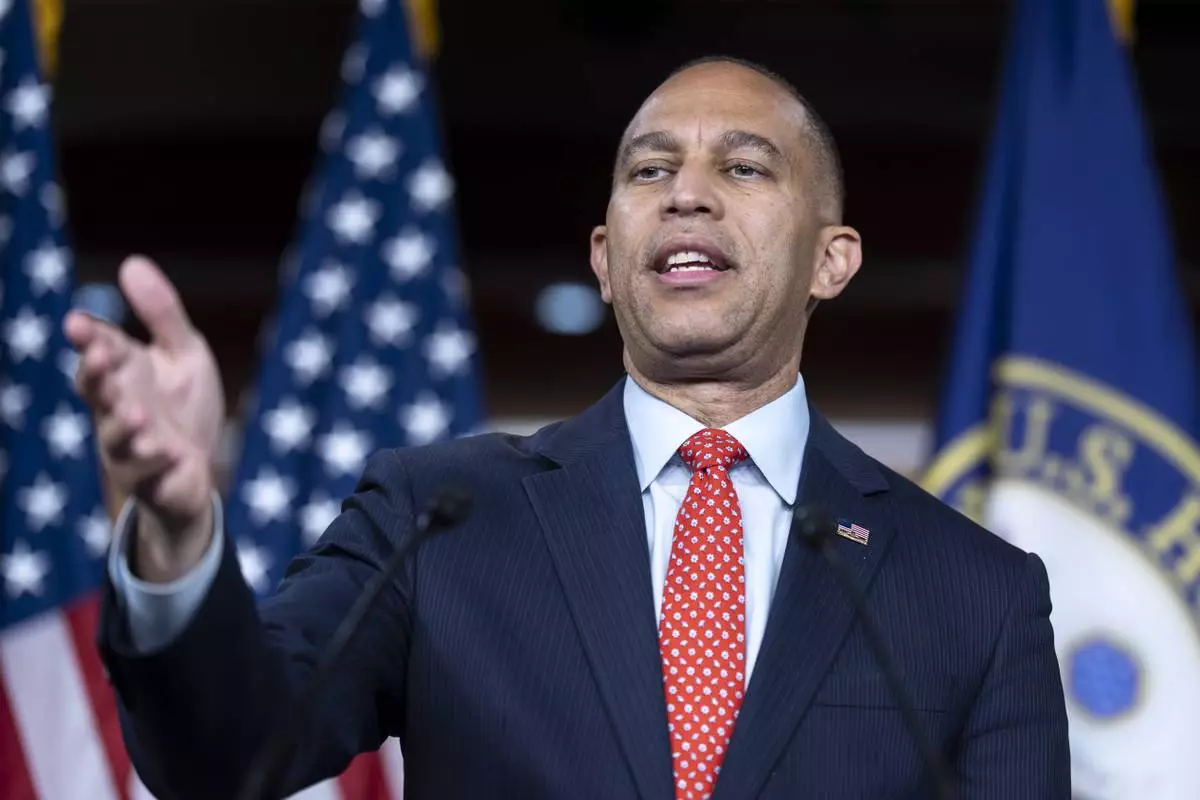
House Minority Leader Hakeem Jeffries, D-N.Y., tells reporters that Republicans are jeopardizing health care for Americans with their policies and their strategy to fund the government before the deadline at the end of the month, at the Capitol in Washington, Tuesday, Sept. 16, 2025. (AP Photo/J. Scott Applewhite)
House Minority Leader Hakeem Jeffries, D-N.Y., tells reporters that Republicans are jeopardizing health care for Americans with their policies and their strategy to fund the government before the deadline at the end of the month, at the Capitol in Washington, Tuesday, Sept. 16, 2025. (AP Photo/J. Scott Applewhite)

Senate Majority Leader John Thune, R-S.D., is met by reporters as he walks to his office while Congress works on a government funding solution, at the Capitol in Washington, Thursday, Sept. 18, 2025. (AP Photo/J. Scott Applewhite)
Senate Majority Leader John Thune, R-S.D., is met by reporters as he walks to his office while Congress works on a government funding solution, at the Capitol in Washington, Thursday, Sept. 18, 2025. (AP Photo/J. Scott Applewhite)

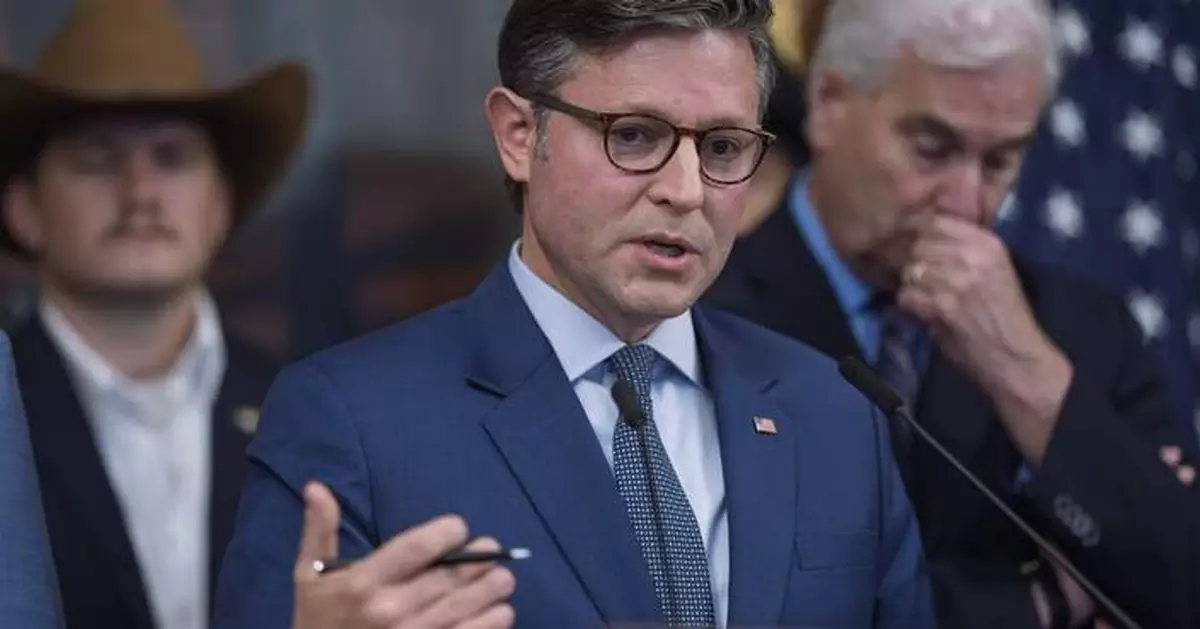
Speaker of the House Mike Johnson, R-La., talks about the killing of conservative activist Charlie Kirk and defended employers who take action against their workers whose comments go too far, at the Capitol in Washington, Tuesday, Sept. 16, 2025. (AP Photo/J. Scott Applewhite)
Speaker of the House Mike Johnson, R-La., talks about the killing of conservative activist Charlie Kirk and defended employers who take action against their workers whose comments go too far, at the Capitol in Washington, Tuesday, Sept. 16, 2025. (AP Photo/J. Scott Applewhite)
If Indiana Republican senators had any doubt about what to do with President Donald Trump's redistricting proposal, he helped them make up their minds the night before this week's vote.

In a social media screed, Trump accused the state's top senator of being “a bad guy, or a very stupid one."

“That kind of language doesn’t help,” said Sen. Travis Holdman, a banker and lawyer from near Fort Wayne who voted against the plan.

He was among 21 Republican senators who dealt Trump one of the most significant political defeats of his second term by voting down redistricting in Indiana. The decision undermined the president's national campaign to redraw congressional maps to boost his party's chances in the upcoming midterm elections.

In interviews after Thursday's vote, several Republican senators said they were leaning against the plan from the start because their constituents didn't like it. But in a Midwest nice rebuttal to America's increasingly coarse political discourse, some said they simply didn't like the president's tone, like when he called senators “suckers.”

“I mean, that’s pretty nasty,” said Sen. Jean Leising, a farm owner from Oldenburg who works at her daughter’s travel agency.

Trump didn't seem to get the message. Asked about the vote Thursday, the president once again took aim at Indiana's top senator, Rodric Bray.

“He’ll probably lose his next primary, whenever that is," Trump said. "I hope he does, because he’s done a tremendous disservice.”

Sen. Sue Glick, an attorney from La Grange who also opposed redistricting, brushed off Trump's threat to unseat lawmakers who defied him.

“I would think he would have better things to do,” she said. “It would be money better spent electing the individuals he wants to represent his agenda in Congress.”

The president tried to brush off the defeat, telling reporters he “wasn’t working on it very hard."

But the White House had spent months engaged in what Republican Sen. Andy Zay described as “a full-court press.”

Vice President JD Vance met with senators twice in Indiana and once in Washington. White House aides frequently checked in over the phone.

Holdman said the message behind the scenes was often more soothing than Trump's social media attacks.

“We were getting mixed messages," he said. “Two days before the vote, they wanted to declare a truce on Sen. Bray. And the next day, there’s a post on Truth Social that didn’t sound like truce language to me.”

Some of Trump's other comments caused backlash too. For example, he described Minnesota Gov. Tim Walz as “retarded,” which upset Sen. Mike Bohacek because his daughter has Down syndrome. Bohacek had been skeptical of redistricting and decided to vote no in response.

The White House did not respond to questions about outreach to senators, but it distanced itself from conservative allies who claimed Trump had threatened to withhold money from the state.

"President Trump loves the great state of Indiana," said spokesman Davis Ingle, who insisted Trump "has never threatened to cut federal funding and it’s 100% fake news to claim otherwise.”

Regardless, Trump had struggled to get traction despite months of pressure.

Holdman said he turned down an invitation to the White House last month because he had a scheduling conflict.

“Plus, by then it was a little too late,” he said.

Leising said she missed a call from a White House official the day before a vote while she was in a committee meeting. She didn't try to call back because she wasn't going to change her mind.

Mitch Daniels, a former Indiana governor and a Republican, had a simple explanation for what happened.

“Folks in our state don’t react well to being bullied,” he said.

Some Republicans lashed out at senators for defying Trump.

"His life was threatened — and he was nearly assassinated," Indiana Lieutenant Gov. Micah Beckwith wrote on social media. “All for what? So that Indiana politicians could grow timid.”

The message to the president, Beckwith said, was “go to hell.”

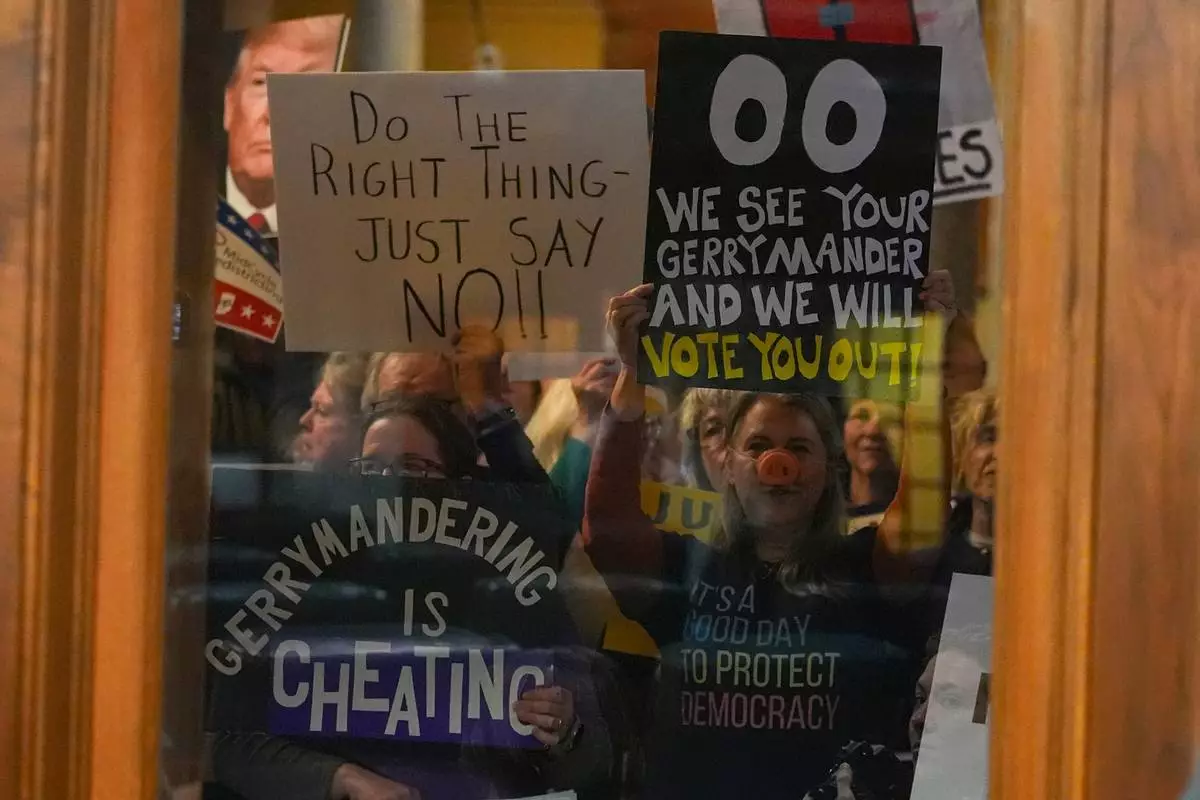
But senators who opposed redistricting said they were just listening to their constituents. Some believed the unusual push to redraw districts was the equivalent of political cheating. Others didn't like that Washington was telling Indiana what to do.

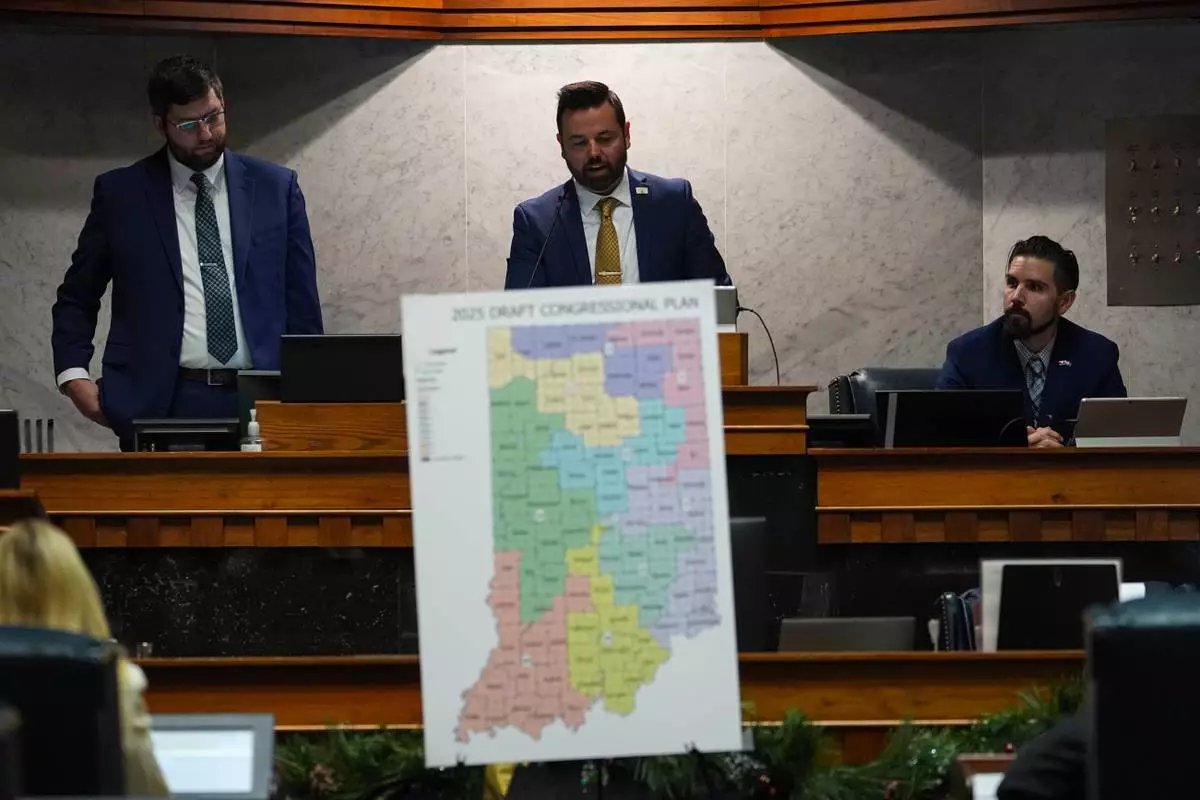
The proposed map would have divided Indianapolis into four pieces, grafting pieces of the city onto other districts to dilute the influence of Democratic voters. But in small towns near the borders with Kentucky and Ohio, residents feared the state's biggest metropolitan area would gain influence at their expense.

“Constituents just didn’t want it,” Holdman said.

During Thursday's vote on the Senate floor, some Republicans seemed torn about their decision.

Sen. Greg Goode, who is from Terre Haute, said he had spoken twice to Trump on the phone while weighing the redistricting plan. He declared his “love” for the president but decried “over-the-top pressure.”

Goode said he wouldn't vote for the proposal.

“I’m confident my vote reflects the will of my constituents," he said.

Protesters are seen through a window in the Senate Chamber during dissuasion before a vote to redistrict the state's congressional map, Thursday, Dec. 11, 2025, at the Statehouse in Indianapolis. (AP Photo/Michael Conroy)

Protesters are seen through a window in the Senate Chamber during dissuasion before a vote to redistrict the state's congressional map, Thursday, Dec. 11, 2025, at the Statehouse in Indianapolis. (AP Photo/Michael Conroy)

Indiana Senate President Pro Tem Rodric Bray takes a question after a bill to redistrict the state's congressional map was defeated, Thursday, Dec. 11, 2025, at the Statehouse in Indianapolis. (AP Photo/Michael Conroy)

Indiana Senate President Pro Tem Rodric Bray takes a question after a bill to redistrict the state's congressional map was defeated, Thursday, Dec. 11, 2025, at the Statehouse in Indianapolis. (AP Photo/Michael Conroy)

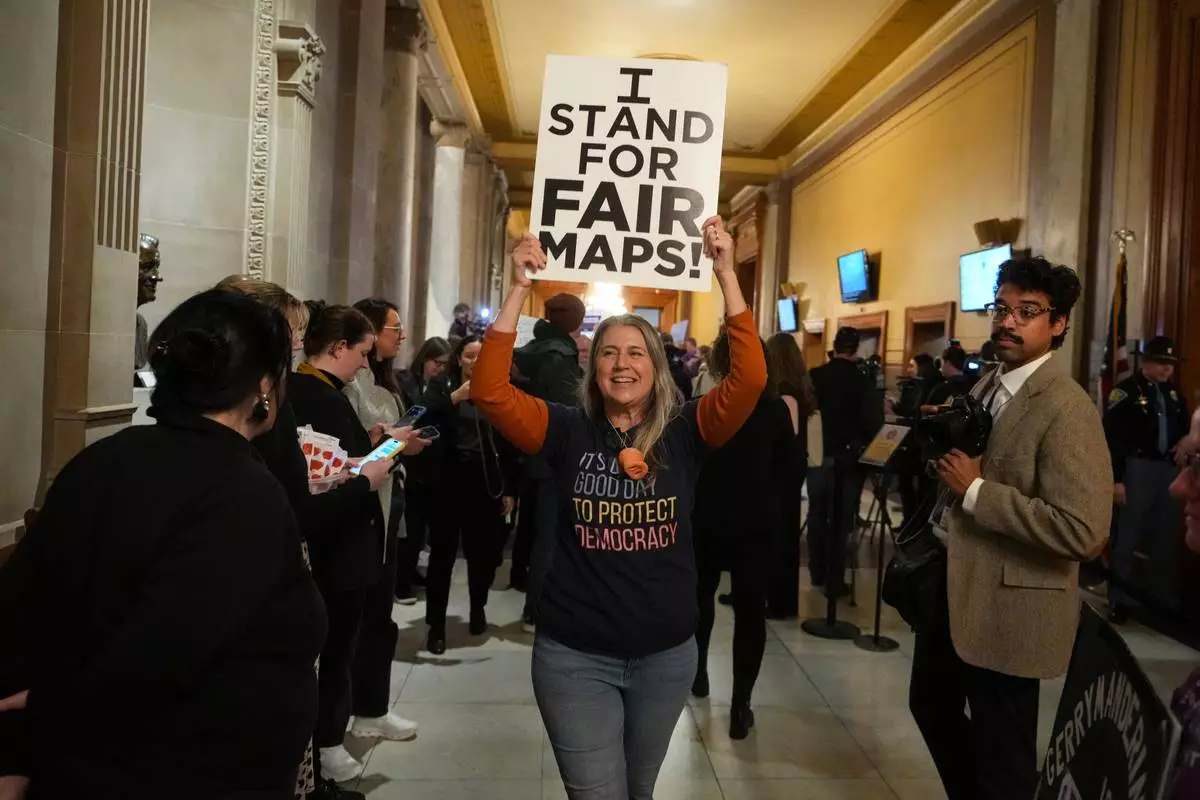
A protester celebrates as they walk outside the Indiana Senate Chamber after a bill to redistrict the state's congressional map was defeated, Thursday, Dec. 11, 2025, at the Statehouse in Indianapolis. (AP Photo/Michael Conroy)

A protester celebrates as they walk outside the Indiana Senate Chamber after a bill to redistrict the state's congressional map was defeated, Thursday, Dec. 11, 2025, at the Statehouse in Indianapolis. (AP Photo/Michael Conroy)

Protestors hold signs outside the Indiana Senate chamber before a vote to redistrict the state's congressional map at the Statehouse in Indianapolis, Thursday, Dec. 11, 2025. (AP Photo/Michael Conroy)

Protestors hold signs outside the Indiana Senate chamber before a vote to redistrict the state's congressional map at the Statehouse in Indianapolis, Thursday, Dec. 11, 2025. (AP Photo/Michael Conroy)

Indiana Lt. Gov. Micah Beckwith announces the results of a vote to redistrict the state's congressional map, Thursday, Dec. 11, 2025, at the Statehouse in Indianapolis. (AP Photo/Michael Conroy)

Indiana Lt. Gov. Micah Beckwith announces the results of a vote to redistrict the state's congressional map, Thursday, Dec. 11, 2025, at the Statehouse in Indianapolis. (AP Photo/Michael Conroy)

Recommended Articles