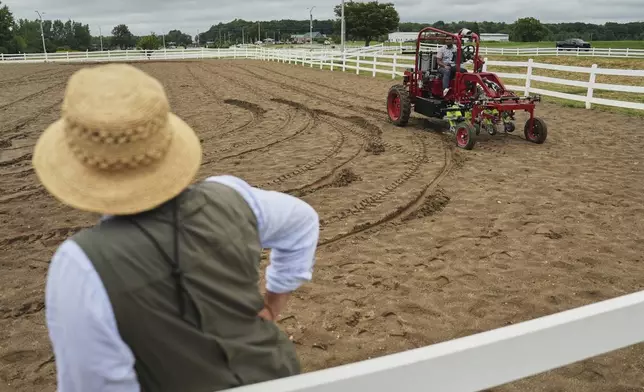
EAST LANSING, Mich. (AP) — In the soft dirt of an indoor horseback riding ring last month, a group of farmers got ready to test drive a new piece of equipment: an electric tractor.
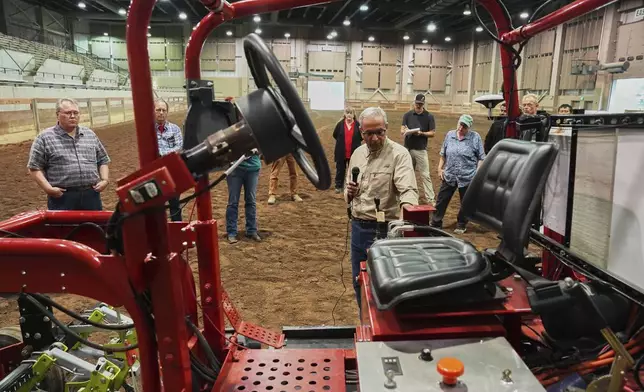
As they took turns climbing in — some surprised by its quick acceleration — they gave real-time feedback to the Michigan State University researchers who have been developing it for over two years.
Click to Gallery
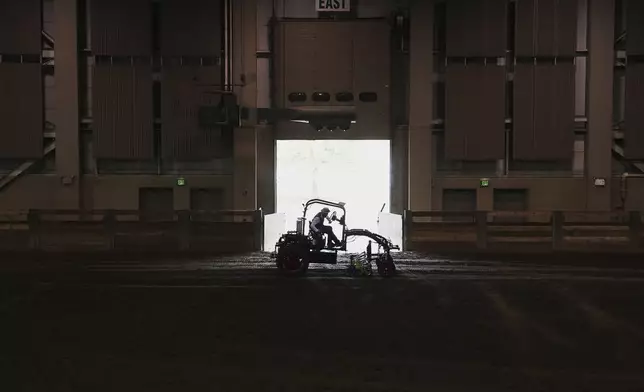
Ben Phillips test drives an electric tractor Tuesday, Aug. 19, 2025, during a demonstration in East Lansing, Mich. (AP Photo/Joshua A. Bickel)
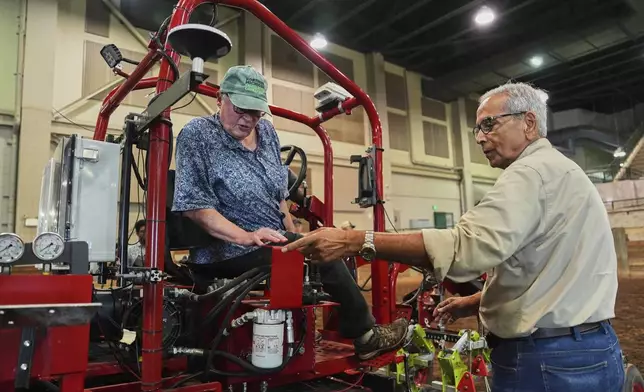
Farmer Vicki Morrane, left, listens as Ajit Srivastava, right, explains the mechanics of an electric tractor before she test drives Tuesday, Aug. 19, 2025, in East Lansing, Mich. (AP Photo/Joshua A. Bickel)
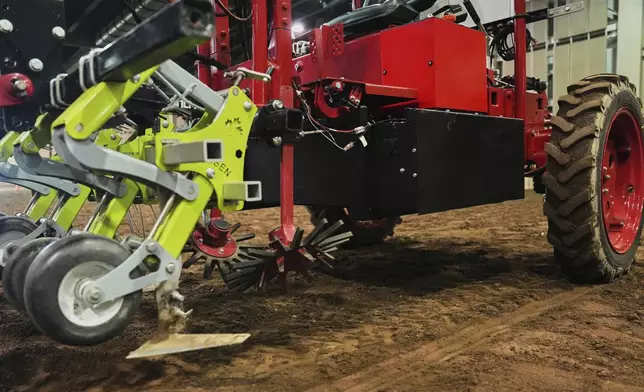
Farm implements, at left, and a battery, are attached to the underside of an electric tractor Tuesday, Aug. 19, 2025, in East Lansing, Mich. (AP Photo/Joshua A. Bickel)
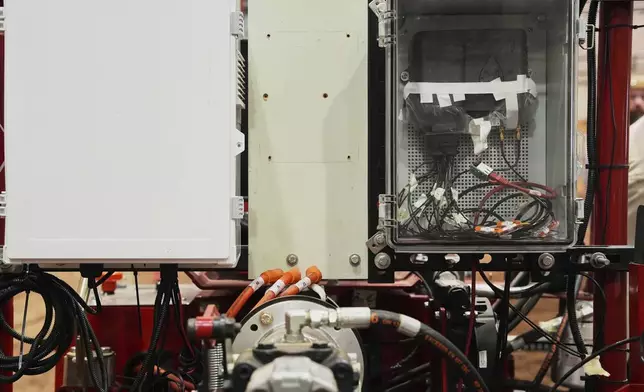
Electronics for a self-driving system sit on an electric tractor Tuesday, Aug. 19, 2025, in East Lansing, Mich. (AP Photo/Joshua A. Bickel)
Ajit Srivastava, an engineering professor at Michigan State University, talks about an electric tractor in development Tuesday, Aug. 19, 2025, during a demonstration in East Lansing, Mich. (AP Photo/Joshua A. Bickel)
MK Bashar drives an electric tractor Tuesday, Aug. 19, 2025, during a demonstration in East Lansing, Mich. (AP Photo/Joshua A. Bickel)
MK Bashar, right, test drives an electric tractor as Ben Phillips, left, watches Tuesday, Aug. 19, 2025, during a demonstration in East Lansing, Mich. (AP Photo/Joshua A. Bickel)
The farmers remarked on the motor's quiet whir. Most were intrigued, or at least open to the idea. Some were concerned that the battery on the underside of the carriage would mean a lower clearance over the field, while others worried that it would simply be too expensive.
“What we hope to do when we retire is we want to get everything electric on the farm. The tractor is the last electric implement to get,” said Don Dunklee, one of the farmers to provide feedback. He runs a small organic vegetable farm that's relied on wind and solar for decades.
The market is fairly new, but some researchers and entrepreneurs think electric tractors will be ideal for small farmers who care about sustainability and want to market their products that way. The small cherry-red, open-cab machine is well-suited for tasks like weeding fields of specialty crops like carrots or asparagus, or squeezing between the tight rows of orchard trees. Farmers with solar panels can avoid the cost of diesel.
Agriculture is among the largest sources of climate-warming emissions worldwide. Though tractors are a small culprit, experts believe an environmentally friendly machine would still attract buyers interested in sustainability.
“There’s reduced emissions, but before you get there, you have to be solving for other problems,” including noise, ease of use and cost, said Derek Muller, business manager for battery electric systems at John Deere.
There are downsides — electric tractors are aimed at filling a niche, not overturning the status quo. And while battery technology has come a long way, they can’t last all day or match the massive horsepower of a diesel engine that sets giant tractors cruising through the sprawling grain and soybean operations of the Midwest.
In addition to battery limitations, there are other structural obstacles. Most farmers do not have fast electric chargers, nor do they have solar panels to supply those chargers with free electricity — diesel would need to be much more expensive for the economics to turn sharply in favor of electric. But companies are starting to see an opportunity.
“For John Deere, it is not the only solution,” Muller said. “It’s not going to be where we lead our efforts. It’s going to be one of many options.”
The company has built a small utility electric tractor prototype. It joins a limited set of offerings from other companies like Monarch Tractor, which started in 2019 with the aim to help farmers, who have traditionally struggled with razor-thin profits, save money, work sustainably and more efficiently.
Ajit Srivastava, an agricultural engineer and Michigan State professor who hosted the farmer feedback session, wants to help smallholder farmers across the world. Such farmers grow about a third of the world’s food but many do it with only hand tools. He started trying to emulate a pair of oxen made of off-the-shelf parts, so anyone could build it themselves.
“If we were to mechanize all the smallholder farmers in the world, there isn’t enough diesel out there to power them. So we have to find some other source,” Srivastava said.
It's still a work in progress. Rain had postponed the feedback session, originally planned for the spring, because the tractor hadn't been waterproofed yet. It also doesn't have enough power for some jobs like tilling. But farmers generally like what Srivastava had developed. He hopes it could eventually be sold for roughly $30,000, substantially cheaper than some of the competition.
“The steering is really responsive. It just seems to run really smooth,” said Dunklee, adding, however, that it might not do everything he needs on a farm yet. “Probably the biggest thing would be it’s relatively quiet.”
Muller said they're seeing demand for electric tractors from Europe, where farming policies are sometimes more progressive. And there's also a market at universities in other countries where researchers are studying agriculture, said Brendan Dowdle, chief business officer of Bonsai Robotics, which sells modular, automated electric farm robots that can work together to mimic some tasks ordinarily done by a tractor.
One possible customer is the so-called “gentleman farmer” who has a small operation of specialty crops or vegetables and farms for fun, not necessarily to make a living.
“They want to be self-sustaining,” said Patrick Woolcock, an associate engineering professor and agriculture expert at the University of Wisconsin-River Falls.
Plus, without harmful diesel emissions, they can work in greenhouses and, with fewer parts, there's hope repairs won't be as complicated, at least once a readily available supply is established.
Some entrepreneurs see electric tractors as a step on the path to automation — fewer workers, more efficiency and less cost. Engineers are now designing machines that will drive themselves and power precise weeders and planters.
For example, Monarch Tractor CEO Praveen Penmetsa noted that if a self-guided tractor gets stuck and has to notify the farmer, electric power has clear benefits. A diesel tractor would sit there idling, but an electric one doesn’t waste fuel while waiting.
Srivastava also said he's just trying to make people's lives easier — looking backward all day to make sure a plow is operating properly is grueling. So, a self-driving tractor would let farmers pay more attention to ensuring harvesting is happening properly, or the weeder isn't accidentally digging up crops.
"Not that we want to take the operator off the tractor, the operator would be there, but they can focus on how well the operation is going rather than making sure the tractor is in the rows," he said.
Still, some aren’t so sure electric has such a big advantage when it comes to automation. Tim Bucher, CEO of Agtonomy, a company focused on bringing autonomy software to farm vehicles, was all-in on electric a few years ago. But the technology has gotten so good that now his customers can pick and choose the energy source for their tractor and see similar results, he said. And with government electric vehicle subsidies disappearing, there's less incentive for most farmers to go that route.
On his own farm, though, he opts for electric, and he says he's seen economic returns.
And from an environmental perspective, “it also just makes me feel better,” he said.
Phillis reported from Washington and Walling reported from Chicago.
The Associated Press’ climate and environmental coverage receives financial support from multiple private foundations. AP is solely responsible for all content. Find AP’s standards for working with philanthropies, a list of supporters and funded coverage areas at AP.org.
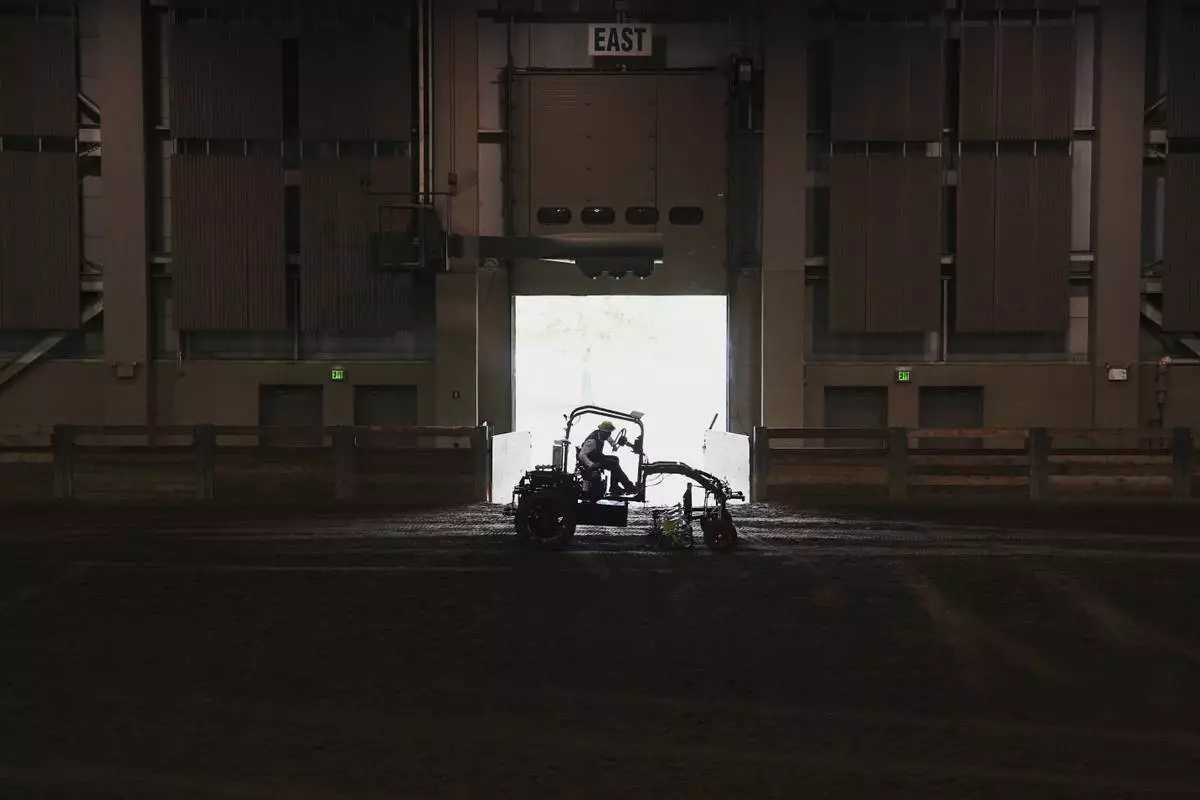
Ben Phillips test drives an electric tractor Tuesday, Aug. 19, 2025, during a demonstration in East Lansing, Mich. (AP Photo/Joshua A. Bickel)
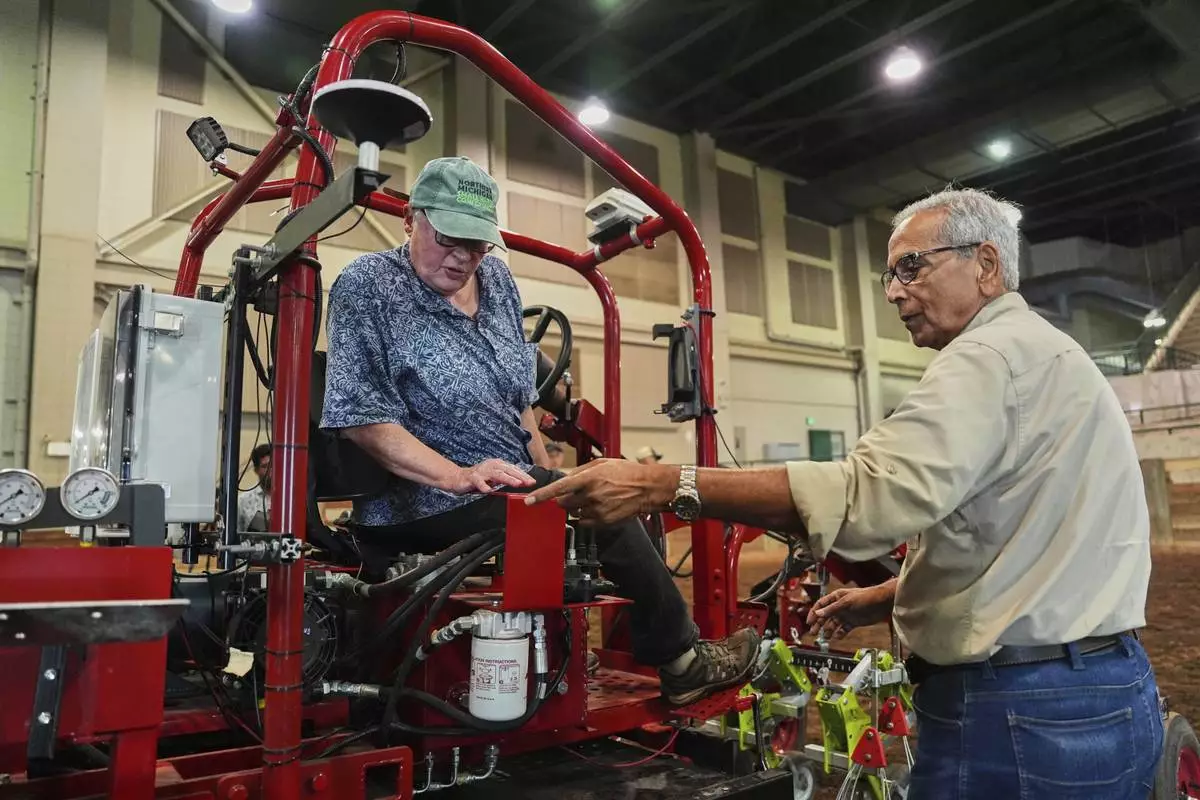
Farmer Vicki Morrane, left, listens as Ajit Srivastava, right, explains the mechanics of an electric tractor before she test drives Tuesday, Aug. 19, 2025, in East Lansing, Mich. (AP Photo/Joshua A. Bickel)
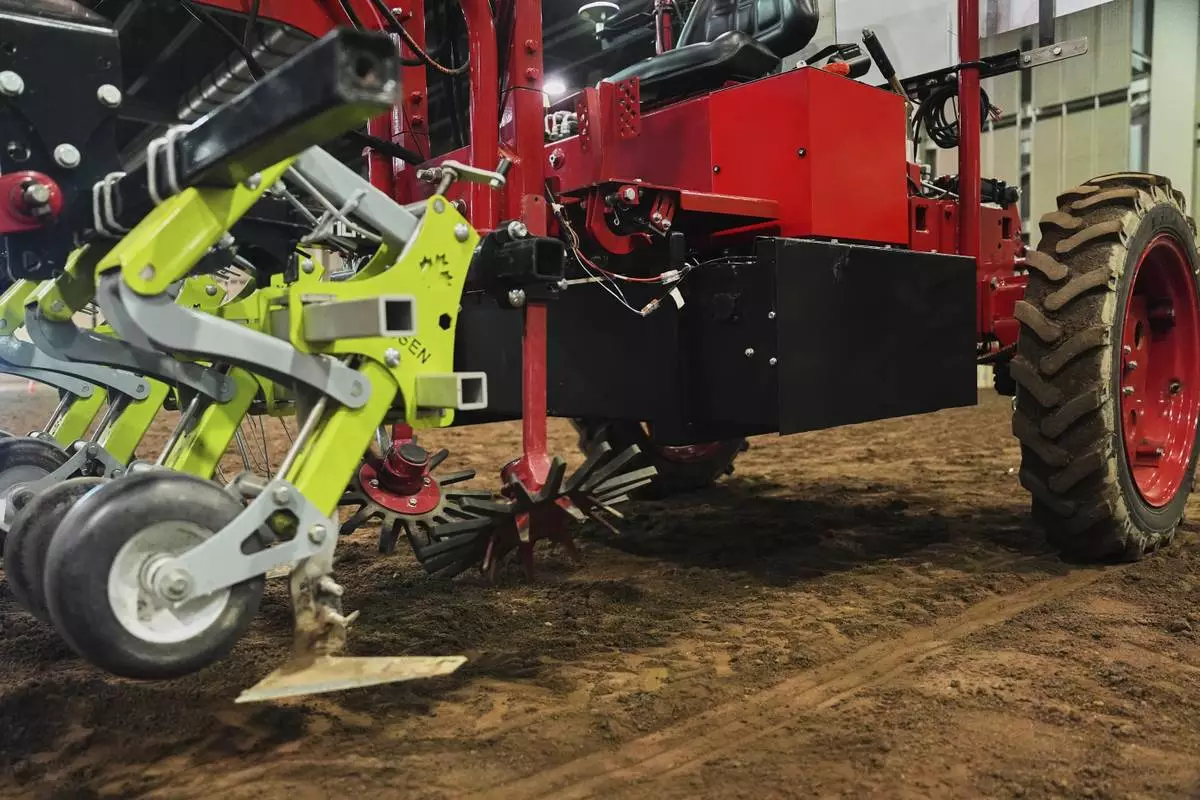
Farm implements, at left, and a battery, are attached to the underside of an electric tractor Tuesday, Aug. 19, 2025, in East Lansing, Mich. (AP Photo/Joshua A. Bickel)
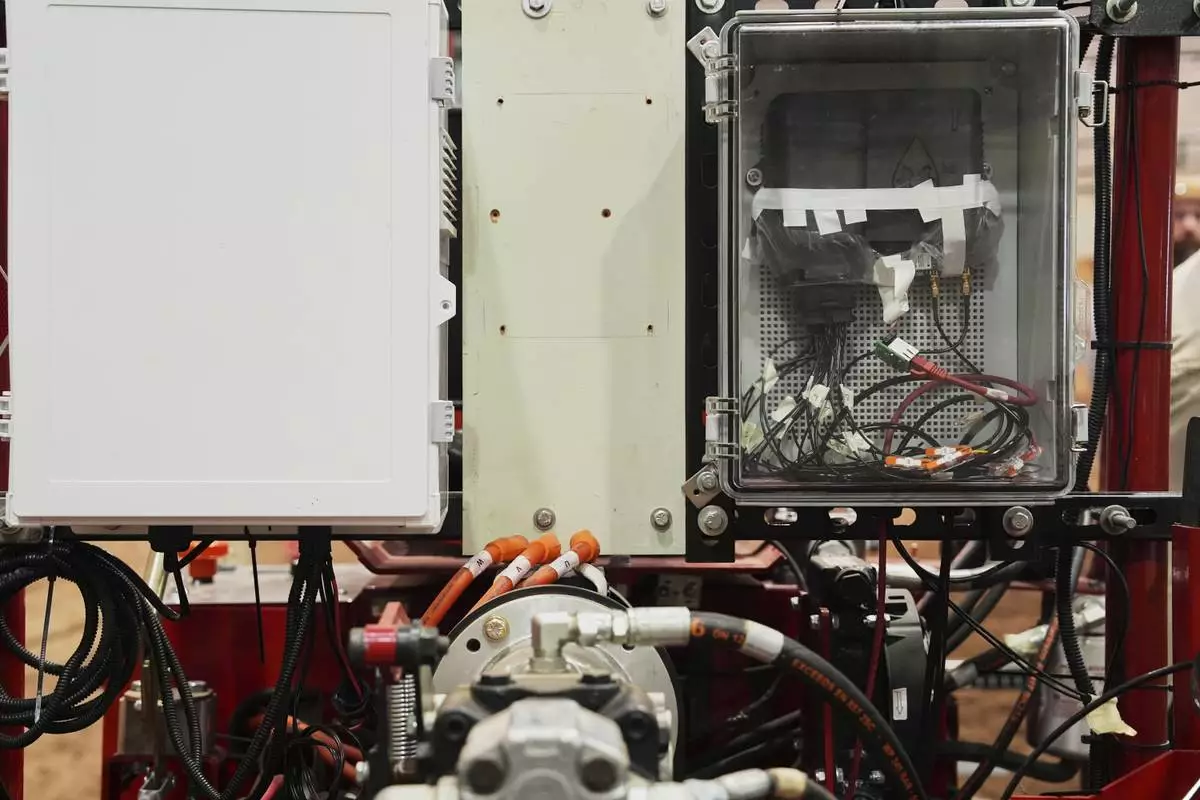
Electronics for a self-driving system sit on an electric tractor Tuesday, Aug. 19, 2025, in East Lansing, Mich. (AP Photo/Joshua A. Bickel)
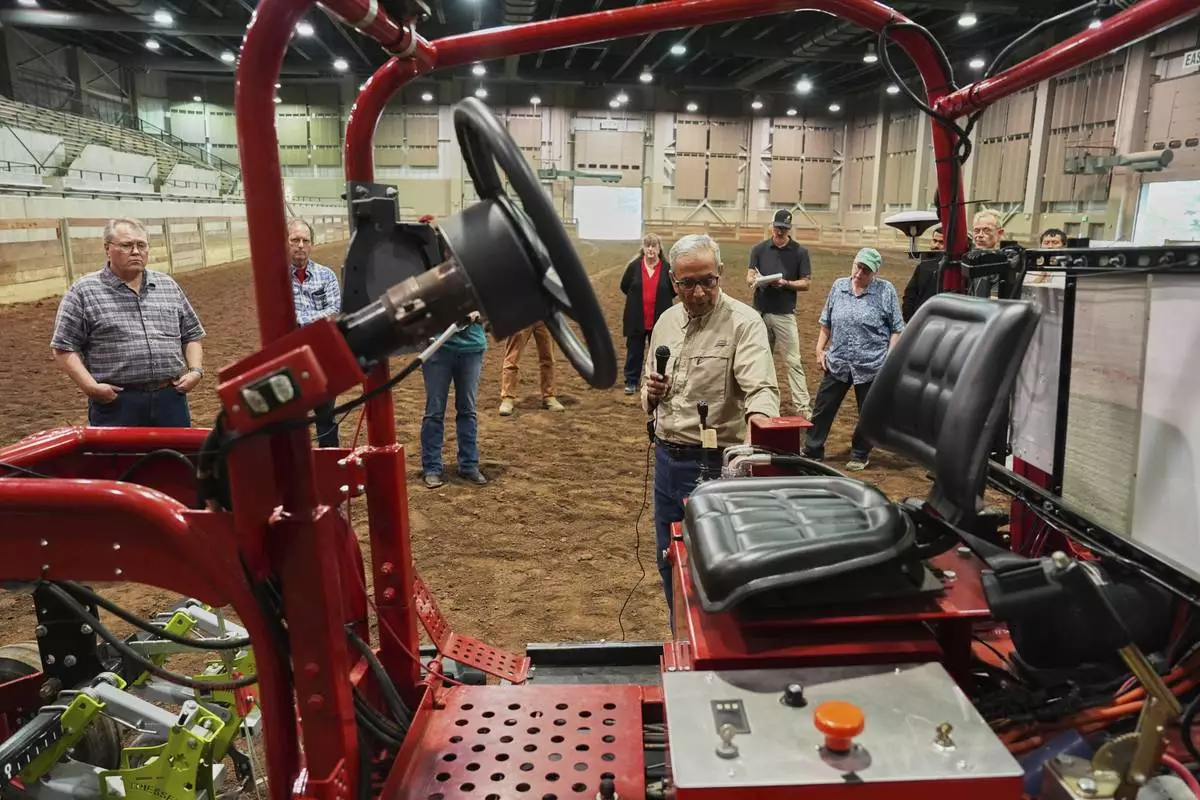
Ajit Srivastava, an engineering professor at Michigan State University, talks about an electric tractor in development Tuesday, Aug. 19, 2025, during a demonstration in East Lansing, Mich. (AP Photo/Joshua A. Bickel)

MK Bashar drives an electric tractor Tuesday, Aug. 19, 2025, during a demonstration in East Lansing, Mich. (AP Photo/Joshua A. Bickel)
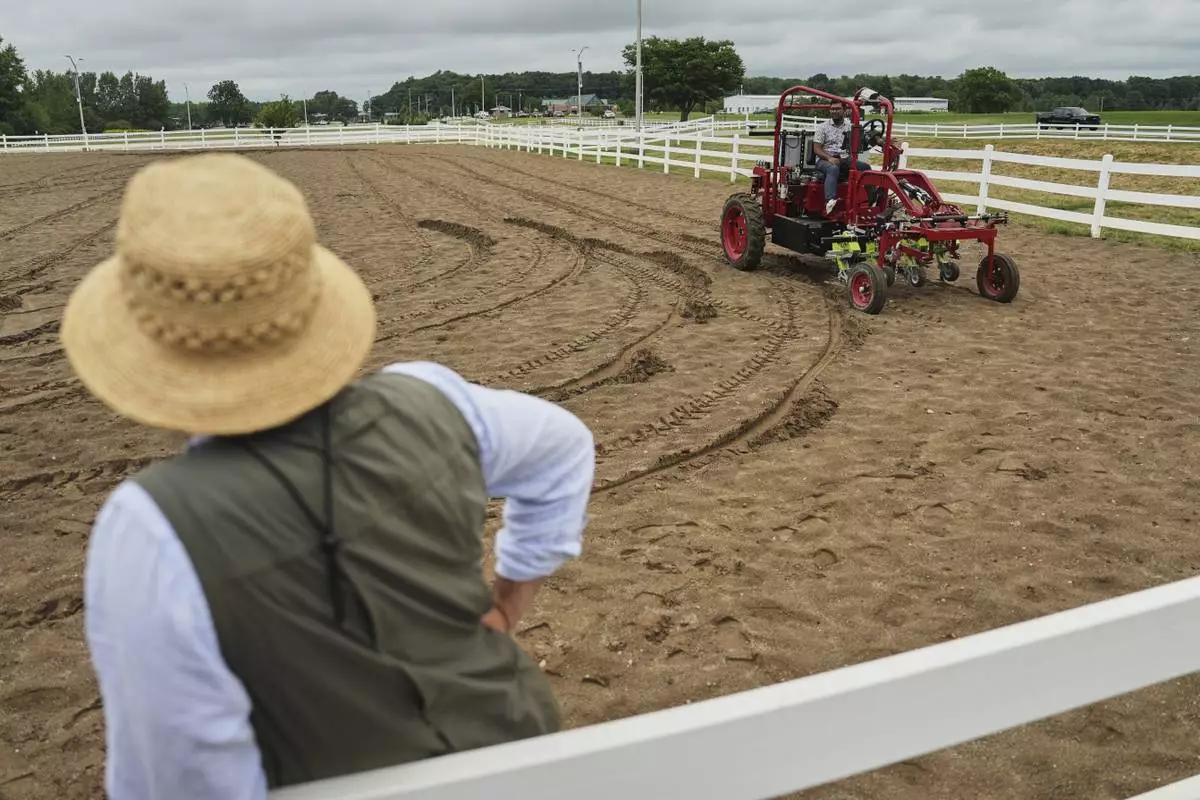
MK Bashar, right, test drives an electric tractor as Ben Phillips, left, watches Tuesday, Aug. 19, 2025, during a demonstration in East Lansing, Mich. (AP Photo/Joshua A. Bickel)
BEIRUT, Lebanon (AP) — A 10-day ceasefire announced by U.S. President Donald Trump and agreed on by Lebanon and Israel started at midnight Thursday local time.
The two neighboring countries held their first direct diplomatic talks in decades on Tuesday in Washington after more than a month of war between Israel and the Iran-backed, Lebanon-based Hezbollah militant group.
The truce, if it holds, could boost attempts to extend the ceasefire between Iran, the United States and Israel after weeks of devastating war that killed thousands of people and upended global markets by disrupting the flow of oil.
Hezbollah started firing on Israel right after the start of the Iran war. It kept up attacks focused on northern Israel communities through Thursday night, with at least eight people injured including two seriously, according to Israel’s emergency services.
Air raid sirens were sounding in a few northern Israeli communities just minutes before the ceasefire was going into effect. Israel’s military also said late Thursday it was striking Hezbollah rocket launchers.
THIS IS A BREAKING NEWS UPDATE. AP’s earlier story follows below.
BEIRUT, Lebanon (AP) — Israel agreed Thursday to a 10-day ceasefire in Lebanon, a truce that could pause fighting with the Hezbollah militant group and boost attempts to extend the ceasefire between Iran, the United States and Israel after weeks of devastating war.
U.S. President Donald Trump announced the agreement as a ceasefire between Israel and Lebanon. However, Israel has not been fighting with Lebanon itself, but rather with the Iranian-backed Hezbollah militants inside the country, who were not formally part of the agreement.
Israeli Prime Minister Benjamin Netanyahu said he agreed to the ceasefire “to advance” peace efforts with Lebanon, but said Israeli troops would not withdraw.
Israeli forces have engaged in fierce battles with Hezbollah in the border area as they pushed into southern Lebanon to create what officials have called a “security zone.” Netanyahu, in his address, said it will extend 10 kilometers (6 miles) into Lebanon.
“That is where we are, and we are not leaving,” he said in a video message.
Hezbollah said that “Israeli occupation on our land grants Lebanon and its people the right to resist it, and this matter will be determined based on how developments unfold” — a stance that could complicate the ceasefire.
The U.S. State Department said that according to the agreement reached between the two sides, Israel reserves the right to defend itself “at any time, against planned, imminent, or ongoing attacks.” But otherwise, Israel “will not carry out any offensive military operations against Lebanese targets, including civilian, military, and other state targets.”
The wording suggested Israel would maintain the freedom to strike at will, as it did in the months following the ceasefire that ended the previous war. This time, Hezbollah said it would respond to any strikes by Israel.
It's unclear when the 1 million people displaced by the war will be able to return.
Trump posted the ceasefire announcement on his Truth Social platform, saying it was to begin at 5 p.m. Eastern time (9 p.m. GMT).
The agreement came about following a meeting between Israel's and Lebanon’s ambassadors in Washington and a flurry of subsequent phone calls from Trump and Secretary of State Marco Rubio, according to a White House official.
The talks amounted to the first direct diplomatic talks between the two countries in decades. Hezbollah had opposed direct talks between Lebanon and Israel.
Trump spoke Wednesday evening with Netanyahu, who agreed to a ceasefire with certain terms, according to the official, who was not authorized to comment publicly and spoke on condition of anonymity.
Rubio then called Lebanon’s president, Joseph Aoun, who got on board. Trump then spoke with Aoun, and again with Netanyahu.
The State Department worked with both governments to formulate a memorandum of understanding for the truce.
Lebanon has insisted on a ceasefire to stop the fighting between Israel and Hezbollah before engaging in more talks, while vowing to commit to disarming the group.
Israel and Lebanon have technically been at war since Israel was established in 1948, and Lebanon remains deeply divided over diplomatic engagement with Israel.
Trump also invited the leaders of Israel and Lebanon to the White House for what he said would be “the first meaningful talks" between the countries since 1983.
“Both sides want to see PEACE, and I believe that will happen, quickly,” Trump wrote.
Lebanon and Israel signed an agreement in 1983 saying Lebanon would formally recognize Israel, and Israel would withdraw from Lebanon. The deal fell apart during Lebanon’s civil war and was formally rescinded a year later.
A Hezbollah official said the ceasefire was a result of Iran’s negotiations with the U.S., in which Iran had insisted Lebanon be included in its own ceasefire, and came about through efforts by mediator Pakistan. The official spoke on condition of anonymity because he was not authorized to speak publicly.
Meanwhile, Pakistan’s army chief met Thursday with Iran’s parliament speaker as part of international efforts to press for an extension to a ceasefire that has paused almost seven weeks of war between Israel, the U.S. and Iran.
It was unclear whether the frantic diplomacy could lead to a lasting deal before the ceasefire ends next week. The Iran war has killed thousands of people and upended global markets by disrupting the flow of oil.
Iranian state television did not provide details on the meeting between Pakistani Army Gen. Asim Munir and Iranian Parliament Speaker Mohammad Bagher Qalibaf, his country’s chief negotiator.
There was no immediate comment from Pakistan, which has become a key mediator after hosting direct talks between the U.S. and Iran that authorities said helped narrow differences between the sides.
The White House said any further talks regarding Iran would likely take place in the Pakistani capital of Islamabad, though no decision had been made on whether to resume negotiations. The fragile ceasefire is holding despite a U.S. naval blockade of Iranian ports and Iranian counter-threats to target regional ports across the Red Sea.
The 14-day ceasefire expires on April 22, but Trump suggested it could be extended.
“If we’re close to a deal, would I extend?” Trump said in an exchange with reporters. “Yeah, I would do that.”
The war has jolted markets and rattled the global economy as shipping has been cut off and airstrikes have pounded military and civilian infrastructure. Oil prices have fallen amid hopes for an end to fighting, and U.S. stocks on Wednesday surpassed records set in January.
Even as the U.S. blockade on Iranian ports and renewed Iranian threats strained the ceasefire, regional officials reported progress, telling AP the United States and Iran had an “in-principle agreement” to extend it to allow for more diplomacy. They spoke on condition of anonymity to discuss sensitive negotiations.
But tensions simmered.
The commander of Iran’s joint military command, Ali Abdollahi, threatened to halt trade in the region if the U.S. does not lift its naval blockade, and a newly appointed military adviser to Iranian Supreme Leader Mojtaba Khamenei said he does not support extending the ceasefire.
The fighting has killed at least 3,000 people in Iran, more than 2,100 in Lebanon, 23 in Israel and more than a dozen in Gulf Arab states. Thirteen U.S. service members have also been killed.
Mediators are pushing for a compromise on three main sticking points: Iran’s nuclear program, the Strait of Hormuz and compensation for wartime damages, according to a regional official involved in the mediation efforts.
Since the war began, Iran has curtailed maritime traffic through the strait, which a fifth of global oil transited through in peacetime. Tehran’s effective closure of the strait sent oil prices skyrocketing, raising the cost of fuel, food and other basic goods far beyond the Middle East.
Becatoros contributed from Athens, Greece. Matthew Lee and Ben Finley in Washington, Samy Magdy in Cairo, Melanie Lidman in Tel Aviv, Israel and Munir Ahmed in Islamabad contributed to this report.
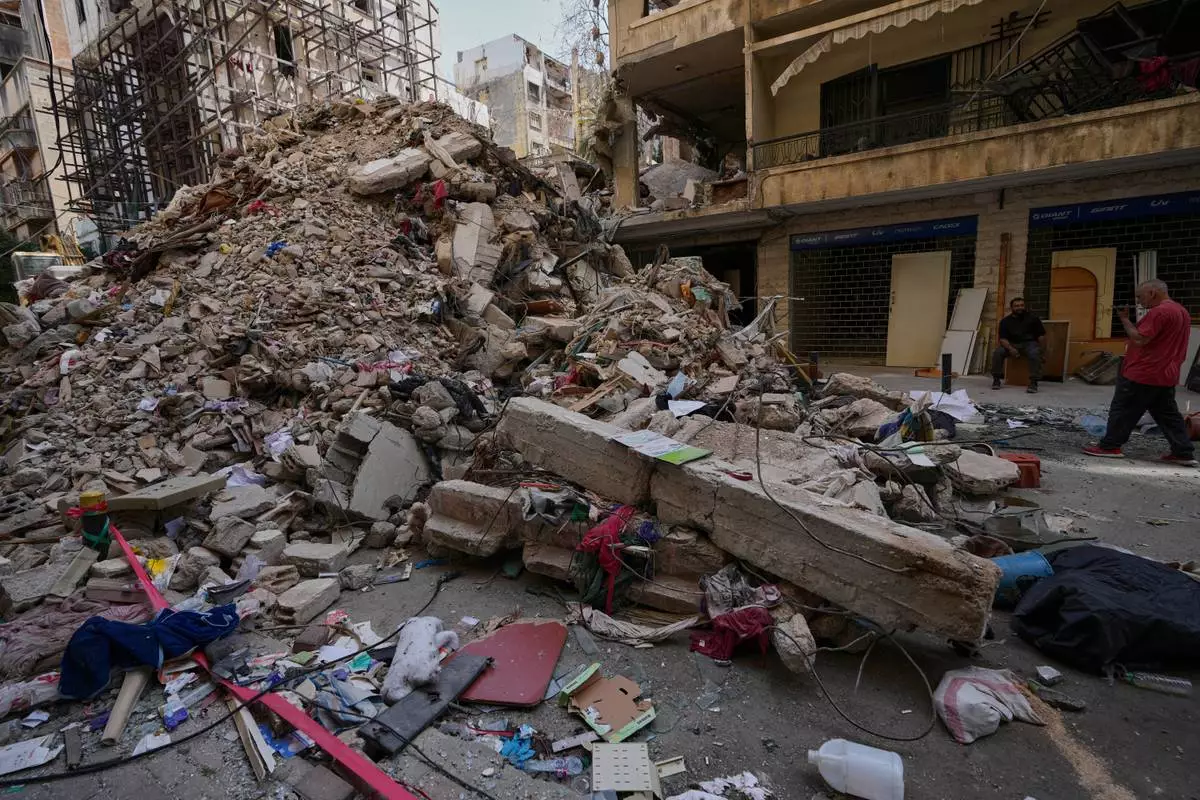
Residents stand next to the rubble of a destroyed building that was hit a week ago in an Israeli airstrike in central Beirut, Lebanon, Thursday, April 16, 2026. (AP Photo/Hussein Malla)
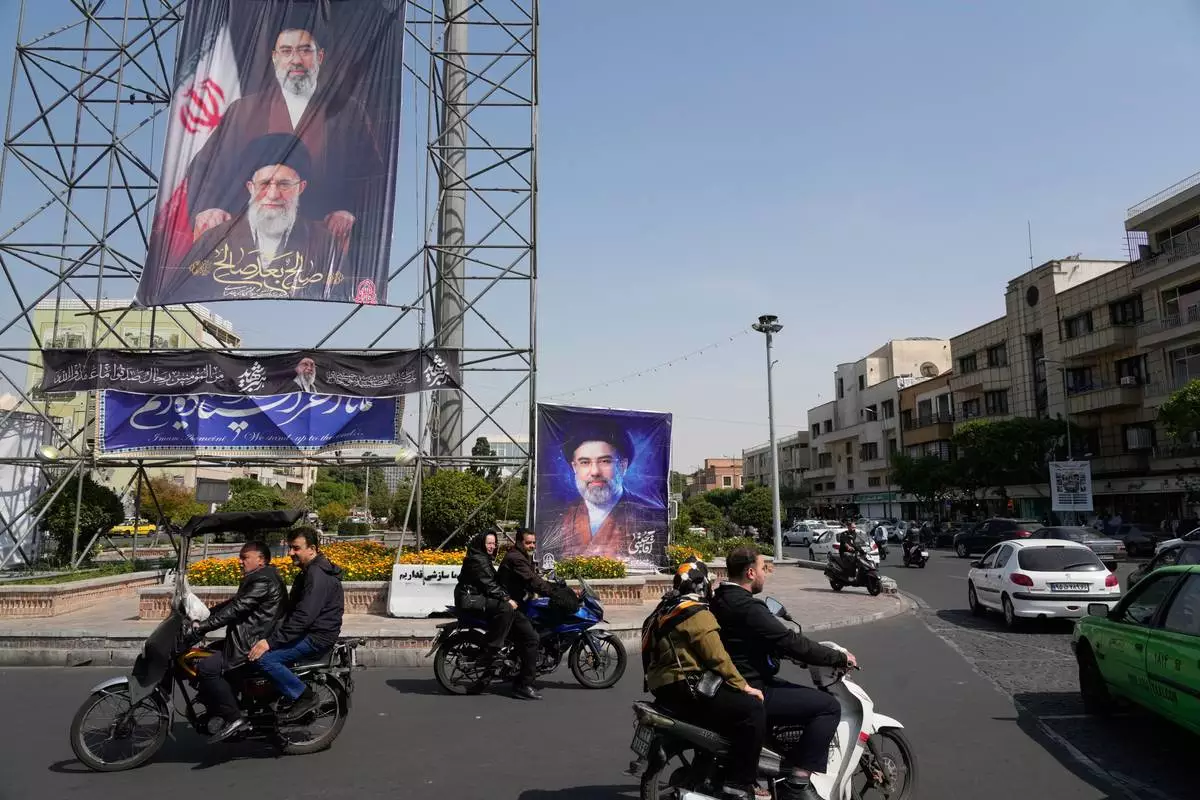
People drive their motorbikes past billboards showing the Iran's Supreme Leader Ayatollah Mojtaba Khamenei, top and right, and his father, the slain Supreme Leader Ayatollah Ali Khamenei, who was killed in U.S. and Israeli strikes on Feb. 28, in downtown Tehran, Iran, Thursday, April 16, 2026. (AP Photo/Vahid Salemi)
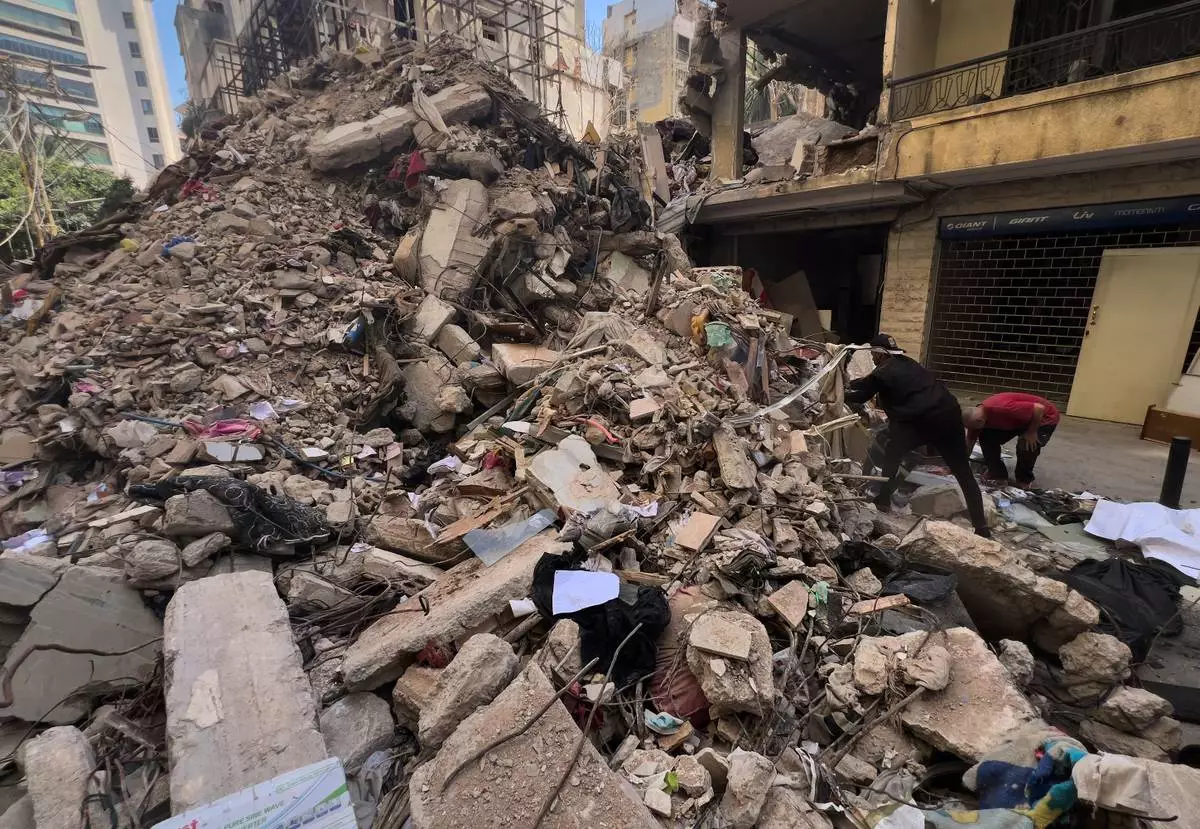
Workers search amongst the rubble of a destroyed building that was hit a week ago in an Israeli airstrike in central Beirut, Lebanon, Thursday, April 16, 2026. (AP Photo/Hussein Malla)
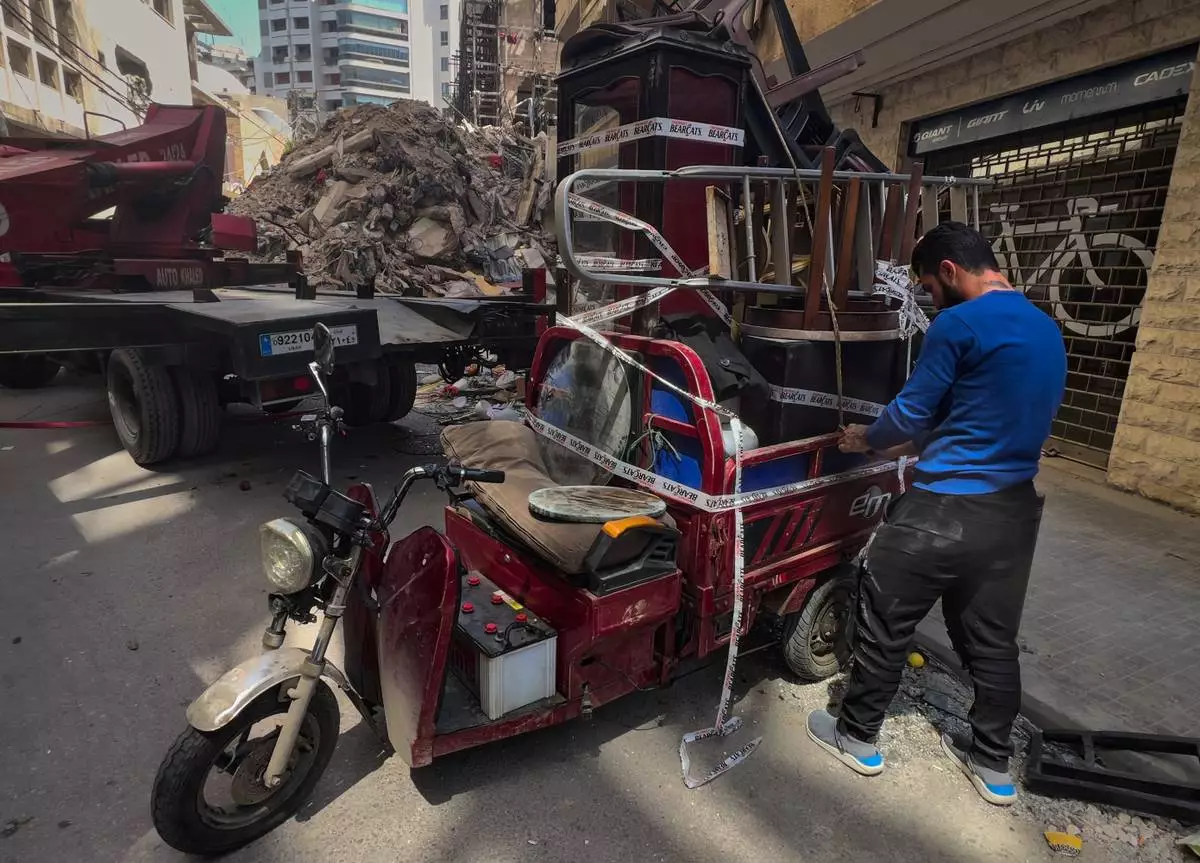
A worker arranges furniture from an apartment of a destroyed building that was hit a week ago in an Israeli airstrike in central Beirut, Lebanon, Thursday, April 16, 2026. (AP Photo/Hussein Malla)
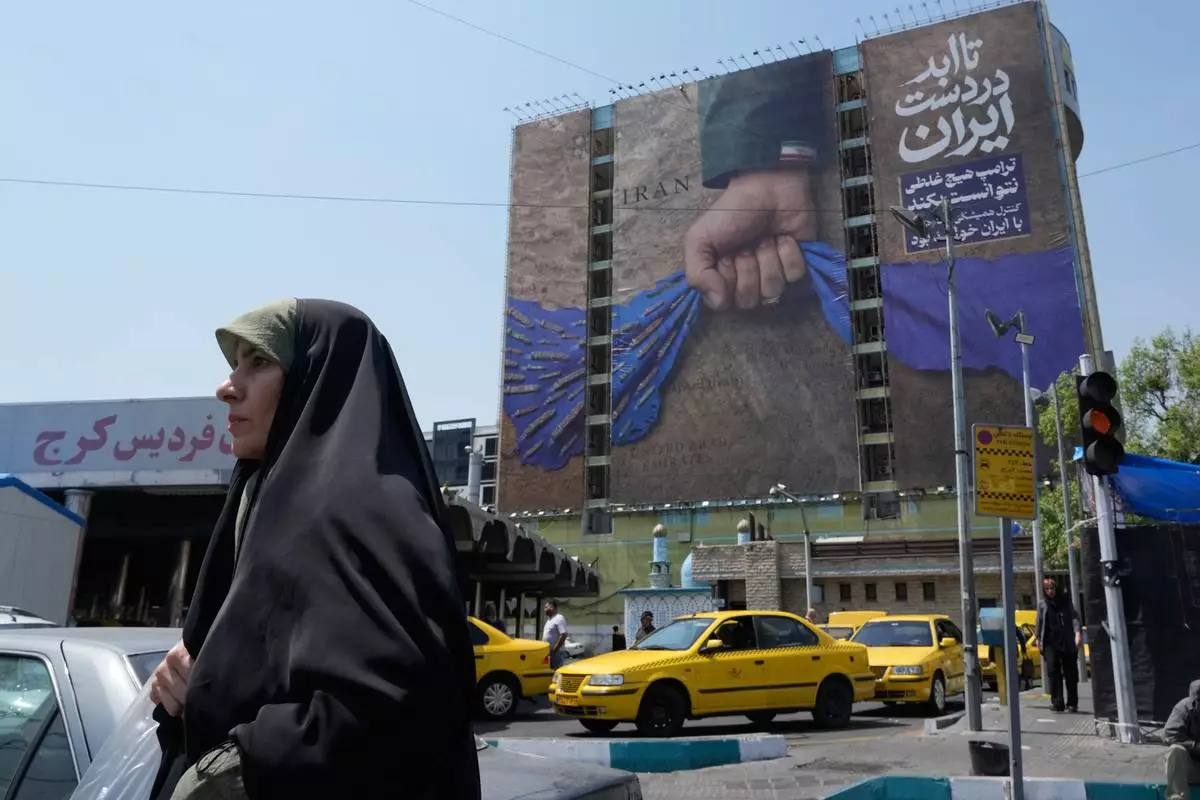
A woman walks past a billboard that shows a graphic depicting a military personnel's hand holding the Strait of Hormuz in his fist with signs which read in Farsi: "In Iran's hands forever," "Trump couldn't do a damn thing," " The control of Strait of Hormuz will be Iran's forever," in Vanak Square, in northern Tehran, Iran, Thursday, April 16, 2026. (AP Photo/Vahid Salemi)

Relatives of Ghadir Baalbaki, 19, who was killed on Tuesday in an Israeli airstrike, mourn during her funeral in the southern port city of Tyre, Lebanon, Wednesday, April 15, 2026. (AP Photo/Hussein Malla)
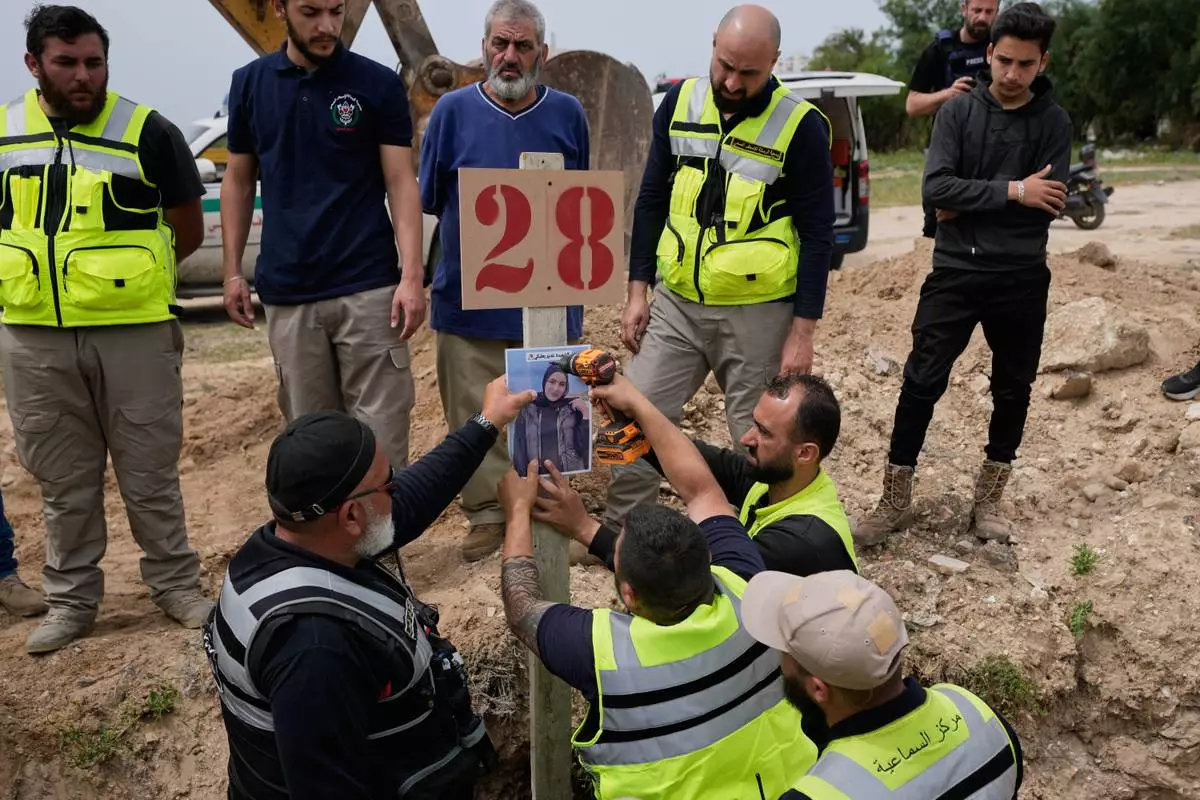
Paramedics attach a portrait over the grave of Ghadir Baalbaki, 19, who was killed on Tuesday in an Israeli airstrike, at a temporary mass grave in the southern port city of Tyre, Lebanon, Wednesday, April 15, 2026. (AP Photo/Hussein Malla)
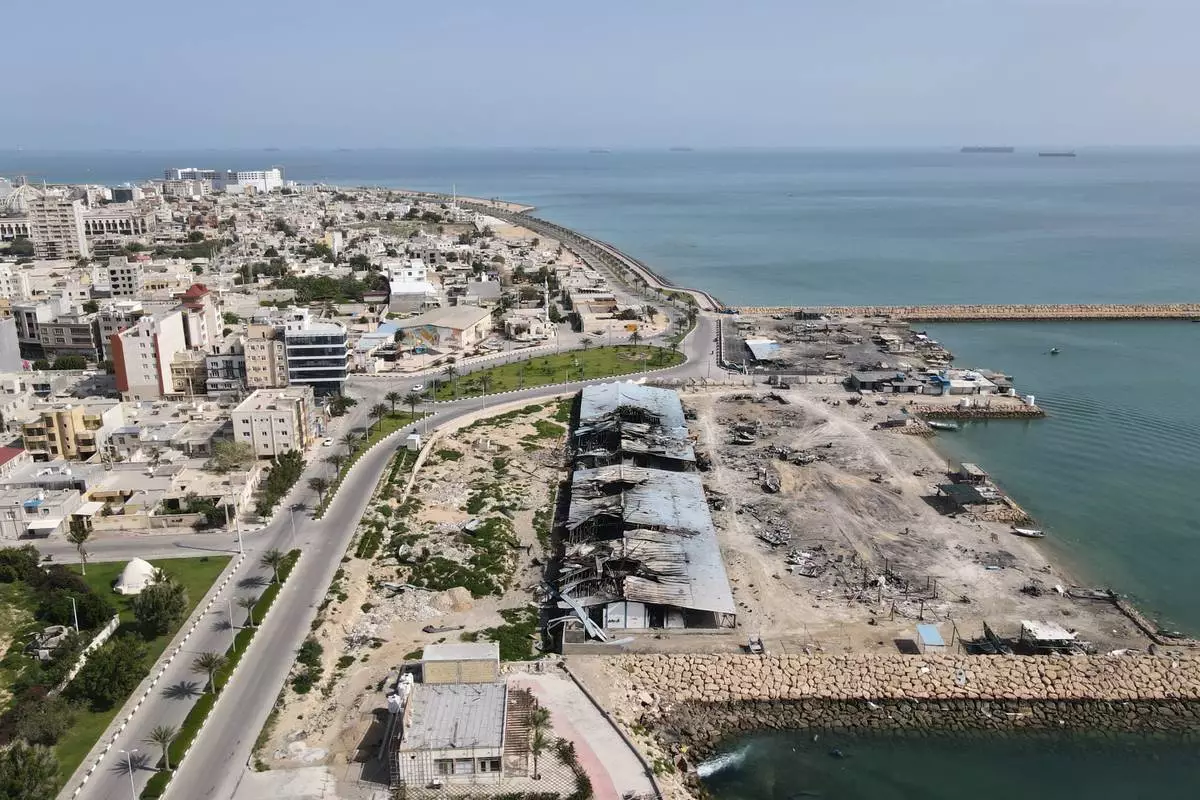
Backdropped by ships in the Strait of Hormuz, damage, according to local witnesses caused by several recent airstrikes during the U.S.-Israel military campaign, is seen on a fishing pier in the port of Qeshm island, Iran, Monday, April 13, 2026. (AP Photo/Asghar Besharati)
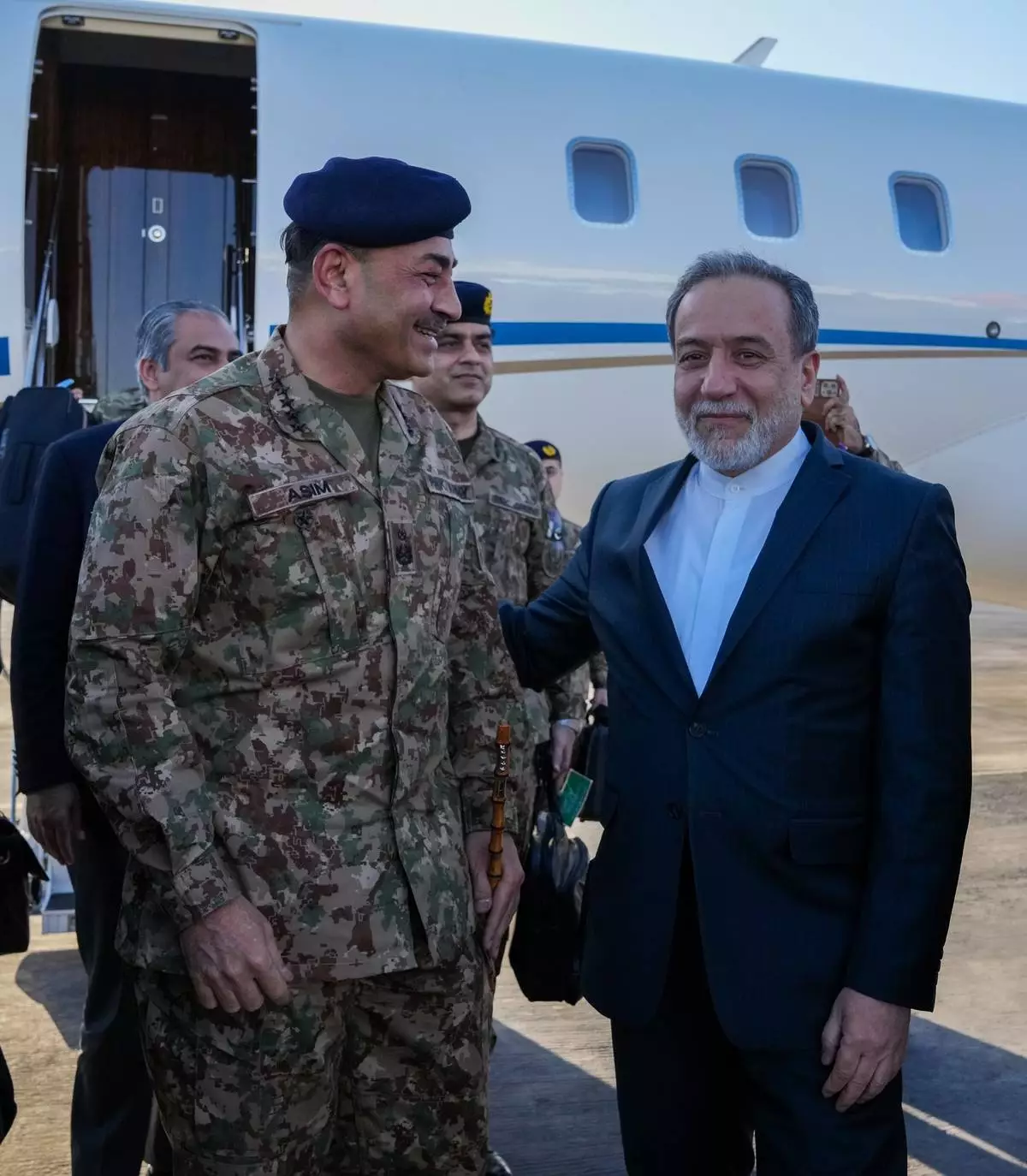
In this photo released by the Iranian Foreign Ministry, Pakistan's Army Chief Field Marshal Gen. Asim Munir, left, is welcomed by Iranian Foreign Minister Abbas Araghchi upon his arrival in Tehran, Wednesday, April 15, 2026. (Iranian Foreign Ministry via AP)
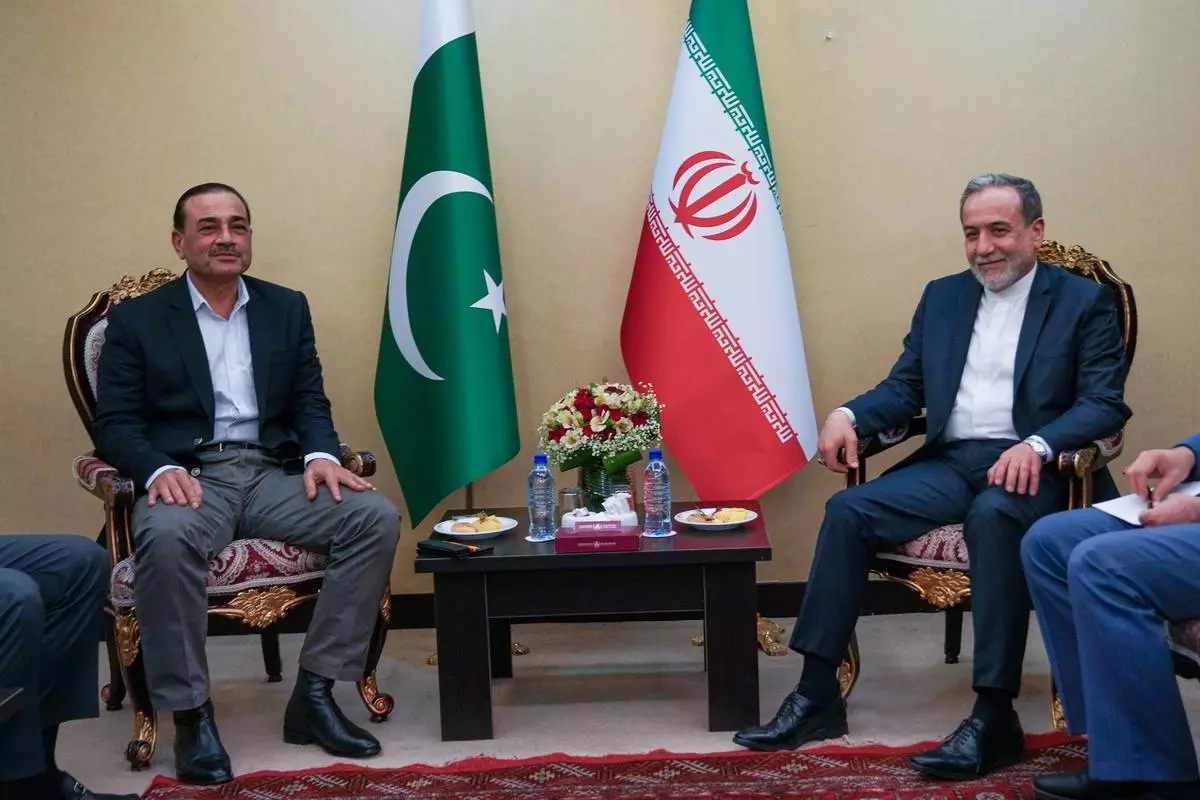
In this photo released by the Iranian Foreign Ministry, Iranian Foreign Minister Abbas Araghchi, right, meets with Pakistan's Army Chief Field Marshal Gen. Asim Munir in Tehran, Wednesday, April 15, 2026. (Iranian Foreign Ministry via AP)