China's decade-long efforts to preserve Imperial Japan's most horrific World War II crimes into the Memory of the World Register by the United Nations Educational, Scientific, and Cultural Organization (UNESCO) have been deliberately and systematically sabotaged, according to a recent video commentary by Yuyuantantian, a media outlet under China Media Group (CMG).
The commentary traces China's official and non-official efforts in the matter over the years, exposing a well-funded, government-backed campaign by far-right-wing forces in Japan, with the support of the Japanese Foreign Ministry, aimed at preventing the international community from formally acknowledging historical truths. An abridged translation of the commentary continues as follows.
In 2014, China submitted the "comfort women" archives for inclusion in the Memory of the World Register, only to see the nomination rejected the following year.
A renewed joint submission with South Korea in 2017 was deliberately stalled through procedural manipulation. Then, in 2019, China's nomination of the Japanese Bacterial Warfare Archives, which contains irrefutable evidence of crimes committed by Unit 731 - the Japanese germ warfare lab base - was indefinitely delayed, with no progress to date.
This pattern of obstruction reflects a coordinated effort to prevent the international community from formally acknowledging these historical truths.
It is not a matter of procedural delay, but a well-funded, government-backed campaign to erase history.
Actually, the strategy is straight out of the playbook of Japanese revisionism. After China's successful nomination of the Nanjing Massacre Archives in 2015, right-wing forces mobilized to prevent further truth-telling. Under then-Prime Minister Shinzo Abe, who openly rejected a continued Japanese apology, a machinery of denial swung into action.
Their method was weaponizing UNESCO's own mechanisms. In 2017, when China and South Korea jointly nominated "comfort women" archives, a so-called "grassroots" Japanese group, which is in fact a government-influenced operation, submitted a rival dossier whitewashing the atrocities and falsely claiming the women were "volunteers." This triggered a deadlock in the "dialogue" process, a tactical abuse of international bureaucracy.
This case was no spontaneous citizen effort. It was a campaign engineered by a coordinated network of right-wing actors operating with full official support.
Ultranationalist thinker Hideaki Kase, who has long denied Japan's war responsibilities, provided the ideological backbone for the initiative. Scholar Shiro Takahashi devised the specific "dueling nomination" tactic designed to exploit UNESCO's procedural weaknesses. On the ground, Yumiko Yamamoto, who was publicly presented as a concerned housewife but was actually a key operative, executed the plan.
And behind it all stood the Japanese Foreign Ministry, leveraging diplomatic influence and financial pressure in a clear, state-sponsored effort to suppress historical truth.
The outrageous outcome was that in 2021, UNESCO capitulated to political pressure and amended its rules, now allowing any member state, including perpetrator nations, to indefinitely block a historical nomination it simply opposes. That means Japan, the perpetrator, now holds veto power over the historical memory of its own victims.
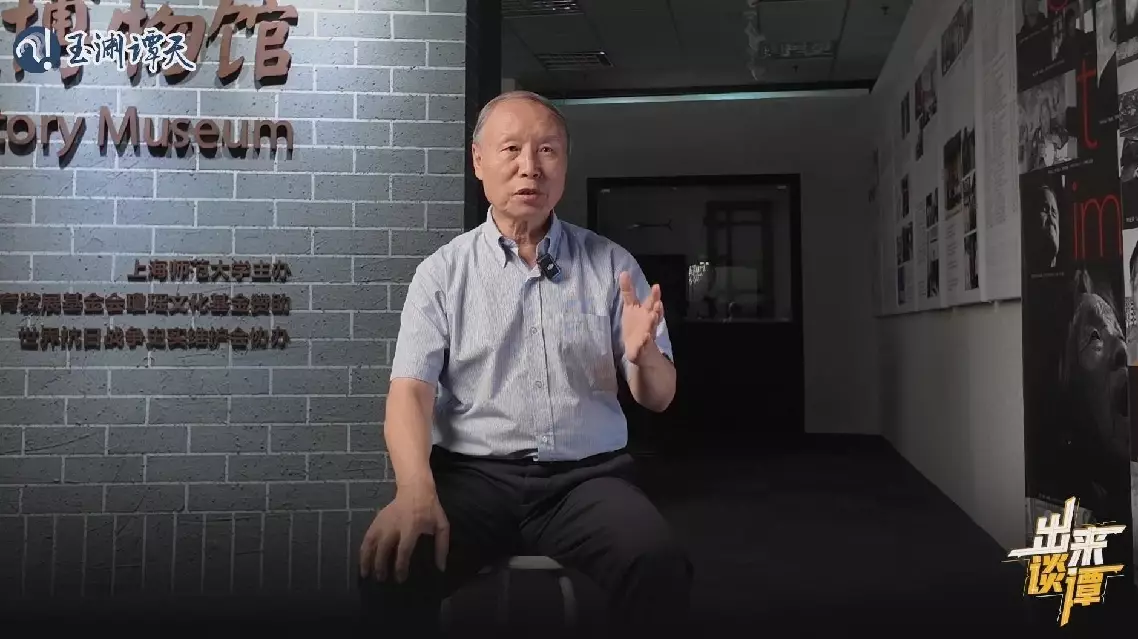
Amid this deeply unjust situation, the voices of scholars and survivors who have fought for decades for recognition grow more urgent. Among them is Chinese Professor Su Zhiliang, who has dedicated his life to documenting the truth.
He recently returned from meetings in South Korea, where he continues to seek a path toward justice despite intentional institutional barriers.
"Ten years have passed—ten years—and still there has been no meaningful dialogue. We have identified 358 survivors of the 'comfort women' system across China's mainland. Only seven are still alive today. It is heartbreaking. Even though the Director-General of UNESCO has changed multiple times, the injustice persists. Now, under the new rules, if we were to include evidence of Unit 731's crimes, we would need Japan's consent. The absurdity and pain are beyond words. The Japanese Foreign Ministry works relentlessly, often in one-on-one settings, to sway committee members in every country. We must keep fighting. We must speak for those who endured these horrors. When I see the aged faces of our survivors, I cannot look away," he said.
China has always adhered to international rules and norms. However, when certain parties manipulate those very mechanisms to erase historical crimes and promote revisionist narratives, inaction becomes a form of complicity.
Japan's campaign to obstruct historical recognition has come at the cost of its own international credibility, trading long-term trust for short-term political expediency.
While China refuses to employ the same underhanded tactics, it will not remain silent or retreat from defending the truth. The country remains steadfast in its commitment to historical justice.
CMG commentary reveals how Japan sabotaged listing of its war crimes in UNESCO Memory of World Register