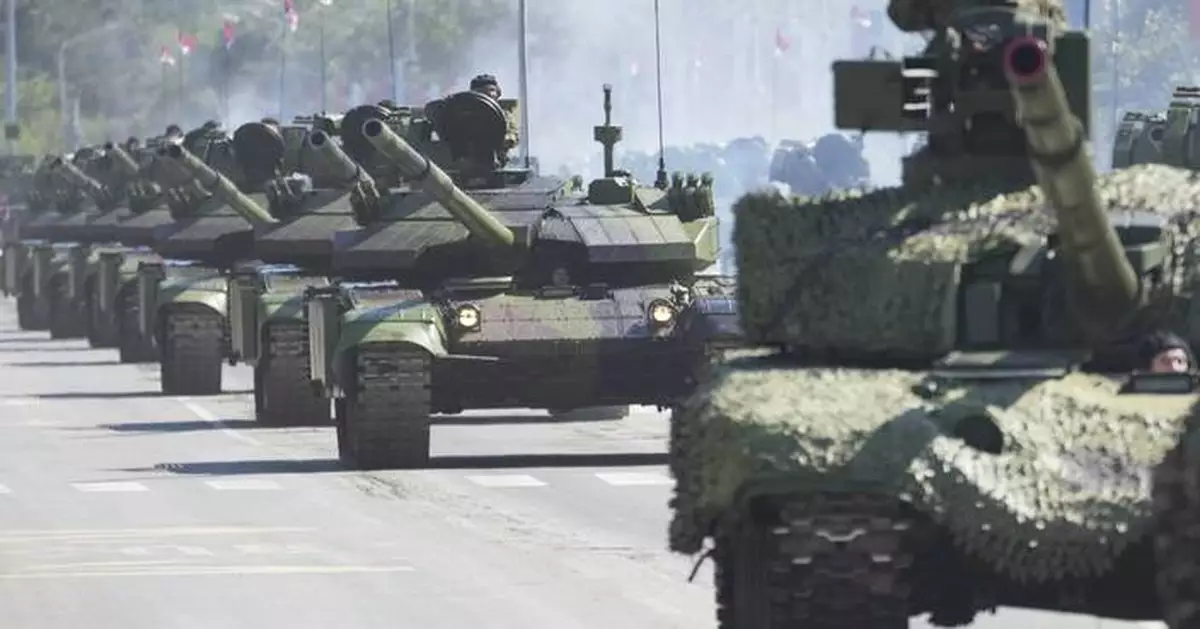
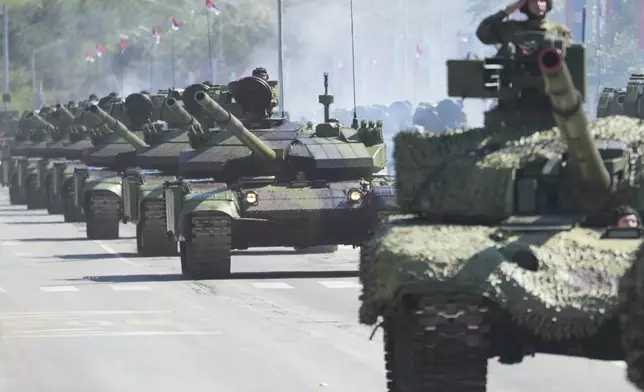
BELGRADE, Serbia (AP) — Serbia on Saturday staged a large-scale military parade in the capital Belgrade, showcasing tanks, missile systems and fighter jets in what officials described as the country’s biggest display of army strength in its history.
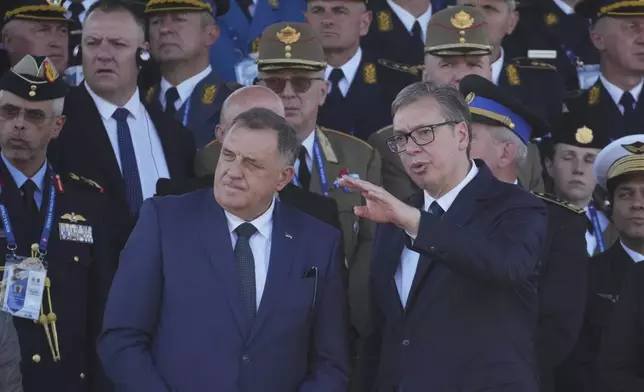
President Aleksandar Vucic reviewed the parade, which included about 10,000 troops, saying the show of force underscored Serbia’s ability to defend its independence and sovereignty and act as a deterrent against any foreign aggressor. Serbia is mostly surrounded by NATO-member states.
Click to Gallery
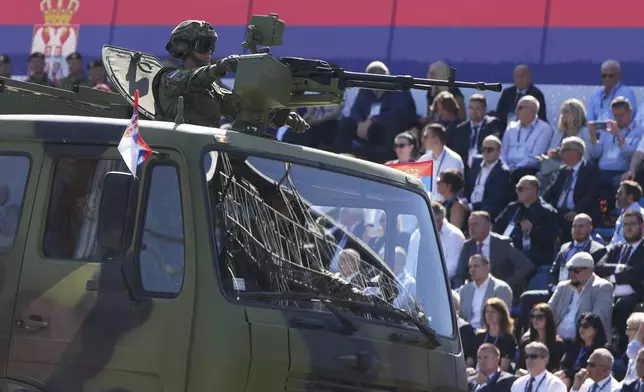
Serbian Army soldiers perform during a military parade in Belgrade, Serbia, Saturday, Sept. 20, 2025. (AP Photo/Darko Vojinovic)
Serbian President Aleksandar Vucic, right, and Bosnian Serb leader Milorad Dodik attend a military parade in Belgrade, Serbia, Saturday, Sept. 20, 2025. (AP Photo/Darko Vojinovic)
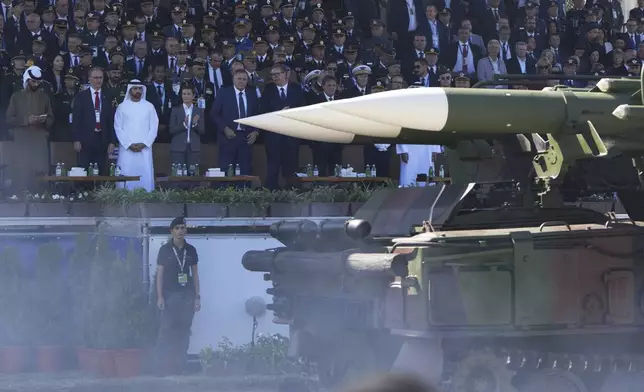
Serbian President Aleksandar Vucic and Bosnian Serb leader Milorad Dodik attend a military parade in Belgrade, Serbia, Saturday, Sept. 20, 2025. (AP Photo/Darko Vojinovic)
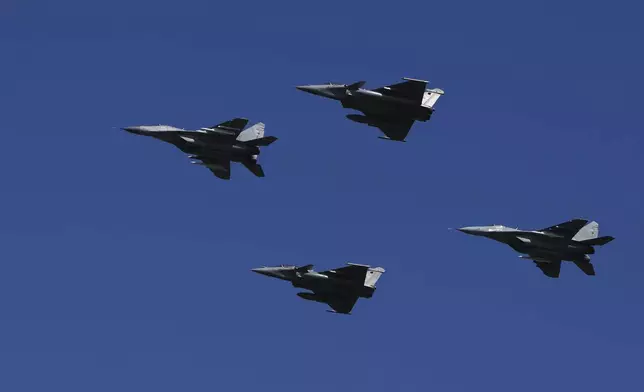
Serbian army MiG-29 jets, left and right, and French Air Force Rafale fighter jets fly in the sky during a military parade in Belgrade, Serbia, Saturday, Sept. 20, 2025. (AP Photo/Darko Vojinovic)
Serbian Army soldiers perform during a military parade in Belgrade, Serbia, Saturday, Sept. 20, 2025. (AP Photo/Darko Vojinovic)
Columns of troops marched through the New Belgrade district of the capital as crowds waved national flags, while aircraft roared overhead.
The event featured both domestically produced weapons as well as rocket launchers from Israel, drones purchased from the United Arab Emirates as well as tanks supplied by Russia and anti-aircraft systems from China, reflecting Belgrade’s close ties with Moscow and Beijing despite its declared goal of joining the European Union.
What caught most of the attention of military experts was the Israeli PULS system, a versatile rocket artillery platform capable of launching a range of munitions with varying ranges and payloads. Its range is up to 300 kilometers (185 miles), meaning it can reach most of the Balkan capitals.
Another surprise appearance was a couple of the French air force's Rafale fighter jets. Serbia has ordered 12 such multi-purpose aircraft that are due for delivery in the coming years.
Critics said the parade was designed less to showcase the strength of the military than to bolster Vucic’s populist rule that has been challenged by student-led protests and growing international scrutiny of his increasingly authoritarian grip on power.
Opposition leaders accused the government of using the army as a political prop, while rights groups noted that some state employees were pressured to attend the parade and were transported in hundreds of buses.
Hundreds of university students and other opposition supporters, who have for more than 10 months staged anti-corruption protests against Vucic and his government, were prevented by riot police from joining other spectators of the parade.
Vucic has refused a student demand to call an early parliamentary election. He has instead stepped up a crackdown on the protests, which have drawn hundreds of thousands of people in the past months.
The anti-government protests first started in November last year after a concrete canopy collapse at a renovated train station in the northern city of Novi Sad killed 16 people. It ignited a nationwide movement seeking justice for the victims and blaming corruption-fueled negligence for the tragedy.
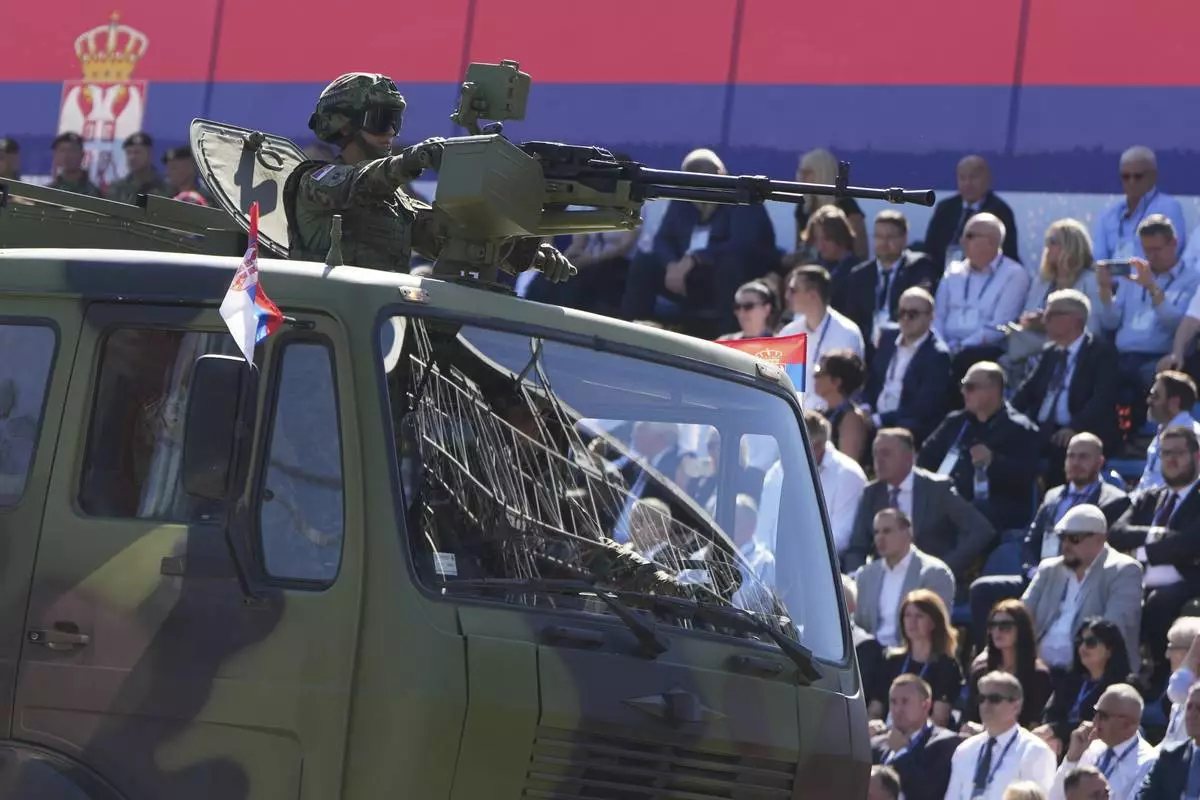
Serbian Army soldiers perform during a military parade in Belgrade, Serbia, Saturday, Sept. 20, 2025. (AP Photo/Darko Vojinovic)
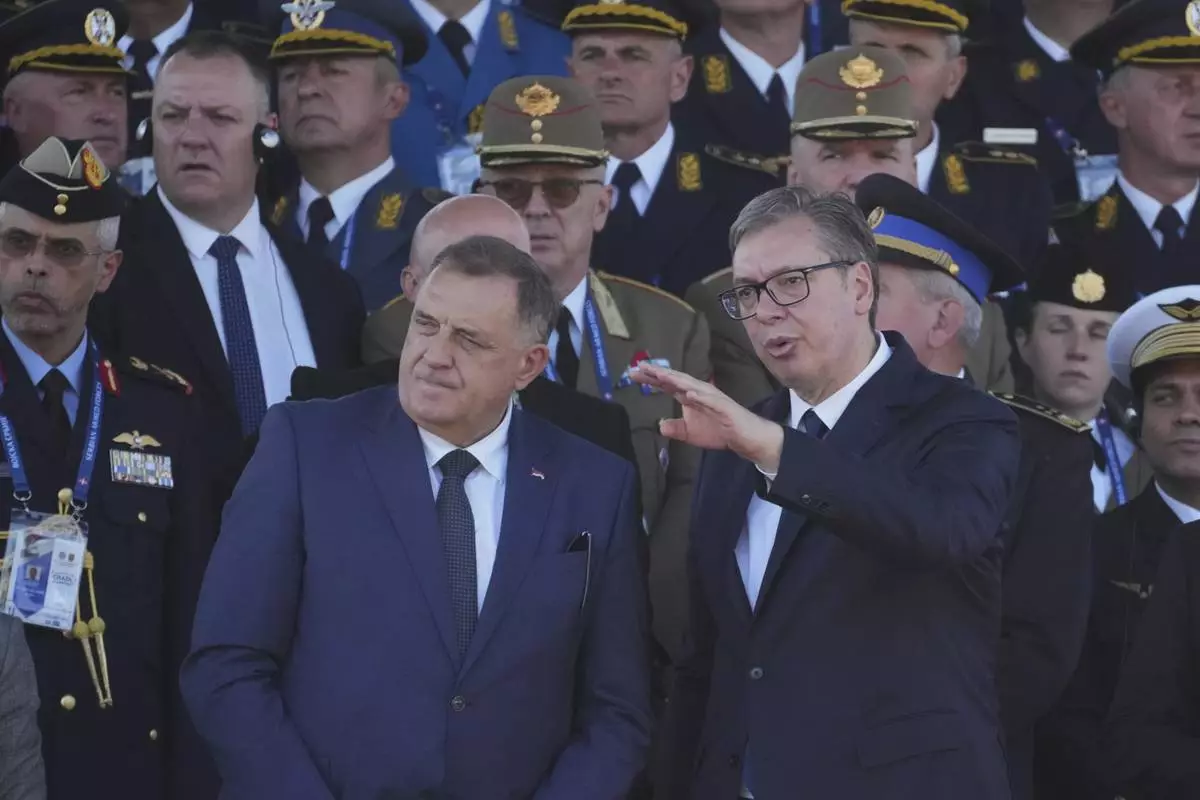
Serbian President Aleksandar Vucic, right, and Bosnian Serb leader Milorad Dodik attend a military parade in Belgrade, Serbia, Saturday, Sept. 20, 2025. (AP Photo/Darko Vojinovic)
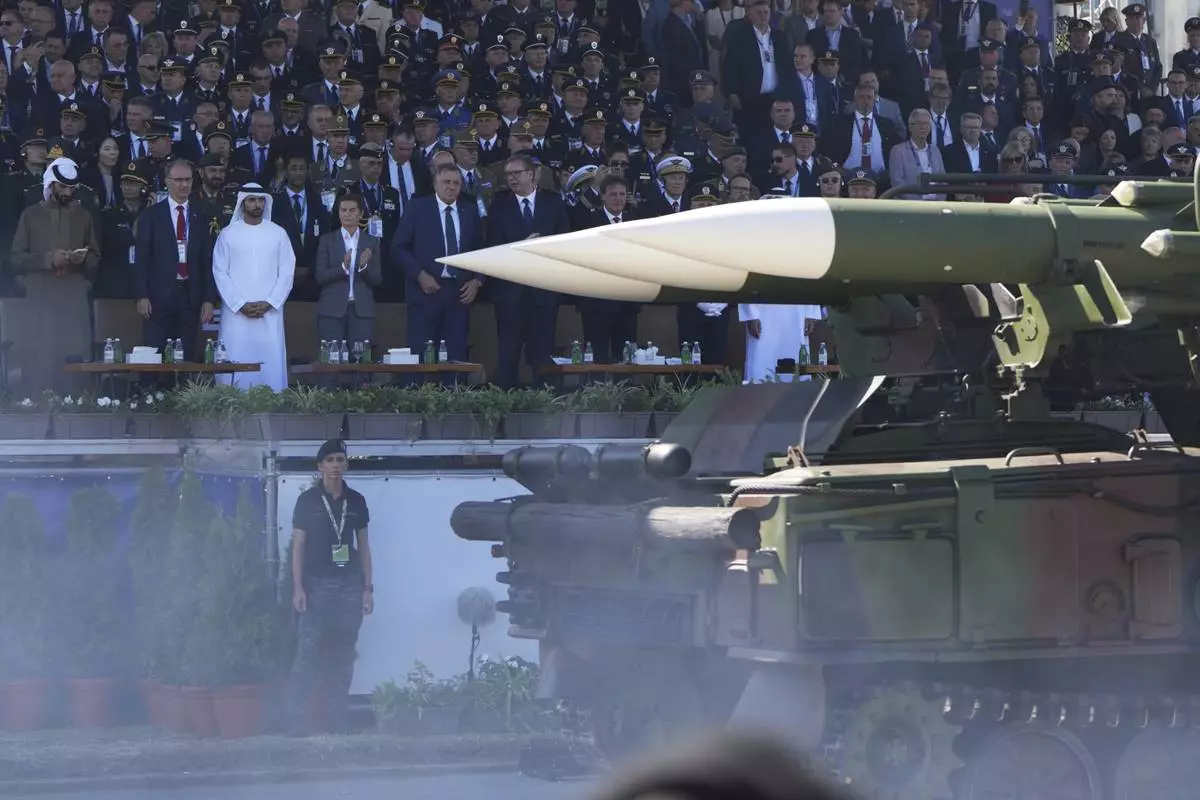
Serbian President Aleksandar Vucic and Bosnian Serb leader Milorad Dodik attend a military parade in Belgrade, Serbia, Saturday, Sept. 20, 2025. (AP Photo/Darko Vojinovic)

Serbian army MiG-29 jets, left and right, and French Air Force Rafale fighter jets fly in the sky during a military parade in Belgrade, Serbia, Saturday, Sept. 20, 2025. (AP Photo/Darko Vojinovic)

Serbian Army soldiers perform during a military parade in Belgrade, Serbia, Saturday, Sept. 20, 2025. (AP Photo/Darko Vojinovic)
NASHVILLE, Tenn. (AP) — A new Tennessee law has eased up on two longstanding financial hurdles for people with felony sentences who want their voting rights back, including a unique requirement among states that they must have fully paid their child support costs.
The Republican-supermajority Legislature approved the Democratic-sponsored change, which now lets people prove they have complied for the last year with child support orders, such as payment plans. The legislation also unties the payment of all court costs from voting rights restoration.
Advocates for years have sought various changes to Tennessee’s voting rights restoration system at the statehouse and in court. They say loosening these two rules marks the biggest rollback of restrictions to voting rights restoration in decades.
“This is huge and this is history,” said Keeda Haynes, senior attorney for the advocacy group Free Hearts led by formerly incarcerated women like her.
Most Republicans voted for it and Democrats supported it unanimously. The law took effect immediately upon Republican Gov. Bill Lee's signature last week.
“I think people are at a point where they want to just remove the barriers out of the way and allow people to be fully functional members of society,” said Democratic House Minority Leader Karen Camper, a bill sponsor.
In 2023 and early 2024, the state shelved a paperwork process that didn’t require going to court and decided gun rights were required to restore the right to vote. Election officials said a court ruling made the changes necessary, though voting rights advocates said officials misinterpreted the order.
Last year, lawmakers untangled voting and gun rights. But voting rights advocates opposed some of the bill's other provisions, such as keeping the process in the courts, where costs can rack up if someone isn't ruled indigent.
Easing up on the financial requirements uncommonly split legislative Republicans. For instance, Senate Speaker Randy McNally voted against it, while House Speaker Cameron Sexton supported it, noting that people aren't getting forgiveness on making their payments.
“They need to continue paying that, and as long as they do, then there’s a possibility (to restore their voting rights)," Sexton said. "I really think that’s harder for people to argue against than maybe what something else was.”
Republican Rep. Johnny Garrett, who voted no, said in committee his vote would hinge on whether “there still can be an (child support) arrearage owed beyond that 12 months.”
For some, backed-up child support payments could reach hundreds or thousands of dollars, and court costs could be hundreds or thousands more, said Gicola Lane, Campaign Legal Center's Restore Your Vote community partnership senior manager.
Advocates credited their narrowed focus, omitting goals such as automatic restoration of rights, no longer tying restitution payments to voting rights, or offering a path for certain people to restore their right who are permanently disenfranchised, including those convicted of voter fraud or most murder charges.
The bill passed the Senate last year and the House this year.
Lawmakers gave the child support requirement final passage in 2006 within an overhaul bill that also created a voting rights restoration process outside of court. Critics said the child support rule penalized impoverished parents.
Democrats were then narrowly hanging onto legislative leadership in both chambers. Republicans held a slim Senate majority but GOP defectors voted for a Democratic speaker.
Last year marked the dismissal of a nearly five-year-old federal lawsuit over Tennessee’s voting-rights restoration system. Free Hearts and the Campaign Legal Center represented plaintiffs in the long-delayed case, which saw some election policy changes along the way.
Roughly 184,000 people have completed supervision for felonies and their offenses don't preclude them from restoring their voting rights, according to a plaintiffs expert’s 2023 estimate in the lawsuit. About one in 10 were estimated to have outstanding child support payments, and more than six in 10 owed court courts, restitution or both, the expert said.
Both Republican and Democratic-led states have eased the voting rights restoration process in recent years. Some states have added complexities.
In Florida, after voters approved a constitutional amendment in 2018 restoring the right to vote for people with felony convictions, the Republican-controlled Legislature watered that down by requiring payment of fines, fees and court costs.
Voting rights are automatically restored upon release in nearly half of states. In 15 others, it occurs after parole, probation or a similar period and sometimes requires paying outstanding court costs, according to the National Conference of State Legislatures. In Maine and Vermont, people with felonies keep their voting rights in prison, the NCSL says.
Ten other states including Tennessee require additional government action. Virginia ’s governor must intervene to restore voting rights of people convicted of felonies. In some states, including Tennessee, certain conviction types render someone ineligible.
However, Virginia lawmakers this year have passed a proposed state constitutional amendment to ask voters whether they want automatic voting rights restoration after someone is released from prison. Kentucky lawmakers have proposed a similar change for voters' consideration that would automatically restore voting rights after certain completed sentences, including probation.
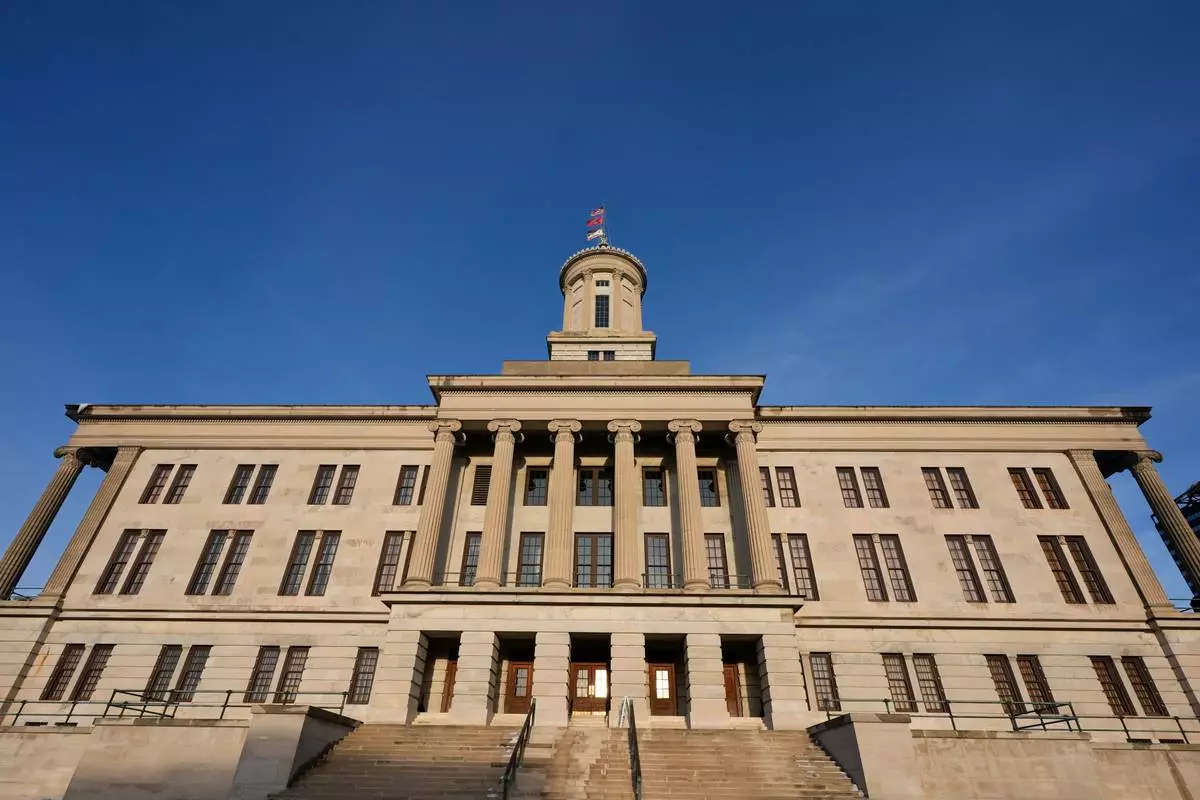
FILE - The Tennessee Capitol is seen, Jan. 22, 2024, in Nashville, Tenn. (AP Photo/George Walker IV, File)