Skip to Content Facebook Feature Image

More German investment discussed at China-Germany economic dialogue

China

China

China

More German investment discussed at China-Germany economic dialogue

2025-09-21 15:55 Last Updated At:19:07

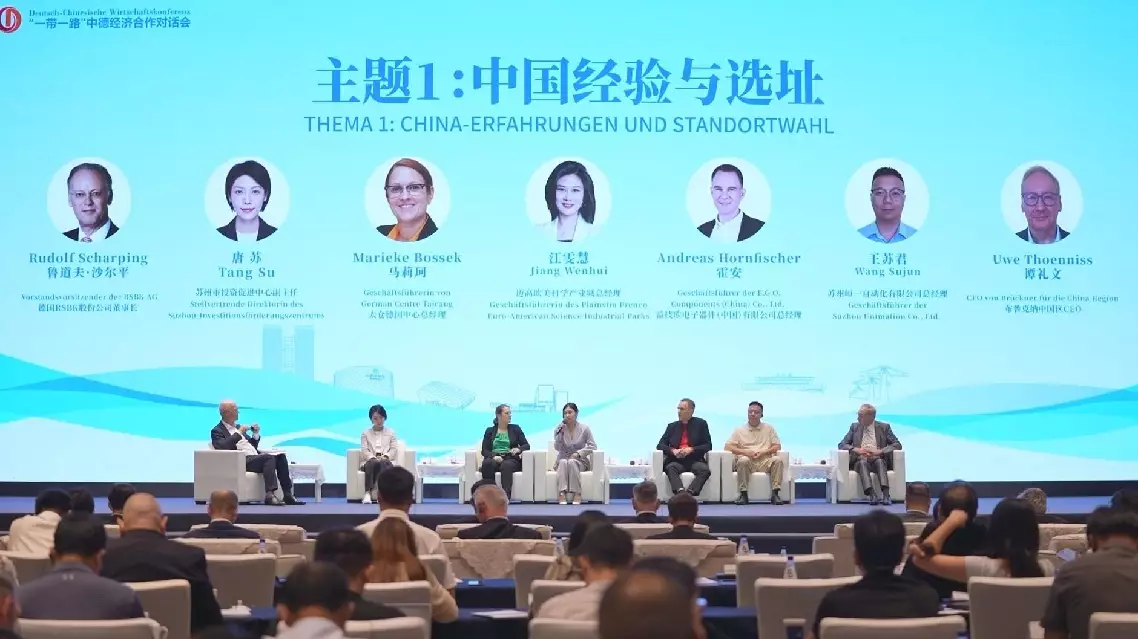
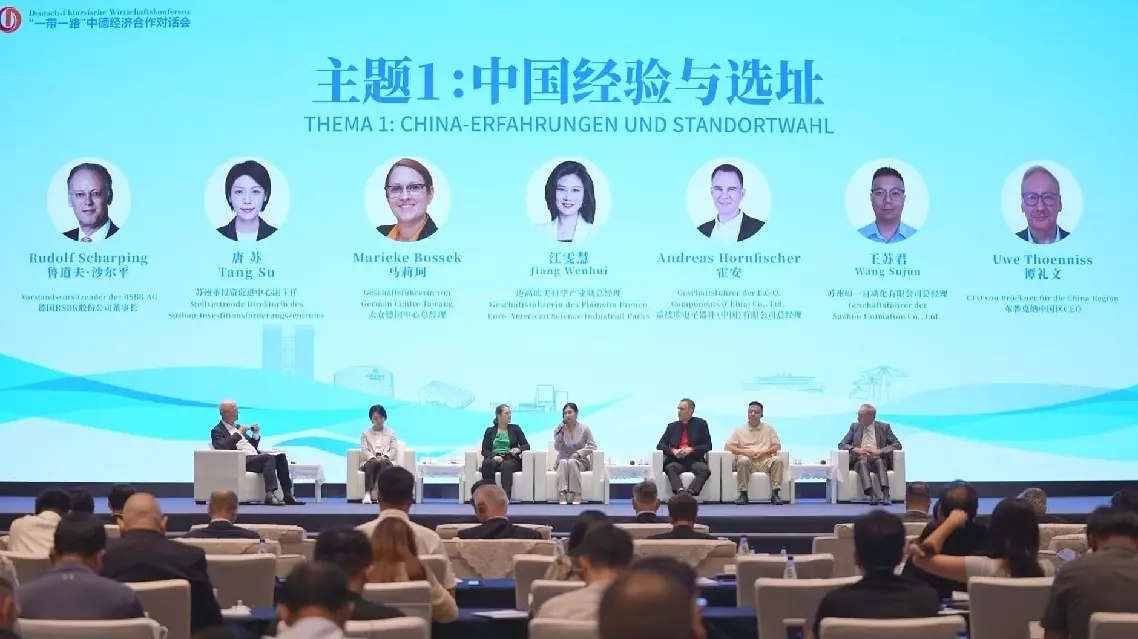
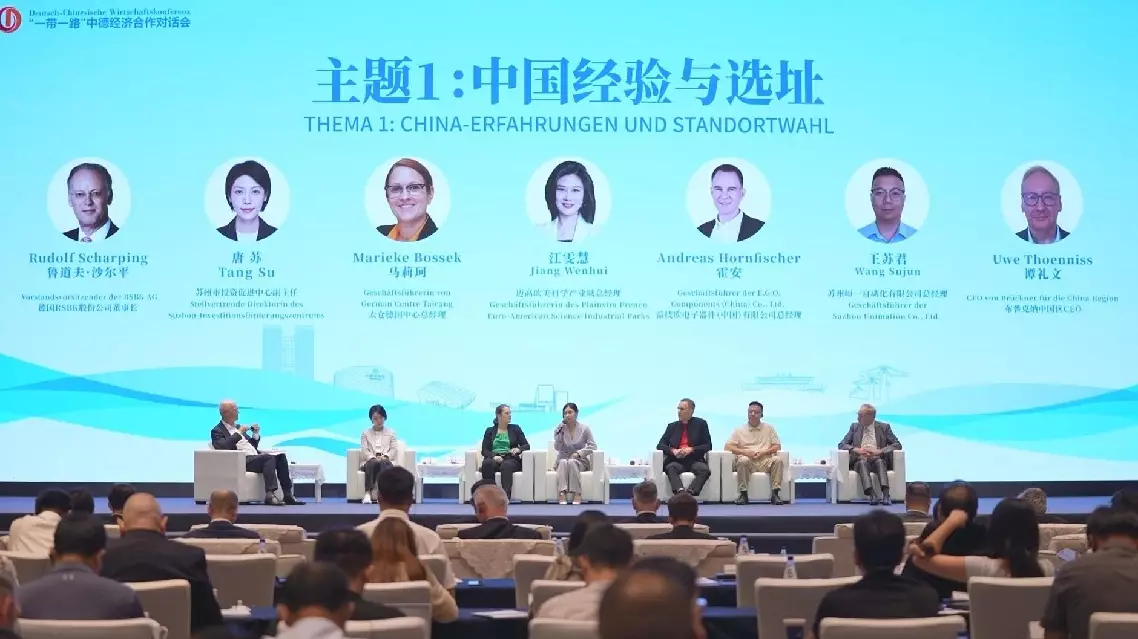
The 12th China-Germany Economic Dialogue ("Deutsch-Chinesische Wirtschaftskonferenz" in German) was held in Taicang City, east China's Jiangsu Province, on Thursday, with guests from both countries sharing their business experiences and seeking investment opportunities.

Among the guests was Rudolf Scharping, a former German defense minister and current chairman of the consulting firm RSBK AG, who stated that he aims to attract more German companies to China.

"Our cooperation between Europe and Germany on the one side, China on the other side, is something which has value in itself. It's not defined by others. And although we have different political systems, although we have some fundamental differences, the common interest in a stable world and in a good development of our societies and nations is overwhelming," he said.

Before the dialogue, the German delegation, led by Christoph Ahlhaus, former mayor of Hamburg and current chairman of the German Association of Small and Medium-Sized Enterprises (BVMW), visited local German companies in Taicang in search of more investment opportunities.

The city of Taicang is known as "the hometown of German business." Over 560 German companies have established here, with the actual use of German capital exceeding six billion U.S. dollars.

"We are a delegation of about 20 companies from Germany, the medium-sized companies, the German Mittelstand. They are very interested in investing in China, particularly in this region. Therefore they look at what is possible and they feel a big friendship between Germany and China," said Ahlhaus.

With economic uncertainty and rising global competition, some guests believe that both countries need to have confidence in working together.

"We don't think these two great nations, China and Germany, being No.2 and No.3 in the world, cannot find solutions for a better future. I think we can, that's exactly why I believe this confidence need to come back because we know we will find it," said Christian Sommer, CEO and Chairman of the German Center Shanghai.

China is now the largest investment destination for Germany. The first half of 2025 saw a 6.3 percent increase in German investment in China year on year, according to the Ministry of Commerce.
More German investment discussed at China-Germany economic dialogue
More German investment discussed at China-Germany economic dialogue
More German investment discussed at China-Germany economic dialogue
More German investment discussed at China-Germany economic dialogue

More German investment discussed at China-Germany economic dialogue

More German investment discussed at China-Germany economic dialogue
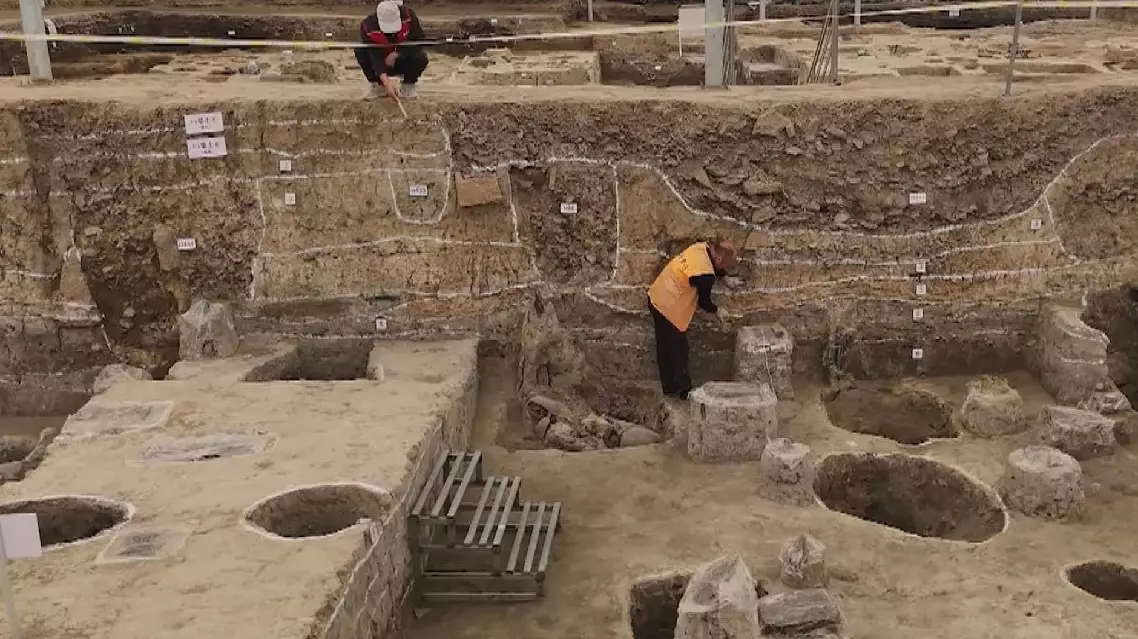
Based on preliminary results released recently, four ancient sites in the Yangtze River Basin have been shortlisted for the final evaluation of China's top 10 archaeological discoveries of 2025.

The four sites span from prehistoric times to the Han Dynasty (202 BC-AD 220) and the Six Dynasties period (222-589). Together, they offer evidence of early human activity as well as remnants of ancient capitals at their peak.

The Chuandong Site is located in Puding County, southwest China's Guizhou Province. Last year, large quantities of artifacts made of stone, bone, and horn were unearthed there, indicating prehistoric human activity dating back more than 55,000 years.

The Shenduntou Site, a typical Zhou Dynasty (1046BC-256BC) copper smelting site in the lower Yangtze River region in east China's Anhui Province, was part of the early Wu Kingdom's official industrial system. It holds great significance for the study of the development of bronze civilization in the Yangtze River basin.

Another shortlisted site, the Jinan City Site, lies in the northern suburbs of Jingzhou City, central China's Hubei Province. Covering an area of approximately 16 square kilometers, it is the largest capital city site from the pre-Qin period (before 221 B.C.) in southern China.

Outside the ancient city, multiple other sites and tombs have been discovered, spanning a total area of over 1,000 square kilometers. The sheer scale of the city ruins and surrounding burial grounds reflect the social landscape of the ancient Chu State at the height of its power.

The final shortlisted site comprises the remains of the capital of the ancient Yue State and the Kuaiji Commandery from the Han to the Six Dynasties period, located in the city of Shaoxing in east China's Zhejiang Province.

This site provides important clues for understanding the layout of the Yue capital and its ritual system. It also offers key evidence for studying the continuity of Chinese civilization and the development of construction techniques in southern China's wetland area.

The unique humid climate and extensive river systems of the Yangtze River Basin have shaped the distinctive cultural character of these sites, reinforcing the view that the Yangtze River Basin is a vital part of the diverse yet unified pattern of Chinese civilization.

Four sites in Yangtze River Basin shortlisted for final evaluation of China's top 10 archaeological discoveries of 2025

Four sites in Yangtze River Basin shortlisted for final evaluation of China's top 10 archaeological discoveries of 2025

Recommended Articles