DUBAI, United Arab Emirates (AP) — United Nations sanctions on Iran over its nuclear program were reimposed Sunday, putting Tehran under new pressure as tensions remain high in the wider Mideast over the Israel-Hamas war in Gaza.
At the U.N. General Assembly this week in New York, Iranian President Masoud Pezeshkian and Foreign Minister Abbas Araghchi tried a last-minute diplomatic push to stop the sanctions. However, Iran's supreme leader Ayatollah Ali Khamenei boxed in their efforts by describing diplomacy with the United States as a “sheer dead end.”
Meanwhile, efforts by China and Russia to halt the sanctions failed Friday.
A 30-day clock for the sanctions started when France, Germany and the United Kingdom on Aug. 28 declared Iran wasn't complying with its 2015 nuclear deal with world powers.
Tehran has argued without success that the deal was voided by the United States' unilateral withdrawal from the accord in 2018 under President Donald Trump's first administration. Since then, Iran has severely restricted required inspections by the U.N. nuclear watchdog, the International Atomic Energy Agency, particularly after the 12-day war Israel launched on Iran in June. That war saw both the U.S. and Israel bomb key Iranian nuclear sites.
“We don’t think it can impact the people of Iran, especially the people of Iran’s determination to defend their rights,” Araghchi said Friday in New York about the sanctions, despite the pressure already on the country's economy. “The question is, what it impacts is diplomacy. It closed the way of diplomacy.”
Here's what to know about Iran's nuclear sites, “snapback” sanctions and other issues raising tensions between Iran and the West.
The “snapback” process, as it is called by the diplomats who negotiated it into Iran’s 2015 nuclear deal with world powers, was designed to be veto-proof at the U.N. Security Council and took effect 30 days after parties to the deal told the Security Council that Iran was not complying. It again froze Iranian assets abroad, halted arms deals with Tehran and penalized any development of Iran’s ballistic missile program, among other measures.
The power to impose “snapback” would have expired Oct. 18, which likely prompted the European countries to use it before they lost the measure. After that, any sanctions effort would have faced a veto from U.N. Security Council members China and Russia, nations that have provided support to Iran in the past. China has remained a major buyer of Iranian crude oil, something that could be affected if “snapback” happens, while Russia has relied on Iranian drones in its war on Ukraine.
Iran has insisted for decades that its nuclear program is peaceful. However, its officials increasingly threaten to pursue a nuclear weapon. Iran now enriches uranium to near-weapons-grade levels, the only country in the world without a nuclear weapons program to do so.
Under the original 2015 nuclear deal, Iran was allowed to enrich uranium up to 3.67% purity and to maintain a uranium stockpile of 300 kilograms (661 pounds). The IAEA put Iran's stockpile just before the war at 9,874.9 kilograms (21,770.4 pounds), with 440.9 kilograms (972 pounds) of uranium enriched up to 60%. That would allow Iran to build several nuclear weapons, should it choose to do so.
U.S. intelligence agencies assess that Iran has yet to begin a weapons program, but has “undertaken activities that better position it to produce a nuclear device, if it chooses to do so.”
Iran’s nuclear facility at Natanz, located some 220 kilometers (135 miles) southeast of Tehran, is the country’s main enrichment site and had already been targeted by Israeli airstrikes when the U.S. attacked it in June. Uranium had been enriched to up to 60% purity at the site — a short step away from weapons grade — before Israel destroyed the aboveground part of the facility, according to the IAEA.
Another part of the facility on Iran’s Central Plateau is underground to defend against airstrikes. It operates multiple “cascades,” groups of centrifuges that work together to more quickly enrich uranium. The IAEA has said it believes that most if not all of these centrifuges were destroyed by an Israeli strike that cut off power to the site. The U.S. also dropped so-called bunker-busting bombs on the site, likely heavily damaging it.
Iran’s nuclear enrichment facility at Fordo, located some 100 kilometers (60 miles) southwest of Tehran, also came under U.S. bombardment with bunker-busting bombs. The U.S. struck the Isfahan Nuclear Technology as well with smaller munitions.
Israel separately targeted other sites associated with the program, including the Arak heavy water reactor.
Iran was decades ago one of the U.S.’s top allies in the Mideast under Shah Mohammad Reza Pahlavi, who purchased American military weapons and allowed CIA technicians to run secret listening posts monitoring the neighboring Soviet Union. The CIA fomented a 1953 coup that cemented the shah’s rule.
But in January 1979, the shah, fatally ill with cancer, fled Iran as mass demonstrations swelled against his rule. Then came the Islamic Revolution led by Grand Ayatollah Ruhollah Khomeini, which created Iran’s theocratic government.
Later that year, university students overran the U.S. Embassy in Tehran, seeking the shah’s extradition and sparking the 444-day hostage crisis that saw diplomatic relations between Iran and the U.S. severed.
During the Iran-Iraq war of the 1980s, the U.S. backed Saddam Hussein. During that conflict, the U.S. launched a one-day assault that crippled Iran at sea as part of the so-called “Tanker War,” and later it shot down an Iranian commercial airliner that the American military said it mistook for a warplane.
Iran and the U.S. have seesawed between enmity and grudging diplomacy in the years since, and relations peaked with the 2015 nuclear deal. But Trump unilaterally withdrew America from the accord in 2018, sparking tensions in the Mideast that persist today, fanned by the Israel-Hamas war and Israel's wider strikes across the region.
The Associated Press receives support for nuclear security coverage from the Carnegie Corporation of New York and Outrider Foundation. The AP is solely responsible for all content.
Additional AP coverage of the nuclear landscape: https://apnews.com/projects/the-new-nuclear-landscape/
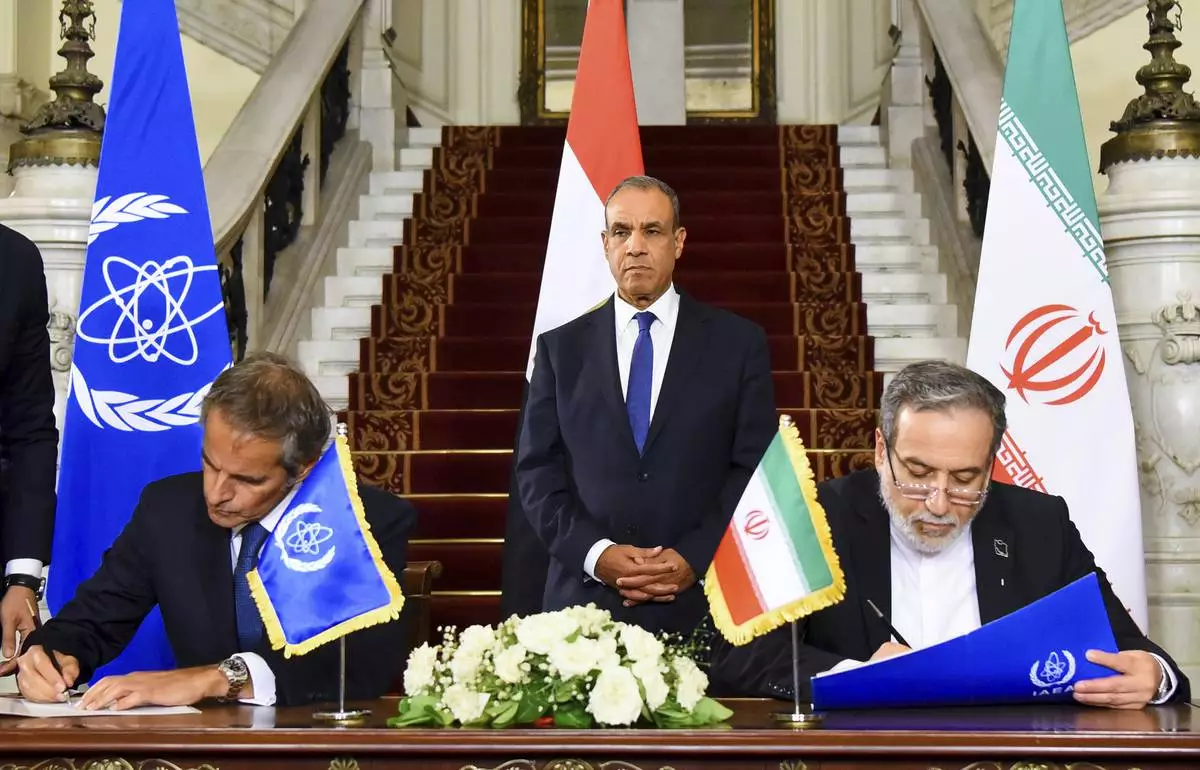
In this handout photo released by Egyptian Foreign Ministry Press Service, Iranian Foreign Minister Abbas Araghchi, right, and Director General of the International Atomic Energy Agency (IAEA) Rafael Grossi, left, an sign an agreement to open the way for resuming cooperation, at Tahrir Palace in Cairo, Egypt, Tuesday, Sept. 9, 2025. (Egyptian Foreign Ministry Press Service via AP)
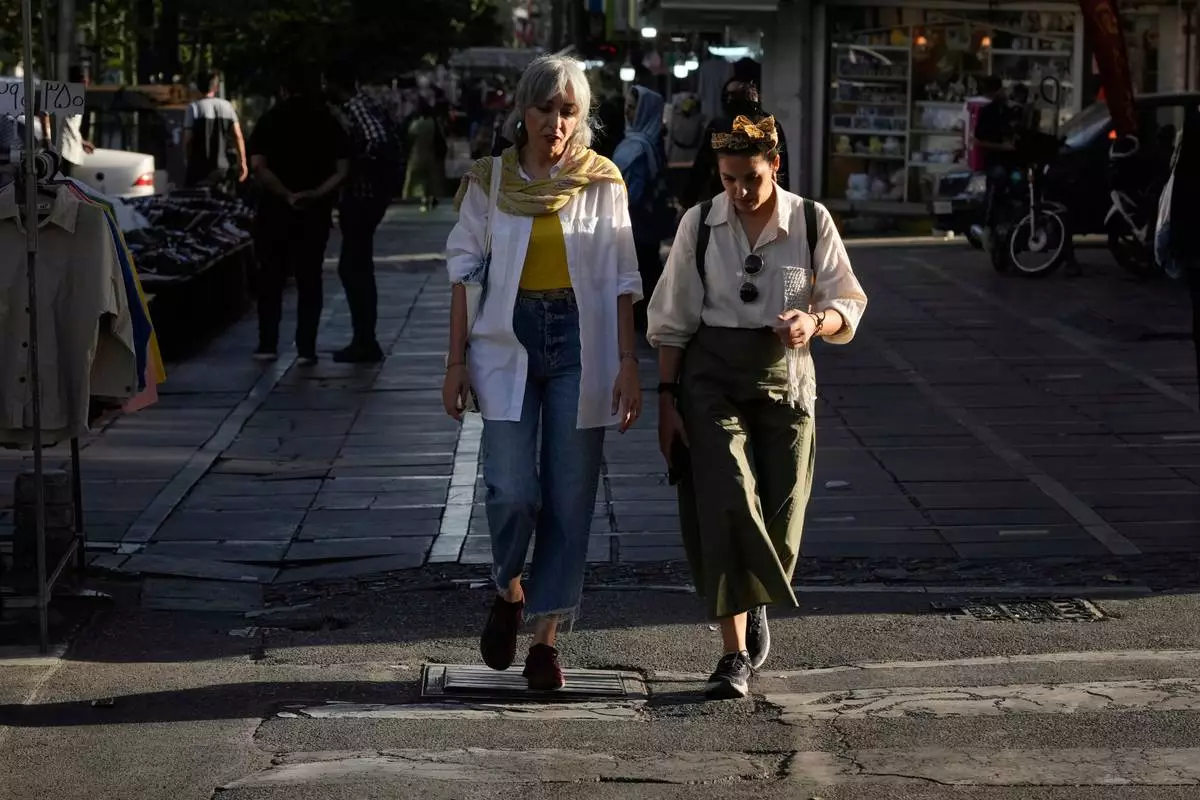
Women cross a street in downtown Tehran, Iran, Thursday, Sept. 18, 2025. (AP Photo/Vahid Salemi)
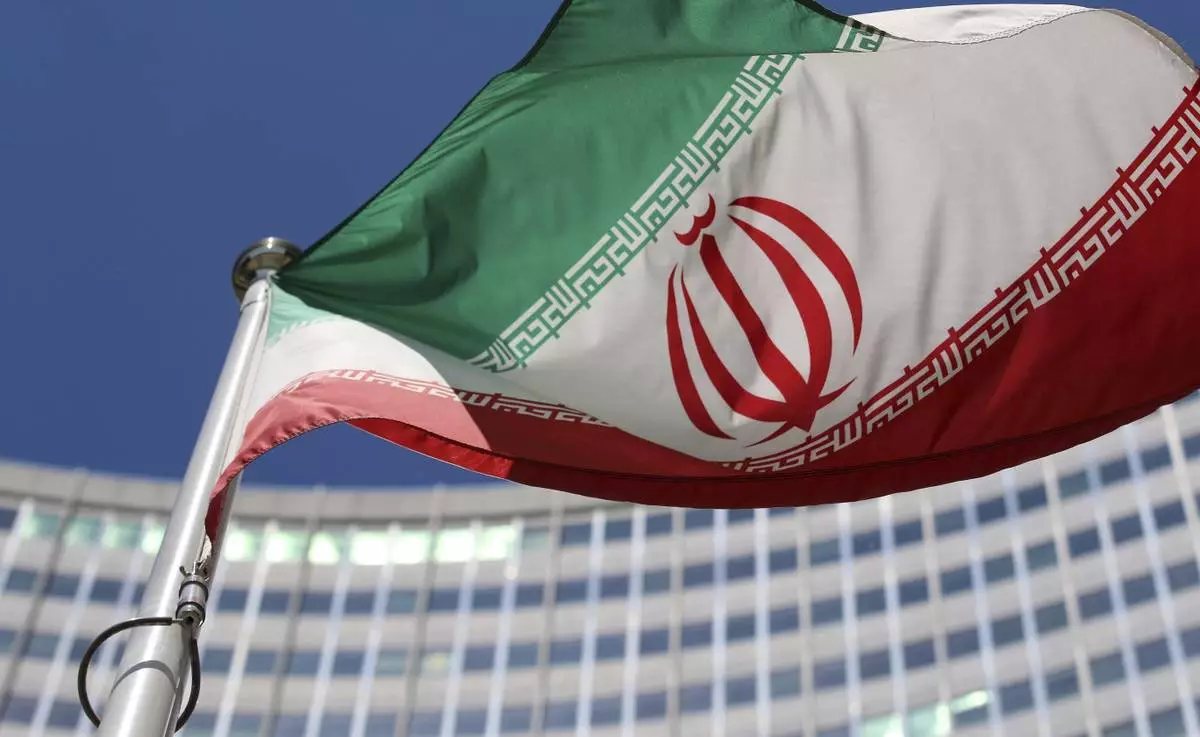
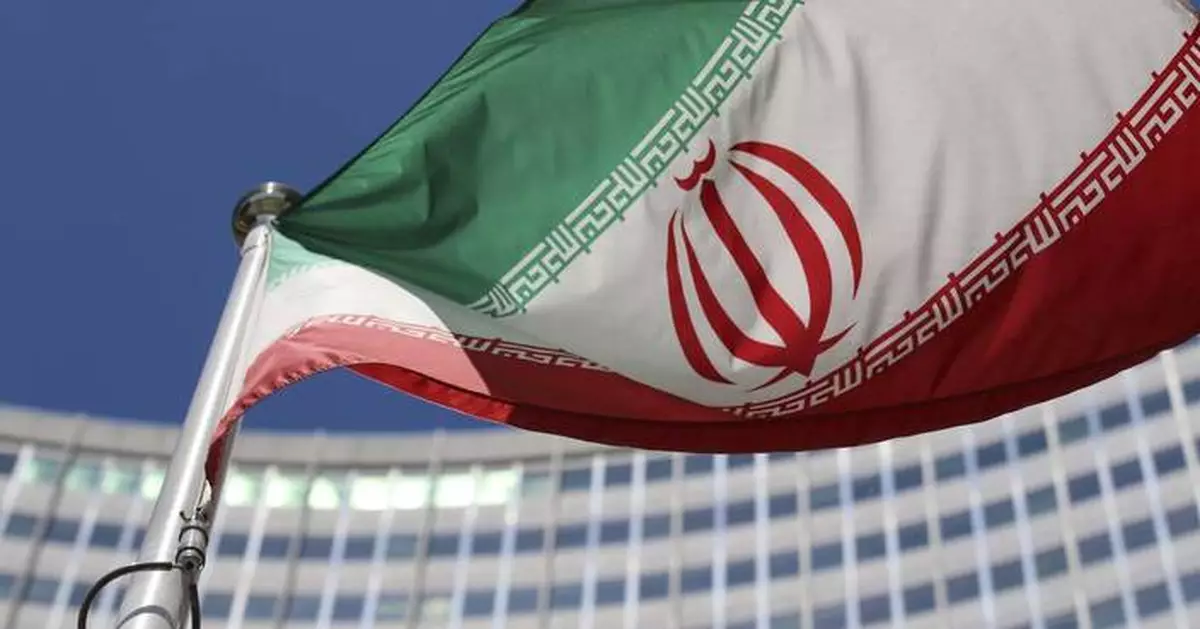
FILE - The Iranian flag flies in front of a U.N. building where closed-door nuclear talks take place at the International Center in Vienna, Austria, on June 18, 2014. (AP Photo/Ronald Zak, File)