
MADRID (AP) — With most European leaders talking tougher about immigration amid a rise in far-right populism and Trump administration warnings that they could face “civilizational erasure” unless they tighten their borders, Spanish Prime Minister Pedro Sánchez stands apart.
The Iberian nation has taken in millions of people from Latin America and Africa in recent years, and the leftist Sánchez regularly extols the financial and social benefits that immigrants who legally come to Spain bring to the eurozone’s fourth-largest economy.
Click to Gallery

FILE - Spain's Prime Minister Pedro Sanchez arrives for an EU summit at the European Council building in Brussels, Thursday, June 29, 2023. (AP Photo/Virginia Mayo, File)
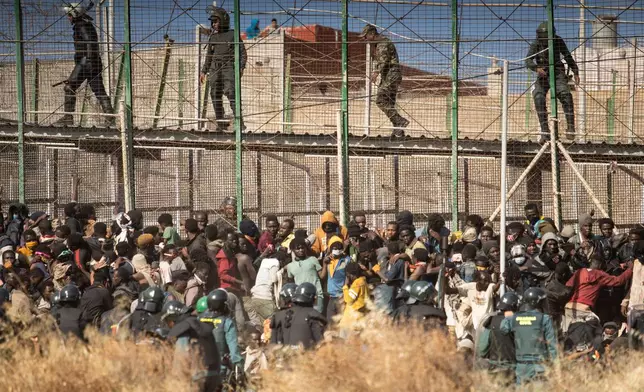
FILE - Riot police officers cordon off the area after migrants arrive on Spanish soil and crossing the fences separating the Spanish enclave of Melilla from Morocco in Melilla, Spain, on June 24, 2022. (AP Photo/Javier Bernardo, File)
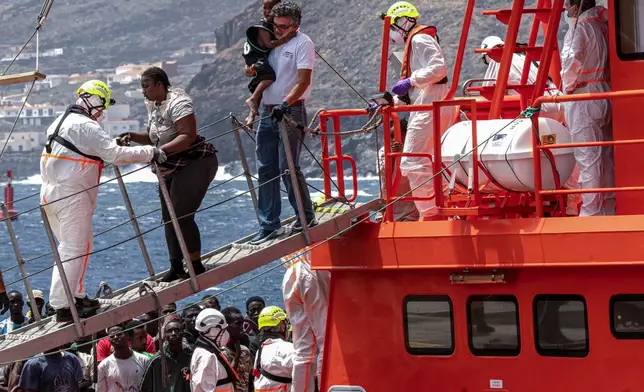
FILE - Migrants disembark at the port of "La Estaca" in Valverde at the Canary island of El Hierro, Spain, Monday, Aug. 26, 2024. (AP Photo/Maria Ximena, File)
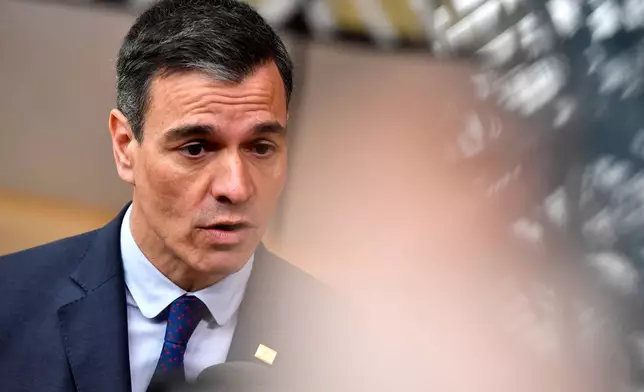
FILE - Spain's Prime Minister Pedro Sanchez speaks with the media as he arrives for an EU summit at the European Council building in Brussels, Thursday, March 23, 2023. (AP Photo/Geert Vanden Wijngaert, File)
Spain’s choice, Sánchez often says, is between “being an open and prosperous country or a closed and poor one.”
His words stand in stark contrast to other Western leaders, and so far, his bet seems to be paying off. Spain’s economy has grown faster than any other EU nation for a second year in a row, due in part to newcomers boosting its aging workforce.
“Today, Spain’s progress and strong economic situation owe much to the contribution of the migrants who have come to Spain to develop their life projects,” Sánchez said in July after anti-migrant clashes rocked a small southern Spanish town.
Sánchez's immigration approach, including his remarks about immigrants' contributions to Spanish society, is consistent with those of the country's past progressive governments, said Anna Terrón Cusi, a senior fellow at the Migration Policy Institute think tank who previously worked on immigration policy for multiple Spanish governments, including Sánchez's.
“What has changed a lot internally is that there is now very anti-immigration rhetoric from Vox, especially against Muslim immigrants,” she said, referring to the far-right Spanish party that has been polling third, behind the ruling Socialists and center-right People's Party. “But Sánchez, unlike other European leaders, responds by directly and strongly confronting this narrative.”
Centrist leaders across Europe are facing rising pressure from anti-immigrant far-right parties, despite a significant decrease in illegal border crossings into the EU over the past two years.
In France, where the once-ostracized National Rally far-right party has built support, centrist President Emmanuel Macron now speaks about what he refers to as “the migration problem."
“If we don’t want the National Rally to come to power, we must address the problem that feeds it,” Macron said last year after France passed new restrictions that he described as “a shield” needed to “fight illegal immigration” while helping to “better integrate” migrant workers.
While running to be German chancellor this year, Friedrich Merz vowed to toughen the country’s migration policy. Days after he was elected, Germany boosted its border security efforts. And in recent weeks, it has presented new figures suggesting a rise in deportations of rejected asylum-seekers and a drop in the number of new asylum-seekers.
Sánchez’s progressive government, too, has seen pro-immigration proposals stall.
Last year, it amended Spain’s immigration law to facilitate residency and work permits to hundreds of thousands of immigrants living in the country illegally. At the time, Migration Minister Elma Saiz said Spain needed to add as many as 300,000 taxpaying foreign workers per year to sustain its state benefits, including for pensions, health care and unemployment. Critics, though, said the changes to the law had many shortcomings and even hurt some migrants instead.
A more ambitious amnesty proposal later also endorsed by Sánchez’ progressive government stalled in Parliament due to its thorny politics.
“There were some voices that pointed out that (the amnesty) could have a very big social impact,” said Cecilia Estrada Villaseñor, an immigration researcher at the Pontifical Comillas University in Madrid. She added, “there is a European context that comes into play. We belong to the European Union, and right now the balance lies in a different place.”
Sánchez’s government, in conjunction with the EU, has also paid African governments to help stop migrants, from reaching Spanish shores, including many would-be asylum-seekers.
Most immigrants in Spain enter the country legally by plane. But the relatively few who arrive on Spanish shores in smugglers' boats dominate headlines and are routinely held up by far-right politicians and media as a sign of what's wrong with the government's stance.
Last year, amid steep rises in the number of people making the dangerous sea crossing from Africa's west coast to the Canary Islands, Sánchez traveled to Mauritania with EU Commission President Ursula von der Leyen, who pledged 210 million euros (around $247 million) of EU money to help the northwestern African country curb migration.
The efforts seem to be working. Migrant arrivals to the Canary Islands this year are down 60%, which even the government's critics say is because of governments in Africa stepping up border controls.
But rights advocates blame Sánchez's policies for the violent deaths of migrants in Spain and abroad, such as the 2022 flashpoint in the Spanish enclave of Melilla, in North Africa. In that instance, sub-Saharan migrants and asylum-seekers scaled a border fence, which sparked clashes with authorities in which 23 migrants died.
In an interview with The Associated Press a week later, Sánchez defended how Moroccan and Spanish police responded, calling the attempt “an attack on Spain’s borders.”
In response to questions from the AP, a spokesperson from the prime minister's office said, “our migration policy is effective and responsible.”
Spain is home to millions of migrants from Latin America, who are fast-tracked for Spanish citizenship and generally integrate easily because of the shared language.
More than 4 million people from Latin America were living in Spain legally in 2024, according to government figures. The current leading countries of origin for Spain’s immigrants are Morocco, Colombia and Venezuela.
Spain's central bank estimates the country will need around 24 million working-age immigrants over the next 30 years to sustain the balance between workers and retirees-plus-children.
But economists say Spain's millions of immigrants have added fuel to another political fire — the country's increasingly unaffordable housing market. José Boscá, an economist at the University of Valencia, said alongside pressures from overtourism and short-term rentals in cities, Spain hasn't built enough housing to accommodate its new residents.
“If you integrate so many people, but you don’t build more housing, there could be problems,” Boscá said.
In response, Sánchez's government has pledged to fund more construction — especially of public housing — and also floated measures to crack down on wealthy foreigners buying second homes in the country.
Associated Press reporters Kirsten Grieshaber in Berlin, Sylvie Corbet in Paris and Renata Brito in Barcelona, Spain, contributed to this story.

FILE - Spain's Prime Minister Pedro Sanchez arrives for an EU summit at the European Council building in Brussels, Thursday, June 29, 2023. (AP Photo/Virginia Mayo, File)
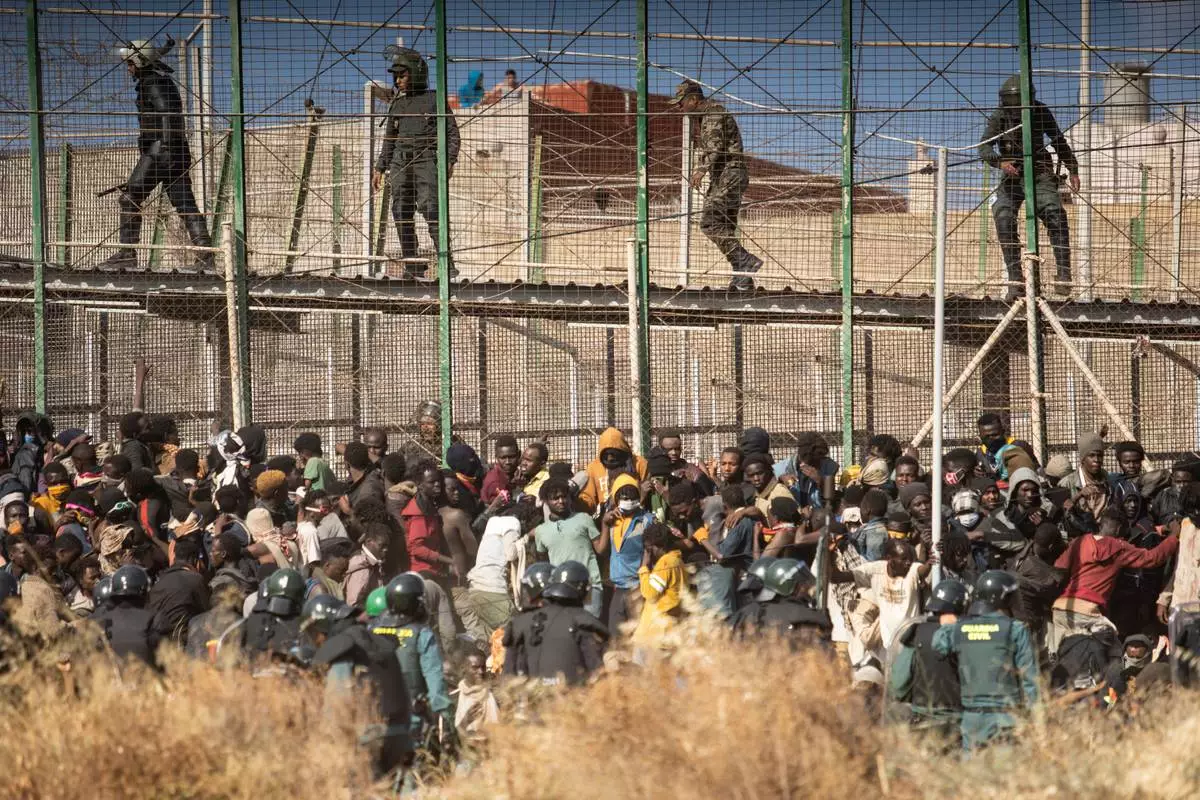
FILE - Riot police officers cordon off the area after migrants arrive on Spanish soil and crossing the fences separating the Spanish enclave of Melilla from Morocco in Melilla, Spain, on June 24, 2022. (AP Photo/Javier Bernardo, File)
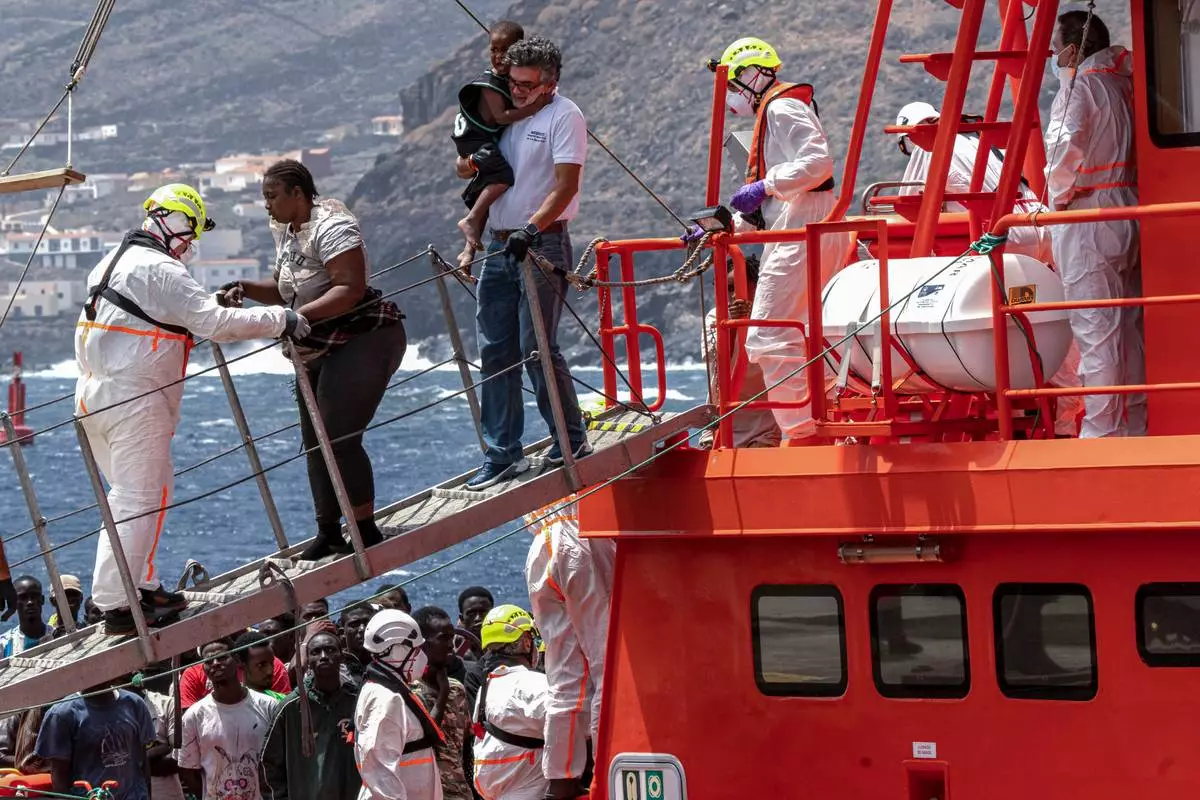
FILE - Migrants disembark at the port of "La Estaca" in Valverde at the Canary island of El Hierro, Spain, Monday, Aug. 26, 2024. (AP Photo/Maria Ximena, File)
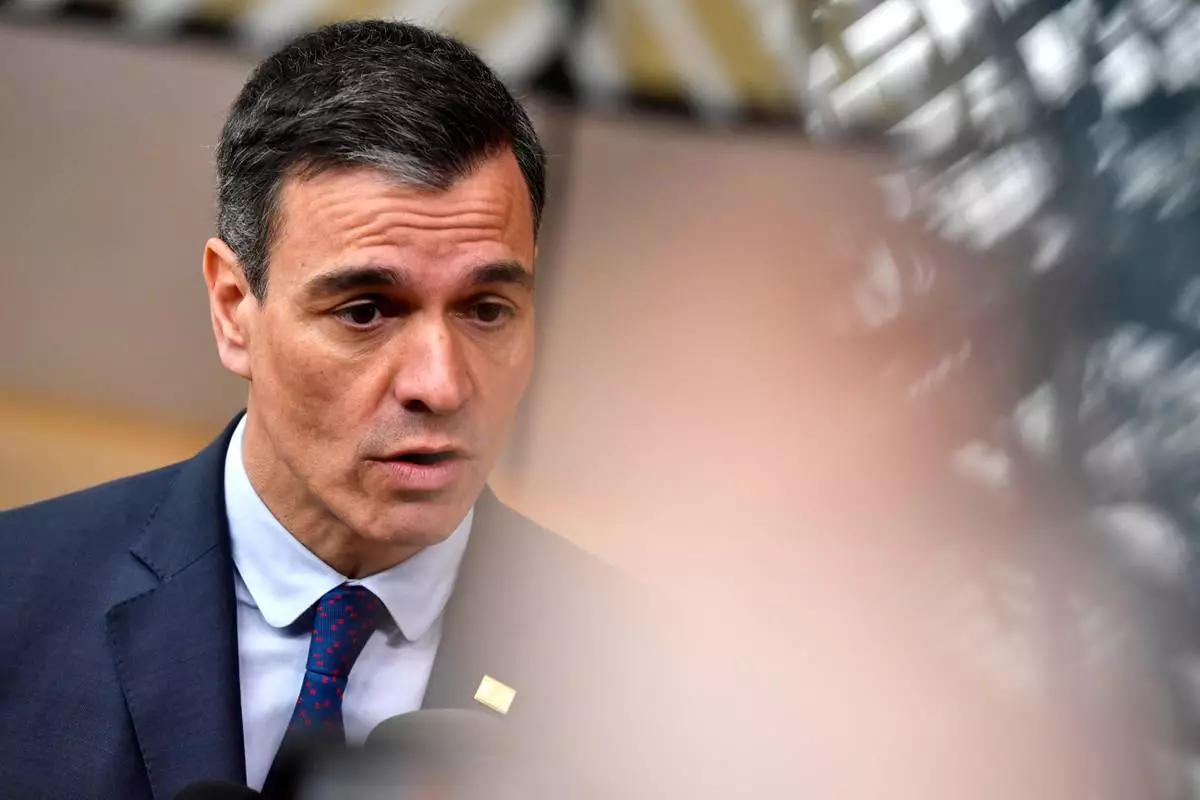
FILE - Spain's Prime Minister Pedro Sanchez speaks with the media as he arrives for an EU summit at the European Council building in Brussels, Thursday, March 23, 2023. (AP Photo/Geert Vanden Wijngaert, File)