The rate of mechanization in crops plowing, planting, and harvesting has surpassed 90 percent in northwest China's Xinjiang Uygur Autonomous Region.
In Manas County of Changji Hui Autonomous Prefecture, villager Zhang Hongyuan said that the rising level of mechanization has brought more leisure time to locals.
"Now due to modernized cotton production, each farmer in our village is able to manage 33 hectares of farmland. So people have more leisure time, and some of them spend the time on traveling," said Zhang.
The mechanization rates in sowing and harvesting of tomatoes for processing reached over 97.5 percent in Xinjiang by the end of 2024.
"In the past, people used hands to plant tomato seedlings one by one. And during the harvest, the villagers had to buy thousands of bags and manually put the tomatoes into the bags. Each day, they got up at four or five o'clock early in the morning and then worked until eight or nine o'clock in the evening. Now the farming processes have been largely mechanized, which makes the planting easy and brings high output of quality products. The harvesters are able to sort the tomatoes based on their colors, and automatically remove all the green and rotten fruits, ensuring that only the good ones are harvested. In this way, the farmers feel confident about securing good harvests," said Zhu Jianyun, a villager in Hutubi County of Changji Hui Autonomous Prefecture.
"The mechanization level of agriculture is getting higher and higher in Xinjiang, and the technical equipment is also becoming more and more advanced. We are both witnesses and beneficiaries of the agricultural development in Xinjiang," said Zhang Hongyuan.
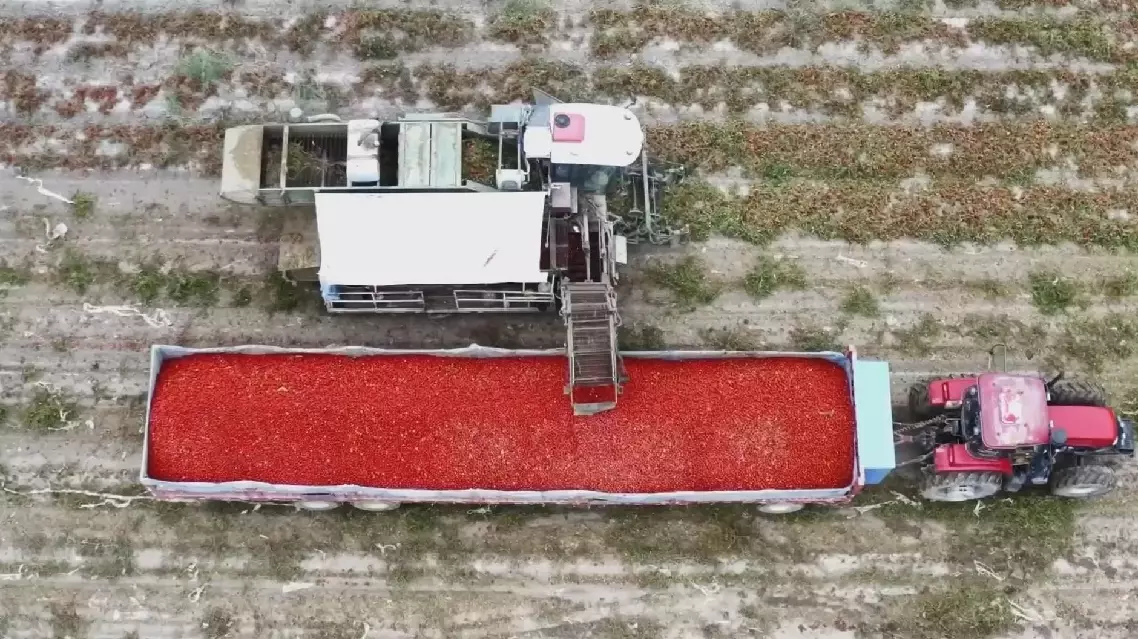
Mechanization rate in crops plowing, planting, harvesting surpasses 90 percent in Xinjiang